
Global Formal Wear Market Size, Growth & Revenue 2024-2034
Global Formal Wear Market is segmented by Product Type (Men's Formal Wear, Women's Formal Wear, Children's Formal Wear, Accessories (Ties, Cufflinks, Scarves), Footwear (Formal Shoes, Heels)), Application (Corporate Events, Weddings, Social Gatherings, Entertainment, Others), End-Use Industry (Corporate Sector, Hospitality and Events, Retail and Fashion, Entertainment and Media), Distribution Channel (Offline Retail Stores, E-commerce Platforms, Specialty Boutiques), and Geography (North America, LATAM, West Europe, Central & Eastern Europe, Northern Europe, Southern Europe, East Asia, Southeast Asia, South Asia, Central Asia, Oceania, MEA)
Pricing
Report Overview
Executive Summary
- •The Global Formal Wear Market is a dynamic and evolving industry that covers the production and distribution of formal attire and accessories designed for professional, ceremonial, and social occasions. This market includes diverse segments such as men's, women's, and children's formal wear, encompassing suits, tuxedos, evening gowns, and complementary accessories like ties, cufflinks, shoes, and handbags. The market is characterized by its adaptation to cultural nuances and fashion trends across different regions worldwide, providing consumers with a broad range of styles and materials suited for events such as corporate meetings, weddings, social gatherings, and entertainment functions. Key drivers include rising disposable incomes, increasing urbanization, and growing demand for premium and customized formal wear. Technological integration in textile innovation and e-commerce platforms has further expanded market reach. The market faces challenges such as fluctuating raw material costs and shifting consumer preferences towards casual wear, but opportunities abound in sustainable fabrics and emerging markets. The industry’s competitive landscape is marked by significant innovation and strategic collaborations, positioning it for steady growth through 2034.
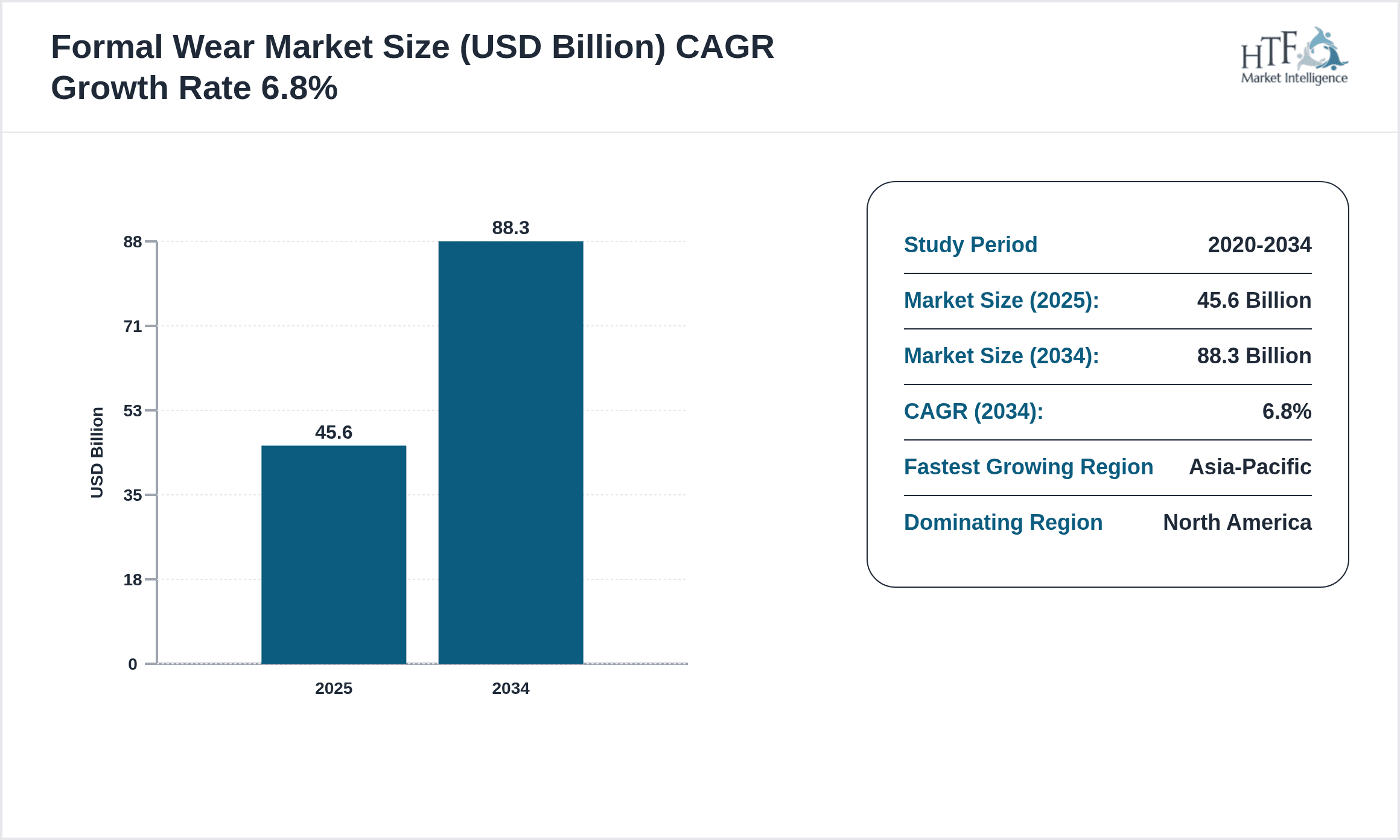
- •Key highlights reveal that the Global Formal Wear Market was valued at USD 45.6 Billion in 2024 and is forecasted to reach USD 88.3 Billion by 2034, growing at a CAGR of 6.8%. North America currently dominates the market due to its mature retail infrastructure and strong corporate culture, while Asia-Pacific represents the fastest-growing region, driven by rising urban populations and increasing wedding ceremonies. Men's formal wear remains the leading product type, though women's formal wear is experiencing rapid growth fueled by increasing female workforce participation and changing fashion trends. Corporate events and weddings are the primary applications, underscoring the importance of formal wear in professional and social contexts. Market expansion is supported by innovations in fabric technology, customization services, and omnichannel retailing strategies. Despite some restraints like economic fluctuations and competition from casual wear, the market outlook remains positive with sustained demand and new growth avenues.
- •The market's value proposition lies in its ability to blend tradition with modernity, catering to diverse demographics and occasions with high-quality, stylish, and culturally relevant products. Formal wear plays a strategic role across industries such as corporate, hospitality, and event management, enhancing brand image and social presence. For manufacturers and retailers, investing in sustainable materials and leveraging digital transformation offers competitive advantages. Stakeholders, including designers, suppliers, and distributors, benefit from understanding evolving consumer preferences and regional dynamics to optimize product offerings and expand market penetration. Overall, the Global Formal Wear Market presents a lucrative opportunity for innovation, partnership, and expansion, driven by social trends, economic growth, and technological advancements.
Competitive Landscape
The competitive environment in the Global Formal Wear Market is characterized by intense rivalry among established international brands and emerging regional players. Companies focus on innovation through fabric technology, sustainable sourcing, and design differentiation to capture market share. Strategic partnerships and collaborations between manufacturers, designers, and retailers enable product diversification and geographical expansion. Pricing strategies vary from premium luxury segments to affordable mass-market offerings, creating a broad competitive spectrum. Market leaders invest heavily in digital marketing and omnichannel retailing to enhance customer experience and loyalty. Innovation in customization and made-to-measure services further differentiates competitors. Barriers to entry include high capital requirements, brand recognition, and supply chain optimization. Regional competition is influenced by cultural preferences and economic conditions, prompting firms to tailor strategies by geography. The future competitive landscape is expected to evolve with digital transformation, sustainability focus, and consumer-centric approaches driving differentiation and market consolidation.
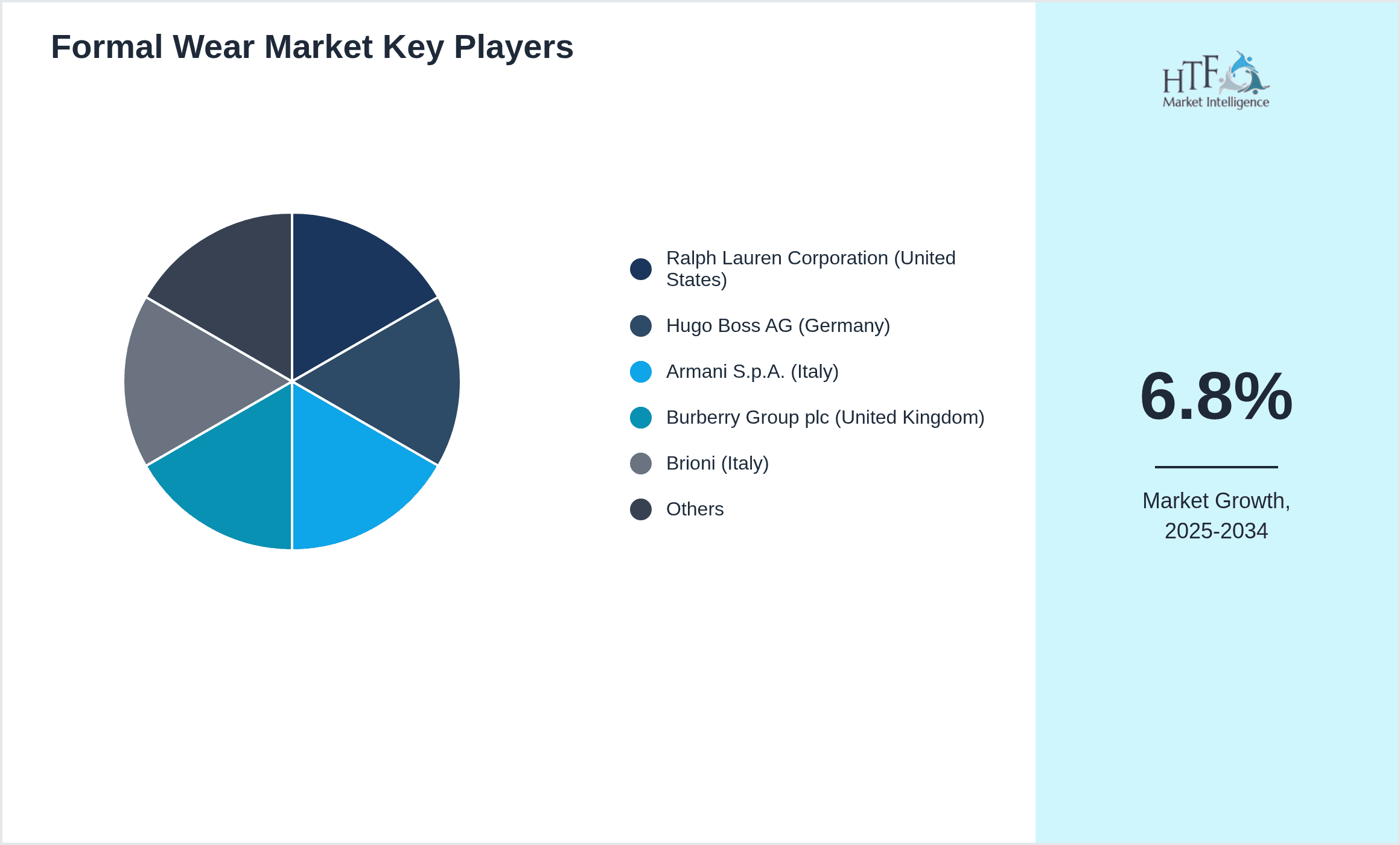
Leading Companies in Formal Wear Market
- •Ralph Lauren Corporation (United States)
- •Hugo Boss AG (Germany)
- •Armani S.p.A. (Italy)
- •Burberry Group plc (United Kingdom)
- •Brioni (Italy)
- •Tom Ford International (United States)
- •Canali S.p.A. (Italy)
- •Brooks Brothers Group, Inc. (United States)
- •Ermenegildo Zegna Group (Italy)
- •Ted Baker plc (United Kingdom)
- •Paul Smith Ltd (United Kingdom)
- •Michael Kors Holdings Limited (United States)
- •Calvin Klein Inc. (United States)
- •Zara SA (Spain)
- •Uniqlo Co., Ltd. (Japan)
- •Massimo Dutti (Spain)
- •Alexander McQueen (United Kingdom)
- •Dolce & Gabbana S.r.l. (Italy)
- •Saint Laurent (France)
- •Balenciaga (France)
- •Valentino S.p.A. (Italy)
- •Hermès International S.A. (France)
- •Gucci (Italy)
- •Prada S.p.A. (Italy)
- •Chanel S.A. (France)
Market Breakdown
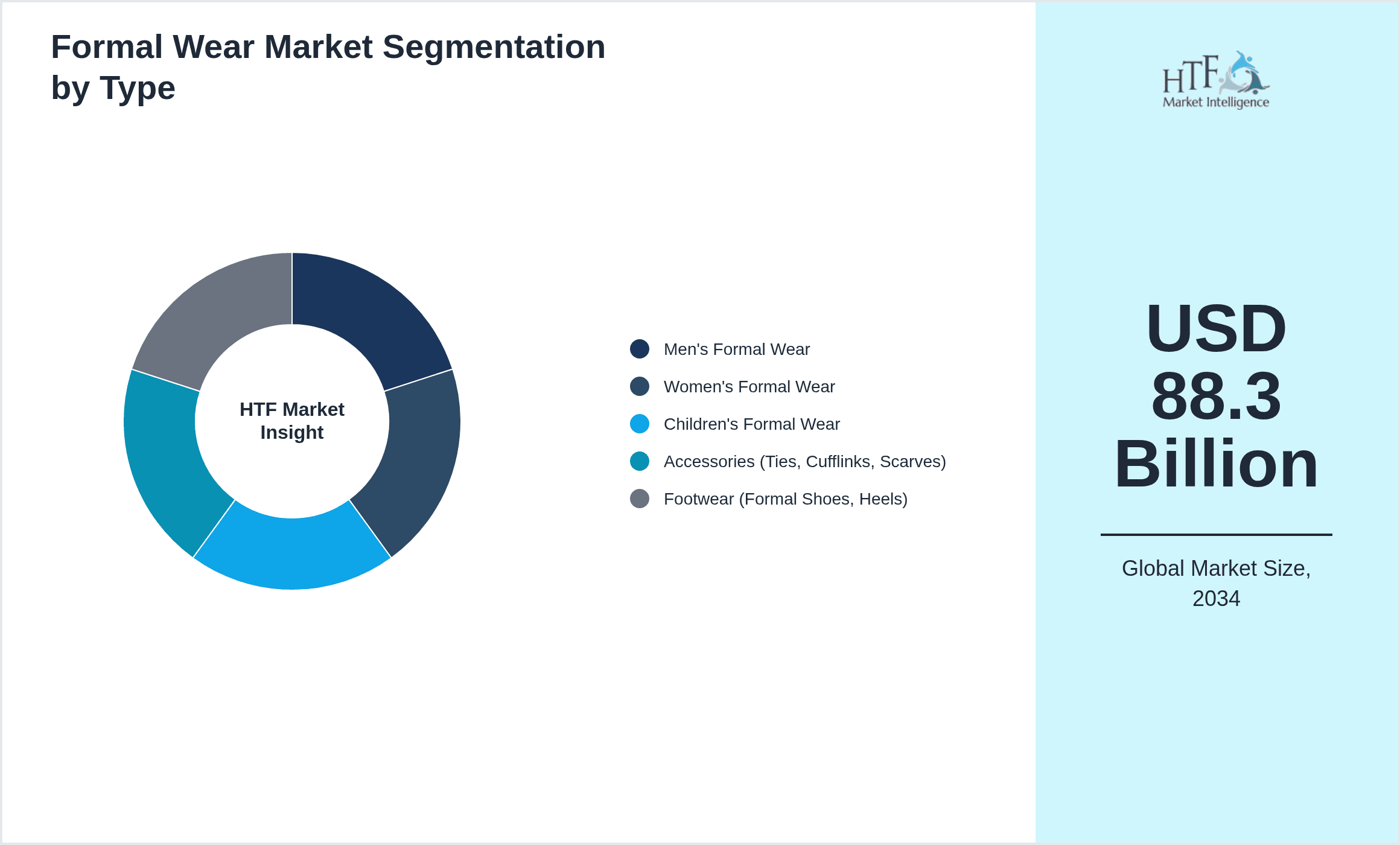
- •By Product Type
- ◦Men's Formal Wear
- ◦Women's Formal Wear
- ◦Children's Formal Wear
- ◦Accessories (Ties, Cufflinks, Scarves)
- ◦Footwear (Formal Shoes, Heels)
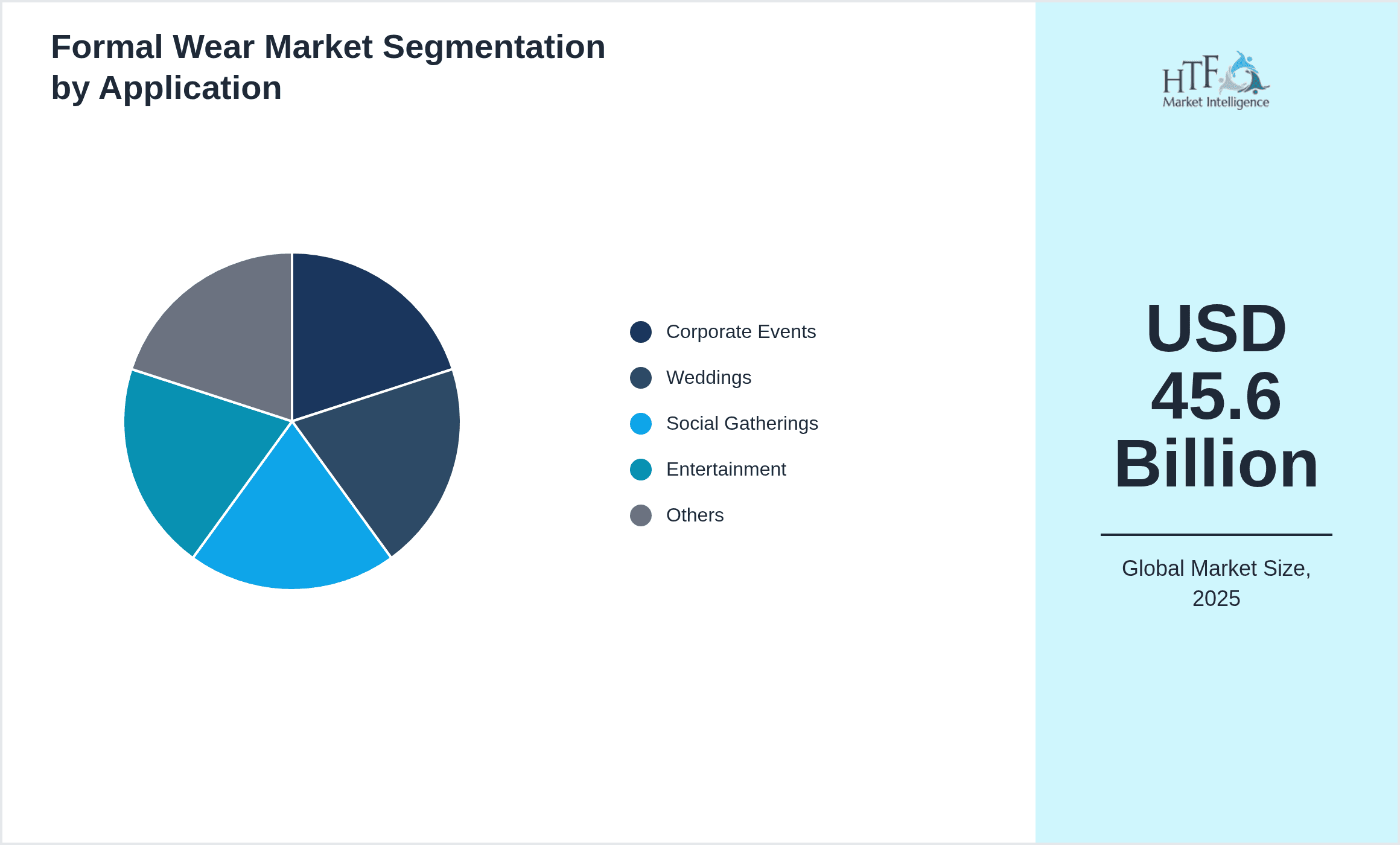
- •By Application
- ◦Corporate Events
- ◦Weddings
- ◦Social Gatherings
- ◦Entertainment
- ◦Others
- •By End-Use Industry
- ◦Corporate Sector
- ◦Hospitality and Events
- ◦Retail and Fashion
- ◦Entertainment and Media
- •By Distribution Channel
- ◦Offline Retail Stores
- ◦E-commerce Platforms
- ◦Specialty Boutiques
Growth Dynamics
The Global Formal Wear Market is propelled by rising disposable incomes and an increasing number of formal events worldwide. Growing urbanization and a surge in corporate culture promote demand for men's and women's formal attire. Technological advancements in textile manufacturing enable production of comfortable and stylish garments, which attracts a broader consumer base. Additionally, social media and celebrity endorsements influence fashion choices, driving market expansion. Customization and made-to-measure options have gained popularity, enhancing consumer engagement and brand loyalty. Expansion of e-commerce platforms facilitates easier access to formal wear, particularly in emerging economies where traditional retail is limited. The growing awareness of sustainable fashion also encourages manufacturers to innovate with eco-friendly materials, appealing to environmentally conscious consumers. Overall, these factors collectively stimulate market growth, with Asia-Pacific emerging as a key driver due to its expanding middle class and cultural emphasis on formal occasions.
Market Trends
The formal wear market is witnessing increased adoption of sustainable and ethically sourced fabrics, reflecting a broader industry shift towards eco-consciousness. Brands are launching collections using organic cotton, recycled fibers, and biodegradable materials to meet consumer demand for greener products. Digital transformation is reshaping retail with virtual fitting rooms, AI-powered styling recommendations, and augmented reality enhancing the shopping experience. Personalization trends are also prominent, with customers seeking bespoke tailoring and unique designs. The integration of smart textiles incorporating wearable technology is emerging, offering functionalities such as temperature regulation and moisture control. Additionally, the market shows a growing preference for gender-neutral formal wear, reflecting evolving social norms. Collaborations between high-end designers and mass-market retailers are creating accessible luxury options, expanding consumer base. These trends are expected to influence product development and marketing strategies significantly through 2034.
Market Opportunities
There is substantial growth potential in emerging markets where increasing urbanization and rising middle-class populations are boosting demand for formal wear. Expansion of e-commerce platforms in these regions offers cost-effective distribution channels to reach untapped customer segments. The rising trend of sustainable fashion presents opportunities for innovation in eco-friendly materials and production methods, enabling brands to differentiate themselves. Customization and personalization services, including made-to-measure suits and AI-driven styling, provide avenues for premium pricing and enhanced customer loyalty. Collaborations with influencers and integration of digital marketing campaigns can further enhance brand visibility and engagement. Additionally, product diversification into accessories and footwear complements core offerings, increasing revenue streams. The growing importance of corporate uniforms and event-specific attire in hospitality and entertainment sectors also represents a promising opportunity for specialized product lines and B2B partnerships.
Market Challenges
The formal wear market faces challenges related to fluctuating raw material prices, particularly for high-quality fabrics such as wool and silk, which can affect profit margins. Consumer preference shifts toward casual and athleisure wear reduce formal wear demand, especially among younger demographics. The COVID-19 pandemic accelerated remote work trends, decreasing the frequency of formal events and corporate gatherings. Supply chain disruptions and increasing labor costs present operational challenges for manufacturers. Additionally, counterfeiting and imitation products undermine brand equity and revenue. Market fragmentation with numerous regional players intensifies competition and pricing pressures. Regulatory complexities related to international trade and environmental compliance also impose barriers. To overcome these challenges, companies need to innovate continuously, adopt efficient supply chain management, and align product offerings with evolving consumer lifestyles and sustainability expectations.
Regulatory Framework
From 2019 through 2024, the Global Formal Wear Market has been influenced by evolving regulations focusing on sustainable textile production, labor standards, and trade compliance. Countries have implemented stricter environmental norms requiring reduced chemical usage and promoting eco-friendly manufacturing processes, impacting raw material sourcing and production costs. Labor laws emphasizing fair wages and safe working conditions have increased operational transparency and ethical manufacturing practices. Trade agreements and tariffs enacted between major economies affect import-export dynamics, influencing pricing and supply chain strategies. Additionally, regulations related to product labeling and consumer safety standards ensure quality assurance and enhance consumer trust. Government incentives for sustainable fashion initiatives support innovation and adoption of green technologies. Overall, these regulatory developments shape market competitiveness, encouraging companies to align with compliance while fostering sustainable growth.
Market Intelligence
- •15th January 2025, Ralph Lauren Corporation launched a new sustainable formal wear collection featuring organic cotton and recycled polyester blends designed for corporate professionals seeking eco-friendly options. The collection integrates advanced wrinkle-resistant technology and enhanced breathability, catering to comfort without compromising style. Targeted at North America and Europe, this initiative aligns with growing consumer demand for sustainable fashion and corporate responsibility. Ralph Lauren aims to leverage its global retail and e-commerce channels to maximize reach and brand impact, reinforcing its position as a market innovator.
- •30th March 2025, Hugo Boss AG introduced an AI-driven virtual fitting platform allowing customers worldwide to personalize and tailor formal wear with precise measurements and style preferences. This digital innovation enhances customer experience, reduces return rates, and supports omnichannel retail strategies. The platform integrates with Hugo Boss’s existing e-commerce infrastructure and aims to expand into Asia-Pacific markets where demand for customization is rising rapidly. This strategic move reflects the company’s commitment to digital transformation and consumer-centric service models.
- •10th July 2024, Armani S.p.A. announced a strategic partnership with a leading textile innovator to develop biodegradable formal wear fabrics. This collaboration focuses on reducing environmental impact through sustainable sourcing and manufacturing processes while maintaining luxury quality standards. The initiative targets global markets with a phased rollout beginning in Europe and North America. Armani plans to enhance its brand sustainability credentials and meet stringent regulatory requirements through this innovation.
- •22nd November 2024, Burberry Group plc completed the acquisition of a niche bespoke tailoring company specializing in women's formal wear, aiming to expand its premium offerings and capture growing demand in the Asia-Pacific region. The acquisition enhances Burberry’s product portfolio with exclusive customization services and strengthens its foothold in emerging luxury markets. This strategic expansion supports the company’s long-term growth objectives and competitive positioning.
- •Source: Official company press releases and industry reports
Regional Outlook
The North America currently holds a significant share of the market, primarily due to several key factors: increasing consumption rates, a burgeoning population, and robust economic momentum. These elements collectively drive demand, positioning this region as a leader in the market. On the other hand, Asia-Pacific is rapidly emerging as the fastest-growing area within the industry. This remarkable growth can be attributed to swift infrastructure development, the expansion of various industrial sectors, and a marked increase in consumer demand. These dynamics make this region a crucial player in shaping future market growth.
In our report, we cover a comprehensive analysis of the following regions and countries:
- North America
- LATAM
- West Europe
- Central & Eastern Europe
- Northern Europe
- Southern Europe
- East Asia
- Southeast Asia
- South Asia
- Central Asia
- Oceania
- MEA
| Feature | Details |
|---|---|
| Base Year Market Size | USD 45.6 Billion |
| Forecast Year Market Size | USD 88.3 Billion |
| CAGR | 6.8% |
| Forecast Period | 2026 to 2033 |
| YoY Growth | 6.6% |
| Scope of Report | Market is segmented by Product Type (Men's Formal Wear, Women's Formal Wear, Children's Formal Wear, Accessories (Ties, Cufflinks, Scarves), Footwear (Formal Shoes, Heels)), Application (Corporate Events, Weddings, Social Gatherings, Entertainment, Others), End-Use Industry (Corporate Sector, Hospitality and Events, Retail and Fashion, Entertainment and Media), Distribution Channel (Offline Retail Stores, E-commerce Platforms, Specialty Boutiques) |
| Regions Covered | North America, LATAM, West Europe, Central & Eastern Europe, Northern Europe, Southern Europe, East Asia, Southeast Asia, South Asia, Central Asia, Oceania, MEA |
| Key Companies | Ralph Lauren Corporation (United States), Hugo Boss AG (Germany), Armani S.p.A. (Italy), Burberry Group plc (United Kingdom), Brioni (Italy), Tom Ford International (United States), Canali S.p.A. (Italy), Brooks Brothers Group, Inc. (United States), Ermenegildo Zegna Group (Italy), Ted Baker plc (United Kingdom), Paul Smith Ltd (United Kingdom), Michael Kors Holdings Limited (United States), Calvin Klein Inc. (United States), Zara SA (Spain), Uniqlo Co., Ltd. (Japan), Massimo Dutti (Spain), Alexander McQueen (United Kingdom), Dolce & Gabbana S.r.l. (Italy), Saint Laurent (France), Balenciaga (France), Valentino S.p.A. (Italy), Hermès International S.A. (France), Gucci (Italy), Prada S.p.A. (Italy), Chanel S.A. (France) |
Global Formal Wear Market Size, Growth & Revenue 2024-2034 - Table of Contents
Frequently Asked Questions (FAQ):
The Compact Track Loaders market is expected to see value worth 5.3 Billion in 2025.
North America currently leads the market with approximately 45% market share, followed by Europe at 28% and Asia-Pacific at 22%. The remaining regions account for 5% of the global market.
Key growth drivers include increasing construction activities, rising demand for versatile equipment in agriculture, technological advancements in track loader design, and growing preference for compact equipment in urban construction projects.