
Global Milk Powder Market Size, Growth & Revenue 2024-2034
Global Milk Powder Market is segmented by Product Type (Full Cream Milk Powder, Skimmed Milk Powder, Instant Milk Powder, Organic Milk Powder, Flavored Milk Powder), Application (Infant Nutrition, Food & Beverage, Pharmaceuticals, Animal Feed, Others), End-Use Industry (Dairy Industry, Confectionery and Bakery, Nutrition and Health, Animal Husbandry), Distribution Channel (Supermarkets/Hypermarkets, Specialty Stores, Online Retail, Direct Sales), and Geography (North America, LATAM, West Europe, Central & Eastern Europe, Northern Europe, Southern Europe, East Asia, Southeast Asia, South Asia, Central Asia, Oceania, MEA)
Pricing
Report Overview
Executive Summary
- •The Global Milk Powder market represents a vital segment within the dairy industry, encompassing the processing and commercialization of powdered milk products derived mainly from cow's milk. This market includes a variety of product types such as full cream, skimmed, instant, organic, and flavored milk powders, each tailored to meet specific consumer needs. Applications span infant nutrition, food and beverage production, pharmaceuticals, and animal feed sectors, reflecting the broad utility of milk powder worldwide. With its advantages of longer shelf life, ease of transport, and versatility, milk powder serves as a critical dairy substitute in regions with limited fresh milk availability. Technological advancements in drying methods and packaging have enhanced product quality and safety, further boosting market penetration. The industry involves a complex value chain from dairy farms through processing facilities to distributors and end-users, influenced by evolving consumer preferences, regulatory frameworks, and global trade dynamics. Increasing urbanization, rising disposable incomes, and growing awareness of nutritional benefits are key factors driving sustained market growth internationally.
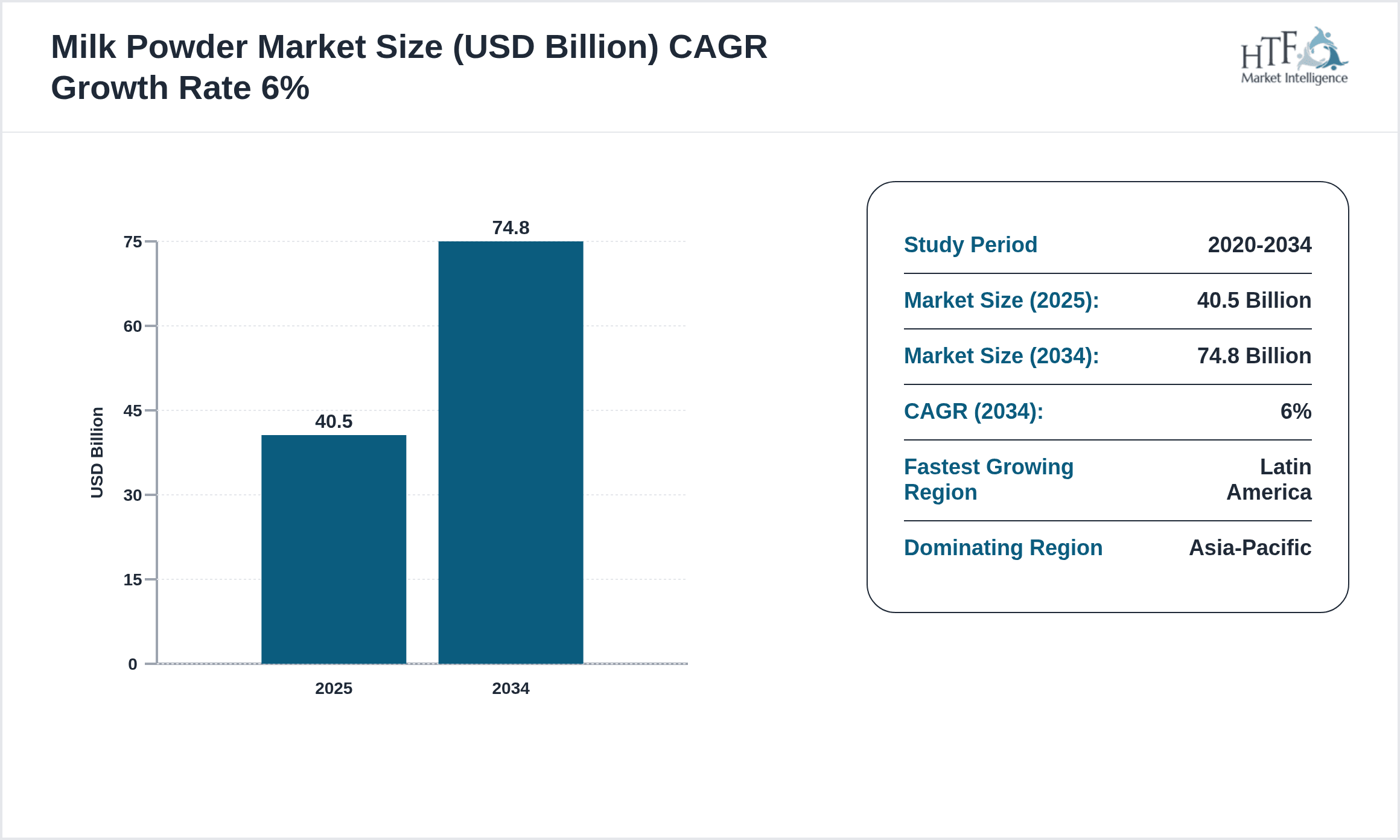
- •Key market highlights include a robust CAGR of 6.0% projected between 2024 and 2034, driven by expanding demand in emerging economies and health-conscious consumer trends favoring organic and specialty milk powders. The base market size was USD 40.5 Billion in 2024, expected to reach USD 74.8 Billion by 2034, reflecting significant growth potential. Asia-Pacific dominates the market in terms of volume and revenue, attributed to large population bases and increasing dairy consumption, whereas Latin America is identified as the fastest-growing region due to rapid urbanization and rising dairy product adoption. Full Cream Milk Powder leads the product segment with the highest market share, but Organic Milk Powder is the fastest growing, propelled by consumer inclination towards natural and chemical-free food options. Infant nutrition remains the primary application, followed closely by food and beverage processing, emphasizing the sector's reliance on milk powder as a nutritional ingredient.
- •The milk powder market holds strategic importance across multiple industries including nutrition, healthcare, and animal husbandry, serving as a crucial ingredient and dietary source. Its value proposition lies in providing a shelf-stable, nutrient-rich alternative to liquid milk, enabling global distribution and year-round availability. This market supports food security in regions with limited fresh milk supply, while also driving innovation in formulations catering to infant nutrition and specialized dietary needs. Stakeholders such as dairy producers, food manufacturers, pharmaceutical companies, and retailers benefit from the market's scalability and diverse application base. Moreover, ongoing investments in organic and fortified milk powders align with consumer trends towards health and wellness, reinforcing the market’s growth trajectory. The evolving regulatory landscape, focusing on quality assurance and safety, further underpins market stability and consumer confidence, highlighting the sector’s integral role in the global food system.
Competitive Landscape
The Global Milk Powder market exhibits intense competition characterized by the presence of multinational corporations and regional players striving for market dominance through product innovation, branding, and supply chain optimization. Market leaders prioritize research and development to introduce value-added products such as organic and fortified milk powders, catering to evolving consumer preferences for health and wellness. Competitive strategies include strategic partnerships, mergers and acquisitions, and geographic expansion to access emerging markets. Companies emphasize sustainability and quality certifications to differentiate offerings and comply with stringent regulatory standards worldwide. Pricing strategies vary according to product type and regional demand dynamics, with premium pricing for specialty powders balanced by volume-driven sales of conventional types. Distribution channels are diversified, ranging from supermarkets and specialty stores to e-commerce platforms, enhancing market reach. The competitive environment also witnesses consolidation trends aimed at achieving economies of scale and enhancing global footprint. Technological advancements in processing and packaging further provide competitive advantages, enabling companies to maintain leadership and adapt to shifting market conditions effectively.
Leading Companies in Milk Powder Market
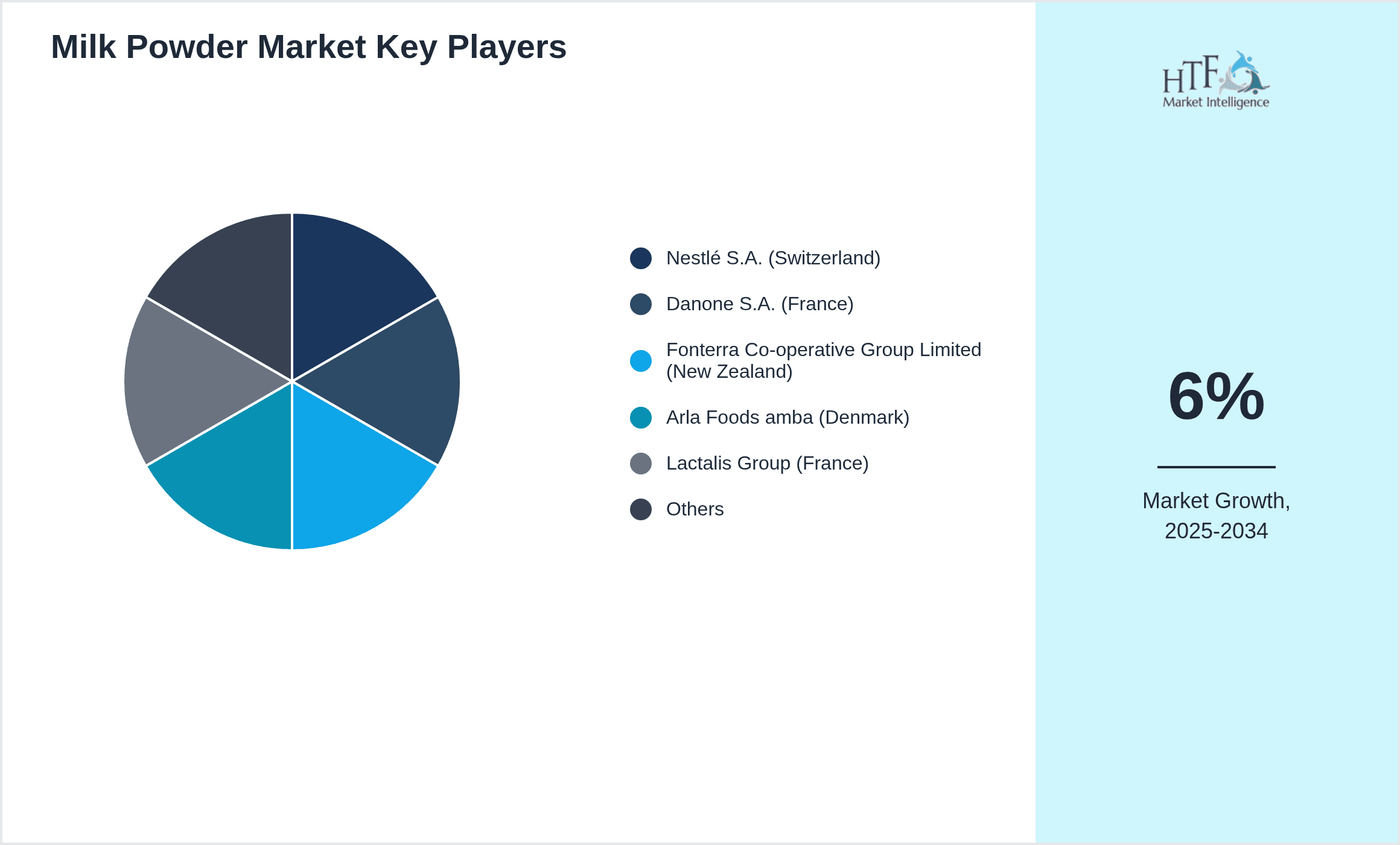
- •Nestlé S.A. (Switzerland)
- •Danone S.A. (France)
- •Fonterra Co-operative Group Limited (New Zealand)
- •Arla Foods amba (Denmark)
- •Lactalis Group (France)
- •FrieslandCampina N.V. (Netherlands)
- •Murray Goulburn Co-operative Co. Limited (Australia)
- •Glanbia plc (Ireland)
- •Yili Group (China)
- •Meiji Holdings Co., Ltd. (Japan)
- •Saputo Inc. (Canada)
- •Dean Foods Company (United States)
- •Arla Foods Ingredients Group P/S (Denmark)
- •Hilmar Cheese Company, Inc. (United States)
- •Volac International Limited (United Kingdom)
- •DMK Deutsches Milchkontor GmbH (Germany)
- •Amul (India)
- •China Mengniu Dairy Company Limited (China)
- •Saputo Dairy Australia (Australia)
- •Agropur Cooperative (Canada)
- •Parmalat S.p.A. (Italy)
- •Nestlé Nutrition (Switzerland)
- •Meiji Co., Ltd. (Japan)
- •Bright Dairy & Food Co., Ltd. (China)
- •Royal FrieslandCampina N.V. (Netherlands)
Market Breakdown
- •By Product Type
- ◦Full Cream Milk Powder
- ◦Skimmed Milk Powder
- ◦Instant Milk Powder
- ◦Organic Milk Powder
- ◦Flavored Milk Powder
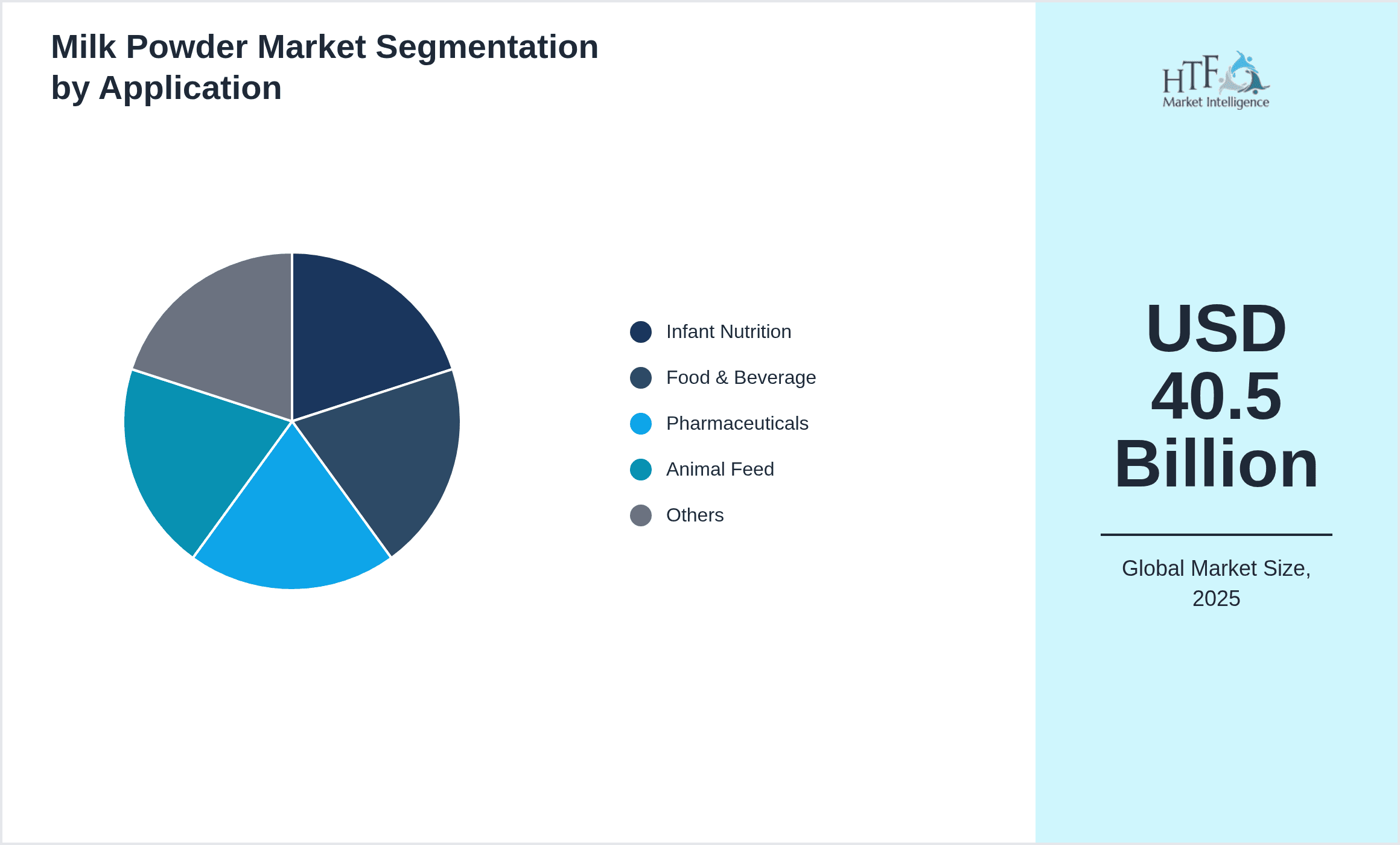
- •By Application
- ◦Infant Nutrition
- ◦Food & Beverage
- ◦Pharmaceuticals
- ◦Animal Feed
- ◦Others
- •By End-Use Industry
- ◦Dairy Industry
- ◦Confectionery and Bakery
- ◦Nutrition and Health
- ◦Animal Husbandry
- •By Distribution Channel
- ◦Supermarkets/Hypermarkets
- ◦Specialty Stores
- ◦Online Retail
- ◦Direct Sales
Growth Dynamics
- •The global milk powder market is fueled by increasing consumer demand for convenient, shelf-stable dairy products, particularly in regions with limited fresh milk supply. Rising awareness of nutritional benefits associated with milk powder, especially in infant nutrition and health supplements, is driving consumption. Technological advancements in drying and packaging processes enhance product quality and shelf life, expanding market reach. Urbanization and changing dietary patterns stimulate demand for processed and fortified milk powders. Additionally, growth in emerging economies with expanding middle-class populations contributes significantly to market expansion.
- •Consumer trends toward organic and natural food products are catalyzing the growth of organic milk powder segment, with increasing preference for chemical-free and sustainable dairy options. Innovations in product formulations, including flavored and fortified powders, address evolving consumer tastes and dietary requirements. Growing applications in pharmaceuticals and animal feed further diversify demand. Moreover, expanding distribution networks, including e-commerce platforms, improve accessibility and convenience for end-users globally.
- •Regulatory support and quality certifications enhance consumer confidence, fostering market growth. Government initiatives promoting dairy farming and exports in key regions strengthen supply chains. Strategic partnerships and mergers among industry players facilitate technology transfer and market penetration. Additionally, investments in cold chain logistics and infrastructure facilitate efficient distribution, enabling rapid market expansion in developing countries.
- •Despite growth opportunities, the market faces challenges such as fluctuating raw milk prices and supply constraints impacting production costs. Stringent food safety regulations require continuous compliance investments by manufacturers. Competition from alternative dairy substitutes and fresh milk limits market expansion in some regions. Environmental concerns related to dairy farming and processing also influence market dynamics. Manufacturers are adapting by focusing on sustainability and product innovation to maintain competitiveness.
- •The ongoing development of fortified and specialized milk powders tailored to specific nutritional needs presents significant opportunities for market participants. Expansion into untapped geographic markets with rising dairy consumption, supported by improved infrastructure, offers growth potential. Digital marketing and online retail channels enable direct consumer engagement, enhancing sales. Furthermore, collaborative research initiatives focusing on product quality and functional benefits create avenues for innovation-driven growth in the global milk powder market.

Market Trends
- •There is a marked shift towards organic and plant-based milk powder alternatives driven by health-conscious consumers seeking sustainable and chemical-free options. This trend is evident in product launches emphasizing natural ingredients and certifications.
- •Technological innovations in spray drying and freeze drying methods improve powder solubility and nutritional retention, enhancing product quality and consumer acceptance.
- •E-commerce and digital platforms have gained prominence as vital distribution channels, enabling manufacturers to reach broader consumer segments and offer personalized product selections.
- •Collaborative partnerships between dairy producers and pharmaceutical companies are increasing to develop specialized milk powders with added health benefits, targeting niche markets.
- •Sustainability initiatives focusing on reducing carbon footprint and water usage in milk powder production are influencing operational practices and consumer perceptions.
- •Expansion of fortified milk powders enriched with vitamins, minerals, and probiotics aligns with growing consumer demand for functional foods supporting immunity and wellness.
- •Regional diversification is observed as manufacturers explore emerging markets in Latin America and Africa, leveraging demographic growth and rising dairy consumption.
Market Opportunities
- •Emerging markets in Latin America and the Middle East present substantial growth opportunities due to increasing dairy consumption and urbanization, supported by improving distribution infrastructure.
- •Development of value-added milk powders with enhanced nutritional profiles for infant nutrition and elderly care segments offers lucrative potential for product differentiation.
- •Investment in sustainable dairy farming practices and eco-friendly processing technologies can attract environmentally conscious consumers and comply with evolving regulations.
- •Expansion of online retail channels enables direct consumer access and personalized marketing approaches, facilitating market penetration in diverse regions.
- •Strategic collaborations between dairy manufacturers and foodservice providers can create new application avenues, increasing product utilization in institutional catering and hospitality sectors.
- •Innovations in packaging solutions enhancing product shelf life and convenience can drive consumer preference and reduce wastage, supporting market growth.
- •Regulatory harmonization across regions can simplify compliance and facilitate international trade expansion for milk powder producers.
Market Challenges
- •Volatility in raw milk supply and prices due to climatic conditions, disease outbreaks, and geopolitical factors poses significant production challenges for milk powder manufacturers.
- •Stringent food safety and quality regulations require continuous investments in compliance, testing, and certification, increasing operational costs.
- •Competition from fresh milk and alternative plant-based dairy substitutes limits market penetration, especially in regions with established fresh milk consumption habits.
- •Environmental concerns related to greenhouse gas emissions and water consumption in dairy farming are intensifying pressure on producers to adopt sustainable practices.
- •Supply chain disruptions, including logistics and cold chain challenges, affect timely product delivery and market availability, particularly in emerging regions.
- •Consumer skepticism about processed food products may restrict demand growth, necessitating transparent communication and education efforts.
- •High capital investment requirements for advanced processing and packaging technologies can be a barrier for smaller industry players.
Regulatory Framework
- •Between 2020 and 2024, key regulations such as the Codex Alimentarius standards for milk powder quality and safety were updated, mandating stricter limits on contaminants and enhanced labeling requirements, significantly impacting global trade compliance.
- •The European Union implemented revised hygiene and traceability regulations for dairy products during 2021-2023, requiring manufacturers to adopt advanced monitoring systems to ensure product integrity and consumer safety.
- •In 2022, the United States Food and Drug Administration (FDA) introduced new guidelines emphasizing allergen labeling and nutritional fortification standards for milk powders, influencing product formulations and marketing.
- •China's General Administration of Customs enhanced import inspection protocols for dairy powders in 2023, including rigorous testing for microbial contamination and authenticity verification to protect domestic consumers.
- •Government incentives promoting organic dairy farming and sustainable production practices were introduced across several regions between 2020 and 2024, offering subsidies and certification support to encourage market growth in organic milk powder segments.
Market Intelligence
- •15th March 2024, Nestlé S.A. launched a new line of fortified organic milk powders targeting infant and elderly nutrition markets. This product features enhanced vitamin and mineral content designed to support immune health and cognitive development. The initiative aligns with growing consumer demand for natural and functional dairy products, expanding Nestlé's presence in the premium milk powder segment globally. The launch includes advanced packaging to preserve nutrient integrity and extends availability through e-commerce platforms to improve consumer accessibility. This strategic move is expected to strengthen Nestlé’s competitive position in the evolving milk powder market.
- •30th November 2023, Danone S.A. introduced an innovative instant milk powder formulation incorporating probiotics and prebiotics to promote digestive health. The product targets health-conscious consumers seeking functional foods and supports Danone’s focus on nutrition-driven growth. Enhanced solubility and taste profile distinguish this launch, creating opportunities in both retail and foodservice channels. Danone’s strategic marketing campaign emphasizes scientific validation and sustainability, reflecting industry trends toward transparency and environmental responsibility.
- •10th July 2023, Fonterra Co-operative Group Limited announced a strategic partnership with a leading biotechnology firm to develop plant-based milk powder alternatives. This collaboration aims to combine dairy expertise with innovative plant protein technologies to address shifting consumer preferences and sustainability goals. The initiative includes joint research projects, pilot production facilities, and plans for commercial rollout within the next two years, positioning Fonterra at the forefront of dairy industry transformation.
- •5th January 2024, Arla Foods amba completed the acquisition of a regional organic milk powder producer to expand its portfolio in the health and wellness segment. This acquisition enhances Arla’s capacity for organic product innovation and strengthens its distribution network in key European markets. The move reflects a broader industry consolidation trend aimed at capturing growing market share in premium dairy categories.
- •Source: Official company press releases, industry publications
Regional Outlook
The Asia-Pacific currently holds a significant share of the market, primarily due to several key factors: increasing consumption rates, a burgeoning population, and robust economic momentum. These elements collectively drive demand, positioning this region as a leader in the market. On the other hand, Latin America is rapidly emerging as the fastest-growing area within the industry. This remarkable growth can be attributed to swift infrastructure development, the expansion of various industrial sectors, and a marked increase in consumer demand. These dynamics make this region a crucial player in shaping future market growth.
In our report, we cover a comprehensive analysis of the following regions and countries:
- North America
- LATAM
- West Europe
- Central & Eastern Europe
- Northern Europe
- Southern Europe
- East Asia
- Southeast Asia
- South Asia
- Central Asia
- Oceania
- MEA
| Feature | Details |
|---|---|
| Base Year Market Size | USD 40.5 Billion |
| Forecast Year Market Size | USD 74.8 Billion |
| CAGR | 6% |
| Forecast Period | 2026 to 2033 |
| YoY Growth | 5.8% |
| Scope of Report | Market is segmented by Product Type (Full Cream Milk Powder, Skimmed Milk Powder, Instant Milk Powder, Organic Milk Powder, Flavored Milk Powder), Application (Infant Nutrition, Food & Beverage, Pharmaceuticals, Animal Feed, Others), End-Use Industry (Dairy Industry, Confectionery and Bakery, Nutrition and Health, Animal Husbandry), Distribution Channel (Supermarkets/Hypermarkets, Specialty Stores, Online Retail, Direct Sales) |
| Regions Covered | North America, LATAM, West Europe, Central & Eastern Europe, Northern Europe, Southern Europe, East Asia, Southeast Asia, South Asia, Central Asia, Oceania, MEA |
| Key Companies | Nestlé S.A. (Switzerland), Danone S.A. (France), Fonterra Co-operative Group Limited (New Zealand), Arla Foods amba (Denmark), Lactalis Group (France) |
Global Milk Powder Market Size, Growth & Revenue 2024-2034 - Table of Contents
Frequently Asked Questions (FAQ):
The Compact Track Loaders market is expected to see value worth 5.3 Billion in 2025.
North America currently leads the market with approximately 45% market share, followed by Europe at 28% and Asia-Pacific at 22%. The remaining regions account for 5% of the global market.
Key growth drivers include increasing construction activities, rising demand for versatile equipment in agriculture, technological advancements in track loader design, and growing preference for compact equipment in urban construction projects.