
Global Ornamental Flower Market Size, Growth & Revenue 2024-2034
Global Ornamental Flower Market is segmented by Product Type (Cut Flowers, Potted Plants, Flowering Shrubs, Bulbs & Tubers, Foliage Plants), Application (Indoor Decoration, Outdoor Landscaping, Event Decoration, Garden Centers, Florist Shops), End-Use Industry (Residential, Commercial, Hospitality, Public Spaces), Distribution Channel (Direct Sales, Retail Stores, Online Platforms), and Geography (North America, LATAM, West Europe, Central & Eastern Europe, Northern Europe, Southern Europe, East Asia, Southeast Asia, South Asia, Central Asia, Oceania, MEA)
Pricing
Report Overview
Executive Summary
- •The global Ornamental Flower market represents a vital segment of the horticulture industry, focusing on the production and distribution of aesthetically appealing flowering plants and foliage used for decoration and landscaping worldwide. This market spans diverse product categories including cut flowers, potted plants, flowering shrubs, bulbs and tubers, and foliage plants, each catering to various consumer needs from indoor beautification to large-scale event decoration. The industry operates through complex supply chains involving nurseries, growers, wholesalers, retailers, and end-users such as garden centers and florists. Driven by urbanization, increased disposable incomes, and environmental consciousness, demand is rising for sustainable and innovative ornamental floral solutions. Additionally, technological advances in cultivation techniques and logistics have enhanced product quality and market reach, boosting global trade and consumption. As consumer preferences evolve towards eco-friendly and personalized floral décor, the market continues to expand with significant opportunities in emerging economies and digital sales platforms.
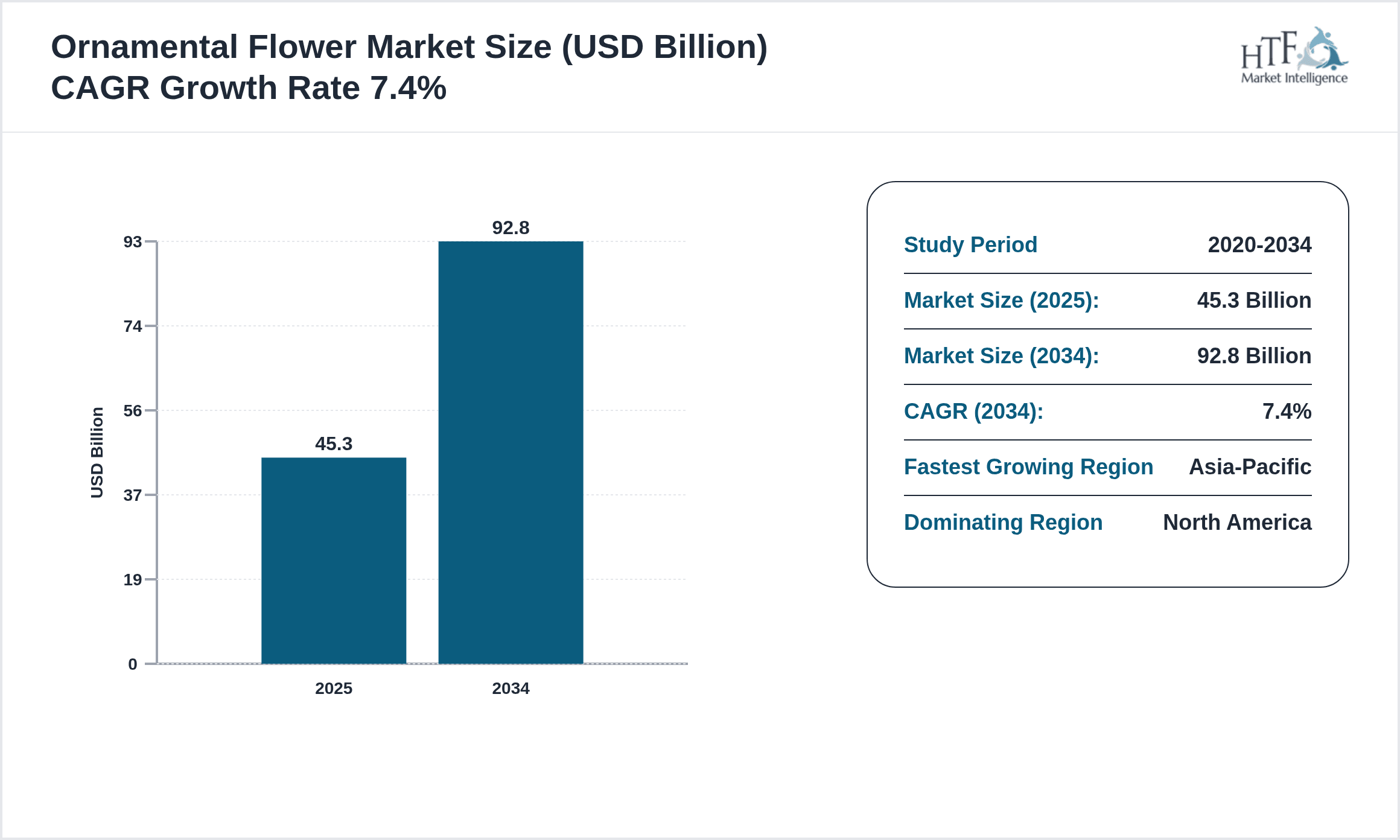
- •Market highlights reveal a projected CAGR of 7.4% from 2024 to 2034, with the market size expected to more than double from USD 45.3 billion in 2024 to USD 92.8 billion by 2034. North America currently dominates market revenue, while Asia-Pacific exhibits the fastest growth owing to rapid urban expansion and increased horticultural investments. Cut flowers lead product type revenue share, yet potted plants are gaining traction fastest due to rising interior landscaping trends. The market’s segmentation into five key application areas reflects diverse consumer usage scenarios, reinforcing the market’s expansive scope and adaptability.
- •The market’s strategic importance lies in its contribution to the green economy, urban planning, and lifestyle enhancement sectors. Ornamental flowers not only improve aesthetics but also promote mental well-being and environmental sustainability. Stakeholders including growers, distributors, landscape designers, and retailers benefit from the expanding market through innovation-driven growth and globalization of supply chains. The sector’s adaptability to technological innovation, evolving consumer preferences, and regulatory frameworks further underscores its long-term revenue potential and resilience against economic fluctuations.
Competitive Landscape
The global Ornamental Flower market is characterized by intense competition among diversified players ranging from multinational horticultural corporations to regional nurseries and specialty growers. Market leaders focus heavily on innovation in breeding techniques, sustainable cultivation practices, and expanding product portfolios to meet shifting consumer demands. Strategic collaborations, mergers, and acquisitions are common to consolidate market share and enhance geographic penetration. Competitive strategies also include diversification into related segments such as landscaping services and ornamental plant care products. Furthermore, companies leverage technological advancements in supply chain management and e-commerce platforms to improve distribution efficiency and customer engagement. Regional players often capitalize on local varieties and indigenous cultivation knowledge to differentiate their offerings. The competitive rivalry drives continuous improvement in product quality, pricing strategies, and marketing approaches, fostering an environment of dynamic market evolution and expansion.
Leading Companies in Ornamental Flower Market
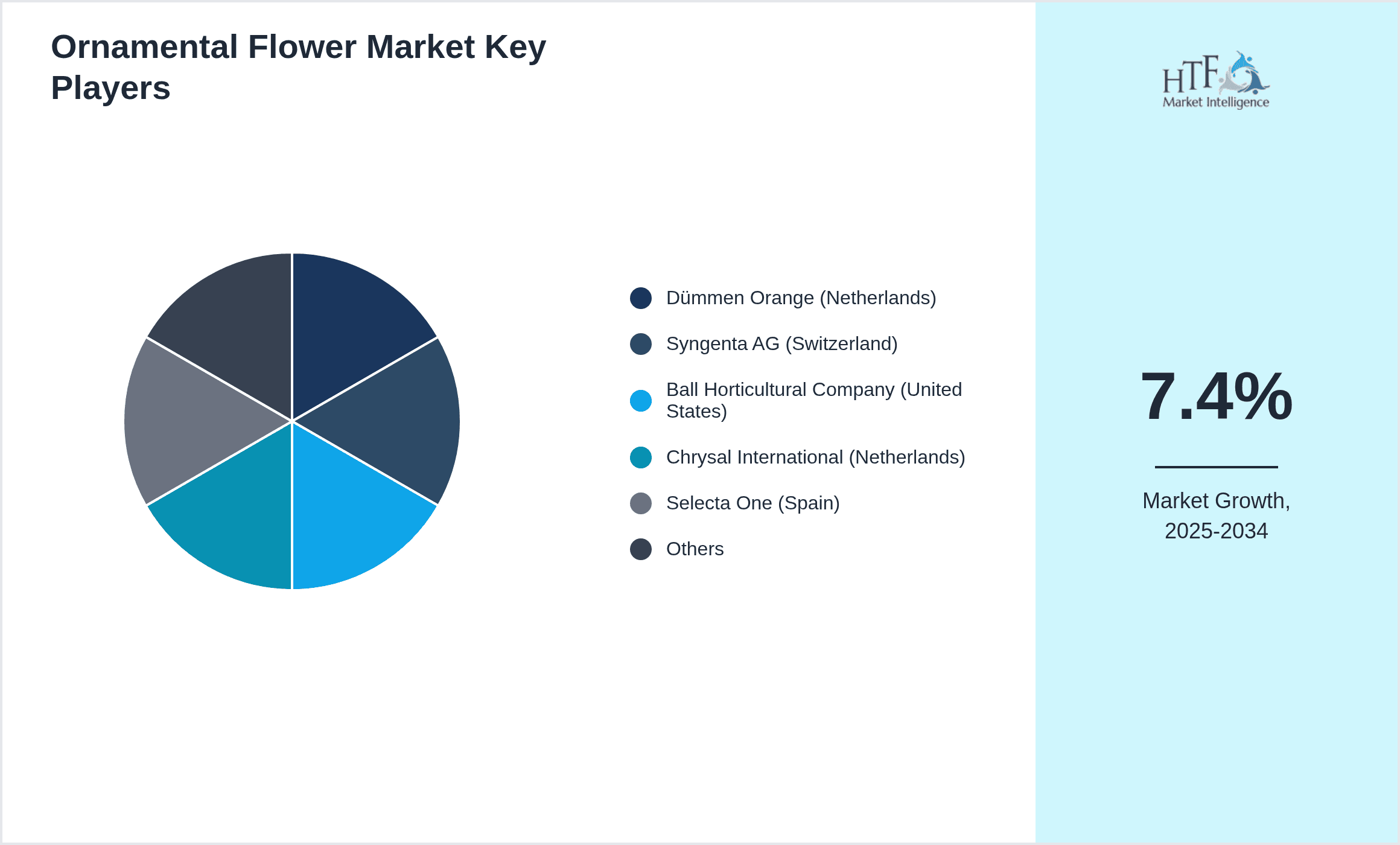
- •Dümmen Orange (Netherlands)
- •Syngenta AG (Switzerland)
- •Ball Horticultural Company (United States)
- •Chrysal International (Netherlands)
- •Selecta One (Spain)
- •Florensis (Netherlands)
- •Westland Horticulture (Netherlands)
- •PanAmerican Seed (United States)
- •Benary (Germany)
- •Sakata Seed Corporation (Japan)
- •Takii & Co., Ltd. (Japan)
- •Danziger 'Dan' Flower Farm (Israel)
- •Ball Seed (United States)
- •Beekenkamp Plants (Netherlands)
- •Ecke Ranch (United States)
- •Kieft Seed (Netherlands)
- •PanAmerican Seed (United States)
- •Dalefoot Composts (United Kingdom)
- •Gloeckner Seeds (United States)
- •Rijk Zwaan (Netherlands)
- •Takii & Co. Ltd. (Japan)
- •Sakata Seed America (United States)
- •Van Belle Nursery (United States)
- •Syngenta Flowers (Switzerland)
- •PanAmerican Seed (United States)
Market Breakdown
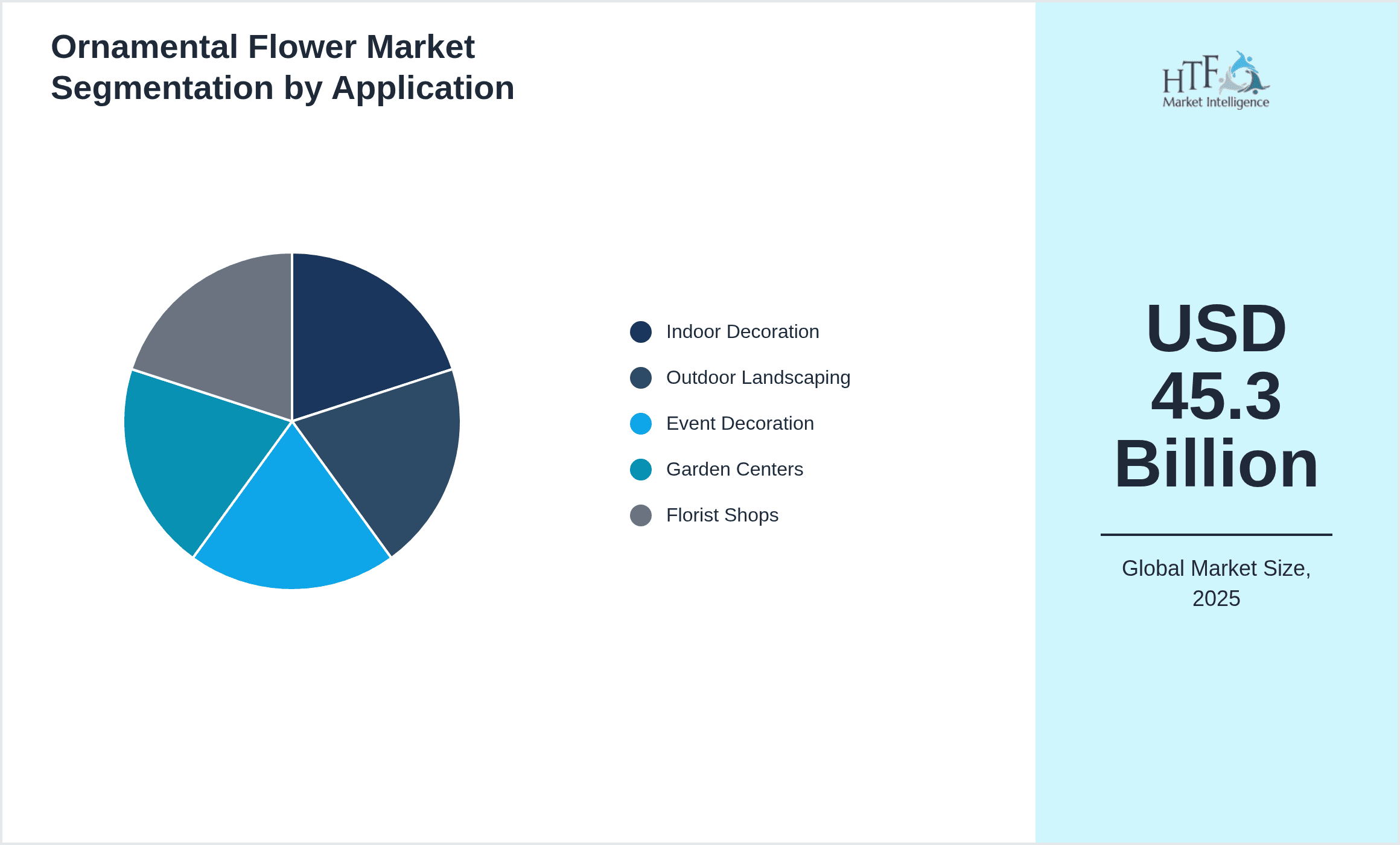
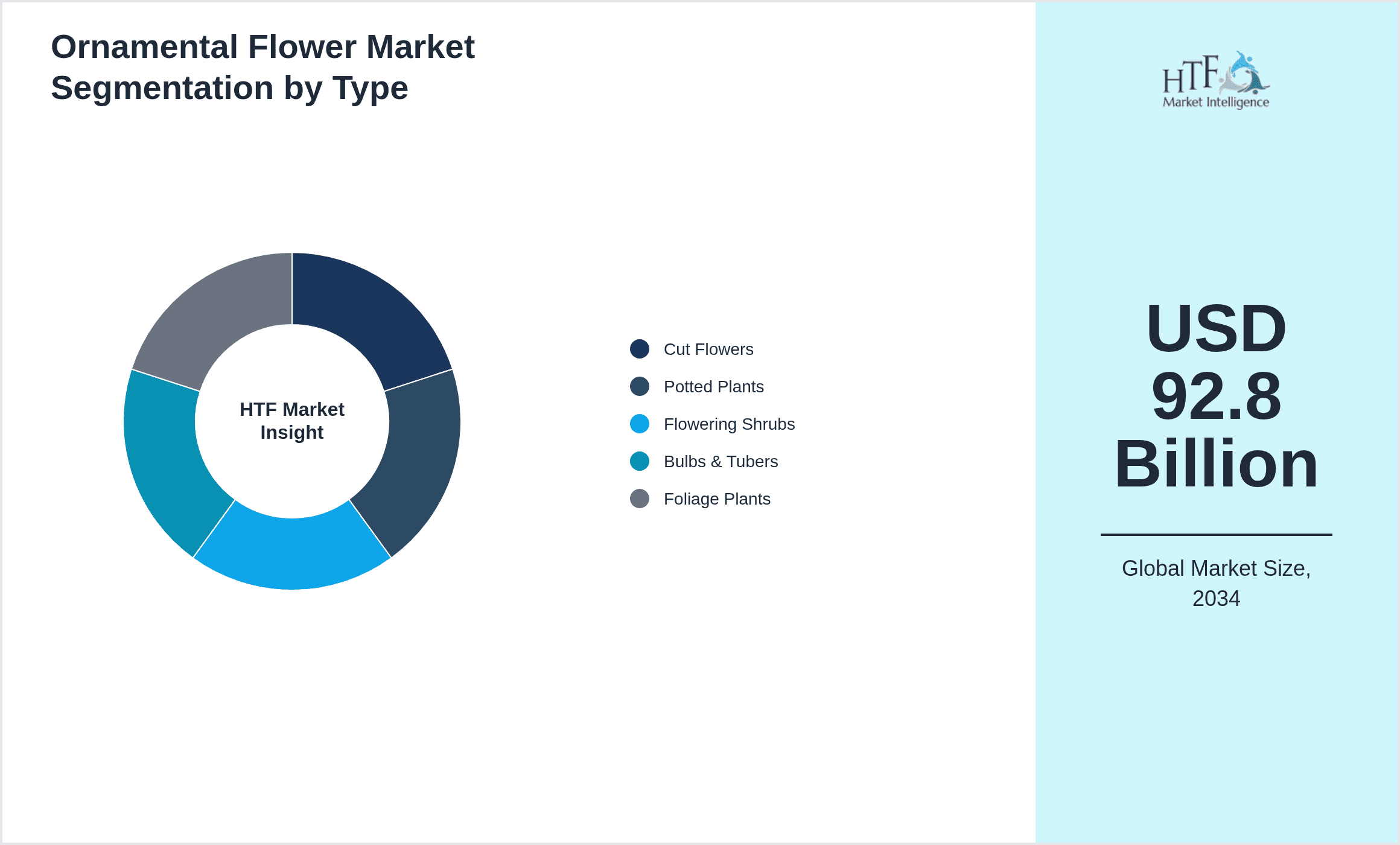
- •By Product Type
- ◦Cut Flowers
- ◦Potted Plants
- ◦Flowering Shrubs
- ◦Bulbs & Tubers
- ◦Foliage Plants
- •By Application
- ◦Indoor Decoration
- ◦Outdoor Landscaping
- ◦Event Decoration
- ◦Garden Centers
- ◦Florist Shops
- •By End-Use Industry
- ◦Residential
- ◦Commercial
- ◦Hospitality
- ◦Public Spaces
- •By Distribution Channel
- ◦Direct Sales
- ◦Retail Stores
- ◦Online Platforms
Growth Dynamics
- •Increasing urbanization and the expansion of residential and commercial infrastructures worldwide are significant growth drivers, fueling demand for ornamental flowers used in landscaping and interior decoration. This trend is especially prominent in emerging markets where urban green spaces are prioritized.
- •Rising environmental awareness and consumer preference for sustainable and eco-friendly products are steering the market towards organic cultivation methods and biodegradable packaging, enhancing market appeal among environmentally conscious buyers.
- •Technological advancements in plant breeding and greenhouse automation improve product quality and yield, enabling producers to meet increasing demand efficiently while reducing resource consumption and operational costs.
- •The proliferation of e-commerce platforms has transformed distribution channels, expanding market access and providing consumers with convenient options to purchase ornamental flowers globally, thereby driving market growth.
- •Government initiatives promoting urban greenery and landscaping projects, coupled with subsidies for horticultural development, provide significant impetus for the ornamental flower market across various regions.
- •Cultural trends and increased spending on events such as weddings and festivals elevate demand for decorative floral arrangements, supporting sustained market expansion.
- •Investment in research and development by key market players to introduce novel flower varieties and enhance disease resistance contributes to product differentiation and competitive advantage.
Market Trends
- •There is a growing trend towards the use of native and drought-resistant ornamental plants, reflecting environmental concerns and water conservation efforts, particularly in regions facing climate change impacts.
- •Integration of smart technology in greenhouse management, including sensors and IoT devices, is improving cultivation precision and reducing waste, transforming traditional horticultural practices.
- •The rise of personalized floral gifting services and subscription-based models is reshaping consumer purchasing behavior, increasing recurring sales and customer loyalty.
- •Sustainability-focused packaging innovations using recycled materials are becoming standard, aligning with global environmental regulations and consumer expectations.
- •Collaborations between flower growers and event management companies are enhancing market reach and creating new revenue streams through bespoke floral designs and installations.
- •Digital marketing and social media platforms are playing a pivotal role in influencing consumer preferences and expanding market awareness for ornamental flowers worldwide.
- •Emergence of exotic and rare flower varieties is attracting niche consumer segments, driving product diversification and premium pricing opportunities.
Market Opportunities
- •Expanding urban landscaping projects in developing economies offer lucrative opportunities for market players to introduce cost-effective and resilient ornamental flower varieties tailored to local climates.
- •The growing popularity of eco-tourism and botanical gardens worldwide creates demand for unique and indigenous ornamental plants, enabling product diversification and new market segments.
- •Investment in biotechnology to develop pest-resistant and longer-lasting flower varieties presents significant potential for improving supply chain efficiency and reducing losses.
- •Digital transformation of the distribution network through online marketplaces and direct-to-consumer platforms offers expanded reach and enhanced customer engagement.
- •Collaborative ventures between horticultural companies and urban planners can facilitate integrated green infrastructure projects, opening avenues for sustained demand growth.
- •Development of value-added services such as floral design consultancy and maintenance contracts can generate additional revenue streams and strengthen client relationships.
- •Emerging markets in Latin America and the Middle East & Africa present untapped potential due to increasing disposable incomes and evolving lifestyle preferences favoring ornamental plants.
Market Challenges
- •The perishable nature of ornamental flowers requires efficient cold chain logistics and handling, posing challenges in maintaining product quality across long-distance shipments.
- •Fluctuating climatic conditions and vulnerability to pests and diseases can disrupt production cycles, impacting supply consistency and raising costs.
- •High labor intensity and dependence on skilled horticultural workers increase operational costs and expose the industry to workforce availability risks.
- •Stringent pesticide regulations and environmental compliance requirements can limit the use of certain chemicals, necessitating investment in alternative pest management solutions.
- •Intense competition from synthetic decorative alternatives and shifting consumer preferences towards low-maintenance plants may restrain market growth.
- •Price volatility in raw materials such as fertilizers and packaging materials can affect profit margins and pricing strategies.
- •Supply chain disruptions caused by geopolitical tensions and global pandemics pose risks to timely product delivery and market stability.
Regulatory Framework
- •Between 2019 and 2024, several countries implemented stricter regulations on pesticide residues in ornamental plants, requiring compliance with maximum residue limits to ensure consumer safety and environmental protection. These regulations have prompted growers to adopt integrated pest management and organic alternatives.
- •New import-export protocols established in key markets such as the European Union and North America increased phytosanitary inspection rigor, affecting cross-border trade and encouraging the development of certified disease-free plant materials.
- •Environmental sustainability mandates introduced between 2020 and 2024 have led to the phasing out of single-use plastic packaging in the ornamental flower supply chain, promoting biodegradable and recyclable alternatives.
- •Government incentives and subsidies for urban greening projects have been expanded globally, with many regions incentivizing the use of native ornamental species to support biodiversity and ecosystem restoration efforts.
- •Labor laws related to the horticulture sector have tightened, mandating improved worker safety standards and fair wage practices, impacting operational costs and prompting automation investments.
Market Intelligence
- •15th January 2025, Dümmen Orange unveiled a new line of drought-resistant potted plants designed for urban indoor environments. This launch incorporates advanced breeding techniques to enhance longevity and reduce water consumption, targeting eco-conscious consumers and commercial clients seeking sustainable decor options. The product features improved resistance to common indoor pests and adapts to low-light conditions, broadening its appeal in global markets. The initiative aligns with growing urban greening trends and demonstrates the company's commitment to innovation and environmental responsibility. Source: Official company website
- •10th March 2025, Syngenta AG introduced an innovative biodegradable packaging solution for cut flowers aimed at reducing plastic waste in the supply chain. This packaging utilizes plant-based materials that degrade within six months post-use, meeting stringent environmental regulations and consumer demand for sustainability. The solution enhances product freshness while minimizing ecological footprint, positioning Syngenta as a leader in sustainable horticultural practices. The launch is expected to influence packaging standards industry-wide, driving broader adoption of eco-friendly materials. Source: Industry publication
- •22nd May 2025, Ball Horticultural Company announced a strategic partnership with a leading botanical garden network to develop exclusive flower varieties tailored for public landscaping projects. This collaboration focuses on creating resilient, low-maintenance ornamental plants that support biodiversity and are aesthetically versatile. The initiative enables Ball Horticultural to expand its presence in institutional markets and showcases its R&D capabilities in breeding innovation. The partnership also aims to educate the public on sustainable gardening practices through demonstration gardens. Source: Official press release
- •5th July 2025, Florensis completed the acquisition of a regional nursery specializing in exotic flowering shrubs, enhancing its product portfolio and geographic footprint in emerging markets. This move strengthens Florensis' competitive position by integrating unique plant varieties and experienced cultivation expertise. The acquisition supports the company's growth strategy focused on diversification and meeting rising demand for rare ornamental plants globally. It also facilitates supply chain synergies and broadens customer access. Source: Company website
Regional Outlook
The North America currently holds a significant share of the market, primarily due to several key factors: increasing consumption rates, a burgeoning population, and robust economic momentum. These elements collectively drive demand, positioning this region as a leader in the market. On the other hand, Asia-Pacific is rapidly emerging as the fastest-growing area within the industry. This remarkable growth can be attributed to swift infrastructure development, the expansion of various industrial sectors, and a marked increase in consumer demand. These dynamics make this region a crucial player in shaping future market growth.
In our report, we cover a comprehensive analysis of the following regions and countries:
- North America
- LATAM
- West Europe
- Central & Eastern Europe
- Northern Europe
- Southern Europe
- East Asia
- Southeast Asia
- South Asia
- Central Asia
- Oceania
- MEA
| Feature | Details |
|---|---|
| Base Year Market Size | USD 45.3 Billion |
| Forecast Year Market Size | USD 92.8 Billion |
| CAGR | 7.4% |
| Forecast Period | 2026 to 2033 |
| YoY Growth | 7.2% |
| Scope of Report | Market is segmented by Product Type (Cut Flowers, Potted Plants, Flowering Shrubs, Bulbs & Tubers, Foliage Plants), Application (Indoor Decoration, Outdoor Landscaping, Event Decoration, Garden Centers, Florist Shops), End-Use Industry (Residential, Commercial, Hospitality, Public Spaces), Distribution Channel (Direct Sales, Retail Stores, Online Platforms) |
| Regions Covered | North America, LATAM, West Europe, Central & Eastern Europe, Northern Europe, Southern Europe, East Asia, Southeast Asia, South Asia, Central Asia, Oceania, MEA |
| Key Companies | Dümmen Orange (Netherlands), Syngenta AG (Switzerland), Ball Horticultural Company (United States), Chrysal International (Netherlands), Selecta One (Spain), Florensis (Netherlands), Westland Horticulture (Netherlands), PanAmerican Seed (United States), Benary (Germany), Sakata Seed Corporation (Japan), Takii & Co., Ltd. (Japan), Danziger 'Dan' Flower Farm (Israel), Ball Seed (United States), Beekenkamp Plants (Netherlands), Ecke Ranch (United States), Kieft Seed (Netherlands), PanAmerican Seed (United States), Dalefoot Composts (United Kingdom), Gloeckner Seeds (United States), Rijk Zwaan (Netherlands), Takii & Co. Ltd. (Japan), Sakata Seed America (United States), Van Belle Nursery (United States), Syngenta Flowers (Switzerland), PanAmerican Seed (United States) |
Global Ornamental Flower Market Size, Growth & Revenue 2024-2034 - Table of Contents
Frequently Asked Questions (FAQ):
The Compact Track Loaders market is expected to see value worth 5.3 Billion in 2025.
North America currently leads the market with approximately 45% market share, followed by Europe at 28% and Asia-Pacific at 22%. The remaining regions account for 5% of the global market.
Key growth drivers include increasing construction activities, rising demand for versatile equipment in agriculture, technological advancements in track loader design, and growing preference for compact equipment in urban construction projects.