
Global Packaged Muesli Products Market Size, Growth & Revenue 2025-2034
Global Packaged Muesli Products Market is segmented by Type (Organic Packaged Muesli, Gluten-Free Packaged Muesli, Conventional Packaged Muesli, High Fiber Packaged Muesli, Low Sugar Packaged Muesli), Application (Breakfast, Snacks, Health & Wellness, Sports Nutrition, Others), End-Use Industry (Retail, Food Service, Online Retail, Specialty Stores), Distribution Channel (Supermarkets/Hypermarkets, Convenience Stores, Online Channels), and Geography (North America, LATAM, West Europe, Central & Eastern Europe, Northern Europe, Southern Europe, East Asia, Southeast Asia, South Asia, Central Asia, Oceania, MEA)
Pricing
Report Overview
Executive Summary
- •The Global Packaged Muesli Products Market comprises ready-to-eat cereal blends made from oats, grains, nuts, seeds, and dried fruits. These products fulfill consumer demand for nutritious, convenient, and wholesome breakfast and snacking options. The market scope includes diverse product types such as organic, gluten-free, conventional, high fiber, and low sugar, catering to various dietary requirements and preferences. Applications cover breakfast consumption, health and wellness, sports nutrition, and general snacking. Distribution channels include supermarkets, online platforms, health food stores, and convenience outlets worldwide. Rising health awareness, changing lifestyles, and a shift towards natural and functional foods drive market expansion globally. Technological advances in food processing and packaging enhance product shelf-life and appeal. The market holds strategic importance due to its alignment with global nutrition trends, increasing demand for clean-label products, and expanding consumer base seeking balanced diets.
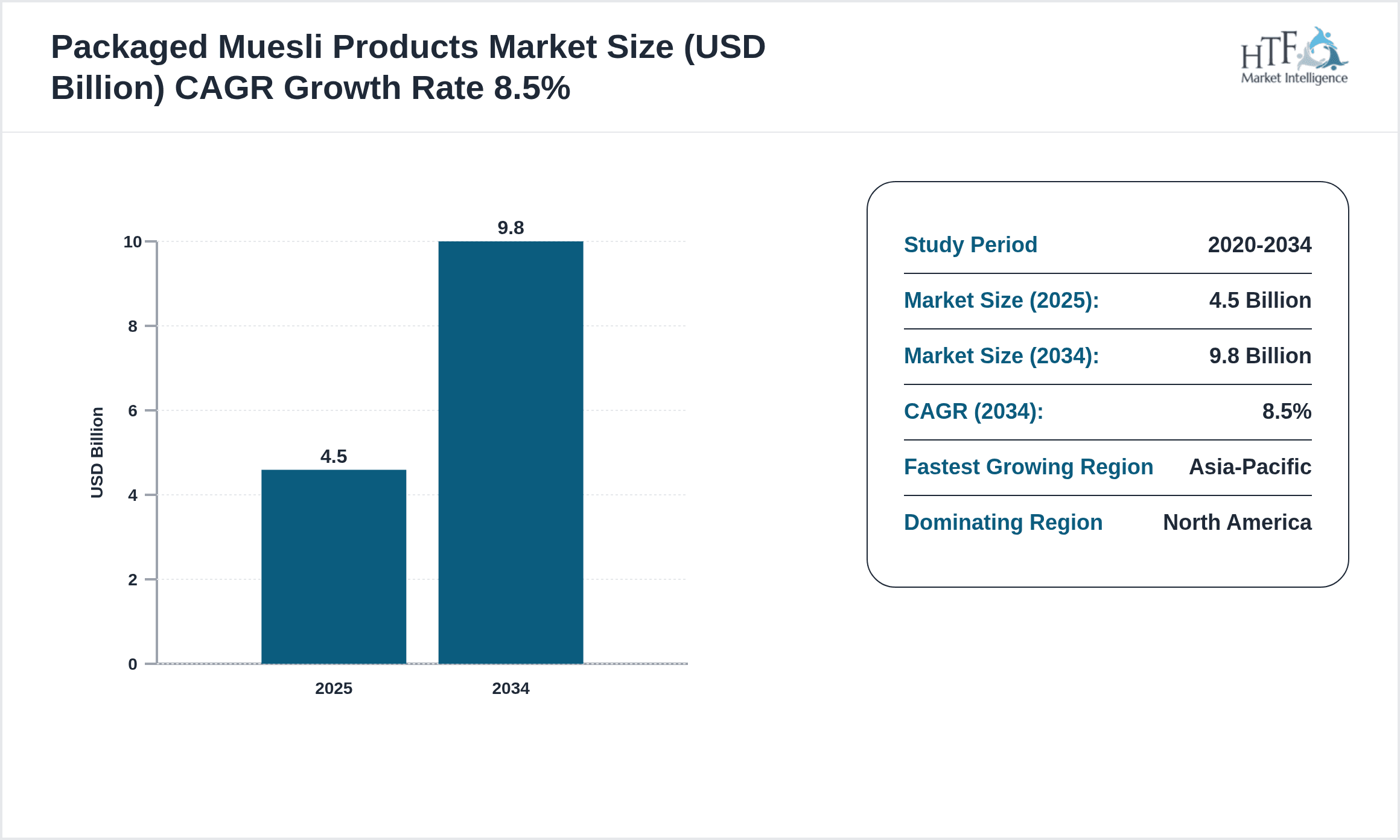
- •Key highlights include a base market size of USD 4.5 Billion in 2025, forecasted to reach USD 9.8 Billion by 2034 at a CAGR of 8.5 percent. North America leads with a 32 percent market share, followed by Europe and Asia-Pacific. The organic segment dominates product types, while gluten-free products exhibit the fastest growth trajectory. Application-wise, breakfast remains the largest segment, with health and wellness gaining significant momentum. The market experiences robust year-over-year growth driven by consumer preferences for healthy, convenient food options and innovations in product formulations and packaging.
- •The packaged muesli market offers strategic value to food manufacturers, retailers, and health-conscious consumers by providing nutritious and convenient meal solutions. It supports industry objectives toward sustainability, clean-label products, and enhanced nutrition. Stakeholders benefit from expanding global demand, evolving consumer diets, and continuous innovation in flavors and formats. The market also plays a critical role in promoting healthy lifestyles and addressing dietary restrictions, reinforcing its significance across food, health, and wellness sectors worldwide.
Competitive Landscape
Competition within the Global Packaged Muesli Products Market is shaped by companies pursuing diverse strategies to maintain and grow their market presence. Leading players focus on product innovation by introducing organic, gluten-free, and high-fiber variants that cater to evolving consumer preferences. Strategic partnerships with ingredient suppliers, retailers, and online platforms enhance distribution reach and brand visibility. Global expansion into emerging markets is a key growth tactic, supported by localized product development to meet regional taste and nutritional requirements. Companies leverage technological adoption in manufacturing and packaging to improve product shelf-life, quality, and sustainability credentials. Mergers and acquisitions facilitate market consolidation and portfolio diversification. Pricing strategies vary to balance affordability with premium product positioning, addressing different consumer segments. Investment in marketing and digital engagement strengthens brand equity and consumer loyalty. Overall, firms combine innovation, collaboration, and expansion to compete effectively in this dynamic and growing market.
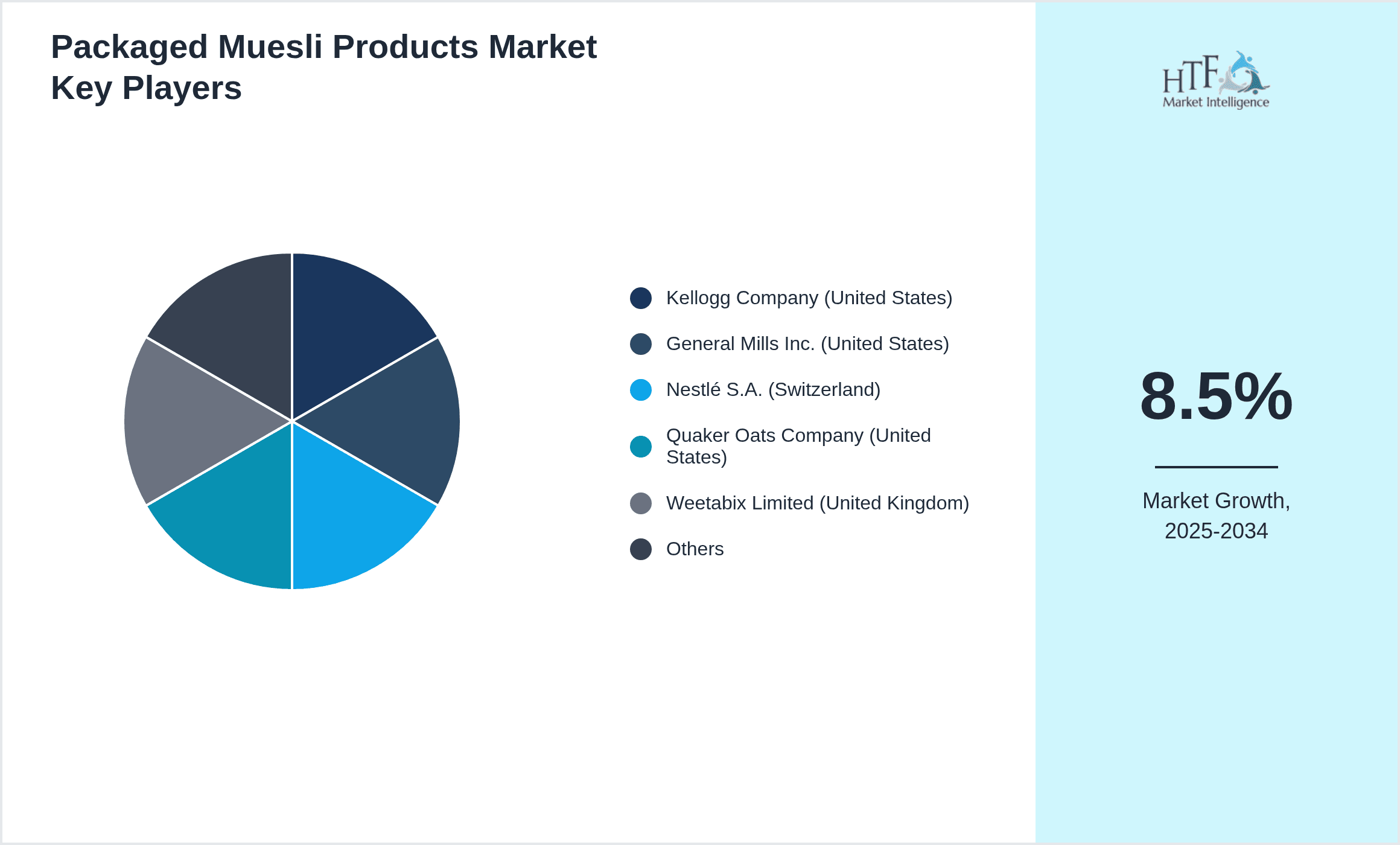
Leading Companies in Packaged Muesli Products Market
- •Kellogg Company (United States)
- •General Mills Inc. (United States)
- •Nestlé S.A. (Switzerland)
- •Quaker Oats Company (United States)
- •Weetabix Limited (United Kingdom)
- •Hero Group (Switzerland)
- •Nature's Path Foods Inc. (Canada)
- •Alpen Food Ltd. (United Kingdom)
- •Bob's Red Mill Natural Foods (United States)
- •Freedom Foods Group Limited (Australia)
- •Cereal Partners Worldwide (Switzerland)
- •Kraft Heinz Company (United States)
- •Post Consumer Brands (United States)
- •Nature Valley (United States)
- •Barilla Group (Italy)
- •B&G Foods, Inc. (United States)
- •Danone S.A. (France)
- •PepsiCo, Inc. (United States)
- •Sunshine Mills, Inc. (United States)
- •The Hain Celestial Group, Inc. (United States)
Market Breakdown
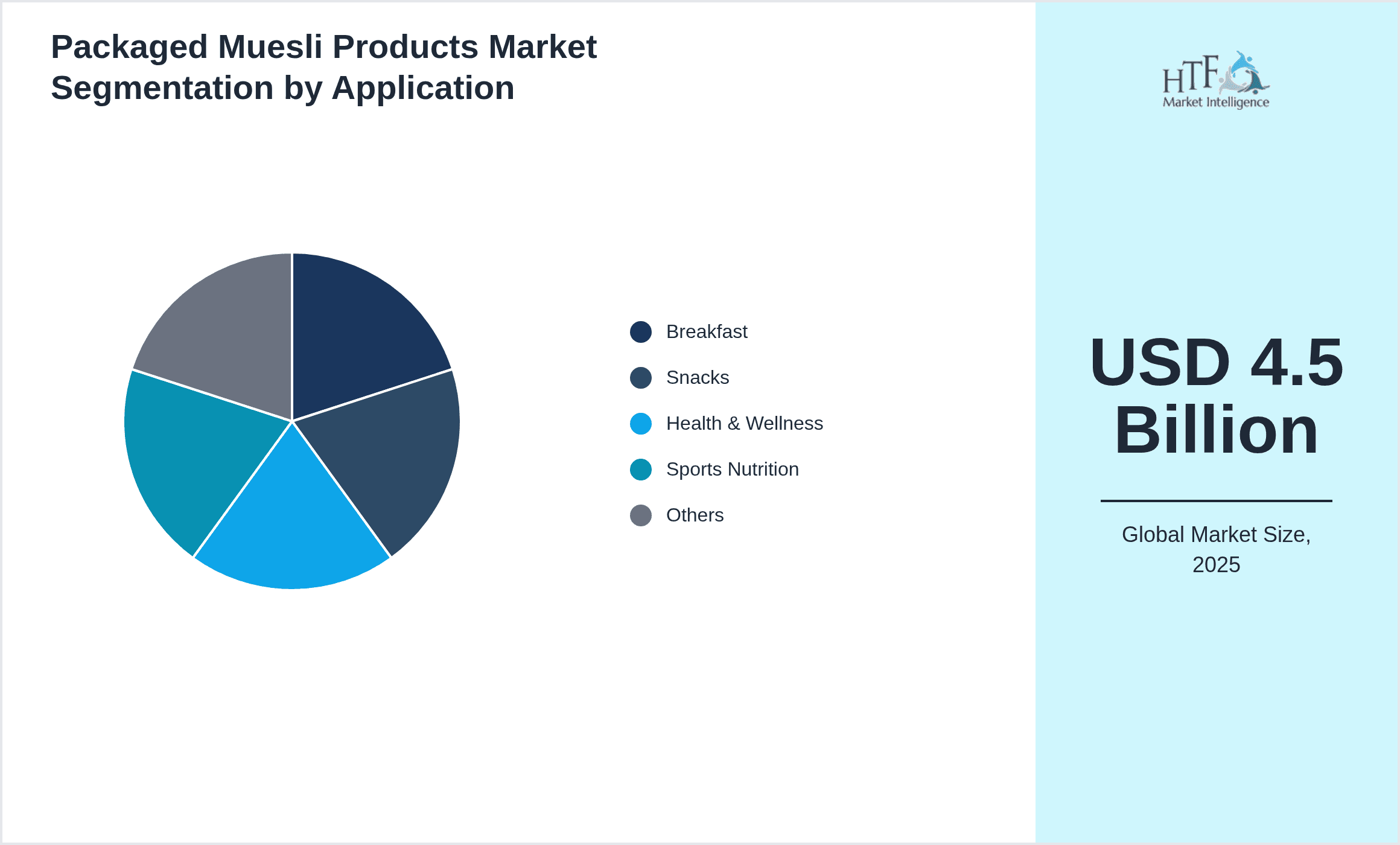
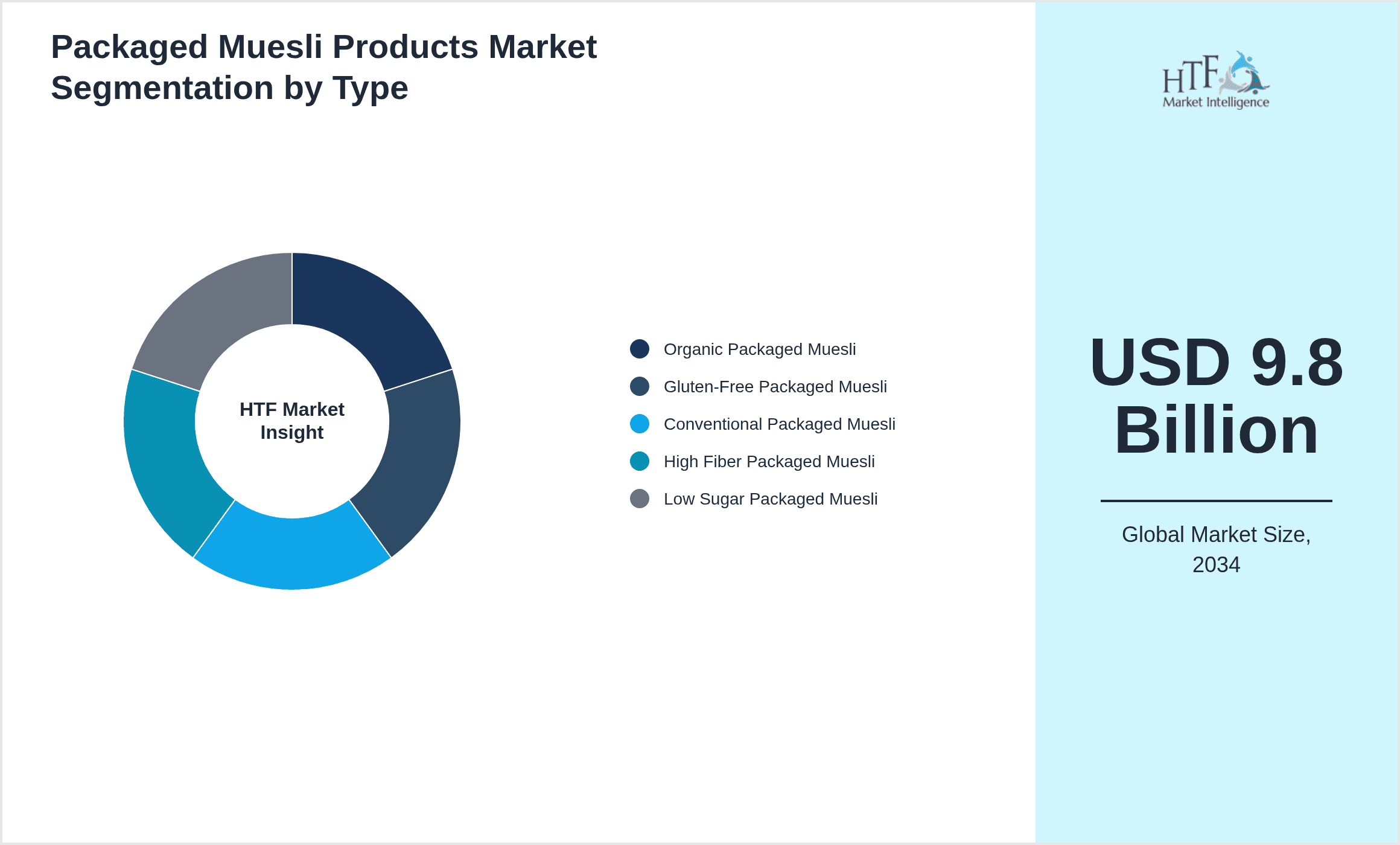
- •By Type
- ◦Organic Packaged Muesli
- ◦Gluten-Free Packaged Muesli
- ◦Conventional Packaged Muesli
- ◦High Fiber Packaged Muesli
- ◦Low Sugar Packaged Muesli
- •By Application
- ◦Breakfast
- ◦Snacks
- ◦Health & Wellness
- ◦Sports Nutrition
- ◦Others
- •By End-Use Industry
- ◦Retail
- ◦Food Service
- ◦Online Retail
- ◦Specialty Stores
- •By Distribution Channel
- ◦Supermarkets/Hypermarkets
- ◦Convenience Stores
- ◦Online Channels
Growth Dynamics
The Global Packaged Muesli Products Market experiences robust growth propelled by increasing consumer focus on health and nutrition. Rising awareness of dietary benefits associated with whole grains, fiber, and natural ingredients fuels demand across all regions, particularly in North America and Europe. Convenience-driven lifestyles support adoption of easy-to-prepare breakfast and snack options. Innovation in product formulations such as organic and gluten-free varieties attracts consumers with specific dietary needs. Recent launches of plant-based and low-sugar muesli products by leading companies have expanded consumer choices. Expansion of e-commerce platforms facilitates wider market reach and accessibility. Additionally, rising disposable incomes in emerging markets like Asia-Pacific encourage premium product consumption. Strategic marketing and endorsements by nutrition experts further enhance market traction. Overall, demand growth results from a blend of health consciousness, convenience, innovation, and expanding distribution networks.
Market Trends
Increasing consumer preference for clean-label and organic products drives innovation in the packaged muesli market. Companies integrate superfoods, ancient grains, and functional ingredients such as chia seeds and flaxseeds to enhance nutritional profiles. Digital marketing and influencer endorsements amplify product visibility and consumer engagement. Sustainable packaging and environmentally friendly sourcing are becoming standard expectations, influencing purchasing decisions. Growth of online grocery shopping accelerates access to niche and premium muesli products worldwide. Regional customization of flavors and ingredient blends addresses diverse taste preferences across Asia-Pacific and Latin America. Product diversification into snack bars and on-the-go formats meets the needs of busy consumers. Collaborations between food technologists and nutritionists foster development of tailored offerings. These trends collectively shape future market dynamics and growth trajectories.
Market Opportunities
Emerging markets offer significant growth potential for packaged muesli products driven by increasing urbanization and rising health awareness. Expansion into Asia-Pacific and Latin America through localized product development presents lucrative opportunities. Integration of functional ingredients targeting specific health benefits such as digestive health, heart health, and weight management caters to evolving consumer demands. Adoption of e-commerce and direct-to-consumer sales models enhances market penetration and consumer data analytics. Collaboration with fitness and wellness brands helps position muesli products as part of holistic lifestyle solutions. Investment in sustainable and eco-friendly packaging aligns with global environmental priorities, attracting environmentally conscious consumers. Innovation in flavor profiles and convenience formats addresses diverse consumer lifestyles. These opportunities encourage market participants to diversify offerings and expand geographical reach for sustained revenue growth.
Market Challenges
The Global Packaged Muesli Products Market faces challenges including fluctuating raw material prices impacting production costs. Supply chain disruptions, especially for organic and specialty ingredients, affect timely deliveries and product availability. Regulatory compliance across multiple regions regarding food labeling, health claims, and ingredient standards increases operational complexity. Intense competition from alternative healthy breakfast products such as granola and protein bars pressures market share. Consumer skepticism regarding product authenticity and nutritional benefits necessitates transparent sourcing and marketing. High price points of premium muesli variants limit accessibility in price-sensitive markets. Additionally, packaging waste concerns require investment in sustainable materials, increasing costs. Companies must address these challenges through efficient sourcing, regulatory adherence, and consumer education to maintain competitiveness and profitability.
Regulatory Framework
In the past five years, global regulations have increasingly emphasized accurate labeling, allergen declarations, and permissible health claims for packaged food products including muesli. The European Union's Food Information to Consumers Regulation mandates clear ingredient lists and nutritional information, impacting packaging standards. North American regulations under the FDA require compliance with the Nutrition Facts label and gluten-free certification criteria for relevant products. Additionally, organic certification standards globally have tightened to ensure product authenticity and sustainability. Recent regulatory updates also focus on reducing added sugars and artificial additives to address public health concerns. Companies must adhere to these evolving frameworks to ensure market access and consumer trust. Regulatory monitoring and proactive compliance planning remain critical for global players navigating diverse regional requirements.
Market Intelligence
- •Recent market developments and strategic initiatives are continuously tracked through industry publications, company announcements, and regulatory filings. For the most current information, stakeholders are advised to monitor official corporate communications and recognized market intelligence platforms.
- •Recent market developments and strategic initiatives are continuously tracked through industry publications, company announcements, and regulatory filings. For the most current information, stakeholders are advised to monitor official corporate communications and recognized market intelligence platforms.
- •Recent market developments and strategic initiatives are continuously tracked through industry publications, company announcements, and regulatory filings. For the most current information, stakeholders are advised to monitor official corporate communications and recognized market intelligence platforms.
- •Recent market developments and strategic initiatives are continuously tracked through industry publications, company announcements, and regulatory filings. For the most current information, stakeholders are advised to monitor official corporate communications and recognized market intelligence platforms.
- •Source: Industry Publications, Company Announcements, Regulatory Agencies
Regional Outlook
The North America currently holds a significant share of the market, primarily due to several key factors: increasing consumption rates, a burgeoning population, and robust economic momentum. These elements collectively drive demand, positioning this region as a leader in the market. On the other hand, Asia-Pacific is rapidly emerging as the fastest-growing area within the industry. This remarkable growth can be attributed to swift infrastructure development, the expansion of various industrial sectors, and a marked increase in consumer demand. These dynamics make this region a crucial player in shaping future market growth.
In our report, we cover a comprehensive analysis of the following regions and countries:
- North America
- LATAM
- West Europe
- Central & Eastern Europe
- Northern Europe
- Southern Europe
- East Asia
- Southeast Asia
- South Asia
- Central Asia
- Oceania
- MEA
| Feature | Details |
|---|---|
| Base Year Market Size | USD 4.5 Billion |
| Forecast Year Market Size | USD 9.8 Billion |
| CAGR | 8.5% |
| Forecast Period | 2026 to 2033 |
| YoY Growth | 8.2% |
| Scope of Report | Market is segmented by Type (Organic Packaged Muesli, Gluten-Free Packaged Muesli, Conventional Packaged Muesli, High Fiber Packaged Muesli, Low Sugar Packaged Muesli), Application (Breakfast, Snacks, Health & Wellness, Sports Nutrition, Others), End-Use Industry (Retail, Food Service, Online Retail, Specialty Stores), Distribution Channel (Supermarkets/Hypermarkets, Convenience Stores, Online Channels) |
| Regions Covered | North America, LATAM, West Europe, Central & Eastern Europe, Northern Europe, Southern Europe, East Asia, Southeast Asia, South Asia, Central Asia, Oceania, MEA |
| Key Companies | Kellogg Company (United States), General Mills Inc. (United States), Nestlé S.A. (Switzerland), Quaker Oats Company (United States), Weetabix Limited (United Kingdom), Hero Group (Switzerland), Nature's Path Foods Inc. (Canada), Alpen Food Ltd. (United Kingdom), Bob's Red Mill Natural Foods (United States), Freedom Foods Group Limited (Australia), Cereal Partners Worldwide (Switzerland), Kraft Heinz Company (United States), Post Consumer Brands (United States), Nature Valley (United States), Barilla Group (Italy), B&G Foods, Inc. (United States), Danone S.A. (France), PepsiCo, Inc. (United States), Sunshine Mills, Inc. (United States), The Hain Celestial Group, Inc. (United States) |
Global Packaged Muesli Products Market Size, Growth & Revenue 2025-2034 - Table of Contents
Research enthusiast focused on transforming data uncovering into actionable insights through data-driven decision-making.
Frequently Asked Questions (FAQ):
The Compact Track Loaders market is expected to see value worth 5.3 Billion in 2025.
North America currently leads the market with approximately 45% market share, followed by Europe at 28% and Asia-Pacific at 22%. The remaining regions account for 5% of the global market.
Key growth drivers include increasing construction activities, rising demand for versatile equipment in agriculture, technological advancements in track loader design, and growing preference for compact equipment in urban construction projects.