
Global Vegan Protein Powder Market Size, Growth & Revenue 2024-2034
Global Vegan Protein Powder Market is segmented by Product Type (Pea Protein, Soy Protein, Rice Protein, Hemp Protein, Mixed Plant Protein), Application (Sports Nutrition, Weight Management, Dietary Supplement, Functional Foods, Others), End-Use Industry (Food & Beverage, Healthcare & Nutrition, Sports & Fitness, Personal Care & Cosmetics), Distribution Channel (Online Retail, Supermarkets & Hypermarkets, Specialty Stores), and Geography (North America, LATAM, West Europe, Central & Eastern Europe, Northern Europe, Southern Europe, East Asia, Southeast Asia, South Asia, Central Asia, Oceania, MEA)
Pricing
Report Overview
Executive Summary
- •The global Vegan Protein Powder market is a dynamic and rapidly expanding sector within the broader plant-based nutrition industry. It includes a range of protein sources such as pea, soy, rice, hemp, and mixed plant proteins tailored for applications including sports nutrition, weight management, dietary supplements, and functional foods. This market addresses the growing consumer demand for sustainable, ethical, and health-conscious protein alternatives to animal-based products. The scope covers product development, technological innovation in extraction and formulation, and distribution across diverse channels worldwide. Key drivers include rising veganism, increasing awareness of health benefits, and environmental concerns linked to traditional protein sources. The market is characterized by intense competition, continuous innovation, and regulatory scrutiny to ensure product safety and efficacy. Leading companies focus on improving taste, texture, and nutritional profiles while expanding geographic reach. The global outlook remains positive, with a projected CAGR of 12.0% from 2024 to 2034, fueled by shifting dietary trends and technological advancements.
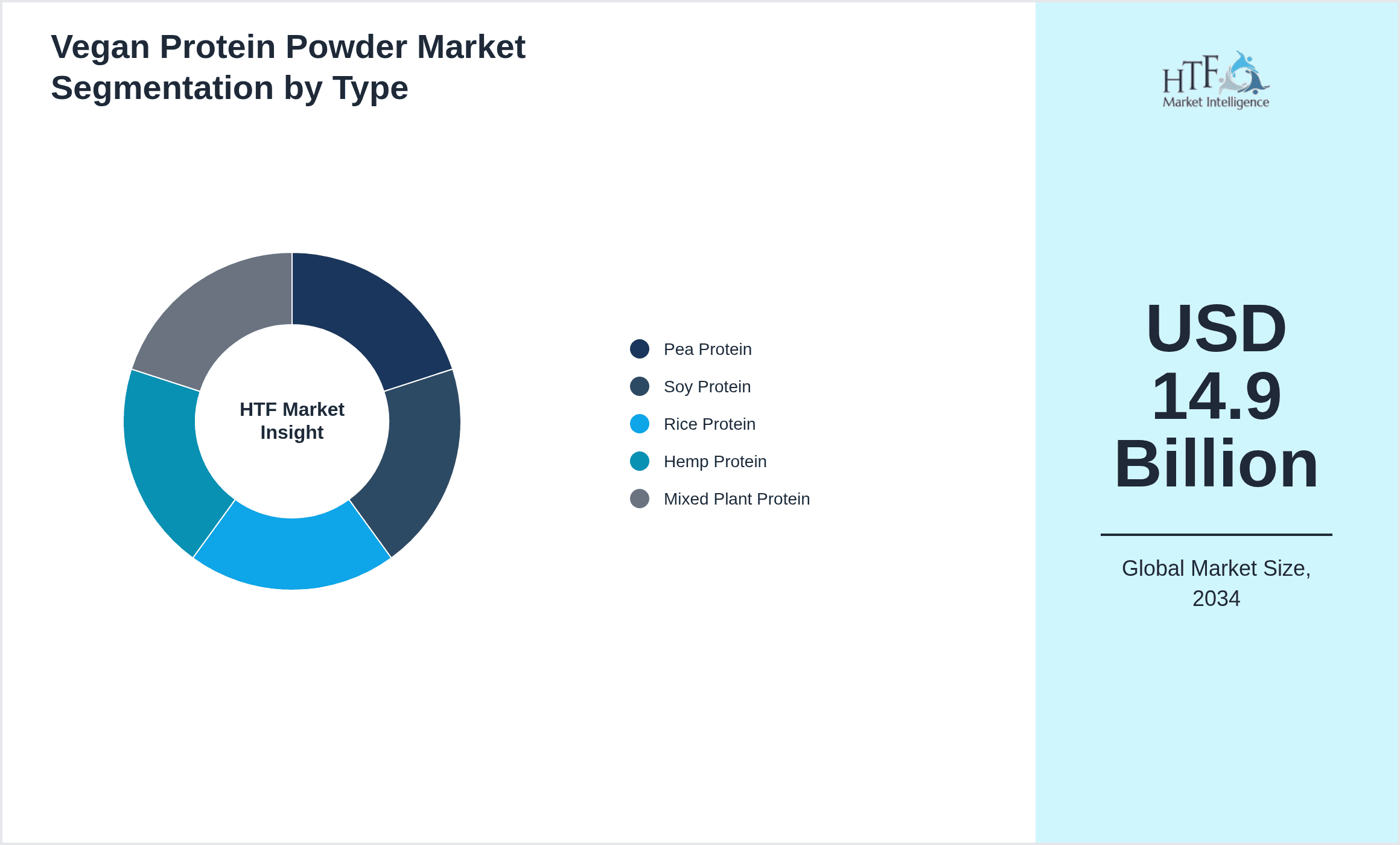
- •Key market highlights include a base market size of USD 4.8 Billion in 2024, expected to reach USD 14.9 Billion by 2034, demonstrating robust growth driven by expanding consumer bases and product diversification. North America currently dominates the market due to established distribution networks and health-conscious populations, while Asia-Pacific is the fastest-growing region fueled by rising disposable incomes and increasing adoption of vegan diets. Pea protein leads in product type market share due to its favorable amino acid profile and allergen-friendly nature, whereas mixed plant proteins exhibit the fastest growth trajectory. Applications centered around sports nutrition and dietary supplements remain the largest revenue contributors. The market is also witnessing innovation in clean-label formulations and sustainable packaging, enhancing consumer appeal and regulatory compliance.
- •The Vegan Protein Powder market presents significant value propositions to stakeholders including manufacturers, retailers, and consumers. For manufacturers, the market offers opportunities to leverage technological advancements in protein extraction and formulation to develop differentiated products with enhanced nutritional benefits and sensory attributes. Retailers benefit from expanding product portfolios that cater to diverse dietary preferences and sustainability trends, driving consumer engagement and loyalty. Consumers gain access to nutritious, allergen-friendly, and environmentally sustainable protein options that support health and wellness goals. Strategically, the market aligns with global trends towards plant-based diets, clean-label products, and ethical consumption, positioning it as a critical segment within the health and wellness and food industries. The synergy between innovation, consumer demand, and regulatory support underpins long-term growth and competitive differentiation in this market.

Competitive Landscape
The competitive landscape of the global Vegan Protein Powder market is characterized by a diverse mix of multinational corporations and specialized regional players competing through innovation, product differentiation, and strategic partnerships. Market participants emphasize research and development to enhance protein quality, flavor profiles, and functional benefits, which serve as key competitive levers. A focus on sustainable sourcing and transparent supply chains further strengthens brand positioning amid rising consumer scrutiny. Companies adopt varied strategies including mergers and acquisitions to expand geographic presence, portfolio diversification to address multiple consumer segments, and digital marketing to engage health-conscious audiences. Pricing strategies balance premium positioning for high-quality, clean-label products with competitive offerings targeting mass-market penetration. Distribution channels span e-commerce platforms, specialty health stores, and mainstream retail, facilitating wide accessibility. Competitive rivalry is intensified by regulatory compliance demands and evolving consumer preferences, necessitating agile innovation and strategic foresight to maintain market leadership and capitalize on emerging growth opportunities.
Prominent Players in Vegan Protein Powder Market
- •Beyond Meat Inc. (United States)
- •Glanbia plc (Ireland)
- •The Kraft Heinz Company (United States)
- •Ingredion Incorporated (United States)
- •Archer Daniels Midland Company (United States)
- •Roquette Frères (France)
- •Cargill, Incorporated (United States)
- •Dymatize Enterprises LLC (United States)
- •Hain Celestial Group (United States)
- •Axiom Foods, Inc. (United States)
- •Nutrabiotic (United States)
- •Sunwarrior (United States)
- •Myprotein (United Kingdom)
- •Vega (Canada)
- •NutraScience Labs (United States)
- •Naked Nutrition (United States)
- •Now Health Group Inc. (United States)
- •Purition (United Kingdom)
- •Terrasoul Superfoods LLC (United States)
- •Orgain, Inc. (United States)
- •Aloha Organic (United States)
- •Sunfood Superfoods (United States)
- •Natures Plus (United States)
- •Anthony's Goods (United States)
- •Garden of Life (United States)

Market Breakdown
- •By Product Type
- ◦Pea Protein
- ◦Soy Protein
- ◦Rice Protein
- ◦Hemp Protein
- ◦Mixed Plant Protein
- •By Application
- ◦Sports Nutrition
- ◦Weight Management
- ◦Dietary Supplement
- ◦Functional Foods
- ◦Others
- •By End-Use Industry
- ◦Food & Beverage
- ◦Healthcare & Nutrition
- ◦Sports & Fitness
- ◦Personal Care & Cosmetics
- •By Distribution Channel
- ◦Online Retail
- ◦Supermarkets & Hypermarkets
- ◦Specialty Stores
Growth Dynamics
The global Vegan Protein Powder market is propelled by increasing consumer awareness regarding health and environmental sustainability. Growing vegan and vegetarian populations seek plant-based protein alternatives that offer comparable nutrition to animal-derived proteins. Additionally, rising incidences of lifestyle diseases encourage consumers to adopt protein supplements for better health management. Advances in protein extraction technologies have improved taste and solubility, enhancing product acceptance. The market benefits from expanding e-commerce platforms, facilitating accessibility to niche products globally. Government initiatives promoting sustainable agriculture and dietary guidelines favoring plant-based diets further stimulate demand. The integration of vegan protein powders in sports nutrition and functional food segments taps into fitness-conscious demographics. Moreover, rising disposable incomes in emerging regions enable penetration into previously untapped markets, collectively driving robust market growth and innovation.
Market Trends
The Vegan Protein Powder market is witnessing a shift toward clean-label and allergen-free formulations, responding to consumer demand for transparency and health-consciousness. Innovations include organic certifications, non-GMO sourcing, and natural flavoring, enhancing product appeal. Plant protein blends combining multiple sources are trending to provide balanced amino acid profiles and improved functionality. Digital marketing and influencer partnerships have become critical for brand visibility and consumer engagement. Sustainability trends drive adoption of eco-friendly packaging and ethical sourcing practices. Additionally, fortification with vitamins, minerals, and probiotics is becoming popular to create multifunctional products. The rise of personalized nutrition platforms leveraging AI and data analytics also shapes product development, targeting specific consumer needs and preferences.

Market Opportunities
Emerging markets in Asia-Pacific and Latin America present significant growth opportunities due to increasing urbanization, rising health awareness, and expanding middle-class populations. There is potential in developing localized formulations catering to regional taste preferences and dietary habits. Innovations in sustainable protein extraction and processing can reduce costs and environmental impact, appealing to eco-conscious consumers. Expansion of plant-based protein applications beyond traditional supplements into bakery, dairy alternatives, and ready-to-eat meals offers diversification prospects. Collaborations between ingredient suppliers and food manufacturers can accelerate product innovation and market penetration. Additionally, growing interest in personalized nutrition and functional foods creates avenues for tailored product offerings with enhanced health benefits.
Market Challenges
Challenges in the Vegan Protein Powder market include the high cost of raw materials and processing technologies, which can limit accessibility in price-sensitive markets. Taste and texture issues remain barriers to consumer acceptance, requiring continuous innovation in formulation. Regulatory complexities across different regions create compliance challenges and can delay product launches. Supply chain disruptions, especially for raw plant proteins, pose risks to consistent product availability. Intense competition pressures companies to differentiate while managing profitability. Additionally, misinformation and skepticism among consumers regarding plant protein efficacy may hinder market growth. Addressing allergen concerns and ensuring product transparency are critical to building consumer trust. Overcoming these challenges requires strategic investments in R&D, supply chain resilience, and effective consumer education campaigns.
Regulatory Framework
Between 2020 and 2024, regulatory bodies worldwide have implemented stringent guidelines to ensure the safety, labeling accuracy, and quality of vegan protein powders. The U.S. FDA updated requirements for plant-based protein supplement labeling and allergen declarations, enhancing transparency. The European Food Safety Authority (EFSA) introduced new standards for novel food ingredients, impacting product approvals in the region. Several countries have adopted regulations mandating non-GMO certifications and organic labeling to align with consumer preferences. Environmental regulations encourage sustainable sourcing and packaging practices. Compliance with these regulations requires manufacturers to maintain rigorous quality control and traceability systems, impacting operational costs and product development timelines. These evolving standards aim to protect consumer interests and foster market trust while promoting innovation within the vegan protein powder industry.
Market Intelligence
- •15th February 2024, Beyond Meat Inc. launched an innovative pea and rice protein blend powder targeting the sports nutrition market, featuring enhanced amino acid profiles and improved solubility. This product aims to capture a wider athlete demographic seeking plant-based alternatives with superior taste and digestibility. The launch included strategic partnerships with fitness centers and e-commerce platforms to maximize reach and consumer education. This initiative reflects the company's commitment to expanding its product portfolio and addressing consumer demands for clean-label, allergen-friendly options in protein supplementation. Market analysts anticipate this launch will strengthen Beyond Meat's competitive positioning and accelerate growth in the global vegan protein powder segment. Source: Official Beyond Meat press release
- •20th October 2023, Glanbia plc announced a strategic collaboration with a leading Asian plant protein supplier to develop region-specific formulations for the fast-growing Asia-Pacific market. The partnership focuses on leveraging local pea and hemp protein sources to create cost-effective, high-quality vegan protein powders tailored to regional dietary preferences and regulatory requirements. This alliance is expected to enhance Glanbia's footprint in emerging markets and drive innovation in product customization. The initiative also aligns with sustainability goals by optimizing local sourcing and reducing supply chain emissions. Industry experts view this collaboration as a significant step towards market expansion and diversification in the competitive global vegan protein powder landscape. Source: Glanbia plc official announcement
- •Recent market developments and strategic initiatives are continuously tracked through industry publications, company announcements, and regulatory filings. For the most current information, stakeholders are advised to monitor official corporate communications and recognized market intelligence platforms.
- •Recent market developments and strategic initiatives are continuously tracked through industry publications, company announcements, and regulatory filings. For the most current information, stakeholders are advised to monitor official corporate communications and recognized market intelligence platforms.
Regional Outlook
The North America currently holds a significant share of the market, primarily due to several key factors: increasing consumption rates, a burgeoning population, and robust economic momentum. These elements collectively drive demand, positioning this region as a leader in the market. On the other hand, Asia-Pacific is rapidly emerging as the fastest-growing area within the industry. This remarkable growth can be attributed to swift infrastructure development, the expansion of various industrial sectors, and a marked increase in consumer demand. These dynamics make this region a crucial player in shaping future market growth.
In our report, we cover a comprehensive analysis of the following regions and countries:
- North America
- LATAM
- West Europe
- Central & Eastern Europe
- Northern Europe
- Southern Europe
- East Asia
- Southeast Asia
- South Asia
- Central Asia
- Oceania
- MEA
| Feature | Details |
|---|---|
| Base Year Market Size | USD 4.8 Billion |
| Forecast Year Market Size | USD 14.9 Billion |
| CAGR | 12% |
| Forecast Period | 2026 to 2033 |
| YoY Growth | 11.4% |
| Scope of Report | Market is segmented by Product Type (Pea Protein, Soy Protein, Rice Protein, Hemp Protein, Mixed Plant Protein), Application (Sports Nutrition, Weight Management, Dietary Supplement, Functional Foods, Others), End-Use Industry (Food & Beverage, Healthcare & Nutrition, Sports & Fitness, Personal Care & Cosmetics), Distribution Channel (Online Retail, Supermarkets & Hypermarkets, Specialty Stores) |
| Regions Covered | North America, LATAM, West Europe, Central & Eastern Europe, Northern Europe, Southern Europe, East Asia, Southeast Asia, South Asia, Central Asia, Oceania, MEA |
| Key Companies | Beyond Meat Inc. (United States), Glanbia plc (Ireland), The Kraft Heinz Company (United States), Ingredion Incorporated (United States), Archer Daniels Midland Company (United States) |
Global Vegan Protein Powder Market Size, Growth & Revenue 2024-2034 - Table of Contents
Frequently Asked Questions (FAQ):
The Compact Track Loaders market is projected to grow at a CAGR of 6.8% from 2025 to 2030, driven by increasing demand in construction and agricultural sectors.
North America currently leads the market with approximately 45% market share, followed by Europe at 28% and Asia-Pacific at 22%. The remaining regions account for 5% of the global market.
Key growth drivers include increasing construction activities, rising demand for versatile equipment in agriculture, technological advancements in track loader design, and growing preference for compact equipment in urban construction projects.