
Global Crane and Hoist Market Size, Growth & Revenue 2024-2034
Global Crane and Hoist Market is segmented by Product Type (Overhead Cranes, Gantry Cranes, Jib Cranes, Hoists, Tower Cranes), Application (Construction, Manufacturing, Transportation, Warehousing, Energy), End-Use Industry (Automotive, Shipbuilding, Mining, Oil & Gas), Distribution Channel (Direct Sales, Dealerships, Online Sales), and Geography (North America, LATAM, West Europe, Central & Eastern Europe, Northern Europe, Southern Europe, East Asia, Southeast Asia, South Asia, Central Asia, Oceania, MEA)
Pricing
Report Overview
Executive Summary
- •The Global Crane and Hoist Market is a vital segment within the material handling equipment industry, providing engineered solutions for lifting and transporting heavy loads across diverse sectors including construction, manufacturing, transportation, warehousing, and energy production. This market features an extensive range of product types such as overhead cranes, gantry cranes, jib cranes, hoists, and tower cranes, each tailored to specific operational demands. The market scope extends to manual, electric, and automated systems, integrating advancements like IoT for enhanced safety and efficiency. Growing industrialization, urban infrastructure projects, and expanding logistics networks worldwide drive market demand. Additionally, regulatory focus on workplace safety and environmental compliance shapes product development and adoption. The competitive landscape is marked by innovation, strategic partnerships, and regional expansion, making this market pivotal for industrial productivity enhancement globally. This report provides a detailed analysis of market segmentation, growth drivers, challenges, and future opportunities shaping the industry through 2034.
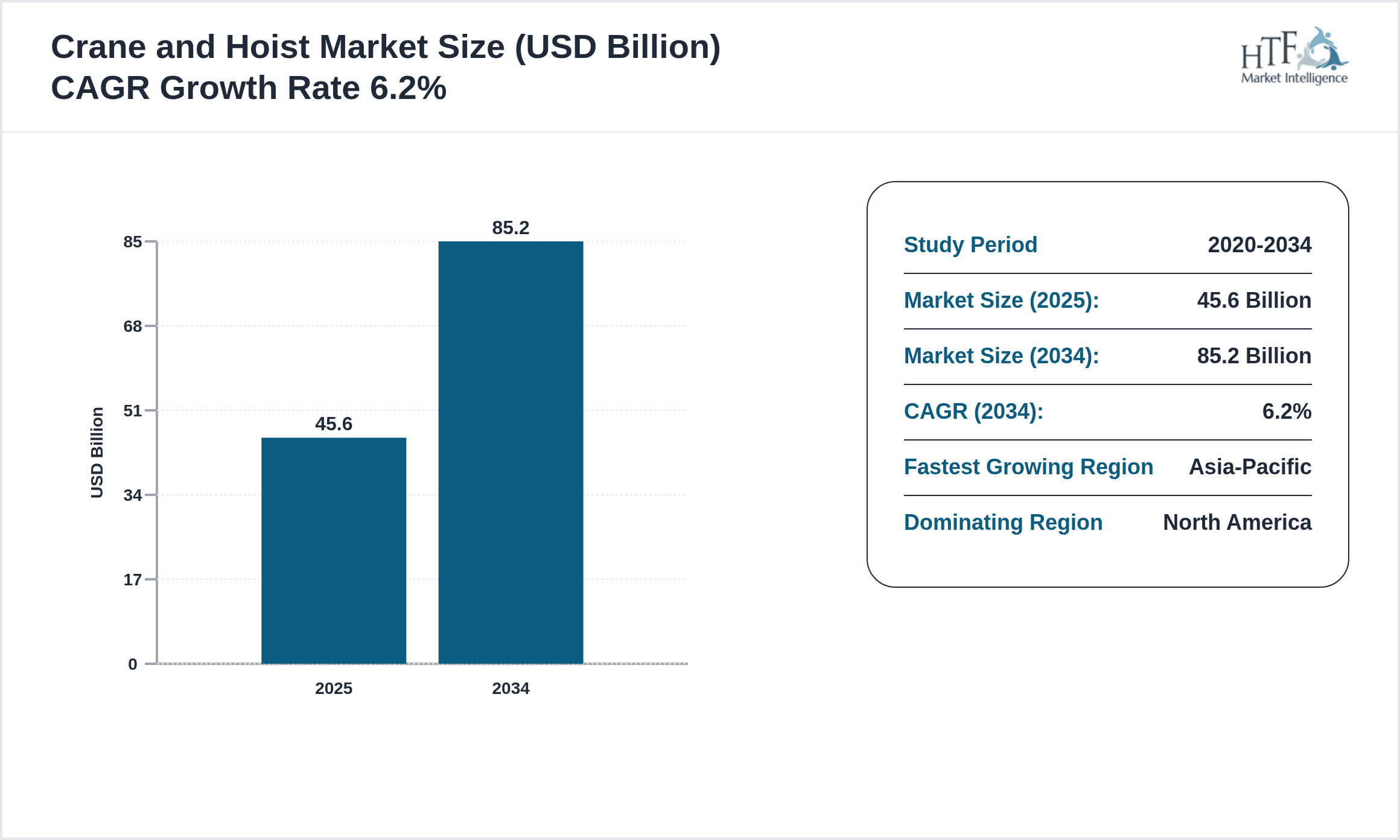
- •Key highlights of the Global Crane and Hoist Market include a projected CAGR of 6.2% from 2024 to 2034, with market size expected to grow from USD 45.6 Billion in 2024 to USD 85.2 Billion by 2034. Overhead cranes currently dominate the product segment due to their widespread application in heavy industries, while tower cranes are witnessing the fastest growth propelled by booming construction activities in emerging economies. Geographically, North America leads the market in revenue share, supported by advanced infrastructure and stringent safety regulations, whereas Asia-Pacific is the fastest-growing region driven by rapid urbanization and industrial projects. Market growth is propelled by technological advancements, rising automation, and increasing demand for efficient material handling solutions. However, challenges such as high initial capital investment and maintenance costs restrain widespread adoption in some regions.
- •The crane and hoist industry offers significant value propositions to construction companies, manufacturers, logistics providers, and energy producers by enhancing operational efficiency, reducing manual labor, and improving workplace safety. Strategic importance lies in its enabling role for large-scale infrastructure projects, factory automation, and supply chain optimization. Stakeholders benefit from innovations such as smart hoists and crane monitoring systems that reduce downtime and increase productivity. The market's evolution is also influenced by environmental sustainability initiatives promoting energy-efficient equipment. This comprehensive report aids investors, manufacturers, and policymakers with actionable insights on market dynamics, competitive landscape, and emerging trends, supporting informed decision-making and strategic planning in the global crane and hoist ecosystem.
Competitive Landscape
The Global Crane and Hoist Market is characterized by intense competition among established multinational corporations and regional manufacturers, focusing on innovation, quality, and service excellence to maintain market position. Key competitive strategies include continuous product development to enhance load capacity, safety features, and automation capabilities. Companies invest heavily in R&D to integrate smart technologies such as IoT-enabled monitoring and predictive maintenance, which offer competitive differentiation. Strategic partnerships, joint ventures, and acquisitions are frequent to expand geographic reach and product portfolios. Pricing strategies vary regionally, balancing cost competitiveness with high-quality standards. Distribution networks and after-sales service quality are critical factors influencing buyer preference. Barriers to entry include high capital requirements, regulatory compliance, and technological expertise, which protect incumbents. Going forward, competition is expected to intensify with emerging players focusing on niche applications and sustainable solutions, while leading companies leverage digital transformation and global supply chain optimization to sustain growth.
Leading Companies in Crane and Hoist Market
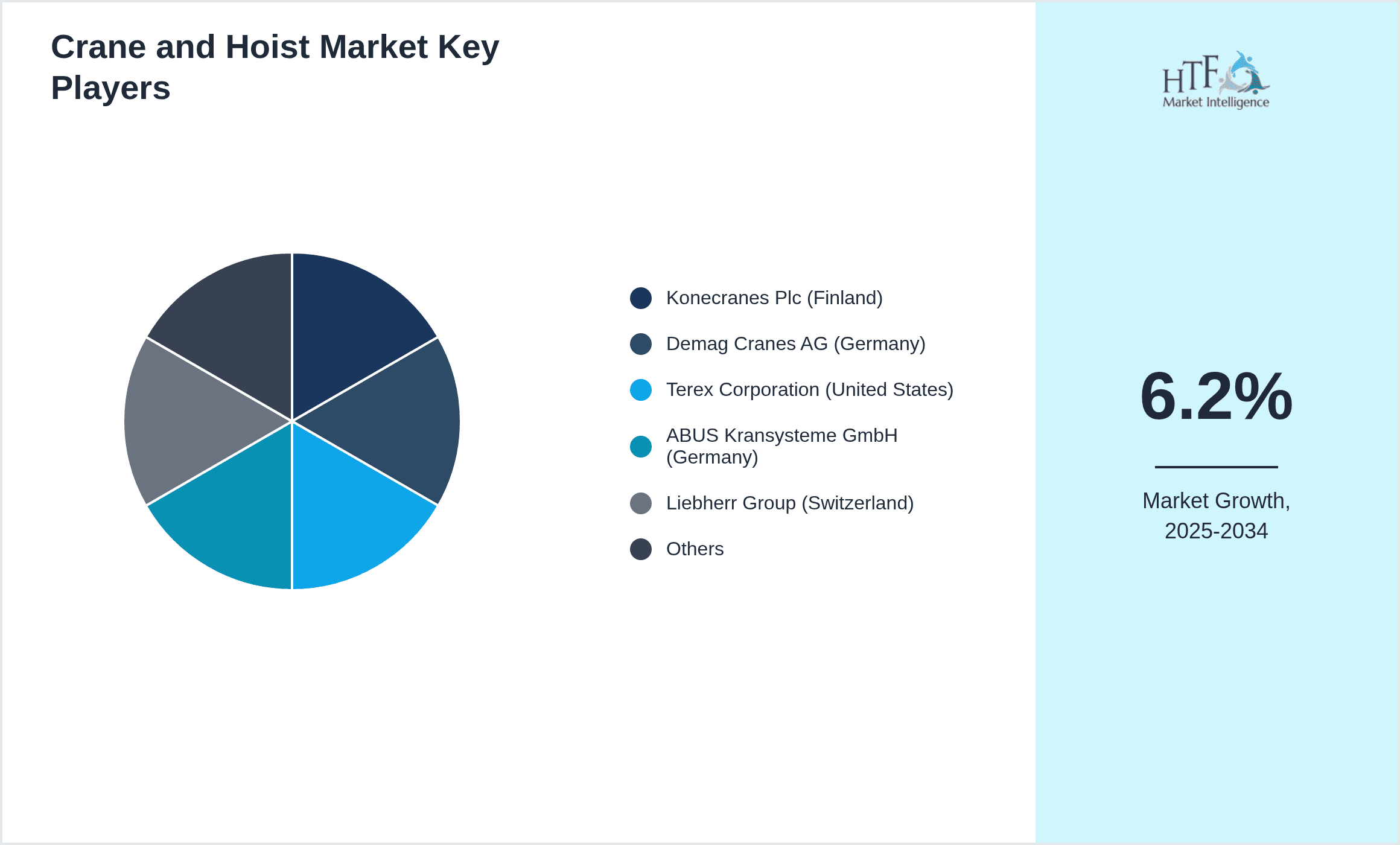
- •Konecranes Plc (Finland)
- •Demag Cranes AG (Germany)
- •Terex Corporation (United States)
- •ABUS Kransysteme GmbH (Germany)
- •Liebherr Group (Switzerland)
- •Columbus McKinnon Corporation (United States)
- •Harrington Hoists, Inc. (United States)
- •Jaso Group (Spain)
- •GH Cranes & Components (Spain)
- •Yale Materials Handling Corporation (United States)
- •Hitachi Construction Machinery Co., Ltd. (Japan)
- •Kito Corporation (Japan)
- •Vaughan Company, Inc. (United States)
- •Palfinger AG (Austria)
- •Kobelco Cranes Co., Ltd. (Japan)
- •SWF Krantechnik GmbH (Germany)
- •Cargotec Corporation (Finland)
- •Kuli Crane Group (China)
- •Demag Cranes & Components (Germany)
- •Mazzella Companies (United States)
- •Magnetek, Inc. (United States)
- •Nabtesco Corporation (Japan)
- •Tadano Ltd. (Japan)
- •Spanco, Inc. (United States)
- •VETTER Krantechnik GmbH (Germany)
Market Breakdown
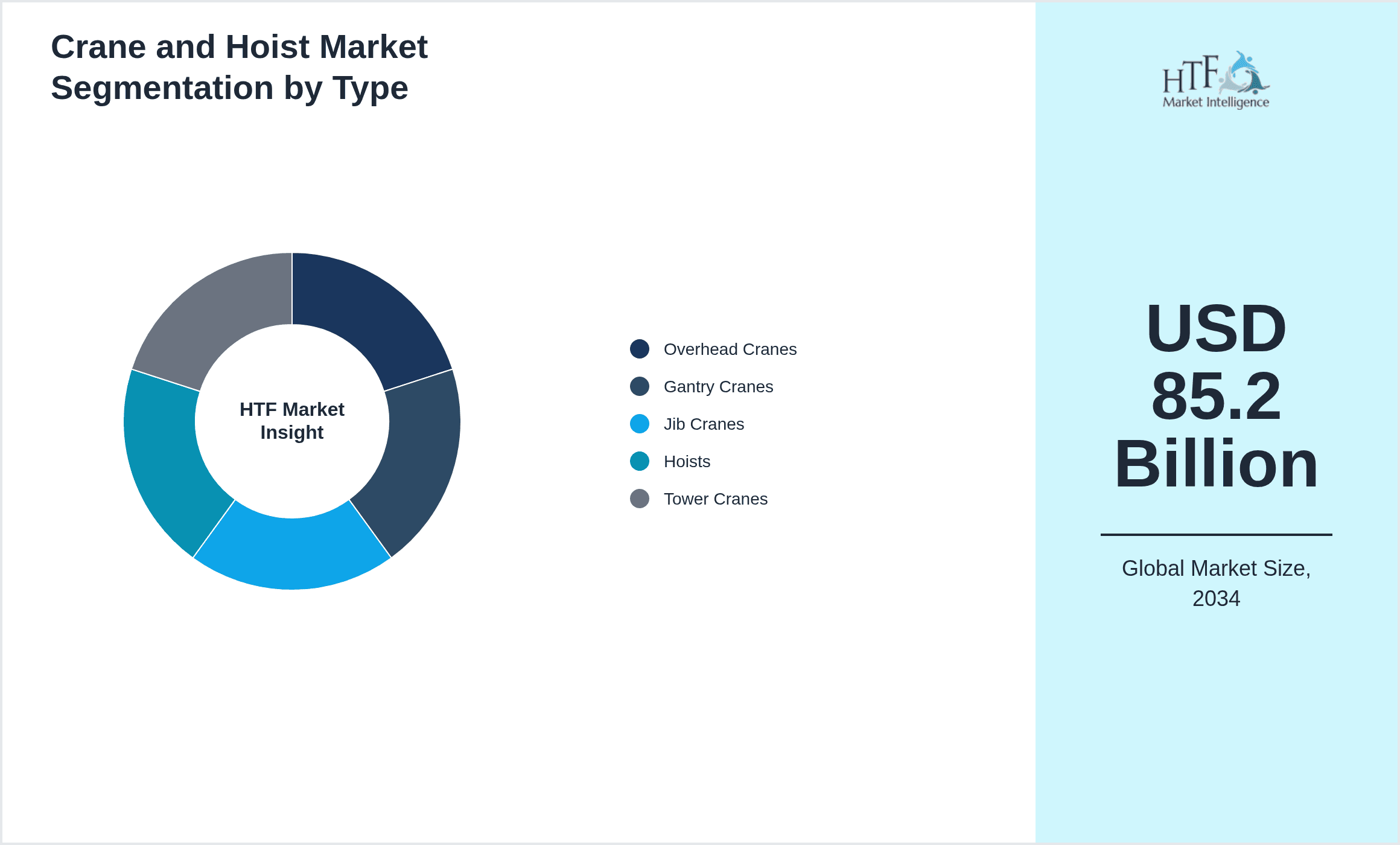
- •By Product Type
- ◦Overhead Cranes
- ◦Gantry Cranes
- ◦Jib Cranes
- ◦Hoists
- ◦Tower Cranes
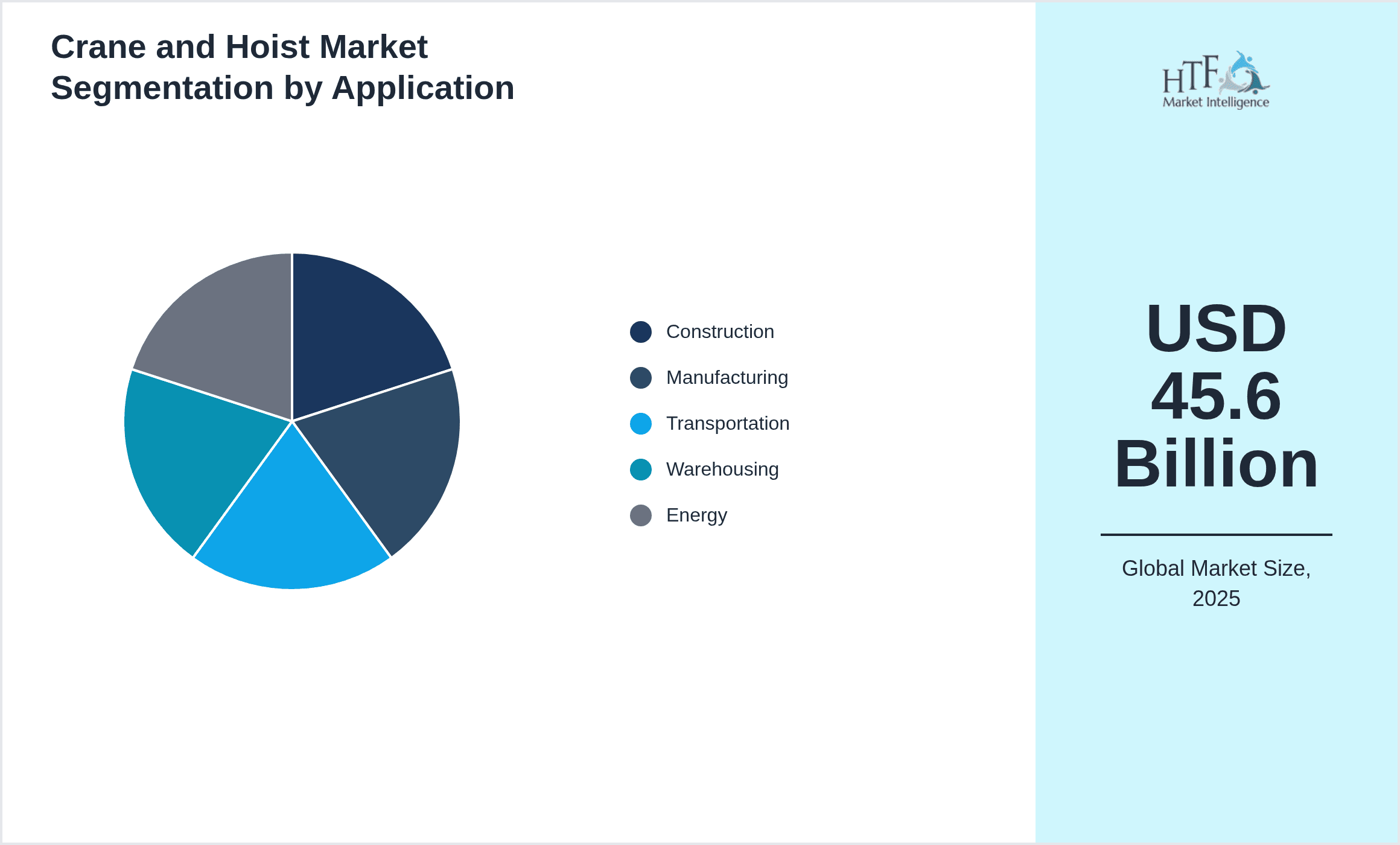
- •By Application
- ◦Construction
- ◦Manufacturing
- ◦Transportation
- ◦Warehousing
- ◦Energy
- •By End-Use Industry
- ◦Automotive
- ◦Shipbuilding
- ◦Mining
- ◦Oil & Gas
- •By Distribution Channel
- ◦Direct Sales
- ◦Dealerships
- ◦Online Sales
Growth Dynamics
The global crane and hoist market growth is primarily driven by increasing infrastructure development and industrialization across emerging economies, particularly in Asia-Pacific. Rapid urbanization necessitates large-scale construction projects requiring advanced lifting equipment. Moreover, the manufacturing sector's expansion fuels demand for efficient material handling solutions that optimize production lines and warehouse operations. Technological advancements, including automation and IoT integration, enhance operational efficiency and safety, further propelling market adoption. Government investments in energy and transportation infrastructure also contribute significantly. Rising demand for high-capacity cranes and eco-friendly equipment supports sustainable growth. Additionally, growing replacement demand in developed regions due to aging infrastructure adds to market expansion. Collectively, these factors ensure a robust compound annual growth rate, signaling continued industry vitality through 2034.
Market Trends
The crane and hoist market is witnessing a surge in the adoption of smart cranes equipped with IoT sensors and remote monitoring capabilities, enabling predictive maintenance and minimizing downtime. Sustainability trends are driving manufacturers to develop energy-efficient and low-emission equipment, aligning with global environmental regulations. Modular crane designs offering flexibility and ease of installation are gaining traction, particularly in urban construction projects. Additionally, there is a growing shift towards electric-powered hoists replacing traditional hydraulic models to reduce environmental impact and operational costs. Industry players are increasingly forming strategic alliances and partnerships to expand their technological capabilities and geographic reach. These trends are reshaping the market landscape, fostering innovation and competitive differentiation.
Market Opportunities
Emerging markets in Asia-Pacific, Latin America, and the Middle East present significant opportunities due to rapid urbanization and infrastructure modernization. There is untapped demand for customized crane and hoist solutions tailored to specific industry needs, such as mining and oil & gas sectors. The integration of artificial intelligence and automation in lifting equipment offers potential for productivity enhancement and operational cost reduction. Expansion of rental services and after-sales support in developing regions can drive market penetration. Furthermore, increasing government focus on renewable energy projects, such as wind and solar farms, opens new avenues for specialized lifting equipment. Collaborations between technology providers and traditional manufacturers can accelerate innovation and market growth.
Market Challenges
High capital investment required for advanced crane and hoist systems poses a barrier for small and medium enterprises, limiting broader market adoption. Maintenance complexity and costs, particularly for automated and high-capacity equipment, present operational challenges. Regulatory compliance across multiple regions increases the cost and complexity of product development and market entry. Supply chain disruptions and raw material price volatility impact production timelines and profitability. Additionally, skilled labor shortages affect installation, operation, and maintenance services. Intense competition from low-cost regional manufacturers, especially in Asia, pressures pricing and margins of global players. Addressing these challenges is critical for sustained growth and competitive advantage.
Regulatory Framework
Between 2020 and 2024, the Global Crane and Hoist Market has been influenced by stringent safety regulations such as the updated ISO 9927 standard for crane inspection and maintenance, which mandates enhanced periodic testing and certification. OSHA regulations have been reinforced globally, emphasizing operator training and equipment safety features, directly impacting product design and market compliance costs. Environmental directives, including emissions and energy-efficiency standards, have accelerated the development of electric and hybrid cranes. Regional mandates in North America and Europe require manufacturers to adhere to strict noise and vibration limits, influencing equipment innovation. Additionally, governments worldwide have introduced incentives for adopting sustainable lifting technologies. Compliance with these evolving regulations remains a critical factor shaping market strategies and competitive positioning.
Market Intelligence
- •12th January 2024, Konecranes Plc launched its new range of IoT-enabled overhead cranes designed to provide real-time monitoring, predictive maintenance, and enhanced safety features targeted at manufacturing and logistics sectors. This innovative product line integrates cloud-based analytics to optimize crane performance and reduce downtime, offering customers improved operational efficiency and lower maintenance costs. The launch signifies the company's commitment to digital transformation and sustainability within the crane and hoist market, positioning it as a technology leader. The new cranes are expected to gain rapid adoption in developed and emerging markets, supporting Konecranes' growth ambitions globally. Source: Konecranes Official Press Release
- •8th August 2023, Demag Cranes AG introduced a cutting-edge tower crane model featuring enhanced load capacity and energy-efficient electric drives, aimed at the booming construction markets in Asia-Pacific and Europe. The new model incorporates advanced safety sensors and remote operation capabilities, allowing for improved worker safety and operational flexibility in challenging environments. This product launch reinforces Demag's strategic focus on innovation and sustainability, addressing the evolving needs of urban infrastructure development. Analysts anticipate that this launch will strengthen Demag's market share in key regions and set new industry benchmarks. Source: Demag Corporate Announcement
- •15th March 2024, Terex Corporation announced a strategic partnership with a leading automation technology provider to co-develop smart hoist systems integrated with AI-driven predictive analytics. This collaboration aims to revolutionize material handling by enhancing equipment uptime and reducing operational risks across the manufacturing and warehousing sectors. The initiative reflects Terex's commitment to leveraging digital technologies to meet changing customer demands and improve competitive positioning globally. The partnership is expected to accelerate product innovation cycles and expand Terex's footprint in high-growth markets. Source: Terex Corporate News
- •20th November 2023, Liebherr Group completed the acquisition of a regional crane manufacturer specializing in modular gantry cranes, expanding its product portfolio and strengthening presence in emerging markets such as Latin America and Middle East & Africa. This acquisition enables Liebherr to offer more customized solutions tailored to local infrastructure needs and enhances its global supply chain capabilities. The move aligns with Liebherr’s growth strategy to diversify offerings and capitalize on increasing industrialization worldwide. Industry experts view this as a significant consolidation step, boosting Liebherr’s competitive advantage in the crane and hoist sector. Source: Liebherr Official Statement
Regional Outlook
The North America currently holds a significant share of the market, primarily due to several key factors: increasing consumption rates, a burgeoning population, and robust economic momentum. These elements collectively drive demand, positioning this region as a leader in the market. On the other hand, Asia-Pacific is rapidly emerging as the fastest-growing area within the industry. This remarkable growth can be attributed to swift infrastructure development, the expansion of various industrial sectors, and a marked increase in consumer demand. These dynamics make this region a crucial player in shaping future market growth.
In our report, we cover a comprehensive analysis of the following regions and countries:
- North America
- LATAM
- West Europe
- Central & Eastern Europe
- Northern Europe
- Southern Europe
- East Asia
- Southeast Asia
- South Asia
- Central Asia
- Oceania
- MEA
| Feature | Details |
|---|---|
| Base Year Market Size | USD 45.6 Billion |
| Forecast Year Market Size | USD 85.2 Billion |
| CAGR | 6.2% |
| Forecast Period | 2026 to 2033 |
| YoY Growth | 6% |
| Scope of Report | Market is segmented by Product Type (Overhead Cranes, Gantry Cranes, Jib Cranes, Hoists, Tower Cranes), Application (Construction, Manufacturing, Transportation, Warehousing, Energy), End-Use Industry (Automotive, Shipbuilding, Mining, Oil & Gas), Distribution Channel (Direct Sales, Dealerships, Online Sales) |
| Regions Covered | North America, LATAM, West Europe, Central & Eastern Europe, Northern Europe, Southern Europe, East Asia, Southeast Asia, South Asia, Central Asia, Oceania, MEA |
| Key Companies | Konecranes Plc (Finland), Demag Cranes AG (Germany), Terex Corporation (United States), ABUS Kransysteme GmbH (Germany), Liebherr Group (Switzerland), Columbus McKinnon Corporation (United States), Harrington Hoists, Inc. (United States), Jaso Group (Spain), GH Cranes & Components (Spain), Yale Materials Handling Corporation (United States), Hitachi Construction Machinery Co., Ltd. (Japan), Kito Corporation (Japan), Vaughan Company, Inc. (United States), Palfinger AG (Austria), Kobelco Cranes Co., Ltd. (Japan), SWF Krantechnik GmbH (Germany), Cargotec Corporation (Finland), Kuli Crane Group (China), Demag Cranes & Components (Germany), Mazzella Companies (United States), Magnetek, Inc. (United States), Nabtesco Corporation (Japan), Tadano Ltd. (Japan), Spanco, Inc. (United States), VETTER Krantechnik GmbH (Germany) |
Global Crane and Hoist Market Size, Growth & Revenue 2024-2034 - Table of Contents
Frequently Asked Questions (FAQ):
The Compact Track Loaders market is expected to see value worth 5.3 Billion in 2025.
North America currently leads the market with approximately 45% market share, followed by Europe at 28% and Asia-Pacific at 22%. The remaining regions account for 5% of the global market.
Key growth drivers include increasing construction activities, rising demand for versatile equipment in agriculture, technological advancements in track loader design, and growing preference for compact equipment in urban construction projects.