
Global Four Column Universal Hydraulic Press Market Size, Growth & Revenue 2025-2034
Global Four Column Universal Hydraulic Press Market is segmented by Product Type (Mechanical Press, Hydraulic Press, Pneumatic Press, Servo Press, Hybrid Press), Application (Metal Forming, Plastic Molding, Assembly Operations, Testing and Inspection, Other Industrial Uses), End-Use Industry (Automotive, Aerospace, Electronics, General Manufacturing), Distribution Channel (Direct Sales, Distributors, Online Platforms), and Geography (North America, LATAM, West Europe, Central & Eastern Europe, Northern Europe, Southern Europe, East Asia, Southeast Asia, South Asia, Central Asia, Oceania, MEA)
Pricing
Report Overview
Executive Summary
- •The global Four Column Universal Hydraulic Press market comprises a vital segment of industrial machinery engineered to deliver precise and versatile pressing solutions across a multitude of manufacturing sectors. Characterized by a robust four-column design, these presses offer enhanced stability and uniform force application, crucial for complex operations such as metal forming, plastic molding, assembly, and quality testing. The market includes diverse press types like mechanical, hydraulic, pneumatic, servo, and hybrid variants, each optimized for specific operational requirements and industry demands. Technological advancements focusing on automation, energy efficiency, and integration with Industry 4.0 protocols have further expanded the applicability and performance of these presses. Key end-use industries include automotive, aerospace, electronics, and general manufacturing, where precision and reliability are paramount. The market is influenced by growing industrialization, demand for high-quality manufacturing outputs, and the need for efficient production processes worldwide. This comprehensive analysis details market segmentation, growth drivers, emerging trends, challenges, and opportunities, providing stakeholders with a holistic view of the market dynamics and future outlook through 2034.
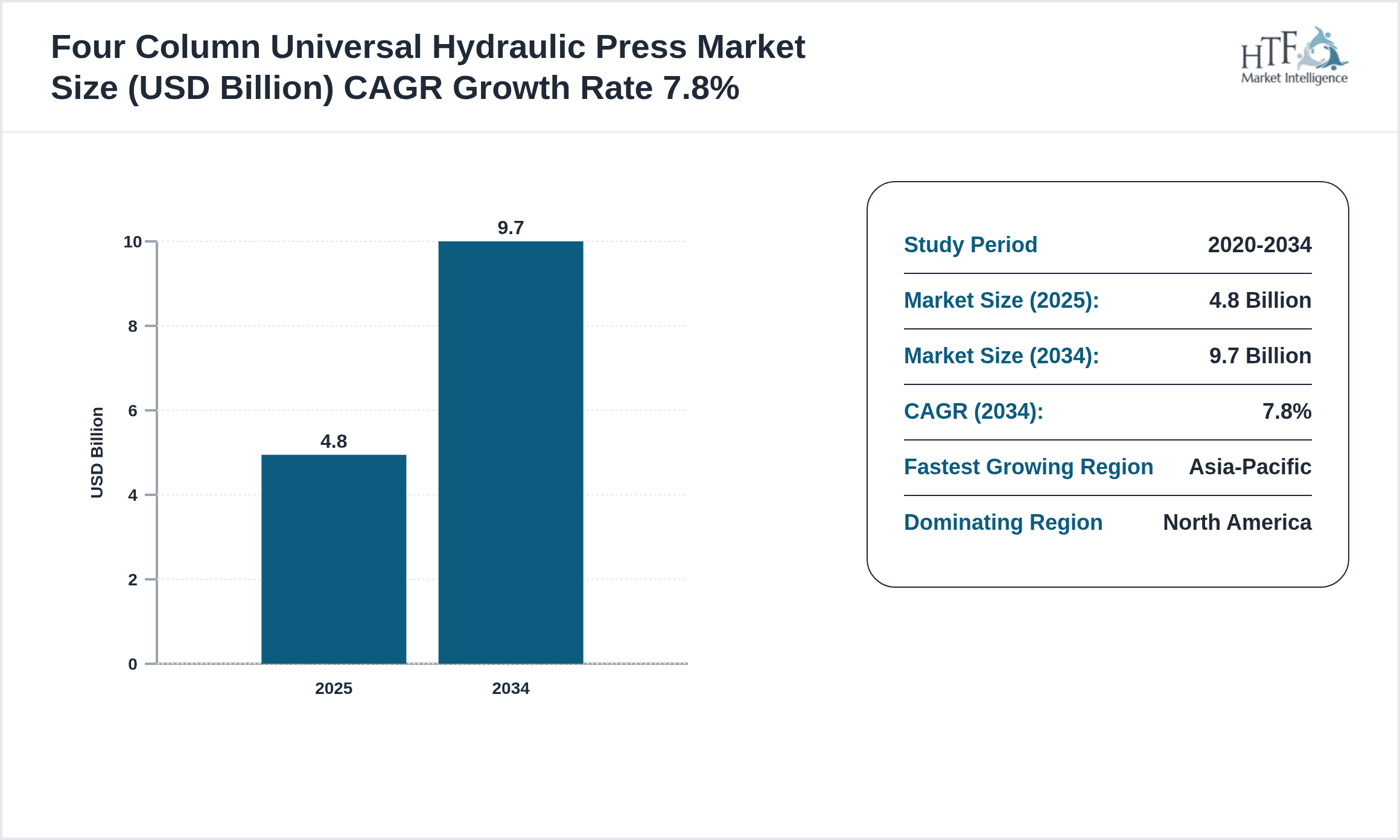
- •Market highlights indicate a steady CAGR of 7.8% from 2025 to 2034, driven by rising demand for advanced manufacturing technologies and increasing adoption of servo and hydraulic press types. The base market size stood at USD 4.8 Billion in 2025, with projections estimating growth to USD 9.7 Billion by 2034, reflecting robust year-on-year expansion. Regional dynamics reveal North America as the dominating region due to advanced industrial infrastructure, while Asia-Pacific is the fastest growing region propelled by rapid industrialization and expanding manufacturing bases. Technological innovations and increasing automation are key factors fueling market growth, while challenges such as high capital investment and maintenance complexities persist. These factors collectively shape the competitive landscape and strategic initiatives of market participants.
- •The Four Column Universal Hydraulic Press market offers significant value propositions including enhanced machine stability, precision, and adaptability across diverse industrial applications. Its strategic importance is underscored by its critical role in streamlining production workflows, reducing operational downtime, and improving product quality. Stakeholders encompassing manufacturers, end users, and technology providers benefit from continuous innovation, expanding application scopes, and evolving regulatory standards promoting safety and environmental compliance. The market’s growth trajectory aligns with global industrial transformation trends, positioning it as an essential component in the advancement of manufacturing technologies worldwide.
Competitive Landscape
The competitive environment within the global Four Column Universal Hydraulic Press market is characterized by the presence of established multinational corporations and emerging regional players, each vying for market share through innovation, strategic partnerships, and customer-centric approaches. Market dynamics are influenced by rapidly evolving manufacturing needs, technological advancements such as smart automation and IoT integration, and increasing demand for energy-efficient machinery. Companies leverage product differentiation strategies focusing on precision, reliability, and customization capabilities to address diverse end-use industries. Strategic collaborations, mergers and acquisitions, and geographic expansion remain pivotal for consolidating market positions and accessing new customer segments. Pricing strategies are carefully balanced against quality and technological sophistication to maintain competitive advantage. Distribution channels are expanding with digital adoption enhancing customer engagement and service delivery. Barriers to market entry include high capital requirements and stringent regulatory compliances, which favor incumbents with established expertise and resources. Future trends point towards increased emphasis on sustainable practices, modular designs, and enhanced after-sales support, shaping competitive strategies and driving innovation across the market landscape.
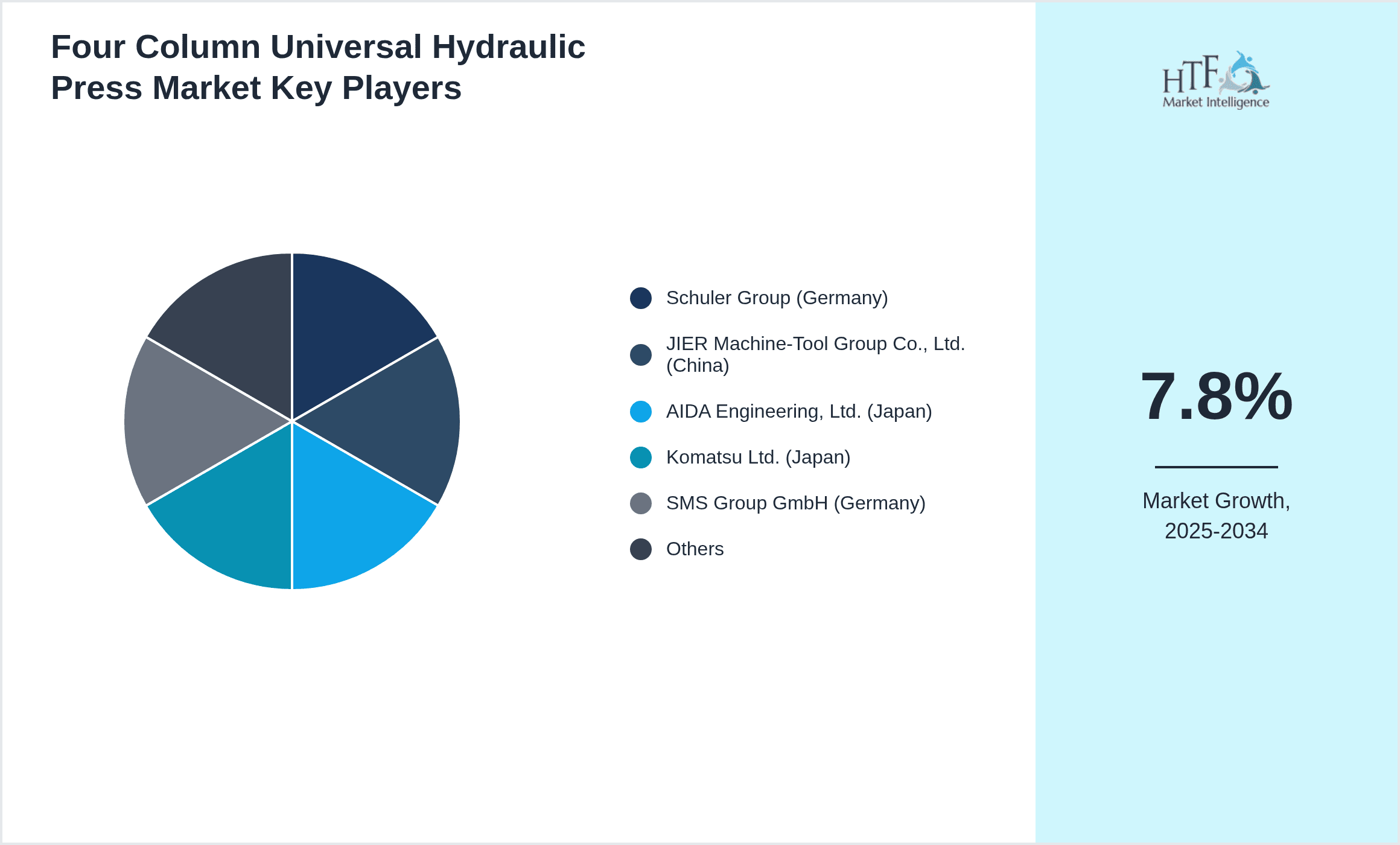
Prominent Players in Four Column Universal Hydraulic Press Market
- •Schuler Group (Germany)
- •JIER Machine-Tool Group Co., Ltd. (China)
- •AIDA Engineering, Ltd. (Japan)
- •Komatsu Ltd. (Japan)
- •SMS Group GmbH (Germany)
- •SIP Industrial Presses (Italy)
- •Nidec Corporation (Japan)
- •Fagor Arrasate (Spain)
- •Lips Group (Germany)
- •BYSTRONIC (Switzerland)
- •HACO Group (Belgium)
- •Raymond Corporation (United States)
- •Enerpac Tool Group (United States)
- •Bharat Fritz Werner Ltd. (India)
- •KMT Group (Italy)
- •Faccin S.p.A. (Italy)
- •Eagle Press & Equipment (United States)
- •Peddinghaus Corporation (Germany)
- •Rivi S.p.A. (Italy)
- •Yadon Industrial (China)
- •Schneider Electric (France)
- •Amada Co., Ltd. (Japan)
- •HACO America, Inc. (United States)
- •Dake Corporation (United States)
- •Kishan Steel Industries (India)
Market Breakdown
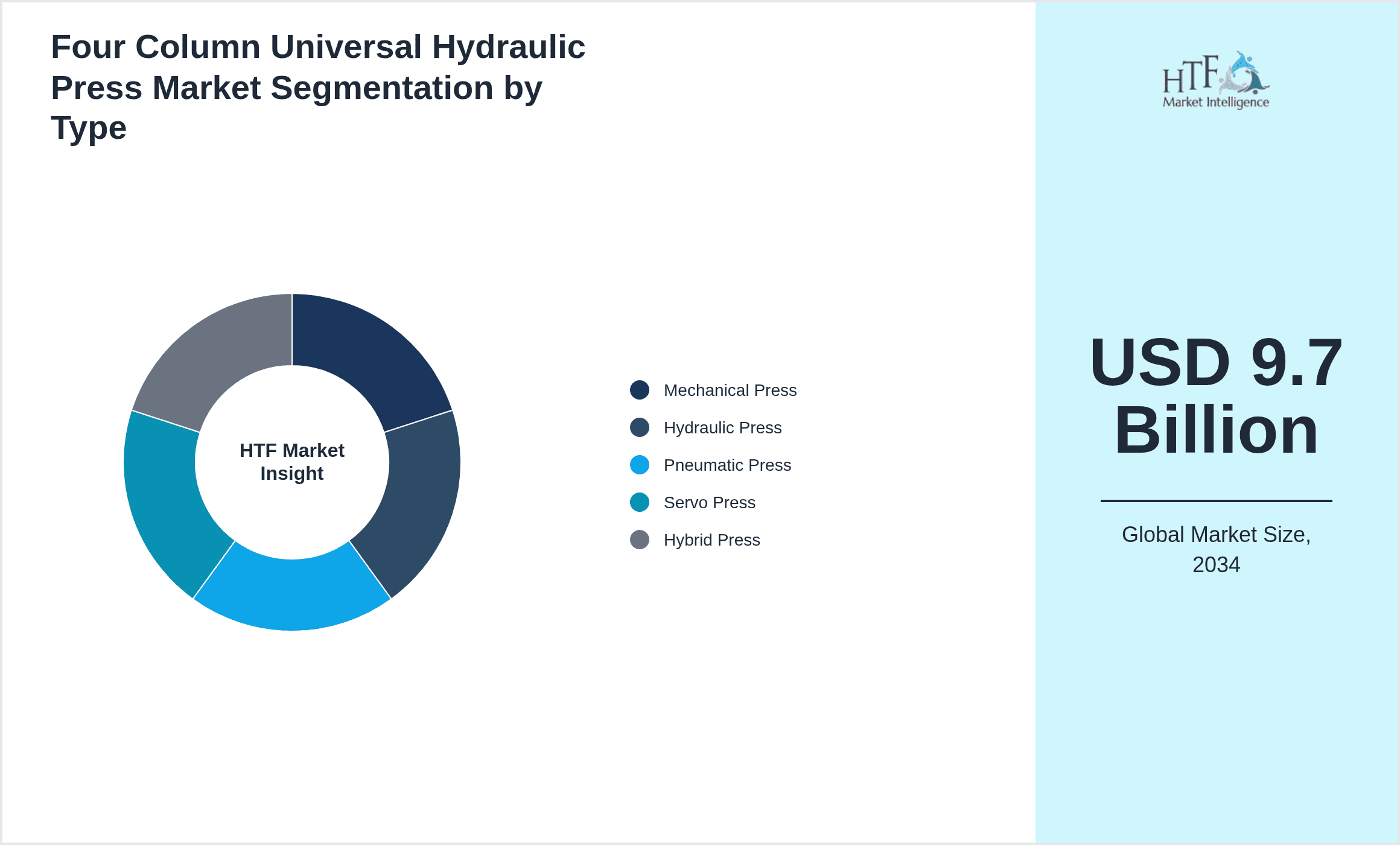
- •By Product Type
- ◦Mechanical Press
- ◦Hydraulic Press
- ◦Pneumatic Press
- ◦Servo Press
- ◦Hybrid Press
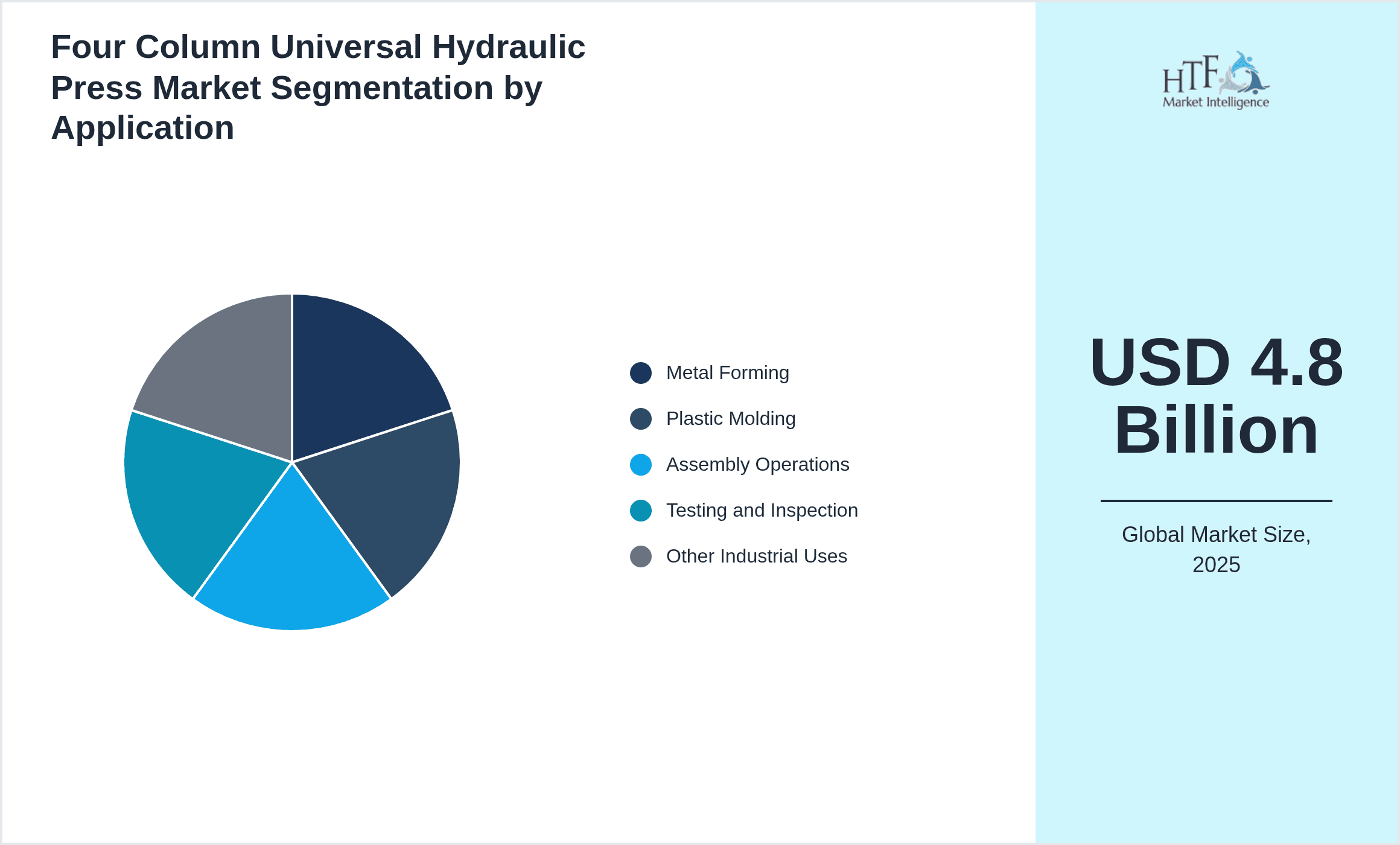
- •By Application
- ◦Metal Forming
- ◦Plastic Molding
- ◦Assembly Operations
- ◦Testing and Inspection
- ◦Other Industrial Uses
- •By End-Use Industry
- ◦Automotive
- ◦Aerospace
- ◦Electronics
- ◦General Manufacturing
- •By Distribution Channel
- ◦Direct Sales
- ◦Distributors
- ◦Online Platforms
Growth Dynamics
The global Four Column Universal Hydraulic Press market is propelled by the increasing demand for high-precision manufacturing processes across automotive, aerospace, and electronics sectors. The presses’ ability to deliver consistent force and uniform pressure distribution enhances product quality and reduces material wastage, driving adoption globally. Additionally, the integration of advanced control systems and automation technologies improves operational efficiency and reduces labor costs, making these presses attractive investments for manufacturers seeking productivity gains and process optimization. Growing industrialization, especially in emerging economies within Asia-Pacific, further fuels market expansion by boosting demand for versatile and reliable pressing machinery. Environmental regulations encouraging energy-efficient equipment also stimulate innovation and replacement of outdated mechanical presses with hydraulic and servo variants. Collectively, these factors create a robust growth environment for the market.
Market Trends
The Four Column Universal Hydraulic Press market is witnessing significant trends including the adoption of servo-driven technology that offers enhanced precision, energy efficiency, and reduced cycle times. Manufacturers are increasingly integrating IoT and Industry 4.0 capabilities to enable real-time monitoring, predictive maintenance, and remote diagnostics, thereby minimizing downtime and operational costs. There is also a growing preference for modular press designs that allow customization to specific application requirements, supporting diverse manufacturing needs. Sustainability considerations are driving the development of presses with lower power consumption and environmentally friendly hydraulic fluids. Additionally, strategic collaborations between press manufacturers and technology providers are fostering innovation and expanding application scopes.
Market Opportunities
Emerging markets in Asia-Pacific present substantial growth opportunities due to rapid industrialization and expanding automotive and electronics manufacturing sectors requiring advanced pressing solutions. The increasing adoption of smart manufacturing and automation technologies opens avenues for developing intelligent hydraulic presses with integrated sensors and AI-driven controls. Furthermore, retrofitting and upgrading existing mechanical presses with servo and hybrid technologies offer potential for market expansion by enhancing machine capabilities and energy efficiency. Opportunities also exist in niche applications such as renewable energy equipment manufacturing and medical device production, where precision pressing is critical. Strategic partnerships and acquisitions aimed at technology enhancement and geographic expansion can further drive market growth.
Market Challenges
The Four Column Universal Hydraulic Press market faces challenges including high initial capital investment and maintenance costs, which can be prohibitive for small and medium-sized enterprises. Complex machinery requires skilled operators and technicians, leading to increased training and labor costs. Additionally, stringent environmental and safety regulations necessitate compliance investments that may impact profitability. Market penetration in developing regions can be hindered by lack of awareness and infrastructure limitations. Furthermore, competition from alternative pressing technologies such as electric servo presses and mechanical presses with advanced features poses a threat to traditional hydraulic models. Supply chain disruptions and raw material price volatility also affect production costs and delivery timelines.
Regulatory Framework
- •Between 2020 and 2025, regulatory landscapes impacting the Four Column Universal Hydraulic Press market have evolved to emphasize safety standards and environmental compliance. Key regulations such as the Machinery Directive in Europe set stringent requirements for machine safety, mandating inclusion of emergency stops, guards, and fail-safe mechanisms. Energy efficiency standards have been introduced in North America and Asia-Pacific, encouraging manufacturers to develop presses with reduced power consumption and lower emissions. Environmental policies restrict the use of hazardous hydraulic fluids, promoting biodegradable and eco-friendly alternatives. Additionally, workplace safety regulations require comprehensive operator training and machine certification, influencing design and operational protocols. Compliance with these regulatory frameworks has driven innovation and adoption of advanced technologies, while also imposing additional costs and complexity on manufacturers and end-users.
- •The enforcement mechanisms include periodic audits, certification requirements, and penalties for non-compliance, ensuring adherence across regions. Stakeholders have responded by investing in research and development to meet evolving standards and by enhancing transparency in supply chains. National mandates in emerging markets are progressively aligning with international norms, facilitating global trade and technology transfer. Industry associations play a role in disseminating best practices and assisting manufacturers with regulatory navigation. Overall, the regulatory environment from 2020 to 2025 has shaped market dynamics by balancing innovation incentives with safety and sustainability imperatives.
- •Operational guidelines emphasize preventive maintenance, proper handling of hydraulic fluids, and standardized testing procedures to ensure machine longevity and reduce environmental impact. Countries like Germany, Japan, and the United States have implemented specific mandates regarding noise pollution and workplace ergonomics, influencing press design innovations. Emerging economies are gradually adopting similar frameworks, driven by increased industrial activity and international trade pressures. The regulatory framework also covers import-export controls, intellectual property protections for patented pressing technologies, and certifications for quality management systems such as ISO 9001. These regulations collectively support a safer, more efficient, and environmentally conscious market ecosystem.
- •Country-specific mandates vary, with Europe focusing extensively on sustainability and worker safety, while Asia-Pacific emphasizes rapid industrial compliance and technology modernization. Timelines for implementation have been staggered, allowing manufacturers to adapt designs and processes accordingly. Government incentives and subsidies are available in select regions to encourage adoption of energy-saving and low-emission presses. Collaborative efforts between regulatory bodies and industry stakeholders enhance guideline development and compliance monitoring. These developments have reinforced the importance of proactive regulatory engagement as a strategic priority for market participants.
- •Government initiatives include funding programs for innovation in hydraulic press technologies, tax benefits for energy-efficient machinery adoption, and support for workforce skill development. Public-private partnerships have facilitated pilot projects demonstrating advanced press capabilities and sustainability benefits. Policy frameworks also support export facilitation and standard harmonization to boost global competitiveness. Ongoing dialogue between regulators and industry continues to shape future standards, focusing on digital integration, safety enhancement, and environmental stewardship. Collectively, these regulatory efforts underscore a commitment to advancing the Four Column Universal Hydraulic Press market through responsible and forward-looking governance.
Market Intelligence
- •15th January 2025, Schuler Group launched its latest Four Column Universal Hydraulic Press equipped with integrated Industry 4.0 capabilities, enabling real-time monitoring and predictive maintenance. This innovative press features enhanced energy efficiency through servo-driven technology and modular design allowing customization for diverse industrial applications. Targeting automotive and aerospace manufacturers, the product aims to reduce operational downtime and improve precision in metal forming processes. Schuler’s strategic objective includes expanding its footprint in emerging markets by offering scalable solutions addressing local manufacturing needs. This launch is expected to strengthen Schuler’s market leadership and accelerate digital transformation within the hydraulic press industry. Source: Schuler Group Official Press Release
- •10th March 2025, JIER Machine-Tool Group unveiled a new hybrid Four Column Universal Hydraulic Press combining hydraulic and mechanical pressing technologies. The press boasts a significant reduction in energy consumption and cycle times while maintaining high force accuracy for complex assembly operations. Marketed primarily in Asia-Pacific, this development aligns with regional industrial growth and sustainability goals. JIER’s innovation signifies a shift towards versatile and eco-friendly machinery, enhancing competitive positioning amid rising environmental regulations. The company anticipates increased adoption across automotive and electronics sectors seeking efficient manufacturing solutions. Source: JIER Machine-Tool Group Press Announcement
- •5th June 2025, AIDA Engineering, Ltd. announced a strategic partnership with a leading automation technology provider to integrate AI-driven control systems into its Four Column Universal Hydraulic Press portfolio. This collaboration aims to enhance operational intelligence, enabling adaptive force control and predictive diagnostics that minimize waste and maintenance costs. The initiative supports AIDA’s commitment to Industry 4.0 adoption and expanding its presence in North America and Europe. The partnership is expected to yield new product offerings by 2026, reinforcing AIDA’s innovation pipeline and market competitiveness. Source: AIDA Engineering Corporate News
- •20th August 2025, Komatsu Ltd. completed the acquisition of a niche hydraulic press manufacturer specializing in servo technology, strengthening its product range and technical expertise. The acquisition enables Komatsu to accelerate development of advanced Four Column Universal Hydraulic Press models with improved precision and automation features. Synergies are anticipated in R&D, supply chain optimization, and market access, particularly in Asia-Pacific and Europe. This strategic move positions Komatsu as a formidable competitor capable of addressing evolving customer demands for high-performance pressing solutions. The consolidation reflects broader industry trends of technological convergence and competitive consolidation. Source: Komatsu Ltd. Investor Relations
- •Recent market developments and strategic initiatives are continuously tracked through industry publications, company announcements, and regulatory filings. For the most current information, stakeholders are advised to monitor official corporate communications and recognized market intelligence platforms.
Regional Outlook
The North America currently holds a significant share of the market, primarily due to several key factors: increasing consumption rates, a burgeoning population, and robust economic momentum. These elements collectively drive demand, positioning this region as a leader in the market. On the other hand, Asia-Pacific is rapidly emerging as the fastest-growing area within the industry. This remarkable growth can be attributed to swift infrastructure development, the expansion of various industrial sectors, and a marked increase in consumer demand. These dynamics make this region a crucial player in shaping future market growth.
In our report, we cover a comprehensive analysis of the following regions and countries:
- North America
- LATAM
- West Europe
- Central & Eastern Europe
- Northern Europe
- Southern Europe
- East Asia
- Southeast Asia
- South Asia
- Central Asia
- Oceania
- MEA
| Feature | Details |
|---|---|
| Base Year Market Size | USD 4.8 Billion |
| Forecast Year Market Size | USD 9.7 Billion |
| CAGR | 7.8% |
| Forecast Period | 2026 to 2033 |
| YoY Growth | 7.5% |
| Scope of Report | Market is segmented by Product Type (Mechanical Press, Hydraulic Press, Pneumatic Press, Servo Press, Hybrid Press), Application (Metal Forming, Plastic Molding, Assembly Operations, Testing and Inspection, Other Industrial Uses), End-Use Industry (Automotive, Aerospace, Electronics, General Manufacturing), Distribution Channel (Direct Sales, Distributors, Online Platforms) |
| Regions Covered | North America, LATAM, West Europe, Central & Eastern Europe, Northern Europe, Southern Europe, East Asia, Southeast Asia, South Asia, Central Asia, Oceania, MEA |
| Key Companies | Schuler Group (Germany), JIER Machine-Tool Group Co., Ltd. (China), AIDA Engineering, Ltd. (Japan), Komatsu Ltd. (Japan), SMS Group GmbH (Germany) |
Global Four Column Universal Hydraulic Press Market Size, Growth & Revenue 2025-2034 - Table of Contents
Frequently Asked Questions (FAQ):
The Compact Track Loaders market is projected to grow at a CAGR of 6.8% from 2025 to 2030, driven by increasing demand in construction and agricultural sectors.
North America currently leads the market with approximately 45% market share, followed by Europe at 28% and Asia-Pacific at 22%. The remaining regions account for 5% of the global market.
Key growth drivers include increasing construction activities, rising demand for versatile equipment in agriculture, technological advancements in track loader design, and growing preference for compact equipment in urban construction projects.