
Global Cloud-Based English Language Learning Market Size, Growth & Revenue 2024-2034
Global Cloud-Based English Language Learning Market is segmented by Product Type (Software-as-a-Service (SaaS) Platforms, Mobile Applications, Web-Based Software, Virtual Classrooms, AI-Powered Tools), Application (K-12 Education, Higher Education, Corporate Training, Self-Learning, Language Institutes), End-User Industry (Educational Institutions, Corporate Sector, Individual Learners, Government & Public Sector), Distribution Channel (Direct Sales, Online Marketplaces, Educational Partnerships), and Geography (North America, LATAM, West Europe, Central & Eastern Europe, Northern Europe, Southern Europe, East Asia, Southeast Asia, South Asia, Central Asia, Oceania, MEA)
Pricing
Report Overview
Executive Summary
- •The global cloud-based English language learning market is a rapidly evolving sector focused on delivering English education through internet-based platforms powered by cloud technology. This market includes a variety of product types such as SaaS platforms, mobile applications, web-based software, virtual classrooms, and AI-powered learning tools. Its applications span across K-12 education, higher education, corporate training, self-learning, and language institutes, supporting learners worldwide with flexible, accessible, and personalized English learning experiences. The market’s scope covers interactive content, real-time communication, progress tracking, and adaptive learning capabilities that leverage AI and machine learning. The industry’s growth is driven by increasing internet penetration, demand for English proficiency in global commerce and education, and the rising adoption of digital education tools. This market addresses the challenges of traditional classroom constraints by providing scalable, cost-effective, and engaging learning solutions accessible across diverse geographies and user segments.
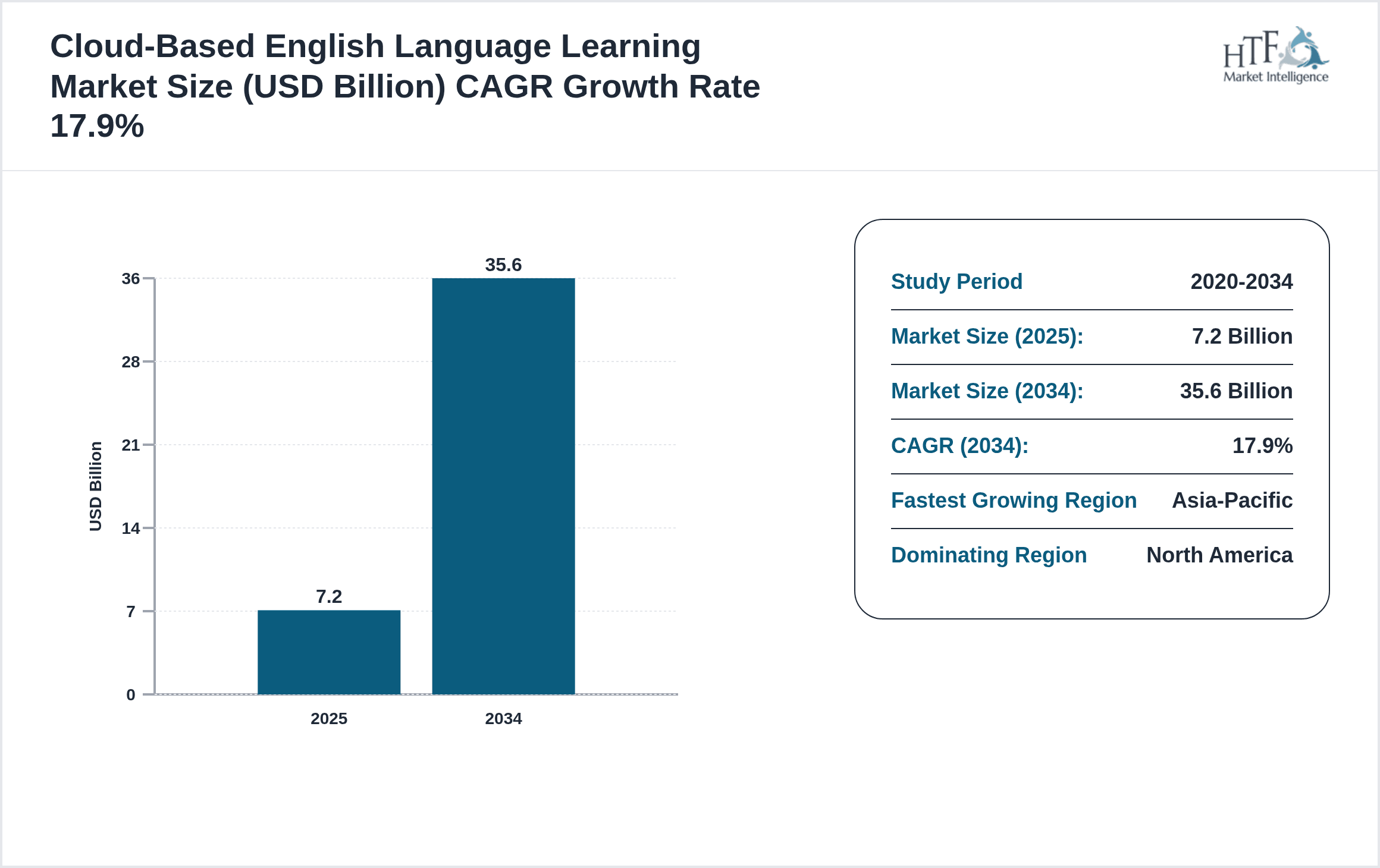
- •Key highlights indicate the market valued at USD 7.2 Billion in 2024, with projections reaching USD 35.6 Billion by 2034, signifying a CAGR of 17.9%. North America dominates the market due to early adoption of cloud technologies and strong education infrastructure, while Asia-Pacific is the fastest-growing region fueled by expanding internet access and rising English language demand. SaaS platforms lead in product types by market share, whereas AI-powered tools exhibit the highest growth rates owing to their adaptive learning capabilities. Applications in corporate training and self-learning segments are expanding rapidly, reflecting shifts in workforce upskilling and individual learner preferences. The market witnesses continuous innovation and strategic collaborations among key players to enhance user experience and expand geographic reach.
- •This market holds strategic importance for educational institutions, corporate training providers, technology companies, and governments aiming to improve English proficiency as a critical skill for global competitiveness. Cloud-based delivery models enable cost efficiency, scalability, and real-time updates, essential for modern education ecosystems. Stakeholders benefit from data-driven insights and personalized learning journeys, improving learner outcomes and engagement. The market’s growth also supports economic development by addressing skill gaps and enhancing employability across regions. Therefore, investments in innovation, infrastructure, and partnerships within this market can yield substantial returns and societal benefits.
Competitive Landscape
The competitive environment in the global cloud-based English language learning market is characterized by intense rivalry among established technology firms, specialized language learning startups, and educational content providers. Companies compete through continuous innovation in AI-driven adaptive learning, user engagement features, and platform scalability. Strategic partnerships and mergers are common to expand geographic presence and integrate complementary services. Market leaders focus on differentiating through personalized learning experiences, multilingual support, and seamless cloud infrastructure integration. Pricing strategies vary from subscription-based models to freemium offerings, targeting diverse user segments. Barriers to entry include high technology development costs and the need for robust content curation. Regional competition is influenced by local language preferences and regulatory frameworks, prompting companies to customize offerings. Future competitive trends suggest increased adoption of immersive technologies such as AR/VR and greater emphasis on data privacy and user analytics to maintain competitive advantages.
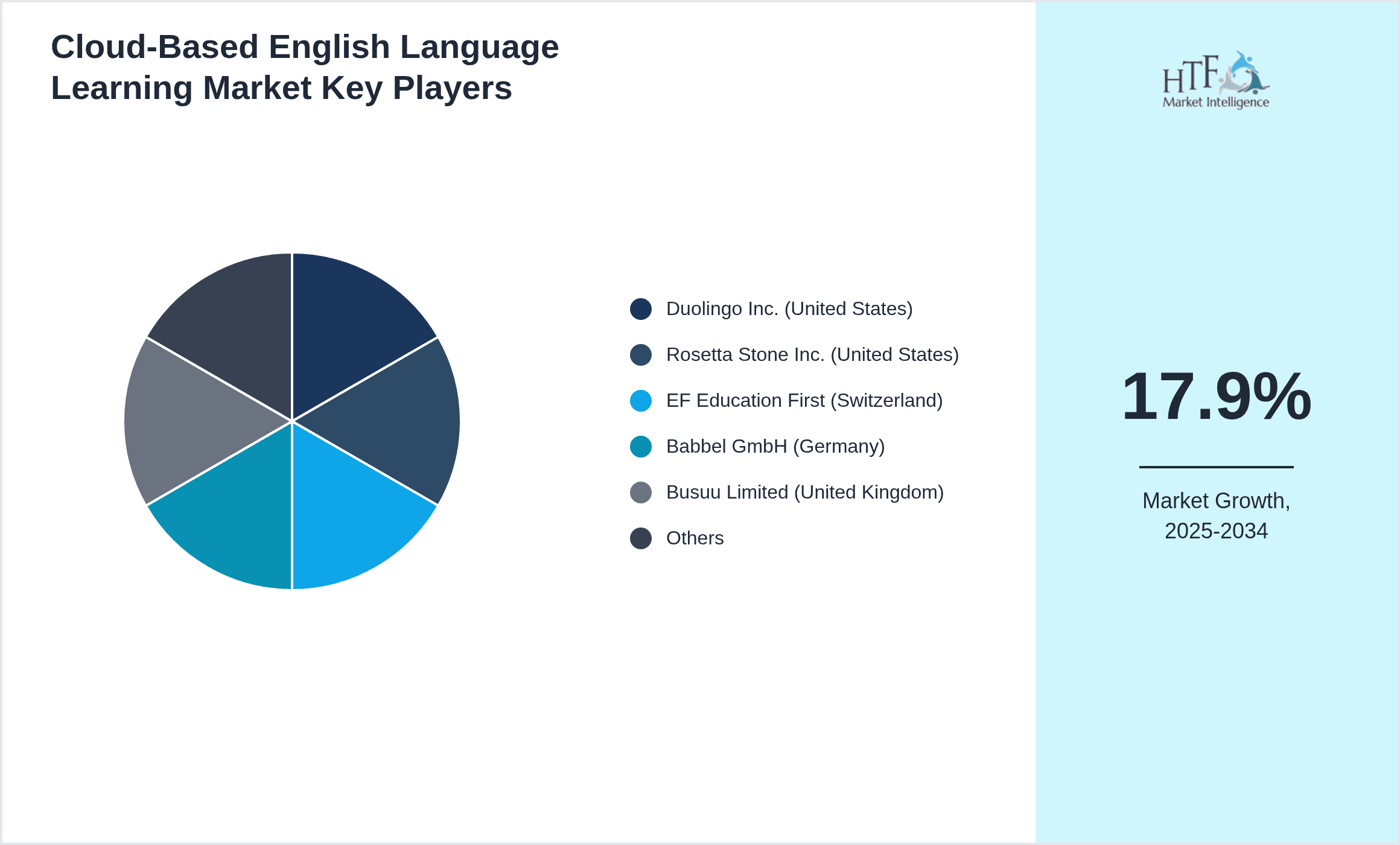
Leading Companies in Cloud-Based English Language Learning Market
- •Duolingo Inc. (United States)
- •Rosetta Stone Inc. (United States)
- •EF Education First (Switzerland)
- •Babbel GmbH (Germany)
- •Busuu Limited (United Kingdom)
- •Cambly Inc. (United States)
- •Lingoda GmbH (Germany)
- •Open English LLC (United States)
- •Memrise Ltd. (United Kingdom)
- •Voxy Inc. (United States)
- •iTutorGroup (Taiwan)
- •Preply Inc. (United States)
- •HelloTalk Corp. (China)
- •Engoo (Japan)
- •Italki (China)
- •Kahoot! AS (Norway)
- •Mango Languages (United States)
- •Cake Technologies Inc. (United States)
- •Lingvist OÜ (Estonia)
- •EF English Live (Switzerland)
- •Tandem Mobile GmbH (Germany)
- •EnglishCentral (United States)
- •LingualBox (Singapore)
- •Berlitz Corporation (United States)
- •WizIQ Inc. (United States)
Market Breakdown
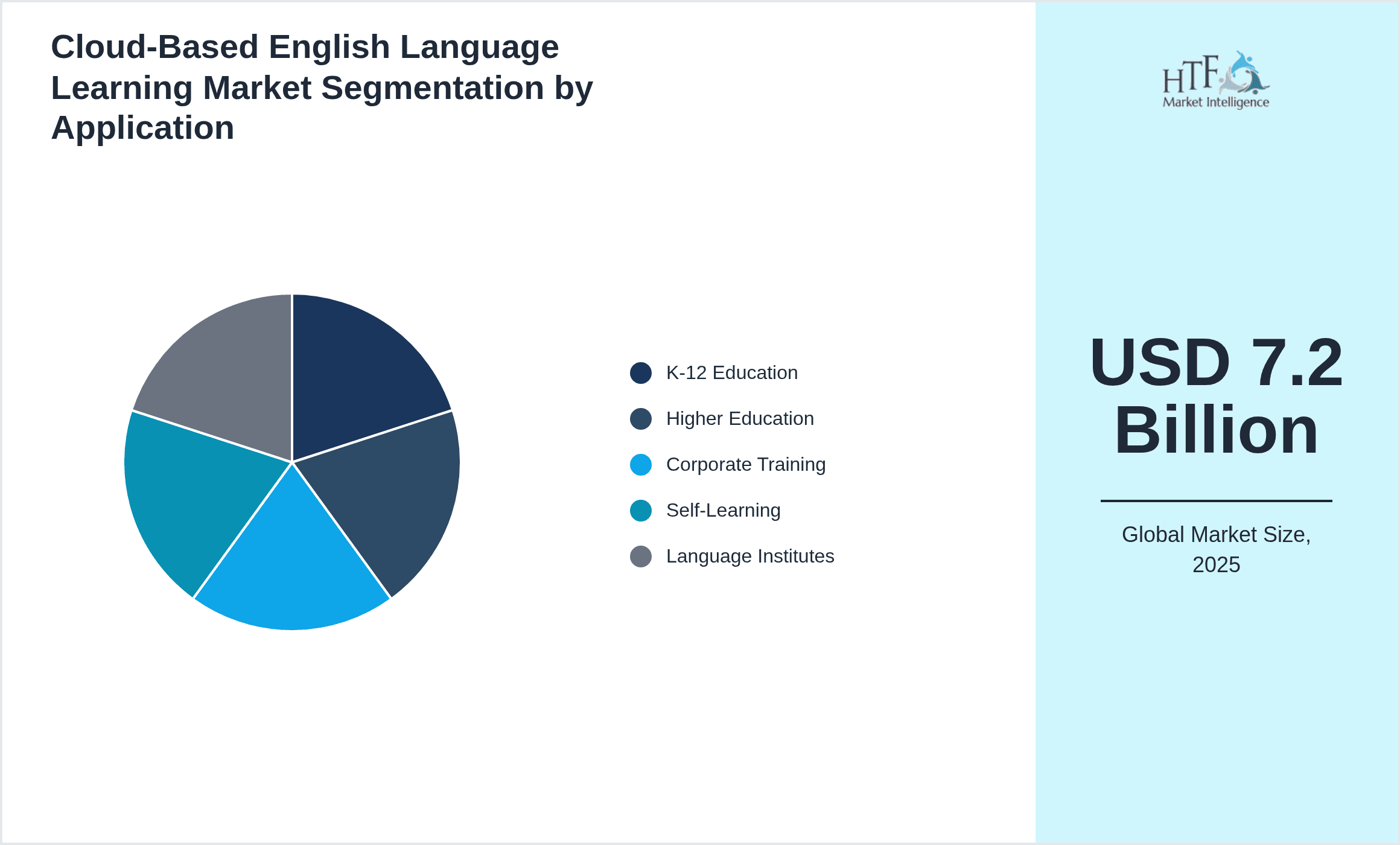
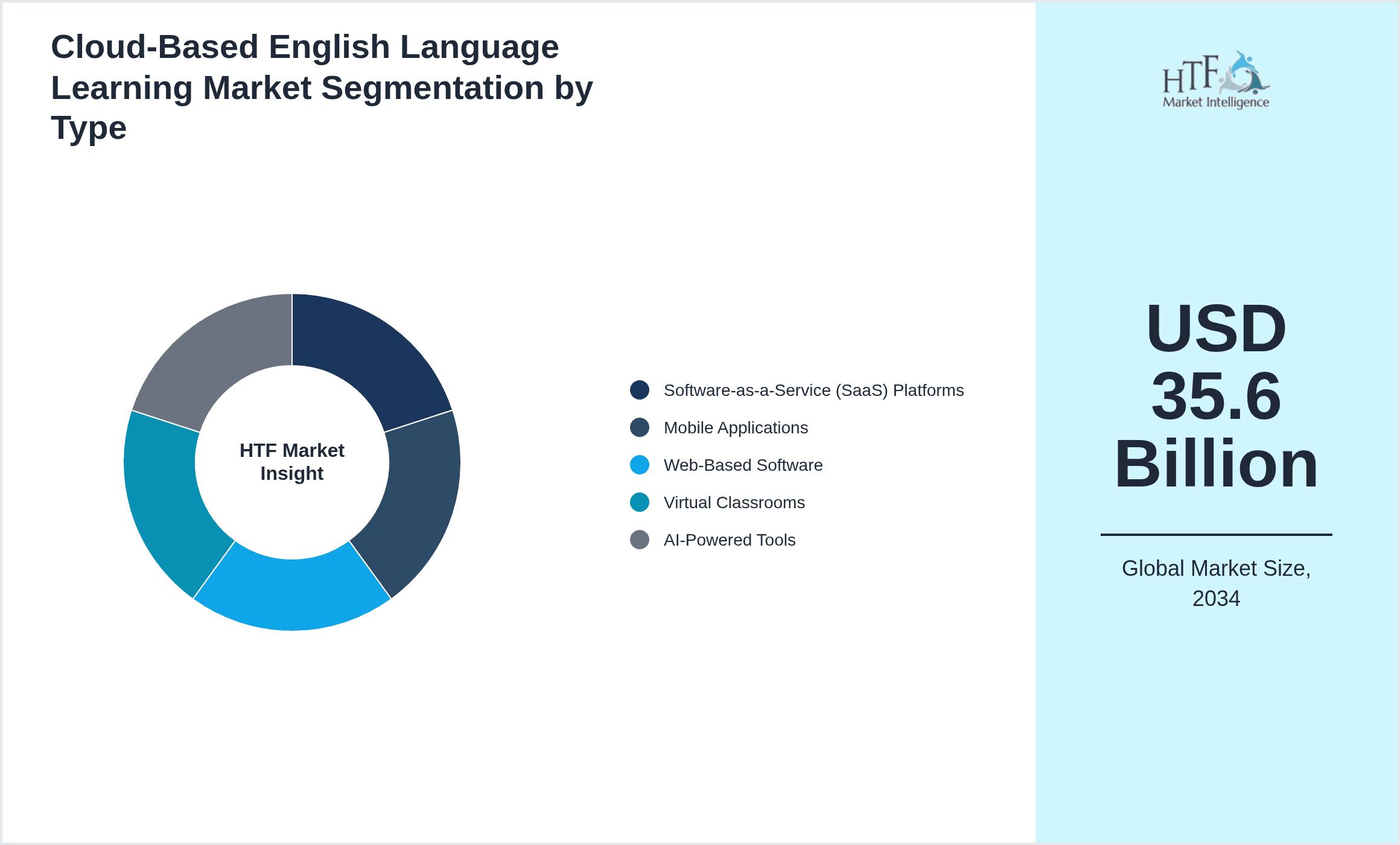
- •By Product Type
- ◦Software-as-a-Service (SaaS) Platforms
- ◦Mobile Applications
- ◦Web-Based Software
- ◦Virtual Classrooms
- ◦AI-Powered Tools
- •By Application
- ◦K-12 Education
- ◦Higher Education
- ◦Corporate Training
- ◦Self-Learning
- ◦Language Institutes
- •By End-User Industry
- ◦Educational Institutions
- ◦Corporate Sector
- ◦Individual Learners
- ◦Government & Public Sector
- •By Distribution Channel
- ◦Direct Sales
- ◦Online Marketplaces
- ◦Educational Partnerships
Growth Dynamics
- •Rising digital transformation in education and corporate sectors is a primary growth driver, enabling widespread adoption of cloud-based English learning solutions that offer flexibility and accessibility to a global user base.
- •Integration of artificial intelligence and machine learning technologies facilitates personalized and adaptive learning experiences, enhancing engagement and retention rates among diverse learner profiles.
- •The growing demand for English proficiency across emerging economies, particularly in Asia-Pacific and Latin America, fuels market expansion as learners seek scalable and affordable language learning platforms.
- •Increasing mobile device penetration and internet accessibility worldwide support the growth of mobile applications and SaaS platforms, making English learning more convenient and on-demand.
- •Government initiatives and educational reforms promoting digital literacy and English language acquisition contribute significantly to market growth by creating favorable environments and funding opportunities.
- •Strategic collaborations between technology providers and educational institutions enhance content quality and platform reach, driving wider adoption and customer loyalty in competitive markets.
- •The shift toward remote work and virtual collaboration globally increases the need for English language skills, especially in multinational corporations, stimulating demand for corporate training applications.
Market Trends
- •Adoption of AI-powered chatbots and virtual tutors is transforming learner interaction by providing real-time feedback and conversational practice, thereby improving language acquisition efficiency.
- •Gamification of language learning content through interactive exercises, rewards, and challenges is enhancing user engagement and motivation across all age groups and proficiency levels.
- •Increasing integration of cloud-based platforms with video conferencing tools supports immersive virtual classrooms, enabling live instructor-led sessions and peer interaction despite geographical barriers.
- •Sustainability initiatives are influencing platform providers to adopt energy-efficient cloud infrastructure and digital content delivery methods, aligning with global environmental goals.
- •Cross-platform compatibility and offline access features are becoming standard offerings, allowing learners to continue their studies seamlessly across devices and without constant internet connectivity.
- •Rising collaboration between language learning platforms and corporate HR departments facilitates customized training programs tailored to specific business communication needs.
- •Emerging markets are witnessing a surge in demand for localized English language content, reflecting cultural adaptation and regional preferences to increase learning effectiveness.
Market Opportunities
- •Expanding into underpenetrated regions such as Africa and the Middle East presents significant growth potential due to rising internet adoption and increasing emphasis on English proficiency for economic advancement.
- •Developing AI-driven multilingual platforms that integrate English learning with native language support can attract diverse user bases and improve learner retention.
- •Investment in corporate-focused solutions tailored to industry-specific vocabulary and communication skills offers lucrative opportunities for platform providers to capture business training budgets.
- •Collaborations with governments and educational institutions to offer subsidized or free cloud-based English learning programs can enhance market penetration and social impact.
- •Leveraging emerging technologies such as augmented reality (AR) and virtual reality (VR) to create immersive English learning environments will differentiate offerings and attract tech-savvy learners.
- •Expanding distribution through strategic partnerships with mobile network operators and device manufacturers can increase accessibility and user acquisition in mobile-first markets.
- •Enhancing data analytics capabilities to provide in-depth learner insights will enable personalized curriculum development and improve educational outcomes, driving customer satisfaction.
Market Challenges
- •High competition with numerous free or low-cost language learning apps poses a challenge for premium cloud-based platforms to differentiate and justify subscription pricing.
- •Variability in internet infrastructure quality across regions limits consistent access to cloud-based platforms, impacting user experience and market expansion in developing areas.
- •Concerns over data privacy and security, particularly involving minors and educational data, require stringent compliance and can increase operational costs for providers.
- •Limited digital literacy among certain learner segments hampers adoption of advanced cloud-based learning technologies, necessitating user-friendly interfaces and support services.
- •The rapid pace of technological change demands continuous platform upgrades and content updates, which may strain resources and affect service stability.
- •Cultural differences and language preferences require significant localization efforts, increasing complexity and cost for global platform providers.
- •Retention of learners over long-term periods remains challenging due to motivation fluctuations and competing educational priorities.
Regulatory Framework
- •Between 2019 and 2024, data protection regulations such as the GDPR in Europe and CCPA in North America have mandated strict compliance for cloud-based educational platforms, requiring enhanced data privacy measures and transparent user consent protocols.
- •Educational technology certifications and quality standards introduced globally during this period ensure that cloud-based English learning platforms meet accessibility, content accuracy, and pedagogical effectiveness criteria, influencing market acceptance.
- •Safety standards addressing child online protection have been reinforced internationally, compelling providers to implement robust age verification and parental control features to safeguard young learners.
- •Country-specific mandates, such as those promoting digital literacy and inclusion in Asia-Pacific and Latin America, have shaped government funding and incentivization frameworks supporting cloud-based English learning adoption.
- •Public-private partnership policies have emerged to foster collaboration between platform providers and educational institutions, facilitating subsidized access and curriculum integration under regulated guidelines.
Market Intelligence
- •15th January 2025, Duolingo Inc. launched an advanced AI-powered English learning module integrating speech recognition and personalized feedback capabilities targeting corporate learners seeking enhanced communication skills. This initiative aims to leverage machine learning to customize content dynamically based on user progress, improving engagement and efficacy. The platform expansion includes integration with popular corporate learning management systems, facilitating seamless adoption across organizations worldwide. This strategic product launch underscores Duolingo's commitment to innovation and market leadership in cloud-based English education. Source: Official Duolingo press release
- •7th March 2025, Babbel GmbH introduced a mobile application update featuring immersive augmented reality (AR) scenarios for English language practice. This cutting-edge enhancement enables learners to engage in simulated real-life conversations and situational exercises, enhancing practical language skills. The app update reflects Babbel's strategic focus on combining technology with user-centric design to boost learner motivation and retention. The launch is positioned to capture growing demand for experiential learning tools in both individual and institutional segments. Source: Babbel corporate announcement
- •22nd May 2024, EF Education First completed its acquisition of Lingoda GmbH, a leading virtual classroom provider specializing in live English instruction. This merger expands EF’s digital offering and strengthens its presence in the European market, enabling a broader reach through combined technological assets and educational content. The consolidation aims to enhance scalability, improve service quality, and accelerate innovation in cloud-based language learning solutions. This strategic move reflects ongoing industry consolidation trends to achieve competitive advantages. Source: EF Education First official statement
- •10th August 2024, Voxy Inc. announced a strategic partnership with a major global telecommunications provider to bundle English language learning services with mobile data plans in Latin America. This collaboration targets increased accessibility for learners in emerging markets by leveraging widespread mobile connectivity. The initiative includes localized content and flexible subscription models designed to meet diverse user needs. This partnership exemplifies innovative distribution strategies to penetrate underserved regions effectively. Source: Voxy corporate news release
Regional Outlook
The North America currently holds a significant share of the market, primarily due to several key factors: increasing consumption rates, a burgeoning population, and robust economic momentum. These elements collectively drive demand, positioning this region as a leader in the market. On the other hand, Asia-Pacific is rapidly emerging as the fastest-growing area within the industry. This remarkable growth can be attributed to swift infrastructure development, the expansion of various industrial sectors, and a marked increase in consumer demand. These dynamics make this region a crucial player in shaping future market growth.
In our report, we cover a comprehensive analysis of the following regions and countries:
- North America
- LATAM
- West Europe
- Central & Eastern Europe
- Northern Europe
- Southern Europe
- East Asia
- Southeast Asia
- South Asia
- Central Asia
- Oceania
- MEA
| Feature | Details |
|---|---|
| Base Year Market Size | USD 7.2 Billion |
| Forecast Year Market Size | USD 35.6 Billion |
| CAGR | 17.9% |
| Forecast Period | 2026 to 2033 |
| YoY Growth | 17.6% |
| Scope of Report | Market is segmented by Product Type (Software-as-a-Service (SaaS) Platforms, Mobile Applications, Web-Based Software, Virtual Classrooms, AI-Powered Tools), Application (K-12 Education, Higher Education, Corporate Training, Self-Learning, Language Institutes), End-User Industry (Educational Institutions, Corporate Sector, Individual Learners, Government & Public Sector), Distribution Channel (Direct Sales, Online Marketplaces, Educational Partnerships) |
| Regions Covered | North America, LATAM, West Europe, Central & Eastern Europe, Northern Europe, Southern Europe, East Asia, Southeast Asia, South Asia, Central Asia, Oceania, MEA |
| Key Companies | Duolingo Inc. (United States), Rosetta Stone Inc. (United States), EF Education First (Switzerland), Babbel GmbH (Germany), Busuu Limited (United Kingdom), Cambly Inc. (United States), Lingoda GmbH (Germany), Open English LLC (United States), Memrise Ltd. (United Kingdom), Voxy Inc. (United States), iTutorGroup (Taiwan), Preply Inc. (United States), HelloTalk Corp. (China), Engoo (Japan), Italki (China), Kahoot! AS (Norway), Mango Languages (United States), Cake Technologies Inc. (United States), Lingvist OÜ (Estonia), EF English Live (Switzerland), Tandem Mobile GmbH (Germany), EnglishCentral (United States), LingualBox (Singapore), Berlitz Corporation (United States), WizIQ Inc. (United States) |
Global Cloud-Based English Language Learning Market Size, Growth & Revenue 2024-2034 - Table of Contents
Frequently Asked Questions (FAQ):
The Compact Track Loaders market is projected to grow at a CAGR of 6.8% from 2025 to 2030, driven by increasing demand in construction and agricultural sectors.
North America currently leads the market with approximately 45% market share, followed by Europe at 28% and Asia-Pacific at 22%. The remaining regions account for 5% of the global market.
Key growth drivers include increasing construction activities, rising demand for versatile equipment in agriculture, technological advancements in track loader design, and growing preference for compact equipment in urban construction projects.