
Global Protective Footwear Market Size, Growth & Revenue 2024-2034
Global Protective Footwear Market is segmented by Product Type (Steel Toe Boots, Composite Toe Boots, Aluminum Toe Boots, Rubber Boots, Others), Application (Construction, Manufacturing, Oil & Gas, Mining, Healthcare), End-Use Industry (Industrial, Commercial, Residential, Public Sector), Distribution Channel (Direct Sales, Retail Stores, E-commerce), and Geography (North America, LATAM, West Europe, Central & Eastern Europe, Northern Europe, Southern Europe, East Asia, Southeast Asia, South Asia, Central Asia, Oceania, MEA)
Pricing
Report Overview
Executive Summary
- •The global protective footwear market is a dynamic sector focused on manufacturing specialized footwear designed to protect workers from occupational hazards such as impacts, punctures, electrical shocks, and chemical exposures. The market spans multiple product types including steel toe boots, composite toe boots, aluminum toe boots, and rubber boots, each tailored to meet specific safety standards and industry requirements. Applications primarily cover sectors like construction, manufacturing, oil & gas, mining, and healthcare, where safety compliance is crucial. Rising awareness of workplace safety, coupled with regulatory enforcement globally, propels demand for advanced protective footwear solutions that not only ensure safety but also provide ergonomic comfort and durability. Technological innovations in material science and design, along with increasing industrialization in emerging markets, are further expanding the market’s reach. The market is characterized by competitive strategies emphasizing product differentiation, innovation, and regional expansion to capture growth opportunities worldwide.
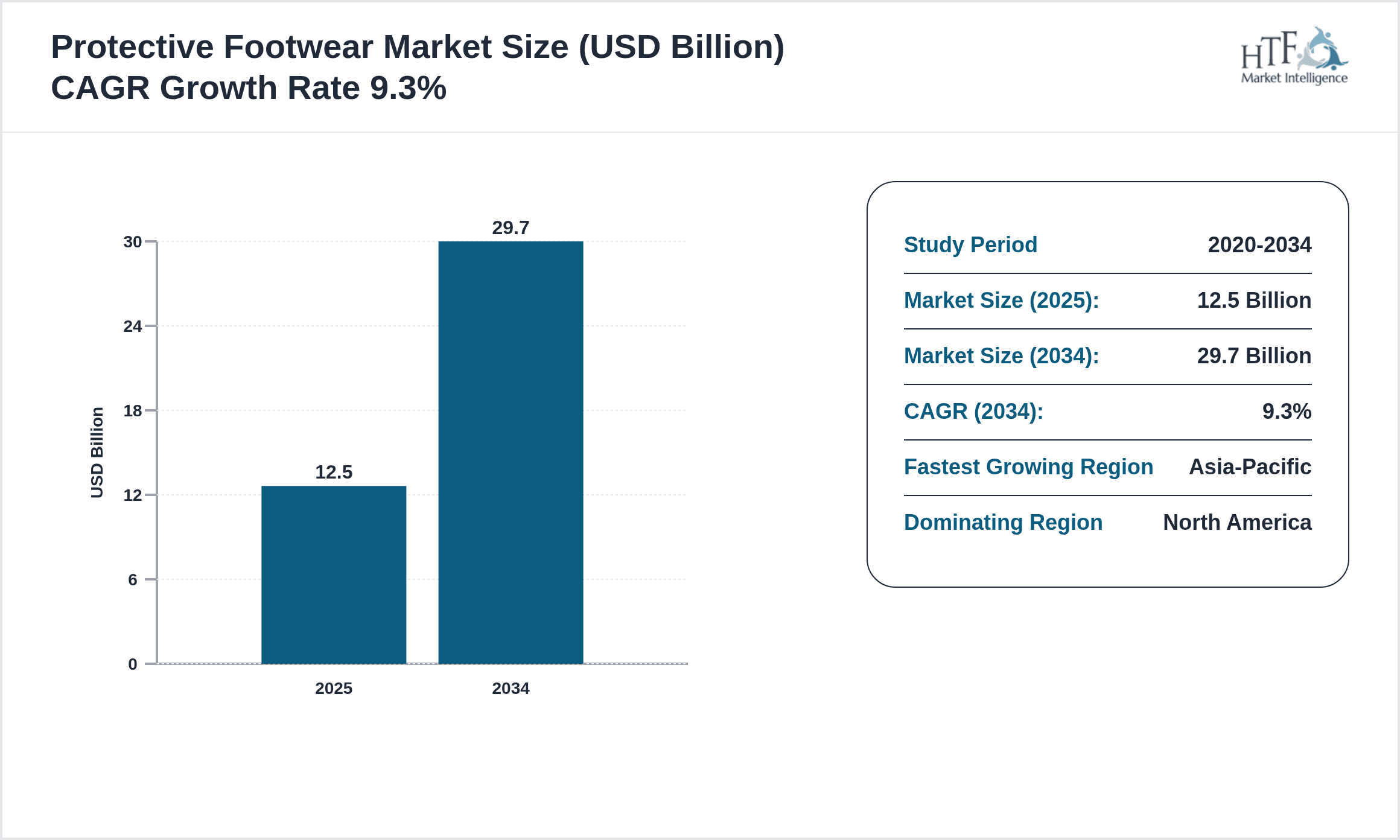
- •Key market highlights include a robust CAGR of 9.3% forecasted from 2025 to 2034, with the market expected to grow from USD 12.5 billion in 2025 to USD 29.7 billion by 2034. North America currently dominates the market due to stringent safety regulations and high industrial activity, while Asia-Pacific is poised as the fastest-growing region driven by rapid industrialization and infrastructure development. Steel toe boots lead the product segment owing to their widespread adoption across heavy industries, whereas composite toe boots exhibit the fastest growth due to their lightweight and non-metallic advantages. Construction remains the largest application segment, reflecting ongoing urbanization and infrastructure projects worldwide. These data points underscore significant growth potential and evolving consumer preferences in the protective footwear market.
- •The strategic importance of the protective footwear market lies in its critical role in workplace safety and compliance, impacting numerous industries by mitigating risks and enhancing worker productivity. For manufacturers and distributors, the market offers ample opportunities through innovation in materials, customization, and sustainability initiatives. For end-users, such as corporations and safety managers, protective footwear is a vital investment to comply with regulations and reduce workplace accidents. Furthermore, the market's growth is supported by government policies and global safety standards, making protective footwear an indispensable component of occupational health and safety strategies on a global scale.
Competitive Landscape
The protective footwear market is marked by intense competition among global and regional players striving to strengthen their market positions through continuous innovation, strategic partnerships, and extensive distribution networks. Market leaders focus on research and development to introduce advanced safety features, lightweight materials, and ergonomic designs that meet evolving industry standards and consumer expectations. Competitive strategies also include mergers and acquisitions to consolidate market share and expand geographic reach. Companies often differentiate themselves through product certifications, customization capabilities, and sustainability commitments. Pricing strategies vary across regions, influenced by local regulatory frameworks and raw material costs. The presence of numerous small and medium enterprises adds to market fragmentation, intensifying rivalry. Emerging trends such as digital marketing and e-commerce channels are reshaping distribution, enabling companies to reach diverse customers efficiently. Overall, the competitive landscape is dynamic, with innovation, quality, and compliance serving as critical factors for sustaining long-term growth and competitive advantage.
Major Protective Footwear Industry Players
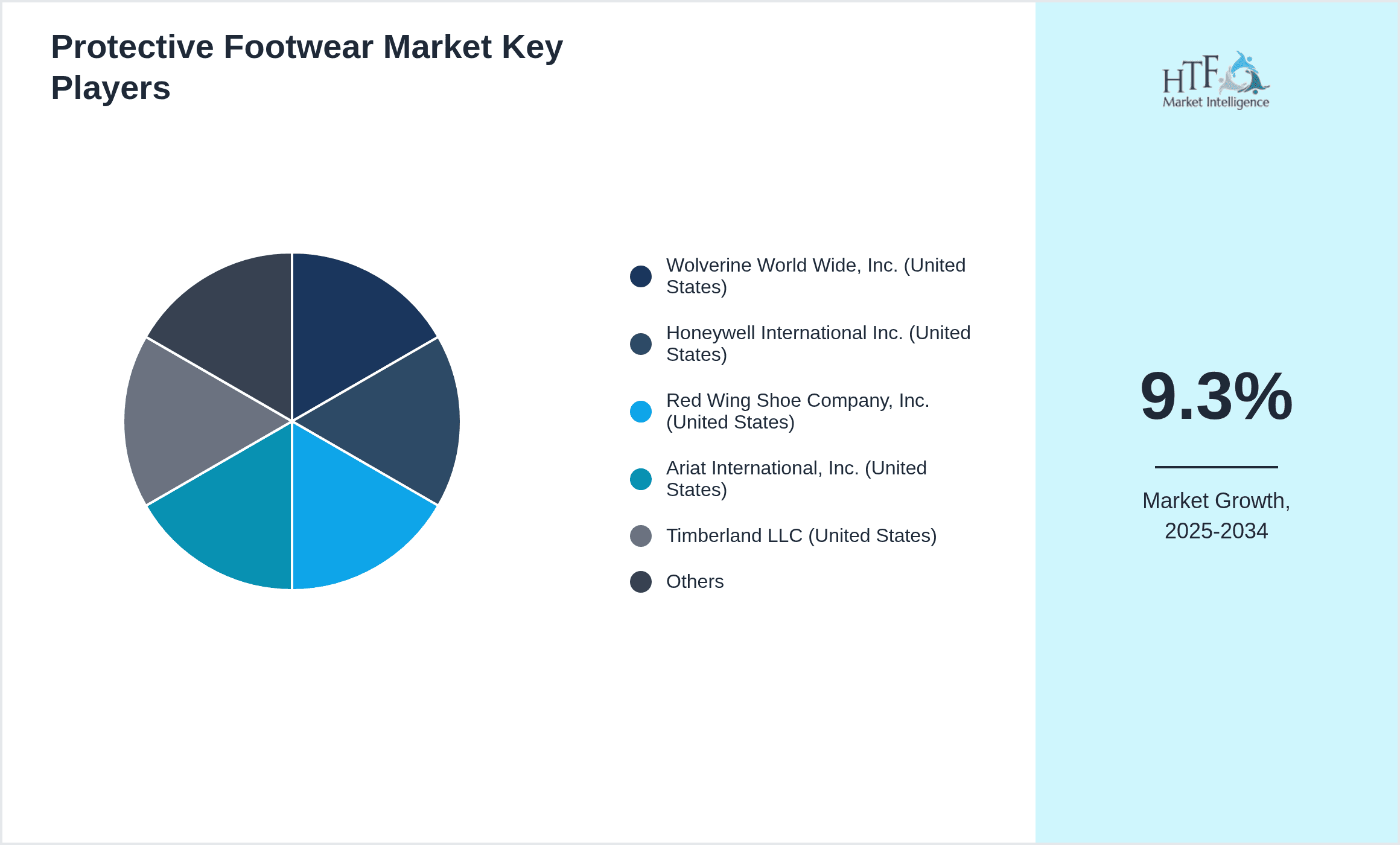
- •Wolverine World Wide, Inc. (United States)
- •Honeywell International Inc. (United States)
- •Red Wing Shoe Company, Inc. (United States)
- •Ariat International, Inc. (United States)
- •Timberland LLC (United States)
- •Dr. Martens plc (United Kingdom)
- •Bata Industrials (Switzerland)
- •Deckers Outdoor Corporation (United States)
- •Keen, Inc. (United States)
- •Caterpillar Inc. (United States)
- •Puma SE (Germany)
- •Skechers U.S.A., Inc. (United States)
- •Redback Boots (Australia)
- •Elten GmbH & Co. KG (Germany)
- •Kickers (France)
- •Jallatte (France)
- •Magnum Boots (United States)
- •Blundstone Footwear (Australia)
- •Thorogood (United States)
- •Mongkol Boots (Thailand)
- •Alpha Industries (United States)
- •Safety Jogger (Belgium)
- •Puma Safety Footwear (Germany)
- •Reebok Industrial Footwear (United States)
- •Fortune Footwear Pvt. Ltd. (India)
Market Breakdown
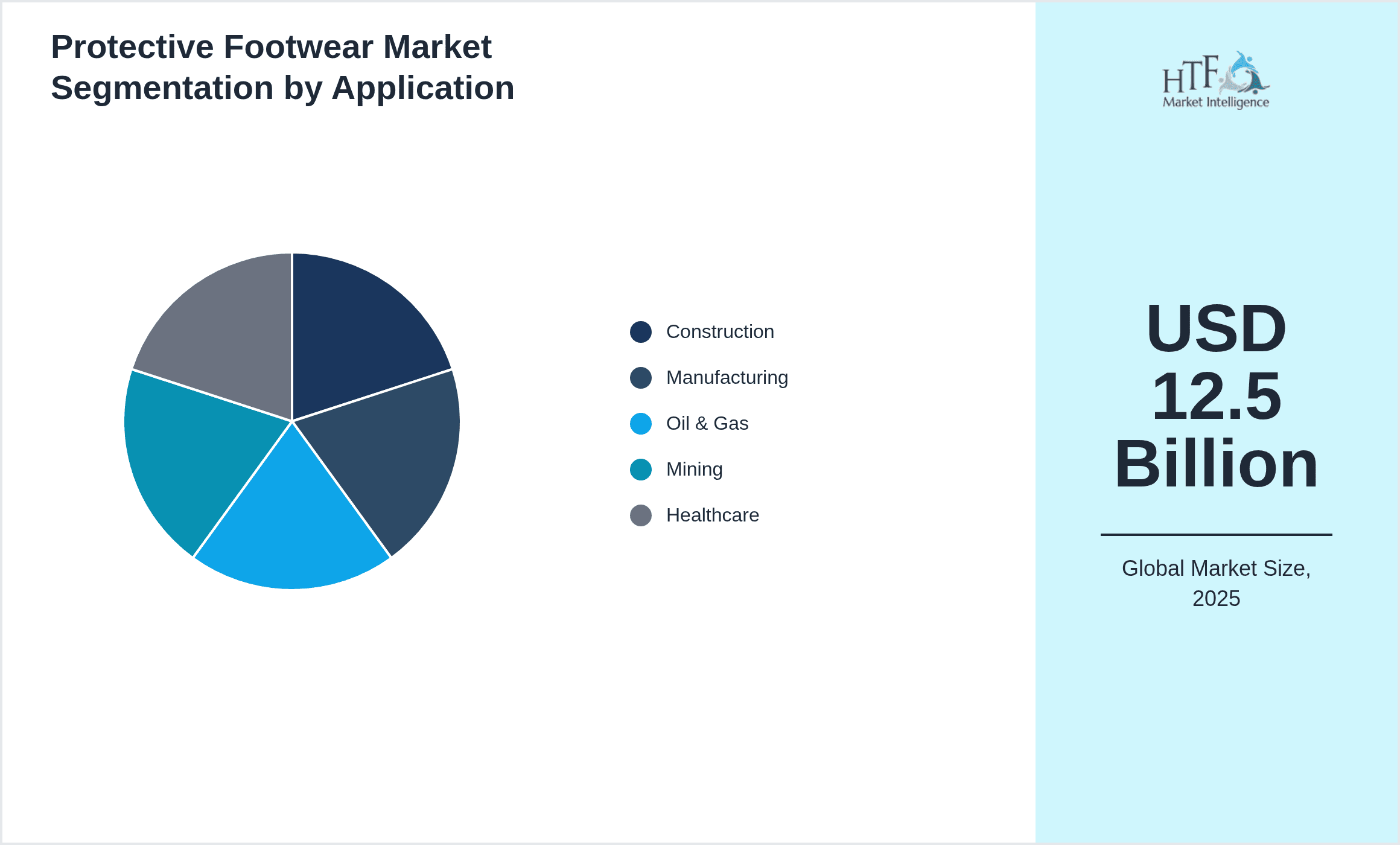
- •By Product Type
- ◦Steel Toe Boots
- ◦Composite Toe Boots
- ◦Aluminum Toe Boots
- ◦Rubber Boots
- ◦Others
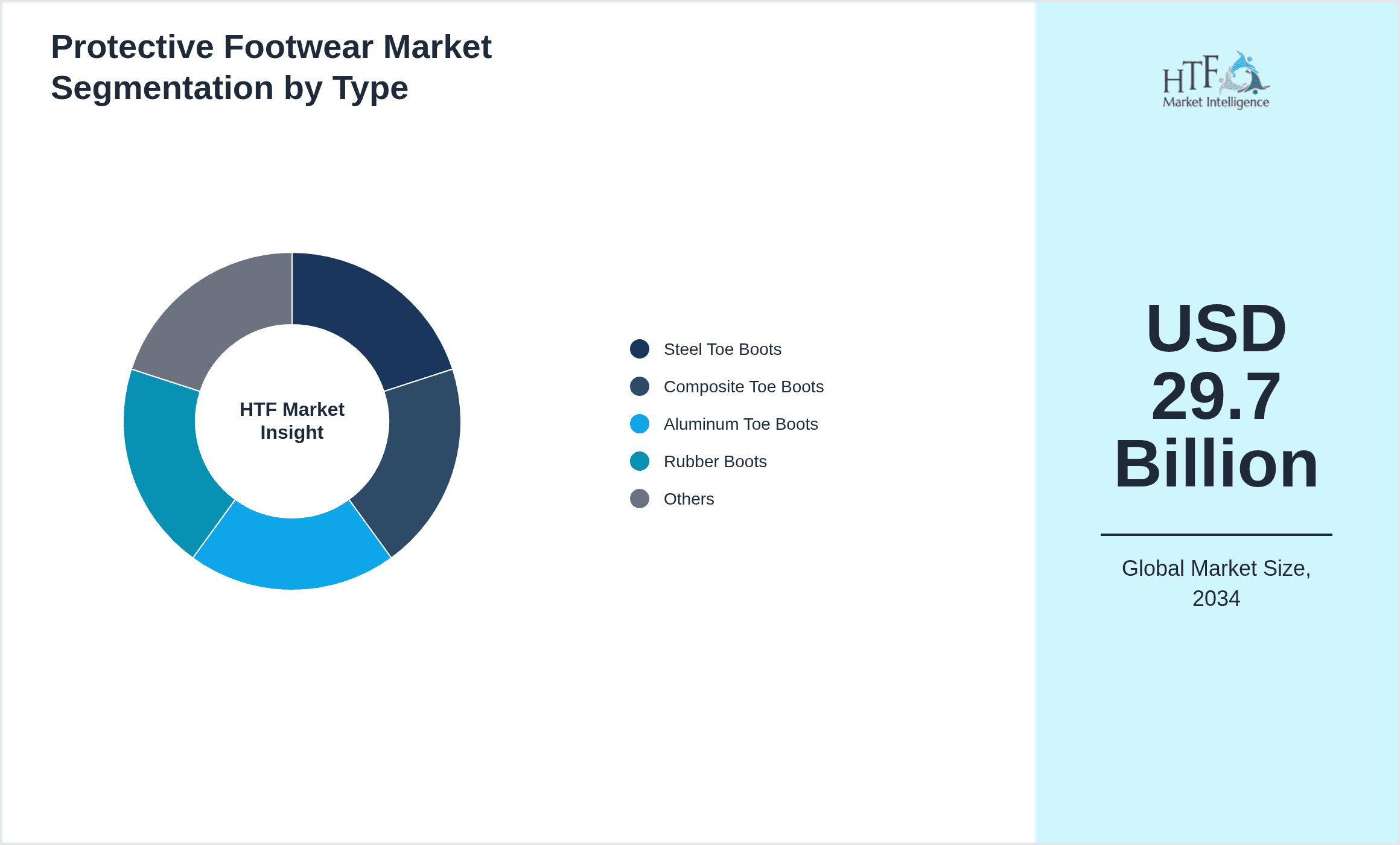
- •By Application
- ◦Construction
- ◦Manufacturing
- ◦Oil & Gas
- ◦Mining
- ◦Healthcare
- •By End-Use Industry
- ◦Industrial
- ◦Commercial
- ◦Residential
- ◦Public Sector
- •By Distribution Channel
- ◦Direct Sales
- ◦Retail Stores
- ◦E-commerce
Growth Dynamics
- •The global protective footwear market is driven by increasing industrialization and stringent workplace safety regulations worldwide. Governments and regulatory bodies are enforcing strict standards mandating the use of protective footwear in hazardous work environments, thereby propelling demand. Additionally, rapid urbanization and infrastructure development in emerging economies are augmenting construction activities, increasing the need for reliable safety footwear. Advancements in material technology, such as the introduction of lightweight composites and enhanced durability features, further stimulate market growth by improving worker comfort and compliance. The growing awareness among employers and workers regarding occupational health and safety is also contributing to higher adoption rates. Moreover, the expansion of end-use sectors like manufacturing, mining, and oil & gas continues to provide lucrative growth opportunities for market participants globally.
- •Increasing adoption of composite toe boots is a notable growth driver due to their lightweight nature and non-metallic composition, which is favored in industries requiring metal-free safety gear. The rise of e-commerce platforms is facilitating wider product accessibility, enabling manufacturers to reach diverse customer bases efficiently. Innovations in ergonomic designs and customization options enhance user comfort, encouraging repeated purchases. Furthermore, environmental concerns are driving manufacturers to develop sustainable and eco-friendly protective footwear, aligning with global sustainability goals and attracting eco-conscious consumers. Strategic collaborations between safety gear manufacturers and industry leaders are also enhancing product offerings and market penetration. These factors collectively create a dynamic environment conducive to sustained growth in the protective footwear market.
- •The integration of smart technologies into protective footwear presents emerging growth avenues, with sensors and wearable tech being developed to monitor worker health and environmental conditions. This technological adoption aligns with Industry 4.0 initiatives and digital transformation trends in manufacturing and construction sectors. Additionally, increasing mechanization and automation in industries necessitate advanced protective gear to safeguard against novel risks, boosting demand. The rise in female workforce participation in traditionally male-dominated industries has also led to the introduction of gender-specific protective footwear, expanding market scope. Global supply chain enhancements and logistics improvements facilitate efficient distribution and timely delivery, supporting market expansion on a global scale.
- •Government initiatives, including subsidies and incentives for workplace safety compliance, are key contributors to market growth. Regulatory mandates such as OSHA and ANSI standards in North America, and equivalent regulations in Europe and Asia-Pacific, are driving compulsory usage of certified protective footwear. These policies ensure consistent demand and encourage innovation to meet evolving standards. Additionally, increasing investments in worker safety training and awareness campaigns propel the adoption of protective footwear in small and medium enterprises, previously underpenetrated segments. The convergence of regulatory frameworks across regions is also simplifying compliance processes for multinational corporations, enhancing market stability and growth prospects.
- •The protective footwear market benefits from expanding applications in non-traditional sectors such as healthcare, agriculture, and logistics, where safety concerns are gaining prominence. The COVID-19 pandemic emphasized the importance of protective gear in healthcare settings, leading to increased demand for specialized footwear. Enhanced focus on ergonomics and injury prevention programs is prompting companies to invest in high-quality protective footwear for their employees. Furthermore, rising disposable incomes in developing regions enable more organizations to allocate budgets for comprehensive safety equipment. These socio-economic factors, combined with technological advancements and regulatory support, establish a robust foundation for long-term growth in the global protective footwear market.
Market Trends
- •One of the prevailing trends in the protective footwear market is the increasing incorporation of sustainable and eco-friendly materials. Manufacturers are adopting recycled and biodegradable components to reduce environmental impact, responding to growing consumer awareness about sustainability. This trend is also aligned with regulatory pressure to minimize carbon footprints and waste in manufacturing processes. Companies launching green product lines are gaining competitive advantages by appealing to environmentally conscious buyers and corporate social responsibility mandates.
- •The rise of smart protective footwear equipped with IoT sensors and wearable technology is transforming traditional safety gear. These smart shoes can monitor physical activity, detect hazardous conditions, and transmit real-time data to safety managers, enhancing workplace safety and operational efficiency. Early adopters in mining and construction sectors are driving innovation and adoption of these advanced products, with significant R&D investments ongoing.
- •Customization and ergonomic design have become critical differentiators, with manufacturers offering tailored solutions to meet diverse worker needs. Adjustable fitting, enhanced breathability, and lightweight construction are key features attracting buyers focused on comfort and prolonged wear. Brands leveraging 3D printing and advanced manufacturing techniques provide personalized footwear, setting new standards in the market.
- •Digital transformation within the supply chain and sales channels is reshaping market dynamics. E-commerce platforms and direct-to-consumer models are expanding accessibility and reducing distribution costs, particularly in emerging markets. This trend is enabling smaller players to compete effectively and broadening the consumer base for protective footwear products globally.
- •Collaborations and partnerships between protective footwear manufacturers and industry stakeholders are fostering innovation and market expansion. Joint ventures targeting new product development, regional market entry, and technology sharing are becoming common strategies to enhance competitiveness and accelerate growth.
- •Growing consumer preference for multi-functional footwear that blends safety with style is influencing product development. Companies are integrating aesthetic elements without compromising protection, targeting younger workforce demographics and broadening market appeal beyond traditional industrial users.
- •The increasing influence of regulatory certifications and standards on purchasing decisions is driving manufacturers to obtain global compliance marks. This trend ensures product reliability and builds trust among end-users, further solidifying market growth and competitive positioning.
Market Opportunities
- •Emerging economies in Asia-Pacific and Latin America present significant growth opportunities due to rapid industrialization and infrastructure development. Expanding manufacturing hubs and construction activities in these regions create substantial demand for protective footwear, particularly in underpenetrated rural and semi-urban markets. Companies focusing on localized product customization and affordable pricing strategies can capture these lucrative segments effectively.
- •The integration of smart technologies into protective footwear offers innovation-driven growth prospects. Developing wearable safety devices with real-time hazard detection and health monitoring can revolutionize occupational safety protocols, attracting investment and partnerships from technology and industrial sectors alike.
- •Sustainability initiatives provide opportunities to develop eco-friendly product lines that meet increasing consumer and regulatory demands. Investing in green manufacturing processes and biodegradable materials can differentiate brands and open new market niches centered on environmental responsibility.
- •Expanding applications into emerging sectors such as healthcare, logistics, and agriculture offer untapped potential. Tailoring protective footwear to meet specific safety challenges in these industries can diversify product portfolios and broaden customer bases.
- •Strategic collaborations and acquisitions enable companies to enhance technological capabilities and expand geographic reach. Partnerships focusing on R&D and distribution can accelerate market entry in new regions and segments, fostering sustained growth.
- •The growing female workforce in industrial sectors creates an opportunity for gender-specific protective footwear. Designing ergonomically optimized products for women can address unmet needs and boost market share.
- •E-commerce expansion provides opportunities for direct consumer engagement and efficient distribution. Leveraging digital marketing and online sales channels can increase brand visibility and customer loyalty globally.
Market Challenges
- •High manufacturing costs, particularly for advanced composite and smart protective footwear, pose a significant challenge by limiting affordability in price-sensitive markets. Material procurement and production complexities increase expenses, impacting profit margins and market penetration in developing regions.
- •Regulatory compliance across diverse regions creates complexity for manufacturers operating globally. Varying safety standards and certification requirements necessitate substantial investment in testing and adaptation, slowing time-to-market and increasing operational costs.
- •Intense competition from low-cost manufacturers, especially in Asia, challenges established players by driving price erosion and commoditization. Maintaining product quality while competing on price requires strategic balancing and innovation.
- •Limited consumer awareness and low adoption rates in certain emerging markets hinder market expansion. Cultural factors and insufficient safety training reduce the perceived need for protective footwear, restricting demand growth in these areas.
- •Supply chain disruptions, including raw material shortages and logistics bottlenecks, impact production schedules and delivery timelines. The COVID-19 pandemic underscored vulnerabilities, necessitating resilient and diversified sourcing strategies.
- •Counterfeit products and lack of enforcement of safety regulations undermine market integrity and pose risks to end-user safety. This challenge affects brand reputation and may lead to regulatory penalties for manufacturers.
- •Technological integration complexities, such as embedding sensors and maintaining durability, present challenges in developing smart protective footwear. Balancing functionality with cost and comfort remains an ongoing hurdle for innovators.
Regulatory Framework
- •Between 2019 and 2025, key regulations such as the updated OSHA standards in the United States mandated stricter compliance for protective footwear, including enhanced impact resistance and electrical hazard protection. These requirements increased demand for certified products and drove innovation in safety features.
- •The European Union introduced the PPE Regulation (EU) 2016/425 enforcement with significant updates implemented by 2021, requiring rigorous testing and certification of protective footwear to ensure conformity with health and safety standards across member states. This harmonization facilitated smoother intra-regional trade and elevated product quality benchmarks.
- •In Asia-Pacific, countries such as China and India have strengthened national standards aligning with ISO and ASTM guidelines, mandating protective footwear usage in construction and manufacturing sectors. These policies were enforced through labor safety laws, increasing market penetration and compliance oversight.
- •Environmental regulations restricting hazardous substances in footwear manufacturing, including REACH compliance in Europe and similar mandates in North America, have prompted companies to adopt safer materials and sustainable production methods since 2020.
- •Government initiatives such as subsidies for workplace safety equipment and awareness programs have been introduced in various regions to encourage adoption of protective footwear, supporting market growth and regulatory adherence through financial incentives and training.
Market Intelligence
- •15th February 2025, Wolverine World Wide, Inc. launched a new line of composite toe boots designed for enhanced lightweight protection and comfort, targeting the construction and manufacturing industries. The product features advanced slip-resistant soles and waterproof technology, aiming to meet stringent OSHA and ANSI standards. This launch reflects the company's commitment to innovation and expanding its portfolio in high-growth segments globally. The initiative is expected to strengthen Wolverine’s market presence in Asia-Pacific and North America, where safety compliance drives demand. Source: Official company announcement
- •10th May 2025, Honeywell International Inc. introduced smart protective footwear embedded with IoT sensors capable of monitoring worker fatigue and environmental hazards in real time. The product integrates seamlessly with existing safety management platforms, offering predictive analytics to prevent workplace accidents. Positioned for use in mining and oil & gas sectors, this innovation aligns with Industry 4.0 digital transformation trends. Honeywell’s strategic focus on connected safety solutions anticipates accelerated adoption across global industrial markets. Source: Industry publication
- •18th August 2025, Red Wing Shoe Company, Inc. announced a strategic partnership with a leading European manufacturer to co-develop eco-friendly protective footwear using biodegradable materials. The collaboration aims to reduce the environmental footprint of safety footwear and meet emerging sustainability regulations in the EU and North America. This initiative leverages Red Wing’s brand strength and the partner’s green technology expertise to capture environmentally conscious market segments. Launch of the first co-developed products is scheduled for early 2026. Source: Company press release
- •22nd November 2025, Ariat International, Inc. completed the acquisition of a niche safety footwear brand specializing in ergonomic designs for female industrial workers. This move expands Ariat’s product portfolio and addresses the growing demand for gender-specific protective footwear in manufacturing and construction sectors globally. The acquisition provides Ariat with enhanced R&D capabilities and access to new distribution channels, strengthening its competitive position. Integration is expected to complete by mid-2026. Source: Market report
Regional Outlook
The North America currently holds a significant share of the market, primarily due to several key factors: increasing consumption rates, a burgeoning population, and robust economic momentum. These elements collectively drive demand, positioning this region as a leader in the market. On the other hand, Asia-Pacific is rapidly emerging as the fastest-growing area within the industry. This remarkable growth can be attributed to swift infrastructure development, the expansion of various industrial sectors, and a marked increase in consumer demand. These dynamics make this region a crucial player in shaping future market growth.
In our report, we cover a comprehensive analysis of the following regions and countries:
- North America
- LATAM
- West Europe
- Central & Eastern Europe
- Northern Europe
- Southern Europe
- East Asia
- Southeast Asia
- South Asia
- Central Asia
- Oceania
- MEA
| Feature | Details |
|---|---|
| Base Year Market Size | USD 12.5 Billion |
| Forecast Year Market Size | USD 29.7 Billion |
| CAGR | 9.3% |
| Forecast Period | 2026 to 2033 |
| YoY Growth | 9% |
| Scope of Report | Market is segmented by Product Type (Steel Toe Boots, Composite Toe Boots, Aluminum Toe Boots, Rubber Boots, Others), Application (Construction, Manufacturing, Oil & Gas, Mining, Healthcare), End-Use Industry (Industrial, Commercial, Residential, Public Sector), Distribution Channel (Direct Sales, Retail Stores, E-commerce) |
| Regions Covered | North America, LATAM, West Europe, Central & Eastern Europe, Northern Europe, Southern Europe, East Asia, Southeast Asia, South Asia, Central Asia, Oceania, MEA |
| Key Companies | Wolverine World Wide, Inc. (United States), Honeywell International Inc. (United States), Red Wing Shoe Company, Inc. (United States), Ariat International, Inc. (United States), Timberland LLC (United States), Dr. Martens plc (United Kingdom), Bata Industrials (Switzerland), Deckers Outdoor Corporation (United States), Keen, Inc. (United States), Caterpillar Inc. (United States), Puma SE (Germany), Skechers U.S.A., Inc. (United States), Redback Boots (Australia), Elten GmbH & Co. KG (Germany), Kickers (France), Jallatte (France), Magnum Boots (United States), Blundstone Footwear (Australia), Thorogood (United States), Mongkol Boots (Thailand), Alpha Industries (United States), Safety Jogger (Belgium), Puma Safety Footwear (Germany), Reebok Industrial Footwear (United States), Fortune Footwear Pvt. Ltd. (India) |
Global Protective Footwear Market Size, Growth & Revenue 2024-2034 - Table of Contents
Research enthusiast focused on transforming data uncovering into actionable insights through data-driven decision-making.
Frequently Asked Questions (FAQ):
The Market market is expected to see significant growth and value in 2025.
North America currently leads the market, followed by Europe and Asia-Pacific.
Key growth drivers include increasing activities, rising demand for innovative solutions, technological advancements, and growing preference for efficient products.