
Global Sexual Wellness Products Market - Outlook 2024-2034
Global Sexual Wellness Products Market is segmented by Product Type (Condoms, Lubricants, Vibrators, Massage Oils, Others (Enhancers, Accessories)), Application (Personal Use, Therapeutic Use, Couples Use, Wellness & Health, Others), End-Use Industry (Healthcare, Retail, E-commerce, Wellness Centers), Distribution Channel (Pharmacies & Drug Stores, Specialty Stores, Online Retail, Supermarkets & Hypermarkets), and Geography (North America, LATAM, West Europe, Central & Eastern Europe, Northern Europe, Southern Europe, East Asia, Southeast Asia, South Asia, Central Asia, Oceania, MEA)
Pricing
Report Overview
Executive Summary
The Global Sexual Wellness Products Market represents a dynamic and rapidly expanding sector focused on the development, manufacture, and distribution of products that promote sexual health, wellbeing, and pleasure. Covering a spectrum of items including condoms, lubricants, vibrators, and massage oils, this market addresses diverse applications from personal and couples’ use to therapeutic interventions. Market growth is driven by rising awareness of sexual health, destigmatization of sexual wellness, and advances in product innovation and technology. The industry operates within a complex regulatory environment that ensures safety and efficacy while adapting to cultural sensitivities worldwide. Increasing internet penetration and e-commerce adoption have transformed distribution strategies, making products more accessible to broader audiences. The market’s strategic importance spans healthcare providers, retail sectors, and consumers, underscoring its relevance across multiple industries and geographies. This report provides a comprehensive analysis of market segmentation, growth drivers, trends, challenges, and competitive dynamics shaping the sexual wellness products landscape through 2034.
Competitive Landscape
The competitive landscape of the Global Sexual Wellness Products Market is characterized by intense rivalry among established multinational corporations and emerging niche players focusing on innovation and brand differentiation. Companies compete through continuous product development, leveraging advanced materials, ergonomics, and formulations to meet evolving consumer preferences. Strategic partnerships, collaborations, and mergers & acquisitions are common tactics to expand product portfolios and geographic reach. Pricing strategies are influenced by cost efficiencies, brand positioning, and consumer segments targeted. Distribution channels have diversified, encompassing traditional retail, specialty outlets, and increasingly dominant online platforms, adding complexity to market positioning. Regulatory compliance and adherence to quality standards serve as competitive barriers, driving companies to invest in research and quality assurance. Regional competition varies, with North America and Europe maintaining leadership through mature markets, while Asia-Pacific experiences rapid growth fueled by rising disposable incomes and shifting cultural attitudes. Future competition is expected to hinge on digital marketing effectiveness, sustainability initiatives, and personalized product offerings.
Prominent Players in Sexual Wellness Products Market
- •Church & Dwight Co., Inc. (United States)
- •Reckitt Benckiser Group plc (United Kingdom)
- •LELO AB (Sweden)
- •Durex (United Kingdom)
- •HIVEXCEL Health (India)
- •Satisfyer (Germany)
- •Nexus Products (United States)
- •Fun Factory GmbH (Germany)
- •We-Vibe (Canada)
- •CalExotics (United States)
- •Doc Johnson (United States)
- •Shiseido Company, Limited (Japan)
- •Pasante Healthcare Ltd. (United Kingdom)
- •Tantus, Inc. (United States)
- •Blush Novelties (United States)
- •Pjur Group (Germany)
- •BMS Factory (South Korea)
- •Lovense (Hong Kong)
- •Trojan Brand (United States)
- •Maia Toys (Switzerland)
- •Crown Laboratories, Inc. (United States)
- •Doc Johnson Enterprises, Inc. (United States)
- •Hismith (China)
- •Sliquid LLC (United States)
- •LELO Corporation (Sweden)

Market Breakdown
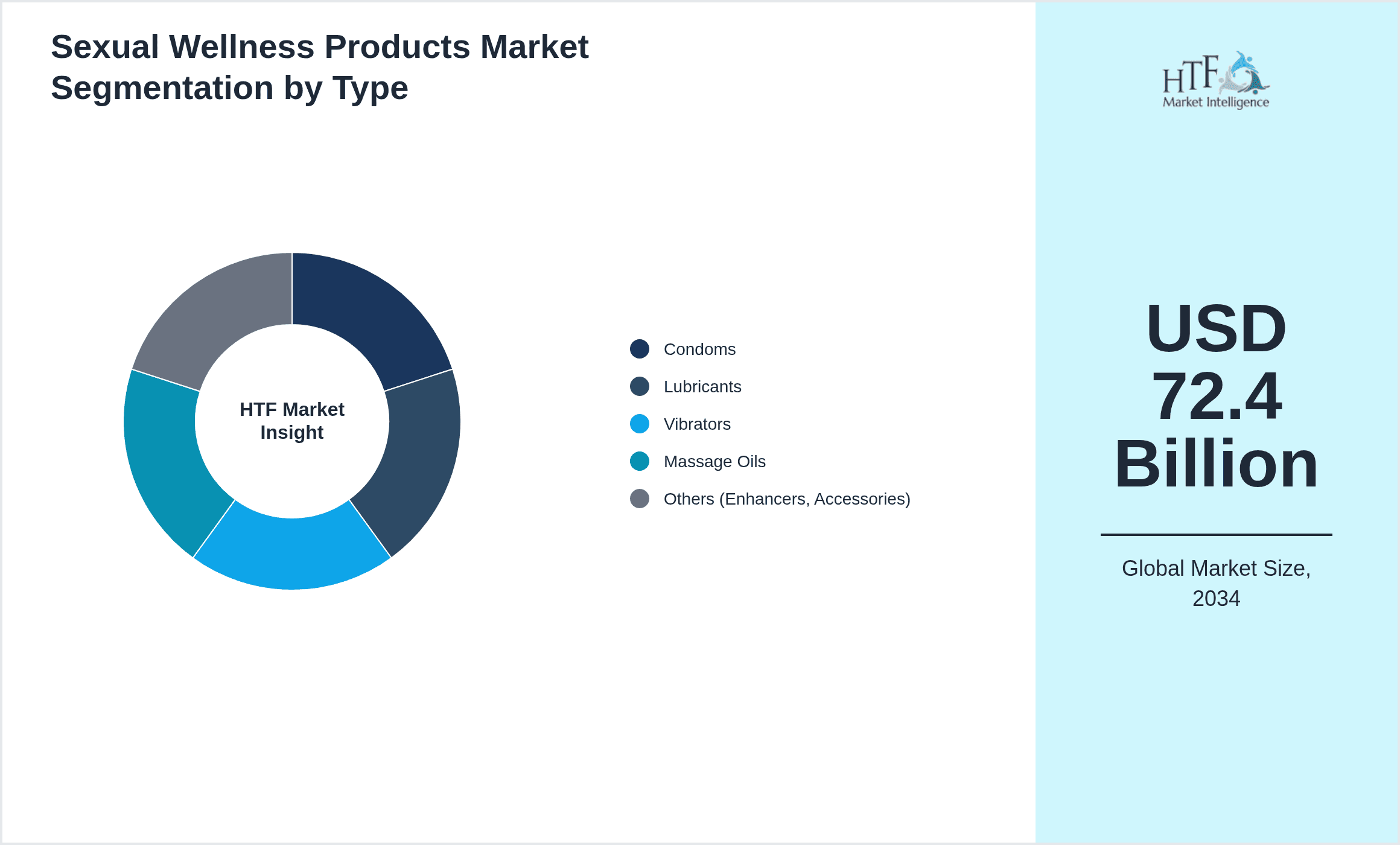
- •By Product Type
- ◦Condoms
- ◦Lubricants
- ◦Vibrators
- ◦Massage Oils
- ◦Others (Enhancers, Accessories)
- •By Application
- ◦Personal Use
- ◦Therapeutic Use
- ◦Couples Use
- ◦Wellness & Health
- ◦Others
- •By End-Use Industry
- ◦Healthcare
- ◦Retail
- ◦E-commerce
- ◦Wellness Centers
- •By Distribution Channel
- ◦Pharmacies & Drug Stores
- ◦Specialty Stores
- ◦Online Retail
- ◦Supermarkets & Hypermarkets
Growth Dynamics
- •Increasing awareness about sexual health and wellness globally is a primary growth driver, supported by widespread educational campaigns and destigmatization efforts. This has led to heightened consumer interest and acceptance of sexual wellness products across diverse demographics.
- •Technological advancements in product design, such as body-safe materials and ergonomic features, have enhanced user experience and safety, driving adoption rates in both mature and emerging markets.
- •The rise of e-commerce platforms has significantly expanded market reach, enabling discreet purchasing options and a broader product range, thus stimulating market growth especially in regions with conservative cultural norms.
- •Growing focus on holistic wellness and mental health has integrated sexual wellness as a key component, encouraging consumers to invest in products that promote intimacy and emotional wellbeing.
- •Increasing disposable incomes and changing societal attitudes in regions like Asia-Pacific and Latin America offer lucrative opportunities for market expansion and product diversification.
Market Trends
- •Sustainability is emerging as a key trend with manufacturers adopting eco-friendly materials and biodegradable packaging to meet consumer demand for environmentally responsible products.
- •Integration of smart technology and app-enabled features in sexual wellness devices is reshaping product offerings, allowing users personalized control and enhanced interactive experiences.
- •Collaborations between healthcare providers and product manufacturers are increasing, aiming to legitimize sexual wellness products as part of comprehensive health regimens.
- •Customization and inclusivity in product design are gaining traction, reflecting diverse consumer needs including gender, sexual orientation, and physical abilities.
- •Digital marketing campaigns leveraging social media influencers have proven effective in reducing stigma and expanding consumer engagement globally.
Market Opportunities
- •Emerging markets in Asia-Pacific and Latin America present significant growth potential due to rising awareness, improving healthcare infrastructure, and increasing acceptance of sexual wellness products.
- •Development of gender-specific and therapeutic sexual wellness products can capture niche consumer segments seeking specialized solutions.
- •Expanding online retail platforms and subscription-based models offer new channels for product distribution and customer retention.
- •Partnerships with healthcare providers and wellness centers can enhance product credibility and broaden market access.
- •Innovations in natural and organic product lines align with consumer preferences for chemical-free and health-conscious options.
Market Challenges
- •Cultural taboos and social stigma in certain regions continue to limit market penetration and consumer openness, posing a barrier to growth.
- •Stringent regulatory requirements and product safety standards necessitate high compliance costs, potentially hindering new entrants and innovation.
- •Competition from counterfeit and low-quality products undermines brand trust and affects market reputation.
- •Pricing pressures in developing economies challenge profitability and require strategic cost management.
- •Supply chain disruptions and raw material shortages can delay product availability and increase production costs.
Regulatory Framework
- •Between 2019 and 2024, multiple regions have implemented enhanced product safety regulations mandating rigorous testing for biocompatibility and toxicity, ensuring consumer protection and market reliability.
- •Enforcement of labeling standards and marketing claims has tightened, requiring transparent disclosure of ingredients and certification statuses to prevent misleading information.
- •Environmental regulations promoting sustainable packaging and waste reduction have influenced manufacturing practices, encouraging the adoption of eco-friendly materials.
- •Region-specific mandates, such as the European Union’s Medical Device Regulation (MDR), have expanded the classification of certain sexual wellness products, necessitating compliance with medical device standards.
- •Government initiatives in various countries support sexual health education and product accessibility, offering incentives for innovation and market expansion within regulated frameworks.
Market Intelligence
- •15th January 2025, LELO AB launched a new line of app-controlled vibrators integrating advanced haptic feedback technology designed to offer personalized user experiences. Targeted at tech-savvy consumers, this product enhances intimacy through customizable vibration patterns accessible via smartphones. The launch aims to capture growing demand for connected sexual wellness devices in North America and Europe, with strategic marketing focusing on younger demographics. The innovation exemplifies the market trend toward digital integration and product personalization, positioning LELO as a leader in high-tech sexual wellness solutions. Source: LELO Official Press Release.
- •3rd March 2025, Church & Dwight Co., Inc. expanded its distribution partnership with major online retailers across Asia-Pacific, enhancing availability of its condom and lubricant products. This strategic move addresses rising demand in emerging markets by leveraging e-commerce growth and expanding consumer access in regions with increasing sexual health awareness. The partnership includes exclusive product bundles and promotional campaigns tailored to local preferences, strengthening brand presence and capturing market share. This expansion underlines the importance of digital channels in global sexual wellness product distribution strategies. Source: Company Website.
- •22nd May 2025, Satisfyer announced a collaboration with a leading healthcare provider to develop therapeutic sexual wellness devices aimed at addressing sexual dysfunction. The initiative combines medical expertise with Satisfyer’s product innovation, focusing on validated efficacy and clinical acceptance. The partnership reflects growing integration between sexual wellness products and healthcare services, aiming to reduce stigma and promote therapeutic benefits. This collaboration is expected to open new market segments centered on health-driven product applications. Source: Industry Publication.
- •10th July 2025, Reckitt Benckiser Group plc unveiled a sustainable product line including biodegradable condoms and organic lubricants. The launch responds to increasing consumer demand for environmentally responsible sexual wellness products and aligns with global sustainability goals. Marketing efforts emphasize ethical manufacturing and reduced environmental impact. This strategic product diversification enhances Reckitt Benckiser’s competitive positioning in the eco-conscious consumer segment, anticipating accelerated growth in regions prioritizing sustainability. Source: Official Press Release.
Regional Outlook
The North America currently holds a significant share of the market, primarily due to several key factors: increasing consumption rates, a burgeoning population, and robust economic momentum. These elements collectively drive demand, positioning this region as a leader in the market. On the other hand, Asia-Pacific is rapidly emerging as the fastest-growing area within the industry. This remarkable growth can be attributed to swift infrastructure development, the expansion of various industrial sectors, and a marked increase in consumer demand. These dynamics make this region a crucial player in shaping future market growth.
In our report, we cover a comprehensive analysis of the following regions and countries:
- North America
- LATAM
- West Europe
- Central & Eastern Europe
- Northern Europe
- Southern Europe
- East Asia
- Southeast Asia
- South Asia
- Central Asia
- Oceania
- MEA
| Feature | Details |
|---|---|
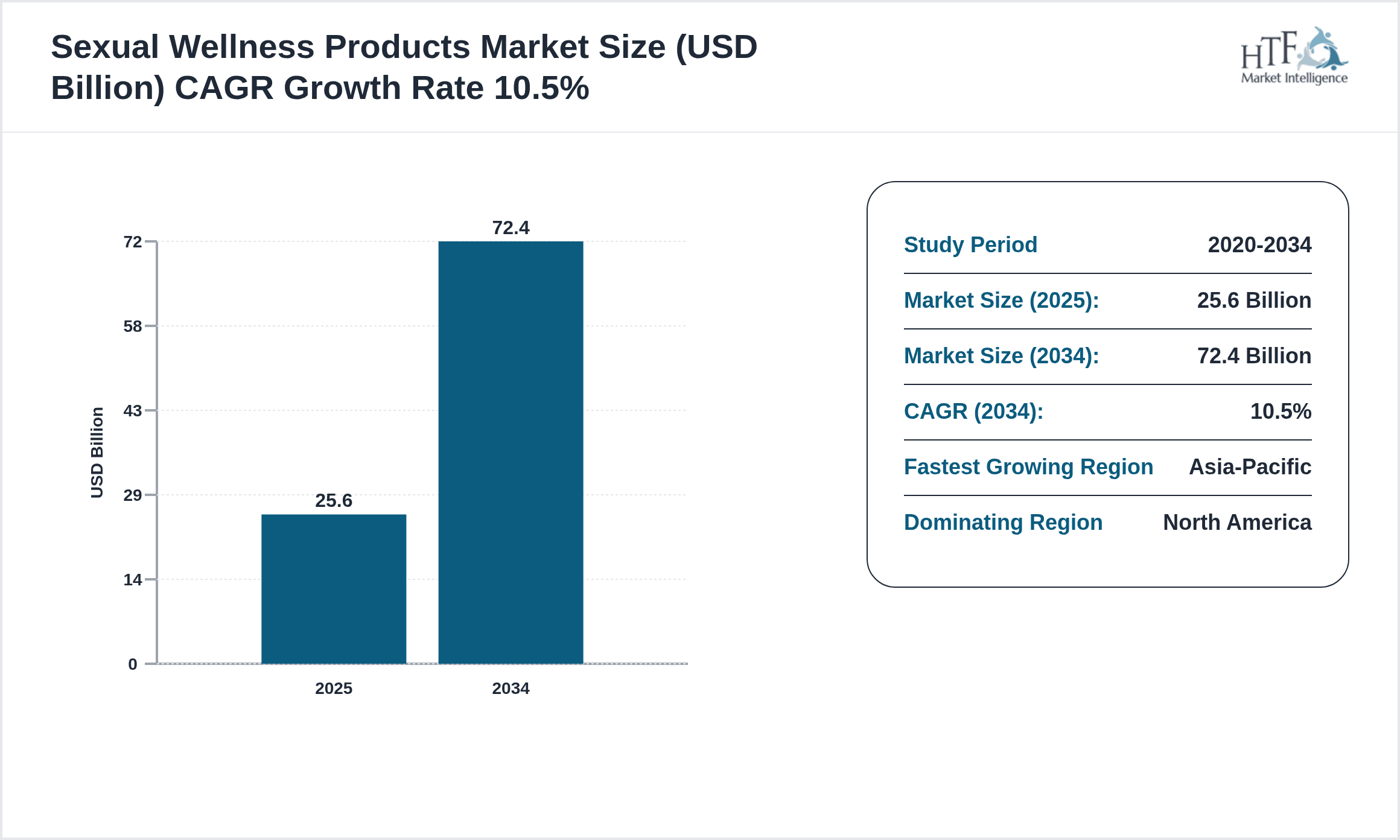
| Base Year Market Size | USD 25.6 Billion |
| Forecast Year Market Size | USD 72.4 Billion |
| CAGR | 10.5% |
| Forecast Period | 2026 to 2033 |
| YoY Growth | 10% |
| Scope of Report | Market is segmented by Product Type (Condoms, Lubricants, Vibrators, Massage Oils, Others (Enhancers, Accessories)), Application (Personal Use, Therapeutic Use, Couples Use, Wellness & Health, Others), End-Use Industry (Healthcare, Retail, E-commerce, Wellness Centers), Distribution Channel (Pharmacies & Drug Stores, Specialty Stores, Online Retail, Supermarkets & Hypermarkets) |
| Regions Covered | North America, LATAM, West Europe, Central & Eastern Europe, Northern Europe, Southern Europe, East Asia, Southeast Asia, South Asia, Central Asia, Oceania, MEA |
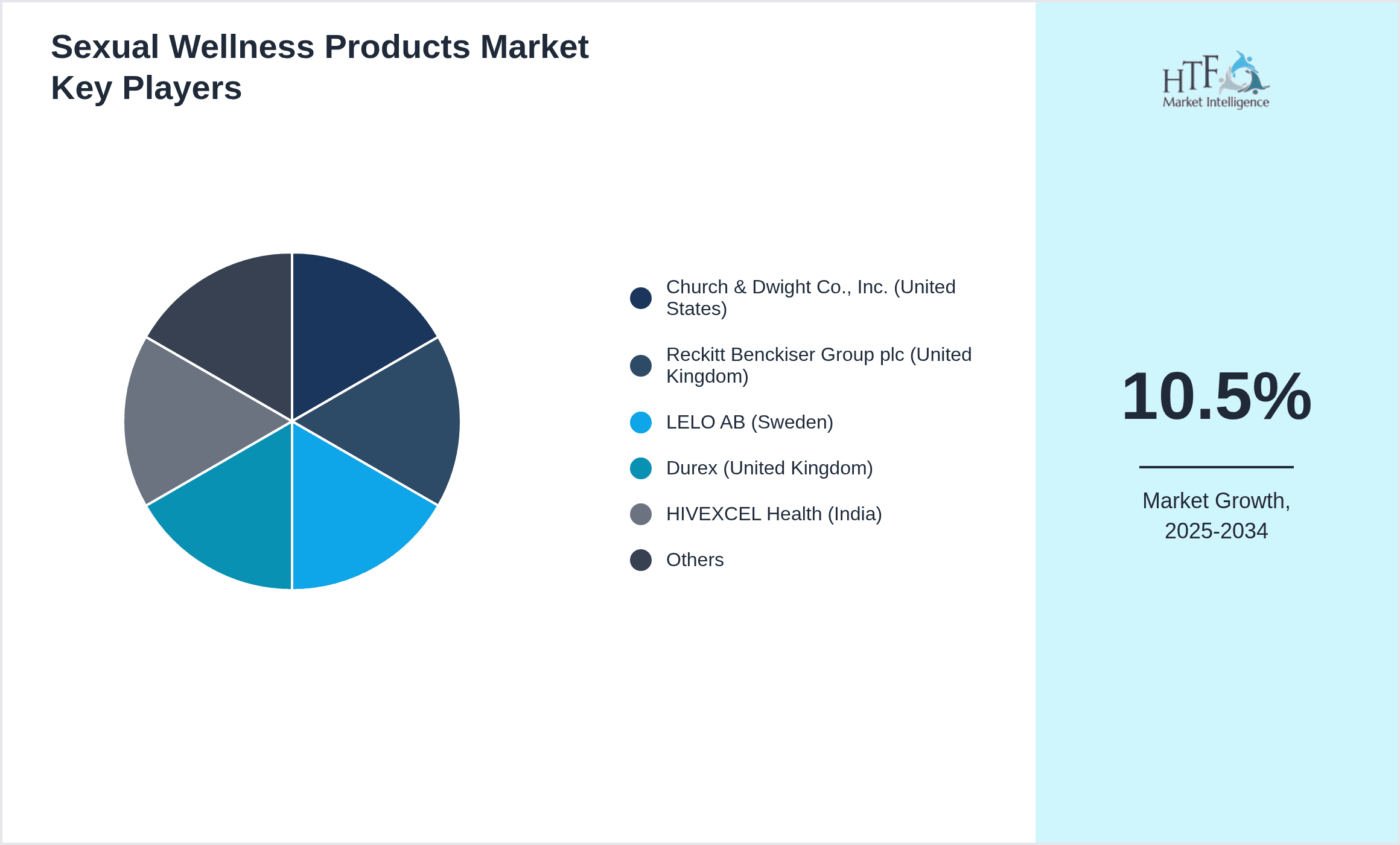
| Key Companies | Church & Dwight Co., Inc. (United States), Reckitt Benckiser Group plc (United Kingdom), LELO AB (Sweden), Durex (United Kingdom), HIVEXCEL Health (India) |
Global Sexual Wellness Products Market - Outlook 2024-2034 - Table of Contents
Multidisciplinary researcher with 10+ years of experience uncovering insights across diverse domains focused on uncovering insights that drive informed decisions.
Frequently Asked Questions (FAQ):
The Market market is expected to see significant growth and value in 2025.
North America currently leads the market, followed by Europe and Asia-Pacific.
Key growth drivers include increasing activities, rising demand for innovative solutions, technological advancements, and growing preference for efficient products.