
Global Track and Field Spikes Market Size, Growth & Revenue 2024-2034
Global Track and Field Spikes Market is segmented by Product Type (Metal Spikes, Plastic Spikes, Ceramic Spikes, Alloy Spikes, Combination Spikes), Application (Sprint, Middle Distance, Long Distance, Jumping, Throwing), End-Use Industry (Professional Athletics, Collegiate Sports, Amateur Sports, Fitness Enthusiasts), Distribution Channel (Specialized Sports Retailers, E-commerce Platforms, Direct Brand Outlets), and Geography (North America, LATAM, West Europe, Central & Eastern Europe, Northern Europe, Southern Europe, East Asia, Southeast Asia, South Asia, Central Asia, Oceania, MEA)
Pricing
Report Overview
Executive Summary
- •The Global Track and Field Spikes Market is a specialized segment within the athletic footwear industry focused on performance-enhancing spikes designed for track and field events. These spikes, equipped with metal, plastic, ceramic, alloy, or combination cleats, facilitate superior traction and speed across diverse disciplines including sprinting, middle- and long-distance running, jumping, and throwing. The market's scope extends beyond product manufacturing to encompass technological advancements in materials, ergonomic designs, and sport-specific customization that cater to professional athletes, amateur runners, and educational institutions. Increasing global participation in athletics, heightened focus on sports performance optimization, and the rising popularity of track events drive market expansion. Regional dynamics reveal North America as the dominant market due to established sports culture and infrastructure, while Asia-Pacific exhibits the highest growth potential fueled by expanding sports programs and investments. The industry thrives on innovation, with companies emphasizing lightweight materials, enhanced spike durability, and athlete comfort to meet evolving demands. The market offers substantial opportunities for new entrants and incumbents to capture emerging segments and leverage technological breakthroughs.
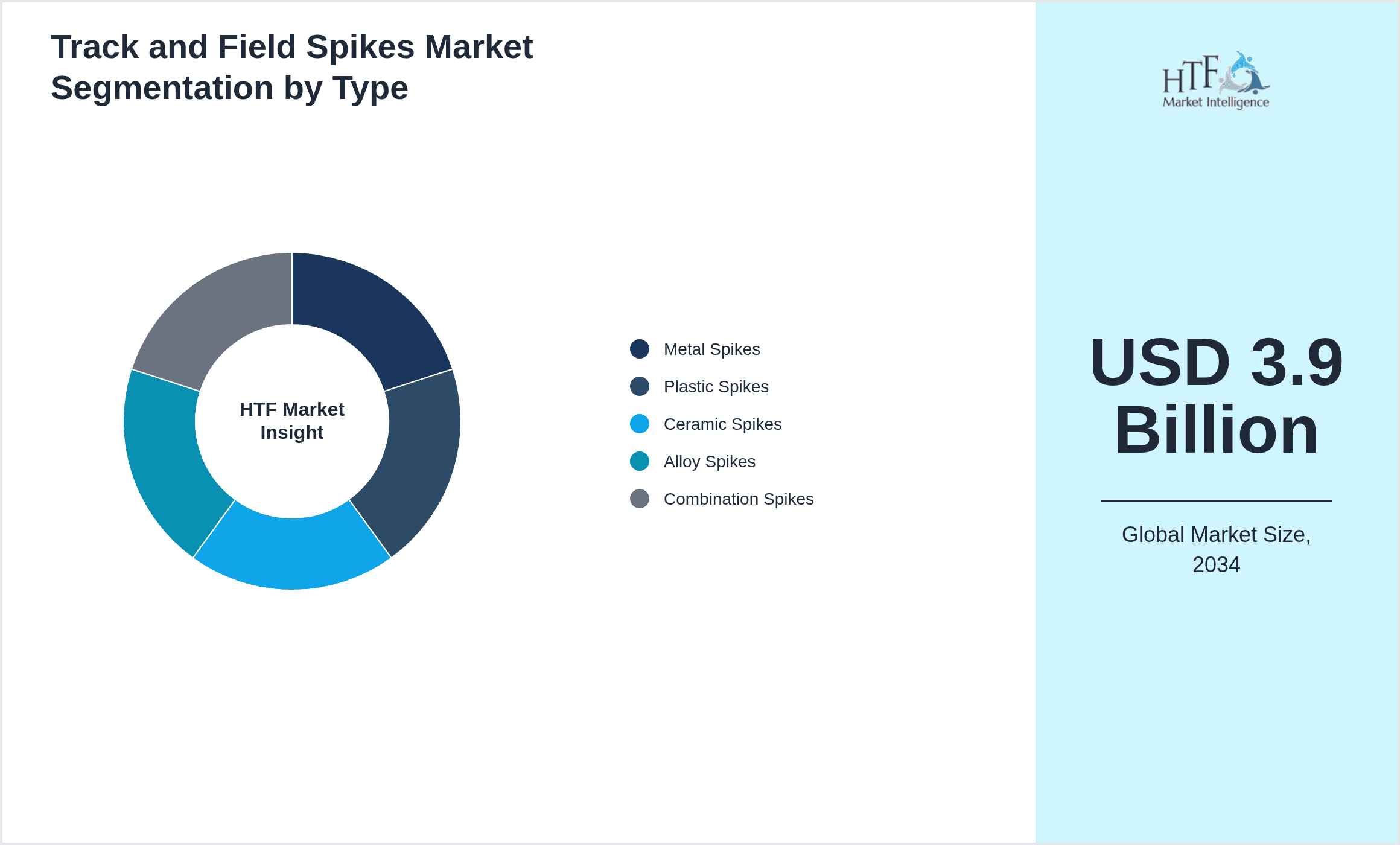
- •Key market highlights include a forecasted CAGR of 7.82% between 2024 and 2034, with the market size expected to grow from USD 1.8 billion in 2024 to approximately USD 3.9 billion by 2034. Metal spikes currently lead the product segment due to their durability and performance benefits, while ceramic spikes are the fastest growing category, driven by advances in lightweight materials and grip technology. Sprint applications dominate the usage landscape, reflecting the global emphasis on short-distance track events. North America maintains the largest market share owing to mature sports ecosystems, whereas Asia-Pacific leads in growth rate, supported by increasing sports participation and infrastructure development. These dynamics highlight a market characterized by steady expansion, regional variation, and ongoing innovation in product design and materials.
- •The value proposition of the Global Track and Field Spikes Market lies in its ability to enhance athletic performance through specialized footwear technology. Stakeholders including athletes, sports teams, equipment manufacturers, and retailers benefit from product innovations that improve speed, traction, and comfort. The market's strategic importance is amplified by rising global sports engagement and the increasing professionalization of track and field disciplines. Manufacturers are focusing on sustainable materials and customization solutions to meet diverse athlete requirements, while leveraging digital marketing and e-commerce to broaden reach. This market serves as a critical enabler for sports performance, health, and competitive success, making it integral to sports industry players and athletic communities worldwide.

Competitive Landscape
The competitive landscape of the Global Track and Field Spikes Market is characterized by intense rivalry among established athletic footwear brands and niche manufacturers specializing in spikes. Market players compete through continuous innovation in materials, spike design, and athlete-specific customization to gain differentiation. Strategic partnerships with sports organizations and endorsements by elite athletes serve as critical competitive strategies to enhance brand visibility and credibility. Companies prioritize research and development to introduce lightweight yet durable spikes and leverage advanced traction technologies that adapt to various track surfaces. Pricing strategies balance premium product positioning with accessibility to amateur markets. Distribution channels range from specialized sports retailers to direct-to-consumer online platforms, intensifying competition for market share. Barriers to entry include the high cost of R&D and strong brand loyalty, while regional competition varies with emerging players gaining traction in growth markets like Asia-Pacific. Future trends indicate a shift towards sustainable materials and digital integration in product customization, shaping the competitive dynamics ahead.
Key Players in Track and Field Spikes Market
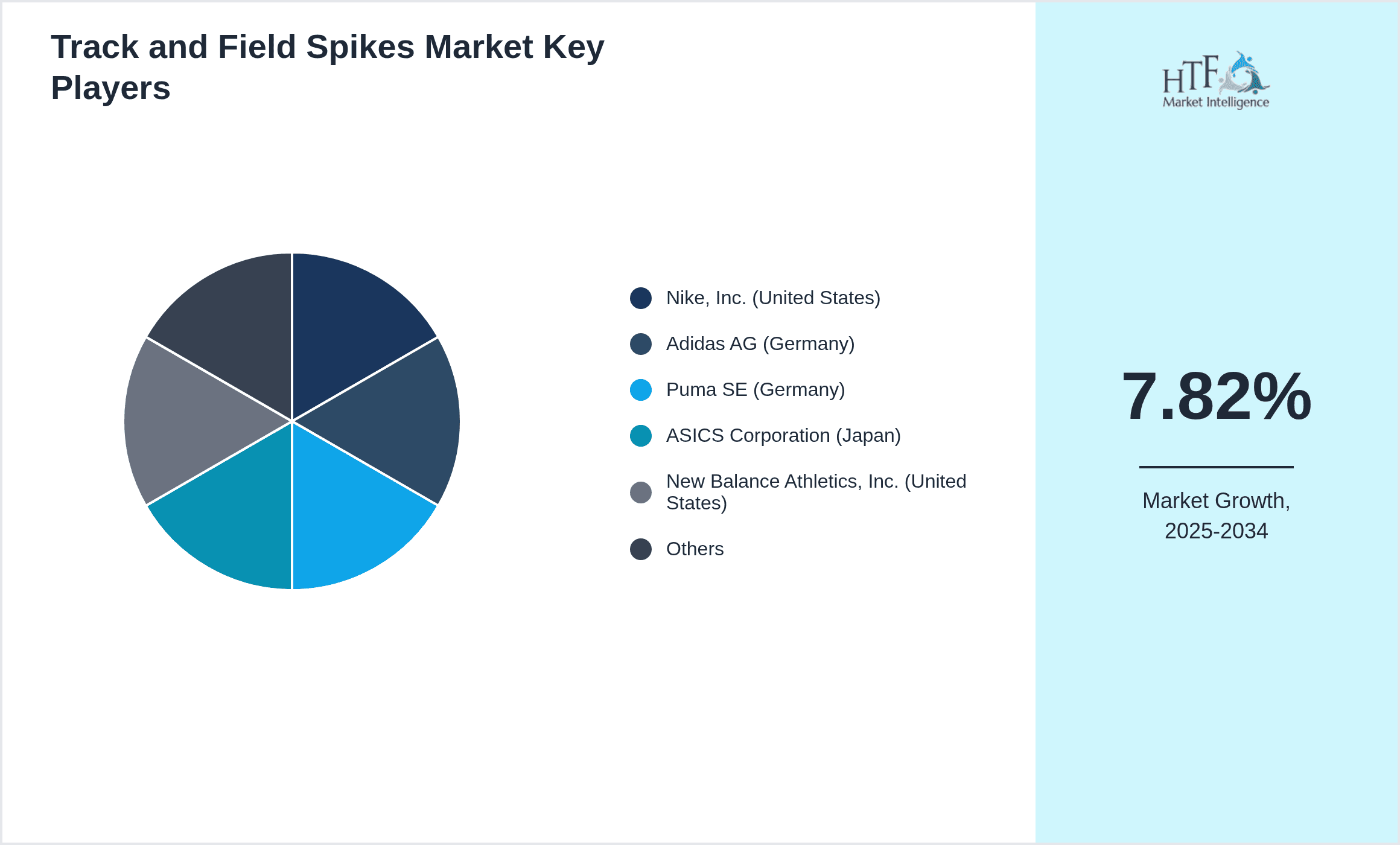
- •Nike, Inc. (United States)
- •Adidas AG (Germany)
- •Puma SE (Germany)
- •ASICS Corporation (Japan)
- •New Balance Athletics, Inc. (United States)
- •Under Armour, Inc. (United States)
- •Mizuno Corporation (Japan)
- •Skechers USA, Inc. (United States)
- •Brooks Sports, Inc. (United States)
- •Salomon Group (France)
- •Hoka One One (United States)
- •Altra Running (United States)
- •Inov-8 (United Kingdom)
- •361 Degrees International Limited (China)
- •Li-Ning Company Limited (China)
- •Fila Holdings Corp. (South Korea)
- •Saucony (United States)
- •On Running AG (Switzerland)
- •Decathlon S.A. (France)
- •K-Swiss Inc. (United States)
- •Vibram S.p.A. (Italy)
- •Topo Athletic LLC (United States)
- •Hummel International (Denmark)
- •Merrell (United States)
- •Reebok International Limited (United States)

Market Breakdown
- •By Product Type
- ◦Metal Spikes
- ◦Plastic Spikes
- ◦Ceramic Spikes
- ◦Alloy Spikes
- ◦Combination Spikes
- •By Application
- ◦Sprint
- ◦Middle Distance
- ◦Long Distance
- ◦Jumping
- ◦Throwing
- •By End-Use Industry
- ◦Professional Athletics
- ◦Collegiate Sports
- ◦Amateur Sports
- ◦Fitness Enthusiasts
- •By Distribution Channel
- ◦Specialized Sports Retailers
- ◦E-commerce Platforms
- ◦Direct Brand Outlets
Growth Dynamics
- •The Global Track and Field Spikes Market is propelled by growing global interest in athletics and increasing investments in sports infrastructure. The rise in professional and amateur sporting events worldwide is expanding demand for advanced performance footwear. Innovations in spike design, including lightweight materials and enhanced traction technologies, contribute to improved athlete outcomes, fueling market growth. Furthermore, expanding health awareness and fitness trends encourage participation in track sports, broadening consumer base. Government initiatives promoting physical activity and sports education also support market expansion by facilitating access to quality athletic gear.
- •Technological advancements such as 3D printing and biomechanical research are revolutionizing spike manufacturing, enabling customized fit and optimized performance. Companies leverage data analytics and athlete feedback to engineer spikes that reduce injury risk and maximize speed. These innovations differentiate products and attract elite athletes, enhancing brand reputations and market penetration. Additionally, sustainability trends are encouraging the use of eco-friendly materials, which appeals to environmentally conscious consumers and opens new market segments.
- •Increasing urbanization and rising disposable incomes in emerging economies are driving growing sports participation, particularly in Asia-Pacific and Latin America. This demographic shift expands the consumer pool, creating lucrative opportunities for market players. Moreover, the proliferation of international track events and sponsorships raises product visibility and demand. Sportswear companies are adopting aggressive marketing strategies, including athlete endorsements and digital campaigns, to capture these expanding markets.
- •The growth of e-commerce platforms enhances product accessibility and broadens geographical reach, enabling manufacturers to target diverse consumer bases globally. Online retail facilitates direct consumer engagement and personalized shopping experiences, which boost sales volumes. Additionally, the increasing penetration of smartphones and internet connectivity supports digital marketing efforts, further accelerating market growth.
- •The professionalization of track and field athletes, including youth development programs and specialized coaching, drives demand for high-performance spikes tailored to specific events. Enhanced focus on athlete safety, injury prevention, and comfort encourages adoption of technologically advanced spikes. This evolving athlete-centric approach fosters innovation and market expansion, as companies invest in R&D to meet precise performance and ergonomic requirements.
Market Trends
- •A prominent trend in the track and field spikes market is the integration of smart technologies such as embedded sensors to monitor athlete biomechanics in real time. These innovations provide valuable data for performance optimization and injury prevention, appealing to professional athletes and coaches. Companies are increasingly investing in wearable tech collaborations to enhance product value and differentiation.
- •Sustainability is gaining traction, with manufacturers adopting recycled and bio-based materials to reduce environmental footprint. This trend resonates with eco-conscious consumers and aligns with global regulatory pressures, pushing companies to innovate in sustainable product design without compromising performance.
- •Customization and personalization have become central to market offerings, with brands providing tailored spike configurations based on athlete-specific parameters such as foot shape, event type, and running style. This bespoke approach improves user satisfaction and strengthens brand loyalty.
- •Digital marketing and e-commerce expansion are reshaping distribution strategies. Brands leverage social media, influencer partnerships, and direct online sales to reach wider audiences efficiently. This shift enhances customer engagement and reduces reliance on traditional retail channels.
- •Collaborations between sportswear companies and elite athletes or sports organizations are growing, facilitating co-branded product launches and driving innovation. These partnerships boost market visibility and credibility, attracting diverse consumer segments.
- •Market segmentation is evolving with increased focus on niche applications such as trail spikes and indoor track spikes, reflecting diversification trends. This expansion caters to specialized athlete needs and broadens market scope.
- •The rise of virtual and augmented reality in training environments influences spike design by simulating track conditions and athlete responses, fostering innovation in performance footwear development.
Market Opportunities
- •Emerging markets in Asia-Pacific and Latin America present significant growth opportunities due to increasing sports participation and government investments in athletic infrastructure. Companies can capitalize on these expanding consumer bases by tailoring products to regional preferences and leveraging localized marketing strategies.
- •The growing demand for sustainable and eco-friendly spikes provides an avenue for innovation and differentiation. Developing biodegradable or recycled material spikes can attract environmentally conscious consumers and comply with evolving regulations.
- •Technological integration such as smart spikes with embedded sensors offers avenues for product innovation and enhanced athlete engagement. Investment in R&D for connected footwear can create competitive advantages and open new revenue streams.
- •Expansion into niche segments like trail running spikes and indoor track spikes can diversify product portfolios and capture underserved markets. Specialized spikes tailored to unique conditions can meet growing athlete demands.
- •Collaborations and strategic partnerships with sports academies and professional teams enable companies to build brand loyalty and co-develop performance-enhancing products, fostering long-term growth.
- •E-commerce growth offers opportunities for direct-to-consumer sales, personalized marketing, and data-driven customer insights, enabling agile market responsiveness and improved profitability.
- •Advancements in 3D printing and manufacturing techniques allow for cost-effective customization and rapid prototyping, accelerating product innovation cycles and market responsiveness.
Market Challenges
- •High costs associated with research, development, and adoption of advanced materials limit accessibility for emerging market consumers and small manufacturers, constraining overall market expansion. Balancing innovation with affordability remains a critical challenge.
- •Stringent regulatory requirements for material safety and environmental compliance impose operational complexities and increase production costs. Navigating diverse regional regulations demands significant resources and expertise.
- •Intense competition from established global brands and local players creates pricing pressure and challenges for new entrants seeking market share. Differentiating products sufficiently while maintaining competitive pricing is difficult.
- •Supply chain disruptions and raw material shortages, exacerbated by geopolitical tensions and pandemic impacts, affect production schedules and increase costs, hindering timely market delivery.
- •Consumer preferences rapidly evolving with technology adoption require continuous innovation and agile product development, straining company resources and increasing risk of product obsolescence.
- •Limited awareness and penetration of advanced spike technologies in developing regions restrict market potential, necessitating focused educational and marketing efforts to drive adoption.
- •Environmental concerns related to disposal and recyclability of synthetic spike materials pose sustainability challenges, pressuring companies to innovate in eco-friendly product life cycles.
Regulatory Framework
- •Between 2019 and 2024, multiple regions implemented updated safety standards governing the use of materials in athletic footwear to ensure athlete health and environmental protection. These regulations mandate rigorous testing for chemical composition and durability, increasing compliance requirements for manufacturers.
- •Countries in North America and Europe introduced environmental regulations in 2021-2023 targeting reduction of plastic waste in sports equipment, encouraging brands to adopt recyclable and biodegradable materials in spike production.
- •The introduction of international standards for sustainable manufacturing processes in 2022 has led to certification programs that influence procurement decisions in professional sports organizations, driving market demand for compliant products.
- •Asia-Pacific countries have enacted import-export regulations affecting raw material sourcing and supply chain transparency since 2020, impacting cost structures and operational logistics for spike manufacturers.
- •Government initiatives in 2019-2024 promoting sports participation include mandates for standardized equipment specifications in educational institutions, fostering adoption of approved track and field spikes and enhancing market penetration.
Market Intelligence
- •15th January 2025, Nike, Inc. launched the ZoomX VaporFly Elite Track Spike featuring advanced carbon fiber plate technology designed to enhance propulsion and reduce energy loss during sprints. Targeted at professional athletes and elite runners, this product integrates lightweight breathable materials with customizable spike configurations, aiming to improve race performance and comfort. The launch strengthens Nike's position in the high-performance spikes segment and aligns with growing demand for technologically advanced athletic footwear. Source: Nike Official Press Release
- •10th March 2025, Adidas AG introduced the Adizero Prime SP Ceramic Spike, incorporating innovative ceramic-based spike tips that offer superior grip and durability while reducing weight by 15% compared to traditional metal spikes. This product targets middle and long-distance runners seeking enhanced traction on various track surfaces. The launch is part of Adidas's strategic focus on sustainable materials and performance optimization, positioning the brand competitively in emerging markets. Source: Adidas Corporate News
- •5th June 2024, Puma SE announced a strategic partnership with the International Association of Athletics Federations to supply customized spikes for upcoming global track events. This collaboration includes co-development of athlete-specific spike designs and extensive marketing campaigns to boost brand visibility and consumer trust worldwide. The initiative is expected to drive Puma's market share and reinforce its commitment to innovation and athlete support. Source: Puma Press Release
- •20th November 2024, ASICS Corporation completed acquisition of a leading sports tech startup specializing in 3D-printed spike soles, enhancing its product customization capabilities. This acquisition enables rapid prototyping and personalized spike designs tailored to individual athlete biomechanics, reinforcing ASICS's competitive edge in the high-performance footwear market. The synergy is anticipated to accelerate innovation and market responsiveness. Source: ASICS Corporate Announcement
Regional Outlook
The North America currently holds a significant share of the market, primarily due to several key factors: increasing consumption rates, a burgeoning population, and robust economic momentum. These elements collectively drive demand, positioning this region as a leader in the market. On the other hand, Asia-Pacific is rapidly emerging as the fastest-growing area within the industry. This remarkable growth can be attributed to swift infrastructure development, the expansion of various industrial sectors, and a marked increase in consumer demand. These dynamics make this region a crucial player in shaping future market growth.
In our report, we cover a comprehensive analysis of the following regions and countries:
- North America
- LATAM
- West Europe
- Central & Eastern Europe
- Northern Europe
- Southern Europe
- East Asia
- Southeast Asia
- South Asia
- Central Asia
- Oceania
- MEA
| Feature | Details |
|---|---|
| Base Year Market Size | USD 1.8 Billion |
| Forecast Year Market Size | USD 3.9 Billion |
| CAGR | 7.82% |
| Forecast Period | 2026 to 2033 |
| YoY Growth | 7.55% |
| Scope of Report | Market is segmented by Product Type (Metal Spikes, Plastic Spikes, Ceramic Spikes, Alloy Spikes, Combination Spikes), Application (Sprint, Middle Distance, Long Distance, Jumping, Throwing), End-Use Industry (Professional Athletics, Collegiate Sports, Amateur Sports, Fitness Enthusiasts), Distribution Channel (Specialized Sports Retailers, E-commerce Platforms, Direct Brand Outlets) |
| Regions Covered | North America, LATAM, West Europe, Central & Eastern Europe, Northern Europe, Southern Europe, East Asia, Southeast Asia, South Asia, Central Asia, Oceania, MEA |
| Key Companies | Nike, Inc. (United States), Adidas AG (Germany), Puma SE (Germany), ASICS Corporation (Japan), New Balance Athletics, Inc. (United States), Under Armour, Inc. (United States), Mizuno Corporation (Japan), Skechers USA, Inc. (United States), Brooks Sports, Inc. (United States), Salomon Group (France), Hoka One One (United States), Altra Running (United States), Inov-8 (United Kingdom), 361 Degrees International Limited (China), Li-Ning Company Limited (China), Fila Holdings Corp. (South Korea), Saucony (United States), On Running AG (Switzerland), Decathlon S.A. (France), K-Swiss Inc. (United States), Vibram S.p.A. (Italy), Topo Athletic LLC (United States), Hummel International (Denmark), Merrell (United States), Reebok International Limited (United States) |
Global Track and Field Spikes Market Size, Growth & Revenue 2024-2034 - Table of Contents
Frequently Asked Questions (FAQ):
The Compact Track Loaders market is expected to see value worth 5.3 Billion in 2025.
North America currently leads the market with approximately 45% market share, followed by Europe at 28% and Asia-Pacific at 22%. The remaining regions account for 5% of the global market.
Key growth drivers include increasing construction activities, rising demand for versatile equipment in agriculture, technological advancements in track loader design, and growing preference for compact equipment in urban construction projects.