
Asia-Pacific Automatic Expresso Machines Market Size, Growth & Revenue 2025-2034
Asia-Pacific Automatic Expresso Machines Market is segmented by Product Type (Fully Automatic Espresso Machines, Semi-Automatic Espresso Machines, Capsule Espresso Machines, Pod Espresso Machines, Manual Espresso Machines), Application (Residential, Commercial Cafes, Office Spaces, Hotels & Restaurants, Vending Services), Service Type (Installation & Setup, Maintenance & Repair, Extended Warranty Services, Customer Training & Support), Deployment Model (Cloud-connected Smart Machines, Standalone Machines, Hybrid Systems), and Geography (Japan, China, Southeast Asia, India, Australia, South Korea, Others)
Pricing
Report Overview
Executive Summary
- •The Asia-Pacific Automatic Expresso Machines market is a rapidly growing segment within the coffee appliances industry, characterized by increasing adoption of automated coffee preparation systems across diverse applications such as residential, commercial cafes, office spaces, hotels & restaurants, and vending services. This market includes a variety of machine types ranging from fully automatic to semi-automatic and capsule-based systems, catering to the growing demand for convenience, quality, and consistency in coffee brewing. The value chain integrates component suppliers, manufacturers, distributors, and end users, reflecting a complex ecosystem driven by technological innovation and evolving consumer preferences. Economic growth, urbanization, and rising disposable income levels in key countries like China, India, Japan, and Southeast Asia are significant enablers, alongside expanding café culture and digital integration through IoT-enabled machines. This report provides an in-depth analysis of market size, growth trajectories from 2020 through 2034, competitive landscape, regulatory frameworks, and regional performance within Asia-Pacific, offering strategic insights for stakeholders and investors aiming to capitalize on market opportunities in this dynamic environment.
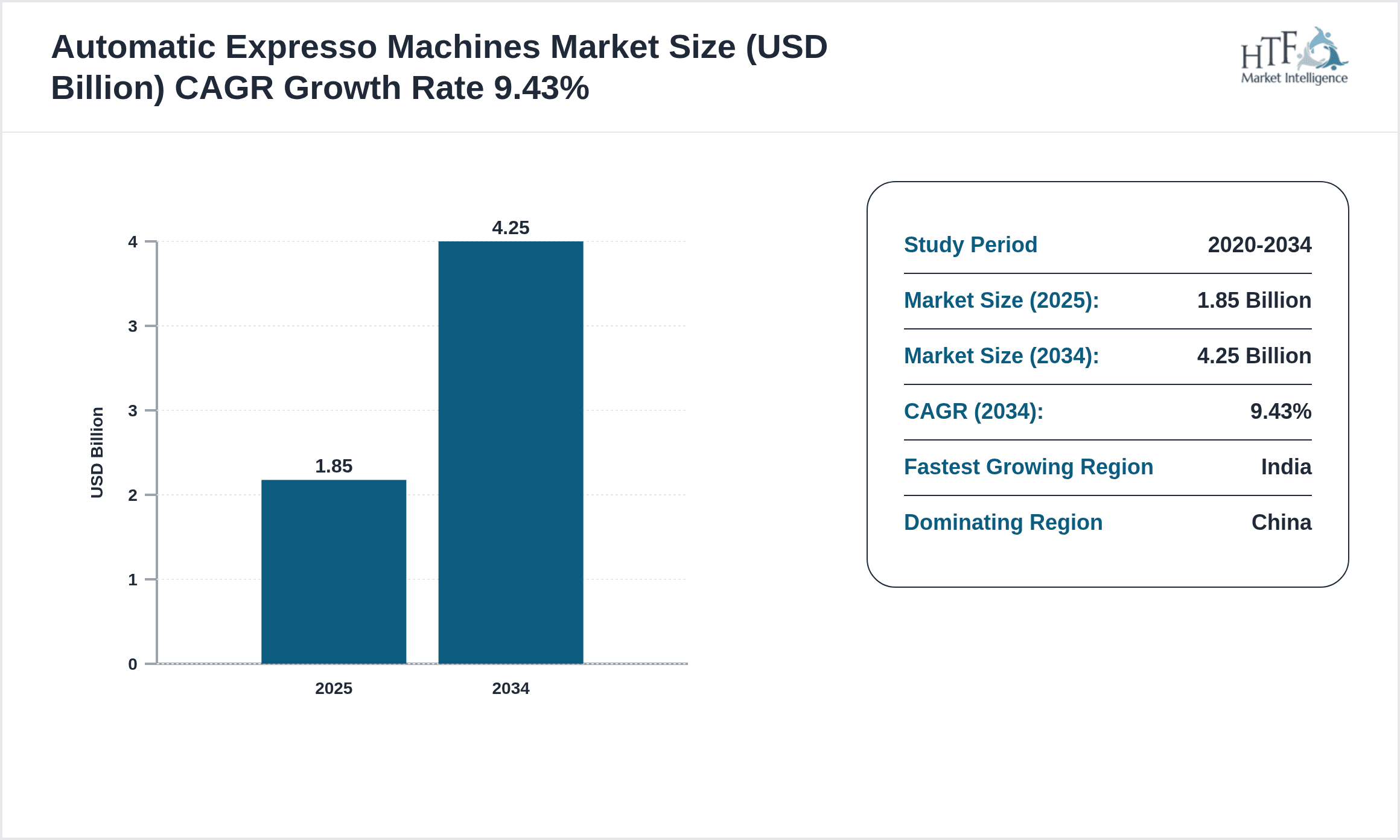
- •Key market highlights indicate that the Asia-Pacific Automatic Expresso Machines market was valued at USD 1.2 Billion in 2020 and grew to USD 1.85 Billion by 2025, with a forecasted expansion to USD 4.25 Billion by 2034. This translates to a robust CAGR of approximately 9.43% from 2025 to 2034, supported by a year-on-year growth rate of 9.03%. The fully automatic segment leads the market in revenue share, driven by demand for high-end, feature-rich coffee machines in metropolitan areas, whereas capsule machines are the fastest-growing product type due to their convenience and rising popularity among younger demographics. Regionally, China dominates the market with the largest share, while India represents the fastest-growing market fueled by increasing urbanization and coffee culture penetration. These trends are backed by continuous product innovation, digital integration, and expanding distribution channels across Asia-Pacific.
- •The market's value proposition lies in its ability to deliver consistent, high-quality espresso with minimal user effort, enhancing the consumer coffee experience across various settings. For manufacturers and distributors, this segment offers significant growth potential through product diversification, technological advancement, and tapping into emerging markets within Asia-Pacific. Stakeholders benefit from the strategic importance of aligning with evolving consumer lifestyles that prioritize convenience, customization, and sustainability. The expansion of automated espresso machines also supports hospitality sectors to improve operational efficiency and customer satisfaction. Overall, the Asia-Pacific Automatic Expresso Machines market is positioned as a vital growth area with broad applications, technological innovation, and increasing regional adoption driving sustained market expansion.
Competitive Landscape
The competitive landscape of the Asia-Pacific Automatic Expresso Machines market is characterized by the presence of multinational corporations, regional manufacturers, and emerging local players, all vying to capture market share through innovation, strategic partnerships, and expanding distribution networks. Market leaders emphasize technological differentiation by integrating smart features such as IoT connectivity, app control, and energy-efficient brewing systems to appeal to tech-savvy consumers and commercial clients. Pricing strategies vary from premium to value-based models, catering to diverse customer segments ranging from upscale cafes to budget-conscious households. Strategic mergers, acquisitions, and collaborations are common to enhance product portfolios and geographic reach. Companies invest heavily in R&D to improve machine durability, user interface, and beverage quality, which constitute key competitive advantages. Distribution channels include direct sales, e-commerce, specialty retailers, and hospitality procurement, enabling widespread market penetration. Barriers to entry include high capital investment, brand loyalty, and compliance with regional safety and quality standards. The market is expected to witness intensified competition as emerging players innovate in capsule technology and sustainable machine designs, while incumbents focus on enhancing customer experience and expanding after-sales services. Regional nuances in consumer preferences and regulatory requirements further influence competitive positioning and strategic decisions within Asia-Pacific.
Prominent Players in Automatic Expresso Machines Market
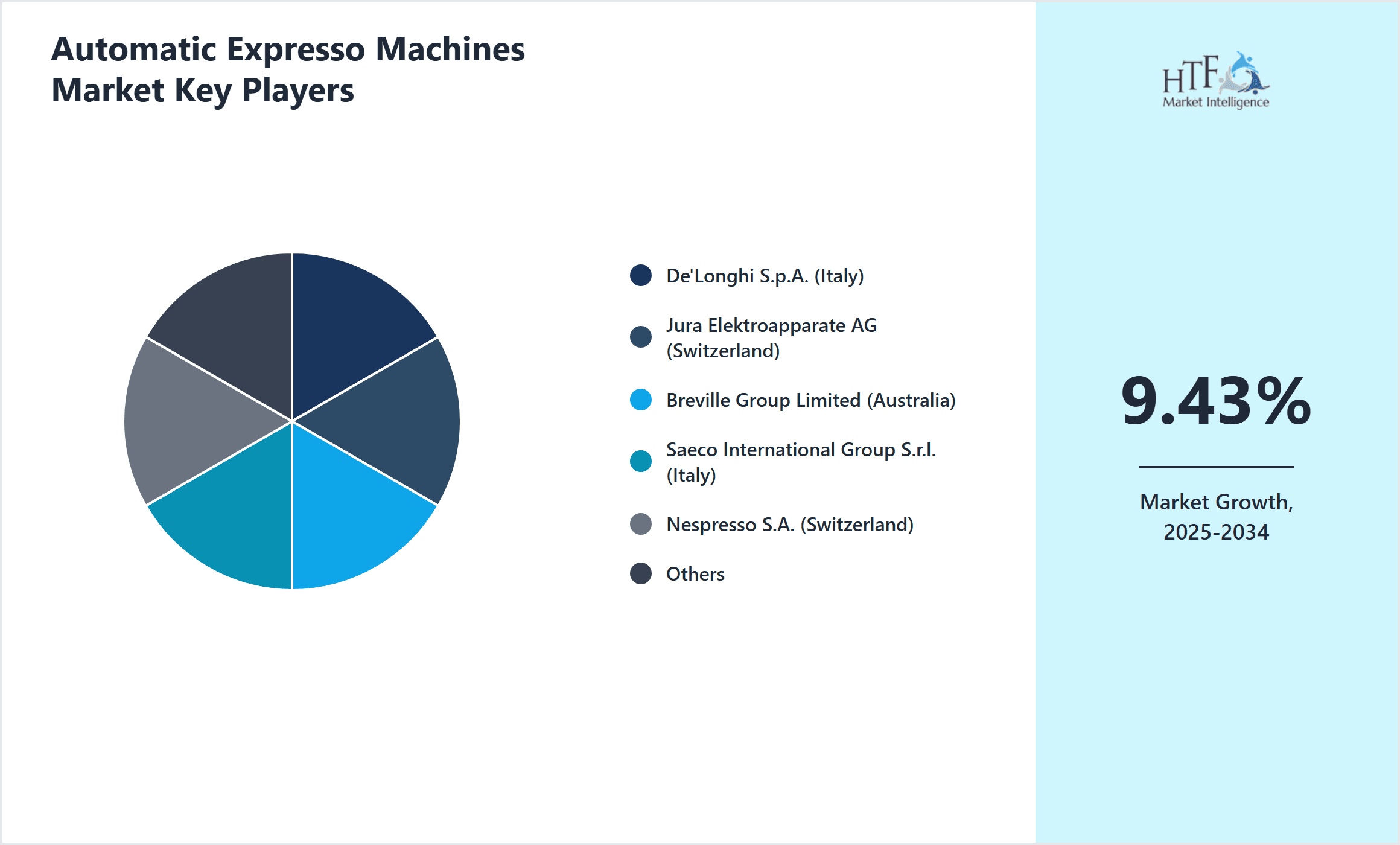
- •De'Longhi S.p.A. (Italy)
- •Jura Elektroapparate AG (Switzerland)
- •Breville Group Limited (Australia)
- •Saeco International Group S.r.l. (Italy)
- •Nespresso S.A. (Switzerland)
- •Philips Domestic Appliances B.V. (Netherlands)
- •Rancilio Group (Italy)
- •Krups GmbH (Germany)
- •Miele & Cie. KG (Germany)
- •Breville USA, Inc. (United States)
- •Gaggia S.p.A. (Italy)
- •Capresso (United States)
- •Siemens AG (Germany)
- •Espressione LLC (United States)
- •Melitta Group (Germany)
- •KitchenAid (United States)
- •LG Electronics Inc. (South Korea)
- •Samsung Electronics Co., Ltd. (South Korea)
- •Sharp Corporation (Japan)
- •Panasonic Corporation (Japan)
- •Tefal (France)
- •Sunbeam Products, Inc. (United States)
- •DeLonghi Asia Pacific Pte Ltd (Singapore)
- •Tassimo (Germany)
- •Bosch Home Appliances (Germany)
Market Breakdown
- •By Product Type
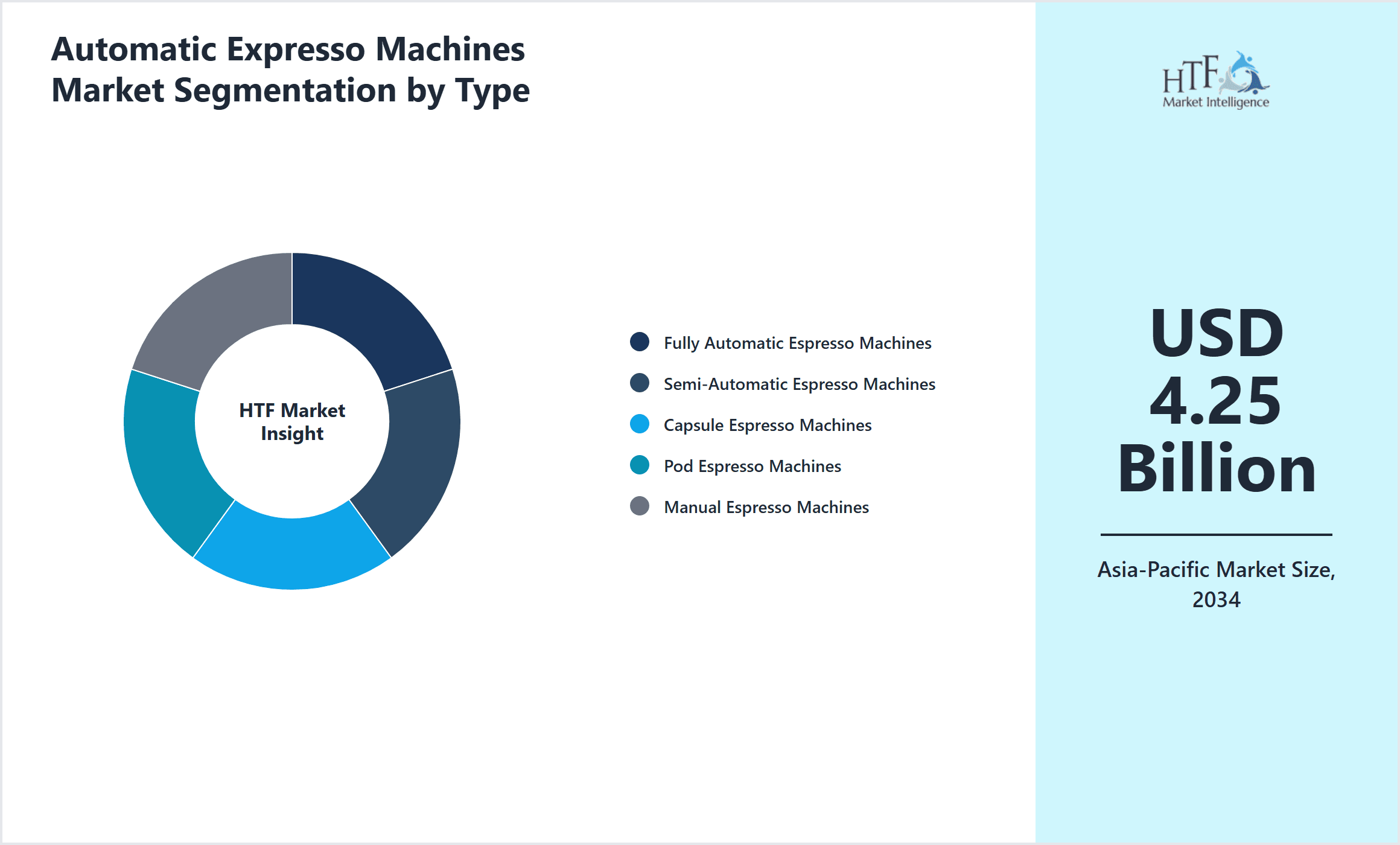
- ◦Fully Automatic Espresso Machines
- ◦Semi-Automatic Espresso Machines
- ◦Capsule Espresso Machines
- ◦Pod Espresso Machines
- ◦Manual Espresso Machines
- •By Application
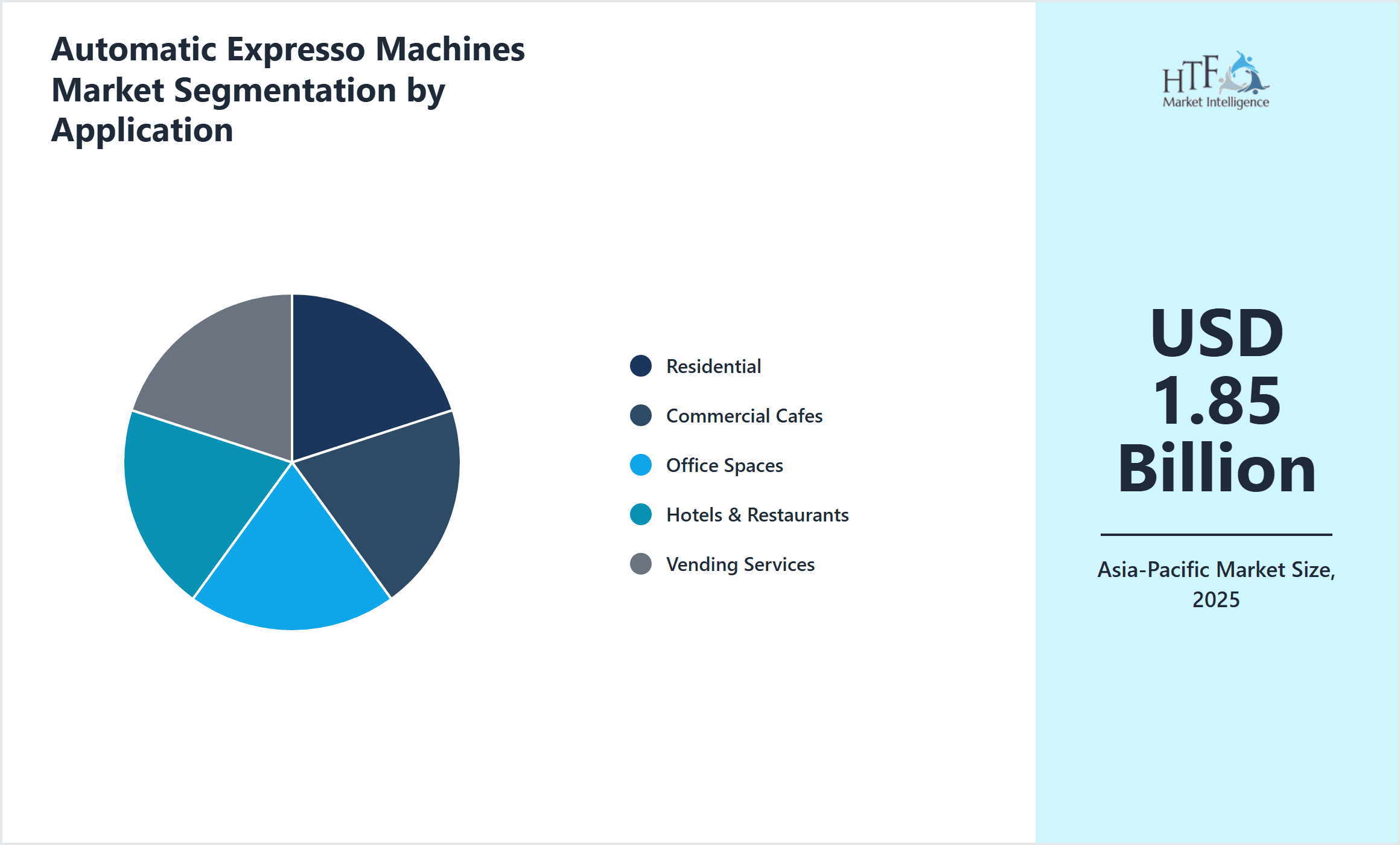
- ◦Residential
- ◦Commercial Cafes
- ◦Office Spaces
- ◦Hotels & Restaurants
- ◦Vending Services
- •By Service Type
- ◦Installation & Setup
- ◦Maintenance & Repair
- ◦Extended Warranty Services
- ◦Customer Training & Support
- •By Deployment Model
- ◦Cloud-connected Smart Machines
- ◦Standalone Machines
- ◦Hybrid Systems
Growth Dynamics
- •The Asia-Pacific market for automatic espresso machines is driven by rising urbanization and increasing disposable incomes, particularly in countries like China and India, enabling a growing middle class to afford premium coffee appliances for home and commercial use. This socio-economic shift fuels demand for convenient, high-quality coffee experiences, expanding the customer base rapidly.
- •Technological advancements such as integration of IoT features and app-based controls have enhanced machine usability and customization options, attracting tech-savvy consumers and commercial operators seeking efficiency and consistent beverage quality. Leading manufacturers invest in R&D to incorporate smart sensors and energy-saving modes, boosting market appeal.
- •The expanding café culture across Asia-Pacific, driven by younger demographics and lifestyle changes, has increased demand for commercial-grade automatic espresso machines, allowing businesses to optimize service speed and quality, thereby encouraging further adoption in hospitality and office sectors.
- •Government initiatives supporting small and medium enterprises (SMEs) in the food and beverage industry stimulate growth by facilitating access to advanced coffee-making equipment, while increasing awareness about premium coffee consumption sustains long-term market expansion.
- •The rise in home brewing trends amid increasing work-from-home arrangements has led to greater consumer interest in fully automatic and capsule espresso machines that offer ease of use and convenience, contributing to sustained market growth in the residential segment.
- •Investment in sustainable product designs and eco-friendly capsules aligns with growing environmental consciousness, positioning companies competitively and attracting environmentally aware consumers, thereby supporting market growth through product innovation.
- •Strategic partnerships between coffee machine manufacturers and coffee bean suppliers enhance product ecosystem offerings, providing end users with integrated solutions that drive higher customer satisfaction and repeat purchases.
Market Trends
- •Increasing adoption of IoT-enabled espresso machines allowing remote monitoring, machine diagnostics, and beverage customization is reshaping consumer interaction and service models in both residential and commercial sectors across Asia-Pacific.
- •Growing preference for capsule and pod-based espresso machines reflects a shift towards convenience and portion control, particularly among younger urban consumers and office environments seeking quick coffee solutions without compromising quality.
- •The expansion of specialty coffee shops and premium café chains in urban centers is driving demand for high-performance fully automatic espresso machines capable of handling high volume with consistent quality and minimal operator intervention.
- •Sustainability trends are influencing machine designs and consumable choices, with increased focus on recyclable capsules, energy-efficient systems, and biodegradable materials to meet evolving regulatory and consumer expectations.
- •Integration of AI and machine learning technologies is emerging in high-end machines to optimize brewing parameters based on user preferences and environmental conditions, enhancing product differentiation and customer experience.
- •E-commerce platforms and online marketplaces have become significant distribution channels, enabling wider market reach and access to diverse product ranges, especially in remote or underserved Asia-Pacific regions.
- •Collaborations between coffee machine manufacturers and popular coffee brands are creating bundled offerings that enhance brand loyalty and encourage product adoption through exclusive coffee blends and machine compatibility.
Market Opportunities
- •There is significant growth potential in untapped rural and semi-urban regions across Asia-Pacific where rising incomes and improving infrastructure are gradually increasing demand for automatic espresso machines, particularly affordable and easy-to-use models.
- •Emerging markets such as India and Southeast Asia offer opportunities for manufacturers to expand by tailoring products to local preferences, such as incorporating multi-beverage capabilities and robust designs suited for diverse environmental conditions.
- •Increasing trend of smart homes and connected appliances opens avenues for integrating espresso machines into IoT ecosystems, enabling manufacturers to offer value-added services like predictive maintenance and subscription-based coffee supplies.
- •Growth in office coffee service segments presents opportunities for B2B sales of commercial automatic espresso machines that improve workplace satisfaction and productivity, supported by leasing and rental models that reduce upfront costs for businesses.
- •Innovations in sustainable capsule materials and recycling initiatives can attract environmentally conscious consumers, creating differentiation and compliance advantages in markets with stringent environmental regulations.
- •Partnerships with coffee retailers and hospitality chains enable cross-promotional strategies and bundled offers, driving sales growth and brand visibility in competitive urban markets across Asia-Pacific.
- •Expansion of e-commerce infrastructure and digital payment adoption facilitates direct-to-consumer sales channels, reducing reliance on traditional retail and enabling personalized marketing campaigns to boost penetration.
Market Challenges
- •High initial investment and maintenance costs of fully automatic espresso machines limit adoption among price-sensitive consumers and small businesses, constraining market growth in lower-income Asia-Pacific regions.
- •Complexity of machine operation and maintenance requirements pose barriers for first-time users and small commercial operators lacking technical expertise, impeding wider market penetration.
- •Supply chain disruptions, including raw material shortages and logistic challenges, have impacted production schedules and inventory management, especially during global crises such as the COVID-19 pandemic.
- •Stringent regulatory standards related to electrical safety, environmental compliance, and energy efficiency across different Asia-Pacific countries increase manufacturing costs and complicate market entry procedures.
- •Competition from low-cost manual and semi-automatic machines, as well as traditional coffee-making methods, limits the market share growth of advanced automatic espresso machines in price-sensitive segments.
- •Limited consumer awareness and education about the benefits and features of automatic espresso machines in some emerging markets hinder adoption rates and slow market expansion.
- •Fragmented retail and service networks in rural and semi-urban areas restrict product availability and after-sales support, affecting customer satisfaction and brand loyalty.
Regulatory Framework
- •Between 2020 and 2025, several Asia-Pacific countries implemented electrical safety standards mandating certifications such as IEC and national safety marks, requiring manufacturers to comply with rigorous testing protocols to ensure consumer protection and product reliability.
- •Environmental regulations introduced in the region focus on energy efficiency labeling and restrictions on hazardous substances in electrical appliances, compelling manufacturers to adopt eco-friendly designs and materials to meet compliance and consumer expectations.
- •Specific country-level mandates, such as Japan’s Top Runner Program and China’s Energy Conservation Law, set benchmarks for reducing power consumption of household and commercial appliances, influencing product development and market competitiveness.
- •Waste management and recycling regulations targeting single-use capsules and packaging materials have emerged in countries like South Korea and Australia, incentivizing companies to innovate in sustainable consumables and implement take-back programs.
- •Government initiatives providing subsidies and incentives for SMEs to upgrade to energy-efficient and smart appliances have facilitated market growth by lowering adoption barriers and encouraging modernization in hospitality and office sectors.
Market Intelligence
- •15th January 2025, De'Longhi S.p.A. launched its latest fully automatic espresso machine model featuring integrated IoT connectivity, enabling users to customize beverages remotely via a smartphone app. This model incorporates AI-driven brewing algorithms that adjust parameters based on bean type and user preferences, enhancing the coffee experience. The launch targets urban markets in Asia-Pacific, especially China and Japan, aligning with growing demand for smart home appliances. De'Longhi aims to strengthen its regional presence and capitalize on the rising trend of connected kitchen devices. Source: Official De'Longhi press release.
- •3rd March 2025, Breville Group Limited introduced a capsule espresso machine designed for sustainability, utilizing biodegradable capsules compatible with multiple coffee brands. The machine is tailored for residential consumers in Southeast Asia and Australia, emphasizing eco-friendly coffee consumption without compromising convenience or flavor. This innovation responds to increasing environmental regulations and consumer demand for green products. Breville's strategic objective includes expanding market share in environmentally conscious segments and promoting sustainable practices across its product portfolio. Source: Breville corporate announcement.
- •22nd June 2025, Philips Domestic Appliances B.V. announced a strategic partnership with a leading coffee chain in India to co-develop commercial automatic espresso machines with customized brewing profiles suited for local taste preferences. This collaboration aims to accelerate adoption in the fast-growing Indian café market and enhance operational efficiency through tailored technology. The initiative supports Philips' regional expansion strategy and strengthens its position in the commercial segment by leveraging localized expertise. Source: Philips official website.
- •10th September 2025, Samsung Electronics Co., Ltd. completed the acquisition of a smart appliance startup specializing in AI-powered coffee machines, aiming to integrate advanced machine learning capabilities into its home appliance lineup. This move is expected to accelerate innovation in Asia-Pacific's espresso machine market by combining Samsung's manufacturing scale with cutting-edge software technology. The acquisition aligns with Samsung’s broader strategy to lead in smart home ecosystems and enhance user experience through intelligent appliances. Source: Samsung corporate press release.
Regional Outlook
The China currently holds a significant share of the market, primarily due to several key factors: increasing consumption rates, a burgeoning population, and robust economic momentum. These elements collectively drive demand, positioning this region as a leader in the market. On the other hand, India is rapidly emerging as the fastest-growing area within the industry. This remarkable growth can be attributed to swift infrastructure development, the expansion of various industrial sectors, and a marked increase in consumer demand. These dynamics make this region a crucial player in shaping future market growth.
In our report, we cover a comprehensive analysis of the following regions and countries:
- Japan
- China
- Southeast Asia
- India
- Australia
- South Korea
- Others
| Feature | Details |
|---|---|
| Base Year Market Size | USD 1.85 Billion |
| Forecast Year Market Size | USD 4.25 Billion |
| CAGR | 9.43% |
| Forecast Period | 2026 to 2033 |
| YoY Growth | 9.03% |
| Scope of Report | Market is segmented by Product Type (Fully Automatic Espresso Machines, Semi-Automatic Espresso Machines, Capsule Espresso Machines, Pod Espresso Machines, Manual Espresso Machines), Application (Residential, Commercial Cafes, Office Spaces, Hotels & Restaurants, Vending Services), Service Type (Installation & Setup, Maintenance & Repair, Extended Warranty Services, Customer Training & Support), Deployment Model (Cloud-connected Smart Machines, Standalone Machines, Hybrid Systems) |
| Regions Covered | Japan, China, Southeast Asia, India, Australia, South Korea, Others |
| Key Companies | De'Longhi S.p.A. (Italy), Jura Elektroapparate AG (Switzerland), Breville Group Limited (Australia), Saeco International Group S.r.l. (Italy), Nespresso S.A. (Switzerland) |
Asia-Pacific Automatic Expresso Machines Market Size, Growth & Revenue 2025-2034 - Table of Contents
Frequently Asked Questions (FAQ):
The Compact Track Loaders market is expected to see value worth 5.3 Billion in 2025.
North America currently leads the market with approximately 45% market share, followed by Europe at 28% and Asia-Pacific at 22%. The remaining regions account for 5% of the global market.
Key growth drivers include increasing construction activities, rising demand for versatile equipment in agriculture, technological advancements in track loader design, and growing preference for compact equipment in urban construction projects.