
Global Floral Scissors Market Size, Growth & Revenue 2024-2034
Global Floral Scissors Market is segmented by Product Type (Pruning Floral Scissors, Precision Floral Scissors, Electric Floral Scissors, Ergonomic Floral Scissors, Decorative Floral Scissors), Application (Floristry, Gardening, Crafting, Floral Arrangements, Agricultural Use), End User (Professional Florists, Home Gardeners, Agricultural Workers, Craft Enthusiasts), Distribution Channel (Specialty Retail Stores, E-commerce Platforms, Supermarkets & Hypermarkets), and Geography (North America, LATAM, West Europe, Central & Eastern Europe, Northern Europe, Southern Europe, East Asia, Southeast Asia, South Asia, Central Asia, Oceania, MEA)
Pricing
Report Overview
Executive Summary
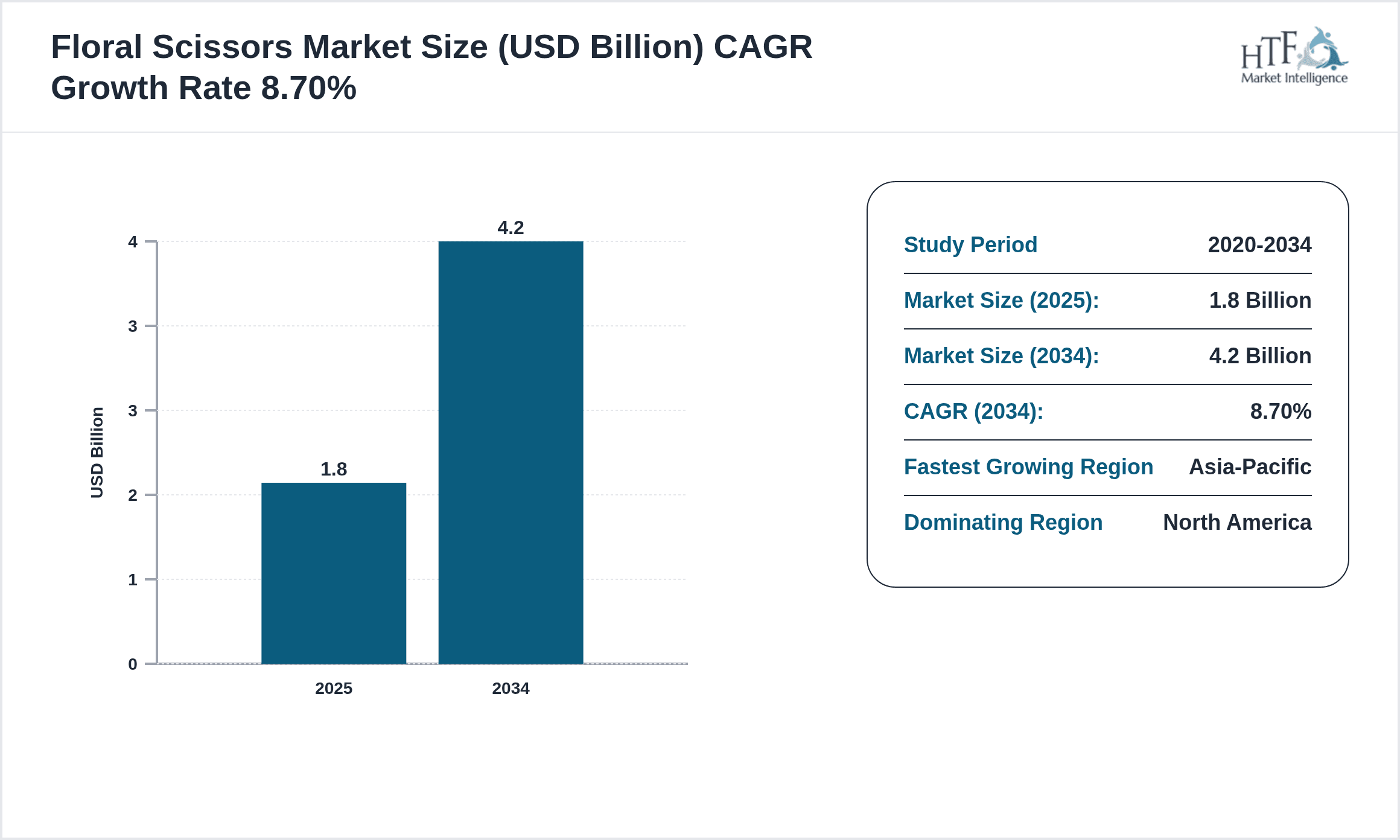
- •The global floral scissors market comprises a range of cutting tools specifically designed for floristry, gardening, crafting, and agricultural applications. These scissors are engineered to deliver precision and efficiency in cutting delicate floral stems and foliage while ensuring user comfort through ergonomic designs. The market includes multiple product types such as pruning floral scissors, precision scissors for detailed work, electric floral scissors for mechanized cutting, ergonomic models to reduce strain, and decorative scissors for craft use. The industry serves a broad spectrum of users including professional florists, gardeners, agricultural workers, and hobbyists worldwide. Growth drivers include rising demand for ornamental plants, increasing adoption of mechanized gardening tools, and a growing trend toward sustainable and home gardening practices. North America currently dominates the market due to high consumer spending and advanced horticultural industries, while Asia-Pacific is the fastest-growing region, driven by expanding agricultural sectors and rising disposable incomes. Technological innovations, expanding e-commerce channels, and increased awareness of floral aesthetics create significant opportunities for market expansion through 2034.
- •Key market highlights include a base market size of USD 1.8 billion in 2024, projected to reach USD 4.2 billion by 2034, reflecting a CAGR of 8.7%. Pruning floral scissors maintain dominance as the leading product type due to widespread professional and consumer usage, while electric floral scissors show the fastest growth due to technological advancements and labor-saving benefits. Floristry applications continue to hold the largest market share, followed by gardening and crafting uses. The North American region leads market revenue, supported by well-established floral industries and consumer awareness. Meanwhile, Asia-Pacific exhibits the highest growth rate, propelled by modernization in horticulture and increased demand for efficient gardening tools. The market faces challenges such as high product costs and competition from multipurpose cutting tools. Nevertheless, continuous innovation, expanding distribution networks, and rising interest in sustainable gardening practices offer promising avenues for growth.
- •The floral scissors market holds strategic importance across multiple sectors including floristry, agriculture, and crafts, providing essential tools that enhance productivity, precision, and aesthetic outcomes. For florists, these scissors are critical in creating high-quality arrangements that meet consumer expectations in retail and event settings. Gardeners and agricultural professionals benefit from specialized scissors that improve pruning efficiency and plant health. The market's growth influences upstream suppliers of raw materials and cutting-edge blade technologies, while downstream stakeholders such as distributors and retailers capitalize on increasing consumer demand. Additionally, the integration of ergonomic and electric designs reflects broader industry trends toward consumer convenience and labor savings. Overall, the floral scissors market supports the expansion of horticultural industries and contributes to the broader gardening and craft economies globally.
Competitive Landscape
The global floral scissors market is characterized by a competitive environment with multiple players striving to innovate and differentiate their product offerings. Market participants compete primarily on product quality, design innovation, brand reputation, and pricing strategies. Leading companies invest significantly in research and development to integrate ergonomic features and electric functionalities that enhance user experience and efficiency. Strategic partnerships and distribution networks are critical for extending market reach across diverse geographic regions. The rivalry is intensified by the presence of numerous regional manufacturers offering cost-effective solutions that challenge established global brands. Additionally, companies continuously pursue brand loyalty through targeted marketing and after-sales services. Barriers to entry remain moderate due to technological requirements and brand trust, but ongoing innovation and market expansion opportunities drive competitive dynamics. Future trends suggest increased consolidation through mergers and acquisitions, as well as growing emphasis on sustainable and eco-friendly product designs.
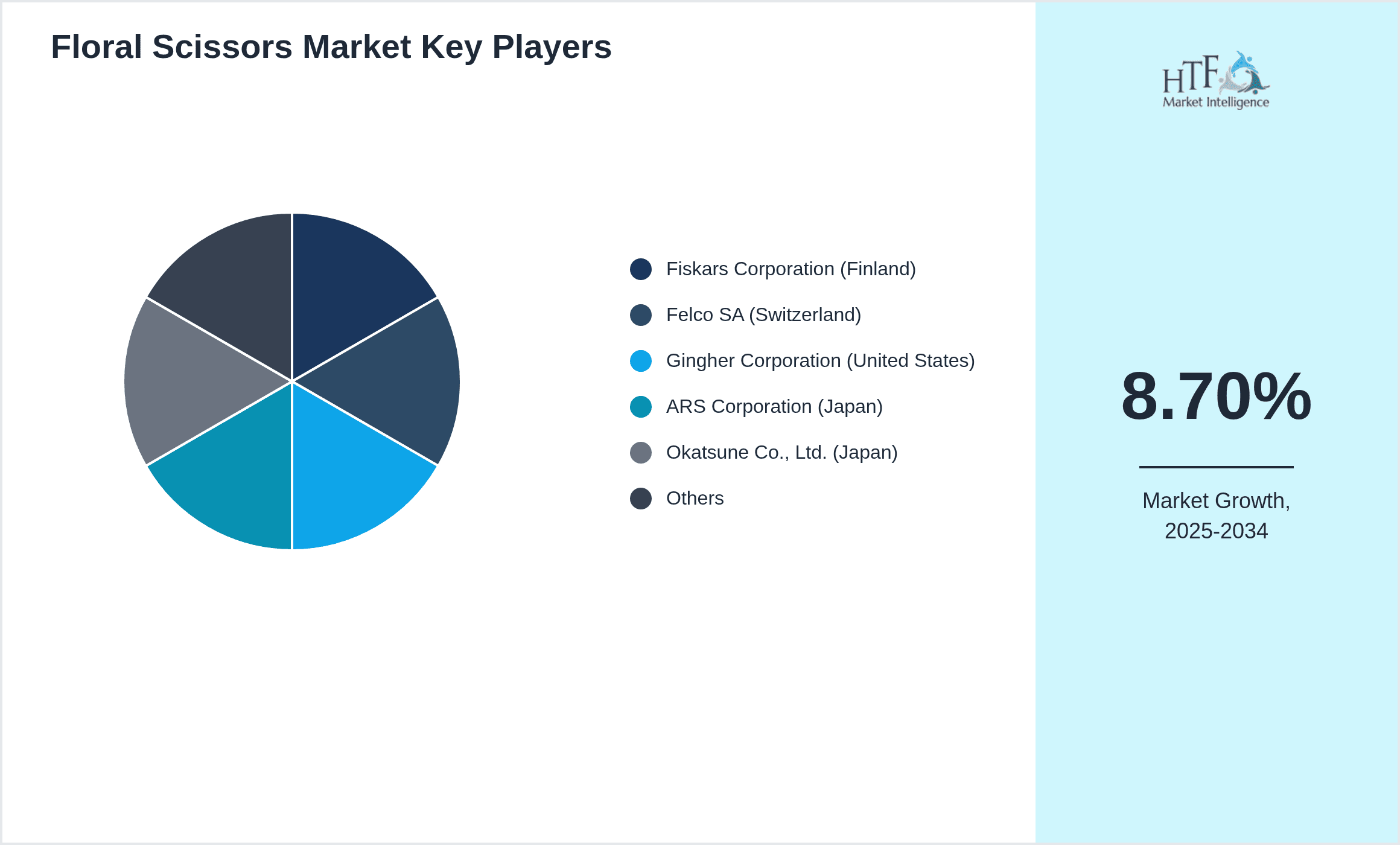
Top Companies Profiled in Floral Scissors Market
- •Fiskars Corporation (Finland)
- •Felco SA (Switzerland)
- •Gingher Corporation (United States)
- •ARS Corporation (Japan)
- •Okatsune Co., Ltd. (Japan)
- •Wüsthof-Tradition (Germany)
- •Kai Corporation (Japan)
- •Opinel (France)
- •Victorinox AG (Switzerland)
- •The Corona Group (United States)
- •Spear & Jackson (United Kingdom)
- •Truper Herramientas (Mexico)
- •Mundial S.A. (United States)
- •Tajima Tool Corporation (Japan)
- •Burgon & Ball (United Kingdom)
- •Wilkinson Sword (United Kingdom)
- •Talen Tools (China)
- •Fiskars Brands Inc. (United States)
- •Spear & Jackson Holdings Limited (United Kingdom)
- •Xiaomi Corporation (China)
- •Husqvarna Group (Sweden)
- •Gardena GmbH (Germany)
- •Corona Tools (United States)
- •DeWit (Netherlands)
- •Bahco (Sweden)
Market Breakdown
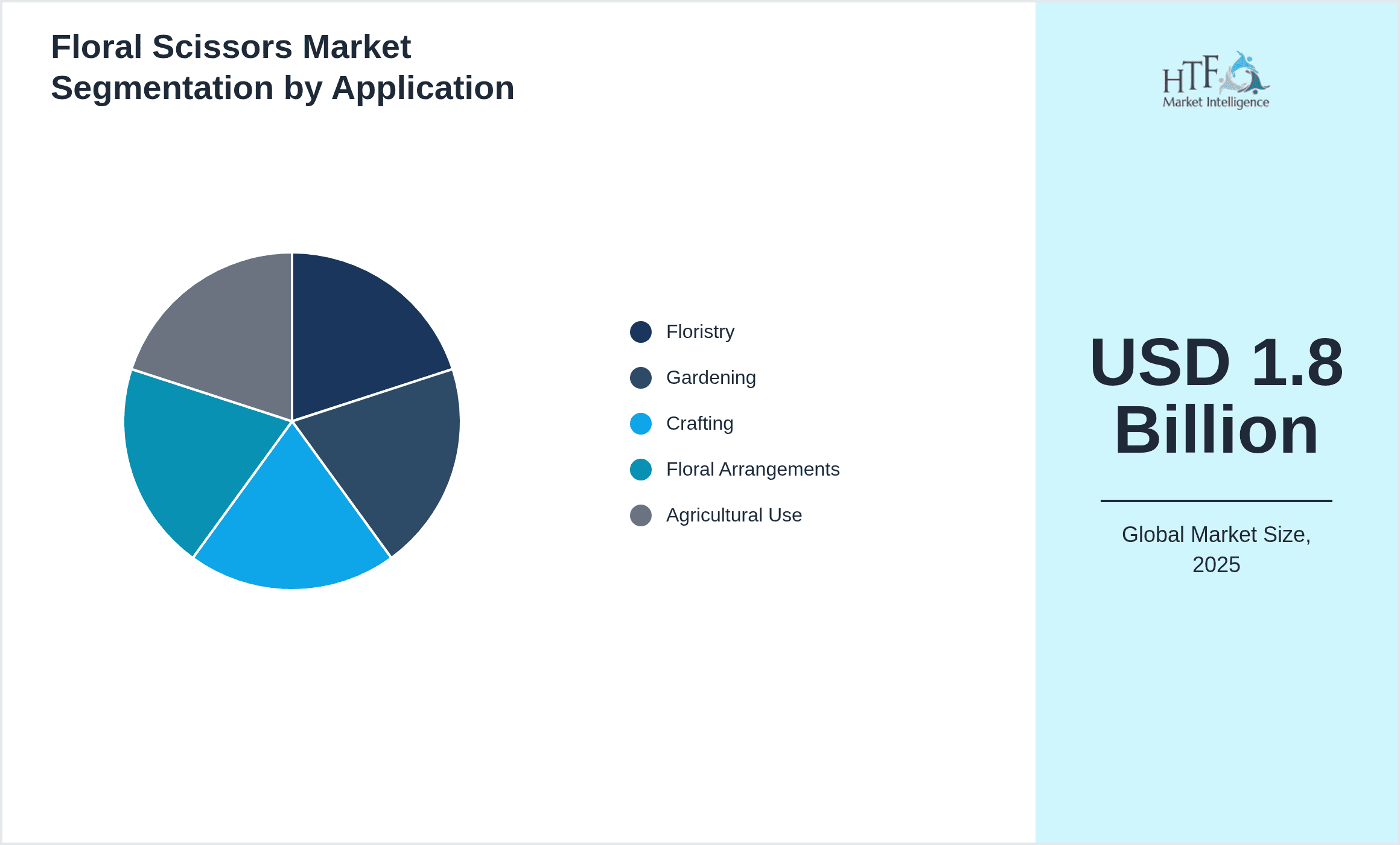
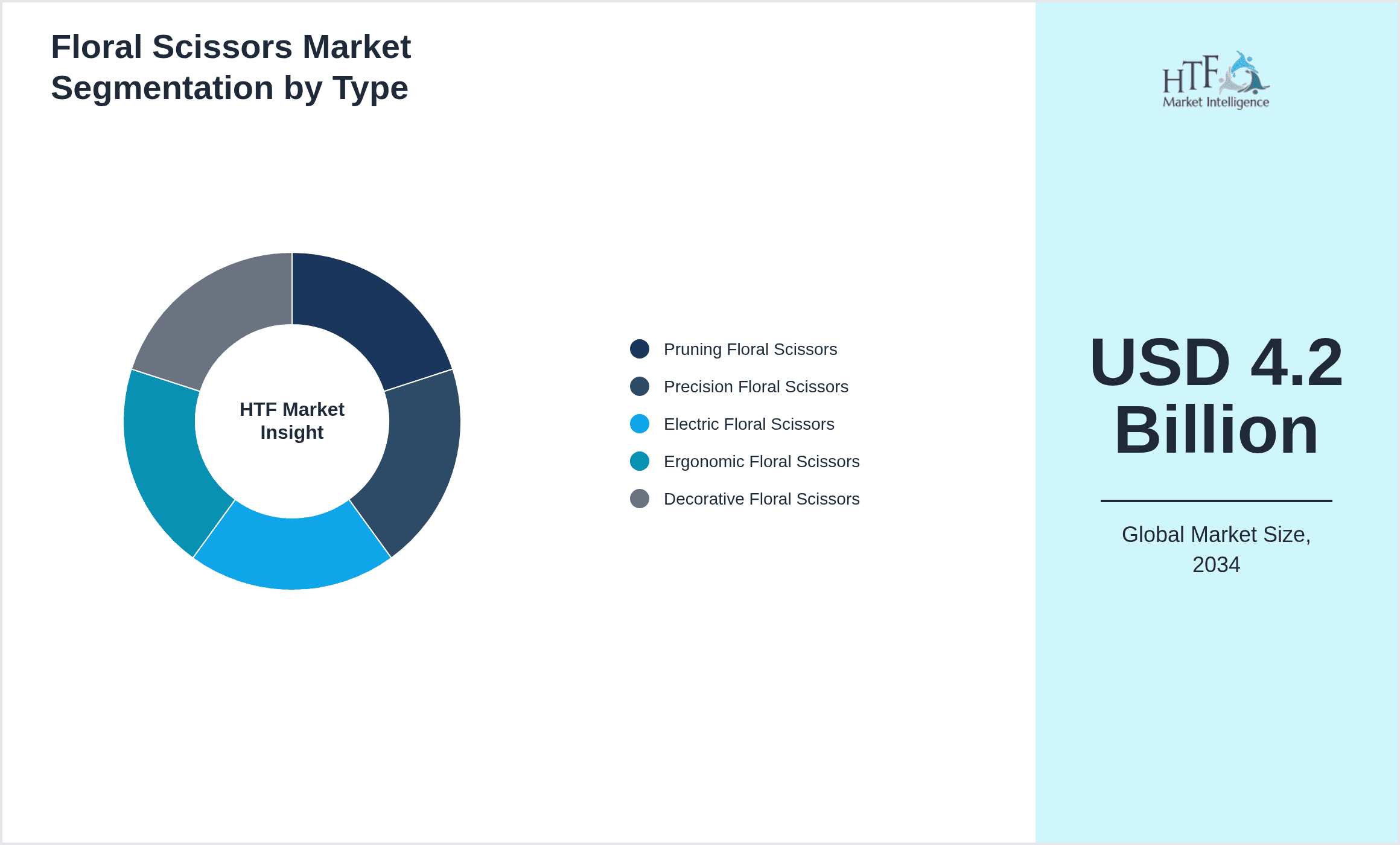
- •By Product Type
- ◦Pruning Floral Scissors
- ◦Precision Floral Scissors
- ◦Electric Floral Scissors
- ◦Ergonomic Floral Scissors
- ◦Decorative Floral Scissors
- •By Application
- ◦Floristry
- ◦Gardening
- ◦Crafting
- ◦Floral Arrangements
- ◦Agricultural Use
- •By End User
- ◦Professional Florists
- ◦Home Gardeners
- ◦Agricultural Workers
- ◦Craft Enthusiasts
- •By Distribution Channel
- ◦Specialty Retail Stores
- ◦E-commerce Platforms
- ◦Supermarkets & Hypermarkets
Growth Dynamics
- •Rising global interest in gardening and ornamental plants fuels demand for specialized floral scissors, particularly among urban consumers adopting home gardening as a lifestyle choice. This trend is bolstered by increased awareness of mental health benefits associated with gardening activities.
- •Technological innovations such as electric floral scissors offering enhanced cutting efficiency and reduced manual fatigue are rapidly gaining traction, especially in commercial floristry and large-scale agricultural operations, driving market expansion.
- •The growth of e-commerce platforms has revolutionized distribution, enabling manufacturers to reach broader consumer bases and offer customized floral scissors with varied designs and functionalities, thus expanding market penetration worldwide.
- •Sustainable material usage and ergonomic designs are becoming key differentiators, with consumers preferring eco-friendly and user-friendly products, motivating manufacturers to innovate and adapt to these preferences for competitive advantage.
- •Increasing investments in commercial horticulture and landscaping industries globally, especially in North America and Asia-Pacific, are driving demand for professional-grade floral scissors, supporting market growth through 2034.
Market Trends
- •The market is witnessing a shift towards electric and battery-operated floral scissors, which provide precision and reduce labor intensity, gaining popularity among professional florists and agricultural workers alike.
- •Customization and aesthetic appeal are increasingly influencing purchasing decisions, with manufacturers offering floral scissors in various colors, materials, and ergonomic shapes to cater to diverse consumer tastes.
- •Integration of smart features such as safety locks, adjustable blades, and lightweight materials is becoming common, aligning with broader trends in smart gardening tools and enhancing product value.
- •Sustainability is a major trend, with rising demand for floral scissors made from recycled metals and biodegradable handles, reflecting environmental consciousness among consumers and businesses.
- •Collaborations between traditional scissors manufacturers and tech companies are emerging, resulting in innovative products that combine craftsmanship with modern technology, expanding market offerings.
Market Opportunities
- •Emerging markets in Asia-Pacific and Latin America present significant growth prospects due to rising disposable income, urbanization, and expanding commercial horticulture sectors demanding advanced floral scissors.
- •Development of multifunctional floral scissors that combine pruning and crafting capabilities could attract wider consumer segments, increasing market share and product adoption.
- •Expansion of online retail channels offers opportunities for direct-to-consumer sales, enabling brands to showcase product innovations and build loyal customer bases globally.
- •Investing in R&D to produce eco-friendly and ergonomic designs can capture environmentally conscious consumers and professional users seeking comfort during prolonged use.
- •Collaborations with floral design schools and gardening institutions to promote specialized floral scissors can enhance brand recognition and stimulate demand through educational outreach.
Market Challenges
- •High manufacturing costs associated with advanced electric floral scissors limit affordability for price-sensitive consumers, constraining market penetration in developing regions.
- •Competition from multifunctional garden tools that offer cutting and trimming features reduces demand for dedicated floral scissors, impacting sales growth negatively.
- •Lack of standardized quality certifications across regions leads to inconsistent product quality, undermining consumer trust and brand reputation in certain markets.
- •Supply chain disruptions and raw material price volatility pose risks to timely product availability and cost management, affecting manufacturers’ profitability and market responsiveness.
- •Limited consumer awareness about the benefits of ergonomic and electric floral scissors restricts adoption rates, especially among traditional gardening and floristry users.
Regulatory Framework
- •Between 2019 and 2024, several regions implemented stringent product safety standards for cutting tools to minimize user injuries, mandating compliance with blade sharpness and locking mechanisms, thus affecting floral scissors manufacturing.
- •Environmental regulations introduced in Europe and North America require manufacturers to use sustainable materials and restrict hazardous chemicals in floral scissors production, encouraging eco-friendly product development.
- •Electric floral scissors are subject to electrical safety certifications such as CE and UL standards, ensuring compliance with operational safety and electromagnetic compatibility requirements for international trade.
- •Country-specific import tariffs and trade policies influence floral scissors pricing and availability in key markets, compelling companies to optimize manufacturing locations and supply chains.
- •Government initiatives promoting urban gardening and sustainable agriculture indirectly support the floral scissors market by increasing demand and encouraging innovation through grants and subsidies.
Market Intelligence
- •15th February 2025, Fiskars Corporation launched an advanced ergonomic electric floral scissors model featuring lightweight lithium-ion batteries, adjustable blade tension, and enhanced safety locks. Targeting professional florists and gardeners, the product aims to reduce user fatigue and increase cutting precision, thereby improving productivity. Fiskars emphasized sustainable materials in the design, aligning with environmental trends and consumer preferences. This launch is expected to strengthen Fiskars’ position in the premium segment and expand their market share globally by addressing growing demand for innovation in floral cutting tools. Source: Official Fiskars Press Release
- •10th April 2025, Felco SA introduced a new range of precision floral scissors equipped with corrosion-resistant blades and ergonomic handles designed for extended use. The launch responds to increasing demand from professional florists for high-durability and comfort-focused cutting tools. Felco’s innovation integrates user feedback and advanced metallurgy to enhance blade sharpness and longevity. This product rollout is anticipated to boost Felco’s competitive edge in Europe and North America, driving incremental revenue through specialized segments. Source: Felco Official Website
- •20th January 2025, Gingher Corporation announced a strategic partnership with a leading e-commerce platform to expand distribution of its floral scissors globally. The collaboration aims to leverage digital channels for wider customer reach and faster delivery in emerging markets. Gingher also plans to introduce exclusive online-only models with customizable features, enhancing brand engagement and consumer personalization. This initiative reflects the company’s strategy to adapt to changing retail landscapes and capitalize on growing online sales trends. Source: Industry Publication
- •5th March 2025, ARS Corporation completed acquisition of a small electric tool manufacturer specializing in battery technology to integrate advanced power systems into their floral scissors line. This move is expected to accelerate ARS’s product development capabilities and strengthen its market position in Asia-Pacific. The acquisition supports ARS’s vision to offer state-of-the-art, user-friendly electric scissors addressing both professional and consumer segments. Analysts predict enhanced innovation pipelines and increased market penetration post-acquisition. Source: Company Announcement
Regional Outlook
The North America currently holds a significant share of the market, primarily due to several key factors: increasing consumption rates, a burgeoning population, and robust economic momentum. These elements collectively drive demand, positioning this region as a leader in the market. On the other hand, Asia-Pacific is rapidly emerging as the fastest-growing area within the industry. This remarkable growth can be attributed to swift infrastructure development, the expansion of various industrial sectors, and a marked increase in consumer demand. These dynamics make this region a crucial player in shaping future market growth.
In our report, we cover a comprehensive analysis of the following regions and countries:
- North America
- LATAM
- West Europe
- Central & Eastern Europe
- Northern Europe
- Southern Europe
- East Asia
- Southeast Asia
- South Asia
- Central Asia
- Oceania
- MEA
| Feature | Details |
|---|---|
| Base Year Market Size | USD 1.8 Billion |
| Forecast Year Market Size | USD 4.2 Billion |
| CAGR | 8.7% |
| Forecast Period | 2026 to 2033 |
| YoY Growth | 8.4% |
| Scope of Report | Market is segmented by Product Type (Pruning Floral Scissors, Precision Floral Scissors, Electric Floral Scissors, Ergonomic Floral Scissors, Decorative Floral Scissors), Application (Floristry, Gardening, Crafting, Floral Arrangements, Agricultural Use), End User (Professional Florists, Home Gardeners, Agricultural Workers, Craft Enthusiasts), Distribution Channel (Specialty Retail Stores, E-commerce Platforms, Supermarkets & Hypermarkets) |
| Regions Covered | North America, LATAM, West Europe, Central & Eastern Europe, Northern Europe, Southern Europe, East Asia, Southeast Asia, South Asia, Central Asia, Oceania, MEA |
| Key Companies | Fiskars Corporation (Finland), Felco SA (Switzerland), Gingher Corporation (United States), ARS Corporation (Japan), Okatsune Co., Ltd. (Japan), Wüsthof-Tradition (Germany), Kai Corporation (Japan), Opinel (France), Victorinox AG (Switzerland), The Corona Group (United States), Spear & Jackson (United Kingdom), Truper Herramientas (Mexico), Mundial S.A. (United States), Tajima Tool Corporation (Japan), Burgon & Ball (United Kingdom), Wilkinson Sword (United Kingdom), Talen Tools (China), Fiskars Brands Inc. (United States), Spear & Jackson Holdings Limited (United Kingdom), Xiaomi Corporation (China), Husqvarna Group (Sweden), Gardena GmbH (Germany), Corona Tools (United States), DeWit (Netherlands), Bahco (Sweden) |
Global Floral Scissors Market Size, Growth & Revenue 2024-2034 - Table of Contents
Frequently Asked Questions (FAQ):
The Compact Track Loaders market is projected to grow at a CAGR of 6.8% from 2025 to 2030, driven by increasing demand in construction and agricultural sectors.
North America currently leads the market with approximately 45% market share, followed by Europe at 28% and Asia-Pacific at 22%. The remaining regions account for 5% of the global market.
Key growth drivers include increasing construction activities, rising demand for versatile equipment in agriculture, technological advancements in track loader design, and growing preference for compact equipment in urban construction projects.