
Global Cashmere Clothing Market Size, Growth & Revenue 2024-2034
Global Cashmere Clothing Market is segmented by Type (100% Cashmere, Cashmere Blends, Fine Cashmere, Coarse Cashmere, Others), Application (Casual Wear, Formal Wear, Outerwear, Accessories, Sportswear), Distribution Channel (Online Retail, Specialty Stores, Department Stores, Brand Outlets), End User (Men, Women, Unisex), and Geography (North America, LATAM, West Europe, Central & Eastern Europe, Northern Europe, Southern Europe, East Asia, Southeast Asia, South Asia, Central Asia, Oceania, MEA)
Pricing
Report Overview
Executive Summary
- •The global cashmere clothing market represents a sophisticated and expanding segment of the luxury apparel industry, characterized by high-quality fiber sourced from cashmere goats. This market includes a broad array of products, from 100% pure cashmere garments to blends that enhance practical wearability and cost efficiency. It spans multiple applications including casual wear, formal wear, outerwear, sportswear, and fashion accessories. The industry scope covers raw material procurement, technological innovations in fiber refinement, manufacturing, and global distribution networks. Increasing disposable incomes, consumer preference for sustainable and ethical fashion, and rising awareness of cashmere's superior softness and thermal properties drive demand worldwide. The market is influenced by dynamic fashion trends, regional economic growth, and the advent of digital retail channels that expand accessibility. Challenges such as limited raw material supply, fluctuating raw material costs, and environmental concerns are balanced by opportunities in emerging markets and innovations in sustainable sourcing and production. This comprehensive market encapsulates the interplay of luxury, fashion, technology, and sustainability shaping cashmere apparel globally.
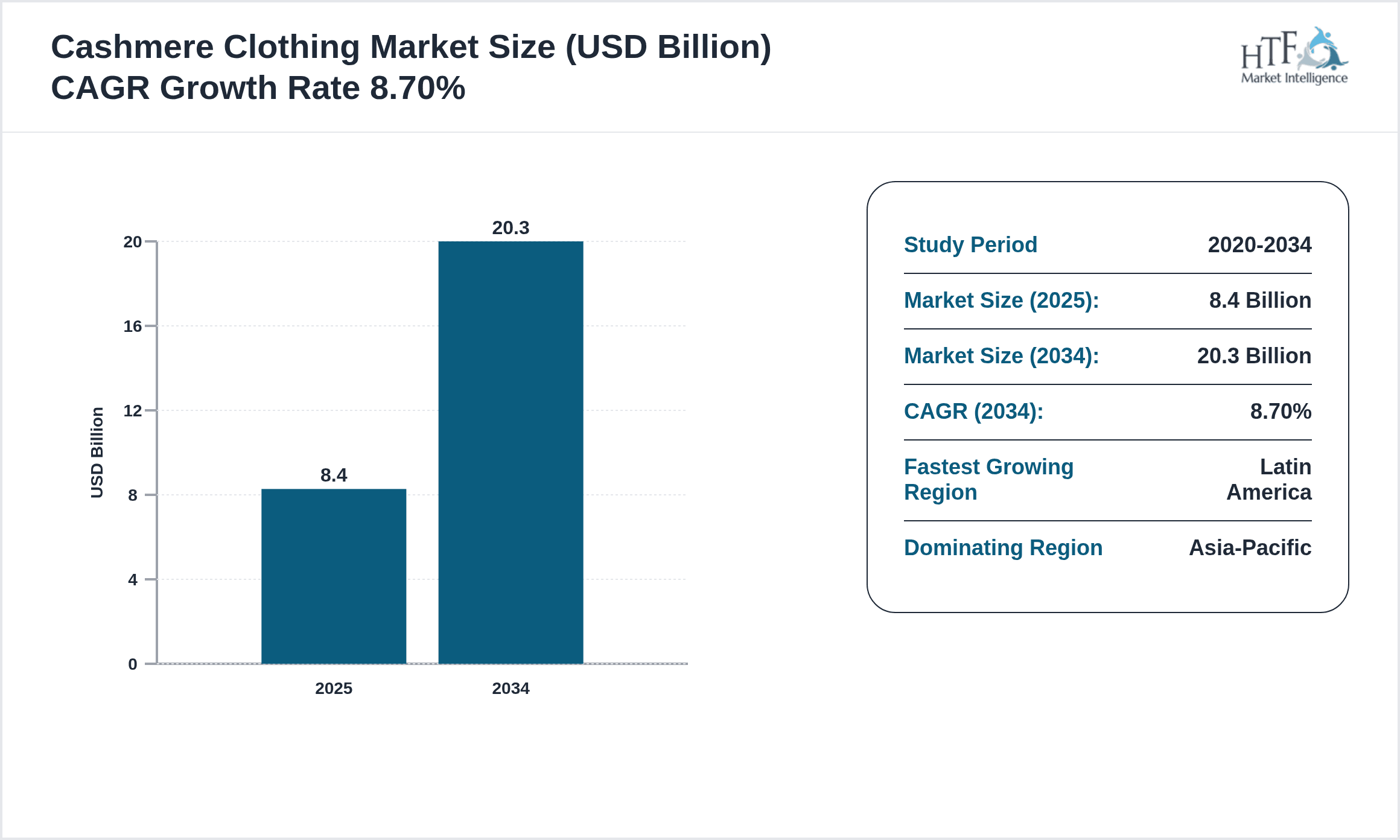
- •Key market highlights include a base market valuation of USD 8.4 billion in 2024 with a projected expansion to USD 20.3 billion by 2034, reflecting a robust compound annual growth rate (CAGR) of 8.7%. Asia-Pacific dominates with the largest share due to rising luxury consumer bases and expanding manufacturing hubs. Latin America emerges as the fastest-growing region, driven by increasing fashion consciousness and disposable income. The leading product type remains 100% cashmere, appreciated for its purity and luxury, while cashmere blends are gaining traction for affordability and durability. Casual wear constitutes the predominant application segment, followed by formal wear, indicating evolving consumer lifestyle preferences. The market’s growth trajectory is supported by digital transformation in retail, sustainability initiatives, and innovative product launches, which collectively enhance consumer engagement and expand market reach.
- •The cashmere clothing market offers significant value propositions for manufacturers, retailers, and consumers by combining luxury aesthetics with thermal comfort and sustainability. Strategic importance is underscored by the fiber’s exclusivity, limited raw material availability, and high consumer willingness to pay premium prices. For industry stakeholders, this translates to opportunities in product differentiation, brand positioning, and geographic expansion. The rise of conscious consumerism encourages the adoption of eco-friendly production methods, aligning business practices with global sustainability goals. Additionally, the integration of technology in supply chain management and e-commerce platforms facilitates efficient operations and enhances customer experience. Collectively, these factors make the cashmere clothing market a vital component of the global luxury fashion ecosystem, with promising growth prospects and evolving competitive dynamics.
Competitive Landscape
The global cashmere clothing market features intense competition among established luxury brands and emerging players, with a strong focus on innovation, quality, and brand heritage. Market leaders differentiate themselves through sustainable sourcing of raw materials, advanced fiber processing technologies, and exclusive designs that appeal to discerning consumers. Competitive strategies include leveraging digital retail channels, expanding product portfolios to include cashmere blends, and forming strategic partnerships to enhance supply chain resilience. Rivalry is heightened by the premium nature of cashmere, which limits raw material availability and necessitates efficient inventory management. Companies invest heavily in marketing to cultivate brand loyalty and capitalize on shifting consumer trends towards ethical fashion. Mergers and acquisitions are common, aimed at consolidating market share and accessing new geographic markets. Regional competition varies, with Asia-Pacific players emphasizing manufacturing efficiencies and Western brands focusing on luxury branding and innovation. Future trends indicate increasing collaboration between traditional craftsmanship and technology-driven customization to maintain competitive advantage.
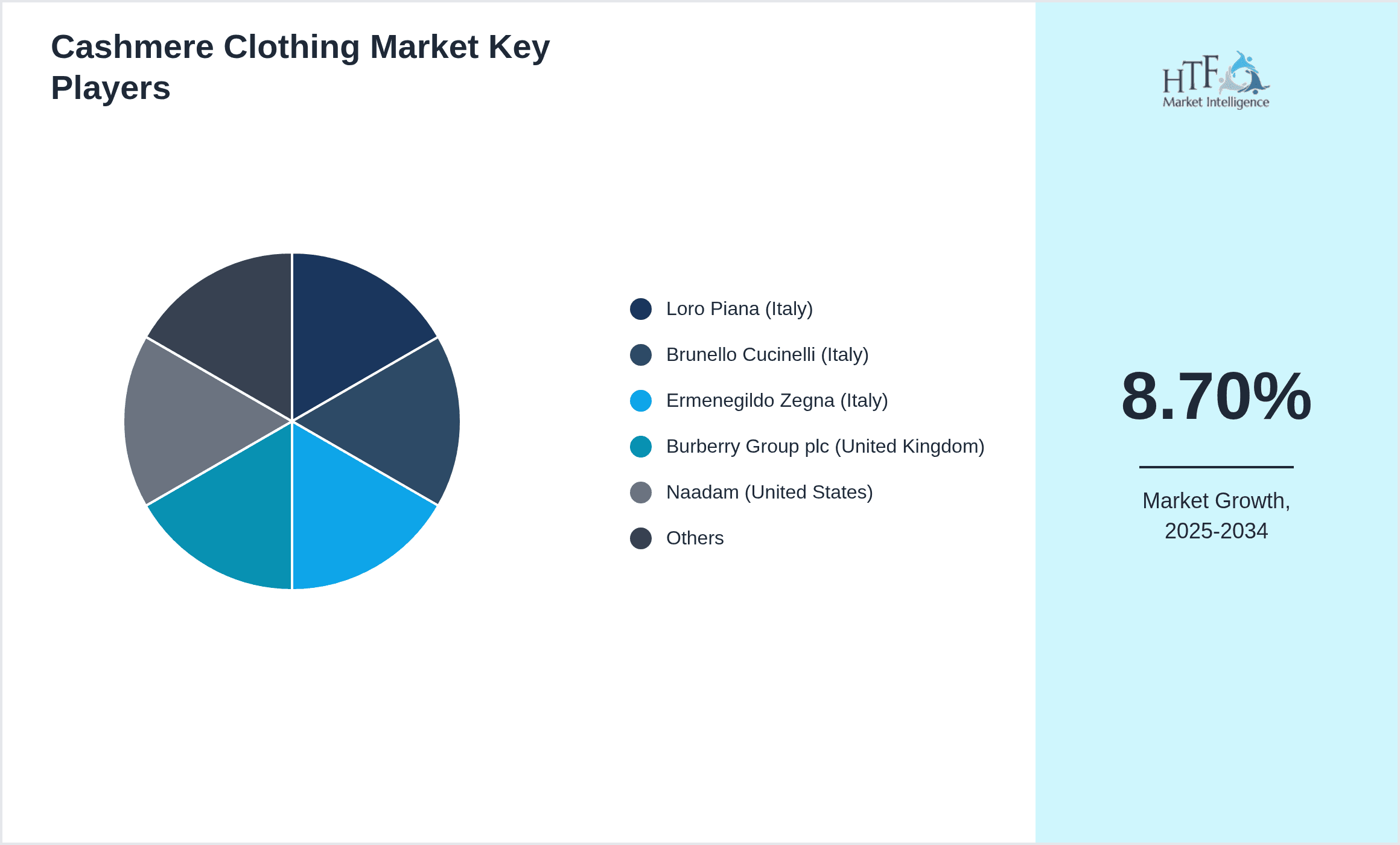
Prominent Players in Global Cashmere Clothing Market
- •Loro Piana (Italy)
- •Brunello Cucinelli (Italy)
- •Ermenegildo Zegna (Italy)
- •Burberry Group plc (United Kingdom)
- •Naadam (United States)
- •The Elder Statesman (United States)
- •Johnstons of Elgin (United Kingdom)
- •Mongolian Cashmere Company (Mongolia)
- •Pringle of Scotland (United Kingdom)
- •Ralph Lauren Corporation (United States)
- •Chinti and Parker (United Kingdom)
- •Inis Meáin Knitwear (Ireland)
- •N.Peal (United Kingdom)
- •Falconeri (Italy)
- •Prada S.p.A. (Italy)
- •Hermès International S.A. (France)
- •Uniqlo Co., Ltd. (Japan)
- •Theory LLC (United States)
- •H&M Group (Sweden)
- •Acne Studios (Sweden)
- •TSE Cashmere (United States)
- •Lindex (Sweden)
- •COS (Sweden)
- •Sandro (France)
- •Victoria Beckham Ltd. (United Kingdom)
Market Breakdown
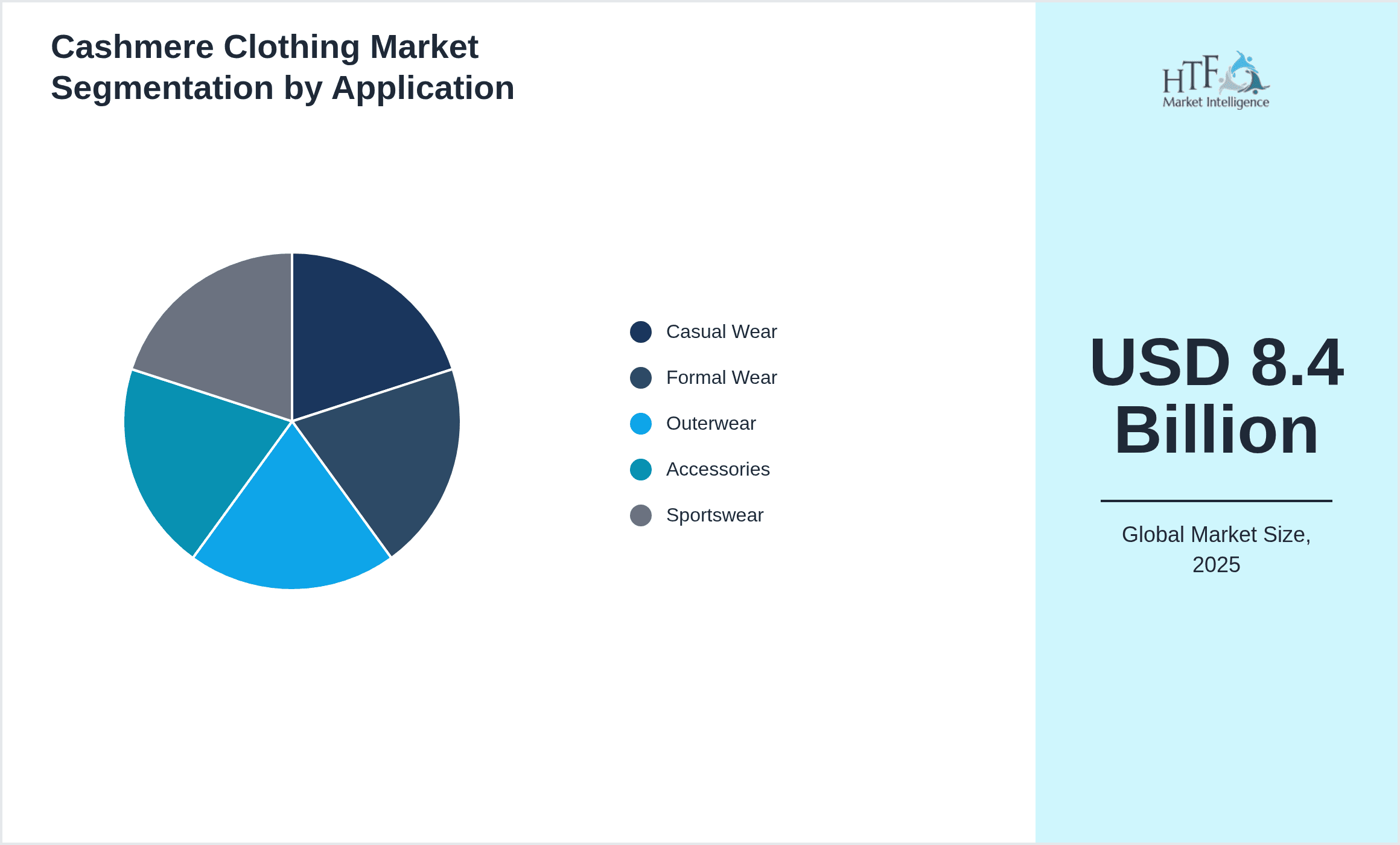
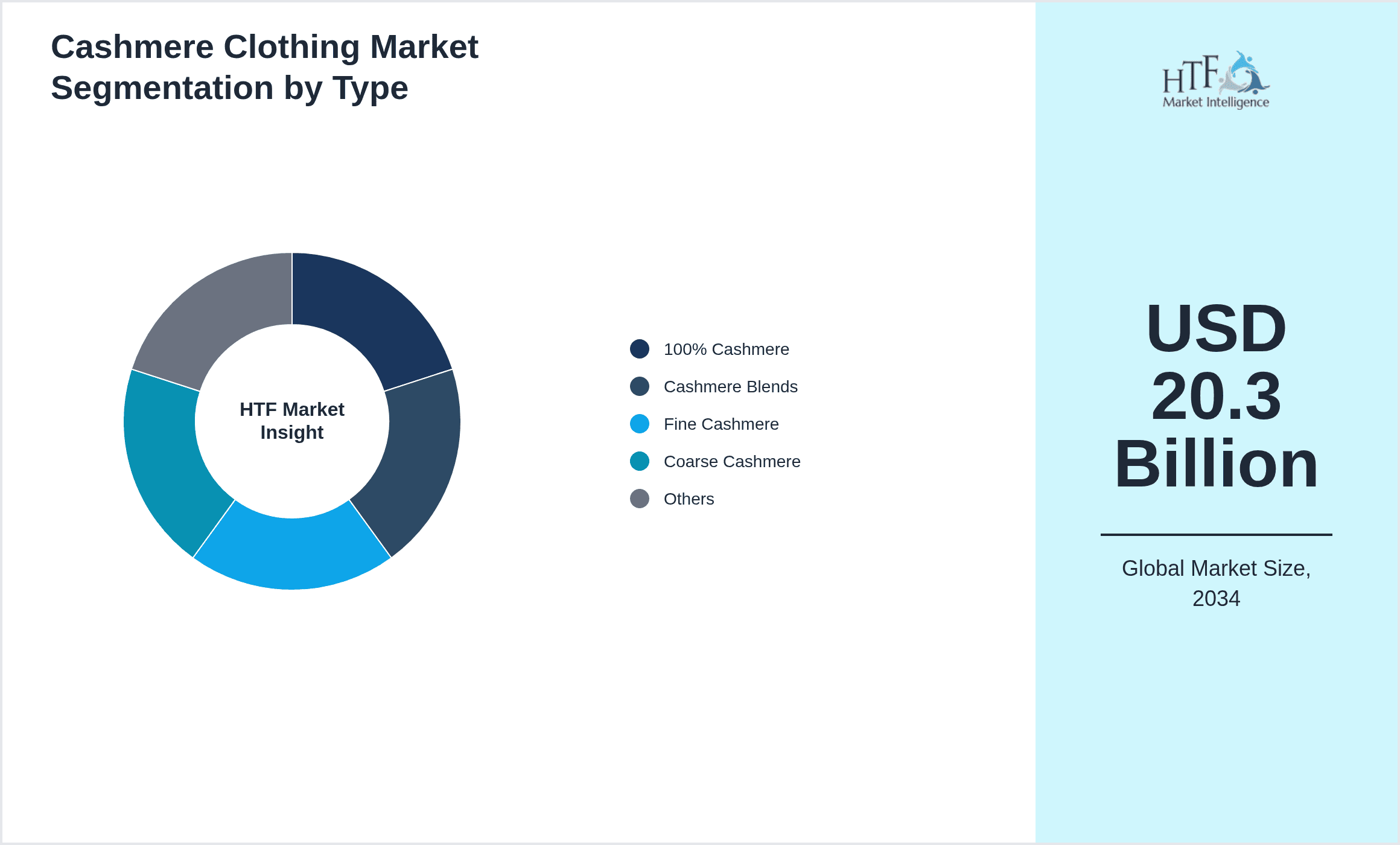
- •By Type
- ◦100% Cashmere
- ◦Cashmere Blends
- ◦Fine Cashmere
- ◦Coarse Cashmere
- ◦Others
- •By Application
- ◦Casual Wear
- ◦Formal Wear
- ◦Outerwear
- ◦Accessories
- ◦Sportswear
- •By Distribution Channel
- ◦Online Retail
- ◦Specialty Stores
- ◦Department Stores
- ◦Brand Outlets
- •By End User
- ◦Men
- ◦Women
- ◦Unisex
Growth Dynamics
- •The global cashmere clothing market is propelled by rising consumer preference for luxury and sustainable fashion, with increasing disposable incomes in Asia-Pacific and emerging markets fueling demand. The unique softness and thermal properties of cashmere enhance its appeal across diverse climates. Growing awareness regarding ethical sourcing and animal welfare encourages manufacturers to adopt sustainable practices, attracting environmentally conscious consumers. Digital retail expansion enables wider accessibility, boosting online sales and brand visibility. Additionally, technological advancements in fiber processing improve product quality and durability, further driving market growth. Collaborations between fashion designers and sustainable fiber producers also stimulate innovation and consumer engagement, reinforcing positive market momentum globally.
- •Market trends indicate a shift towards cashmere blends to balance luxury with affordability, enabling broader consumer reach. Increasing popularity of casual and athleisure wear incorporating cashmere fibers reflects evolving lifestyles prioritizing comfort and style. The rise of digital fashion platforms facilitates personalized shopping experiences and direct-to-consumer sales, enhancing brand loyalty. Sustainability remains a key trend, with emphasis on traceable supply chains and eco-friendly production methods. Additionally, incorporation of advanced textile technologies such as anti-pilling and moisture-wicking treatments enhances product performance. Regional fashion events and influencer collaborations further amplify consumer interest and market visibility.
- •Restraints affecting the market include high raw material costs caused by limited cashmere goat populations and seasonal harvesting constraints. Price sensitivity among mass-market consumers limits penetration in developing regions. Supply chain disruptions, exacerbated by geopolitical tensions and environmental challenges, contribute to volatility in availability and pricing. Furthermore, concerns over animal welfare and ethical sourcing impose operational complexities and increased compliance costs for manufacturers. Competition from synthetic and alternative natural fibers offering lower prices and easier maintenance also poses challenges. These factors collectively temper rapid market expansion and necessitate strategic innovation and differentiation by market players.
- •Opportunities in the cashmere clothing market arise from expanding middle-class populations in emerging economies seeking premium apparel. Innovative product development such as blended yarns combining cashmere with technical fibers opens new application avenues in sportswear and outdoor apparel. Investments in sustainable farming and fiber processing technologies enhance supply chain transparency and product appeal. Digital marketing and e-commerce platforms offer scalable channels to reach global consumers efficiently. Collaborations with fashion influencers and sustainable fashion initiatives enable brand differentiation. Additionally, growth in luxury rental and resale markets presents alternative revenue streams and supports circular economy principles, augmenting market potential.
- •Challenges confronting the market include managing raw material scarcity amid growing demand, leading to price inflation and supply constraints. Ensuring ethical sourcing and animal welfare compliance across fragmented supply chains involves significant monitoring and certification efforts. The impact of climate change on cashmere goat habitats threatens sustainable fiber production. Market fragmentation with numerous small-scale producers complicates quality standardization. Consumer education on cashmere quality and care remains limited, affecting perceived value. Additionally, competition from substitute fibers and fluctuating currency exchange rates influence profitability. Addressing these challenges requires strategic collaboration, innovation, and transparent practices to maintain long-term market viability.
Market Trends
- •The global cashmere clothing market is witnessing a significant trend towards sustainable and ethically sourced products, driven by growing consumer awareness and regulatory pressures. Brands increasingly emphasize traceability and certifications to assure customers of responsible practices. This shift has led to innovations in eco-friendly dyeing and processing techniques, reducing environmental footprint. Moreover, the integration of digital technologies such as blockchain enhances supply chain transparency, fostering consumer trust. Alongside, the trend of casualization in fashion supports the inclusion of cashmere in athleisure and daily wear categories, expanding its market reach. Collaborations with influencers and adoption of omni-channel retail strategies further stimulate demand and brand engagement.
- •Technological advancements in textile manufacturing, including anti-pilling treatments and mixed fiber innovations, are shaping product development in the cashmere clothing market. These innovations improve durability and ease of care, addressing traditional concerns about cashmere maintenance. The rise of customization and personalized fashion experiences via AI-powered platforms enables brands to cater to individual consumer preferences, enhancing loyalty. Additionally, growing integration of recycled cashmere fibers aligns with circular economy principles, reflecting a broader industry commitment to sustainability. These trends collectively contribute to product differentiation and competitive advantage in a crowded market landscape.
- •A strategic trend is the expansion of online retail platforms specializing in luxury and sustainable fashion, which has accelerated post-pandemic. These platforms offer curated collections, virtual try-ons, and direct brand-to-consumer interactions, enhancing shopping convenience and customer engagement. The growing importance of social media in shaping fashion trends drives rapid diffusion of new styles and elevates brand visibility. Regional fashion weeks and sustainable fashion events spotlight cashmere apparel innovations, attracting global attention. Furthermore, partnerships between cashmere producers and luxury fashion houses foster design innovation and market penetration, reinforcing the premium positioning of cashmere products worldwide.
- •Digitalization is transforming the cashmere clothing market by enabling efficient inventory management, demand forecasting, and customer relationship management. Sustainability efforts are increasingly embedded into operational models, with brands adopting carbon-neutral manufacturing and renewable energy usage. These initiatives improve operational efficiency and align with consumer values, enhancing brand equity. Additionally, adoption of augmented reality (AR) and virtual reality (VR) technologies in marketing and retail creates immersive consumer experiences, driving engagement and sales. Operational improvements such as automated knitting machines and robotics optimize production scalability and quality consistency, fostering competitive differentiation.
- •Collaborative ecosystems involving fiber producers, fashion designers, technology providers, and sustainability experts are shaping the future of the cashmere clothing market. Such partnerships facilitate innovation in sustainable sourcing, product development, and market expansion. The rise of consumer demand segmentation encourages brands to tailor offerings across demographics and regions, leveraging data analytics. Value chain integration enhances transparency and efficiency, supporting compliance with evolving regulatory frameworks. Future trends include disruptive innovations like bioengineered fibers mimicking cashmere properties and blockchain-enabled provenance verification, potentially redefining market dynamics and consumer trust.
- •Consumer preferences are evolving toward versatile, durable, and ethically produced cashmere garments, driving segmentation and value chain innovation. Market segmentation based on age, income, and lifestyle informs targeted marketing strategies and product design. The value chain is witnessing increased emphasis on circularity, with growing interest in recycling and resale platforms that extend garment lifecycles. Advances in material science facilitate improved fiber blends that retain luxury feel while enhancing functionality. These factors contribute to refined market segmentation, optimizing resource allocation and enhancing overall market profitability.
- •Looking ahead, the cashmere clothing market is poised for continued growth fueled by luxury market expansion and sustainability imperatives. Disruptive innovations such as lab-grown cashmere and digital fashion experiences may reshape traditional business models. The increasing role of AI in consumer insights and supply chain optimization promises operational excellence and enhanced customer satisfaction. Regulatory developments focusing on environmental impact and animal welfare will further influence market practices. Strategic foresight and adaptability will be critical for stakeholders to capitalize on emerging opportunities and navigate evolving challenges in this dynamic global market.
Market Opportunities
- •Expansion into emerging markets presents significant growth potential for the cashmere clothing industry, with rising middle-class populations seeking premium apparel. Targeting younger demographics through affordable cashmere blends and innovative designs can broaden consumer bases. Collaborations with sustainable fiber producers enable the development of eco-friendly product lines that meet increasing environmental standards. Digital marketing and e-commerce platforms offer scalable channels to reach global consumers efficiently, reducing reliance on traditional brick-and-mortar retail. Additionally, the growing luxury resale market offers opportunities to implement circular economy models, enhancing brand sustainability credentials. Investment in advanced textile technologies can unlock new applications in sportswear and technical apparel, diversifying product offerings and revenue streams.
- •The growing consumer demand for ethically produced and traceable cashmere products creates opportunities for brands to differentiate through transparency and certifications. Implementing blockchain technology for supply chain verification can build consumer trust and command premium pricing. Expansion of personalized and customized cashmere apparel, facilitated by AI and digital platforms, can enhance customer engagement and loyalty. Strategic partnerships with fashion influencers and sustainability advocates enhance brand visibility and credibility. Additionally, investing in sustainable raw material cultivation and processing methods can secure long-term supply and reduce environmental impact, reinforcing competitive advantage in a rapidly evolving market landscape.
- •Innovation in blending cashmere with technical fibers offers opportunities to develop high-performance garments suitable for active lifestyles and diverse climates. This can attract younger, active consumers and expand application segments such as sportswear and outdoor apparel. Exploring circular business models including rental, resale, and recycling programs aligns with sustainability trends and generates new revenue streams. Geographic expansion into underpenetrated regions with growing luxury markets supports top-line growth. Leveraging digital transformation for enhanced customer insights and streamlined operations can optimize resource allocation and responsiveness. These strategic initiatives position companies to capture evolving consumer preferences and market dynamics effectively.
- •Geographical expansion into Latin America and Middle East & Africa presents untapped markets with increasing fashion consciousness and disposable incomes. These regions offer growth opportunities through localized marketing strategies and tailored product offerings. Adoption of omni-channel retail models combining online and offline experiences can enhance market penetration and consumer convenience. Developing entry-level luxury cashmere products can capture aspirational consumers, facilitating brand growth. Additionally, partnerships with local artisans and sustainable fiber farms can foster community engagement and brand authenticity. These initiatives support diversification and resilience in a competitive global market, enabling sustainable long-term growth.
- •Product development focusing on innovative features such as anti-bacterial, moisture-wicking, and temperature-regulating cashmere blends can enhance functional appeal. Enhancing value propositions through design collaborations with renowned fashion houses can elevate brand prestige. Investment in sustainable manufacturing technologies reduces environmental impact and operational costs, aligning with regulatory trends. Strategic acquisitions and partnerships can strengthen market position and expand product portfolios. The evolving luxury consumer’s preference for experiential retail offers opportunities to integrate immersive brand experiences, increasing customer retention. These growth avenues collectively enable companies to diversify offerings, improve competitiveness, and capitalize on global market expansion.
Market Challenges
- •Raw material scarcity remains a critical challenge for the cashmere clothing market due to the limited population of cashmere goats and seasonal harvesting constraints. This scarcity drives up prices, impacting affordability and supply chain stability. Additionally, climate change threatens natural habitats, exacerbating supply volatility. The fragmented nature of cashmere supply chains complicates traceability and ethical sourcing verification, increasing compliance costs. Market players face difficulties in balancing premium quality with cost-effective production, especially when catering to diverse regional markets. These challenges necessitate strategic sourcing, investment in sustainable farming practices, and supply chain transparency to ensure long-term viability.
- •High production costs associated with cashmere fiber refinement and garment manufacturing limit market accessibility for price-sensitive consumers, particularly in emerging economies. Competition from synthetic and alternative natural fibers provides lower-cost substitutes, challenging cashmere’s market share. Additionally, consumer misconceptions about cashmere care and durability affect purchase decisions, requiring extensive education and marketing. Regulatory complexities related to animal welfare and environmental standards increase operational burdens. The COVID-19 pandemic exposed vulnerabilities in global supply chains, emphasizing the need for diversification and resilience. These factors collectively constrain rapid market expansion and necessitate innovation in cost management and consumer engagement.
- •The luxury segment’s sensitivity to economic fluctuations poses risks to cashmere clothing demand during downturns. Fluctuating currency exchange rates impact profitability for companies operating across multiple regions. Intellectual property issues and counterfeit products undermine brand reputation and market trust. Rapidly changing fashion trends require agile product development and inventory management to avoid obsolescence. Limited consumer awareness in some regions about cashmere’s unique qualities restricts market penetration. Addressing these multifaceted challenges requires coordinated industry efforts, investment in brand differentiation, and enhanced consumer education campaigns.
- •Sustainability demands impose challenges in balancing environmental goals with cost and production efficiency. Implementing eco-friendly dyeing and processing technologies requires capital investment and operational changes. Ensuring animal welfare compliance across diverse, often remote, fiber collection regions involves complex monitoring and certification processes. Supply chain transparency is difficult due to numerous small-scale producers, complicating traceability. Additionally, integrating recycled cashmere fibers while maintaining product quality is technically challenging. These operational and technical hurdles require innovation, collaboration, and regulatory alignment to overcome effectively.
- •Talent shortages in specialized textile processing and design impact innovation capacity. Infrastructure gaps in emerging markets hinder efficient production and distribution. The fragmented retail landscape, with varying levels of digital adoption, complicates unified brand management. Data privacy and cybersecurity concerns related to digital transformation require robust safeguards. Finally, market saturation in developed regions intensifies competition, pressuring margins. These challenges necessitate strategic workforce development, infrastructure investment, and technological resilience to sustain growth.
Regulatory Framework
- •Between 2019 and 2024, global regulations have increasingly focused on animal welfare standards for cashmere fiber sourcing, mandating humane treatment and sustainable grazing practices. These guidelines require fiber producers to comply with certification schemes such as the Responsible Wool Standard, impacting operational protocols and supply chain transparency. Compliance enhances brand credibility but increases auditing and documentation costs.
- •Environmental regulations related to chemical use in dyeing and processing have tightened, with regions such as the European Union enforcing strict limits on hazardous substances. Manufacturers must adopt eco-friendly alternatives and meet wastewater treatment standards, ensuring reduced environmental impact and aligning with sustainability goals.
- •Trade policies enacted between 2020 and 2023 have influenced import-export dynamics for cashmere apparel, with tariff adjustments affecting cost structures. Free trade agreements in Asia-Pacific and Europe have facilitated smoother cross-border transactions, supporting market expansion.
- •Data protection laws impacting e-commerce and digital marketing strategies require companies to adhere to privacy standards such as GDPR in Europe and CCPA in North America. These regulations affect customer data management, necessitating robust compliance frameworks to avoid penalties.
- •Government incentives promoting sustainable textile manufacturing, including grants and tax benefits, have been introduced in major markets to encourage adoption of green technologies. These policies stimulate investment in innovation and contribute to long-term operational efficiencies.
Market Intelligence
- •15th January 2024, Loro Piana launched an innovative line of sustainable 100% cashmere sweaters incorporating recycled fibers and eco-friendly dyes. This product aims to reduce environmental impact while maintaining luxury standards, targeting environmentally conscious consumers globally. The launch includes extensive digital marketing campaigns and collaborations with sustainability influencers to expand reach and brand equity. This initiative aligns with Loro Piana’s strategic vision to lead in ethical luxury fashion and strengthen its position in key markets such as Asia-Pacific and Europe. Source: Loro Piana Official Press Release
- •10th September 2023, Naadam introduced a direct-to-consumer online platform emphasizing traceability and fair trade cashmere products. The platform features blockchain-enabled supply chain transparency, allowing consumers to track the origin of each garment. This innovation enhances brand trust and caters to growing demand for ethical fashion. Naadam's strategy includes expanding its product portfolio with cashmere blends suitable for casual wear, aiming to attract younger demographics. The move supports Naadam’s global expansion ambitions, particularly in North America and Europe. Source: Naadam Corporate Announcement
- •22nd March 2025, Burberry Group plc unveiled a collaboration with Mongolian Cashmere Company to establish sustainable cashmere farms utilizing advanced grazing practices. This partnership focuses on improving fiber quality and ensuring animal welfare, addressing supply chain challenges. The initiative is part of Burberry’s broader sustainability roadmap, aiming for carbon neutrality and circular product life cycles by 2030. This strategic alliance enhances Burberry’s supply chain resilience and supports luxury market growth in Asia-Pacific and Europe. Source: Burberry Sustainability Report
- •18th November 2024, Hermès International launched a limited-edition cashmere outerwear collection featuring technical fiber blends for enhanced durability and weather resistance. This innovation combines traditional craftsmanship with modern textile technology, catering to premium consumers seeking functional luxury. The collection received positive reception at Paris Fashion Week and is expected to boost Hermès’s market share in the formal and outerwear segments globally. The product launch reinforces Hermès’s commitment to innovation and sustainability through responsible sourcing. Source: Hermès Official Website
Regional Outlook
The Asia-Pacific currently holds a significant share of the market, primarily due to several key factors: increasing consumption rates, a burgeoning population, and robust economic momentum. These elements collectively drive demand, positioning this region as a leader in the market. On the other hand, Latin America is rapidly emerging as the fastest-growing area within the industry. This remarkable growth can be attributed to swift infrastructure development, the expansion of various industrial sectors, and a marked increase in consumer demand. These dynamics make this region a crucial player in shaping future market growth.
In our report, we cover a comprehensive analysis of the following regions and countries:
- North America
- LATAM
- West Europe
- Central & Eastern Europe
- Northern Europe
- Southern Europe
- East Asia
- Southeast Asia
- South Asia
- Central Asia
- Oceania
- MEA
| Feature | Details |
|---|---|
| Base Year Market Size | USD 8.4 Billion |
| Forecast Year Market Size | USD 20.3 Billion |
| CAGR | 8.7% |
| Forecast Period | 2026 to 2033 |
| YoY Growth | 8.3% |
| Scope of Report | Market is segmented by Type (100% Cashmere, Cashmere Blends, Fine Cashmere, Coarse Cashmere, Others), Application (Casual Wear, Formal Wear, Outerwear, Accessories, Sportswear), Distribution Channel (Online Retail, Specialty Stores, Department Stores, Brand Outlets), End User (Men, Women, Unisex) |
| Regions Covered | North America, LATAM, West Europe, Central & Eastern Europe, Northern Europe, Southern Europe, East Asia, Southeast Asia, South Asia, Central Asia, Oceania, MEA |
| Key Companies | Loro Piana (Italy), Brunello Cucinelli (Italy), Ermenegildo Zegna (Italy), Burberry Group plc (United Kingdom), Naadam (United States), The Elder Statesman (United States), Johnstons of Elgin (United Kingdom), Mongolian Cashmere Company (Mongolia), Pringle of Scotland (United Kingdom), Ralph Lauren Corporation (United States), Chinti and Parker (United Kingdom), Inis Meáin Knitwear (Ireland), N.Peal (United Kingdom), Falconeri (Italy), Prada S.p.A. (Italy), Hermès International S.A. (France), Uniqlo Co., Ltd. (Japan), Theory LLC (United States), H&M Group (Sweden), Acne Studios (Sweden), TSE Cashmere (United States), Lindex (Sweden), COS (Sweden), Sandro (France), Victoria Beckham Ltd. (United Kingdom) |
Global Cashmere Clothing Market Size, Growth & Revenue 2024-2034 - Table of Contents
Multidisciplinary researcher with 10+ years of experience uncovering insights across diverse domains focused on uncovering insights that drive informed decisions.
Frequently Asked Questions (FAQ):
The Market market is expected to see significant growth and value in 2025.
North America currently leads the market, followed by Europe and Asia-Pacific.
Key growth drivers include increasing activities, rising demand for innovative solutions, technological advancements, and growing preference for efficient products.