
Global Cordless Vacuum Cleaners Market - Outlook 2020-2034
Global Cordless Vacuum Cleaners Market is segmented by Product Type (Stick Vacuums, Handheld Vacuums, Robotic Vacuums, Wet & Dry Vacuums, Canister Vacuums), Application (Home Cleaning, Commercial Cleaning, Automotive Cleaning, Industrial Cleaning, Hospitality), Service Type (Maintenance and Repair, Customer Support, Extended Warranty, Product Installation), Deployment Model (Cordless Battery Operated, Rechargeable Battery Operated, Swappable Battery Models), and Geography (North America, LATAM, West Europe, Central & Eastern Europe, Northern Europe, Southern Europe, East Asia, Southeast Asia, South Asia, Central Asia, Oceania, MEA)
Pricing
Report Overview
Executive Summary
- •The global cordless vacuum cleaners market represents a rapidly expanding segment within the home appliances industry, defined by portable, battery-operated cleaning devices that eliminate the limitations of corded vacuums. This market encompasses various product types such as stick vacuums, handheld units, robotic models, wet & dry types, and canister vacuums. Applications span residential cleaning, commercial spaces, automotive interiors, industrial environments, and hospitality settings, highlighting the wide utility and adoption across sectors. The value chain includes raw material suppliers, component manufacturers specializing in batteries and motors, device assemblers, distributors, retailers, and after-sales service providers. Technological advancements in lithium-ion battery capacity and smart connectivity have significantly enhanced user convenience and device performance. Increasing consumer demand for lightweight, energy-efficient, and efficient cleaning solutions, along with rising disposable incomes in emerging regions, drives market growth. The market’s strategic importance is underpinned by its role in supporting hygiene standards, improving operational efficiency in commercial contexts, and offering ergonomic convenience in domestic use. Emerging markets in Asia-Pacific and Latin America provide substantial growth opportunities, while mature markets in North America and Europe maintain dominance due to higher penetration rates and technological innovation. Overall, the market is poised for robust growth fueled by continuous innovation, evolving consumer preferences, and expanding application scopes globally.
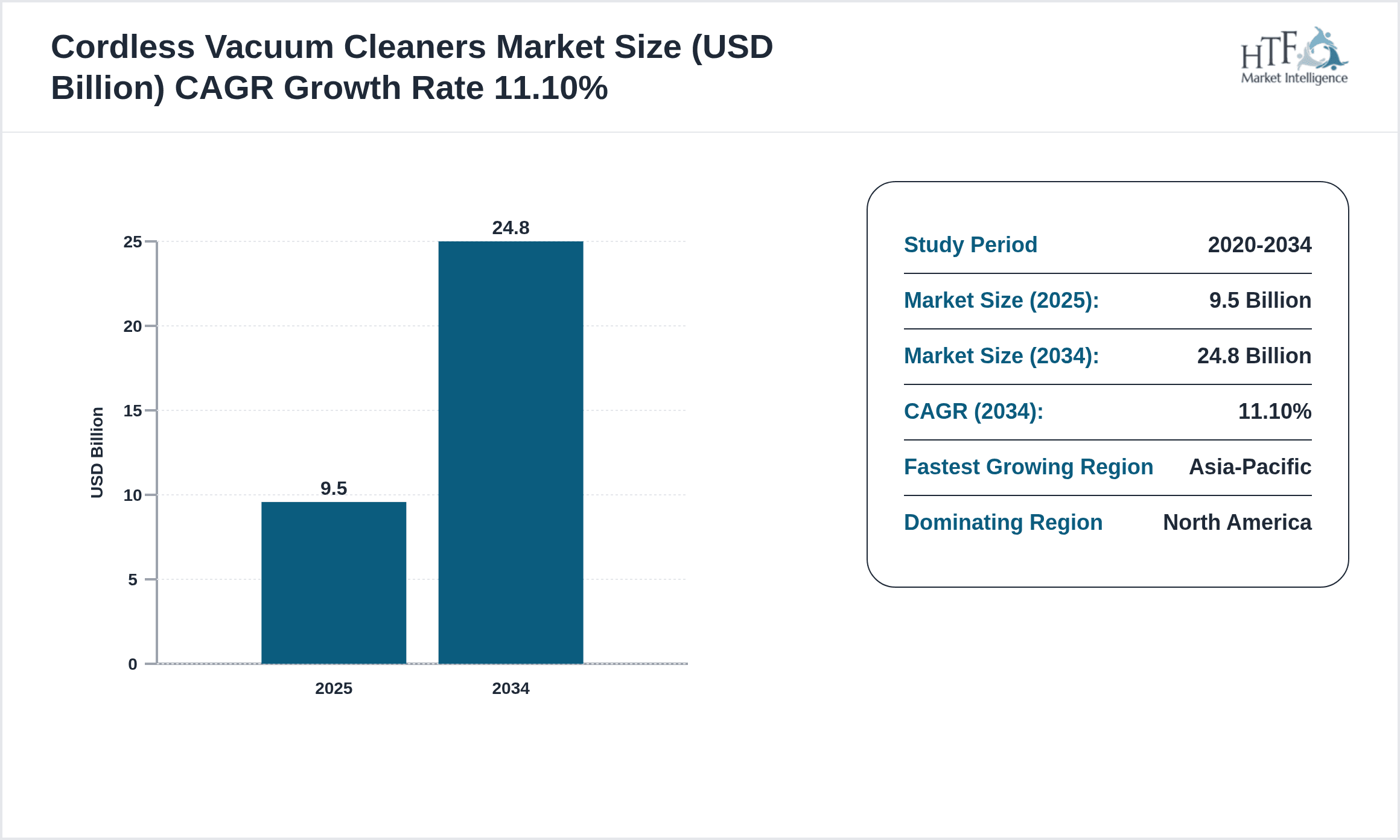
- •Key highlights indicate the cordless vacuum cleaners market was valued at USD 9.5 Billion in 2025 and is forecasted to reach USD 24.8 Billion by 2034, exhibiting a compound annual growth rate (CAGR) of approximately 11.1%. The market shows a steady year-on-year growth rate close to 11.0%, driven by advancing battery technologies, increasing urbanization, and consumer shifts toward smart home devices. Stick vacuums remain the dominant product type, accounting for the largest market share, while robotic vacuums emerge as the fastest growing segment due to innovations in artificial intelligence and automation. North America leads the market in revenue generation, attributed to high consumer spending and technological adoption, whereas Asia-Pacific is identified as the fastest growing region, supported by rising middle-class populations and increasing infrastructural development. The report underscores the strategic relevance of these trends for manufacturers, investors, and policy makers aiming to capitalize on evolving market dynamics.
- •This market holds significant value proposition across various industries, offering enhanced cleaning efficiency, mobility, and user-friendliness compared to traditional corded vacuums. For consumers, cordless vacuums improve convenience and reduce cleaning time, aligning with busy lifestyles and increasing demand for smart home integrations. Commercial and industrial stakeholders benefit from these devices through reduced labor costs and improved hygiene compliance. Furthermore, manufacturers leverage ongoing R&D to introduce innovative products with extended battery life, improved suction power, and noise reduction, enhancing competitive positioning. The strategic importance of cordless vacuum cleaners is also reflected in their contribution to sustainability goals by promoting energy-efficient cleaning solutions. Overall, the market serves as a critical segment within the broader household and commercial appliances industry, presenting diverse opportunities for growth and innovation globally.
Competitive Landscape
The global cordless vacuum cleaners competitive landscape is characterized by intense rivalry among established multinational corporations and emerging regional players. Market dynamics are shaped by strategic investments in research and development focusing on battery technology, motor efficiency, and smart features such as IoT connectivity and AI-driven automation. Companies adopt diverse competitive strategies including product differentiation through innovative design, enhanced suction capabilities, and ergonomic improvements to target various consumer segments. Pricing strategies vary from premium positioning of advanced robotic models to affordable stick and handheld vacuums aimed at budget-conscious consumers. Distribution channels encompass traditional retail, e-commerce platforms, and direct-to-consumer sales, with the latter gaining prominence due to changing purchasing behaviors. Strategic partnerships and collaborations with technology firms accelerate innovation, while mergers and acquisitions contribute to market consolidation and expansion of product portfolios. Market entry barriers such as high capital investment in technology development and brand loyalty pose challenges for new entrants. Regional competition also influences market positioning, with North American and European companies leading in innovation, while Asia-Pacific players focus on cost competitiveness and expanding manufacturing capacities. Future competitive trends point toward increased emphasis on sustainable materials, enhanced user experience, and integration of AI for autonomous cleaning, driving continuous evolution of the market landscape.
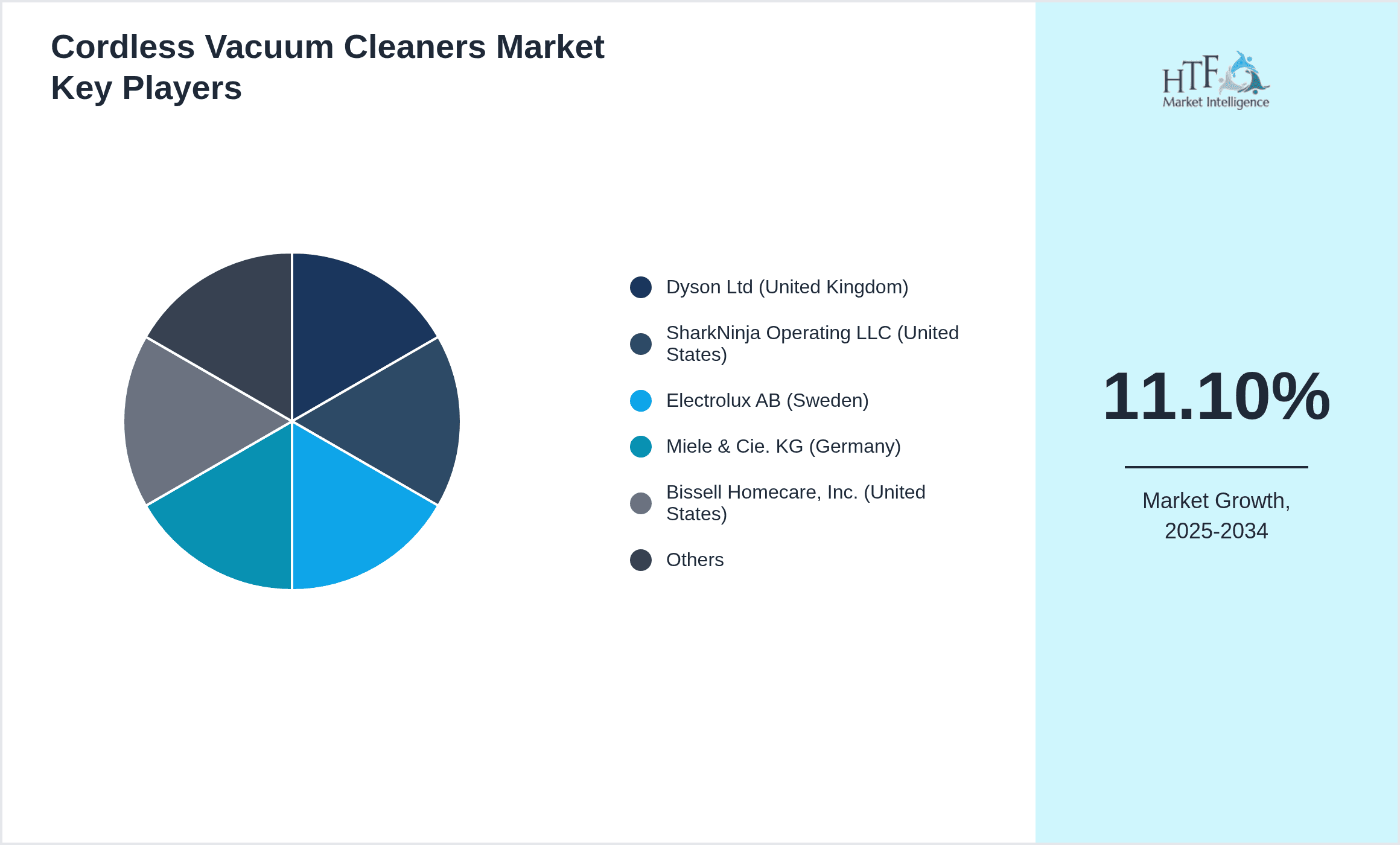
Prominent Players in Cordless Vacuum Cleaners Market
- •Dyson Ltd (United Kingdom)
- •SharkNinja Operating LLC (United States)
- •Electrolux AB (Sweden)
- •Miele & Cie. KG (Germany)
- •Bissell Homecare, Inc. (United States)
- •LG Electronics Inc. (South Korea)
- •Samsung Electronics Co., Ltd. (South Korea)
- •Black+Decker (Stanley Black & Decker, Inc.) (United States)
- •Hoover (Techtronic Industries Company Limited) (Hong Kong)
- •iRobot Corporation (United States)
- •Nilfisk A/S (Denmark)
- •Tineco (China)
- •Ecovacs Robotics (China)
- •Roborock Technology Co., Ltd. (China)
- •Vax Ltd (United Kingdom)
- •Midea Group Co., Ltd. (China)
- •Panasonic Corporation (Japan)
- •Philips Domestic Appliances (Netherlands)
- •Rowenta (Groupe SEB) (France)
- •Eureka Forbes Ltd. (India)
- •Shunzao Technology (China)
- •Vorwerk & Co. KG (Germany)
- •iLife Technology Co., Ltd. (China)
- •Deerma Technology Group Co., Ltd. (China)
- •Toshiba Corporation (Japan)
Market Breakdown
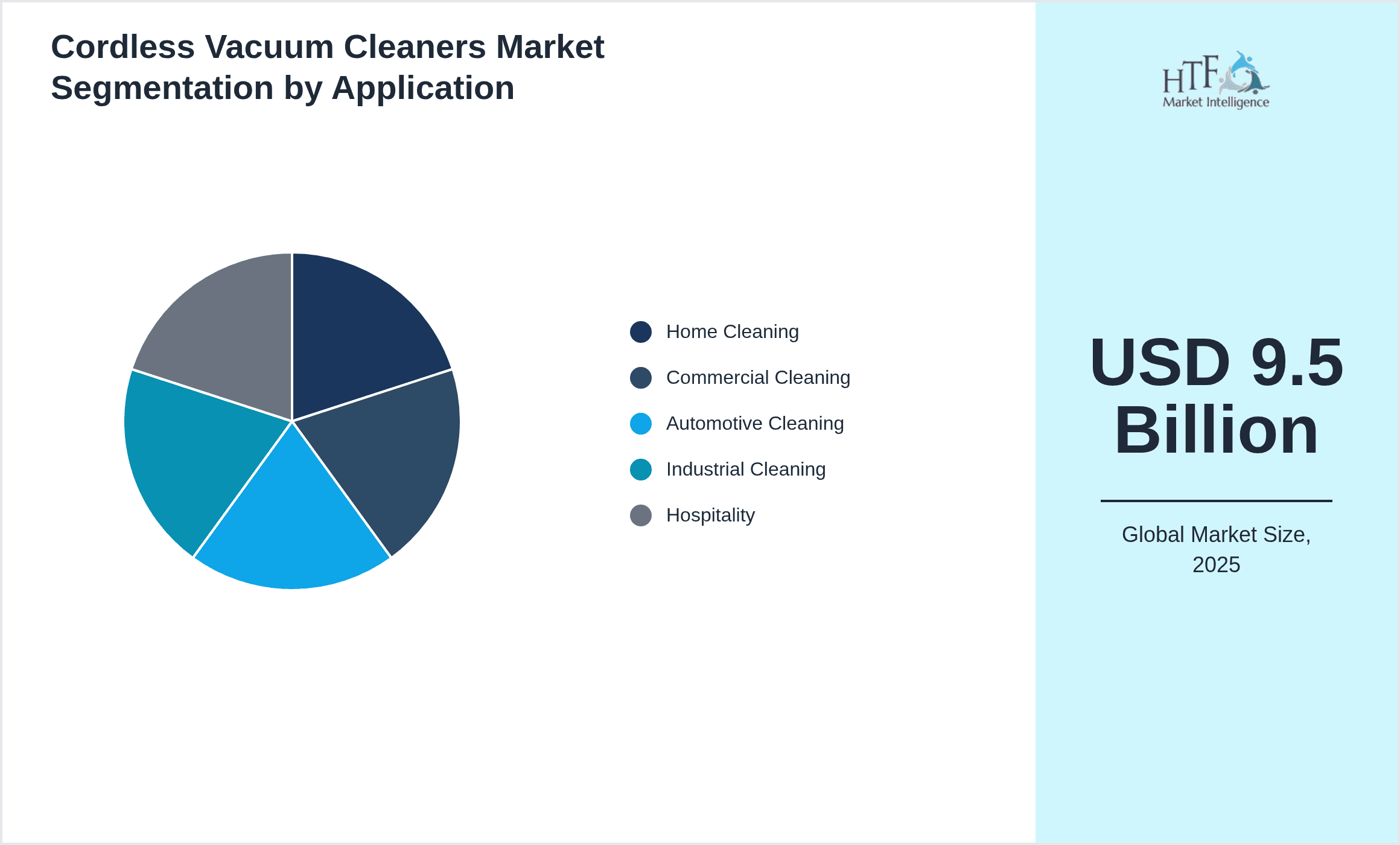
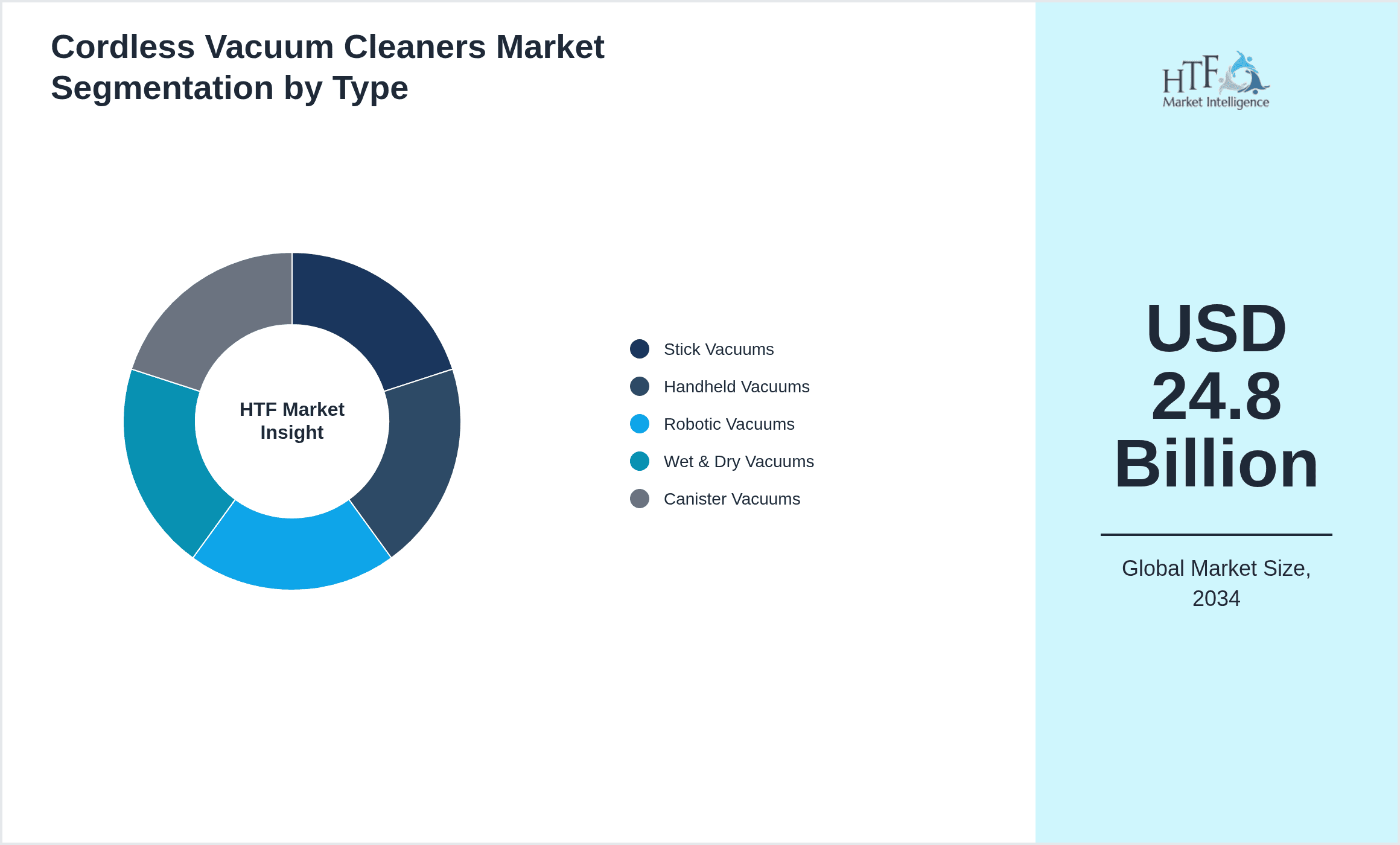
- •By Product Type
- ◦Stick Vacuums
- ◦Handheld Vacuums
- ◦Robotic Vacuums
- ◦Wet & Dry Vacuums
- ◦Canister Vacuums
- •By Application
- ◦Home Cleaning
- ◦Commercial Cleaning
- ◦Automotive Cleaning
- ◦Industrial Cleaning
- ◦Hospitality
- •By Service Type
- ◦Maintenance and Repair
- ◦Customer Support
- ◦Extended Warranty
- ◦Product Installation
- •By Deployment Model
- ◦Cordless Battery Operated
- ◦Rechargeable Battery Operated
- ◦Swappable Battery Models
Growth Dynamics
- •The growing consumer preference for cordless vacuum cleaners is driven by the convenience of portability and ease of use, which eliminates the hassle of cords during cleaning activities. Increased urbanization and rising disposable incomes in emerging markets are expanding the customer base, fueling demand growth. Technological innovations such as improved lithium-ion batteries and smart automation enhance suction power and battery life, making these devices more attractive to consumers and commercial users alike.
- •Integration of smart home technologies including IoT connectivity and voice control is transforming cordless vacuum cleaners into multifunctional devices, appealing to tech-savvy consumers and increasing product adoption rates. Manufacturers are investing heavily in R&D to deliver advanced features such as mapping, obstacle avoidance, and automated charging, driving market expansion.
- •Environmental concerns and regulatory push towards energy-efficient appliances are prompting the development of eco-friendly cordless vacuums with reduced power consumption and recyclable materials. This trend aligns with global sustainability goals and enhances brand reputation for manufacturers adopting green initiatives.
- •The surge in e-commerce platforms facilitates wider product availability and consumer reach, allowing new entrants and established players to penetrate diverse geographic markets efficiently. Online reviews and social media influence consumer purchase decisions, accelerating market growth globally.
- •Government incentives and support for energy-efficient appliances in various regions encourage consumers to replace traditional corded vacuums with cordless models, contributing to incremental market growth. Additionally, the growing emphasis on hygiene and cleanliness post-pandemic has increased the demand for efficient cleaning devices in commercial and residential sectors.
Market Trends
- •Robotic vacuum cleaners are gaining significant traction due to advancements in AI and machine learning, enabling autonomous cleaning with minimal user intervention. Leading players are continuously enhancing navigation algorithms and sensor technologies to improve cleaning efficiency and user experience.
- •There is a rising trend towards multifunctional cordless vacuums that combine vacuuming with mopping or wet cleaning capabilities, catering to consumer demand for all-in-one cleaning solutions. This trend is particularly prominent in Asia-Pacific and Europe.
- •Battery technology improvements, including fast charging and longer runtime, are critical market trends that enhance product usability and customer satisfaction. Companies like Dyson and SharkNinja are pioneering developments in this space to differentiate their offerings.
- •Sustainability and eco-conscious manufacturing processes are becoming key differentiators, with increased use of recyclable materials and energy-efficient motors being integrated into product designs to meet stricter environmental regulations.
- •The rise of direct-to-consumer (DTC) sales models via brand websites and digital marketplaces is reshaping distribution strategies, allowing companies to gather consumer data and tailor marketing efforts more effectively.
Market Opportunities
- •Emerging economies in Asia-Pacific and Latin America present substantial growth opportunities due to expanding middle-class populations and increasing urbanization, which drive demand for modern cleaning appliances. Targeted marketing and localized product adaptations could unlock significant potential in these regions.
- •Integration of artificial intelligence and IoT technologies into cordless vacuum cleaners offers opportunities to develop highly advanced, autonomous products that can self-optimize performance and provide real-time user feedback, enhancing consumer engagement.
- •Collaborations with battery manufacturers and technology startups can accelerate innovation in battery life and device functionality, providing competitive advantages and new product development pathways.
- •Expanding product lines to include specialized vacuums for automotive, industrial, and hospitality sectors can diversify revenue streams and meet evolving consumer and business needs.
- •Growing environmental awareness creates opportunities to introduce eco-friendly and energy-efficient cordless vacuums, appealing to environmentally conscious consumers and aligning with global regulatory trends.
Market Challenges
- •High manufacturing costs associated with advanced battery technologies and premium components pose pricing pressures, limiting market penetration in price-sensitive regions. Balancing cost and performance remains a critical challenge for manufacturers.
- •Limited battery life and long charging times for some cordless vacuum models restrict usage duration, impacting customer satisfaction and repeat purchases. Continuous R&D is required to overcome these technical barriers.
- •The market faces intense competition with numerous players offering similar products, which leads to price wars and erodes profit margins. Differentiation through innovation and branding is essential to maintain market share.
- •Variability in regional regulations and certification requirements complicates product launches and increases compliance costs, particularly for companies targeting multiple geographic markets simultaneously.
- •Consumer skepticism regarding the cleaning efficacy of cordless models compared to traditional corded vacuums can hinder adoption, necessitating focused marketing and education efforts.
Regulatory Framework
- •The EU Ecodesign Directive, updated between 2020 and 2025, mandates minimum energy efficiency and noise standards for vacuum cleaners sold within the European Union, compelling manufacturers to innovate for compliance and market access.
- •In the United States, the Energy Star program provides certification for energy-efficient appliances, including cordless vacuum cleaners, incentivizing manufacturers to develop products that meet stringent power consumption criteria.
- •China’s National Energy Conservation Law enforces regulations on electrical appliance efficiency and hazardous substance restrictions, impacting product design and manufacturing processes from 2020 onwards.
- •The Restriction of Hazardous Substances Directive (RoHS) implemented globally since 2020 restricts the use of certain hazardous materials in electronic components, influencing component sourcing and product safety standards.
- •Government incentives in regions such as North America and Asia-Pacific promote the adoption of energy-efficient household appliances, including rebates and tax benefits which stimulate market demand and support manufacturers’ innovation efforts.
Market Intelligence
- •15th March 2025, Dyson Ltd launched its latest cordless stick vacuum featuring an advanced digital motor and improved battery technology offering up to 90 minutes of runtime. This product is targeted at premium home cleaning segments and integrates intelligent sensor technology to optimize suction power based on floor type. The launch strengthens Dyson’s market position in North America and Europe, where demand for high-performance cordless vacuums is robust. The company emphasized sustainability by using recyclable materials and reducing packaging waste. Source: Dyson Official Press Release
- •2nd July 2025, SharkNinja Operating LLC introduced a new robotic vacuum cleaner equipped with AI-powered obstacle avoidance and voice assistant compatibility. The model targets tech-savvy consumers seeking automation and convenience in home cleaning. Its advanced mapping technology allows for efficient navigation and cleaning path optimization. SharkNinja aims to capture a significant share of the growing robotic vacuum segment, particularly in Asia-Pacific where smart home adoption is accelerating. Source: SharkNinja Corporate News
- •20th September 2024, LG Electronics Inc. announced the expansion of its cordless vacuum cleaner portfolio with a focus on lightweight designs and swappable battery systems. This strategic initiative is aimed at enhancing user flexibility and addressing battery life concerns. The launch coincides with growing consumer demand in Latin America and the Middle East & Africa regions, where cordless vacuum penetration is increasing rapidly. LG also partnered with local distributors to strengthen regional market presence. Source: LG Electronics Press Release
- •10th January 2025, Ecovacs Robotics unveiled its latest robotic vacuum model featuring integrated mopping functionality and AI-driven cleaning schedules. This innovation targets the premium segment in Europe and Asia-Pacific, emphasizing convenience and multifunctionality. The company’s strategic investments in AI technology aim to differentiate its products in an increasingly competitive market. This launch is expected to boost Ecovacs’ market share and reinforce its leadership in robotic vacuum innovation. Source: Ecovacs Official Announcement
Regional Outlook
The North America currently holds a significant share of the market, primarily due to several key factors: increasing consumption rates, a burgeoning population, and robust economic momentum. These elements collectively drive demand, positioning this region as a leader in the market. On the other hand, Asia-Pacific is rapidly emerging as the fastest-growing area within the industry. This remarkable growth can be attributed to swift infrastructure development, the expansion of various industrial sectors, and a marked increase in consumer demand. These dynamics make this region a crucial player in shaping future market growth.
In our report, we cover a comprehensive analysis of the following regions and countries:
- North America
- LATAM
- West Europe
- Central & Eastern Europe
- Northern Europe
- Southern Europe
- East Asia
- Southeast Asia
- South Asia
- Central Asia
- Oceania
- MEA
| Feature | Details |
|---|---|
| Base Year Market Size | USD 9.5 Billion |
| Forecast Year Market Size | USD 24.8 Billion |
| CAGR | 11.1% |
| Forecast Period | 2026 to 2033 |
| YoY Growth | 11% |
| Scope of Report | Market is segmented by Product Type (Stick Vacuums, Handheld Vacuums, Robotic Vacuums, Wet & Dry Vacuums, Canister Vacuums), Application (Home Cleaning, Commercial Cleaning, Automotive Cleaning, Industrial Cleaning, Hospitality), Service Type (Maintenance and Repair, Customer Support, Extended Warranty, Product Installation), Deployment Model (Cordless Battery Operated, Rechargeable Battery Operated, Swappable Battery Models) |
| Regions Covered | North America, LATAM, West Europe, Central & Eastern Europe, Northern Europe, Southern Europe, East Asia, Southeast Asia, South Asia, Central Asia, Oceania, MEA |
| Key Companies | Dyson Ltd (United Kingdom), SharkNinja Operating LLC (United States), Electrolux AB (Sweden), Miele & Cie. KG (Germany), Bissell Homecare, Inc. (United States), LG Electronics Inc. (South Korea), Samsung Electronics Co., Ltd. (South Korea), Black+Decker (Stanley Black & Decker, Inc.) (United States), Hoover (Techtronic Industries Company Limited) (Hong Kong), iRobot Corporation (United States), Nilfisk A/S (Denmark), Tineco (China), Ecovacs Robotics (China), Roborock Technology Co., Ltd. (China), Vax Ltd (United Kingdom), Midea Group Co., Ltd. (China), Panasonic Corporation (Japan), Philips Domestic Appliances (Netherlands), Rowenta (Groupe SEB) (France), Eureka Forbes Ltd. (India), Shunzao Technology (China), Vorwerk & Co. KG (Germany), iLife Technology Co., Ltd. (China), Deerma Technology Group Co., Ltd. (China), Toshiba Corporation (Japan) |
Global Cordless Vacuum Cleaners Market - Outlook 2020-2034 - Table of Contents
Frequently Asked Questions (FAQ):
The Compact Track Loaders market is expected to see value worth 5.3 Billion in 2025.
North America currently leads the market with approximately 45% market share, followed by Europe at 28% and Asia-Pacific at 22%. The remaining regions account for 5% of the global market.
Key growth drivers include increasing construction activities, rising demand for versatile equipment in agriculture, technological advancements in track loader design, and growing preference for compact equipment in urban construction projects.