
Global Standby Rental Power Market Size, Growth & Revenue 2025-2034
Global Standby Rental Power Market is segmented by Product Type (Diesel Generators, Gas Generators, Hybrid Systems (Diesel + Solar/Battery), Solar-Powered Systems, Battery Storage Solutions), Application (Industrial Power Backup, Commercial Power Backup, Residential Emergency Power, Construction Site Power, Temporary Event Power), Service Type (Short-Term Rental Services, Long-Term Rental Services, Maintenance and Support Services, Installation and Commissioning Services), Deployment Model (On-site Deployment, Remote Monitoring Enabled, Hybrid Deployment), and Geography (North America, LATAM, West Europe, Central & Eastern Europe, Northern Europe, Southern Europe, East Asia, Southeast Asia, South Asia, Central Asia, Oceania, MEA)
Pricing
Report Overview
Executive Summary
- •The global standby rental power market is driven by increasing demand for reliable and uninterrupted power supply across diverse sectors including industrial, commercial, residential, construction, and event management. Temporary power solutions such as diesel and gas generators, hybrid systems, and solar-powered units provide critical support during grid outages, peak load conditions, and in remote locations lacking permanent infrastructure. The market's value chain integrates manufacturers, rental service providers, maintenance operators, and end-users. The growth trajectory is influenced by rising infrastructure projects, frequent power disruptions in developing regions, and technological advancements emphasizing fuel efficiency and sustainability. This market addresses the essential need for operational continuity, energy security, and compliance with evolving environmental standards, positioning it as a pivotal sector within the global energy ecosystem. Increasing urbanization and industrialization worldwide further propel the requirement for standby rental power, particularly in regions with unreliable grid power. Moreover, the adoption of hybrid and renewable energy-based rental solutions reflects a strategic shift towards greener alternatives, enhancing market potential and environmental benefits.
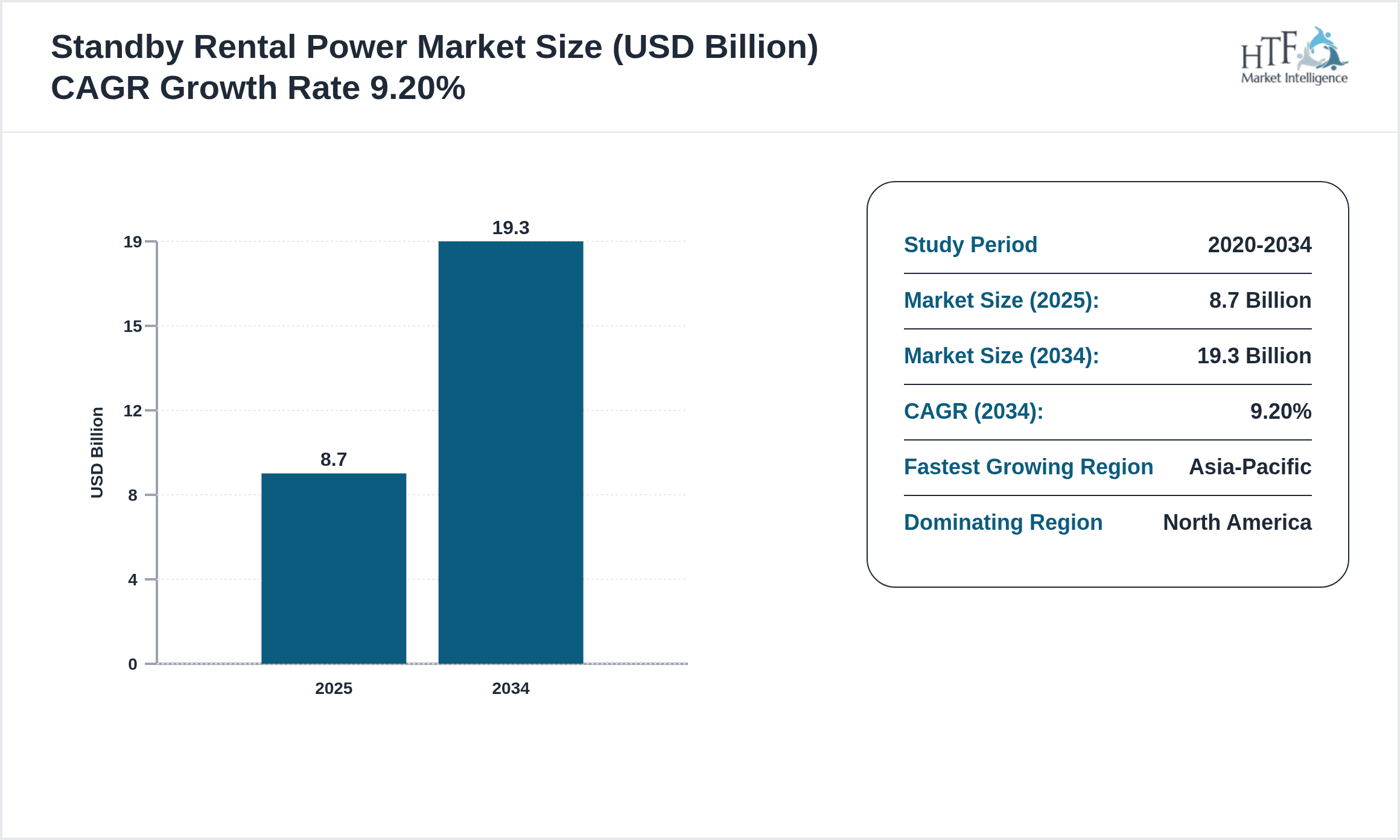
- •Key market highlights include a base market valuation of USD 8.7 Billion in 2025, with projections estimating growth to USD 19.3 Billion by 2034, reflecting a robust CAGR of 9.2%. The Asia-Pacific region emerges as the fastest-growing market, driven by rapid industrialization and infrastructure expansion, while North America retains market dominance due to established rental infrastructure and technological integration. Diesel generators continue to lead product segments due to their reliability and widespread use, whereas hybrid systems represent the fastest-growing product category, fueled by environmental regulations and efficiency demands. Year-on-year growth averaging 8.8% underscores the steady market momentum and increasing adoption across emerging and developed economies.
- •The standby rental power market offers significant value propositions for industries requiring flexible and scalable power solutions. It enables continuity of operations during outages, supports construction and event power needs, and addresses power reliability challenges in underdeveloped regions. Stakeholders including manufacturers, rental service providers, and end-users benefit from the market's technological innovations, expanding applications, and evolving regulatory frameworks. Strategic importance lies in its contribution to energy resilience and sustainability goals, with growing investments in hybrid and renewable-powered rental units enhancing the market's long-term prospects.
Competitive Landscape
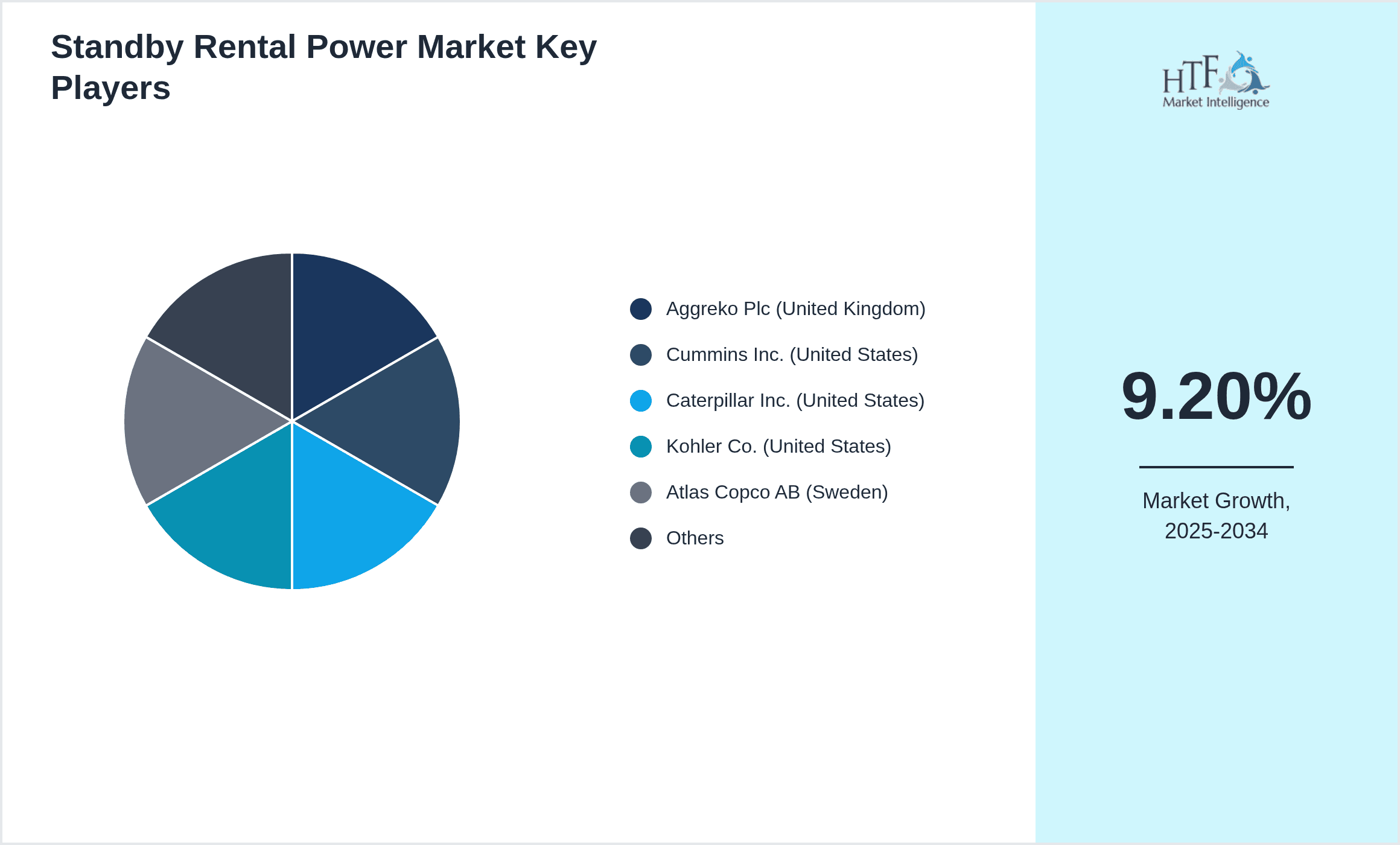
The global standby rental power market landscape is characterized by intense competition among equipment manufacturers, rental service providers, and technology innovators. Market players compete through product innovation, expanding rental fleets, and strategic partnerships to enhance geographic reach and service portfolio. Innovation in hybrid and renewable energy-integrated rental solutions is driving differentiation, alongside efforts to improve fuel efficiency and reduce emissions. Pricing strategies are influenced by fluctuating fuel costs and maintenance expenses, compelling providers to optimize operational efficiencies. Distribution channels encompass direct rentals, online platforms, and third-party service agreements, with an emphasis on rapid deployment and customer service excellence. Barriers to entry include capital-intensive equipment acquisition, regulatory compliance complexities, and the need for specialized technical expertise. Regional competition varies, with North America and Europe focusing on technological advancements, while Asia-Pacific and Latin America prioritize market penetration and infrastructure development. Future competitive trends suggest consolidation through mergers and acquisitions, increased focus on digital fleet management, and expanded service customization to meet evolving customer demands.
Leading Companies in Standby Rental Power Market
- •Aggreko Plc (United Kingdom)
- •Cummins Inc. (United States)
- •Caterpillar Inc. (United States)
- •Kohler Co. (United States)
- •Atlas Copco AB (Sweden)
- •Generac Holdings Inc. (United States)
- •Himoinsa S.L. (Spain)
- •FG Wilson (United Kingdom)
- •Wacker Neuson SE (Germany)
- •SDMO Industries (France)
- •Doosan Portable Power (South Korea)
- •Pramac S.r.l. (Italy)
- •Ashita Power Private Limited (India)
- •Denyo Co., Ltd. (Japan)
- •Yanmar Co., Ltd. (Japan)
- •Mitsubishi Heavy Industries, Ltd. (Japan)
- •Atlas Power Systems (United States)
- •Elemax Co., Ltd. (Japan)
- •Baldor Electric Company (United States)
- •Kubota Corporation (Japan)
- •FG Wilson (United Kingdom)
- •Teksan Jeneratör (Turkey)
- •Kato Engineering Co., Ltd. (Japan)
- •Power Solutions International, Inc. (United States)
- •Cummins Generator Technologies (United States)
Market Breakdown
- •By Product Type
- ◦Diesel Generators
- ◦Gas Generators
- ◦Hybrid Systems (Diesel + Solar/Battery)
- ◦Solar-Powered Systems
- ◦Battery Storage Solutions
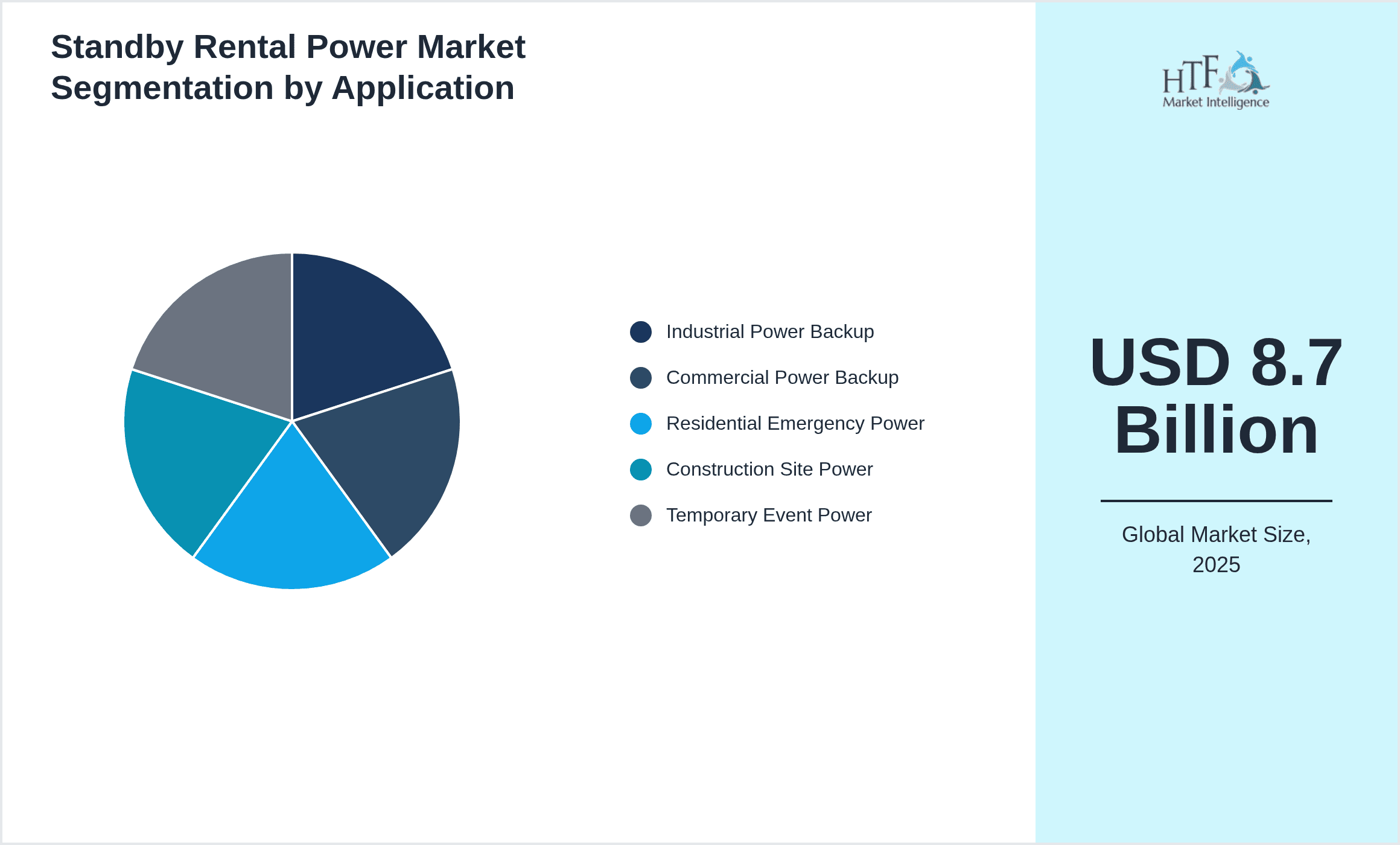
- •By Application
- ◦Industrial Power Backup
- ◦Commercial Power Backup
- ◦Residential Emergency Power
- ◦Construction Site Power
- ◦Temporary Event Power
- •By Service Type
- ◦Short-Term Rental Services
- ◦Long-Term Rental Services
- ◦Maintenance and Support Services
- ◦Installation and Commissioning Services
- •By Deployment Model
- ◦On-site Deployment
- ◦Remote Monitoring Enabled
- ◦Hybrid Deployment
Growth Dynamics
- •Rising infrastructure development projects, especially in emerging economies, drive demand for standby rental power as a critical solution for continuous electrical supply during construction and operational phases. This ensures operational efficiency and prevents costly downtime.
- •Frequent power outages and grid unreliability in developing regions create sustained growth opportunities for rental power solutions, prompting businesses and governments to adopt standby rental power to maintain productivity and safety.
- •Technological advancements in hybrid power systems integrating renewable energy sources with conventional generators enhance fuel efficiency and reduce emissions, attracting environmentally conscious customers and complying with stricter regulations.
- •The increasing number of large-scale events and temporary setups globally requiring flexible and scalable power backup solutions further stimulates growth in the standby rental power market.
- •Government initiatives and incentives promoting energy resilience and sustainability encourage investment in rental power infrastructure, particularly in regions prioritizing clean and reliable energy solutions.
- •Rapid urbanization and industrialization boost demand for commercial and industrial power backup, with rental power providing a cost-effective and flexible alternative to permanent installations.
- •Investment in digital technologies such as IoT-based remote monitoring and fleet management improves service quality and operational efficiency, enhancing customer satisfaction and market competitiveness.

Market Trends
- •Integration of hybrid power solutions combining solar, battery storage, and traditional generators is becoming a dominant trend, driven by environmental regulations and cost reduction imperatives.
- •Increasing adoption of IoT and remote monitoring technologies in rental fleets allows for predictive maintenance, real-time performance tracking, and optimized fuel consumption, enhancing operational efficiency.
- •Shift towards providing comprehensive service packages including installation, maintenance, and fuel management is observed among rental providers to differentiate offerings and increase customer retention.
- •Emergence of digital rental marketplaces and online platforms facilitates easier access, faster procurement, and improved transparency for end-users seeking standby rental power solutions.
- •Growing emphasis on sustainability leads to increased demand for low-emission and noise-reduced generator sets, aligning with corporate social responsibility and regulatory frameworks.
- •Collaborative partnerships between rental companies and renewable technology providers are expanding the availability of clean energy rental options across multiple regions.
- •Customization of rental solutions tailored to specific industry needs, such as oil & gas or data centers, is gaining traction to enhance reliability and efficiency.
Market Opportunities
- •Expanding infrastructure projects in Asia-Pacific and Latin America offer significant growth potential for rental power providers due to rising energy demands and grid limitations in these regions.
- •Development of hybrid and solar-powered rental units presents opportunities for market players to address environmental concerns and tap into green energy initiatives.
- •Emerging applications such as data centers and telecommunication towers requiring uninterrupted power supply create niche segments for tailored standby rental power solutions.
- •Strategic collaborations and acquisitions can enhance geographic footprint and technological capabilities, enabling companies to capitalize on evolving customer requirements.
- •Rising demand for remote monitoring and predictive maintenance services opens avenues for service innovation and recurring revenue streams in the rental power sector.
- •Increasing regulatory focus on emissions and noise pollution encourages the adoption of cleaner rental power technologies, fostering product development and differentiation.
- •Growth in temporary event and emergency response sectors worldwide expands the need for flexible standby rental power solutions, especially in disaster-prone areas.
Market Challenges
- •High initial capital expenditures for acquiring advanced and hybrid rental power equipment pose financial challenges for small and medium-sized rental providers, limiting market entry and expansion.
- •Fluctuating fuel prices and supply chain disruptions impact operational costs and service reliability, affecting profitability and customer satisfaction in the rental power market.
- •Stringent environmental regulations require compliance with emission standards and noise control, necessitating continuous investment in technology upgrades and certifications.
- •Limited availability of skilled technicians and qualified maintenance personnel restricts service quality and timely support, particularly in remote or developing regions.
- •Intense competition and price sensitivity among customers compel rental providers to balance cost management with service quality and innovation investments.
- •Infrastructure challenges such as lack of proper storage and transportation facilities hinder efficient deployment and maintenance of rental power units.
- •Rapid technological changes require continuous adaptation from rental companies to remain competitive, which can strain financial and human resources.
Regulatory Framework
- •The International Electrotechnical Commission (IEC) standards updated between 2020 and 2025 mandate specific safety and performance requirements for rental power equipment, ensuring operational reliability and user safety globally.
- •Environmental regulations enforced in key markets including North America and Europe during 2020-2025 impose stringent emission limits and noise pollution control, compelling manufacturers and rental providers to adopt cleaner technologies.
- •Countries within Asia-Pacific have introduced standards for fuel efficiency and air quality compliance between 2020 and 2025, influencing product design and service offerings in rental power.
- •The U.S. Environmental Protection Agency (EPA) Tier 4 emission standards effective in the base years require the use of advanced exhaust after-treatment systems in diesel generators, impacting rental fleets’ composition and maintenance.
- •Government incentives and subsidies promoting renewable energy integration within rental power solutions have been implemented in multiple regions from 2020 to 2025, encouraging greener rental power adoption.
Market Intelligence
- •15th January 2025, Aggreko Plc announced the launch of a new hybrid rental power solution combining solar panels with advanced battery storage and diesel generators. This product targets commercial and industrial clients seeking reduced carbon footprint without compromising reliability. The system integrates IoT-enabled remote monitoring for predictive maintenance and operational efficiency. Aggreko aims to expand its hybrid rental fleet across Europe and Asia-Pacific by 2026 to address growing sustainability demands. Source: Official Aggreko Press Release
- •3rd March 2025, Cummins Inc. introduced an innovative gas-powered rental generator series designed to meet stringent emission regulations while delivering high fuel efficiency. The new product line is positioned for industrial applications requiring flexible and clean power backup, especially in North America and Europe. Cummins emphasized its commitment to sustainability and customer-centric solutions through enhanced service support and digital monitoring capabilities. The launch is expected to strengthen Cummins’ market share in the rental power segment. Source: Cummins Corporate Website
- •20th May 2025, Caterpillar Inc. announced a strategic partnership with a leading renewable energy firm to develop fully integrated hybrid rental power systems. This collaboration aims to accelerate the deployment of low-emission rental power solutions globally, focusing on Asia-Pacific and Latin America markets. Caterpillar plans to retrofit existing rental fleets with solar and battery components, providing customers with scalable and environmentally friendly options. The initiative aligns with global trends toward decarbonization and digital transformation in power generation. Source: Caterpillar Official News
- •1st August 2025, Generac Holdings Inc. completed the acquisition of a regional rental power service provider in Southeast Asia, enhancing its presence in the fast-growing Asia-Pacific market. This strategic move expands Generac’s rental fleet and service capabilities, enabling rapid response to increasing demand for reliable power backup in industrial and commercial sectors. The acquisition supports Generac’s growth strategy focused on geographic diversification and technology adoption. Source: Generac Investor Relations
Regional Outlook
The North America currently holds a significant share of the market, primarily due to several key factors: increasing consumption rates, a burgeoning population, and robust economic momentum. These elements collectively drive demand, positioning this region as a leader in the market. On the other hand, Asia-Pacific is rapidly emerging as the fastest-growing area within the industry. This remarkable growth can be attributed to swift infrastructure development, the expansion of various industrial sectors, and a marked increase in consumer demand. These dynamics make this region a crucial player in shaping future market growth.
In our report, we cover a comprehensive analysis of the following regions and countries:
- North America
- LATAM
- West Europe
- Central & Eastern Europe
- Northern Europe
- Southern Europe
- East Asia
- Southeast Asia
- South Asia
- Central Asia
- Oceania
- MEA
| Feature | Details |
|---|---|
| Base Year Market Size | USD 8.7 Billion |
| Forecast Year Market Size | USD 19.3 Billion |
| CAGR | 9.2% |
| Forecast Period | 2026 to 2033 |
| YoY Growth | 8.8% |
| Scope of Report | Market is segmented by Product Type (Diesel Generators, Gas Generators, Hybrid Systems (Diesel + Solar/Battery), Solar-Powered Systems, Battery Storage Solutions), Application (Industrial Power Backup, Commercial Power Backup, Residential Emergency Power, Construction Site Power, Temporary Event Power), Service Type (Short-Term Rental Services, Long-Term Rental Services, Maintenance and Support Services, Installation and Commissioning Services), Deployment Model (On-site Deployment, Remote Monitoring Enabled, Hybrid Deployment) |
| Regions Covered | North America, LATAM, West Europe, Central & Eastern Europe, Northern Europe, Southern Europe, East Asia, Southeast Asia, South Asia, Central Asia, Oceania, MEA |
| Key Companies | Aggreko Plc (United Kingdom), Cummins Inc. (United States), Caterpillar Inc. (United States), Kohler Co. (United States), Atlas Copco AB (Sweden), Generac Holdings Inc. (United States), Himoinsa S.L. (Spain), FG Wilson (United Kingdom), Wacker Neuson SE (Germany), SDMO Industries (France), Doosan Portable Power (South Korea), Pramac S.r.l. (Italy), Ashita Power Private Limited (India), Denyo Co., Ltd. (Japan), Yanmar Co., Ltd. (Japan), Mitsubishi Heavy Industries, Ltd. (Japan), Atlas Power Systems (United States), Elemax Co., Ltd. (Japan), Baldor Electric Company (United States), Kubota Corporation (Japan), FG Wilson (United Kingdom), Teksan Jeneratör (Turkey), Kato Engineering Co., Ltd. (Japan), Power Solutions International, Inc. (United States), Cummins Generator Technologies (United States) |
Global Standby Rental Power Market Size, Growth & Revenue 2025-2034 - Table of Contents
Frequently Asked Questions (FAQ):
The Compact Track Loaders market is projected to grow at a CAGR of 6.8% from 2025 to 2030, driven by increasing demand in construction and agricultural sectors.
North America currently leads the market with approximately 45% market share, followed by Europe at 28% and Asia-Pacific at 22%. The remaining regions account for 5% of the global market.
Key growth drivers include increasing construction activities, rising demand for versatile equipment in agriculture, technological advancements in track loader design, and growing preference for compact equipment in urban construction projects.