
Global Tufting Machine Market Size, Growth & Revenue 2025-2034
Global Tufting Machine Market is segmented by Tufting Machine Type (Manual Tufting Machines, Semi-Automatic Tufting Machines, Fully Automatic Tufting Machines, Needleloom Tufting Machines, Jet Tufting Machines), Application Area (Carpet Manufacturing, Upholstery Production, Automotive Interiors, Textile Decoration, Industrial Textiles), Service Type (Installation Services, Maintenance & Repair Services, Upgrade & Modernization Services, Spare Parts Supply), Deployment Model (On-Premise Machines, Integrated Automated Systems, Hybrid Systems), and Geography (North America, LATAM, West Europe, Central & Eastern Europe, Northern Europe, Southern Europe, East Asia, Southeast Asia, South Asia, Central Asia, Oceania, MEA)
Pricing
Report Overview
Executive Summary
- •The global tufting machine market is a specialized segment within the textile machinery industry, focused on manufacturing machines that produce tufted fabrics for various end-uses such as carpets, upholstery, automotive interiors, and industrial textiles. This market includes a diverse range of tufting machines, from manual and semi-automatic to fully automatic and advanced needleloom and jet tufting variants, catering to different scales of production and fabric complexities. The machines operate by inserting yarns into fabric backing materials to create textured surfaces that offer durability, aesthetic appeal, and functionality. The market's value chain spans raw material suppliers, component manufacturers, machine producers, distributors, and end-users in textile manufacturing and automotive sectors. Growth is driven by increasing demand for high-quality decorative and functional textile products worldwide, supported by technological advancements emphasizing automation, precision, and sustainability. Key applications include residential and commercial carpets, vehicle upholstery, and industrial textile products, reflecting the broad utility of tufting technology. The market's expansion is also fueled by emerging economies investing in textile manufacturing infrastructure and the rising popularity of customized and innovative textile designs. Overall, the market demonstrates robust growth potential underpinned by innovation, rising consumer demand, and expanding end-use industries.
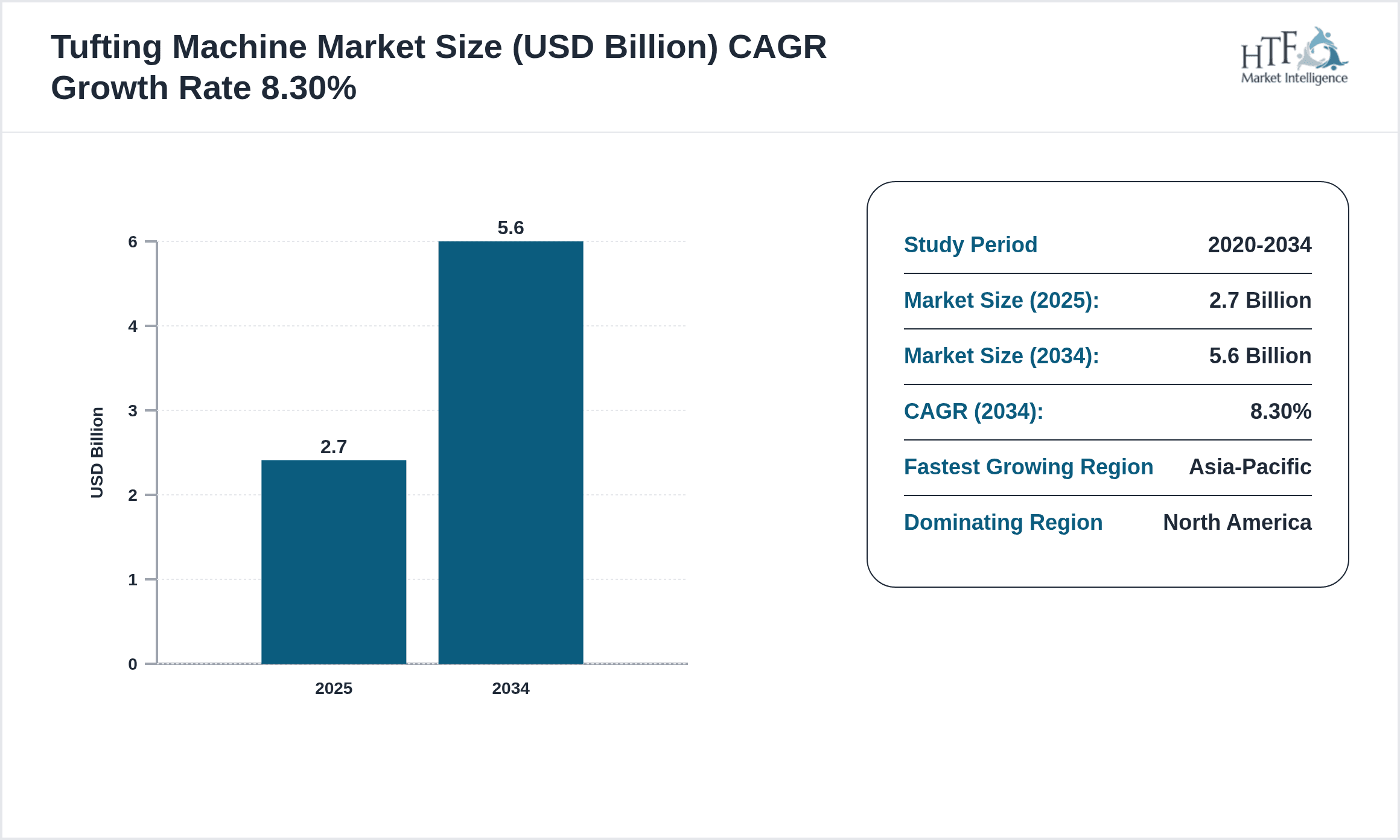
- •Significant highlights include a base market size of USD 2.7 Billion in 2025, with projections to reach USD 5.6 Billion by 2034, reflecting a compound annual growth rate (CAGR) of approximately 8.3%. The fully automatic tufting machine segment leads the market, driven by demand for high efficiency and precision in tufted fabric production. Asia-Pacific emerges as the fastest-growing region due to rapid industrialization, expanding textile manufacturing hubs, and increasing exports. North America remains the dominating region with established infrastructure and technological leadership. The market witnesses continuous innovation in jet tufting technology, which is poised for the highest growth rate owing to its ability to produce complex fabric designs with enhanced speed and reduced waste.
- •The tufting machine market offers strategic value to textile manufacturers, automotive suppliers, and industrial fabric producers by enabling cost-effective, scalable, and customizable production of tufted textiles. Its importance spans sectors such as residential and commercial flooring, furniture upholstery, and automotive interiors, where product quality and design innovation are critical. Stakeholders benefit from the integration of advanced automation and digital controls that improve operational efficiency and reduce labor costs. Additionally, the market contributes to sustainability efforts by adopting energy-efficient machines and reducing material wastage through precision tufting techniques. Overall, the market presents lucrative opportunities aligned with evolving industry trends and global demand for durable, decorative, and functional textile solutions.
Competitive Landscape
The global tufting machine market features a competitive environment characterized by innovation-driven strategies, strategic partnerships, and ongoing investments in research and development. Market players focus on enhancing machine automation, improving energy efficiency, and expanding product portfolios to meet diverse customer needs across various textile segments. Competitive strategies include product differentiation through advanced features such as programmable controls, multi-needle configurations, and integration with digital textile printing. Companies also leverage mergers and acquisitions to consolidate market share and broaden geographic reach. Pricing strategies balance cost competitiveness with value addition, especially for high-end fully automatic and jet tufting machines. Distribution channels encompass direct sales, authorized dealers, and after-sales service networks ensuring customer support and machine uptime. Technological adoption such as IoT-enabled maintenance and predictive diagnostics is emerging as a key competitive advantage. Market entry barriers include high capital investment requirements and the need for specialized technical expertise. Regional competition intensifies in Asia-Pacific due to rising local manufacturers, while North America and Europe focus on innovation and quality leadership. Future trends point towards sustainable and smart tufting machines that align with industry 4.0 principles, fostering enhanced competitiveness and market growth.
Prominent Players in Tufting Machine Market
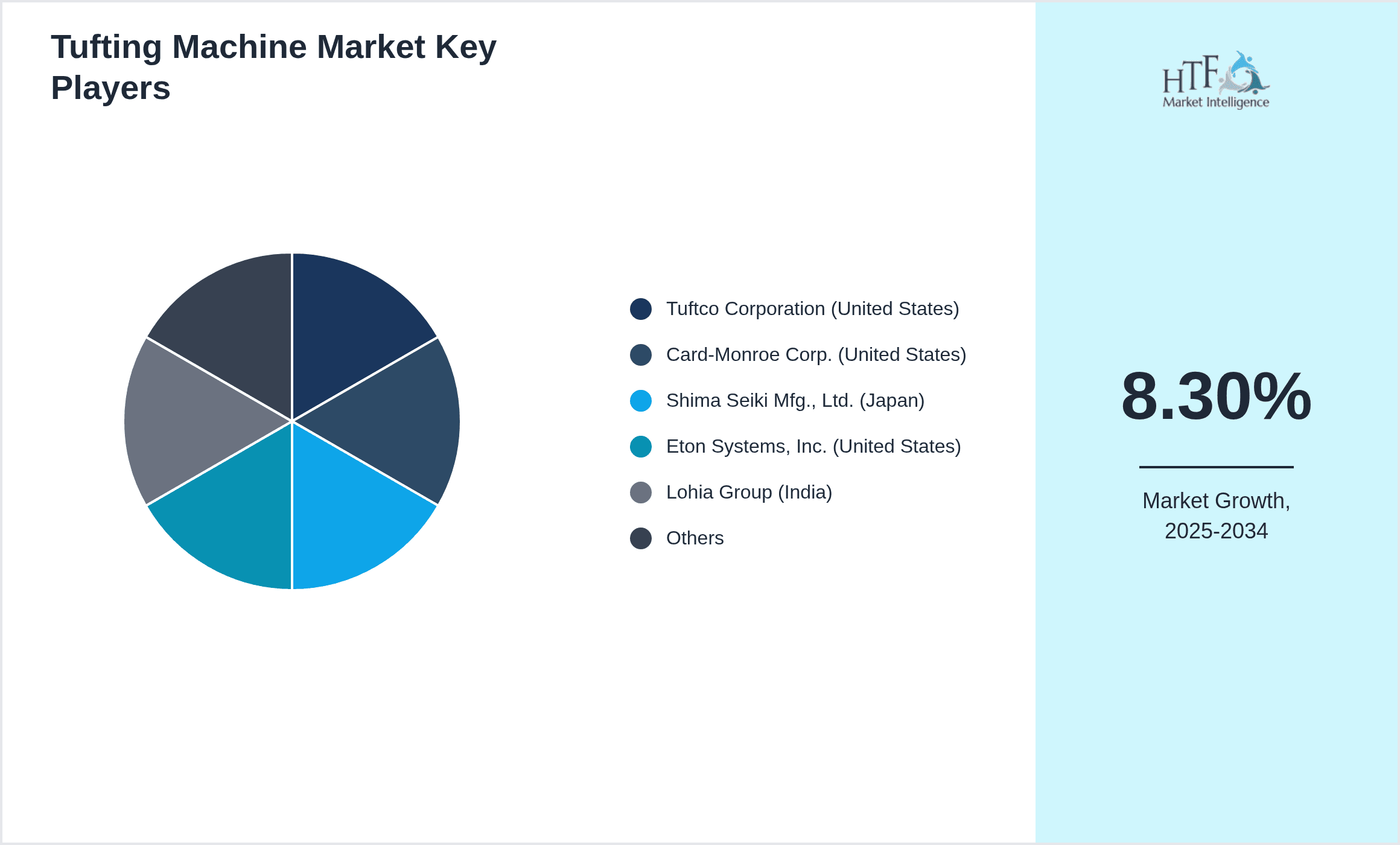
- •Tuftco Corporation (United States)
- •Card-Monroe Corp. (United States)
- •Shima Seiki Mfg., Ltd. (Japan)
- •Eton Systems, Inc. (United States)
- •Lohia Group (India)
- •Heesung Electronics Co., Ltd. (South Korea)
- •Santex Rimar Group (Italy)
- •Dornier GmbH (Germany)
- •Karl Mayer Textilmaschinenfabrik GmbH (Germany)
- •Van de Wiele NV (Belgium)
- •Murata Machinery, Ltd. (Japan)
- •Taiwan Tufting Machine Co., Ltd. (Taiwan)
- •Chenguang Group Co., Ltd. (China)
- •Amscomatic AG (Switzerland)
- •Kuster GmbH (Germany)
- •Mayer & Cie GmbH & Co. KG (Germany)
- •Muratec America, Inc. (United States)
- •Ningbo Tufting Machinery Co., Ltd. (China)
- •Simmons Machine Tool Corporation (United States)
- •Texpa Maschinenbau GmbH (Germany)
- •Bardusch & Co. GmbH (Germany)
- •Fong’s Industries Company Limited (Hong Kong)
- •Groz-Beckert KG (Germany)
- •Jiangsu Xinda Tufting Machine Co., Ltd. (China)
- •Rimoldi Macchine Tessili S.p.A. (Italy)
Market Breakdown
- •By Tufting Machine Type
- ◦Manual Tufting Machines
- ◦Semi-Automatic Tufting Machines
- ◦Fully Automatic Tufting Machines
- ◦Needleloom Tufting Machines
- ◦Jet Tufting Machines
- •By Application Area
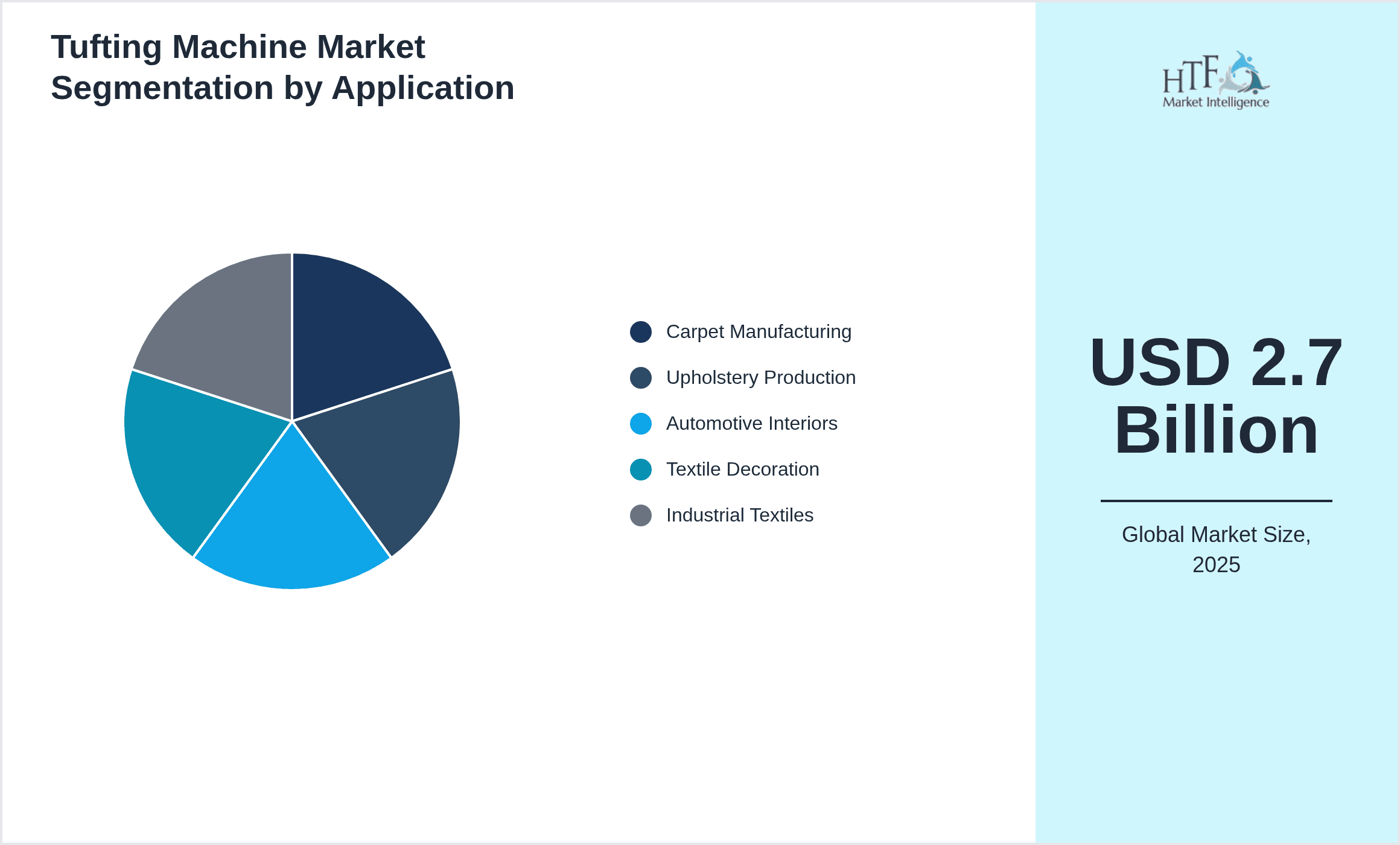
- ◦Carpet Manufacturing
- ◦Upholstery Production
- ◦Automotive Interiors
- ◦Textile Decoration
- ◦Industrial Textiles
- •By Service Type
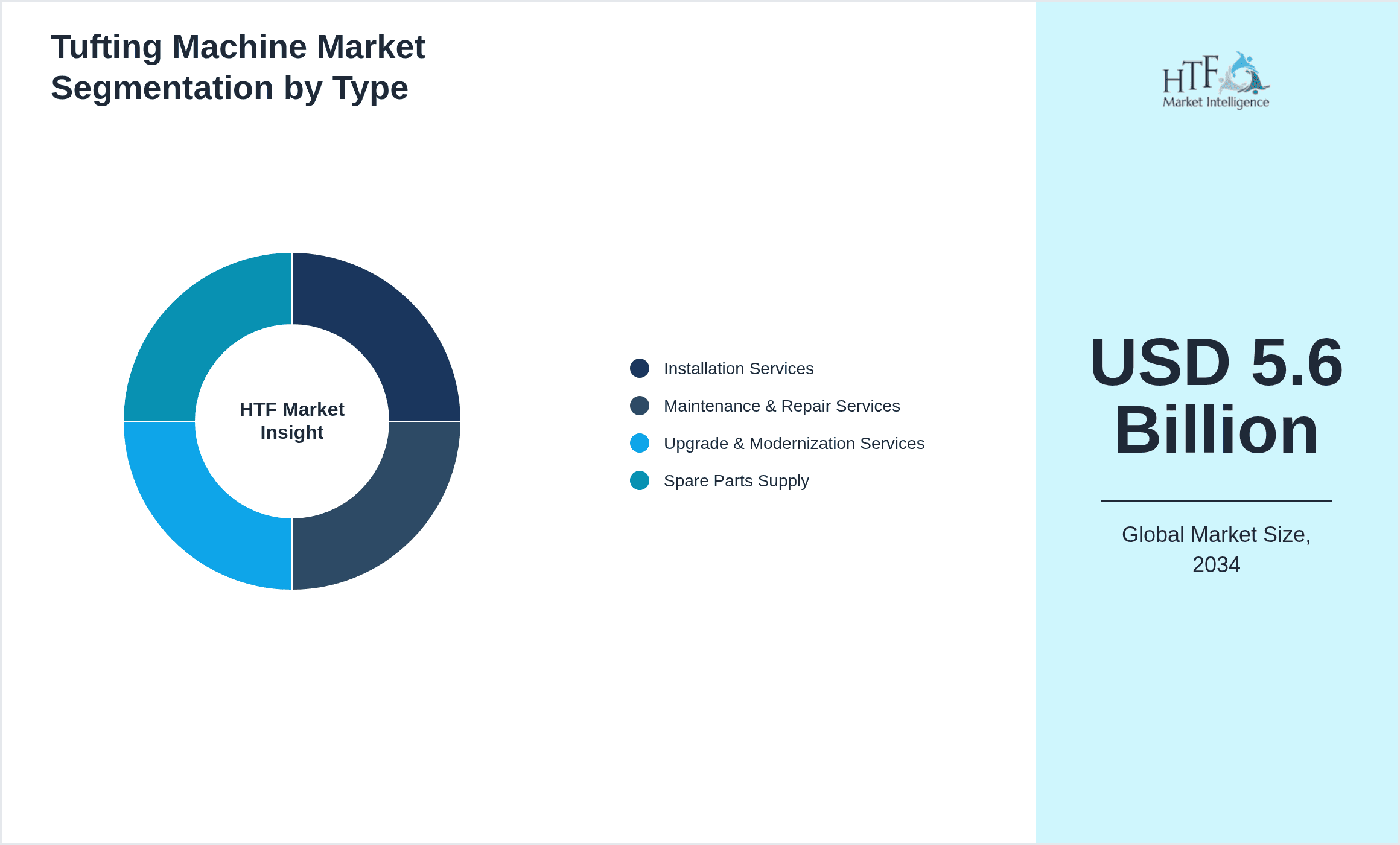
- ◦Installation Services
- ◦Maintenance & Repair Services
- ◦Upgrade & Modernization Services
- ◦Spare Parts Supply
- •By Deployment Model
- ◦On-Premise Machines
- ◦Integrated Automated Systems
- ◦Hybrid Systems
Growth Dynamics
- •Rising demand for decorative and durable carpets and upholstery in residential and commercial sectors is a primary growth driver for the tufting machine market. Increasing consumer preference for customized textile designs accelerates adoption of advanced tufting technology that supports complex patterns and textures.
- •Technological advancements in automation and digital controls enhance production efficiency and reduce labor costs, motivating manufacturers to upgrade to fully automatic and jet tufting machines. This increases output quality and consistency, meeting stringent industry standards.
- •Expansion of automotive production and increasing use of tufted textiles in car interiors for aesthetic appeal and comfort drive market growth. Manufacturers seek efficient tufting solutions to meet high-volume automotive upholstery demand while maintaining lightweight and durability requirements.
- •Emerging economies in Asia-Pacific investing in textile manufacturing infrastructure and export-oriented production create new growth avenues. Government initiatives supporting industrial modernization and export competitiveness further bolster market expansion in this region.
- •Sustainability trends compel manufacturers to adopt energy-efficient tufting machines with reduced material wastage, aligning with global environmental goals and appealing to eco-conscious customers. This drives innovation and market acceptance of green tufting technologies.
- •Growing penetration of e-commerce and online retail in home décor and textile products increases demand for varied and customized tufted fabrics, encouraging manufacturers to invest in flexible tufting machinery for rapid production turnaround.
- •Strategic collaborations between machinery manufacturers and textile producers to co-develop specialized tufting machines for niche applications foster market growth and technological differentiation, enhancing competitive positioning.
Market Trends
- •A major trend shaping the tufting machine market is the integration of Industry 4.0 technologies, including IoT connectivity and predictive maintenance, which enable real-time monitoring and reduce machine downtime, thus boosting productivity.
- •The adoption of jet tufting machines is rising due to their capability to produce intricate fabric designs rapidly and with less waste, appealing to high-end carpet and upholstery manufacturers focused on innovation.
- •Sustainability-focused trends drive demand for machines that consume less energy and utilize eco-friendly yarns, reflecting broader textile industry commitments to environmental responsibility and circular economy principles.
- •Customization and on-demand manufacturing trends promote the use of flexible, semi-automatic tufting machines that allow quick style changes and small batch production, meeting evolving consumer preferences.
- •Collaborative ventures between tufting machine manufacturers and software providers lead to enhanced digital interfaces and automation capabilities, streamlining operations and improving fabric quality consistency.
- •Market players are increasingly focusing on after-sales service excellence, including remote diagnostics and swift spare parts delivery, to enhance customer satisfaction and machine operational lifespan.
- •There is a rising trend toward modular tufting systems that allow easy upgrades and maintenance, reducing capital expenditure for manufacturers while enabling technological adaptability.
Market Opportunities
- •The growing demand for tufted textiles in emerging markets presents significant expansion opportunities for machinery manufacturers to establish local production and service networks, reducing lead times and costs.
- •Innovations in jet tufting technology provide opportunities for product differentiation by enabling complex patterns and textures, appealing to premium carpet and upholstery segments seeking unique design features.
- •Increasing adoption of sustainable and recycled yarns in tufted fabrics opens avenues for developing specialized tufting machines optimized for eco-friendly materials, fulfilling rising consumer and regulatory expectations.
- •Integration of digitalization and automation in tufting machines offers growth potential through enhanced operational efficiency, predictive maintenance, and data analytics services, creating value-added solutions for manufacturers.
- •Collaborative product development with end-users to create customized tufting solutions for niche applications such as automotive and industrial textiles can unlock new revenue streams and market segments.
- •Expansion of the e-commerce sector and home décor market drives demand for personalized tufted textile products, encouraging adoption of flexible and rapid-change tufting machines capable of small batch production.
- •Government incentives promoting manufacturing modernization in developing regions provide financial support for machinery upgrades, presenting opportunities for suppliers to expand market presence and drive sales.
Market Challenges
- •High initial capital expenditure for fully automatic and jet tufting machines limits adoption among small and medium-sized manufacturers, restraining market penetration in price-sensitive regions.
- •Complexity in operation and maintenance of advanced tufting machines requires skilled labor, which is scarce in certain emerging markets, impacting operational efficiency and machine utilization.
- •Fluctuations in raw material prices, particularly synthetic yarns, affect production costs and profitability, leading to market volatility and cautious investment by manufacturers.
- •Stringent regulatory requirements related to machine safety, emissions, and energy consumption require continuous compliance efforts, increasing operational costs and technical challenges for manufacturers.
- •Competition from low-cost regional manufacturers offering basic tufting machines challenges established players, pressuring pricing and margins in certain geographic markets.
- •Supply chain disruptions, including component shortages and logistics delays, adversely affect manufacturing schedules and machine delivery timelines, impacting customer satisfaction.
- •Limited awareness and adoption of advanced tufting technologies among traditional textile producers hinder market growth and technology diffusion in some regions.
Regulatory Framework
- •Between 2020 and 2025, several key regulations were implemented globally mandating energy efficiency standards for textile machinery, including tufting machines, aiming to reduce industrial power consumption and carbon footprint. Compliance requires manufacturers to integrate energy-saving technologies, impacting machine design and cost structures.
- •Safety regulations introduced in major markets between 2020 and 2025 enforce stringent machine guarding, emergency stop mechanisms, and operator training protocols to minimize workplace accidents. These standards have led to increased adoption of automated safety features in tufting machines.
- •Environmental norms focusing on noise and emission levels from textile manufacturing equipment have influenced the development of quieter and low-emission tufting machines. Manufacturers must adhere to regional guidelines to secure market access, impacting R&D priorities.
- •Country-specific mandates such as the European Union’s Ecodesign Directive and the U.S. Department of Energy’s efficiency regulations require continuous product certification and audit compliance. These frameworks encourage innovation towards sustainable tufting technology.
- •Government policies providing incentives for industrial modernization, including subsidies and tax benefits for upgrading to energy-efficient and automated textile machinery, have stimulated market growth and technology adoption, especially in emerging economies.
Market Intelligence
- •15th February 2025, Tuftco Corporation announced the launch of its latest fully automatic tufting machine model featuring enhanced digital controls and IoT-enabled predictive maintenance capabilities. The new machine is designed to increase production efficiency by 20% while reducing energy consumption by 15%. Targeted at high-volume carpet manufacturers, the product aims to address growing demand for precision and sustainability in tufted fabric production. This innovation positions Tuftco as a technology leader in the global tufting machine market. Source: Official Tuftco Corporation Press Release
- •10th May 2025, Shima Seiki Mfg., Ltd. introduced an advanced jet tufting machine with multi-needle technology capable of producing complex, multi-colored fabric patterns with significantly reduced waste. The machine integrates AI-driven quality control systems and supports on-demand customization, catering to premium upholstery and automotive interior markets. This launch is expected to accelerate adoption of jet tufting technology in Asia-Pacific and Europe. Source: Shima Seiki Corporate Website
- •20th August 2025, Lohia Group announced a strategic partnership with a major textile software provider to develop integrated automation solutions for tufting machines, including real-time production monitoring and digital workflow management. This collaboration aims to enhance operational efficiency and enable seamless integration with Industry 4.0-enabled textile manufacturing plants. The initiative reflects growing industry emphasis on digital transformation and smart manufacturing. Source: Lohia Group Official Announcement
- •5th November 2024, Dornier GmbH completed the acquisition of a regional tufting machine manufacturer to expand its portfolio in Asia-Pacific and strengthen after-sales service capabilities. The acquisition supports Dornier's strategy to increase market share in emerging economies and offer comprehensive machinery solutions including installation, maintenance, and training services. This move is anticipated to enhance competitive positioning and customer reach. Source: Industry Publication Textile Machinery Today
Regional Outlook
The North America currently holds a significant share of the market, primarily due to several key factors: increasing consumption rates, a burgeoning population, and robust economic momentum. These elements collectively drive demand, positioning this region as a leader in the market. On the other hand, Asia-Pacific is rapidly emerging as the fastest-growing area within the industry. This remarkable growth can be attributed to swift infrastructure development, the expansion of various industrial sectors, and a marked increase in consumer demand. These dynamics make this region a crucial player in shaping future market growth.
In our report, we cover a comprehensive analysis of the following regions and countries:
- North America
- LATAM
- West Europe
- Central & Eastern Europe
- Northern Europe
- Southern Europe
- East Asia
- Southeast Asia
- South Asia
- Central Asia
- Oceania
- MEA
| Feature | Details |
|---|---|
| Base Year Market Size | USD 2.7 Billion |
| Forecast Year Market Size | USD 5.6 Billion |
| CAGR | 8.3% |
| Forecast Period | 2026 to 2033 |
| YoY Growth | 8% |
| Scope of Report | Market is segmented by Tufting Machine Type (Manual Tufting Machines, Semi-Automatic Tufting Machines, Fully Automatic Tufting Machines, Needleloom Tufting Machines, Jet Tufting Machines), Application Area (Carpet Manufacturing, Upholstery Production, Automotive Interiors, Textile Decoration, Industrial Textiles), Service Type (Installation Services, Maintenance & Repair Services, Upgrade & Modernization Services, Spare Parts Supply), Deployment Model (On-Premise Machines, Integrated Automated Systems, Hybrid Systems) |
| Regions Covered | North America, LATAM, West Europe, Central & Eastern Europe, Northern Europe, Southern Europe, East Asia, Southeast Asia, South Asia, Central Asia, Oceania, MEA |
| Key Companies | Tuftco Corporation (United States), Card-Monroe Corp. (United States), Shima Seiki Mfg., Ltd. (Japan), Eton Systems, Inc. (United States), Lohia Group (India), Heesung Electronics Co., Ltd. (South Korea), Santex Rimar Group (Italy), Dornier GmbH (Germany), Karl Mayer Textilmaschinenfabrik GmbH (Germany), Van de Wiele NV (Belgium), Murata Machinery, Ltd. (Japan), Taiwan Tufting Machine Co., Ltd. (Taiwan), Chenguang Group Co., Ltd. (China), Amscomatic AG (Switzerland), Kuster GmbH (Germany), Mayer & Cie GmbH & Co. KG (Germany), Muratec America, Inc. (United States), Ningbo Tufting Machinery Co., Ltd. (China), Simmons Machine Tool Corporation (United States), Texpa Maschinenbau GmbH (Germany), Bardusch & Co. GmbH (Germany), Fong’s Industries Company Limited (Hong Kong), Groz-Beckert KG (Germany), Jiangsu Xinda Tufting Machine Co., Ltd. (China), Rimoldi Macchine Tessili S.p.A. (Italy) |
Global Tufting Machine Market Size, Growth & Revenue 2025-2034 - Table of Contents
Multidisciplinary researcher with 10+ years of experience uncovering insights across diverse domains focused on uncovering insights that drive informed decisions.
Frequently Asked Questions (FAQ):
The Market market is expected to see significant growth and value in 2025.
North America currently leads the market, followed by Europe and Asia-Pacific.
Key growth drivers include increasing activities, rising demand for innovative solutions, technological advancements, and growing preference for efficient products.