
Global Oscilloscope Market - Outlook 2020-2034
Global Oscilloscope Market is segmented by Oscilloscope Type (Digital Oscilloscopes, Analog Oscilloscopes, Mixed Signal Oscilloscopes, Portable Oscilloscopes, PC-based Oscilloscopes), Application Area (Telecommunications, Automotive, Aerospace & Defense, Consumer Electronics, Industrial Automation), Service Type (Calibration Services, Repair Services, Installation & Training, Technical Support), Deployment Model (Cloud-based Oscilloscope Solutions, On-premise Oscilloscopes, Hybrid Deployment), and Geography (North America, LATAM, West Europe, Central & Eastern Europe, Northern Europe, Southern Europe, East Asia, Southeast Asia, South Asia, Central Asia, Oceania, MEA)
Pricing
Report Overview
Executive Summary
- •The global oscilloscope market is defined by its comprehensive range of electronic test instruments that visualize electrical signals for analysis, crucial across industries such as telecommunications, automotive, aerospace & defense, consumer electronics, and industrial automation. These instruments vary from digital to analog and mixed signal types, supporting diverse application requirements from R&D to field diagnostics. The market value chain integrates component manufacturers, device assemblers, distribution networks, and after-sales services, collectively ensuring product innovation and customer support. Market growth is propelled by advancements in digital technologies, increasing demand in emerging economies, and the rising complexity of electronic systems necessitating sophisticated measurement solutions. This market facilitates critical functions including signal integrity validation, fault detection, and system optimization, thereby serving as an essential instrument in product development and quality assurance. The global reach of oscilloscopes extends through established and developing regions, with North America leading in market dominance due to mature industrial infrastructure, while Asia-Pacific exhibits the fastest growth driven by expanding electronics manufacturing and telecommunications sectors. Emerging trends such as IoT integration, enhanced portability, and AI-enabled analytics are redefining oscilloscope capabilities, offering enhanced precision and operational efficiency.
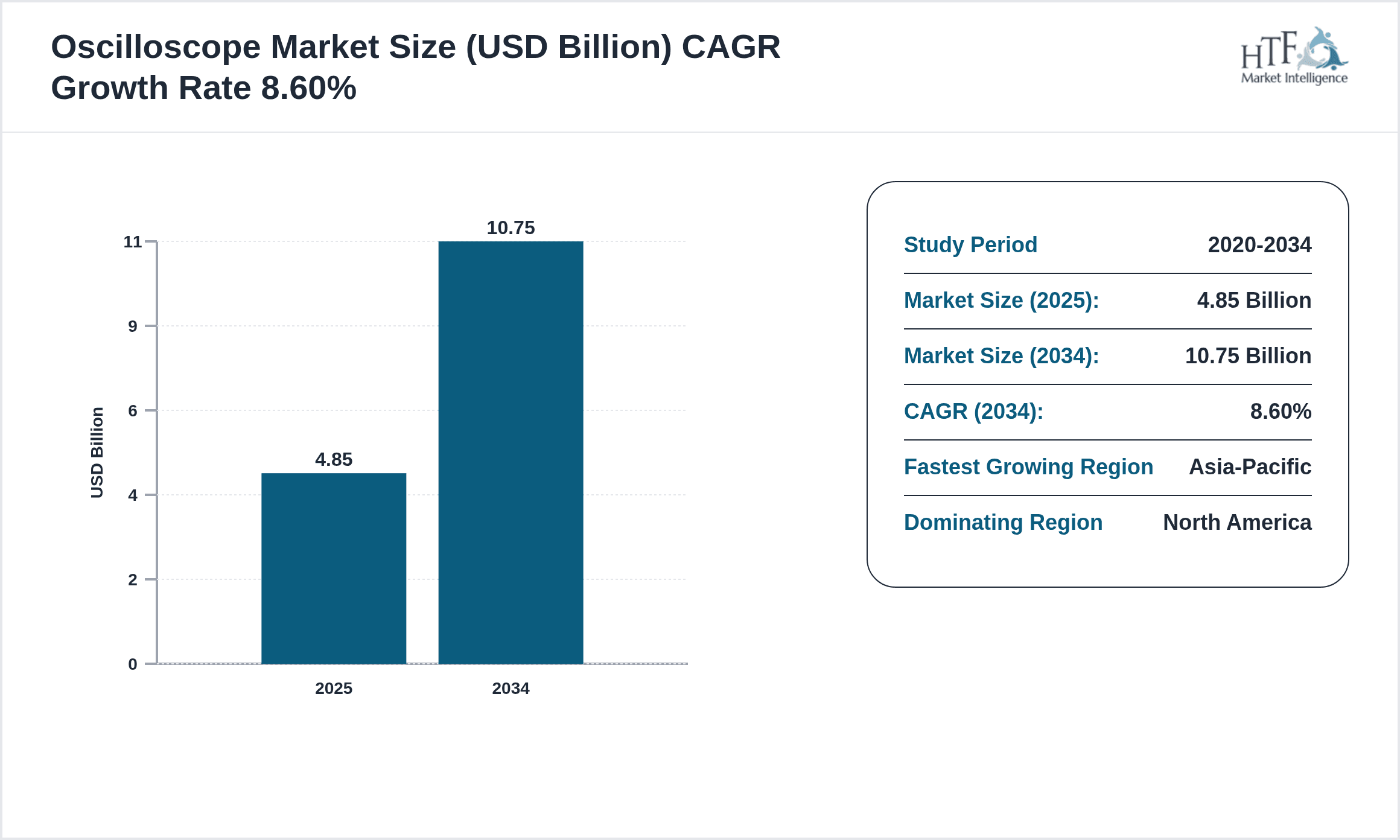
- •Key highlights of the global oscilloscope market include a base year valuation of USD 4.85 Billion in 2025 with a projected growth to USD 10.75 Billion by 2034, reflecting a robust compound annual growth rate (CAGR) of 8.6%. The market's year-on-year growth rate stands at approximately 8.3%, indicative of steady expansion amid technological evolution and increasing adoption across multiple sectors. Digital oscilloscopes currently lead the product category due to their versatility and advanced features, while mixed signal oscilloscopes are the fastest growing segment, propelled by rising demand in complex electronics testing. Regionally, North America holds the largest market share driven by high-tech industry concentration, whereas Asia-Pacific leads growth momentum fueled by rapid industrialization and increasing R&D investments.
- •The value proposition of oscilloscopes lies in their critical role enabling accurate signal measurement and analysis which directly impacts product innovation, quality control, and operational efficiency across industries. For stakeholders including manufacturers, developers, and end-users, oscilloscopes offer indispensable capabilities for ensuring system reliability and performance optimization. Strategic importance is heightened by the rapid evolution of electronic technologies requiring sophisticated testing tools to address increasing complexity. Market dynamics emphasize continuous technological advancements, integration with emerging digital ecosystems, and expanding application footprints, positioning the oscilloscope industry as a key enabler of technological progress and industrial competitiveness globally.
Competitive Landscape
The global oscilloscope market exhibits intense competition characterized by rapid technological innovation, strategic collaborations, and diversified product portfolios. Market participants engage in continuous R&D to enhance oscilloscope functionalities including bandwidth, sampling rate, and user interface improvements, aiming to meet evolving end-user demands. Competitive strategies involve mergers and acquisitions to consolidate market position, geographic expansion to capture emerging markets, and partnerships for technological integration such as IoT and AI capabilities. Pricing strategies vary from premium high-performance instruments targeting R&D segments to cost-effective portable models aimed at field applications. Distribution channels are diversified, including direct sales, online platforms, and authorized dealers, enhancing market reach and customer engagement. Barriers to entry remain significant due to high capital requirements and the need for advanced technological expertise. Regional competition is notable with North America and Europe hosting established players, while Asia-Pacific fosters emerging manufacturers leveraging local market growth. Future trends indicate a shift towards cloud-connected oscilloscopes and enhanced software analytics, intensifying competition and innovation pace.
Prominent Players in Oscilloscope Market
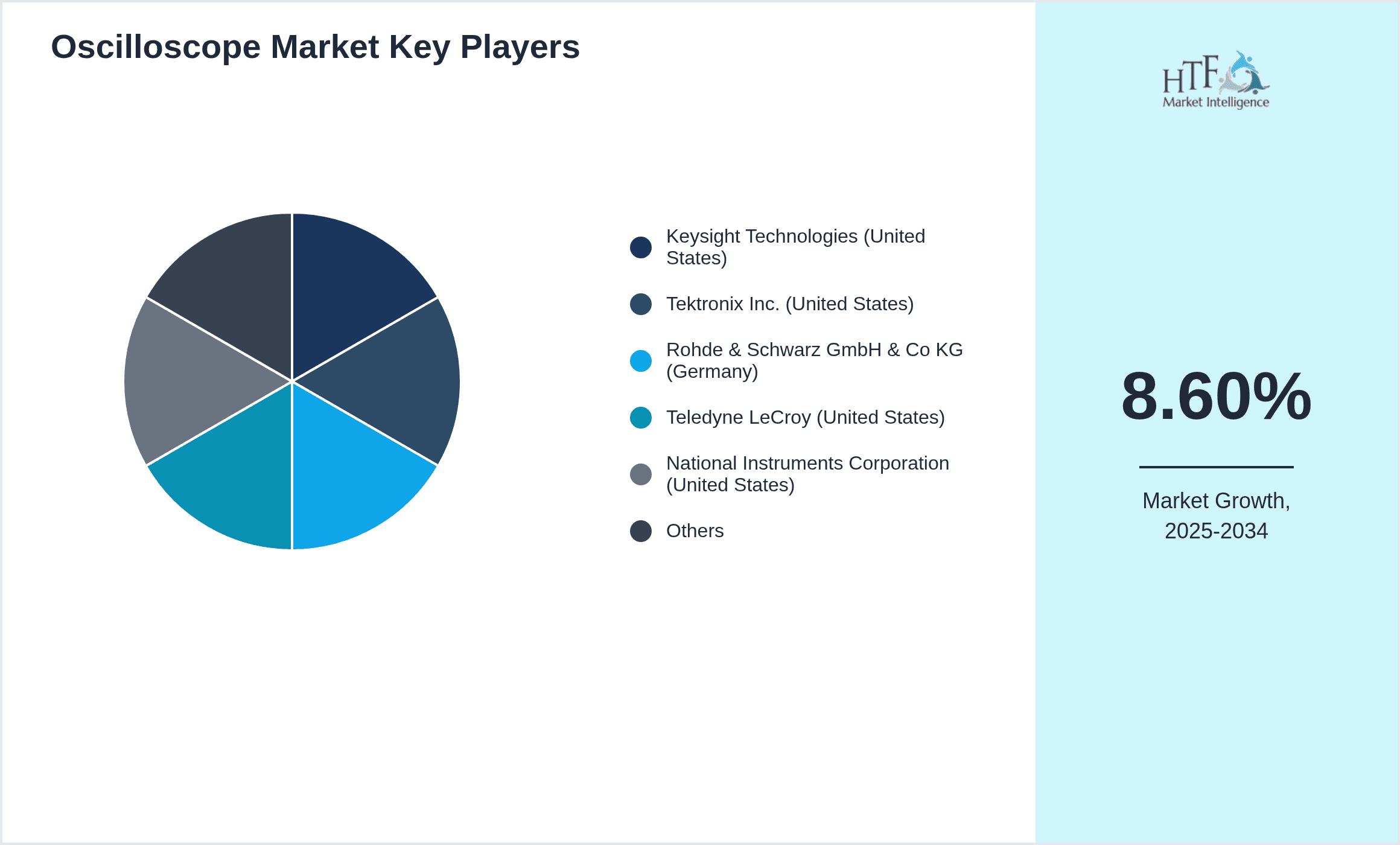
- •Keysight Technologies (United States)
- •Tektronix Inc. (United States)
- •Rohde & Schwarz GmbH & Co KG (Germany)
- •Teledyne LeCroy (United States)
- •National Instruments Corporation (United States)
- •Yokogawa Electric Corporation (Japan)
- •GW Instek (Taiwan)
- •RIGOL Technologies (China)
- •Fluke Corporation (United States)
- •Hantek (China)
- •Owon Technology (China)
- •Siglent Technologies (China)
- •Aim-TTi (United Kingdom)
- •B&K Precision Corporation (United States)
- •LeCroy Corporation (United States)
- •Yokogawa Electric Corporation (Japan)
- •Tekbox Digital Solutions (India)
- •Picotech (United Kingdom)
- •TiePie engineering (Netherlands)
- •LabNation (United States)
- •Oszilloskop (Germany)
- •Thurlby Thandar Instruments (United Kingdom)
- •Metrix Electronics (France)
- •GW Instek (Taiwan)
- •HIOKI E.E. Corporation (Japan)
Market Breakdown
- •By Oscilloscope Type
- ◦Digital Oscilloscopes
- ◦Analog Oscilloscopes
- ◦Mixed Signal Oscilloscopes
- ◦Portable Oscilloscopes
- ◦PC-based Oscilloscopes
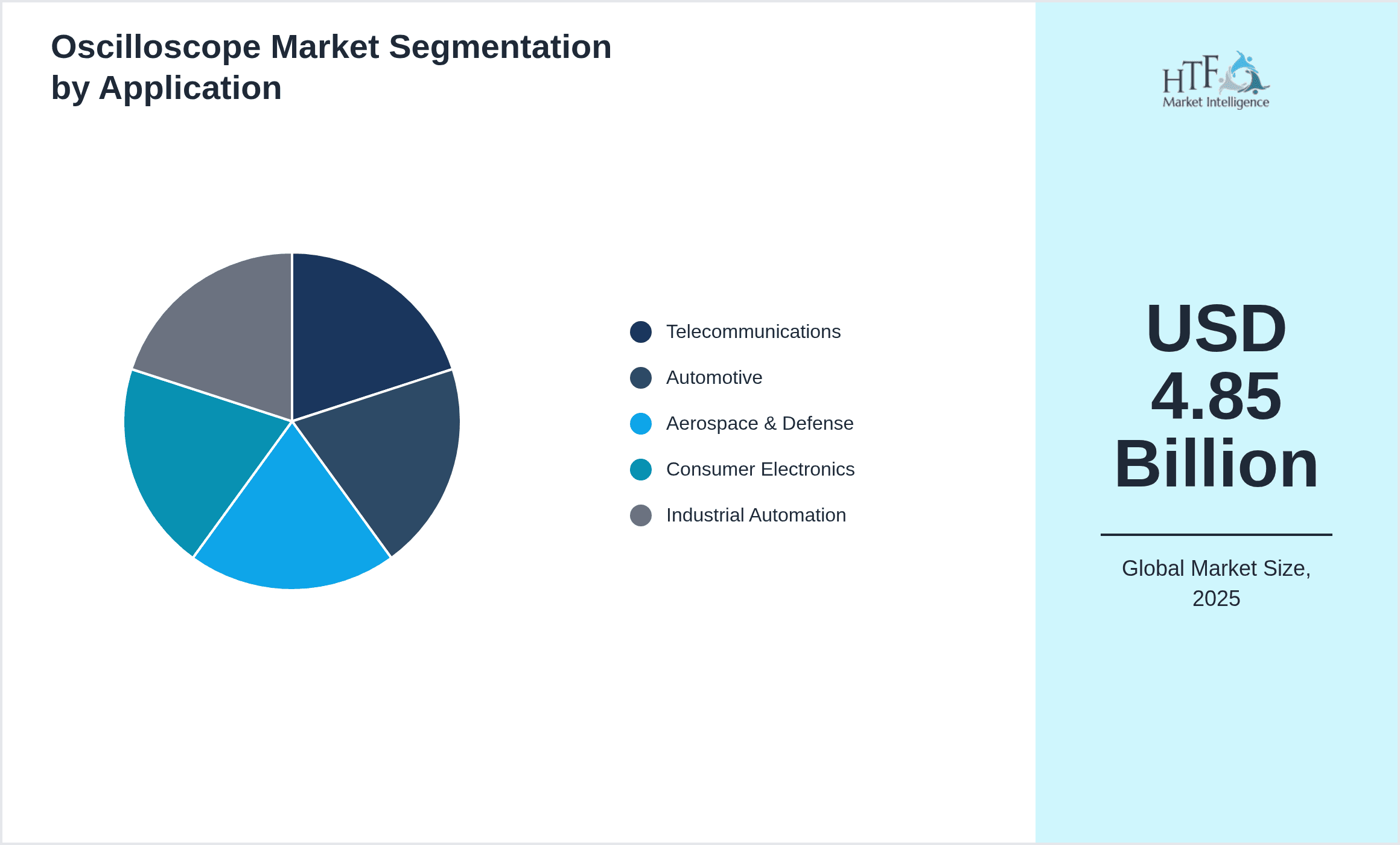
- •By Application Area
- ◦Telecommunications
- ◦Automotive
- ◦Aerospace & Defense
- ◦Consumer Electronics
- ◦Industrial Automation
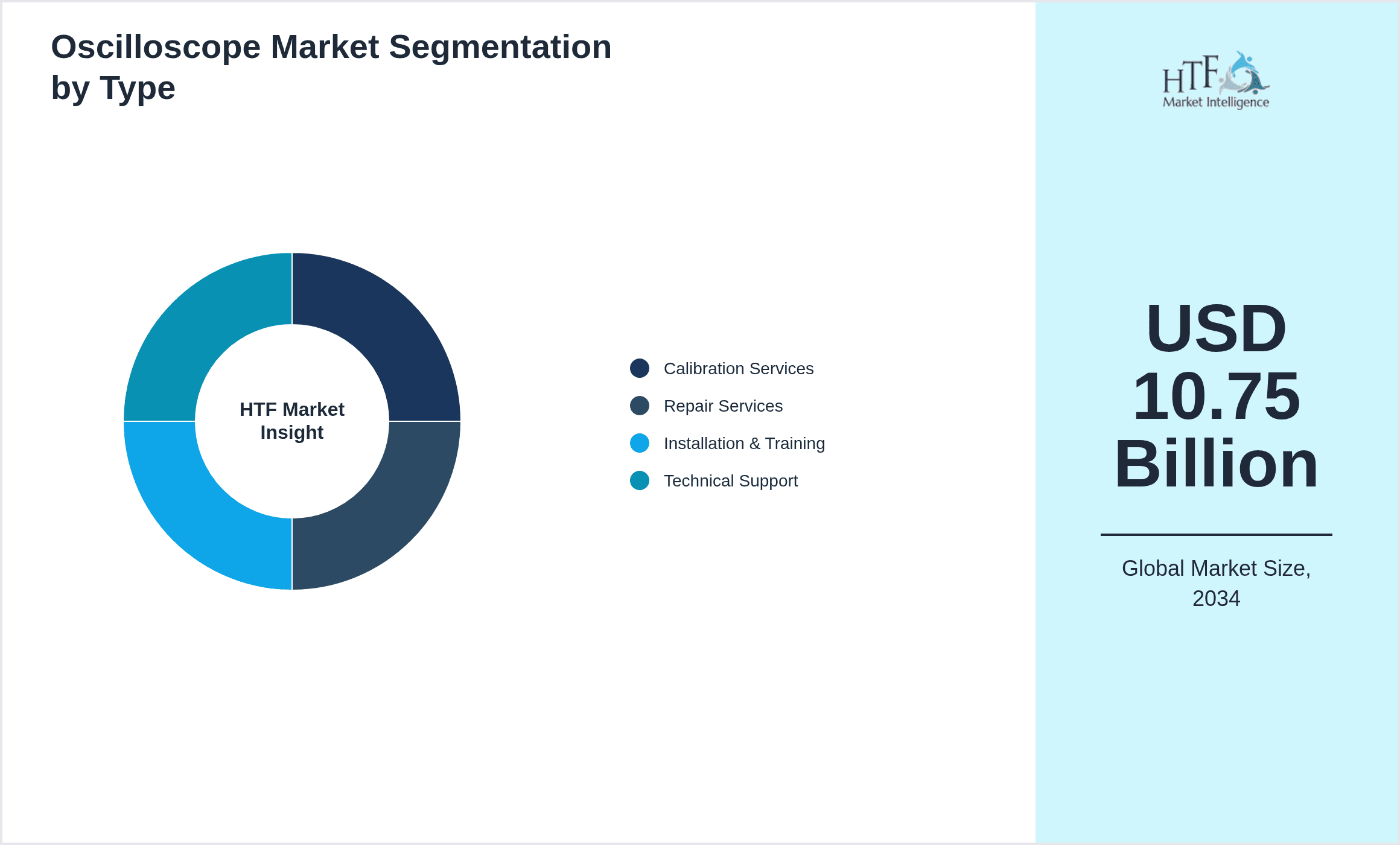
- •By Service Type
- ◦Calibration Services
- ◦Repair Services
- ◦Installation & Training
- ◦Technical Support
- •By Deployment Model
- ◦Cloud-based Oscilloscope Solutions
- ◦On-premise Oscilloscopes
- ◦Hybrid Deployment
Growth Dynamics
- •The increasing complexity of electronic devices and systems drives the demand for high-precision oscilloscopes, enabling engineers to perform accurate signal analysis essential for product development and quality assurance. Industry sectors such as telecommunications and automotive are adopting advanced oscilloscopes to support 5G deployment and electric vehicle innovation respectively, significantly boosting market growth.
- •Technological advancements including the integration of AI and IoT technologies with oscilloscopes enhance their diagnostic and predictive capabilities, facilitating real-time data analysis and remote monitoring. This innovation is attracting significant investments and expanding application fields, particularly in industrial automation and aerospace sectors.
- •Rising R&D expenditures and increasing adoption in emerging economies, especially in Asia-Pacific, contribute to accelerated market expansion. Growing electronics manufacturing hubs in countries such as China and India are fueling demand for versatile and cost-effective oscilloscope solutions to support production and testing needs.
- •The growing trend of miniaturization and portability in electronic testing devices results in increased demand for portable and PC-based oscilloscopes, allowing field engineers and technicians to conduct measurements efficiently outside traditional lab environments.
- •Stringent quality and safety standards in regulated industries such as aerospace and defense stimulate the adoption of high-performance oscilloscopes that comply with rigorous testing protocols, thus driving market growth through regulatory adherence.
- •Strategic partnerships between oscilloscope manufacturers and software developers are enhancing product offerings with advanced analytics and cloud capabilities, creating new revenue streams and strengthening competitive positioning.
- •Continuous innovation in bandwidth and sampling rate capabilities enables oscilloscopes to support next-generation electronic designs, fostering market demand for cutting-edge test instruments.
Market Trends
- •The transition from analog to digital oscilloscopes is a significant trend, driven by digital instruments' superior accuracy, data storage, and analysis capabilities, allowing enhanced performance in complex testing scenarios.
- •Adoption of mixed signal oscilloscopes is increasing, facilitating simultaneous analysis of analog and digital signals, vital for embedded system testing in automotive and consumer electronics applications.
- •Integration of cloud computing and software-defined functionalities in oscilloscopes is reshaping user experience by enabling remote access, data sharing, and collaborative diagnostics among distributed teams.
- •Sustainability considerations are influencing oscilloscope design, with manufacturers focusing on energy-efficient components and recyclable materials to meet environmental regulations and customer expectations.
- •The rise of portable and handheld oscilloscopes caters to the growing need for on-site testing and maintenance, especially in industrial automation and field service sectors.
- •Increasing collaborations between oscilloscope providers and academic institutions are facilitating innovation and training, expanding the market's knowledge base and adoption.
- •Emerging applications in 5G network development and electric vehicle technology are driving specialized oscilloscope features focused on high-frequency and mixed-domain analysis.
Market Opportunities
- •Expanding electronics manufacturing in emerging markets presents opportunities to introduce affordable and scalable oscilloscope solutions tailored to local industry needs, thereby capturing untapped customer segments.
- •Growing demand for IoT and smart device testing creates scope for oscilloscopes integrated with AI-driven diagnostics and automated measurement capabilities, enhancing testing efficiency.
- •Collaborations with cloud service providers offer opportunities to develop subscription-based oscilloscope software, enabling flexible deployment models and recurring revenue streams.
- •Increasing investments in renewable energy and electric vehicle sectors require specialized oscilloscopes capable of high-voltage and high-frequency testing, opening new vertical markets.
- •Product innovation focused on miniaturization and portability can tap into the growing market of field service engineers and technicians requiring on-the-go measurement tools.
- •Customization of oscilloscope features for aerospace and defense applications based on stringent regulatory requirements can provide competitive differentiation and premium pricing opportunities.
- •Expansion of training and educational services linked to oscilloscope usage can foster broader market adoption and create ancillary revenue opportunities.
Market Challenges
- •High initial investment and maintenance costs for advanced oscilloscopes pose adoption barriers for small and medium enterprises, limiting market penetration in price-sensitive regions.
- •Technical complexity and required expertise to operate sophisticated oscilloscopes can hinder widespread use, necessitating comprehensive training and support services.
- •Rapid technological obsolescence demands continuous R&D investments by manufacturers, increasing operational costs and pricing pressures in highly competitive markets.
- •Supply chain disruptions and component shortages, exacerbated by global economic uncertainties, affect production schedules and product availability, impacting market growth.
- •Regulatory compliance across different regions with varying standards creates challenges in product certification and market entry for global companies.
- •Intense competition from low-cost regional manufacturers may pressure established players on pricing and market share, especially in emerging markets.
- •Integration challenges of new technologies such as AI and cloud with traditional oscilloscope platforms may delay product launches and adoption rates.
Regulatory Framework
- •Between 2020 and 2025, regulatory bodies introduced stringent electromagnetic compatibility (EMC) standards requiring oscilloscopes to comply with enhanced interference control, ensuring device reliability in sensitive environments. Compliance necessitates rigorous testing protocols, impacting product design and certification processes.
- •The implementation of RoHS (Restriction of Hazardous Substances) directives mandates manufacturers to limit hazardous materials in oscilloscope production, promoting environmental sustainability and adherence to international regulations. This has driven innovation in material selection and manufacturing processes.
- •Safety standards such as IEC 61010-1 for electrical equipment safety have been updated, imposing stricter requirements on oscilloscope insulation and user protection features, influencing design and testing procedures across regions.
- •Region-specific mandates, such as the EU’s WEEE (Waste Electrical and Electronic Equipment) directive, enforce responsible disposal and recycling practices for oscilloscopes, compelling manufacturers to establish end-of-life management programs and compliance reporting.
- •Government initiatives supporting technological innovation and standardization in testing instruments encourage compliance with international quality certifications like ISO 9001, fostering global market access and customer confidence.
Market Intelligence
- •15th January 2025, Keysight Technologies launched the InfiniiVision 6000 X-Series digital oscilloscope featuring 6 GHz bandwidth and advanced visualization capabilities targeting 5G network development and high-speed data analysis. The product integrates AI-based signal processing tools to enhance measurement accuracy and reduce diagnostic times, aimed at telecommunications and aerospace sectors. This launch strengthens Keysight’s competitive position by addressing growing demand for high-performance oscilloscopes in emerging applications. Source: Keysight Technologies Official Press Release
- •3rd March 2025, Tektronix introduced the 5 Series MSO mixed signal oscilloscope with enhanced modular design and cloud connectivity, enabling remote collaboration and real-time data sharing for automotive and industrial automation users. The device supports up to 8 GHz bandwidth and includes software upgrades for IoT device testing, facilitating faster development cycles. This innovation reflects Tektronix’s strategic focus on integrating digital transformation trends into its product portfolio. Source: Tektronix Corporate Website
- •20th July 2024, Rohde & Schwarz announced a strategic partnership with a leading AI software developer to co-develop next-generation oscilloscopes featuring predictive maintenance and automated fault detection capabilities. The collaboration aims to leverage AI algorithms to enhance diagnostics in aerospace and defense applications, improving operational efficiency and reducing downtime. This initiative positions Rohde & Schwarz at the forefront of innovation in smart testing solutions. Source: Industry Publication - Electronics Weekly
- •5th November 2024, National Instruments Corporation completed the acquisition of a cloud-based test software startup to expand its software-defined instrumentation capabilities. This acquisition enables National Instruments to offer integrated hardware-software solutions for oscilloscopes, enhancing user experience with cloud analytics and remote access features, targeting industrial automation and R&D markets. The deal is expected to accelerate digital transformation in test and measurement sectors. Source: National Instruments Official Announcement
Regional Outlook
The North America currently holds a significant share of the market, primarily due to several key factors: increasing consumption rates, a burgeoning population, and robust economic momentum. These elements collectively drive demand, positioning this region as a leader in the market. On the other hand, Asia-Pacific is rapidly emerging as the fastest-growing area within the industry. This remarkable growth can be attributed to swift infrastructure development, the expansion of various industrial sectors, and a marked increase in consumer demand. These dynamics make this region a crucial player in shaping future market growth.
In our report, we cover a comprehensive analysis of the following regions and countries:
- North America
- LATAM
- West Europe
- Central & Eastern Europe
- Northern Europe
- Southern Europe
- East Asia
- Southeast Asia
- South Asia
- Central Asia
- Oceania
- MEA
| Feature | Details |
|---|---|
| Base Year Market Size | USD 4.85 Billion |
| Forecast Year Market Size | USD 10.75 Billion |
| CAGR | 8.6% |
| Forecast Period | 2026 to 2033 |
| YoY Growth | 8.3% |
| Scope of Report | Market is segmented by Oscilloscope Type (Digital Oscilloscopes, Analog Oscilloscopes, Mixed Signal Oscilloscopes, Portable Oscilloscopes, PC-based Oscilloscopes), Application Area (Telecommunications, Automotive, Aerospace & Defense, Consumer Electronics, Industrial Automation), Service Type (Calibration Services, Repair Services, Installation & Training, Technical Support), Deployment Model (Cloud-based Oscilloscope Solutions, On-premise Oscilloscopes, Hybrid Deployment) |
| Regions Covered | North America, LATAM, West Europe, Central & Eastern Europe, Northern Europe, Southern Europe, East Asia, Southeast Asia, South Asia, Central Asia, Oceania, MEA |
| Key Companies | Keysight Technologies (United States), Tektronix Inc. (United States), Rohde & Schwarz GmbH & Co KG (Germany), Teledyne LeCroy (United States), National Instruments Corporation (United States), Yokogawa Electric Corporation (Japan), GW Instek (Taiwan), RIGOL Technologies (China), Fluke Corporation (United States), Hantek (China), Owon Technology (China), Siglent Technologies (China), Aim-TTi (United Kingdom), B&K Precision Corporation (United States), LeCroy Corporation (United States), Yokogawa Electric Corporation (Japan), Tekbox Digital Solutions (India), Picotech (United Kingdom), TiePie engineering (Netherlands), LabNation (United States), Oszilloskop (Germany), Thurlby Thandar Instruments (United Kingdom), Metrix Electronics (France), GW Instek (Taiwan), HIOKI E.E. Corporation (Japan) |
Global Oscilloscope Market - Outlook 2020-2034 - Table of Contents
Multidisciplinary researcher with 10+ years of experience uncovering insights across diverse domains focused on uncovering insights that drive informed decisions.
Frequently Asked Questions (FAQ):
The Compact Track Loaders market is expected to see value worth 5.3 Billion in 2025.
North America currently leads the market with approximately 45% market share, followed by Europe at 28% and Asia-Pacific at 22%. The remaining regions account for 5% of the global market.
Key growth drivers include increasing construction activities, rising demand for versatile equipment in agriculture, technological advancements in track loader design, and growing preference for compact equipment in urban construction projects.