
Global Short Sleeve Shirt Market Size, Growth & Revenue 2024-2034
Global Short Sleeve Shirt Market is segmented by Fabric Type (Cotton Short Sleeve Shirts, Polyester Short Sleeve Shirts, Blended Fabrics Short Sleeve Shirts, Linen Short Sleeve Shirts, Synthetic Short Sleeve Shirts), Application (Casual Wear, Formal Wear, Sportswear, Workwear, Others), Distribution Channel (Online Retail, Department Stores, Specialty Stores, Supermarkets/Hypermarkets), Consumer Demographic (Men, Women, Unisex, Children), and Geography (North America, LATAM, West Europe, Central & Eastern Europe, Northern Europe, Southern Europe, East Asia, Southeast Asia, South Asia, Central Asia, Oceania, MEA)
Pricing
Report Overview
Executive Summary
- •The Global Short Sleeve Shirt Market is a dynamic segment of the apparel industry, focusing on short-sleeved garments used across various applications including casual wear, formal attire, sportswear, and workwear. This market covers a diverse range of fabric types such as cotton, polyester, blended fabrics, linen, and synthetic materials, offering consumers options based on texture, comfort, and functionality. The market scope extends from raw material sourcing and manufacturing processes to global distribution networks and retail channels. Increasing urbanization, fashion consciousness, and the growing inclination towards sustainable and comfortable apparel are pivotal factors shaping demand. Technological advancements in fabric innovation and eco-friendly production methods are enhancing product offerings. The market benefits from a broad consumer base spanning different age groups and socio-economic segments worldwide. Key use cases include everyday wear, corporate uniforms, athletic apparel, and leisure clothing, all driving market expansion. The interplay of regional preferences and global fashion trends further influences product development and marketing strategies.
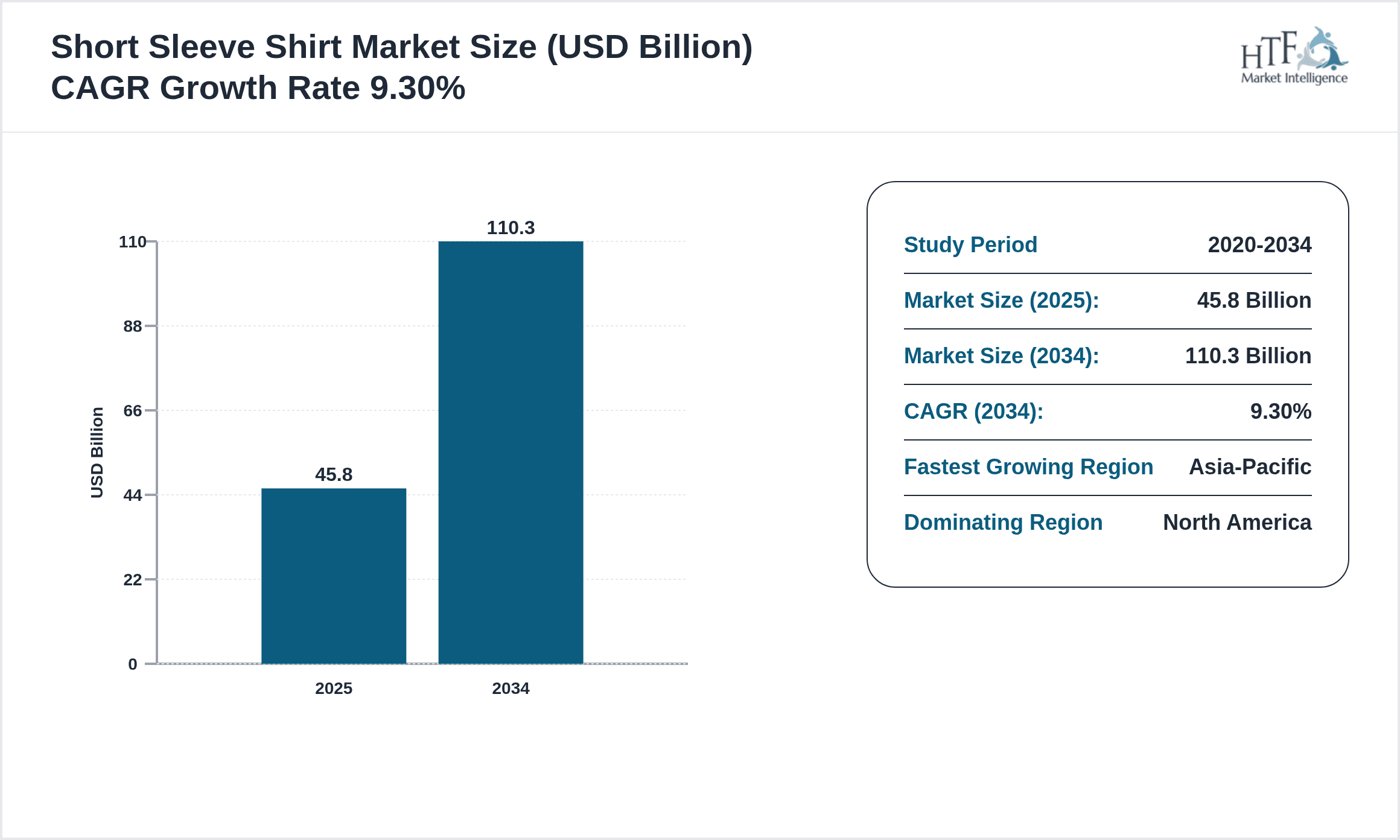
- •The market has exhibited robust growth, with a base size of USD 45.8 Billion in 2024 and forecasted to reach USD 110.3 Billion by 2034, reflecting a CAGR of 9.3%. North America currently dominates the market in terms of revenue, while the Asia-Pacific region is identified as the fastest-growing market owing to rapid urbanization and rising disposable incomes. Cotton fabrics hold the leading product type share due to their breathability and comfort, whereas blended fabrics are witnessing the fastest growth driven by their versatility and durability. Casual wear remains the dominant application segment, with formal wear following closely behind. Market dynamics are influenced by evolving consumer preferences for sustainable and functional apparel, integration of new textile technologies, and expansion of online retail platforms.
- •The short sleeve shirt market holds significant strategic importance across fashion, retail, and manufacturing industries. For stakeholders including textile producers, apparel brands, and retailers, it presents opportunities for innovation in fabric technology and sustainable practices. The rising global middle class and increasing fashion awareness fuel demand, encouraging product diversification and market penetration in emerging economies. Additionally, digitalization and e-commerce expansion enable broader reach and consumer engagement. The market’s value proposition lies in balancing style, comfort, and affordability while adapting to regional tastes and climate conditions. As such, it is a critical segment for driving growth and profitability in the global apparel landscape.
Competitive Landscape
The Global Short Sleeve Shirt Market is characterized by intense competition among established multinational apparel brands and emerging regional players. Market participants compete on product innovation, fabric technology, design aesthetics, and pricing strategies to capture consumer loyalty and expand market share. Innovation in sustainable fabrics and eco-friendly manufacturing processes has become a key differentiator, with companies investing heavily in research and development. The competitive environment also features strategic alliances, partnerships, and collaborations to enhance distribution networks and brand visibility. Pricing competition is significant, especially in emerging markets, driving companies toward cost optimization and efficient supply chain management. Market entry barriers include brand recognition, capital investment, and compliance with international quality standards. Regional market nuances influence competitive positioning, with localized marketing and product customization playing vital roles. Looking forward, digital marketing, omni-channel sales strategies, and rapid adaptation to fashion trends will shape the competitive dynamics.
Leading Companies in Short Sleeve Shirt Market
- •Nike, Inc. (United States)
- •Adidas AG (Germany)
- •H&M Group (Sweden)
- •Uniqlo Co., Ltd. (Japan)
- •Levi Strauss & Co. (United States)
- •Puma SE (Germany)
- •Gap Inc. (United States)
- •VF Corporation (United States)
- •Fast Retailing Co., Ltd. (Japan)
- •Under Armour, Inc. (United States)
- •Lululemon Athletica Inc. (Canada)
- •Zara (Inditex) (Spain)
- •Columbia Sportswear Company (United States)
- •American Eagle Outfitters, Inc. (United States)
- •New Balance Athletics, Inc. (United States)
- •Gap Inc. (United States)
- •Superdry PLC (United Kingdom)
- •ASICS Corporation (Japan)
- •Tommy Hilfiger (PVH Corp.) (United States)
- •Calvin Klein (PVH Corp.) (United States)
- •Abercrombie & Fitch Co. (United States)
- •Jack & Jones (Bestseller) (Denmark)
- •Guess?, Inc. (United States)
- •Lands' End, Inc. (United States)
- •Mango (Spain)
Market Breakdown
- •By Fabric Type
- ◦Cotton Short Sleeve Shirts
- ◦Polyester Short Sleeve Shirts
- ◦Blended Fabrics Short Sleeve Shirts
- ◦Linen Short Sleeve Shirts
- ◦Synthetic Short Sleeve Shirts
- •By Application
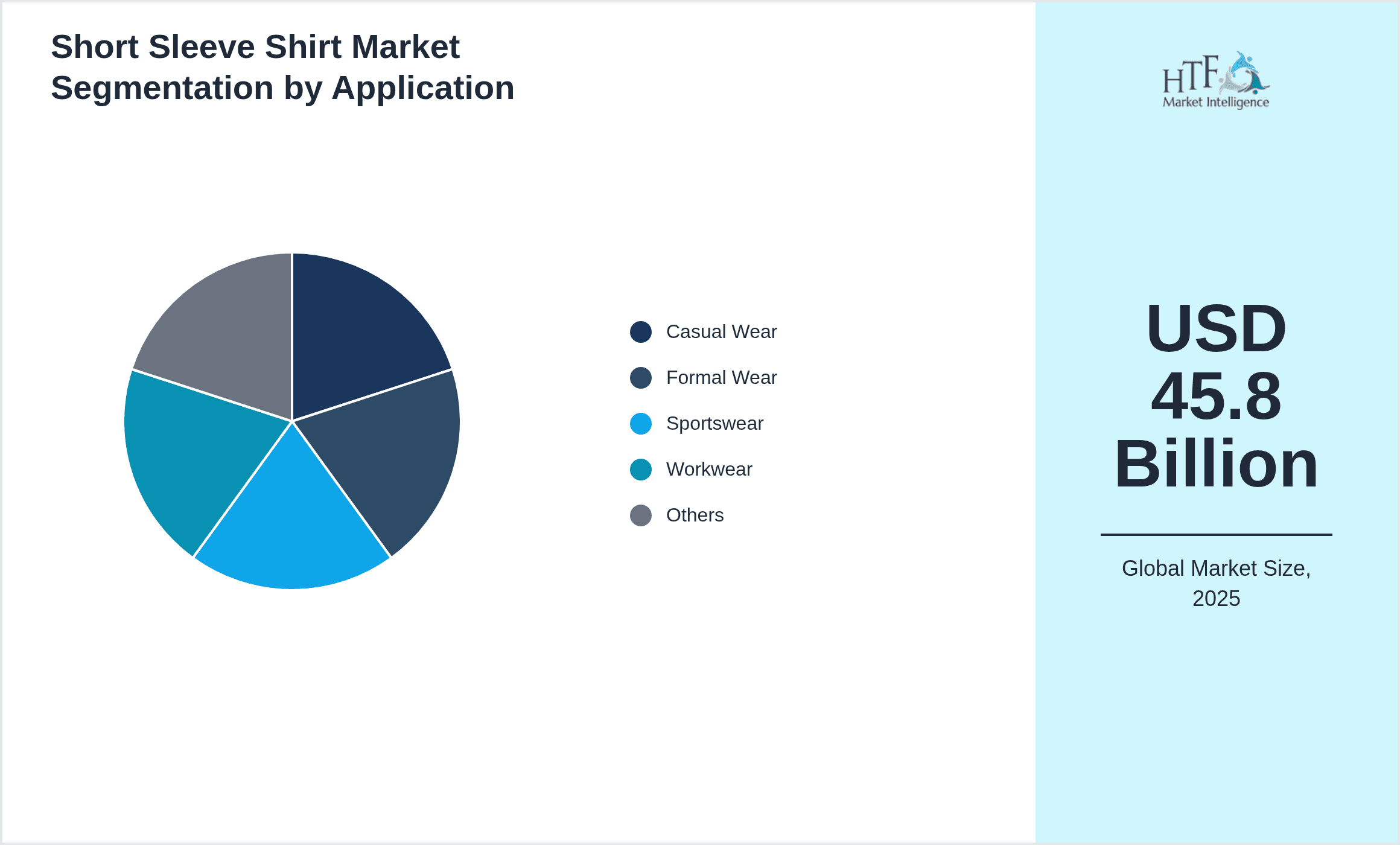
- ◦Casual Wear
- ◦Formal Wear
- ◦Sportswear
- ◦Workwear
- ◦Others
- •By Distribution Channel
- ◦Online Retail
- ◦Department Stores
- ◦Specialty Stores
- ◦Supermarkets/Hypermarkets
- •By Consumer Demographic
- ◦Men
- ◦Women
- ◦Unisex
- ◦Children
Growth Dynamics
- •Rising disposable incomes globally, especially in Asia-Pacific and Latin America, have fueled consumer spending on apparel, propelling demand for short sleeve shirts with an emphasis on casual and sportswear styles that combine comfort and style.
- •Technological innovations in textile manufacturing, such as moisture-wicking and wrinkle-resistant fabrics, have enhanced product appeal, supporting market growth through differentiation and added value for consumers.
- •The expanding e-commerce landscape has enabled brands to reach wider audiences and offer personalized shopping experiences, significantly increasing accessibility and convenience for global consumers.
- •Sustainability initiatives and growing consumer preference for eco-friendly fabrics like organic cotton and recycled materials have driven innovation and market penetration, influencing brand positioning and product development.
- •Urbanization and shifting lifestyle patterns favor casual and versatile clothing, increasing the adoption of short sleeve shirts across diverse demographic segments and geographical regions.
Market Trends
- •Integration of smart textiles and wearable technology in short sleeve shirts is a rising trend, with companies experimenting with health-monitoring fabrics and temperature regulation features.
- •Customization and on-demand manufacturing models are gaining traction, allowing consumers to personalize designs and fit, thereby enhancing customer engagement and reducing inventory costs.
- •Sustainable fashion practices, such as closed-loop recycling and biodegradable fabrics, are increasingly adopted by leading brands to address environmental concerns and regulatory pressures.
- •The casualization of workplace attire is expanding the formal wear segment with hybrid designs that blend comfort and professionalism, broadening market opportunities.
- •Collaborations between fashion brands and influencers on social media platforms are shaping consumer preferences and accelerating trend adoption in the short sleeve shirt market.

Market Opportunities
- •Emerging markets in Asia-Pacific and Latin America present significant growth opportunities due to increasing urban populations and rising middle-class consumer bases seeking fashionable yet affordable apparel.
- •Investment in innovative, eco-friendly fabric technologies offers potential for product differentiation and meeting growing consumer demands for sustainable apparel.
- •Expansion of direct-to-consumer sales channels through digital platforms enables brands to build stronger customer relationships and improve profit margins.
- •Collaborations with sports teams and corporate uniforms provide niche market avenues for specialized short sleeve shirt designs and bulk sales.
- •Leveraging data analytics for trend forecasting and inventory management can optimize product offerings and reduce excess stock, enhancing operational efficiency.
Market Challenges
- •Fluctuating raw material prices, especially cotton and synthetic fibers, create cost volatility impacting profitability and pricing strategies for manufacturers and retailers.
- •Intense competition and market saturation in developed regions pressure companies to continuously innovate and adopt aggressive marketing tactics to maintain market share.
- •Supply chain disruptions due to geopolitical tensions and global pandemics have posed challenges in timely product delivery and cost management.
- •Compliance with diverse international labor and environmental regulations increases operational complexity and costs for global market participants.
- •Rapid changes in fashion trends require agile manufacturing and inventory management to avoid obsolescence and markdown losses.
Regulatory Framework
- •From 2019 to 2024, key international regulations on textile labeling and consumer safety were updated, requiring full disclosure of fabric composition and allergen information, enhancing transparency and consumer protection.
- •Environmental regulations mandating reduced water usage and chemical discharge in textile manufacturing have been increasingly enforced globally, compelling manufacturers to adopt sustainable processes.
- •Trade policies and tariffs have seen adjustments affecting import-export dynamics of apparel products, influencing pricing and regional supply chain strategies.
- •Labor laws emphasizing fair wages and safe working conditions in apparel production countries have been strengthened, impacting operational costs and supplier selection.
- •Government incentives and subsidies promoting sustainable textile innovation have been introduced in several regions, supporting research and adoption of eco-friendly materials.
Market Intelligence
- •12th January 2025, Nike, Inc. launched a new line of short sleeve shirts featuring recycled polyester and organic cotton blends designed for enhanced breathability and sustainability. This product line targets environmentally-conscious consumers and aims to reduce the carbon footprint associated with apparel production while maintaining performance standards. The launch includes digital marketing campaigns emphasizing sustainability and innovation, expected to strengthen Nike's position in the eco-friendly apparel segment. These strategic efforts align with growing global demand for responsible fashion and support Nike's corporate sustainability goals. Source: Official Nike Press Release
- •5th March 2025, Adidas AG introduced an advanced moisture-wicking short sleeve shirt with integrated temperature regulation technology, suitable for both sports and casual wear. The product utilizes proprietary textile innovations to improve athletic performance and comfort, targeting global markets with a focus on Asia-Pacific. Adidas's launch includes partnerships with professional athletes and a multi-channel advertising strategy to drive market penetration. This innovation reflects Adidas's commitment to leveraging technology for competitive advantage in the global apparel market. Source: Adidas Corporate News
- •22nd February 2025, H&M Group announced a strategic partnership with a leading sustainable textile manufacturer to expand its eco-friendly short sleeve shirt offerings globally. The collaboration focuses on sourcing organic and recycled fabrics and scaling production capacity to meet increasing consumer demand for sustainable apparel. H&M plans to integrate these products across its retail network and e-commerce platforms, reinforcing its brand image as a sustainability leader. This initiative signals a broader industry trend towards circular fashion models and responsible manufacturing. Source: H&M Sustainability Report
- •18th April 2025, Uniqlo Co., Ltd. completed the acquisition of a textile technology startup specializing in smart fabric development for casual wear, enhancing its portfolio of innovative short sleeve shirts. The acquisition enables Uniqlo to accelerate R&D in wearable technology and functional apparel, providing unique value propositions to its global customer base. This move supports Uniqlo's strategy to differentiate through product innovation and expand its presence in emerging markets. The integration is expected to result in new product launches within the next fiscal year. Source: Uniqlo Corporate Announcement
Regional Outlook
The North America currently holds a significant share of the market, primarily due to several key factors: increasing consumption rates, a burgeoning population, and robust economic momentum. These elements collectively drive demand, positioning this region as a leader in the market. On the other hand, Asia-Pacific is rapidly emerging as the fastest-growing area within the industry. This remarkable growth can be attributed to swift infrastructure development, the expansion of various industrial sectors, and a marked increase in consumer demand. These dynamics make this region a crucial player in shaping future market growth.
In our report, we cover a comprehensive analysis of the following regions and countries:
- North America
- LATAM
- West Europe
- Central & Eastern Europe
- Northern Europe
- Southern Europe
- East Asia
- Southeast Asia
- South Asia
- Central Asia
- Oceania
- MEA
| Feature | Details |
|---|---|
| Base Year Market Size | USD 45.8 Billion |
| Forecast Year Market Size | USD 110.3 Billion |
| CAGR | 9.3% |
| Forecast Period | 2026 to 2033 |
| YoY Growth | 9.3% |
| Scope of Report | Market is segmented by Fabric Type (Cotton Short Sleeve Shirts, Polyester Short Sleeve Shirts, Blended Fabrics Short Sleeve Shirts, Linen Short Sleeve Shirts, Synthetic Short Sleeve Shirts), Application (Casual Wear, Formal Wear, Sportswear, Workwear, Others), Distribution Channel (Online Retail, Department Stores, Specialty Stores, Supermarkets/Hypermarkets), Consumer Demographic (Men, Women, Unisex, Children) |
| Regions Covered | North America, LATAM, West Europe, Central & Eastern Europe, Northern Europe, Southern Europe, East Asia, Southeast Asia, South Asia, Central Asia, Oceania, MEA |
| Key Companies | Nike, Inc. (United States), Adidas AG (Germany), H&M Group (Sweden), Uniqlo Co., Ltd. (Japan), Levi Strauss & Co. (United States) |
Global Short Sleeve Shirt Market Size, Growth & Revenue 2024-2034 - Table of Contents
Multidisciplinary researcher with 10+ years of experience uncovering insights across diverse domains focused on uncovering insights that drive informed decisions.
Frequently Asked Questions (FAQ):
The Compact Track Loaders market is expected to see value worth 5.3 Billion in 2025.
North America currently leads the market with approximately 45% market share, followed by Europe at 28% and Asia-Pacific at 22%. The remaining regions account for 5% of the global market.
Key growth drivers include increasing construction activities, rising demand for versatile equipment in agriculture, technological advancements in track loader design, and growing preference for compact equipment in urban construction projects.