
Global Tissue Banking Market Size, Growth & Revenue 2025-2034
Global Tissue Banking Market is segmented by Tissue Type (Orthopedic Tissue, Cardiovascular Tissue, Ophthalmic Tissue, Dental Tissue, Skin Tissue), Graft Type (Allograft, Autograft, Xenograft, Synthetic Tissue, Composite Tissue), Service Model (Processing Services, Storage Services, Distribution Services, Testing and Quality Control Services), Preservation Technology (Cryopreservation, Freeze Drying, Hypothermic Storage), and Geography (North America, LATAM, West Europe, Central & Eastern Europe, Northern Europe, Southern Europe, East Asia, Southeast Asia, South Asia, Central Asia, Oceania, MEA)
Pricing
Report Overview
Executive Summary
- •The global tissue banking market involves the systematic collection, processing, preservation, and distribution of human tissues for medical and research applications. It covers multiple tissue types such as orthopedic, cardiovascular, ophthalmic, dental, and skin tissues, used extensively in transplantation and regenerative medicine. The market integrates various graft sources including allograft, autograft, xenograft, synthetic, and composite tissues, each offering distinct clinical benefits. Advanced preservation technologies, such as cryopreservation and sterilization, are employed to maintain tissue viability and safety. Growing prevalence of chronic diseases, increasing geriatric population, and rising demand for minimally invasive surgeries are significant growth drivers. Regulatory oversight and quality standards ensure compliance and safety across tissue banks worldwide. Innovations in tissue engineering and cellular therapies further enhance the market potential. The market is poised for substantial growth driven by technological advancements, expanding healthcare infrastructure, and increasing awareness of tissue transplantation benefits globally.
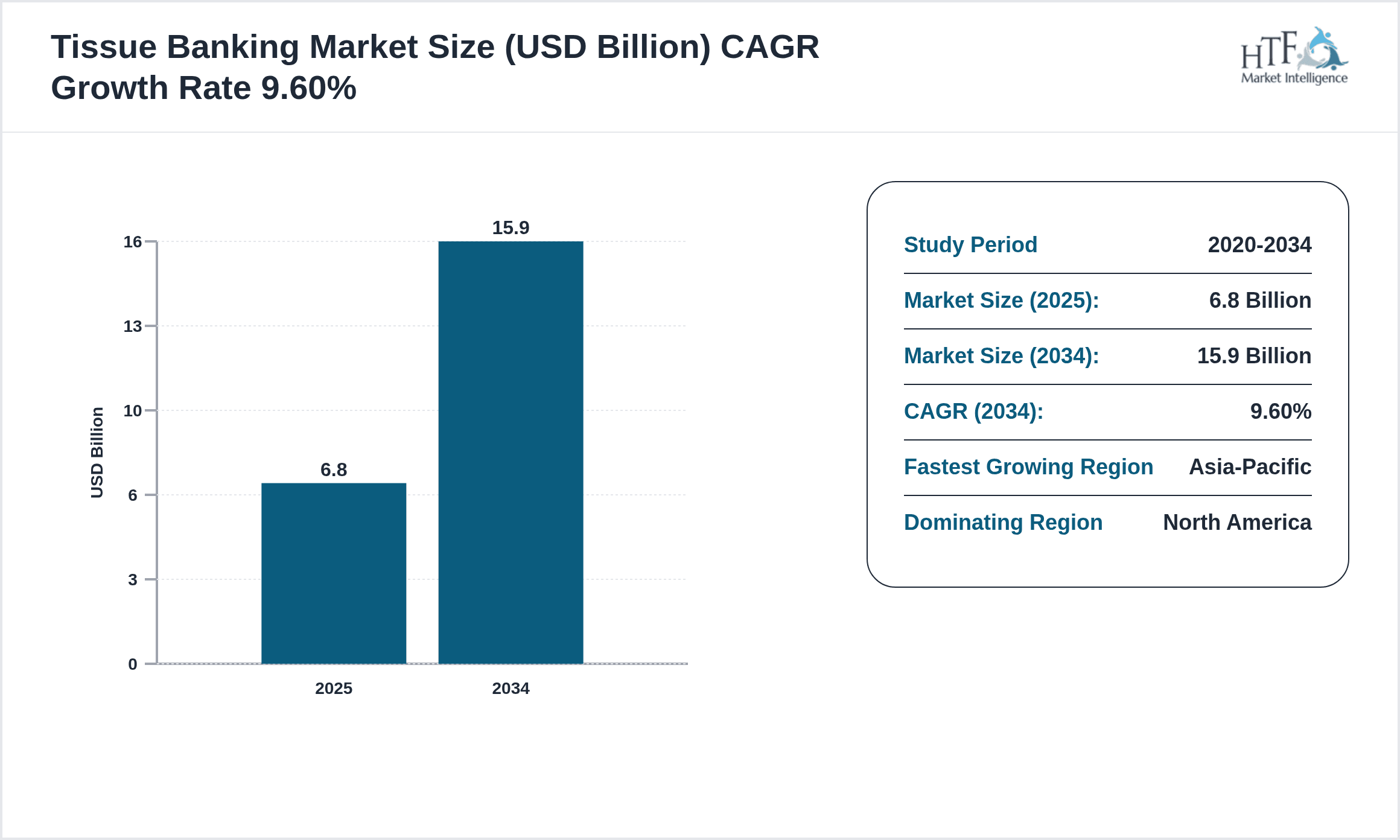
- •Key market highlights include a base market size of USD 6.8 billion in 2025, forecasted to reach USD 15.9 billion by 2034, registering a CAGR of 9.6%. North America dominates due to advanced healthcare infrastructure and stringent regulatory frameworks. Asia-Pacific exhibits the fastest growth propelled by rising healthcare expenditure, increasing surgical procedures, and expanding tissue bank establishments. The allograft segment leads the product type category, while synthetic tissues represent the fastest growing segment owing to innovations in biomaterials and tissue engineering. Applications in orthopedic and cardiovascular tissues hold significant market shares, supported by increasing incidences of related diseases and surgical interventions. These factors collectively contribute to robust market dynamics and expanding opportunities for stakeholders across the value chain.
- •The tissue banking market offers strategic value by enabling improved surgical outcomes, accelerating regenerative medicine adoption, and supporting advanced research initiatives. It serves hospitals, research institutions, and biotechnology companies by providing critical graft materials essential for transplantation and therapeutic procedures. Increasing investments in tissue banking infrastructure, coupled with evolving regulatory landscapes, enhance market credibility and encourage stakeholder participation. The market's growth trajectory also emphasizes sustainable practices and ethical procurement standards, fostering patient safety and donor confidence. For investors and industry players, the market represents a vital segment with significant potential for technological innovation, geographic expansion, and service diversification, thereby shaping the future of tissue-based medical therapies worldwide.
Competitive Landscape
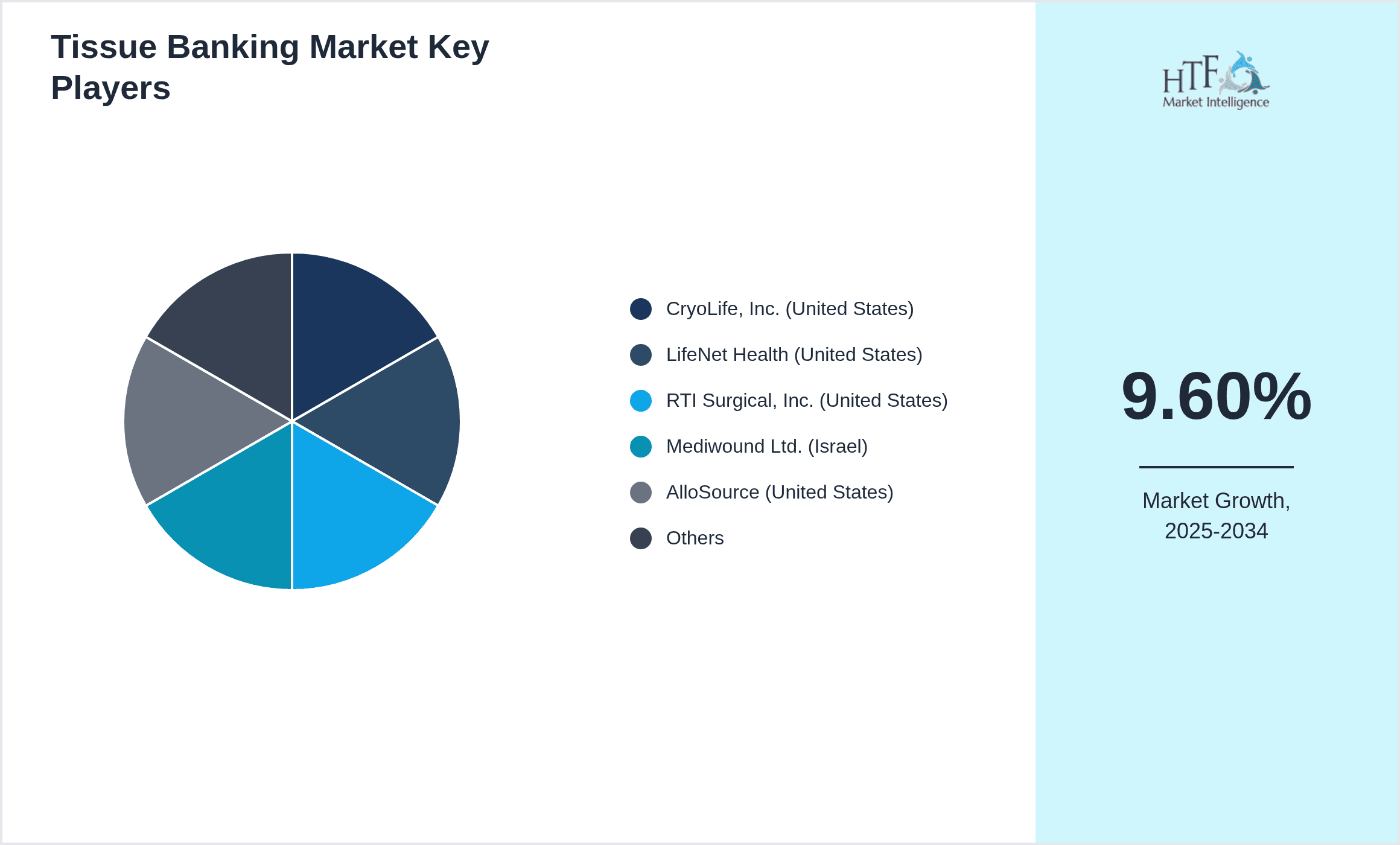
The global tissue banking market is characterized by a competitive environment with numerous key players leveraging innovation, strategic partnerships, and mergers & acquisitions to strengthen their market position. Companies focus on expanding tissue bank networks, enhancing processing capabilities, and investing in research and development to introduce advanced tissue preservation technologies. Market participants adopt competitive pricing strategies and diversified product portfolios to address heterogeneous customer needs across regions. Strategic alliances with healthcare providers, research institutions, and government bodies facilitate market penetration and compliance with stringent regulatory standards. The emphasis on quality assurance and certification drives differentiation while barriers such as high capital investment and regulatory complexity influence market entry. Regional competition varies with North America showcasing mature infrastructure, Europe emphasizing regulatory compliance, and Asia-Pacific focusing on rapid capacity expansion. Future competitive trends indicate increasing consolidation, innovation in synthetic and composite tissues, and digital integration for tissue traceability and inventory management, fostering a dynamic and evolving market landscape.
Leading Companies in Tissue Banking Market
- •CryoLife, Inc. (United States)
- •LifeNet Health (United States)
- •RTI Surgical, Inc. (United States)
- •Mediwound Ltd. (Israel)
- •AlloSource (United States)
- •BRT Tissue Bank (United States)
- •MTF Biologics (United States)
- •Osiris Therapeutics, Inc. (United States)
- •AxoGen, Inc. (United States)
- •Cook Biotech Inc. (United States)
- •Celltex Therapeutics Corporation (United States)
- •Tissue Regeneration Systems (United States)
- •Lifenet Health (United States)
- •RTI Surgical (United States)
- •Osiris Therapeutics (United States)
- •StemCyte, Inc. (United States)
- •AxoGen (United States)
- •BioTime, Inc. (United States)
- •Organogenesis Inc. (United States)
- •Stryker Corporation (United States)
- •Medtronic plc (Ireland)
- •Zimmer Biomet Holdings, Inc. (United States)
- •Smith & Nephew plc (United Kingdom)
- •Baxter International Inc. (United States)
- •Thermo Fisher Scientific Inc. (United States)
Market Breakdown
- •By Tissue Type
- ◦Orthopedic Tissue
- ◦Cardiovascular Tissue
- ◦Ophthalmic Tissue
- ◦Dental Tissue
- ◦Skin Tissue
- •By Graft Type
- ◦Allograft
- ◦Autograft
- ◦Xenograft
- ◦Synthetic Tissue
- ◦Composite Tissue
- •By Service Model
- ◦Processing Services
- ◦Storage Services
- ◦Distribution Services
- ◦Testing and Quality Control Services
- •By Preservation Technology
- ◦Cryopreservation
- ◦Freeze Drying
- ◦Hypothermic Storage
Growth Dynamics
The global tissue banking market growth is primarily driven by increasing prevalence of chronic diseases such as cardiovascular disorders and orthopedic conditions that require tissue transplants. Advancements in preservation technologies like cryopreservation have enhanced graft viability and availability, facilitating wider clinical adoption. Additionally, rising geriatric populations globally are contributing to higher demand for tissue-based therapies. Government initiatives promoting organ and tissue donation awareness further amplify market expansion. The growing focus on regenerative medicine and minimally invasive surgical techniques also supports increased utilization of tissue banking services. Furthermore, investments in healthcare infrastructure in developing regions enable better access to tissue banking facilities, driving market penetration and revenue growth.
Market Trends
A prominent trend in the tissue banking market is the increasing integration of digital technologies such as blockchain and IoT for enhanced traceability and inventory management, ensuring graft safety and regulatory compliance. Innovations in synthetic and composite tissue engineering are gaining momentum, providing alternatives to traditional grafts and addressing donor shortages. There is also a growing emphasis on personalized medicine, with customized tissue grafts tailored to patient-specific needs. Additionally, collaborations between tissue banks and biopharmaceutical companies are fostering research and development of novel cellular therapies. Sustainability and ethical sourcing practices are becoming central to market operations, reflecting heightened consumer and regulatory scrutiny.
Market Opportunities
Significant opportunities exist in emerging markets due to rising healthcare expenditure and increasing awareness about tissue transplantation benefits. Expansion of tissue banking infrastructure in Asia-Pacific and Latin America presents untapped potential for market players. The development of synthetic and bioengineered tissues offers avenues for innovation and product diversification. Strategic partnerships with hospitals and research institutions can enhance service reach and clinical adoption. Additionally, advancements in preservation technologies that extend graft shelf life create new business models and revenue streams. The growing demand for dental and ophthalmic tissues particularly in aging populations offers niche opportunities for specialized tissue banks.
Market Challenges
The tissue banking market faces challenges including stringent regulatory requirements that vary across regions, complicating compliance and increasing operational costs. Limited availability of donor tissues and ethical concerns regarding tissue procurement pose significant hurdles. High capital investment for establishing and maintaining tissue banks restricts market entry and expansion. Additionally, complex logistics and storage conditions require advanced infrastructure, impacting overall cost structures. Market fragmentation and lack of standardized protocols across countries can lead to quality inconsistencies. Furthermore, competition from synthetic tissue substitutes and emerging regenerative therapies necessitates continuous innovation to maintain market relevance.
Regulatory Framework
From 2020 to 2025, the global tissue banking market has been shaped by evolving regulatory frameworks designed to ensure safety, quality, and ethical procurement of human tissues. Key regulations include the U.S. FDA’s Human Cells, Tissues, and Cellular and Tissue-Based Products (HCT/P) regulations that mandate strict compliance for tissue processing and distribution. The European Union’s Tissue and Cells Directives (2004/23/EC) establish rigorous standards for donor screening, testing, and traceability, impacting European tissue banks significantly. Additionally, the World Health Organization provides global guidance on tissue banking practices promoting harmonization. National bodies in Asia-Pacific and Latin America have introduced region-specific mandates to address growing tissue transplantation demand. These regulations enforce licensing requirements, quality management systems, and adverse event reporting. Compliance facilitates market entry and builds patient confidence, but also increases operational complexity and costs. Continuous updates in regulatory policies reflect advancements in tissue engineering and transplantation technologies, underscoring the critical role of governance in market development.
Market Intelligence
- •15th January 2025, CryoLife, Inc. announced the launch of a next-generation cryopreservation system designed to enhance tissue viability for extended periods. This system integrates advanced temperature control and monitoring technologies, targeting cardiovascular and orthopedic tissue preservation. The innovation aims to reduce graft rejection rates and improve patient outcomes. CryoLife’s strategic objective includes expanding its footprint in the Asia-Pacific region by collaborating with leading hospitals and tissue banks. This product launch is expected to drive growth by addressing critical preservation challenges and meeting increasing demand for high-quality tissue grafts. Source: CryoLife Official Press Release.
- •28th March 2025, LifeNet Health introduced an AI-powered inventory management platform to optimize tissue bank operations. This platform utilizes predictive analytics to forecast tissue demand, streamline storage, and reduce wastage. It enhances traceability and regulatory compliance through blockchain-enabled record keeping. LifeNet Health aims to improve operational efficiency and patient safety while reducing costs. The technology adoption positions the company as a leader in digital transformation within the tissue banking sector. The market anticipates broader adoption of such innovations to revolutionize tissue bank management globally. Source: LifeNet Health Corporate Announcement.
- •10th May 2025, RTI Surgical, Inc. completed the acquisition of a regional tissue bank in Southeast Asia, expanding its geographic presence and service capabilities. The acquisition includes state-of-the-art processing facilities and a robust distribution network. RTI Surgical plans to leverage this acquisition to meet rising demand in emerging markets and introduce advanced synthetic tissue products. This strategic move aligns with the company’s growth strategy to diversify its product portfolio and enhance market penetration globally. The consolidation is expected to create synergies in R&D and operational efficiencies, strengthening competitive positioning. Source: RTI Surgical Press Release.
- •20th July 2025, Medtronic plc announced a collaborative partnership with a leading biotechnology firm to co-develop composite tissue grafts integrating synthetic scaffolds with biological tissues. This initiative aims to address limitations of current graft materials and improve therapeutic outcomes in orthopedic and cardiovascular surgeries. The collaboration combines Medtronic’s expertise in medical devices with innovative tissue engineering technologies. Expected to launch initial products by 2027, the partnership seeks to capture emerging market opportunities and set new standards in tissue banking. This development highlights the increasing focus on interdisciplinary innovation within the market. Source: Medtronic Corporate Website.
Regional Outlook
The North America currently holds a significant share of the market, primarily due to several key factors: increasing consumption rates, a burgeoning population, and robust economic momentum. These elements collectively drive demand, positioning this region as a leader in the market. On the other hand, Asia-Pacific is rapidly emerging as the fastest-growing area within the industry. This remarkable growth can be attributed to swift infrastructure development, the expansion of various industrial sectors, and a marked increase in consumer demand. These dynamics make this region a crucial player in shaping future market growth.
In our report, we cover a comprehensive analysis of the following regions and countries:
- North America
- LATAM
- West Europe
- Central & Eastern Europe
- Northern Europe
- Southern Europe
- East Asia
- Southeast Asia
- South Asia
- Central Asia
- Oceania
- MEA
| Feature | Details |
|---|---|
| Base Year Market Size | USD 6.8 Billion |
| Forecast Year Market Size | USD 15.9 Billion |
| CAGR | 9.6% |
| Forecast Period | 2026 to 2033 |
| YoY Growth | 9.2% |
| Scope of Report | Market is segmented by Tissue Type (Orthopedic Tissue, Cardiovascular Tissue, Ophthalmic Tissue, Dental Tissue, Skin Tissue), Graft Type (Allograft, Autograft, Xenograft, Synthetic Tissue, Composite Tissue), Service Model (Processing Services, Storage Services, Distribution Services, Testing and Quality Control Services), Preservation Technology (Cryopreservation, Freeze Drying, Hypothermic Storage) |
| Regions Covered | North America, LATAM, West Europe, Central & Eastern Europe, Northern Europe, Southern Europe, East Asia, Southeast Asia, South Asia, Central Asia, Oceania, MEA |
| Key Companies | CryoLife, Inc. (United States), LifeNet Health (United States), RTI Surgical, Inc. (United States), Mediwound Ltd. (Israel), AlloSource (United States), BRT Tissue Bank (United States), MTF Biologics (United States), Osiris Therapeutics, Inc. (United States), AxoGen, Inc. (United States), Cook Biotech Inc. (United States), Celltex Therapeutics Corporation (United States), Tissue Regeneration Systems (United States), Lifenet Health (United States), RTI Surgical (United States), Osiris Therapeutics (United States), StemCyte, Inc. (United States), AxoGen (United States), BioTime, Inc. (United States), Organogenesis Inc. (United States), Stryker Corporation (United States), Medtronic plc (Ireland), Zimmer Biomet Holdings, Inc. (United States), Smith & Nephew plc (United Kingdom), Baxter International Inc. (United States), Thermo Fisher Scientific Inc. (United States) |
Global Tissue Banking Market Size, Growth & Revenue 2025-2034 - Table of Contents
Frequently Asked Questions (FAQ):
The Compact Track Loaders market is projected to grow at a CAGR of 6.8% from 2025 to 2030, driven by increasing demand in construction and agricultural sectors.
North America currently leads the market with approximately 45% market share, followed by Europe at 28% and Asia-Pacific at 22%. The remaining regions account for 5% of the global market.
Key growth drivers include increasing construction activities, rising demand for versatile equipment in agriculture, technological advancements in track loader design, and growing preference for compact equipment in urban construction projects.