
Global Relaxation Beverage Market - Outlook 2024-2034
Global Relaxation Beverage Market is segmented by Product Type (Herbal Infusions, CBD-Infused Drinks, Adaptogenic Beverages, Functional Teas, Non-Alcoholic Relaxants), Application (Stress Relief, Sleep Aid, Mood Enhancement, Energy Relaxation, Wellness), Distribution Channel (Supermarkets/Hypermarkets, Specialty Stores, E-commerce, Convenience Stores, Health & Wellness Stores), Packaging Type (Bottled Beverages, Canned Drinks, Ready-to-Drink Pouches, Loose Leaf/Tea Bags, Powdered Mixes), and Geography (North America, LATAM, West Europe, Central & Eastern Europe, Northern Europe, Southern Europe, East Asia, Southeast Asia, South Asia, Central Asia, Oceania, MEA)
Pricing
Report Overview
Executive Summary
- •The global Relaxation Beverage market is defined by the production and consumption of beverages specifically designed to promote relaxation, reduce stress, improve mood, and aid sleep. This market includes an array of products such as herbal infusions, CBD-infused drinks, adaptogenic beverages, functional teas, and non-alcoholic relaxants that are formulated with natural and functional ingredients to cater to consumers looking for holistic wellness solutions. The industry spans product research and development, manufacturing, distribution, and retail across multiple channels worldwide. It targets diverse applications including stress relief, sleep enhancement, mood improvement, energy relaxation, and overall wellness. The market's boundaries encompass natural and functional beverage categories, regulatory compliance, and evolving consumer preferences that drive innovation and adoption globally. Increasing health consciousness, rising mental health awareness, and demand for non-pharmaceutical relaxation options are key enablers shaping the industry landscape, while technological advancements and ingredient diversification contribute to market expansion and product differentiation.
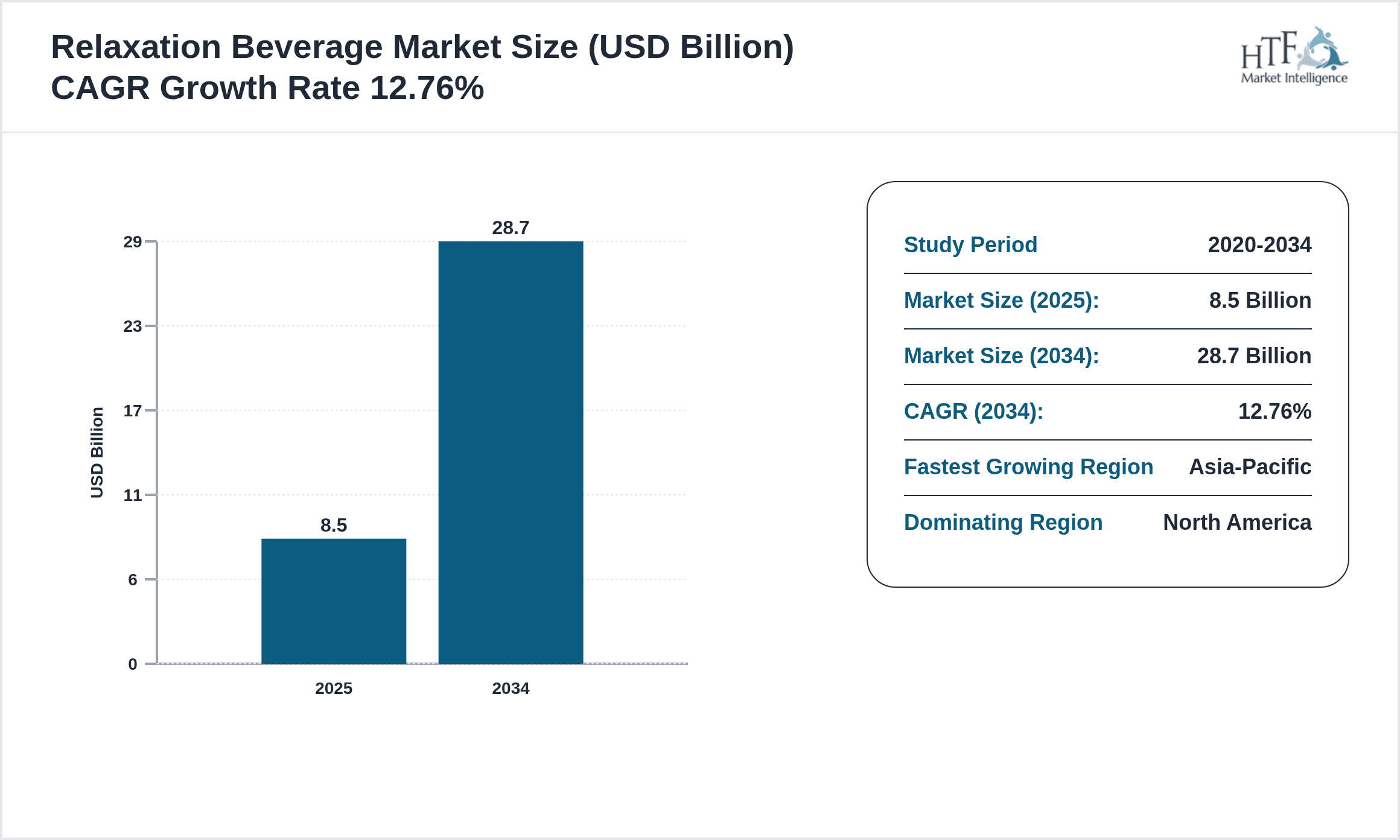
- •Key highlights of the market include a robust CAGR of approximately 12.76% forecasted from 2024 to 2034, with the market size expected to grow from USD 8.5 Billion in 2024 to USD 28.7 Billion by 2034. North America currently dominates the market, driven by high consumer awareness and advanced distribution networks, while Asia-Pacific is identified as the fastest-growing region due to increasing urbanization and rising disposable incomes. Herbal infusions hold the largest share among product types, benefiting from traditional usage and strong consumer trust. Meanwhile, CBD-infused drinks are witnessing the fastest growth, propelled by legalization trends and expanding product portfolios. Applications such as stress relief and sleep aid dominate the usage segments, reflecting the growing demand for mental wellness and physical relaxation. These data points highlight significant growth potential and underscore the strategic importance of innovation, regional expansion, and regulatory compliance.
- •The relaxation beverage market presents a compelling value proposition by offering natural, functional alternatives to conventional relaxation methods, thus aligning with the wellness industry's growth trajectory. Its strategic importance lies in addressing the global surge in stress-related disorders, sleep deficiencies, and lifestyle-induced health challenges. For stakeholders including manufacturers, distributors, retailers, and investors, this market offers expansive growth opportunities through product innovation, cross-regional expansion, and consumer education. The integration of scientifically backed ingredients and compliance with evolving health regulations further amplifies market attractiveness. Additionally, the rise of digital marketing and e-commerce platforms facilitates wider product accessibility. Overall, the relaxation beverage market serves as a vital component in the broader functional beverage landscape, contributing to the evolving consumer focus on mental health and holistic well-being.
Competitive Landscape
The global relaxation beverage market is highly competitive, characterized by a mix of established multinational corporations and emerging niche players focused on innovation, product differentiation, and regional expansion. Market leaders leverage extensive R&D capabilities to develop novel ingredients and formulations that cater to evolving consumer preferences for natural and functional wellness products. Competitive strategies include strategic partnerships, product line extensions, and acquisitions to consolidate market position and expand geographic reach. Pricing strategies vary, with premiumization becoming a key trend as consumers demand high-quality, effective relaxation solutions. Distribution channels are diversified, spanning traditional retail, specialty stores, and rapidly growing e-commerce platforms. Branding and marketing efforts emphasize health benefits and lifestyle alignment, intensifying rivalry. The market faces moderate entry barriers due to regulatory complexities and the necessity for scientific substantiation, which favors established players but allows innovation-driven startups to capture niche segments. Future competition will increasingly hinge on technological advancements, sustainability practices, and consumer engagement.
Companies Shaping the Relaxation Beverage Market
- •Nestlé S.A. (Switzerland)
- •The Coca-Cola Company (United States)
- •PepsiCo, Inc. (United States)
- •Anheuser-Busch InBev (Belgium)
- •Keurig Dr Pepper Inc. (United States)
- •Hain Celestial Group, Inc. (United States)
- •Celestial Seasonings, Inc. (United States)
- •Recess (United States)
- •Calm Co. (United States)
- •Suntory Beverage & Food Limited (Japan)
- •Glanbia plc (Ireland)
- •Keurig Green Mountain (United States)
- •Kombucha Wonder Drink (United States)
- •Pukka Herbs (United Kingdom)
- •Charlotte's Web Holdings, Inc. (United States)
- •Vital Proteins (United States)
- •Hermann's (Germany)
- •Four Sigmatic (Finland)
- •Bai Brands (United States)
- •Yogi Tea (United States)
- •The Republic of Tea (United States)
- •Guayaki Sustainable Rainforest Products (United States)
- •Bubly (United States)
- •Numi Organic Tea (United States)
- •Moon Juice (United States)

Market Breakdown
- •By Product Type
- ◦Herbal Infusions
- ◦CBD-Infused Drinks
- ◦Adaptogenic Beverages
- ◦Functional Teas
- ◦Non-Alcoholic Relaxants
- •By Application
- ◦Stress Relief
- ◦Sleep Aid
- ◦Mood Enhancement
- ◦Energy Relaxation
- ◦Wellness
- •By Distribution Channel
- ◦Supermarkets/Hypermarkets
- ◦Specialty Stores
- ◦E-commerce
- ◦Convenience Stores
- ◦Health & Wellness Stores
- •By Packaging Type
- ◦Bottled Beverages
- ◦Canned Drinks
- ◦Ready-to-Drink Pouches
- ◦Loose Leaf/Tea Bags
- ◦Powdered Mixes
Growth Dynamics
The global relaxation beverage market is propelled by increasing consumer awareness of mental wellness and rising stress levels worldwide, driving demand for natural stress relief solutions. The growing focus on holistic health and self-care routines encourages consumers to adopt beverages infused with functional ingredients like adaptogens and CBD. Additionally, the shift towards plant-based and organic products aligns with broader health trends, supporting market growth. Expansion of e-commerce platforms facilitates greater accessibility and product variety, enhancing consumer reach. Furthermore, investments in product innovation and diversification by key players foster continuous growth by attracting new customer segments and addressing varying preferences across regions.

Market Trends
Emerging trends in the relaxation beverage market include the rising incorporation of cannabinoids such as CBD, driven by regulatory relaxations in various countries. There is also a marked consumer preference for adaptogenic herbs like ashwagandha and reishi mushroom, reflecting a shift towards traditional and functional ingredients. The market is witnessing premiumization, where consumers seek high-quality, artisanal beverages with transparent sourcing. Brands are leveraging sustainable packaging and ethical sourcing to appeal to environmentally conscious buyers. Additionally, the integration of digital marketing and influencer partnerships is reshaping consumer engagement, accelerating brand visibility and adoption in key demographics.

Market Opportunities
Expanding into emerging markets such as Asia-Pacific and Latin America offers significant growth opportunities due to increasing urbanization, disposable incomes, and health awareness. The development of new formulations combining relaxation benefits with additional functional properties like immunity boosting or cognitive enhancement can capture broader consumer interest. Investment in clean label and organic certifications enhances product credibility and market penetration. Collaborations between beverage companies and wellness brands can foster innovation and diversify product portfolios. Furthermore, leveraging direct-to-consumer sales channels and subscription models can improve customer loyalty and steady revenue streams.
Market Challenges
The relaxation beverage market faces challenges including regulatory uncertainties surrounding novel ingredients like CBD, which complicate product approval and distribution in various regions. High product development costs and the need for scientific validation to substantiate health claims can be barriers for smaller players. Consumer skepticism due to lack of standardized dosage and efficacy data impacts market trust. Additionally, competition from traditional pharmaceuticals and alternative relaxation methods limits market penetration in some demographics. Supply chain disruptions, fluctuating raw material prices, and sustainability concerns also pose operational challenges that industry participants must address to maintain growth trajectories.
Regulatory Framework
From 2019 to 2024, regulatory frameworks governing relaxation beverages have evolved significantly, especially concerning the use of cannabinoids and herbal supplements. Various countries have implemented stricter labeling requirements, quality control standards, and ingredient restrictions to ensure consumer safety. The U.S. FDA and European Food Safety Authority (EFSA) have issued guidelines on permissible ingredient concentrations and health claims, impacting product formulation and marketing. Additionally, several regions have introduced regulations addressing sustainability and packaging waste, influencing production processes. Compliance with local and international food safety standards such as HACCP and GMP remains mandatory. These regulatory developments necessitate ongoing monitoring and adaptation by manufacturers to maintain market access and consumer trust.
Market Intelligence
- •15th March 2024, Nestlé S.A. launched a new line of adaptogenic herbal infusions targeting stress relief and sleep enhancement, featuring organic ashwagandha and chamomile. This product line aims at health-conscious consumers seeking natural relaxation solutions, leveraging Nestlé's robust distribution network to expand global reach. The launch aligns with increasing demand for functional beverages and incorporates sustainable packaging initiatives to reduce environmental impact. Nestlé's strategic focus on wellness-oriented product innovation is expected to strengthen its position in the relaxation beverage market and stimulate category growth.
- •10th October 2023, The Coca-Cola Company introduced a CBD-infused non-alcoholic relaxant under its expanding portfolio of functional drinks. This innovation targets millennial and Gen Z consumers in regions permitting CBD usage, combining hemp extracts with natural flavors and adaptogens. The product launch is part of Coca-Cola’s broader strategy to diversify offerings and capitalize on rising consumer interest in mental wellness beverages. It also demonstrates the company's commitment to regulatory compliance and market trend responsiveness, positioning it competitively in the evolving functional beverage sector.
- •Recent market developments and strategic initiatives are continuously tracked through industry publications, company announcements, and regulatory filings. For the most current information, stakeholders are advised to monitor official corporate communications and recognized market intelligence platforms.
- •Recent market developments and strategic initiatives are continuously tracked through industry publications, company announcements, and regulatory filings. For the most current information, stakeholders are advised to monitor official corporate communications and recognized market intelligence platforms.
Regional Outlook
The North America currently holds a significant share of the market, primarily due to several key factors: increasing consumption rates, a burgeoning population, and robust economic momentum. These elements collectively drive demand, positioning this region as a leader in the market. On the other hand, Asia-Pacific is rapidly emerging as the fastest-growing area within the industry. This remarkable growth can be attributed to swift infrastructure development, the expansion of various industrial sectors, and a marked increase in consumer demand. These dynamics make this region a crucial player in shaping future market growth.
In our report, we cover a comprehensive analysis of the following regions and countries:
- North America
- LATAM
- West Europe
- Central & Eastern Europe
- Northern Europe
- Southern Europe
- East Asia
- Southeast Asia
- South Asia
- Central Asia
- Oceania
- MEA
| Feature | Details |
|---|---|
| Base Year Market Size | USD 8.5 Billion |
| Forecast Year Market Size | USD 28.7 Billion |
| CAGR | 12.76% |
| Forecast Period | 2026 to 2033 |
| YoY Growth | 12.05% |
| Scope of Report | Market is segmented by Product Type (Herbal Infusions, CBD-Infused Drinks, Adaptogenic Beverages, Functional Teas, Non-Alcoholic Relaxants), Application (Stress Relief, Sleep Aid, Mood Enhancement, Energy Relaxation, Wellness), Distribution Channel (Supermarkets/Hypermarkets, Specialty Stores, E-commerce, Convenience Stores, Health & Wellness Stores), Packaging Type (Bottled Beverages, Canned Drinks, Ready-to-Drink Pouches, Loose Leaf/Tea Bags, Powdered Mixes) |
| Regions Covered | North America, LATAM, West Europe, Central & Eastern Europe, Northern Europe, Southern Europe, East Asia, Southeast Asia, South Asia, Central Asia, Oceania, MEA |
| Key Companies | Nestlé S.A. (Switzerland), The Coca-Cola Company (United States), PepsiCo, Inc. (United States), Anheuser-Busch InBev (Belgium), Keurig Dr Pepper Inc. (United States), Hain Celestial Group, Inc. (United States), Celestial Seasonings, Inc. (United States), Recess (United States), Calm Co. (United States), Suntory Beverage & Food Limited (Japan), Glanbia plc (Ireland), Keurig Green Mountain (United States), Kombucha Wonder Drink (United States), Pukka Herbs (United Kingdom), Charlotte's Web Holdings, Inc. (United States), Vital Proteins (United States), Hermann's (Germany), Four Sigmatic (Finland), Bai Brands (United States), Yogi Tea (United States), The Republic of Tea (United States), Guayaki Sustainable Rainforest Products (United States), Bubly (United States), Numi Organic Tea (United States), Moon Juice (United States) |
Global Relaxation Beverage Market - Outlook 2024-2034 - Table of Contents
Frequently Asked Questions (FAQ):
The Compact Track Loaders market is expected to see value worth 5.3 Billion in 2025.
North America currently leads the market with approximately 45% market share, followed by Europe at 28% and Asia-Pacific at 22%. The remaining regions account for 5% of the global market.
Key growth drivers include increasing construction activities, rising demand for versatile equipment in agriculture, technological advancements in track loader design, and growing preference for compact equipment in urban construction projects.