
Southeast Asia Functional Drinks Market Size, Growth & Revenue 2025-2034
Southeast Asia Functional Drinks Market is segmented by Product Type (Vitamin-Enriched Functional Drinks, Herbal Functional Drinks, Protein-Based Functional Drinks, Electrolyte-Based Drinks, Probiotic Functional Drinks), Application (Energy Drinks, Sports Drinks, Nutritional Supplements, Relaxation Drinks, Digestive Health Drinks), Distribution Channel (Modern Retail, Convenience Stores, E-Commerce, Traditional Trade), Packaging Type (Cans, Bottles, Tetra Pak, Pouches), and Geography (Singapore, Malaysia, Thailand, Indonesia, Vietnam, Philippines, Others)
Pricing
Report Overview
Executive Summary
- •The Southeast Asia Functional Drinks market is a dynamic segment within the beverage industry, characterized by a wide array of products formulated to deliver health benefits such as energy boosting, enhanced hydration, immune support, digestive health, and relaxation. The scope of this market includes energy drinks, sports drinks, vitamin-enriched beverages, herbal drinks, protein-based supplements, electrolyte drinks, and probiotic formulations. These products cater to a diverse consumer base including athletes, working professionals, and health-conscious individuals seeking convenient and effective ways to supplement their diet and lifestyle. The functional drinks value chain starts from sourcing quality natural and synthetic ingredients, followed by formulation, manufacturing, packaging, and distribution through retail, online, and traditional channels. Growing trends such as natural and organic ingredients, sugar reduction, and innovative flavors are shaping product development. The market's growth is fueled by increasing urbanization, rising disposable incomes, and widespread health awareness across Southeast Asia's populous countries such as Indonesia, Thailand, Vietnam, Philippines, and Malaysia. Regulatory frameworks governing health claims, product safety, and labeling standards are evolving to ensure consumer protection. The rising consumer demand for clean-label, convenient, and multifunctional beverages presents significant opportunities for manufacturers and new entrants, positioning the Southeast Asia Functional Drinks market as a high-growth and competitive space over the forecast period to 2034.
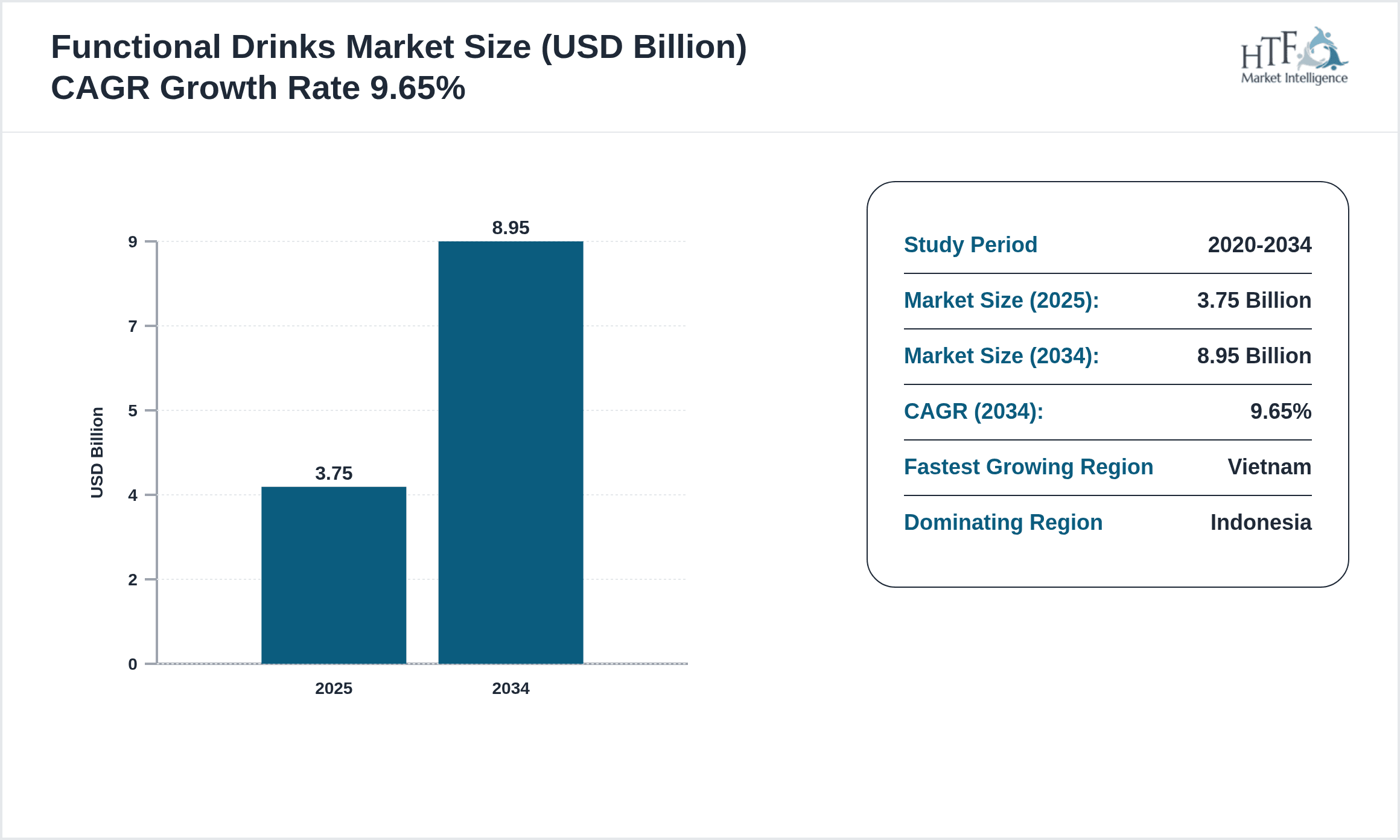
- •Key market highlights include a base market size of USD 3.75 Billion in 2025, with a robust forecasted growth to USD 8.95 Billion by 2034, representing a CAGR of 9.65%. The market witnessed steady expansion since 2020, driven primarily by rising health consciousness and increased consumer spending on wellness products. Vitamin-enriched drinks currently lead the product category, while probiotic drinks are identified as the fastest growing segment due to escalating interest in gut health. Indonesia dominates the market in terms of revenue contribution, whereas Vietnam is the fastest growing country fueled by rapid urbanization and increasing adoption of functional beverages among younger demographics.
- •The value proposition of the Southeast Asia Functional Drinks market lies in its ability to offer consumers convenient, health-enhancing beverage options that align with evolving lifestyle needs. This market holds strategic importance for beverage manufacturers, health supplement companies, and retail distributors aiming to capitalize on the convergence of health trends and consumer demand for functional nutrition. Additionally, it offers investors opportunities in product innovation, regional expansion, and brand differentiation through clean-label and natural ingredient portfolios. As Southeast Asia’s middle-class population grows, the functional drinks sector is set to become an integral part of the region’s health and wellness landscape, contributing significantly to economic growth and employment within the beverage industry ecosystem.
Competitive Landscape
The Southeast Asia Functional Drinks market is highly competitive, featuring a mix of multinational corporations, regional manufacturers, and emerging local brands. Market dynamics are driven by innovation in product formulations, strategic partnerships, and aggressive marketing campaigns to capture growing consumer segments. Companies employ diverse competitive strategies including portfolio diversification, investment in R&D for natural and organic ingredients, and expansion into e-commerce and modern trade channels. Product differentiation is achieved through unique flavor profiles, functional benefits targeting specific health concerns, and clean-label claims. Pricing strategies are calibrated to balance affordability with premium positioning in urban centers. Distribution channels are optimized to reach both large metropolitan and tier-2 city consumers, with an increasing emphasis on digital platforms. Barriers to entry include strict regulatory compliance, high capital investment for quality manufacturing, and established brand loyalty among consumers. Regional competition intensifies as local players leverage cultural preferences and cost advantages, while global players bring innovation and scale. Future competitive trends indicate increased mergers and acquisitions, co-branding initiatives, and sustainability integration to meet consumer expectations and regulatory demands, positioning the market for sustained growth and consolidation over the next decade.
Leading Companies in Functional Drinks Market
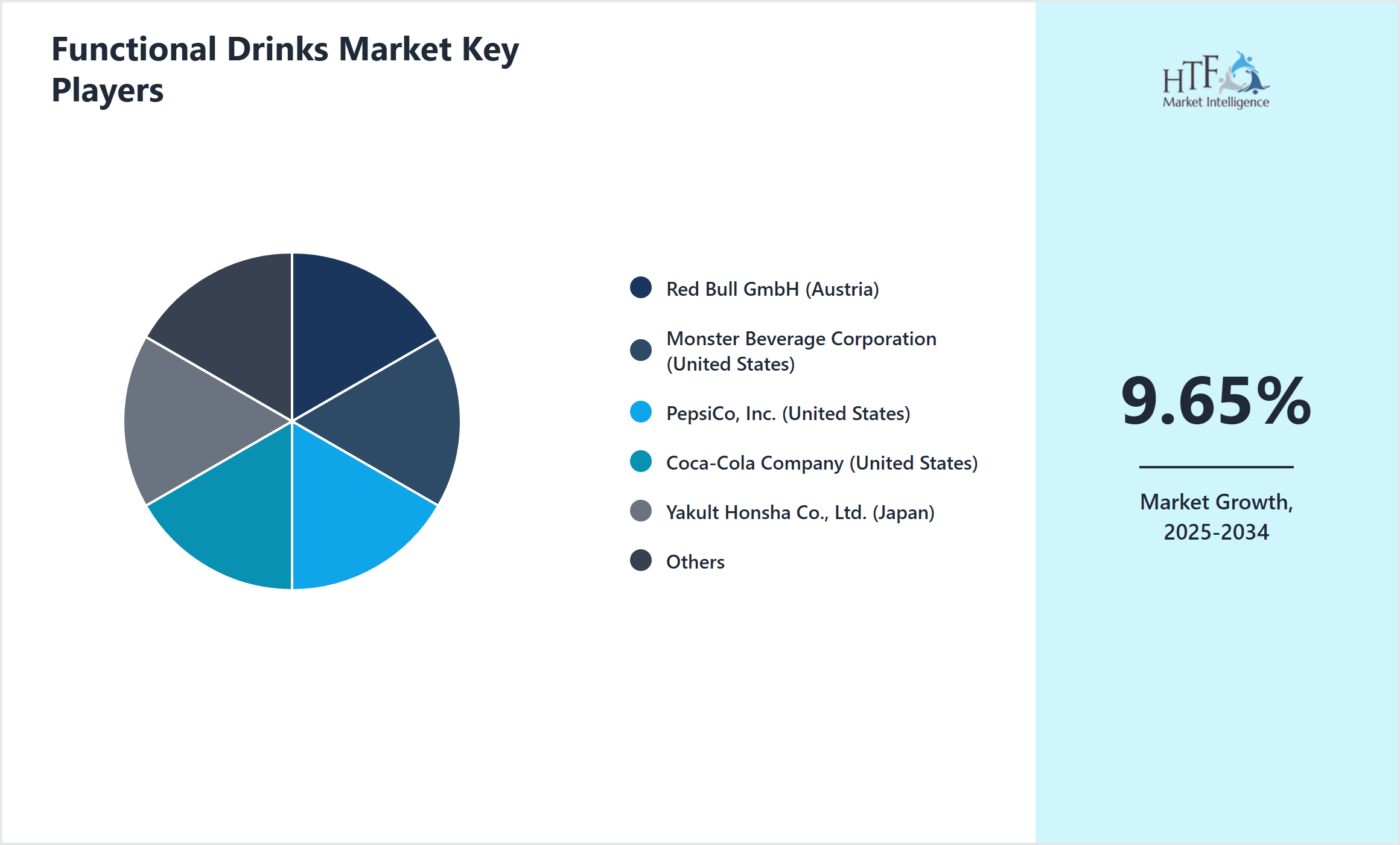
- •Red Bull GmbH (Austria)
- •Monster Beverage Corporation (United States)
- •PepsiCo, Inc. (United States)
- •Coca-Cola Company (United States)
- •Yakult Honsha Co., Ltd. (Japan)
- •Danone S.A. (France)
- •Amway Corporation (United States)
- •Ito En, Ltd. (Japan)
- •Tingyi (Cayman Islands) Holding Corp. (China)
- •Frucor Suntory (New Zealand)
- •Vitasoy International Holdings Ltd. (Hong Kong)
- •Gatorade (PepsiCo Brand) (United States)
- •Huangshi Fuxing Food Co., Ltd. (China)
- •Sappe Public Company Limited (Thailand)
- •Mogu Inc. (China)
- •Otsuka Holdings Co., Ltd. (Japan)
- •Hain Celestial Group, Inc. (United States)
- •Marigold (Kerry Group) (Ireland)
- •Lotte Chilsung Beverage Co., Ltd. (South Korea)
- •The Kraft Heinz Company (United States)
- •Nestlé S.A. (Switzerland)
- •Bio-essence (Singapore)
- •Vita Group (Malaysia)
- •Thai Beverage Public Company Limited (Thailand)
- •Fraser and Neave Limited (Singapore)
Market Breakdown
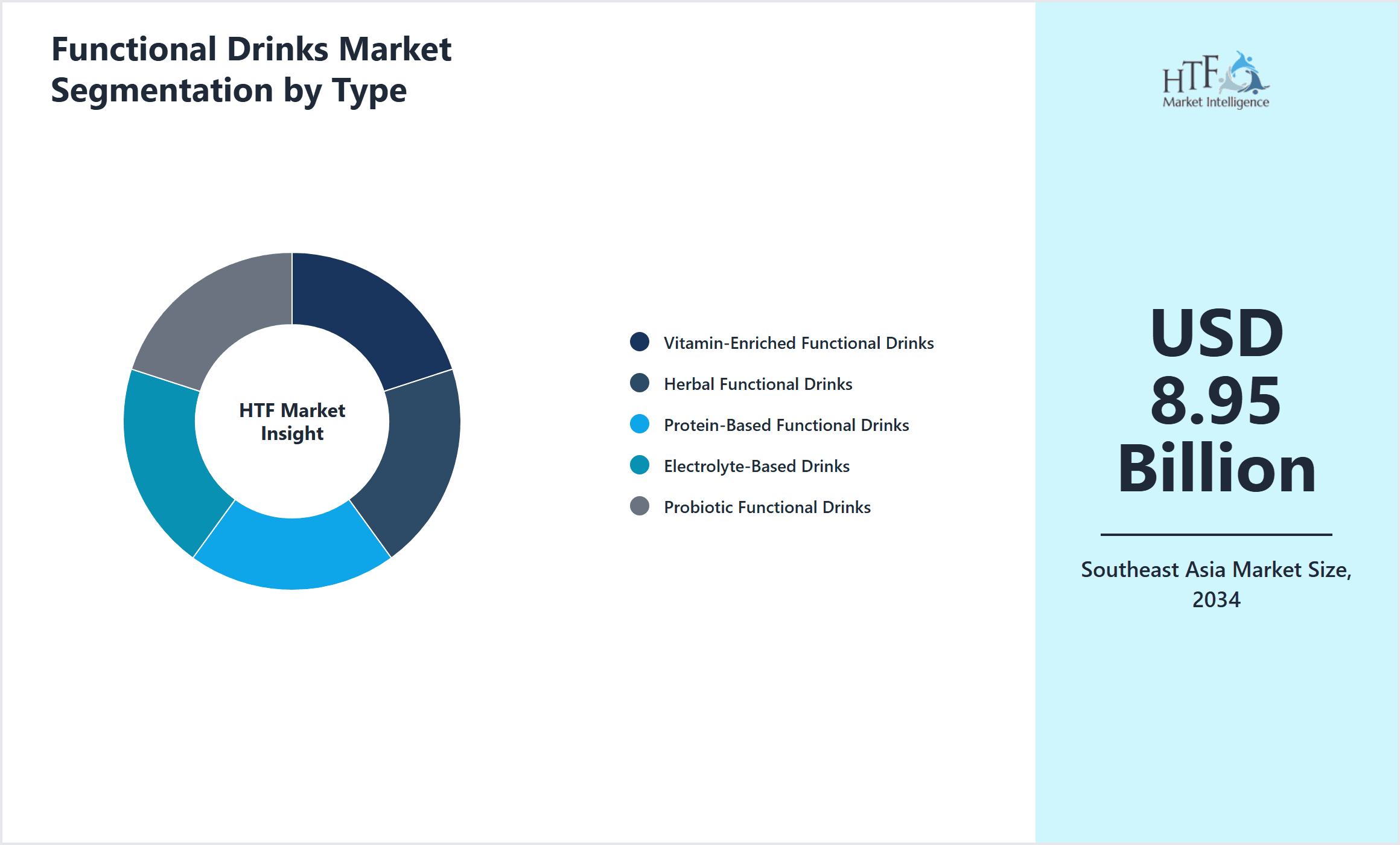
- •By Product Type
- ◦Vitamin-Enriched Functional Drinks
- ◦Herbal Functional Drinks
- ◦Protein-Based Functional Drinks
- ◦Electrolyte-Based Drinks
- ◦Probiotic Functional Drinks
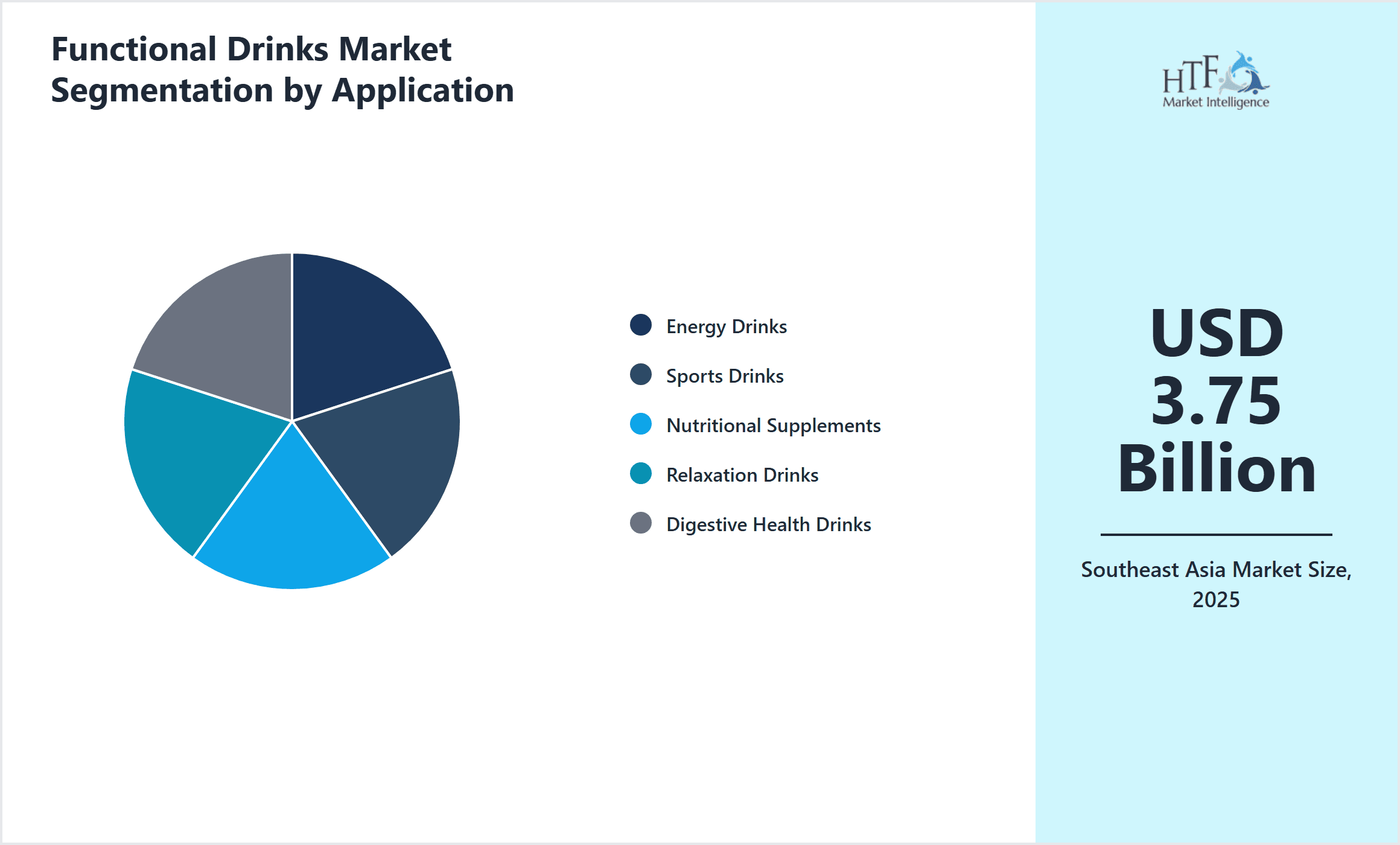
- •By Application
- ◦Energy Drinks
- ◦Sports Drinks
- ◦Nutritional Supplements
- ◦Relaxation Drinks
- ◦Digestive Health Drinks
- •By Distribution Channel
- ◦Modern Retail
- ◦Convenience Stores
- ◦E-Commerce
- ◦Traditional Trade
- •By Packaging Type
- ◦Cans
- ◦Bottles
- ◦Tetra Pak
- ◦Pouches
Growth Dynamics
- •Rising health consciousness among Southeast Asian consumers has accelerated demand for functional drinks that provide specific wellness benefits such as energy enhancement, immunity boosting, and digestive health support. This shift is supported by increasing disposable incomes and urban lifestyles that prioritize convenience and nutrition.
- •Innovation in natural and clean-label formulations is driving growth as consumers prefer products with organic ingredients, low sugar content, and no artificial additives. Companies are investing heavily in R&D to develop proprietary blends that meet these preferences, enhancing market appeal.
- •Expanding e-commerce platforms and modern retail penetration across Southeast Asia have improved product accessibility and availability, enabling manufacturers to reach wider demographics, including younger and tech-savvy consumers who prefer online shopping channels.
- •Government initiatives promoting healthier lifestyles and regulations encouraging transparent labeling and safety standards are fostering consumer trust and expanding the functional drinks consumer base in the region.
- •Strategic collaborations between beverage companies and health supplement brands enable expanded product portfolios and market reach, further fueling growth and diversification across Southeast Asian countries.
Emerging Market Trends
- •The rise of probiotic and gut-health-oriented functional drinks reflects growing consumer awareness of digestive wellness, with new product launches focusing on natural fermentation and live cultures gaining traction in markets such as Vietnam and Thailand.
- •Sustainability initiatives are influencing product packaging and ingredient sourcing, with companies adopting recyclable materials and ethically sourced botanicals to appeal to environmentally conscious consumers.
- •Integration of functional drinks with digital health platforms and personalized nutrition services is emerging, enabling consumers to tailor beverage choices based on individual health data and preferences.
- •The growing popularity of relaxation and adaptogenic functional drinks is driven by rising stress levels among urban populations, with herbal ingredients like ashwagandha and chamomile being incorporated for calming effects.
Strategic Market Opportunities
- •Expanding product portfolios to include multifunctional beverages that combine energy, immunity, and digestive benefits can capture broader consumer segments seeking holistic wellness solutions.
- •Untapped rural and semi-urban markets in Indonesia and the Philippines present significant growth potential through tailored distribution strategies and affordable product offerings.
- •Leveraging e-commerce and social media marketing to engage younger demographics with targeted campaigns can increase brand visibility and consumer loyalty.
- •Collaborations with local health authorities and NGOs to promote functional drinks as part of public health programs can enhance market penetration and brand credibility.
Key Market Challenges
- •Stringent and varying regulatory frameworks across Southeast Asian countries pose compliance challenges for manufacturers, especially regarding health claims and ingredient approvals.
- •High competition from local and international brands increases pressure on pricing and margins, necessitating continuous innovation and differentiation.
- •Consumer skepticism regarding product efficacy and safety, fueled by misinformation and lack of standardization, can hinder market adoption.
- •Supply chain disruptions and rising raw material costs, particularly for natural and organic ingredients, affect production efficiency and profitability.
Regulatory Framework
- •Between 2020 and 2025, Southeast Asian governments implemented updated food safety and labeling regulations mandating accurate ingredient disclosure and substantiation of health claims to protect consumers and standardize the functional drinks market across the region.
- •Thailand's Food and Drug Administration (FDA) introduced stricter guidelines in 2023 requiring pre-market approval for novel functional ingredients, impacting product development timelines and encouraging compliance with international standards.
- •Indonesia's National Agency of Drug and Food Control (BPOM) enhanced surveillance mechanisms and imposed penalties for misleading advertising, fostering a more transparent market environment and ensuring product quality.
- •Malaysia adopted the ASEAN Harmonized Cosmetic Regulatory Scheme adapted for functional beverages, facilitating cross-border trade within ASEAN countries and streamlining registration processes.
- •Government initiatives promoting nutritional awareness and healthy lifestyle choices, including subsidies and public campaigns, have indirectly supported functional drinks market growth by encouraging consumption of health-oriented products.
Market Intelligence
- •15th March 2025, Red Bull GmbH launched a new line of organic vitamin-enriched energy drinks specifically formulated for the Southeast Asian market, combining natural caffeine sources and antioxidants to meet rising consumer demand for clean-label products. The launch includes distribution across Indonesia, Thailand, and Vietnam, with a focus on e-commerce channels to target millennials and Gen Z consumers. This strategic move is expected to strengthen Red Bull's regional market share and align with sustainability trends. Source: Official Red Bull Press Release
- •10th July 2025, Sappe Public Company Limited introduced a probiotic functional drink tailored for digestive health targeting the growing wellness segment in Thailand and Malaysia. The product features live cultures and prebiotics sourced from local organic farms, supported by clinical studies demonstrating efficacy. Sappe aims to expand its portfolio in Southeast Asia by leveraging its strong distribution network and increasing consumer education on gut health benefits. Source: Sappe Annual Report 2025
- •5th October 2024, PepsiCo, Inc. announced the expansion of its functional drinks portfolio in Southeast Asia through the acquisition of a regional herbal beverage producer, enhancing its offerings with natural ingredient-based products. The acquisition supports PepsiCo’s strategic goal to capture the health-conscious consumer base and increase penetration in emerging markets like Vietnam and the Philippines. Integration plans include R&D collaboration and scaling production capabilities. Source: PepsiCo Investor Relations
- •20th January 2025, Coca-Cola Company unveiled a partnership with local startups in Indonesia to develop innovative electrolyte-based functional drinks leveraging indigenous ingredients. The initiative focuses on product innovation, sustainable sourcing, and community engagement to drive brand loyalty and market differentiation. Pilot launches in urban centers are planned for Q3 2025, with anticipated national rollout. Source: Coca-Cola Corporate News
Regional Outlook
The Indonesia currently holds a significant share of the market, primarily due to several key factors: increasing consumption rates, a burgeoning population, and robust economic momentum. These elements collectively drive demand, positioning this region as a leader in the market. On the other hand, Vietnam is rapidly emerging as the fastest-growing area within the industry. This remarkable growth can be attributed to swift infrastructure development, the expansion of various industrial sectors, and a marked increase in consumer demand. These dynamics make this region a crucial player in shaping future market growth.
In our report, we cover a comprehensive analysis of the following regions and countries:
- Singapore
- Malaysia
- Thailand
- Indonesia
- Vietnam
- Philippines
- Others
| Feature | Details |
|---|---|
| Base Year Market Size | USD 3.75 Billion |
| Forecast Year Market Size | USD 8.95 Billion |
| CAGR | 9.65% |
| Forecast Period | 2026 to 2033 |
| YoY Growth | 9.25% |
| Scope of Report | Market is segmented by Product Type (Vitamin-Enriched Functional Drinks, Herbal Functional Drinks, Protein-Based Functional Drinks, Electrolyte-Based Drinks, Probiotic Functional Drinks), Application (Energy Drinks, Sports Drinks, Nutritional Supplements, Relaxation Drinks, Digestive Health Drinks), Distribution Channel (Modern Retail, Convenience Stores, E-Commerce, Traditional Trade), Packaging Type (Cans, Bottles, Tetra Pak, Pouches) |
| Regions Covered | Singapore, Malaysia, Thailand, Indonesia, Vietnam, Philippines, Others |
| Key Companies | Red Bull GmbH (Austria), Monster Beverage Corporation (United States), PepsiCo, Inc. (United States), Coca-Cola Company (United States), Yakult Honsha Co., Ltd. (Japan) |
Southeast Asia Functional Drinks Market Size, Growth & Revenue 2025-2034 - Table of Contents
Frequently Asked Questions (FAQ):
The Compact Track Loaders market is expected to see value worth 5.3 Billion in 2025.
North America currently leads the market with approximately 45% market share, followed by Europe at 28% and Asia-Pacific at 22%. The remaining regions account for 5% of the global market.
Key growth drivers include increasing construction activities, rising demand for versatile equipment in agriculture, technological advancements in track loader design, and growing preference for compact equipment in urban construction projects.