
Southeast Asia Volleyball Team Apparel Market Size, Growth & Revenue 2024-2034
Southeast Asia Volleyball Team Apparel Market is segmented by Type (Jerseys, Shorts, Jackets, Socks, Accessories), Application (Professional Teams, Amateur Teams, School Teams, College Teams, Recreational Use), Distribution Channel (Online Retail, Specialty Sports Stores, Mass Merchandisers, Direct Sales), Fabric Technology (Moisture-Wicking, Breathable Mesh, Compression, Sustainable Materials), and Geography (Singapore, Malaysia, Thailand, Indonesia, Vietnam, Philippines, Others)
Pricing
Report Overview
Executive Summary
- •The Southeast Asia Volleyball Team Apparel market comprises specialized sportswear designed specifically for volleyball teams within Indonesia, Thailand, Vietnam, Philippines, and Malaysia. This market includes a variety of product types such as jerseys, shorts, jackets, socks, and accessories that serve both functional and aesthetic roles for professional, amateur, school, and recreational teams. Increasing participation in volleyball across these countries, coupled with a rising focus on athletic performance and team branding, drives demand for high-quality apparel. Market players emphasize innovative fabric technologies, durability, moisture management, and customizable designs to meet varied consumer needs. The market also reflects broader trends in sportswear, including sustainability and digital customization platforms. Growing sports infrastructure investments and regional tournaments further stimulate apparel consumption, making this sector a significant contributor to the Southeast Asian sportswear industry.
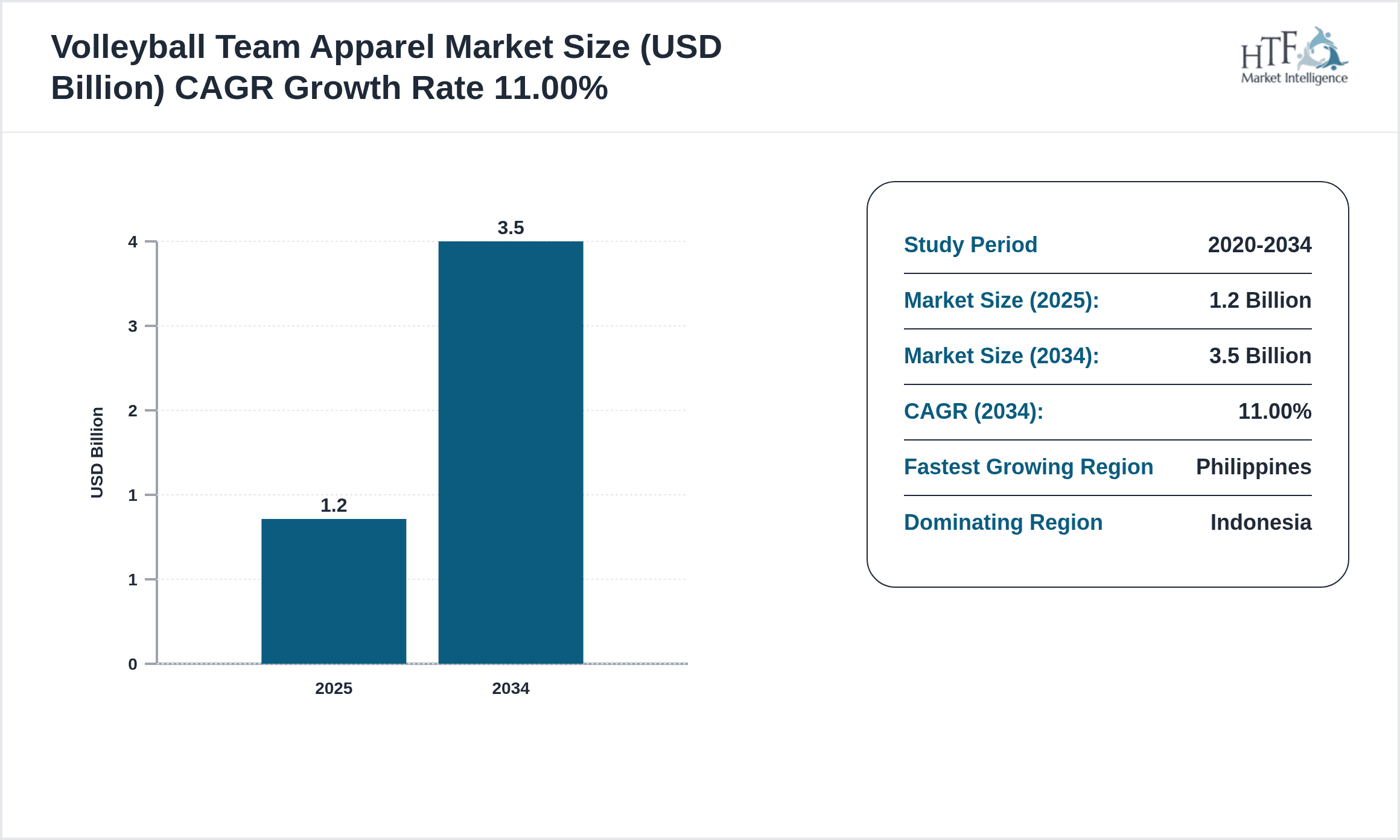
- •Key market highlights include a 2024 base market size of USD 1.2 Billion, with a forecasted expansion to USD 3.5 Billion by 2034, representing a CAGR of approximately 11.0%. Indonesia currently dominates the market, accounting for the largest share due to its sizable volleyball community and infrastructure. The Philippines emerges as the fastest-growing market driven by increasing youth sports programs and enhanced recreational volleyball engagement. Jerseys are the leading product type by revenue, while accessories exhibit the fastest growth rate, fueled by rising demand for complementary team gear. Professional and amateur team applications collectively command the largest segment share, supported by school and college-level adoption. These dynamics underscore the market's vibrant growth potential and diversified consumer base across Southeast Asia.
- •The market offers strategic value to manufacturers, distributors, sports organizations, and retailers by enabling tailored product offerings that enhance team identity and player performance. Increasing consumer awareness about specialized sports apparel quality compels companies to innovate continuously. The integration of sustainable materials and digitized customization services presents new avenues for differentiation. Furthermore, the expanding popularity of volleyball as a competitive and recreational sport stimulates demand for high-performance team apparel, driving investments and partnerships within the industry. Stakeholders benefit from a robust ecosystem that spans grassroots development to professional leagues, positioning the Southeast Asia Volleyball Team Apparel market as a critical growth segment within the regional sportswear landscape.
Competitive Landscape
Competition in the Southeast Asia Volleyball Team Apparel market is characterized by a blend of established global sportswear brands and emerging regional manufacturers. Market players focus heavily on innovation in fabric technologies, including moisture-wicking, breathability, and lightweight materials, to differentiate their offerings. Competitive strategies revolve around product customization, branding collaborations with local teams, and digital engagement to enhance customer loyalty. Pricing strategies vary to accommodate diverse consumer segments ranging from professional teams to recreational users. Distribution channels include direct-to-consumer online platforms, specialized sports retailers, and partnerships with educational institutions. Market rivalry intensifies with frequent product launches and regional sponsorships, creating high entry barriers for new players. Strategic alliances and investments in sustainability have become key competitive levers. The landscape continues to evolve with increasing emphasis on agility in responding to regional consumer preferences and technological advancements.
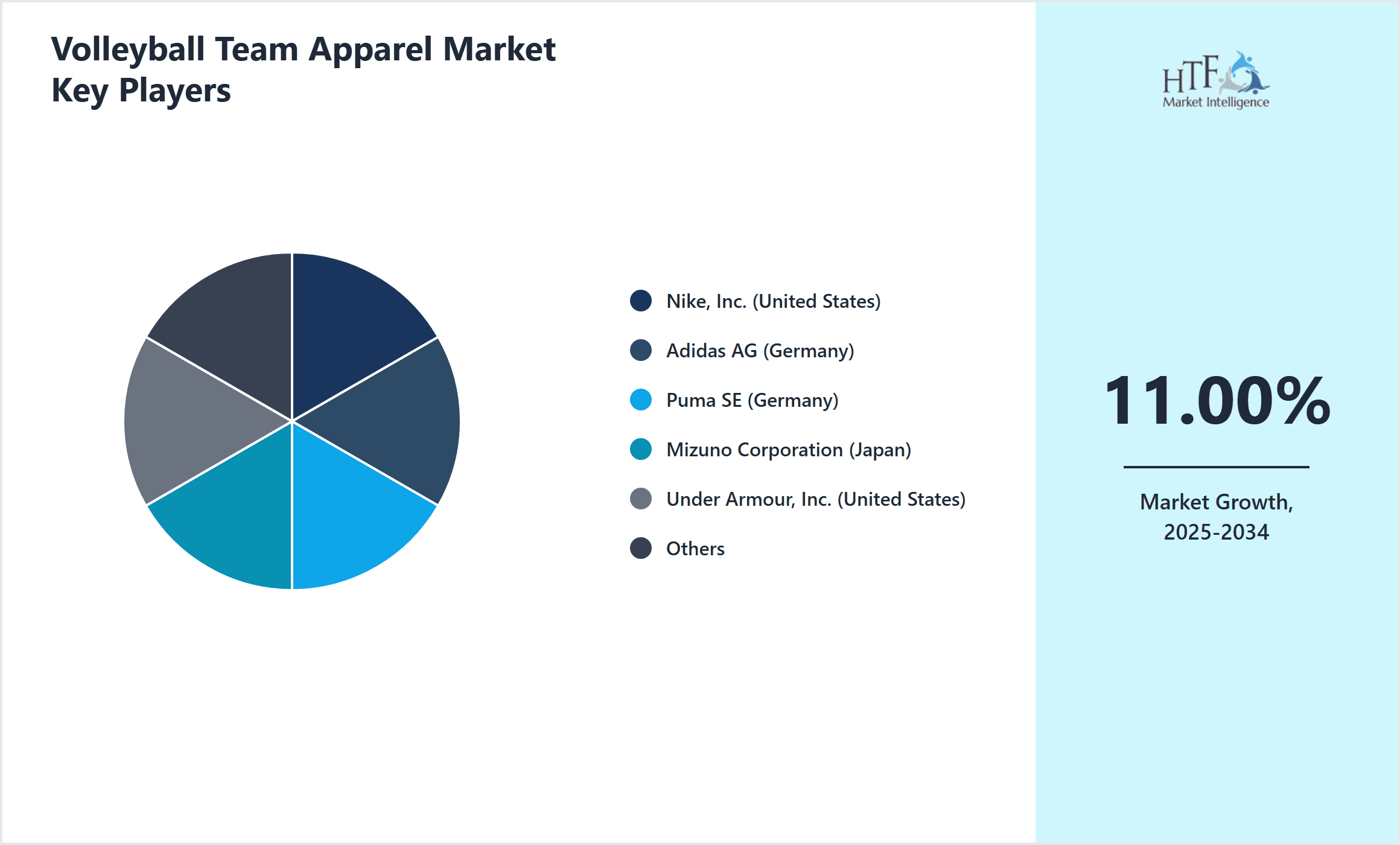
Prominent Players in Volleyball Team Apparel Market
- •Nike, Inc. (United States)
- •Adidas AG (Germany)
- •Puma SE (Germany)
- •Mizuno Corporation (Japan)
- •Under Armour, Inc. (United States)
- •Li-Ning Company Limited (China)
- •ASICS Corporation (Japan)
- •Yonex Co., Ltd. (Japan)
- •Peak Sport Products Co., Ltd. (China)
- •Decathlon S.A. (France)
- •New Balance Athletics, Inc. (United States)
- •Fila Holdings Corp. (South Korea)
- •Anta Sports Products Limited (China)
- •Errea Sport S.p.A. (Italy)
- •Kelme (Spain)
- •Babolat (France)
- •Mammut Sports Group AG (Switzerland)
- •Kappa (Italy)
- •Columbia Sportswear Company (United States)
- •Lotto Sport Italia (Italy)
- •Macron S.p.A. (Italy)
- •Peak Performance AB (Sweden)
- •Joma Sport (Spain)
- •Salomon Group (France)
- •Trinity Sportswear (Singapore)
Market Breakdown
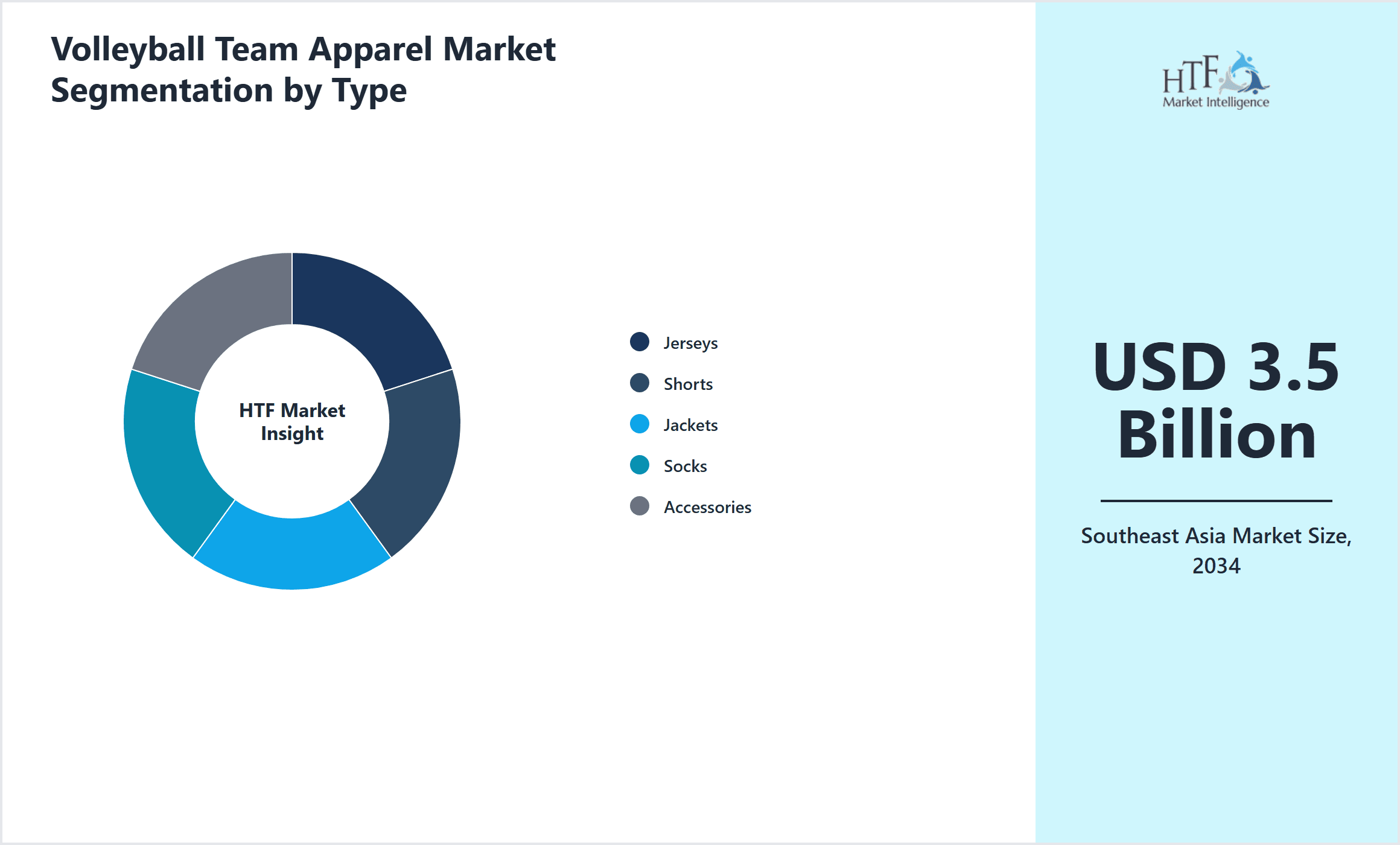
- •By Type
- ◦Jerseys
- ◦Shorts
- ◦Jackets
- ◦Socks
- ◦Accessories
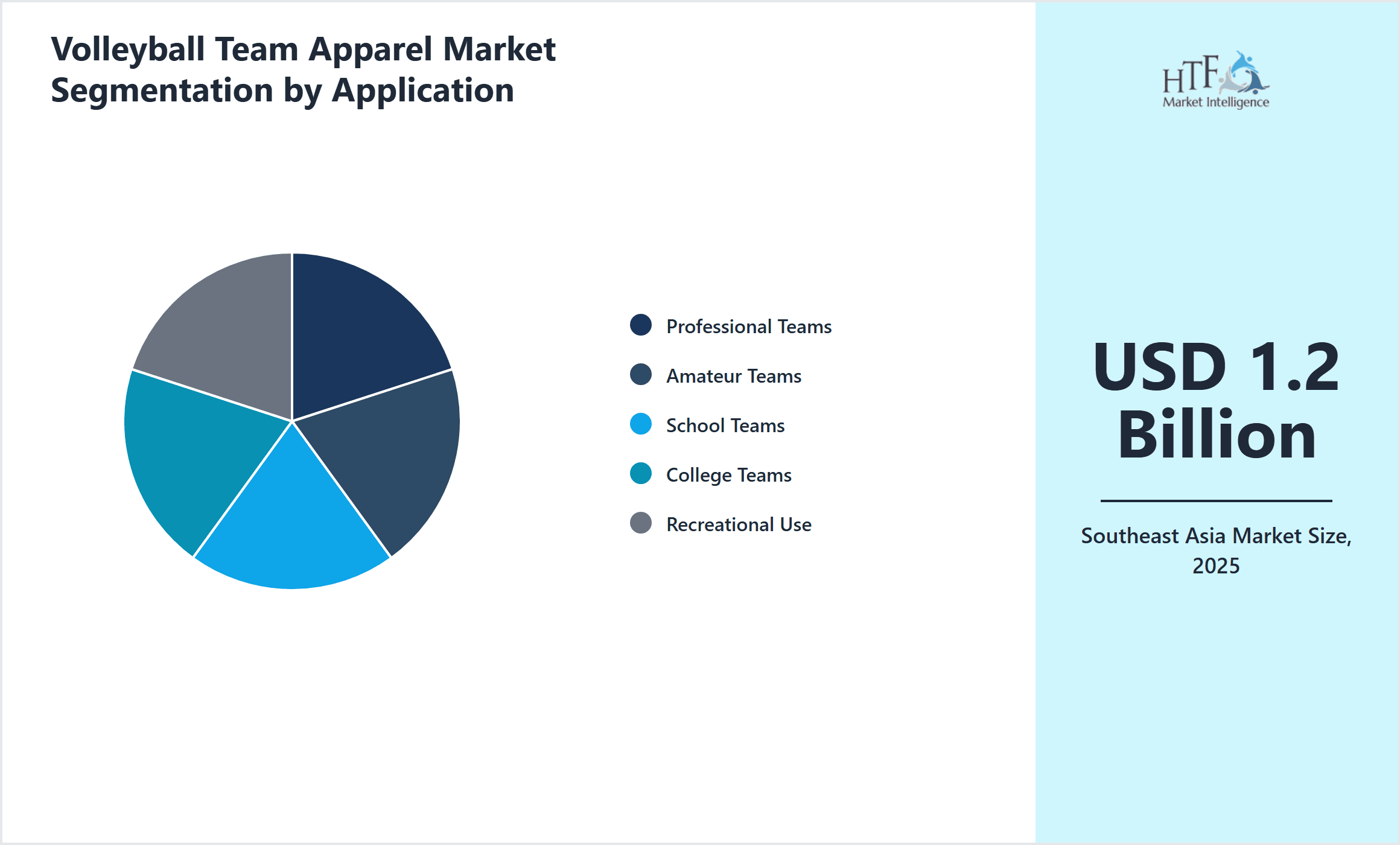
- •By Application
- ◦Professional Teams
- ◦Amateur Teams
- ◦School Teams
- ◦College Teams
- ◦Recreational Use
- •By Distribution Channel
- ◦Online Retail
- ◦Specialty Sports Stores
- ◦Mass Merchandisers
- ◦Direct Sales
- •By Fabric Technology
- ◦Moisture-Wicking
- ◦Breathable Mesh
- ◦Compression
- ◦Sustainable Materials
Growth Dynamics
- •The rapid expansion of volleyball as a popular sport in Southeast Asia, driven by government and private sector investments in sports infrastructure and community programs, fuels demand for specialized team apparel. Growing youth participation in schools and colleges contributes significantly to market volume.
- •Technological innovations in fabric materials, such as moisture-wicking and breathable textiles, enhance player comfort and performance, encouraging teams to upgrade their apparel regularly. This trend supports premium product adoption in the region.
- •Rising digitalization and e-commerce penetration in Southeast Asia facilitates broader access to branded volleyball apparel, expanding the customer base beyond metropolitan areas. Online customization platforms also stimulate personalized purchases.
- •Collaborations between sportswear brands and local volleyball leagues or schools create brand loyalty and drive volume sales. Sponsorships and endorsements raise market visibility and consumer engagement across Southeast Asian countries.
- •Increasing consumer awareness of health, fitness, and team identity aligns with a preference for high-quality, durable volleyball apparel, supporting consistent market growth and attracting new entrants focused on innovation and sustainability.
Market Trends
- •Sustainability is a growing trend within the Southeast Asian volleyball apparel market, with brands adopting eco-friendly fabrics and manufacturing processes to meet consumer demand for responsible products. This shift enhances brand reputation and market differentiation.
- •Customization and personalization of volleyball team uniforms are increasingly sought after, leveraging digital printing and design platforms that allow teams to express unique identities and foster stronger team cohesion in Southeast Asia.
- •Integration of wearable technology with volleyball apparel is emerging, including sensors embedded in clothing to monitor player performance and health metrics, indicating a future direction for market innovation and premium product offerings.
- •The rise of e-commerce and social media marketing in Southeast Asia is reshaping consumer shopping behaviors, enabling brands to reach wider audiences and engage directly with customers through targeted campaigns and influencer partnerships.
- •Regional tournaments and school-level competitions are increasingly influential in driving apparel sales, as participants and fans seek official team gear, expanding market penetration beyond professional leagues.
Market Opportunities
- •Expanding grassroots volleyball programs in Southeast Asia present opportunities for sportswear companies to supply affordable, durable apparel tailored for youth and amateur players, tapping into a large and growing consumer base.
- •Adoption of sustainable and recycled materials offers companies a way to differentiate products and appeal to environmentally conscious consumers, aligning with global trends and local regulatory encouragements.
- •Digital customization services that enable teams to design and order personalized uniforms online can capture niche markets and enhance customer engagement in the region.
- •Collaborations with regional volleyball federations and sponsorship of major tournaments can increase brand visibility and trust, driving sales and long-term loyalty among both players and fans.
- •Expanding distribution networks into emerging Southeast Asian markets such as Myanmar, Cambodia, and Laos can unlock untapped demand for volleyball team apparel products.
Market Challenges
- •Price sensitivity among consumers in several Southeast Asian countries limits the adoption of premium volleyball apparel, requiring brands to balance quality with affordability effectively.
- •The fragmented retail landscape and dominance of informal markets pose challenges for organized distribution and brand penetration in rural and remote areas.
- •Intense competition from counterfeit products dilutes brand value and affects revenue streams for legitimate manufacturers and distributors.
- •Supply chain disruptions, including raw material shortages and logistics delays, exacerbate cost pressures and inventory management challenges for regional apparel suppliers.
- •Lack of standardized sizing and fit preferences across diverse Southeast Asian populations complicates product design and customer satisfaction efforts.
Regulatory Framework
- •Between 2019 and 2024, Southeast Asian countries have increasingly implemented regulations focusing on sustainable textile manufacturing, requiring companies to adopt eco-friendly processes and reduce environmental impact. Compliance with these standards is mandatory for market access and consumer trust.
- •Import tariffs and trade agreements within ASEAN countries have evolved, facilitating smoother cross-border trade of sports apparel but also imposing quality and safety certifications to maintain product standards.
- •Labor laws enforcing fair wages and safe working conditions in garment manufacturing are strictly enforced in countries like Vietnam and Indonesia, affecting production costs and operational strategies for apparel manufacturers.
- •Consumer protection regulations mandate clear labeling of materials and manufacturing origin for sports apparel, ensuring transparency and building customer confidence in Southeast Asia.
- •Government-led initiatives promoting local sports development indirectly influence apparel market demand and encourage partnerships between manufacturers and sports bodies to align with national objectives.
Market Intelligence
- •15th January 2025, Nike, Inc. launched its latest line of volleyball-specific jerseys featuring advanced moisture-wicking and anti-odor technology tailored for Southeast Asian climates. The product line targets professional and amateur teams across Indonesia, Thailand, and the Philippines, incorporating vibrant designs inspired by regional cultural motifs. This launch aims to capture rising demand for performance-oriented apparel and deepen brand loyalty through localized offerings, supporting Nike's growth strategy in emerging markets. Source: Nike Official Press Release
- •10th March 2025, Adidas AG introduced a sustainable volleyball apparel collection made from recycled ocean plastics, emphasizing environmental responsibility within Southeast Asia. The collection includes jerseys, shorts, and accessories, designed in collaboration with local volleyball federations to promote grassroots participation. Adidas plans to leverage digital customization tools to enhance consumer engagement and expand distribution through e-commerce platforms in Vietnam and Malaysia. This initiative aligns with Adidas’s global sustainability goals and regional market expansion. Source: Adidas Corporate Announcement
- •20th February 2025, Under Armour, Inc. announced a strategic partnership with the Philippine Volleyball Federation to supply official team apparel for national leagues and youth development programs. The multi-year agreement includes co-branded marketing campaigns and community outreach initiatives to boost volleyball popularity and apparel sales. Under Armour aims to strengthen its footprint in the fast-growing Philippine sportswear market by enhancing product visibility and fostering local talent development. Source: Under Armour Newsroom
- •5th May 2025, Decathlon S.A. expanded its operations in Southeast Asia by opening new specialty sports stores in Jakarta and Ho Chi Minh City focused on volleyball gear. The stores offer an extensive range of affordable volleyball team apparel with customization services, targeting amateur and school teams. This expansion is part of Decathlon’s broader regional growth plan, capitalizing on increasing volleyball participation and rising consumer spending on sportswear. Source: Decathlon Corporate News
Regional Outlook
The Indonesia currently holds a significant share of the market, primarily due to several key factors: increasing consumption rates, a burgeoning population, and robust economic momentum. These elements collectively drive demand, positioning this region as a leader in the market. On the other hand, Philippines is rapidly emerging as the fastest-growing area within the industry. This remarkable growth can be attributed to swift infrastructure development, the expansion of various industrial sectors, and a marked increase in consumer demand. These dynamics make this region a crucial player in shaping future market growth.
In our report, we cover a comprehensive analysis of the following regions and countries:
- Singapore
- Malaysia
- Thailand
- Indonesia
- Vietnam
- Philippines
- Others
| Feature | Details |
|---|---|
| Base Year Market Size | USD 1.2 Billion |
| Forecast Year Market Size | USD 3.5 Billion |
| CAGR | 11% |
| Forecast Period | 2026 to 2033 |
| YoY Growth | 10.5% |
| Scope of Report | Market is segmented by Type (Jerseys, Shorts, Jackets, Socks, Accessories), Application (Professional Teams, Amateur Teams, School Teams, College Teams, Recreational Use), Distribution Channel (Online Retail, Specialty Sports Stores, Mass Merchandisers, Direct Sales), Fabric Technology (Moisture-Wicking, Breathable Mesh, Compression, Sustainable Materials) |
| Regions Covered | Singapore, Malaysia, Thailand, Indonesia, Vietnam, Philippines, Others |
| Key Companies | Nike, Inc. (United States), Adidas AG (Germany), Puma SE (Germany), Mizuno Corporation (Japan), Under Armour, Inc. (United States) |
Southeast Asia Volleyball Team Apparel Market Size, Growth & Revenue 2024-2034 - Table of Contents
Multidisciplinary researcher with 10+ years of experience uncovering insights across diverse domains focused on uncovering insights that drive informed decisions.
Frequently Asked Questions (FAQ):
The Market market is projected to grow at a steady CAGR from 2025 to 2030, driven by increasing demand and expansion in various applications.
North America currently leads the market, followed by Europe and Asia-Pacific.
Key growth drivers include increasing activities, rising demand for innovative solutions, technological advancements, and growing preference for efficient products.