
Global Uncooled Thermal Camera Module Market Size, Growth & Revenue 2024-2034
Global Uncooled Thermal Camera Module Market is segmented by Sensor Type (Vanadium Oxide (VOx) Microbolometers, Amorphous Silicon (a-Si) Microbolometers, Microbolometer Arrays, Uncooled Pyroelectric Sensors, Bolometer-based Sensors), Application Area (Security & Surveillance, Automotive - Advanced Driver Assistance Systems (ADAS), Industrial Inspection & Predictive Maintenance, Consumer Electronics, Healthcare & Medical Imaging), End-User Industry (Government & Defense, Automotive Manufacturers, Industrial Enterprises, Healthcare Providers, Consumer Electronics Firms), Technology Platform (Thermal Imaging Modules, Thermal Sensor Components, Integrated Thermal Camera Systems), and Geography (North America, LATAM, West Europe, Central & Eastern Europe, Northern Europe, Southern Europe, East Asia, Southeast Asia, South Asia, Central Asia, Oceania, MEA)
Pricing
Report Overview
Executive Summary
- •The global uncooled thermal camera module market comprises advanced imaging components designed to capture infrared radiation without the need for cryogenic cooling, enabling compact and cost-effective thermal imaging solutions. These modules incorporate various sensor materials such as vanadium oxide, amorphous silicon, and microbolometer technologies to deliver precise thermal detection across multiple industry verticals. Their applications span security and surveillance, automotive driver assistance systems, industrial inspection for predictive maintenance, consumer electronics, and healthcare diagnostics, reflecting broad utility and increasing adoption. The market scope includes the design, manufacturing, and integration of these modules into end devices, driven by technological innovation, rising demand for safety and automation, and expanding use cases globally. Factors such as miniaturization, enhanced sensitivity, and affordability are propelling growth. The market is characterized by rapid innovation cycles, competitive vendor landscapes, and evolving regulatory frameworks, making it a dynamic field with significant growth potential through 2034.
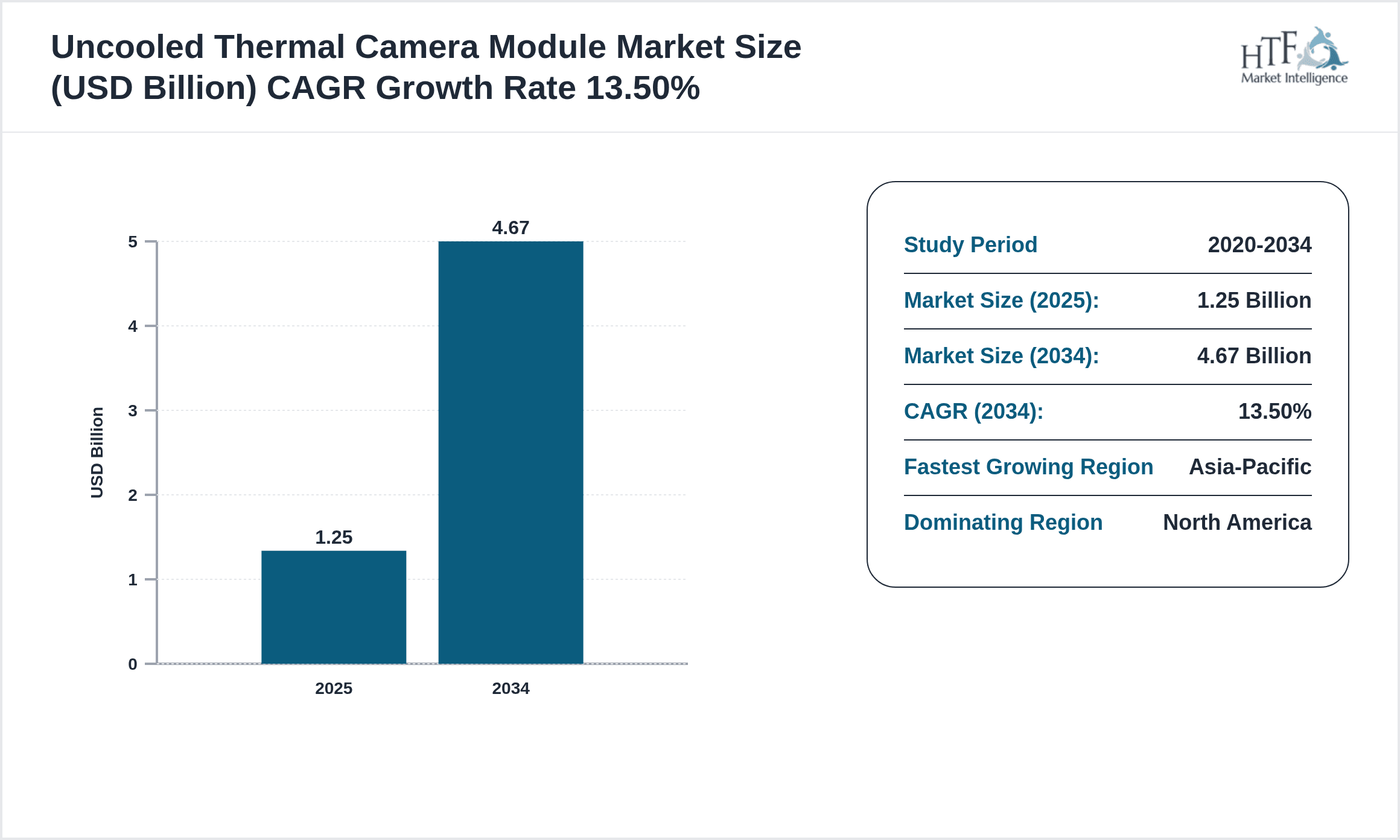
- •Key market highlights include a base market valuation of USD 1.25 billion in 2024, with projections indicating a robust CAGR of 13.5% through 2034, anticipating a market size of USD 4.67 billion by the end of the forecast period. The North American region currently dominates the market, owing to advanced technological infrastructure and high adoption rates in security and automotive sectors, while Asia-Pacific is poised as the fastest-growing region driven by increasing industrialization and rising consumer electronics integration. Vanadium oxide sensor modules lead the product type segment, providing superior sensitivity, whereas microbolometer types are gaining traction rapidly due to cost-effectiveness and wide applicability. The security and surveillance application segment holds the largest share, reflecting the growing emphasis on public safety and infrastructure monitoring worldwide.
- •The uncooled thermal camera module market presents strategic value for stakeholders across industries, offering solutions that enhance operational efficiency, safety, and automation capabilities. For manufacturers and technology providers, the market offers opportunities to innovate sensor materials and module integration, capitalizing on rising demand in automotive advanced driver-assistance systems (ADAS), industrial predictive maintenance, and healthcare thermal imaging. Investors and policymakers benefit from understanding market drivers such as government initiatives for smart cities and industrial automation, which fuel adoption. End users gain from improved thermal imaging performance without the complexity and cost of cooling systems, enabling broader deployment in diverse environments. Overall, this market represents a critical intersection of sensor technology advancement and expanding thermal imaging applications, underpinning future growth and technological evolution globally.
Competitive Landscape
The competitive landscape of the global uncooled thermal camera module market is defined by intense rivalry among established sensor manufacturers, technology innovators, and system integrators. Market leaders leverage extensive R&D investments to develop advanced sensor materials, improve image resolution, and reduce module costs, aiming to secure dominant market positions. Innovation is a key differentiator, with companies focusing on enhancing sensitivity, integration capabilities, and miniaturization to meet diverse application requirements. Strategic collaborations, partnerships, and mergers are common to expand technological portfolios and geographic reach. The market also sees competition from emerging players specializing in niche applications or novel thermal sensing technologies. Pricing strategies balance between premium, high-performance modules and cost-effective mass-market solutions. Distribution channels are diversified, including direct OEM partnerships and third-party suppliers. Regulatory compliance and intellectual property rights further shape competitive dynamics, while evolving customer demands drive continuous product evolution and competitive positioning.
Prominent Players in Uncooled Thermal Camera Module Market
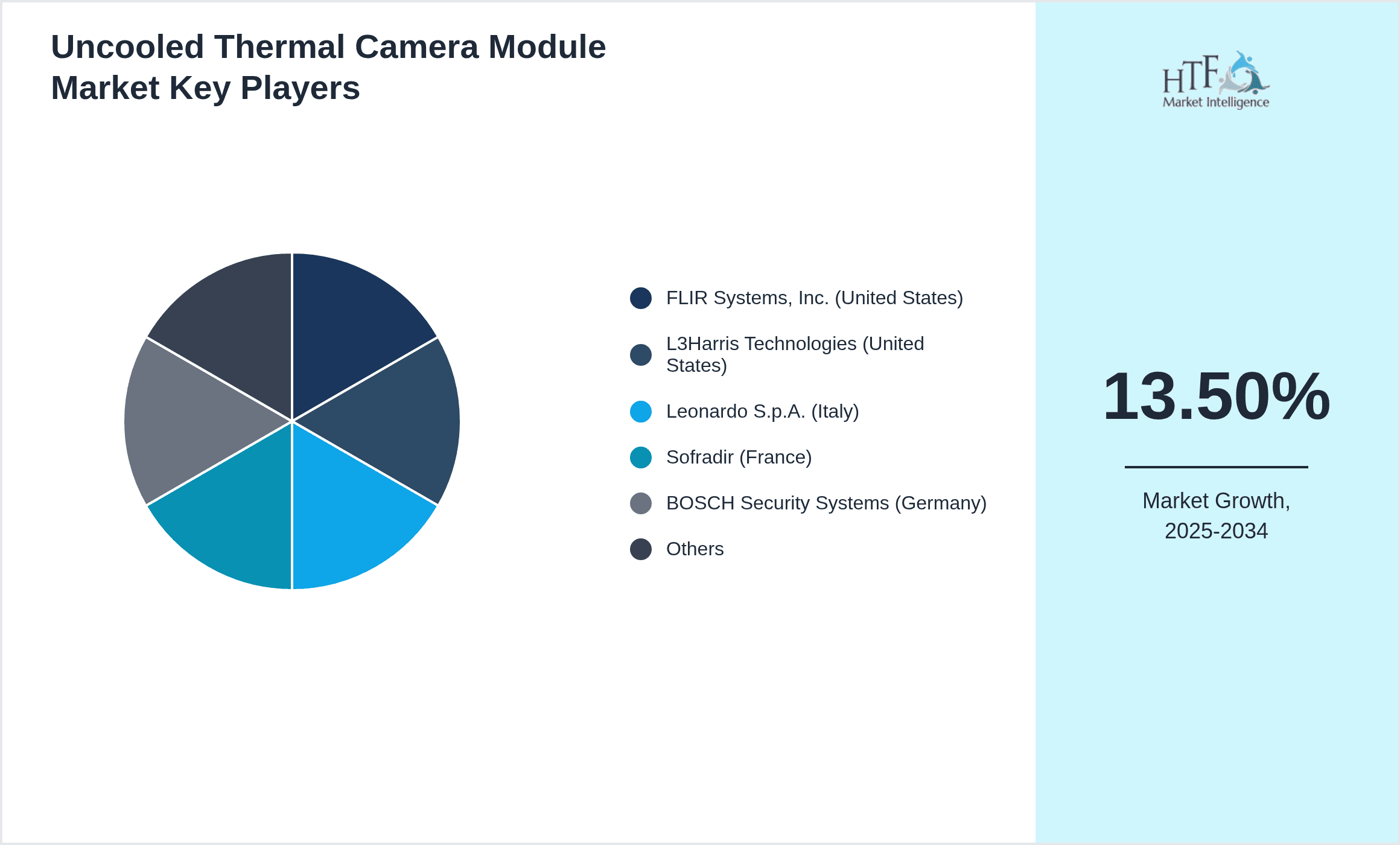
- •FLIR Systems, Inc. (United States)
- •L3Harris Technologies (United States)
- •Leonardo S.p.A. (Italy)
- •Sofradir (France)
- •BOSCH Security Systems (Germany)
- •Hamamatsu Photonics K.K. (Japan)
- •Raytheon Technologies Corporation (United States)
- •Seek Thermal, Inc. (United States)
- •ULIS (France)
- •Dali Technology (China)
- •FLIR Systems (United States)
- •Teledyne Technologies Incorporated (United States)
- •Lynred (France)
- •Excelitas Technologies Corp. (United States)
- •Innoviz Technologies Ltd. (Israel)
- •InfraTec GmbH (Germany)
- •Xenics NV (Belgium)
- •Opgal Optronic Industries Ltd. (Israel)
- •New Imaging Technologies (France)
- •Sensors Unlimited, Inc. (United States)
- •Raytheon Company (United States)
- •Hikvision Digital Technology Co., Ltd. (China)
- •FLIR Systems (United States)
- •Infrared Cameras Inc. (United States)
- •AGEMA Infrared Systems (Sweden)
Market Breakdown
- •By Sensor Type
- ◦Vanadium Oxide (VOx) Microbolometers
- ◦Amorphous Silicon (a-Si) Microbolometers
- ◦Microbolometer Arrays
- ◦Uncooled Pyroelectric Sensors
- ◦Bolometer-based Sensors
- •By Application Area
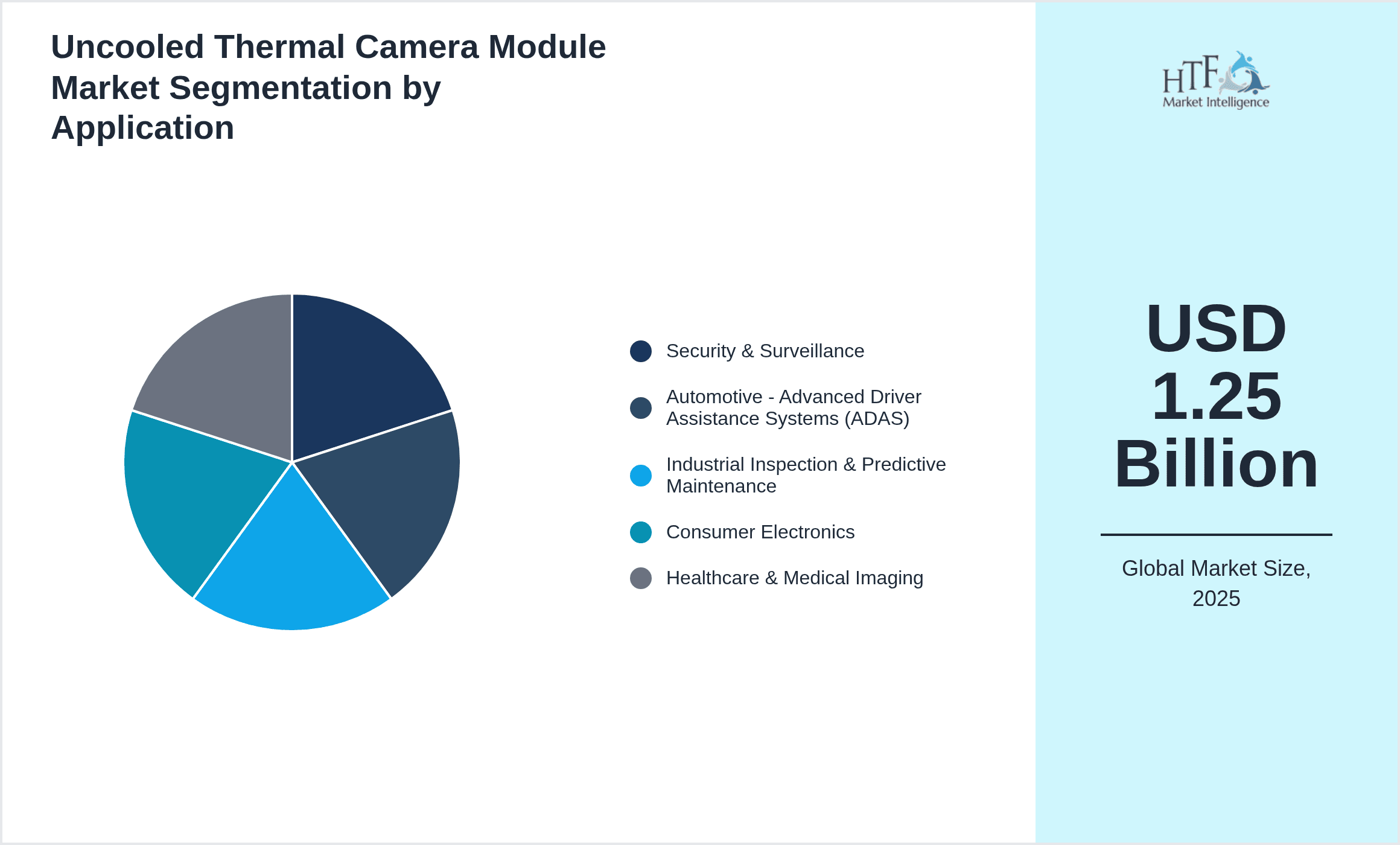
- ◦Security & Surveillance
- ◦Automotive - Advanced Driver Assistance Systems (ADAS)
- ◦Industrial Inspection & Predictive Maintenance
- ◦Consumer Electronics
- ◦Healthcare & Medical Imaging
- •By End-User Industry
- ◦Government & Defense
- ◦Automotive Manufacturers
- ◦Industrial Enterprises
- ◦Healthcare Providers
- ◦Consumer Electronics Firms
- •By Technology Platform
- ◦Thermal Imaging Modules
- ◦Thermal Sensor Components
- ◦Integrated Thermal Camera Systems
Growth Dynamics
- •Increasing demand for enhanced security and surveillance systems globally is driving the adoption of uncooled thermal camera modules, as they provide reliable detection capabilities under low light and adverse weather conditions. Governments and private sectors are investing in infrastructure upgrades, fueling market growth.
- •Advancements in automotive safety technologies, particularly in ADAS, are pushing manufacturers to integrate uncooled thermal camera modules for pedestrian detection and night vision, enhancing vehicle safety and compliance with regulatory standards.
- •Industrial sectors are leveraging thermal camera modules for predictive maintenance and quality control, enabling early fault detection and reducing downtime, which significantly contributes to operational efficiency and cost savings, thus boosting market expansion.
- •Technological innovations such as reduced sensor size, improved thermal sensitivity, and lower production costs are making uncooled thermal camera modules more accessible to consumer electronics, including smartphones and wearable devices, broadening market reach.
- •Government initiatives promoting smart cities and infrastructure security, alongside rising investments in public safety technologies, are creating favorable market conditions and increasing demand for thermal imaging solutions worldwide.
Market Trends
- •The integration of AI and machine learning with uncooled thermal camera modules is a growing trend, enabling smarter analytics, threat detection, and automation across security and industrial applications, enhancing overall system intelligence.
- •There is a notable shift towards miniaturization and integration of thermal sensors in consumer electronics, such as smartphones and drones, to offer enhanced thermal imaging capabilities for diverse end-users.
- •Collaborations between sensor manufacturers and automotive OEMs are increasing, focusing on embedding uncooled thermal cameras into ADAS to enhance pedestrian and obstacle detection, resulting in safer driving experiences.
- •Sustainability considerations are influencing product development, with companies focusing on energy-efficient thermal modules that reduce power consumption and environmental impact, aligning with global green initiatives.
- •The expansion of thermal imaging applications into healthcare, including fever detection and diagnostic imaging, is gaining momentum, particularly accelerated by the COVID-19 pandemic's emphasis on non-contact temperature screening.
Market Opportunities
- •Emerging applications in autonomous vehicles and robotics present substantial growth opportunities for uncooled thermal camera modules, as these sectors require advanced sensing for navigation and environment perception in diverse conditions.
- •Expanding consumer electronics markets in developing regions offer untapped potential for integrating affordable uncooled thermal sensors into smartphones and wearables, enabling new user experiences and functionalities.
- •Increasing demand for thermal imaging in industrial IoT ecosystems creates opportunities for modular, connected thermal camera solutions that facilitate real-time monitoring and predictive analytics.
- •Government funding and incentives for smart city projects worldwide are driving infrastructure upgrades that require advanced surveillance and monitoring solutions, boosting demand for uncooled thermal camera modules.
- •Collaborations and strategic partnerships between technology providers and end-user industries can accelerate innovation and market penetration, especially in healthcare and defense sectors.
Market Challenges
- •High initial development costs and the complexity of integrating uncooled thermal camera modules into existing systems pose significant barriers for smaller manufacturers and end-users, limiting market entry.
- •Technical limitations such as lower resolution and sensitivity compared to cooled thermal sensors can restrict adoption in applications requiring extreme precision, influencing buyer preferences.
- •Stringent regulatory requirements regarding the use of thermal imaging in public spaces and privacy concerns may slow deployment in certain regions, necessitating compliance and adaptation.
- •Intense competition and price pressures from low-cost manufacturers, especially in Asia-Pacific, challenge established players to maintain profitability while investing in innovation.
- •Supply chain disruptions and component shortages, exacerbated by global events, impact production timelines and availability, affecting overall market growth momentum.
Regulatory Framework
- •Between 2019 and 2024, several key regulations were enacted globally to govern the deployment of thermal imaging technologies, including data privacy laws requiring secure handling of thermal data and compliance with public surveillance standards. These have necessitated enhanced security features in uncooled thermal camera modules to protect user privacy and data integrity.
- •Regional mandates such as the European Union’s General Data Protection Regulation (GDPR) have influenced market players to incorporate anonymization and data encryption capabilities within thermal imaging systems, ensuring compliance while maintaining functionality.
- •Safety standards related to electromagnetic compatibility (EMC) and device certification have become increasingly rigorous, requiring manufacturers to adhere to strict testing and quality assurance protocols before market launch.
- •Country-specific export controls on high-tech sensor components, notably in the United States and China, have impacted supply chains and international collaborations, prompting companies to adapt sourcing and production strategies accordingly.
- •Government initiatives promoting smart city infrastructure have introduced incentive programs supporting the adoption of advanced thermal imaging for public safety, providing subsidies and grants that stimulate market growth.
Market Intelligence
- •15th January 2025, FLIR Systems, Inc. launched a new compact uncooled thermal camera module featuring enhanced resolution and faster frame rates targeting automotive ADAS applications. This product integrates cutting-edge vanadium oxide sensor technology, delivering improved pedestrian detection capabilities under low-light conditions. The innovation aims to support automotive manufacturers in meeting evolving safety regulations and consumer demand for advanced driver assistance systems, positioning FLIR as a market technology leader. The launch is expected to stimulate increased adoption of thermal imaging modules in the automotive sector globally. Source: Official FLIR press release
- •23rd March 2025, L3Harris Technologies announced a strategic partnership with a leading industrial IoT platform provider to integrate uncooled thermal camera modules into predictive maintenance solutions. This collaboration focuses on combining thermal imaging data with AI-driven analytics to enable real-time equipment health monitoring across manufacturing plants. The initiative aims to reduce operational costs and downtime for industrial clients, leveraging L3Harris’s expertise in thermal sensor technology and the partner’s data analytics capabilities. This move reinforces the growing trend of smart factory adoption and deepens L3Harris’s presence in industrial applications. Source: L3Harris official website
- •5th June 2025, Leonardo S.p.A. unveiled an advanced uncooled thermal imaging module designed for integration into security and surveillance systems. The module features a novel amorphous silicon sensor with improved thermal sensitivity and energy efficiency, enabling extended operational lifespan in remote installations. Leonardo’s innovation addresses growing demand for reliable, low-maintenance thermal cameras in public safety and critical infrastructure monitoring. The product launch is part of Leonardo’s broader strategy to expand its footprint in the global thermal imaging market and support smart city initiatives. Source: Leonardo corporate announcement
- •12th August 2025, Sofradir completed the acquisition of a specialized microbolometer sensor startup to strengthen its technology portfolio and accelerate product development. This acquisition enhances Sofradir’s capabilities in producing high-performance uncooled thermal camera modules with improved resolution and reduced power consumption. The strategic move is expected to consolidate Sofradir’s market position and enable faster innovation cycles to meet increasing global demand across security, automotive, and industrial sectors. The deal underscores the market’s consolidation trend and the emphasis on technological leadership. Source: Industry publication
Regional Outlook
The North America currently holds a significant share of the market, primarily due to several key factors: increasing consumption rates, a burgeoning population, and robust economic momentum. These elements collectively drive demand, positioning this region as a leader in the market. On the other hand, Asia-Pacific is rapidly emerging as the fastest-growing area within the industry. This remarkable growth can be attributed to swift infrastructure development, the expansion of various industrial sectors, and a marked increase in consumer demand. These dynamics make this region a crucial player in shaping future market growth.
In our report, we cover a comprehensive analysis of the following regions and countries:
- North America
- LATAM
- West Europe
- Central & Eastern Europe
- Northern Europe
- Southern Europe
- East Asia
- Southeast Asia
- South Asia
- Central Asia
- Oceania
- MEA
| Feature | Details |
|---|---|
| Base Year Market Size | USD 1.25 Billion |
| Forecast Year Market Size | USD 4.67 Billion |
| CAGR | 13.5% |
| Forecast Period | 2026 to 2033 |
| YoY Growth | 12.8% |
| Scope of Report | Market is segmented by Sensor Type (Vanadium Oxide (VOx) Microbolometers, Amorphous Silicon (a-Si) Microbolometers, Microbolometer Arrays, Uncooled Pyroelectric Sensors, Bolometer-based Sensors), Application Area (Security & Surveillance, Automotive - Advanced Driver Assistance Systems (ADAS), Industrial Inspection & Predictive Maintenance, Consumer Electronics, Healthcare & Medical Imaging), End-User Industry (Government & Defense, Automotive Manufacturers, Industrial Enterprises, Healthcare Providers, Consumer Electronics Firms), Technology Platform (Thermal Imaging Modules, Thermal Sensor Components, Integrated Thermal Camera Systems) |
| Regions Covered | North America, LATAM, West Europe, Central & Eastern Europe, Northern Europe, Southern Europe, East Asia, Southeast Asia, South Asia, Central Asia, Oceania, MEA |
| Key Companies | FLIR Systems, Inc. (United States), L3Harris Technologies (United States), Leonardo S.p.A. (Italy), Sofradir (France), BOSCH Security Systems (Germany), Hamamatsu Photonics K.K. (Japan), Raytheon Technologies Corporation (United States), Seek Thermal, Inc. (United States), ULIS (France), Dali Technology (China), FLIR Systems (United States), Teledyne Technologies Incorporated (United States), Lynred (France), Excelitas Technologies Corp. (United States), Innoviz Technologies Ltd. (Israel), InfraTec GmbH (Germany), Xenics NV (Belgium), Opgal Optronic Industries Ltd. (Israel), New Imaging Technologies (France), Sensors Unlimited, Inc. (United States), Raytheon Company (United States), Hikvision Digital Technology Co., Ltd. (China), FLIR Systems (United States), Infrared Cameras Inc. (United States), AGEMA Infrared Systems (Sweden) |
Global Uncooled Thermal Camera Module Market Size, Growth & Revenue 2024-2034 - Table of Contents
Research enthusiast focused on transforming data uncovering into actionable insights through data-driven decision-making.
Frequently Asked Questions (FAQ):
The Compact Track Loaders market is expected to see value worth 5.3 Billion in 2025.
North America currently leads the market with approximately 45% market share, followed by Europe at 28% and Asia-Pacific at 22%. The remaining regions account for 5% of the global market.
Key growth drivers include increasing construction activities, rising demand for versatile equipment in agriculture, technological advancements in track loader design, and growing preference for compact equipment in urban construction projects.