
Global Retail Back-office Software Market - Outlook 2025-2034
Global Retail Back-office Software Market is segmented by Deployment Model (Cloud-based, On-premise, Hybrid, Mobile-based, AI-enabled), Application (Inventory Management, Sales Reporting, Employee Management, Customer Relationship Management, Financial Accounting), Retail Format (Supermarkets, Specialty Stores, E-commerce Platforms, Convenience Stores, Hypermarkets), End User (Large Enterprises, Small and Medium Enterprises, Independent Retailers), and Geography (North America, LATAM, West Europe, Central & Eastern Europe, Northern Europe, Southern Europe, East Asia, Southeast Asia, South Asia, Central Asia, Oceania, MEA)
Pricing
Report Overview
Executive Summary
- •The Global Retail Back-office Software Market represents a critical segment within the retail technology landscape, focusing on software solutions that enhance operational efficiency for retailers worldwide. These solutions cover diverse functions including inventory management, sales reporting, employee management, customer relationship management (CRM), and financial accounting. The software enables retailers to automate routine tasks, gain real-time insights, and streamline workflows across multiple retail formats such as brick-and-mortar stores, online platforms, and hybrid models. With growing e-commerce penetration and increasing demand for data-driven decision-making, retailers are adopting advanced back-office software to optimize inventory levels, manage workforce productivity, and ensure regulatory compliance. The market features various deployment types such as cloud-based, on-premise, hybrid, mobile, and AI-enabled systems, each catering to specific operational needs. This market is influenced by technological advancements, changing consumer behavior, and the necessity for integrated retail management solutions, making it indispensable for competitive retail operations globally.
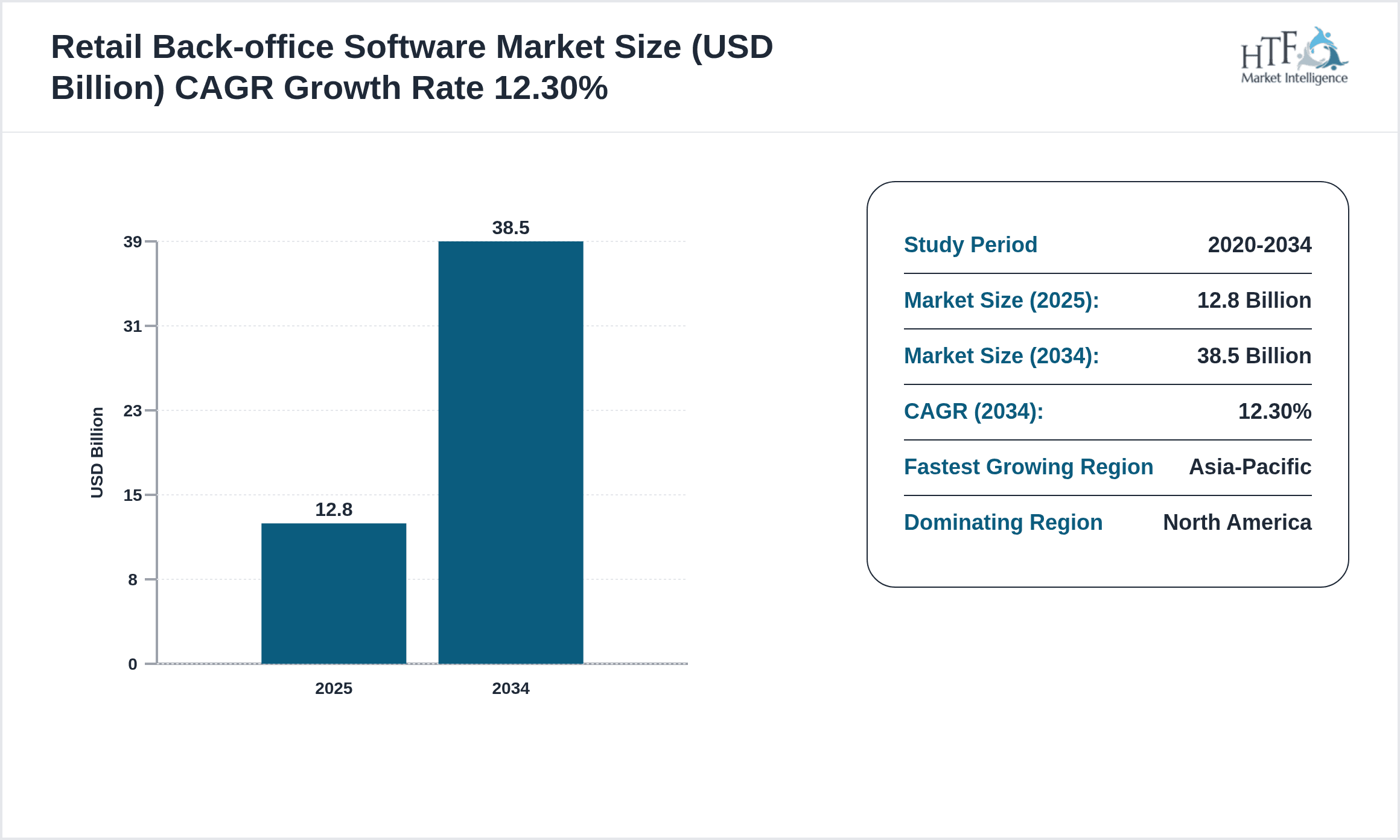
- •Key market highlights include a robust CAGR of 12.3% projected between 2025 and 2034, with the market size expected to grow from USD 12.8 Billion in 2025 to USD 38.5 Billion by 2034. Cloud-based software dominates the product type segment due to its scalability and cost-effectiveness, while AI-enabled solutions are the fastest-growing category given their capabilities in predictive analytics and automation. Inventory management remains the leading application, closely followed by sales reporting, reflecting retailers’ focus on optimizing stock levels and sales performance. North America currently leads the market in revenue generation, driven by early technology adoption and mature retail infrastructure, whereas Asia-Pacific is identified as the fastest-growing region due to rapid retail expansion and digital transformation efforts across emerging economies.
- •The value proposition of retail back-office software lies in its ability to deliver operational efficiency, reduce errors, and facilitate data-driven decisions that directly impact profitability and customer satisfaction. For retailers, these solutions offer centralized control over diverse functions, enabling seamless integration and real-time monitoring. For technology providers and investors, the market presents substantial growth opportunities driven by evolving retail dynamics and increasing demand for innovative software solutions. Furthermore, regulatory compliance and data security considerations elevate the strategic importance of reliable back-office software. Stakeholders across retail, software development, and consulting sectors benefit from understanding market trends, competitive positioning, and technological advancements discussed in this comprehensive report.
Competitive Landscape
The competitive landscape of the global Retail Back-office Software Market is characterized by intense rivalry among established global players and emerging technology firms, fostering continuous innovation and strategic differentiation. Market leaders focus on integrating advanced technologies such as artificial intelligence, machine learning, and cloud computing to offer scalable, user-friendly, and customizable solutions that cater to diverse retail segments. Competitive strategies include product innovation, strategic partnerships, mergers and acquisitions, and geographic market expansion to consolidate market share and enhance customer reach. Pricing strategies vary, with cloud-based subscription models gaining traction over traditional perpetual licenses due to their flexibility and lower upfront costs. The market exhibits moderate entry barriers related to technological expertise and compliance requirements, encouraging innovation while maintaining quality standards. Regional competition is notable in Asia-Pacific and Europe, where local vendors adapt products to specific market needs, intensifying competition. Future trends suggest increasing convergence of back-office software with omnichannel retail platforms, further intensifying competitive dynamics and driving market evolution.
Leading Companies in Retail Back-office Software Market
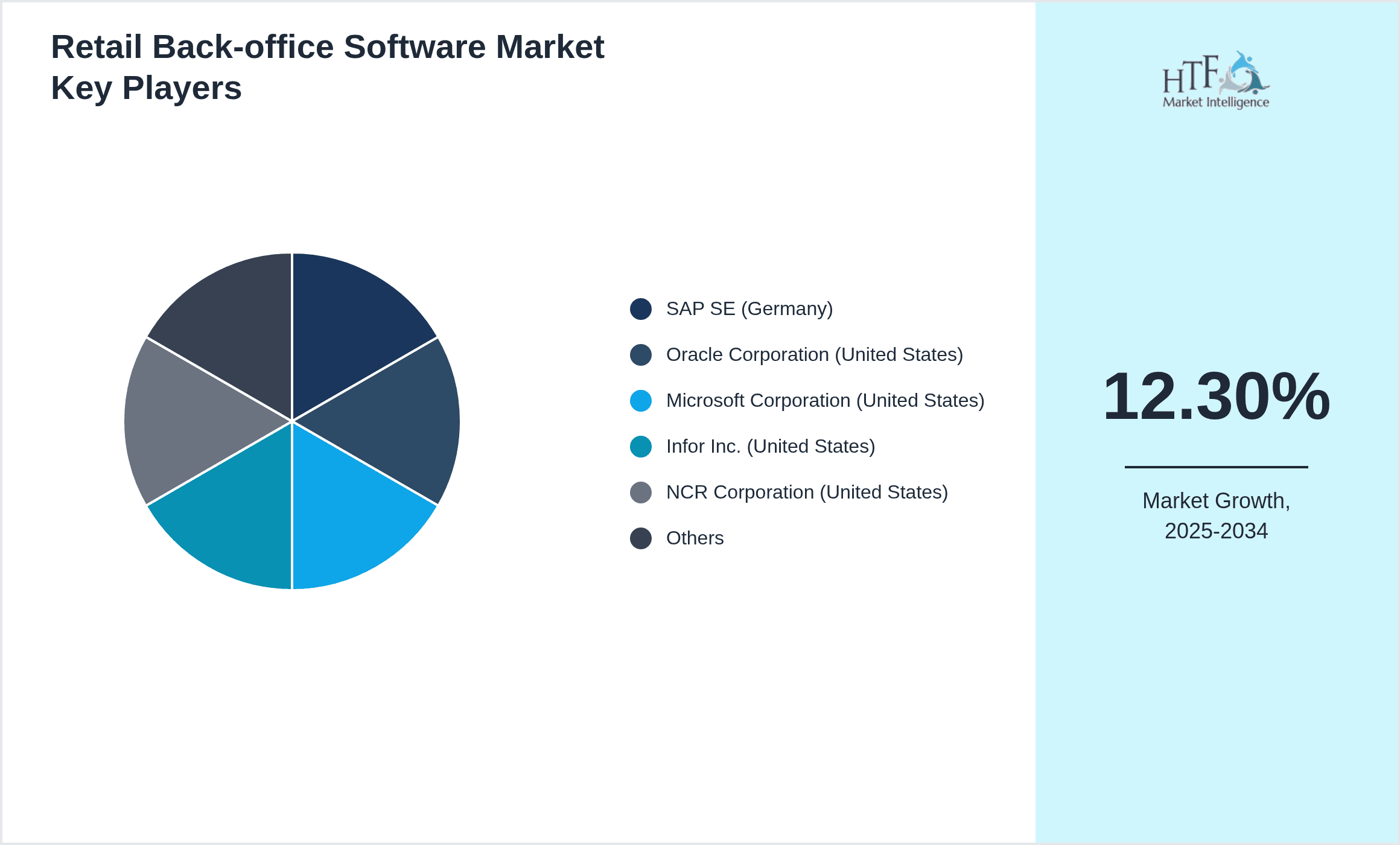
- •SAP SE (Germany)
- •Oracle Corporation (United States)
- •Microsoft Corporation (United States)
- •Infor Inc. (United States)
- •NCR Corporation (United States)
- •Epicor Software Corporation (United States)
- •Lightspeed POS Inc. (Canada)
- •Tally Solutions Pvt. Ltd. (India)
- •Cegid Group (France)
- •Sage Group plc (United Kingdom)
- •Square, Inc. (United States)
- •Shopify Inc. (Canada)
- •K3 Business Technology Group plc (United Kingdom)
- •Retail Pro International (United States)
- •NetSuite Inc. (United States)
- •Revel Systems (United States)
- •Oracle NetSuite (United States)
- •Adyen N.V. (Netherlands)
- •QuickBooks (United States)
- •Vend Limited (New Zealand)
- •Zoho Corporation Pvt. Ltd. (India)
- •Epicor Software (United States)
- •SAP Retail (Germany)
- •Microsoft Dynamics (United States)
- •Oracle Retail (United States)
Market Breakdown
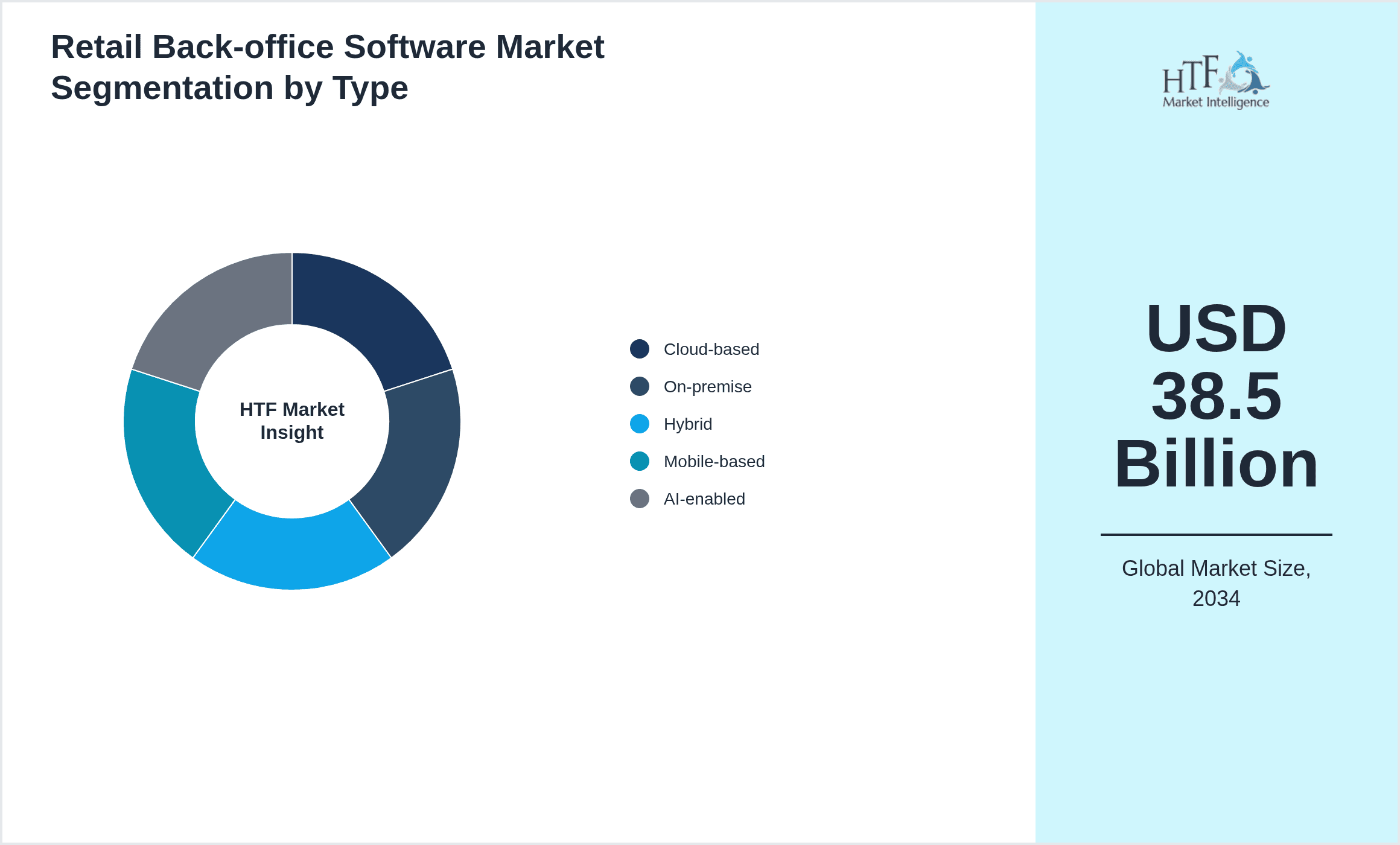
- •By Deployment Model
- ◦Cloud-based
- ◦On-premise
- ◦Hybrid
- ◦Mobile-based
- ◦AI-enabled
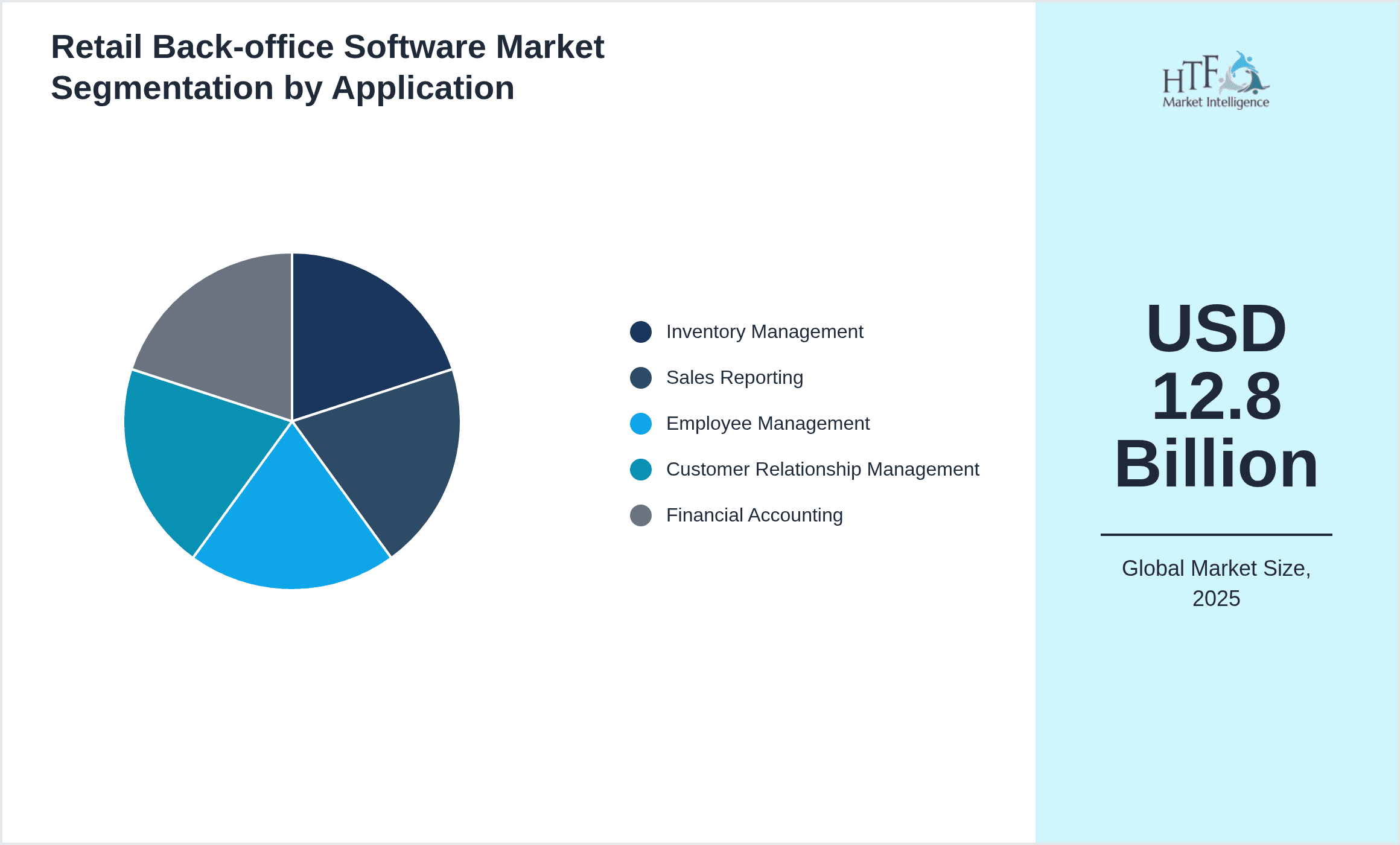
- •By Application
- ◦Inventory Management
- ◦Sales Reporting
- ◦Employee Management
- ◦Customer Relationship Management
- ◦Financial Accounting
- •By Retail Format
- ◦Supermarkets
- ◦Specialty Stores
- ◦E-commerce Platforms
- ◦Convenience Stores
- ◦Hypermarkets
- •By End User
- ◦Large Enterprises
- ◦Small and Medium Enterprises
- ◦Independent Retailers
Growth Dynamics
The global Retail Back-office Software Market is propelled by the increasing adoption of cloud-based solutions that offer scalability and cost efficiency, enabling retailers to manage complex operations with reduced IT overhead. Rising demand for real-time data analytics and automation drives investment in AI-enabled software, allowing predictive inventory management and enhanced customer insights. Additionally, the surge in e-commerce and omnichannel retail necessitates integrated back-office platforms to synchronize sales, inventory, and workforce data seamlessly. Regulatory requirements for accurate financial reporting and compliance further accelerate software adoption. The expanding retail sector in emerging economies, particularly in Asia-Pacific, fuels market growth, supported by government initiatives promoting digital transformation. Integration with mobile platforms enhances workforce management and operational agility, attracting small and medium retailers. These factors collectively underscore a robust growth trajectory for retail back-office software globally.
Market Trends
A prominent trend in the retail back-office software market is the integration of artificial intelligence and machine learning capabilities that facilitate advanced data analytics, automation of routine processes, and personalized customer engagement strategies. The widespread adoption of cloud computing continues to transform deployment models, offering flexible, subscription-based pricing and enhanced accessibility. Retailers are increasingly embracing mobile-based applications to enable real-time workforce and inventory management from any location, fostering operational agility. Sustainability initiatives influence software development, with features supporting waste reduction and energy management gaining traction. Furthermore, the convergence of back-office functions with customer-facing systems under omnichannel platforms enhances seamless retail experiences. These trends reflect the market’s responsiveness to technological innovation and evolving retail paradigms.
Market Opportunities
Emerging markets in Asia-Pacific and Latin America present significant growth opportunities due to increasing retail sector investments and rising digital literacy. The growing emphasis on AI and machine learning integration offers avenues for software vendors to develop advanced predictive analytics and automation tools tailored to retail needs. Expansion of e-commerce platforms globally necessitates robust back-office software solutions that can handle complex multi-channel operations, creating new market segments. Additionally, the increasing adoption of mobile workforce management solutions opens opportunities to cater to small and medium retailers seeking affordable, scalable software. Strategic partnerships with cloud service providers can enhance solution offerings and market penetration. Regulatory changes favoring digital record-keeping and transparency further incentivize adoption, making these areas fertile ground for innovation and market expansion.
Market Challenges
The Retail Back-office Software Market faces challenges related to data security and privacy, as sensitive financial and customer information requires stringent protection against cyber threats. Integration complexities arise due to diverse retail systems and legacy infrastructure, hindering seamless software deployment. High initial investment costs and ongoing maintenance expenses, especially for on-premise solutions, pose barriers for small retailers. Market fragmentation with numerous vendors offering varied solutions creates confusion and complicates vendor selection. Additionally, rapid technological changes demand continuous software updates, increasing operational costs for retailers. Regulatory variations across regions add complexity to compliance management within software platforms. These challenges necessitate robust risk management and innovation strategies to sustain market growth.
Regulatory Framework
From 2020 to 2025, the Retail Back-office Software Market has been influenced by stringent data protection regulations such as the General Data Protection Regulation (GDPR) in Europe, mandating secure handling of customer and employee data. The Payment Card Industry Data Security Standard (PCI DSS) has imposed compliance requirements on software managing financial transactions, ensuring secure payment processing. Various countries have introduced mandates for electronic invoicing and digital tax reporting, compelling software providers to integrate compliant features. Additionally, regional labor laws require software to support accurate employee time tracking and wage calculations. Government initiatives promoting digital transformation in retail sectors, especially in Asia-Pacific and Europe, have accelerated software adoption while necessitating adherence to emerging standards. These regulatory frameworks continue to shape product development and deployment strategies within the market.
Market Intelligence
- •15th February 2025, Oracle Corporation announced the launch of its next-generation cloud-based Retail Back-office Suite, featuring integrated AI capabilities for predictive inventory management and automated financial reporting. The platform targets large and medium retailers seeking scalable solutions to optimize operations and enhance customer engagement. Oracle’s solution emphasizes seamless integration with existing ERP systems and enhanced data security protocols to meet evolving regulatory requirements. This launch positions Oracle competitively in the expanding cloud segment, enabling retailers to leverage real-time analytics and improve operational efficiency. Source: Oracle Official Website
- •10th August 2025, SAP SE unveiled an AI-enabled back-office software module designed to streamline workforce management and customer relationship processes. The module leverages machine learning algorithms to forecast sales trends and employee scheduling needs, reducing operational costs and improving customer satisfaction. Targeted at global retail chains, the solution integrates with SAP’s broader retail ecosystem, facilitating end-to-end process automation. This innovation reflects SAP’s commitment to advancing retail digital transformation and maintaining leadership in enterprise software. Source: SAP Press Release
- •22nd March 2025, Microsoft Corporation expanded its Dynamics 365 suite with enhanced retail back-office functionalities, including mobile-based sales reporting and inventory synchronization. The update improves accessibility for retailers with distributed stores and supports hybrid deployment models. Microsoft’s focus on AI integration and cloud scalability aims to capture growing demand from small and medium enterprises globally. This initiative strengthens Microsoft’s position in the competitive retail software market landscape. Source: Microsoft Newsroom
- •7th November 2024, Shopify Inc. announced strategic partnerships with leading back-office software providers to offer integrated financial accounting and employee management solutions within its e-commerce platform. This collaboration enables Shopify merchants to streamline operations and improve compliance adherence. The expanded service offerings support Shopify’s rapid growth and diversification in the retail technology sector. Source: Shopify Corporate Announcement
Regional Outlook
The North America currently holds a significant share of the market, primarily due to several key factors: increasing consumption rates, a burgeoning population, and robust economic momentum. These elements collectively drive demand, positioning this region as a leader in the market. On the other hand, Asia-Pacific is rapidly emerging as the fastest-growing area within the industry. This remarkable growth can be attributed to swift infrastructure development, the expansion of various industrial sectors, and a marked increase in consumer demand. These dynamics make this region a crucial player in shaping future market growth.
In our report, we cover a comprehensive analysis of the following regions and countries:
- North America
- LATAM
- West Europe
- Central & Eastern Europe
- Northern Europe
- Southern Europe
- East Asia
- Southeast Asia
- South Asia
- Central Asia
- Oceania
- MEA
| Feature | Details |
|---|---|
| Base Year Market Size | USD 12.8 Billion |
| Forecast Year Market Size | USD 38.5 Billion |
| CAGR | 12.3% |
| Forecast Period | 2026 to 2033 |
| YoY Growth | 12.1% |
| Scope of Report | Market is segmented by Deployment Model (Cloud-based, On-premise, Hybrid, Mobile-based, AI-enabled), Application (Inventory Management, Sales Reporting, Employee Management, Customer Relationship Management, Financial Accounting), Retail Format (Supermarkets, Specialty Stores, E-commerce Platforms, Convenience Stores, Hypermarkets), End User (Large Enterprises, Small and Medium Enterprises, Independent Retailers) |
| Regions Covered | North America, LATAM, West Europe, Central & Eastern Europe, Northern Europe, Southern Europe, East Asia, Southeast Asia, South Asia, Central Asia, Oceania, MEA |
| Key Companies | SAP SE (Germany), Oracle Corporation (United States), Microsoft Corporation (United States), Infor Inc. (United States), NCR Corporation (United States), Epicor Software Corporation (United States), Lightspeed POS Inc. (Canada), Tally Solutions Pvt. Ltd. (India), Cegid Group (France), Sage Group plc (United Kingdom), Square, Inc. (United States), Shopify Inc. (Canada), K3 Business Technology Group plc (United Kingdom), Retail Pro International (United States), NetSuite Inc. (United States), Revel Systems (United States), Oracle NetSuite (United States), Adyen N.V. (Netherlands), QuickBooks (United States), Vend Limited (New Zealand), Zoho Corporation Pvt. Ltd. (India), Epicor Software (United States), SAP Retail (Germany), Microsoft Dynamics (United States), Oracle Retail (United States) |
Global Retail Back-office Software Market - Outlook 2025-2034 - Table of Contents
Frequently Asked Questions (FAQ):
The Compact Track Loaders market is expected to see value worth 5.3 Billion in 2025.
North America currently leads the market with approximately 45% market share, followed by Europe at 28% and Asia-Pacific at 22%. The remaining regions account for 5% of the global market.
Key growth drivers include increasing construction activities, rising demand for versatile equipment in agriculture, technological advancements in track loader design, and growing preference for compact equipment in urban construction projects.