
Global Refrigerated Transport Market Size, Growth & Revenue 2024-2034
Global Refrigerated Transport Market is segmented by Refrigerated Transport Type (Refrigerated Trucks, Refrigerated Containers, Refrigerated Railcars, Refrigerated Vans, Refrigerated Air Cargo), Application Sector (Food & Beverages, Pharmaceuticals, Chemicals, Floral Products, Others), End-User Industry (Retail & Supermarkets, Healthcare & Pharmaceuticals, Food Processing, Agriculture, Logistics & Distribution), Cooling Technology (Mechanical Compression Refrigeration, Cryogenic Refrigeration, Absorption Refrigeration), and Geography (North America, LATAM, West Europe, Central & Eastern Europe, Northern Europe, Southern Europe, East Asia, Southeast Asia, South Asia, Central Asia, Oceania, MEA)
Pricing
Report Overview
Executive Summary
- •The global Refrigerated Transport market plays a crucial role in maintaining the integrity of temperature-sensitive goods across international supply chains. It involves specialized vehicles and containers that ensure controlled environments for perishable products like food, pharmaceuticals, and chemicals. This market is characterized by a diverse range of refrigerated transport modes including trucks, containers, railcars, vans, and air cargo solutions. Key technologies such as advanced refrigeration units, IoT-based temperature monitoring, and sustainable cooling systems are integral to enhancing operational efficiency and compliance with stringent regulatory standards. The growth is fueled by rising demand for fresh food products, pharmaceutical shipments, and global trade expansion, which necessitate reliable cold chain logistics. This industry segment supports last-mile delivery and long-haul transport, linking producers to consumers worldwide. Increasing consumer awareness about food safety, coupled with technological advancements and government regulations, further expands the market. Strategic investments and collaborations among key players are shaping the future trajectory of refrigerated transport globally, ensuring robust market development from 2024 through 2034.
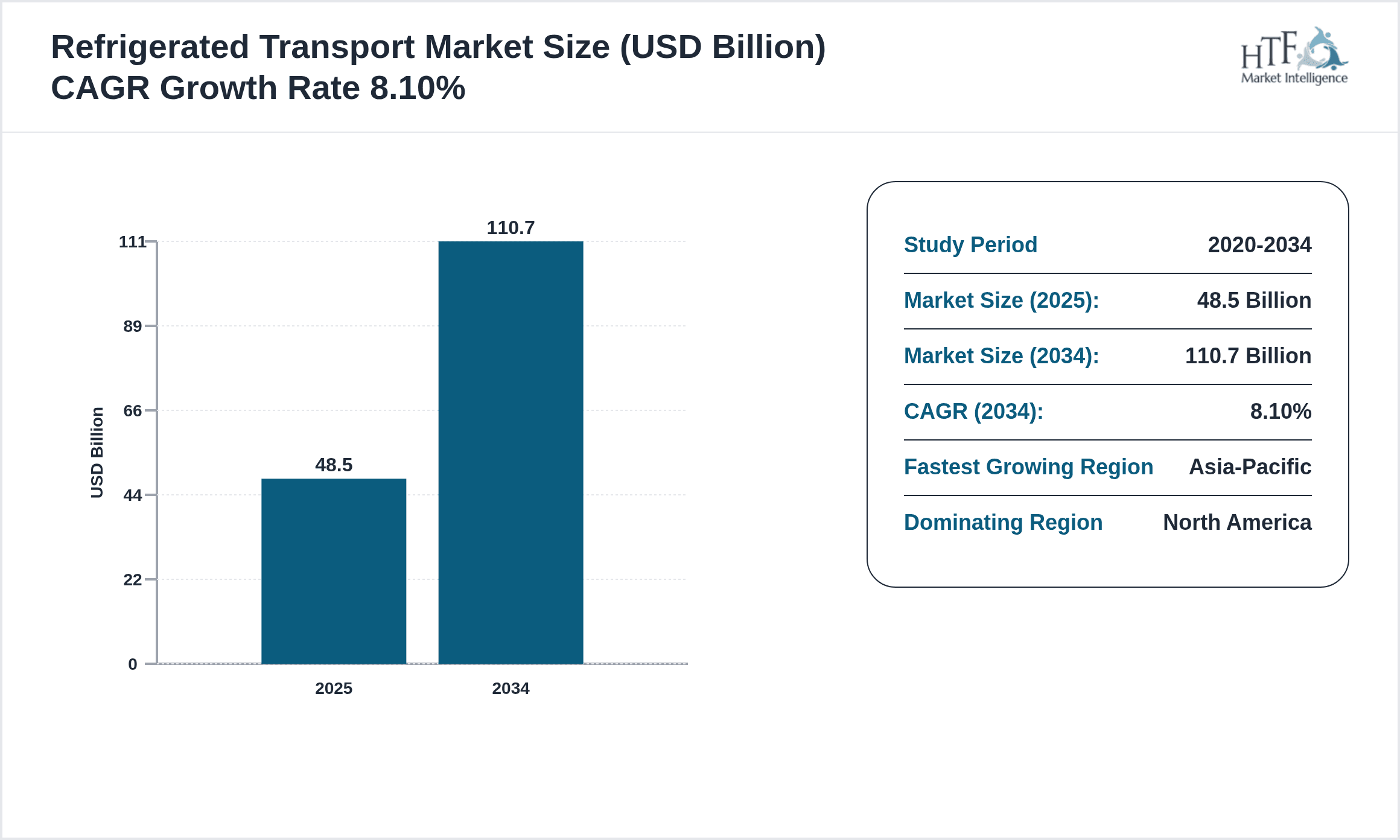
- •Key highlights include a projected CAGR of 8.1% from 2024 to 2034, with the market size expected to grow from USD 48.5 Billion in 2024 to USD 110.7 Billion by 2034. North America currently dominates the market due to advanced infrastructure and stringent regulatory frameworks, while Asia-Pacific exhibits the fastest growth driven by expanding food and pharmaceutical sectors. Refrigerated trucks remain the leading product type, accounting for a significant revenue share, while refrigerated containers are rapidly gaining traction as a preferred solution for intermodal transport. Applications such as food & beverages and pharmaceuticals constitute the largest market segments, reflecting growing global demand for temperature-sensitive logistics. Year-over-year growth is steady at approximately 7.8%, underscoring ongoing market expansion and increasing adoption of innovative cold chain technologies across regions.
- •The value proposition of refrigerated transport lies in its ability to preserve the quality, safety, and shelf life of perishable goods, thereby supporting a wide array of industries including food retail, healthcare, and chemical manufacturing. Its strategic importance is underscored by the rising global demand for fresh and frozen products, stringent safety regulations, and the necessity for reliable cold chain logistics in international trade. Stakeholders such as logistics providers, manufacturers, and retailers benefit from advances in refrigeration technology, real-time monitoring, and sustainability initiatives that reduce environmental impact. The market fosters economic growth by enabling efficient cross-border transport and minimizing product wastage. As consumer preferences evolve towards fresh and health-conscious products, refrigerated transport solutions will continue to be pivotal in meeting these expectations, driving investments and innovation within the sector.
Competitive Landscape
The competitive landscape of the global refrigerated transport market is marked by intense rivalry among well-established multinational corporations and emerging regional players. Market leaders emphasize innovation in refrigeration technology, including energy-efficient systems and IoT-enabled temperature control, to differentiate their offerings. Strategic partnerships, mergers, and acquisitions are common strategies to expand geographic reach and service capabilities. Companies invest heavily in research and development to enhance cold chain reliability and comply with evolving regulatory standards. Pricing strategies are influenced by operational costs, including fuel efficiency and maintenance of refrigeration units. Distribution networks and customer service excellence serve as critical competitive advantages. Regional competition is shaped by infrastructure maturity and local regulations, prompting tailored market approaches. Future trends indicate a shift towards sustainable refrigeration solutions and digital transformation, fostering collaboration and strategic alliances to maintain market positioning and capitalize on growth opportunities globally.
Leading Companies in Refrigerated Transport Market
- •Thermo King Corporation (United States)
- •Carrier Transicold (United States)
- •Dometic Group AB (Sweden)
- •Mitsubishi Heavy Industries, Ltd. (Japan)
- •Ingersoll-Rand plc (Ireland)
- •Schmitz Cargobull AG (Germany)
- •Kässbohrer Fahrzeugwerke GmbH (Germany)
- •Daikin Industries, Ltd. (Japan)
- •Great Dane Trailers, Inc. (United States)
- •Wabash National Corporation (United States)
- •Thermo Fluids, Inc. (Canada)
- •Kingtec Refrigeration (China)
- •Lamberet (France)
- •Frigoblock GmbH (Germany)
- •Carrier Global Corporation (United States)
- •Thermo King Europe (Netherlands)
- •Cold Car International (United Kingdom)
- •Carrier Refrigeration Asia Pacific (Singapore)
- •Thermo King Latin America (Brazil)
- •Thermo King Middle East (United Arab Emirates)
- •Carrier Transicold India (India)
- •Thermo King Australia (Australia)
- •Mitsubishi Heavy Industries Logistics (Japan)
- •Kässbohrer Logistics Solutions (Germany)
- •Dometic Transport Solutions (Sweden)
Market Breakdown
- •By Refrigerated Transport Type
- ◦Refrigerated Trucks
- ◦Refrigerated Containers
- ◦Refrigerated Railcars
- ◦Refrigerated Vans
- ◦Refrigerated Air Cargo
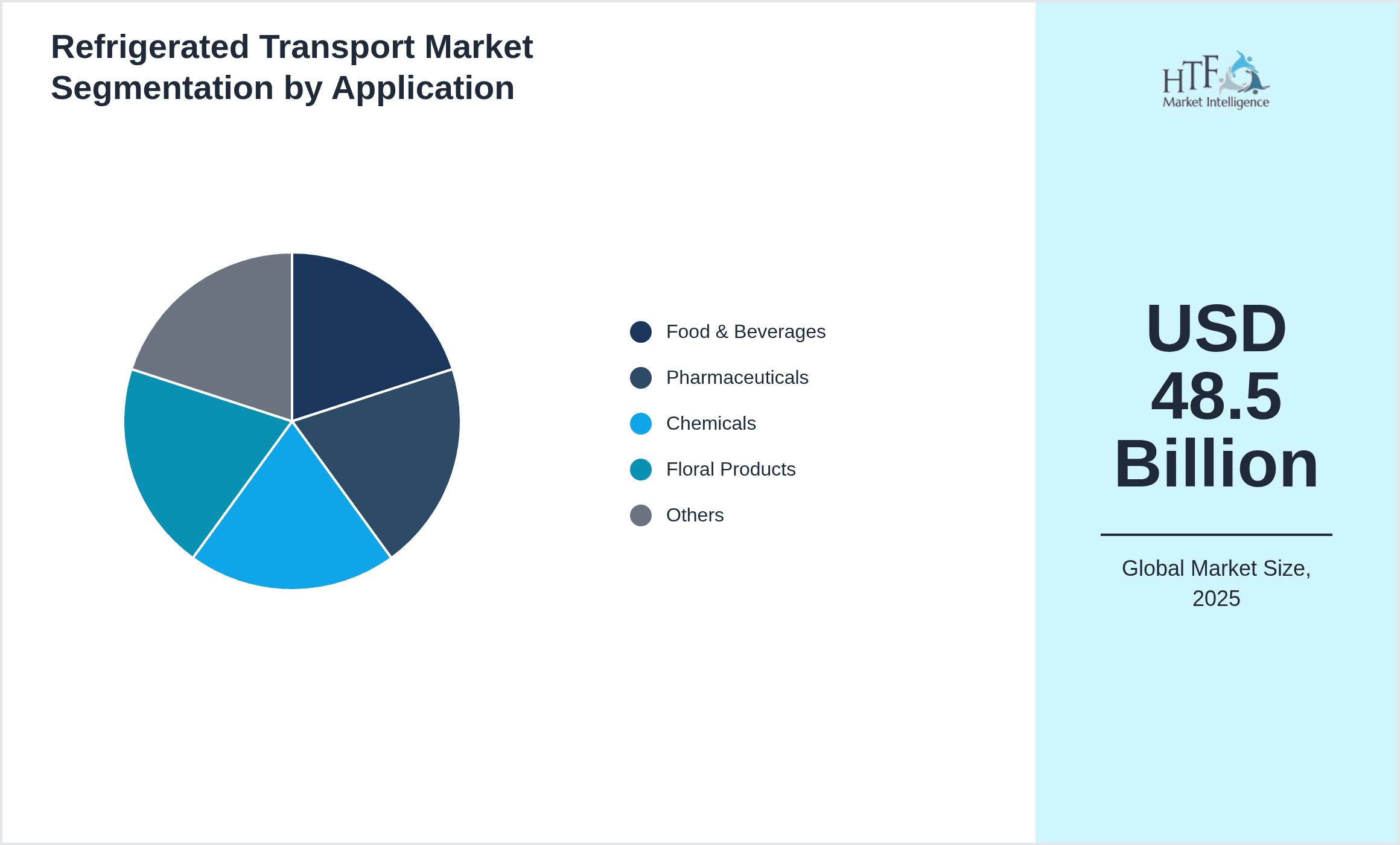
- •By Application Sector
- ◦Food & Beverages
- ◦Pharmaceuticals
- ◦Chemicals
- ◦Floral Products
- ◦Others
- •By End-User Industry
- ◦Retail & Supermarkets
- ◦Healthcare & Pharmaceuticals
- ◦Food Processing
- ◦Agriculture
- ◦Logistics & Distribution
- •By Cooling Technology
- ◦Mechanical Compression Refrigeration
- ◦Cryogenic Refrigeration
- ◦Absorption Refrigeration
Growth Dynamics
The global refrigerated transport market is propelled by rising demand for fresh and frozen food products across emerging and developed economies. Increasing consumer preference for perishable goods with extended shelf life drives investment in advanced refrigerated vehicles and containers. Additionally, the expansion of pharmaceutical logistics requiring strict temperature control enhances market growth. Technological innovations such as IoT-enabled monitoring systems and energy-efficient refrigeration units improve operational reliability and reduce costs, incentivizing adoption among logistics providers. Government regulations mandating compliance with cold chain standards further stimulate market development. Moreover, the rapid growth of e-commerce and food delivery services creates new avenues for refrigerated transport solutions, especially in urban areas. These factors collectively underpin steady market expansion, ensuring sustained demand for refrigerated transport infrastructure and services globally through 2034.
Market Trends
The refrigerated transport market is witnessing a significant shift towards sustainable and eco-friendly refrigeration technologies, including the adoption of natural refrigerants and electric-powered cooling units. This trend aligns with global environmental regulations and growing consumer awareness regarding carbon footprint reduction. Additionally, digitalization through IoT and blockchain is enhancing real-time temperature monitoring, traceability, and supply chain transparency. Integration of automated and AI-based predictive maintenance is improving vehicle uptime and operational efficiency. The rise of multi-modal cold chain logistics, combining road, rail, and sea transport, is optimizing costs and delivery times. Furthermore, customization of refrigerated units to meet specific product requirements is becoming prevalent. These trends collectively drive innovation and competitiveness within the market, shaping its future trajectory.
Market Opportunities
Emerging markets in Asia-Pacific and Latin America present substantial growth opportunities due to increasing urbanization, rising disposable incomes, and expanding cold chain infrastructure. There is significant potential for innovation in last-mile refrigerated delivery services driven by e-commerce growth. Integration of renewable energy sources and electric refrigeration units offers avenues for sustainable product development. Collaboration between logistics providers and technology firms can yield advanced monitoring and control systems enhancing supply chain efficiency. Expansion of pharmaceutical cold chains in developing regions due to rising healthcare demand also creates new market segments. Additionally, regulatory frameworks encouraging food safety and quality assurance promote investments in refrigerated transport solutions. Capitalizing on these trends can unlock new revenue streams and elevate market competitiveness globally.
Market Challenges
The refrigerated transport market faces challenges including high capital investment and operational costs associated with advanced refrigeration technologies and fuel consumption. Infrastructure limitations in emerging regions, such as inadequate cold chain facilities and poor road networks, hinder market penetration. Regulatory compliance across multiple countries involves complex standards and certifications that increase administrative burdens. Technical issues like refrigeration unit failures and temperature excursions risk product quality and customer trust. Market fragmentation and competition from traditional transport methods also pose obstacles. Additionally, shortage of skilled workforce for specialized refrigerated logistics operations affects service quality. These challenges necessitate continuous innovation, strategic partnerships, and investment in infrastructure to sustain growth and meet evolving market demands.
Regulatory Framework
Between 2020 and 2024, global regulations have increasingly focused on enhancing safety and environmental standards within the refrigerated transport market. Key mandates include stricter emission norms for refrigeration units, adherence to international cold chain certification programs, and compliance with pharmaceutical transport guidelines such as Good Distribution Practice (GDP). Regions such as North America and Europe have implemented stringent refrigerant usage policies to reduce greenhouse gas emissions, promoting natural refrigerants and electric-powered cooling solutions. Food safety regulations require continuous temperature monitoring and traceability throughout the supply chain, enforced by regulatory bodies to minimize spoilage and contamination. Governments have also introduced incentives to encourage adoption of energy-efficient refrigeration technologies. These regulations collectively shape market practices, fostering innovation and operational excellence while ensuring sustainability and compliance across global markets.
Market Intelligence
- •15th March 2024, Thermo King Corporation launched its latest electric-powered refrigerated truck model designed to reduce carbon emissions and operational costs in urban delivery services. This model integrates advanced battery technology and IoT-enabled temperature monitoring to ensure precise cold chain management. Targeted at major food and pharmaceutical distributors, the product aims to meet stringent environmental regulations while enhancing logistics efficiency. The launch underscores Thermo King's commitment to sustainability and innovation, positioning it strongly in the expanding refrigerated transport market driven by green technology adoption. Source: Official Company Press Release
- •30th October 2023, Carrier Transicold introduced a next-generation refrigerated container equipped with solar-assisted cooling technology and remote performance monitoring. The innovation enables extended transport duration with reduced fuel consumption, appealing to global shipping companies and cold chain operators. It enhances container versatility for multimodal transport, addressing growing demand for sustainable logistics solutions. Carrier's strategic objective is to lead the market in eco-friendly refrigerated transport technologies, capitalizing on rising environmental awareness and regulatory support worldwide. Source: Industry Publication
- •10th January 2025, Dometic Group AB announced a strategic partnership with a leading IoT technology firm to develop integrated cold chain monitoring platforms for refrigerated vans and trucks. The collaboration focuses on real-time data analytics, predictive maintenance, and enhanced temperature control to minimize product spoilage and optimize fleet operations. This initiative aligns with growing digital transformation trends in logistics, offering end-users improved transparency and efficiency. Dometic aims to expand its market footprint by leveraging technology-driven value propositions in refrigerated transport. Source: Company Website
- •7th July 2024, Schmitz Cargobull AG completed the acquisition of a specialized refrigerated container manufacturer to strengthen its product portfolio and geographic presence in Asia-Pacific and Europe. This move enhances Schmitz's capabilities in providing innovative temperature-controlled transport solutions and supports its long-term growth strategy. The acquisition is expected to improve market share and operational synergies while meeting increasing customer demand for reliable cold chain logistics. Source: Official Corporate Announcement
Regional Outlook
The North America currently holds a significant share of the market, primarily due to several key factors: increasing consumption rates, a burgeoning population, and robust economic momentum. These elements collectively drive demand, positioning this region as a leader in the market. On the other hand, Asia-Pacific is rapidly emerging as the fastest-growing area within the industry. This remarkable growth can be attributed to swift infrastructure development, the expansion of various industrial sectors, and a marked increase in consumer demand. These dynamics make this region a crucial player in shaping future market growth.
In our report, we cover a comprehensive analysis of the following regions and countries:
- North America
- LATAM
- West Europe
- Central & Eastern Europe
- Northern Europe
- Southern Europe
- East Asia
- Southeast Asia
- South Asia
- Central Asia
- Oceania
- MEA
| Feature | Details |
|---|---|
| Base Year Market Size | USD 48.5 Billion |
| Forecast Year Market Size | USD 110.7 Billion |
| CAGR | 8.1% |
| Forecast Period | 2026 to 2033 |
| YoY Growth | 7.8% |
| Scope of Report | Market is segmented by Refrigerated Transport Type (Refrigerated Trucks, Refrigerated Containers, Refrigerated Railcars, Refrigerated Vans, Refrigerated Air Cargo), Application Sector (Food & Beverages, Pharmaceuticals, Chemicals, Floral Products, Others), End-User Industry (Retail & Supermarkets, Healthcare & Pharmaceuticals, Food Processing, Agriculture, Logistics & Distribution), Cooling Technology (Mechanical Compression Refrigeration, Cryogenic Refrigeration, Absorption Refrigeration) |
| Regions Covered | North America, LATAM, West Europe, Central & Eastern Europe, Northern Europe, Southern Europe, East Asia, Southeast Asia, South Asia, Central Asia, Oceania, MEA |
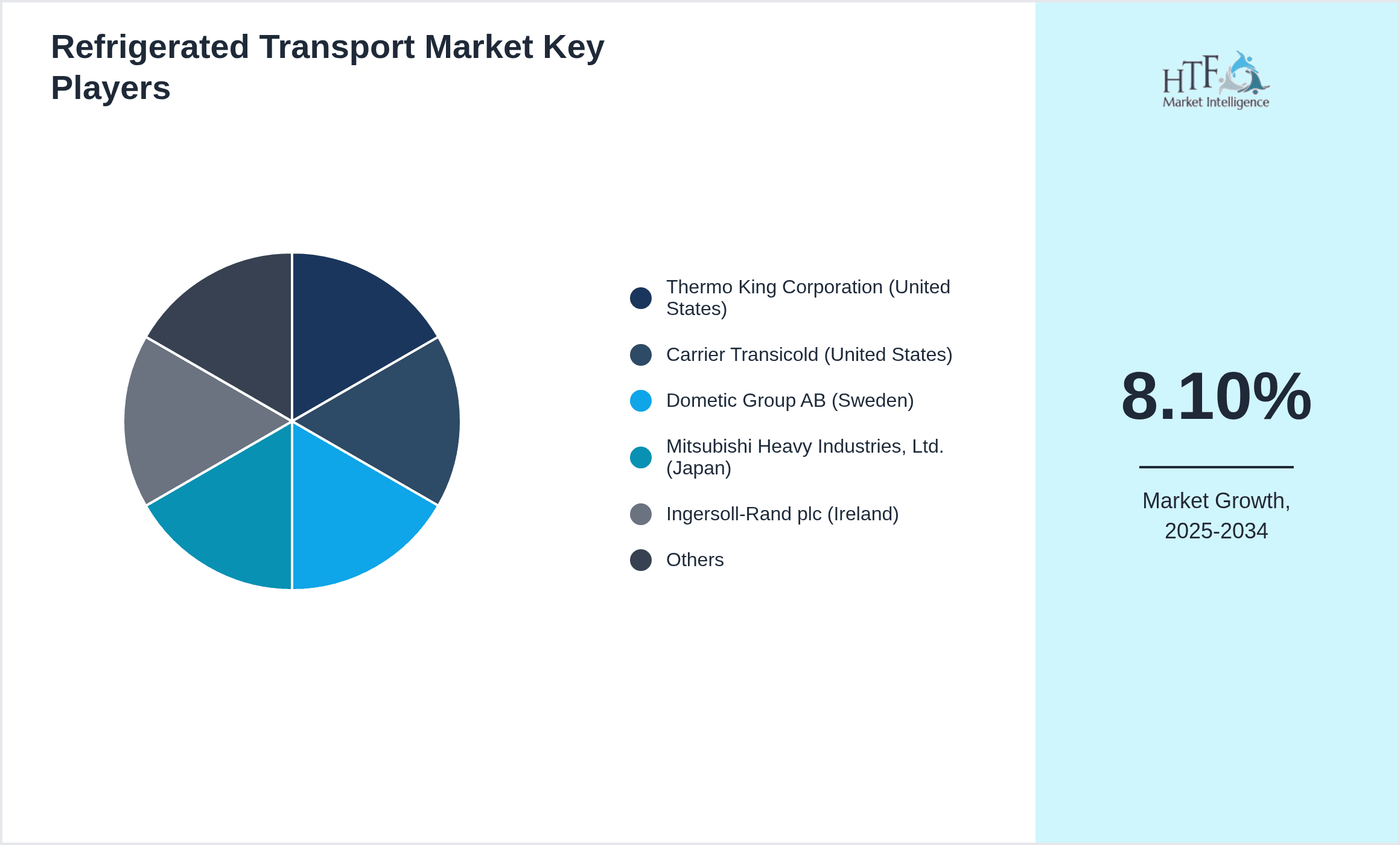
| Key Companies | Thermo King Corporation (United States), Carrier Transicold (United States), Dometic Group AB (Sweden), Mitsubishi Heavy Industries, Ltd. (Japan), Ingersoll-Rand plc (Ireland) |
Global Refrigerated Transport Market Size, Growth & Revenue 2024-2034 - Table of Contents
Multidisciplinary researcher with 10+ years of experience uncovering insights across diverse domains focused on uncovering insights that drive informed decisions.
Frequently Asked Questions (FAQ):
The Compact Track Loaders market is projected to grow at a CAGR of 6.8% from 2025 to 2030, driven by increasing demand in construction and agricultural sectors.
North America currently leads the market with approximately 45% market share, followed by Europe at 28% and Asia-Pacific at 22%. The remaining regions account for 5% of the global market.
Key growth drivers include increasing construction activities, rising demand for versatile equipment in agriculture, technological advancements in track loader design, and growing preference for compact equipment in urban construction projects.