
Asia-Pacific Coffee Capsule Market Size, Growth & Revenue 2025-2034
Asia-Pacific Coffee Capsule Market is segmented by Coffee Capsule Type (Nespresso Compatible Capsules, Dolce Gusto Compatible Capsules, Keurig Compatible Capsules, Lavazza Compatible Capsules, Other Compatible Capsules), Application (Home Use, Office Use, Cafes & Restaurants, Hotels, Retail), Capsule Material (Aluminum Capsules, Plastic Capsules, Biodegradable & Compostable Capsules), Distribution Channel (Supermarkets/Hypermarkets, Specialty Coffee Shops, E-commerce, Convenience Stores), and Geography (Asia_Pacific)
Pricing
Report Overview
Executive Summary
- •The Asia-Pacific Coffee Capsule Market is a rapidly expanding segment within the region's broader coffee industry, driven by increasing consumer demand for convenient and high-quality coffee experiences. Coffee capsules are single-serve pods compatible with various automated coffee machines, popular among home users, offices, and hospitality sectors. The market includes a wide range of product types such as Nespresso, Dolce Gusto, Keurig, and Lavazza-compatible capsules, offering consumers diverse flavor profiles and brewing options. Key applications encompass home consumption, office environments, cafes, restaurants, hotels, and retail sales, highlighting the market's broad end-user base. Innovations in capsule materials, including biodegradable and eco-friendly options, reflect growing environmental awareness and regulatory pressures. The market benefits from rising coffee culture, urbanization, and increasing disposable incomes across countries like China, India, Japan, and Southeast Asia. The Asia-Pacific region's diverse consumer preferences and expanding coffee shop presence underpin strong growth projections. Strategic partnerships, product innovations, and regional expansions are critical for market players aiming to capitalize on this growth. Overall, the market is positioned for significant expansion through 2034, supported by technological advancements and evolving consumer lifestyles.
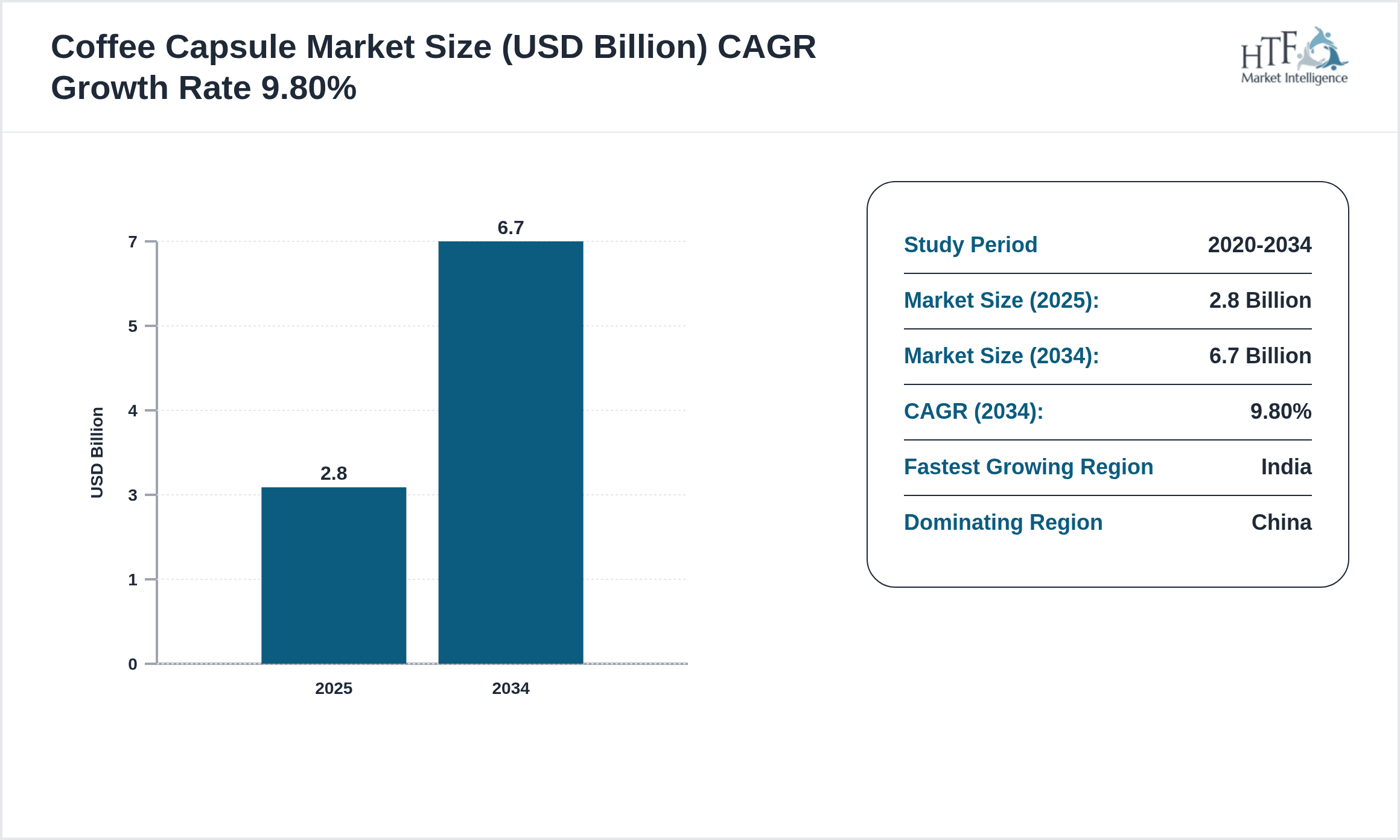
- •The Asia-Pacific Coffee Capsule Market reached an estimated USD 2.8 billion in 2025, reflecting steady growth since the 2020 historical base of USD 1.6 billion. Forecasts project the market to reach USD 6.7 billion by 2034, registering a compound annual growth rate (CAGR) of 9.8%. Year-on-year growth averages approximately 9.4%, driven by increased coffee consumption, rising café culture, and expanding retail penetration. China dominates the regional market, accounting for the largest share due to its vast consumer base and rising urban middle class. India represents the fastest-growing country within the region, supported by growing coffee awareness and adoption of premium coffee products. Nespresso-compatible capsules lead product type sales, attributed to their strong brand presence and consumer preference for quality. Meanwhile, Dolce Gusto-compatible capsules exhibit the fastest growth, fueled by innovative flavors and affordability. These highlights underscore the dynamic nature of the Asia-Pacific coffee capsule market and its potential for sustained expansion.
- •The Asia-Pacific Coffee Capsule Market offers significant value proposition for manufacturers, distributors, and retailers by tapping into evolving consumer lifestyles favoring convenience and premium coffee experiences. Its strategic importance is amplified by the region’s large and youthful population, rapid urbanization, and increasing penetration of single-serve coffee machines. The market facilitates premiumization in coffee consumption, allowing brands to differentiate via product innovation, sustainability initiatives, and localized flavor offerings. For stakeholders, the market presents opportunities to leverage digital marketing, e-commerce platforms, and partnerships with hospitality chains. Moreover, regulatory trends pushing for eco-friendly packaging encourage innovation in capsule materials, aligning with global sustainability goals. Overall, the coffee capsule market in Asia-Pacific acts as a critical growth segment contributing to the broader coffee ecosystem, stimulating economic activity and consumer engagement across multiple countries.
Competitive Landscape
The Asia-Pacific Coffee Capsule Market is characterized by a competitive environment featuring multinational corporations, regional players, and emerging local brands. Market dynamics are shaped by product innovation, strategic partnerships, and brand differentiation strategies focused on quality, sustainability, and consumer convenience. Leading companies invest heavily in research and development to introduce biodegradable capsules, enhance flavor variety, and improve machine compatibility. Competitive strategies also include aggressive marketing campaigns, e-commerce platform expansion, and exclusive collaborations with coffee machine manufacturers. Mergers and acquisitions are sporadic but serve to consolidate market share and expand geographic reach, especially in emerging economies within Southeast Asia and India. Pricing models vary from premium to value-oriented offerings to capture diverse consumer segments. Distribution channels span modern retail, online sales, and specialty coffee shops, enabling broad market penetration. Regulatory compliance and sustainability commitments increasingly influence competitive positioning. Future trends suggest heightened innovation, regional customization, and integrated digital marketing will define success in this evolving market landscape.
Leading Companies in Coffee Capsule Market
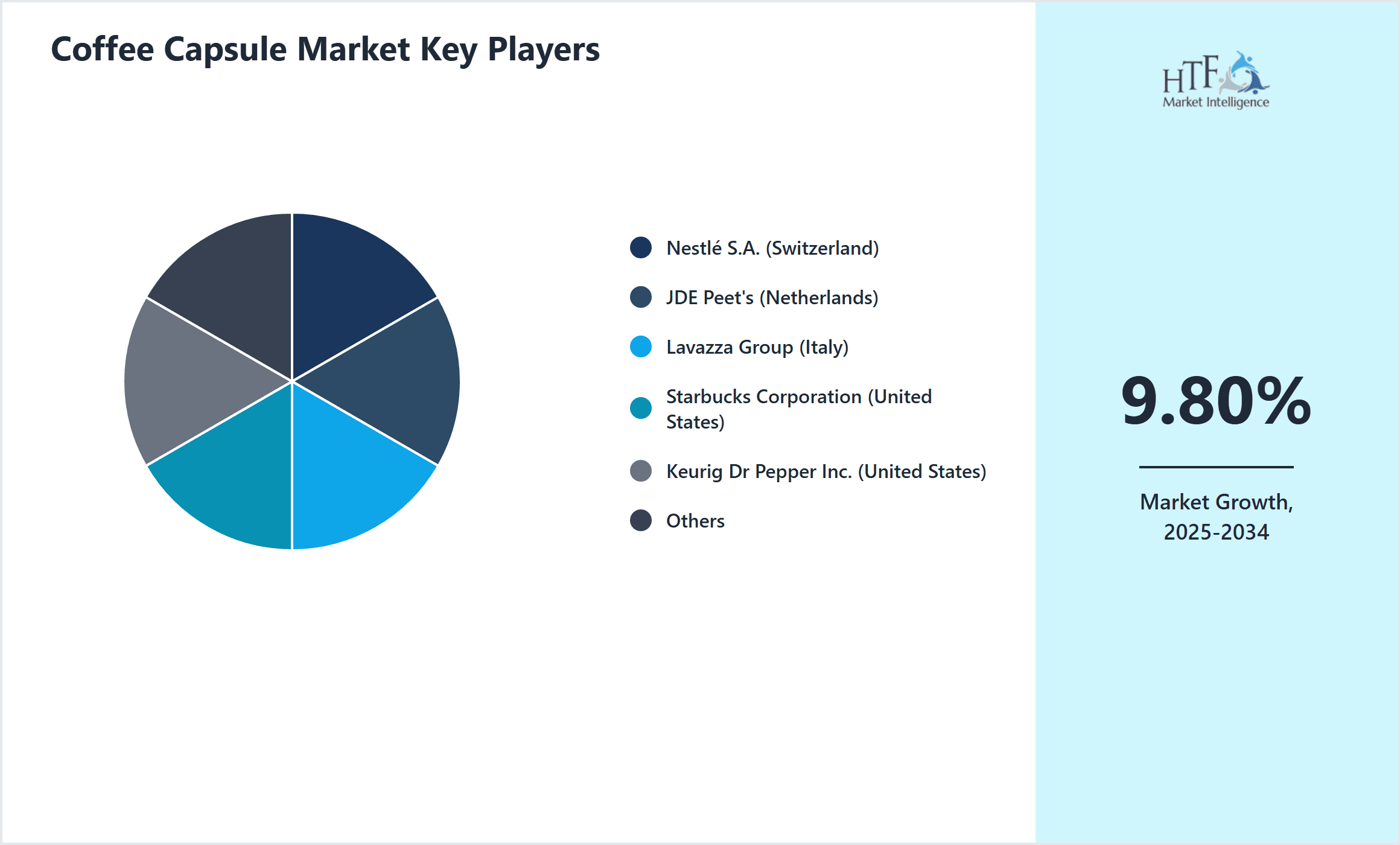
- •Nestlé S.A. (Switzerland)
- •JDE Peet's (Netherlands)
- •Lavazza Group (Italy)
- •Starbucks Corporation (United States)
- •Keurig Dr Pepper Inc. (United States)
- •Tata Consumer Products Limited (India)
- •UCC Ueshima Coffee Co., Ltd. (Japan)
- •Luckin Coffee Inc. (China)
- •Groupe SEB (France)
- •Dallmayr Kaffee oHG (Germany)
- •Illycaffè S.p.A. (Italy)
- •Meiji Holdings Co., Ltd. (Japan)
- •The Kraft Heinz Company (United States)
- •Tchibo GmbH (Germany)
- •Maxwell Coffee (South Korea)
- •Dong Suh Foods Corporation (South Korea)
- •Café de Coral Holdings (Hong Kong)
- •Coffee Day Enterprises Limited (India)
- •Maxwell House (United States)
- •Lavazza India Pvt Ltd (India)
- •Emperor Coffee (China)
- •OldTown Berhad (Malaysia)
- •Suntory Beverage & Food Limited (Japan)
- •Moccona (Australia)
- •Blue Tokai Coffee Roasters (India)

Market Breakdown
- •By Coffee Capsule Type
- ◦Nespresso Compatible Capsules
- ◦Dolce Gusto Compatible Capsules
- ◦Keurig Compatible Capsules
- ◦Lavazza Compatible Capsules
- ◦Other Compatible Capsules
- •By Application
- ◦Home Use
- ◦Office Use
- ◦Cafes & Restaurants
- ◦Hotels
- ◦Retail
- •By Capsule Material
- ◦Aluminum Capsules
- ◦Plastic Capsules
- ◦Biodegradable & Compostable Capsules
- •By Distribution Channel
- ◦Supermarkets/Hypermarkets
- ◦Specialty Coffee Shops
- ◦E-commerce
- ◦Convenience Stores
Growth Dynamics
The Asia-Pacific Coffee Capsule Market is propelled by rising urbanization and growing disposable incomes that facilitate premium coffee consumption. Increasing adoption of single-serve coffee machines at homes and offices fuels demand for compatible capsules, reflecting a shift towards convenience and quality. Expanding cafe culture and growing number of specialty coffee shops in countries like China, India, and Japan support market growth by introducing consumers to diverse coffee experiences. Technological innovations, such as biodegradable capsules and smart coffee makers, enhance market appeal while aligning with sustainability trends. Moreover, the growth of e-commerce platforms in the region enables easy access to a wide variety of coffee capsules, broadening consumer reach. Government initiatives promoting sustainable packaging and increased awareness around environmental impact further drive product innovation and adoption. Together, these factors create a favorable environment for sustained double-digit growth through 2034.
Market Trends
The Asia-Pacific coffee capsule market is witnessing a significant trend toward eco-friendly and biodegradable capsules as consumers become more environmentally conscious. Leading manufacturers are investing in sustainable materials and recyclable packaging to reduce carbon footprints and comply with tightening regulations. Another trend is the diversification of flavor profiles and specialty blends tailored to regional tastes, reflecting growing consumer experimentation. The rise of smart coffee machines integrated with IoT technology enables personalized brewing experiences, adding convenience and customization. Additionally, the surge in online retail and subscription models is transforming purchase behaviors, providing consumers with convenient access and variety. These evolving trends signify a market that is innovating rapidly to meet changing consumer expectations and regulatory demands.
Market Opportunities
The Asia-Pacific Coffee Capsule Market presents ample opportunities in untapped segments such as emerging economies like India and Southeast Asia, where coffee culture is still developing but rapidly gaining popularity. Expanding product portfolios with organic and specialty coffee capsules can capture health-conscious and premium consumers. Collaborations between capsule manufacturers and coffee machine producers offer avenues for co-branding and technology integration, enhancing customer loyalty. Growth in e-commerce and digital marketing platforms enables penetration into remote regions and younger demographics. Furthermore, increasing consumer preference for sustainable and compostable capsule options creates openings for innovation and market differentiation. Capitalizing on these areas can significantly boost market share and profitability for industry players.
Market Challenges
The Asia-Pacific Coffee Capsule Market faces challenges including high production costs associated with advanced capsule technology and sustainable materials, which can translate into premium prices limiting mass adoption. Variations in consumer preferences and brand loyalty across diverse countries complicate standardization and scaling of products. Regulatory fragmentation across different countries creates compliance complexities for manufacturers, especially regarding packaging and waste management. Limited awareness and penetration of single-serve machines in certain rural and tier-2 cities constrain market growth in emerging markets. Additionally, the environmental concerns around non-biodegradable capsules have led to increasing scrutiny and potential restrictions, pressuring manufacturers to innovate rapidly. These challenges require strategic investment and market education to overcome.
Regulatory Framework
Between 2020 and 2025, several Asia-Pacific countries implemented regulations targeting the reduction of plastic waste and promoting sustainable packaging in the coffee capsule market. For instance, Japan introduced stricter recycling mandates for consumer packaging materials in 2022, compelling manufacturers to incorporate recyclable or biodegradable components. China’s National Sword policy intensified scrutiny on waste imports and heightened domestic environmental standards in 2021, influencing capsule producers to adopt eco-friendly materials. India’s Plastic Waste Management Rules, updated in 2021, require producers to ensure extended producer responsibility for capsule waste management. Australia’s 2023 Packaging Covenant sets voluntary targets for reducing packaging waste and increasing recycling rates. South Korea enforced new environmental labeling and certification programs for biodegradable products since 2024, enhancing consumer awareness. Collectively, these regulations drive innovation in capsule design, enforce compliance, and encourage industry-wide sustainability practices, shaping market growth and competitive dynamics.
Market Intelligence
- •15th February 2025, Nestlé S.A. launched a new line of 100% biodegradable coffee capsules compatible with Nespresso machines in the Asia-Pacific region. These capsules are crafted from plant-based materials designed to decompose within 12 weeks in commercial composting facilities. The initiative aims to address growing consumer demand for sustainable products and comply with environmental regulations across key markets like China, Japan, and Australia. Nestlé also plans to expand distribution through e-commerce platforms, targeting environmentally conscious millennials and Gen Z consumers. This launch highlights the company's commitment to sustainability and innovation, expected to strengthen its market position in the rapidly evolving Asia-Pacific coffee capsule market. Source: Nestlé Official Press Release
- •10th June 2025, Tata Consumer Products Limited announced a strategic partnership with leading coffee machine manufacturer Keurig Dr Pepper to co-develop Dolce Gusto-compatible capsules tailored for the Indian market. The collaboration focuses on introducing region-specific coffee blends, including robusta and arabica varieties sourced from Indian plantations, to capitalize on rising coffee consumption trends. The partnership emphasizes affordability and quality, aiming to penetrate tier-2 and tier-3 cities through retail and online channels. This initiative is expected to accelerate market growth by expanding product offerings and leveraging Keurig's technological expertise. The move positions Tata Consumer Products as a significant player in the Asia-Pacific coffee capsule segment. Source: Tata Consumer Products Annual Report 2025
- •5th September 2024, Luckin Coffee Inc. completed its acquisition of a regional capsule manufacturer in China to vertically integrate its supply chain and enhance product quality control. The acquired company specializes in aluminum-based capsules with patented freshness sealing technology, improving shelf life and flavor retention. This acquisition allows Luckin Coffee to expand its coffee capsule offerings and strengthen its presence in the competitive Chinese market. It also provides opportunities for innovation and faster time-to-market for new products. The strategic move underscores the company’s focus on sustainability and operational efficiency in the Asia-Pacific region's coffee capsule market. Source: Luckin Coffee Press Release
- •Recent market developments and strategic initiatives are continuously tracked through industry publications, company announcements, and regulatory filings. For the most current information, stakeholders are advised to monitor official corporate communications and recognized market intelligence platforms.
Regional Outlook
The China currently holds a significant share of the market, primarily due to several key factors: increasing consumption rates, a burgeoning population, and robust economic momentum. These elements collectively drive demand, positioning this region as a leader in the market. On the other hand, India is rapidly emerging as the fastest-growing area within the industry. This remarkable growth can be attributed to swift infrastructure development, the expansion of various industrial sectors, and a marked increase in consumer demand. These dynamics make this region a crucial player in shaping future market growth.
In our report, we cover a comprehensive analysis of the following regions and countries:
| Feature | Details |
|---|---|
| Base Year Market Size | USD 2.8 Billion |
| Forecast Year Market Size | USD 6.7 Billion |
| CAGR | 9.8% |
| Forecast Period | 2026 to 2033 |
| YoY Growth | 9.4% |
| Scope of Report | Market is segmented by Coffee Capsule Type (Nespresso Compatible Capsules, Dolce Gusto Compatible Capsules, Keurig Compatible Capsules, Lavazza Compatible Capsules, Other Compatible Capsules), Application (Home Use, Office Use, Cafes & Restaurants, Hotels, Retail), Capsule Material (Aluminum Capsules, Plastic Capsules, Biodegradable & Compostable Capsules), Distribution Channel (Supermarkets/Hypermarkets, Specialty Coffee Shops, E-commerce, Convenience Stores) |
| Key Companies | Nestlé S.A. (Switzerland), JDE Peet's (Netherlands), Lavazza Group (Italy), Starbucks Corporation (United States), Keurig Dr Pepper Inc. (United States) |
Asia-Pacific Coffee Capsule Market Size, Growth & Revenue 2025-2034 - Table of Contents
Research enthusiast focused on transforming data uncovering into actionable insights through data-driven decision-making.
Frequently Asked Questions (FAQ):
The Compact Track Loaders market is projected to grow at a CAGR of 6.8% from 2025 to 2030, driven by increasing demand in construction and agricultural sectors.
North America currently leads the market with approximately 45% market share, followed by Europe at 28% and Asia-Pacific at 22%. The remaining regions account for 5% of the global market.
Key growth drivers include increasing construction activities, rising demand for versatile equipment in agriculture, technological advancements in track loader design, and growing preference for compact equipment in urban construction projects.