
Global Coffee Vending Machine Market Size, Growth & Revenue 2024-2034
Global Coffee Vending Machine Market is segmented by Type (Automatic Coffee Vending Machines, Semi-Automatic Coffee Vending Machines, Manual Coffee Vending Machines, Capsule-Based Coffee Vending Machines, Bean-to-Cup Coffee Vending Machines), Application (Office, Retail, Hospitality, Healthcare, Education), Distribution Channel (Direct Sales, Online Retail, Distributors & Dealers, Vending Machine Operators), Technology (IoT-Enabled Coffee Vending Machines, Touchless Operation Machines, Energy-Efficient Machines), and Geography (North America, LATAM, West Europe, Central & Eastern Europe, Northern Europe, Southern Europe, East Asia, Southeast Asia, South Asia, Central Asia, Oceania, MEA)
Pricing
Report Overview
Executive Summary
- •The global Coffee Vending Machine Market is a dynamic sector that integrates advanced brewing technologies with user-centric designs to serve diverse environments such as offices, retail, hospitality, healthcare, and education. It includes a spectrum of machine types ranging from manual and semi-automatic to fully automatic, capsule-based, and bean-to-cup systems. The industry is driven by rising coffee consumption worldwide, increasing demand for convenience and quality, and innovations in machine capabilities such as touchless operation and IoT connectivity. Geographic expansion across North America, Europe, Asia-Pacific, Latin America, and Middle East & Africa further fuels market growth. Key applications leverage these machines to improve beverage service efficiency and meet consumer expectations for premium coffee experiences. The market’s growth trajectory is supported by evolving consumer lifestyles, increased workplace coffee culture, and rising disposable incomes in emerging economies, establishing coffee vending machines as an indispensable component of the global beverage service landscape.
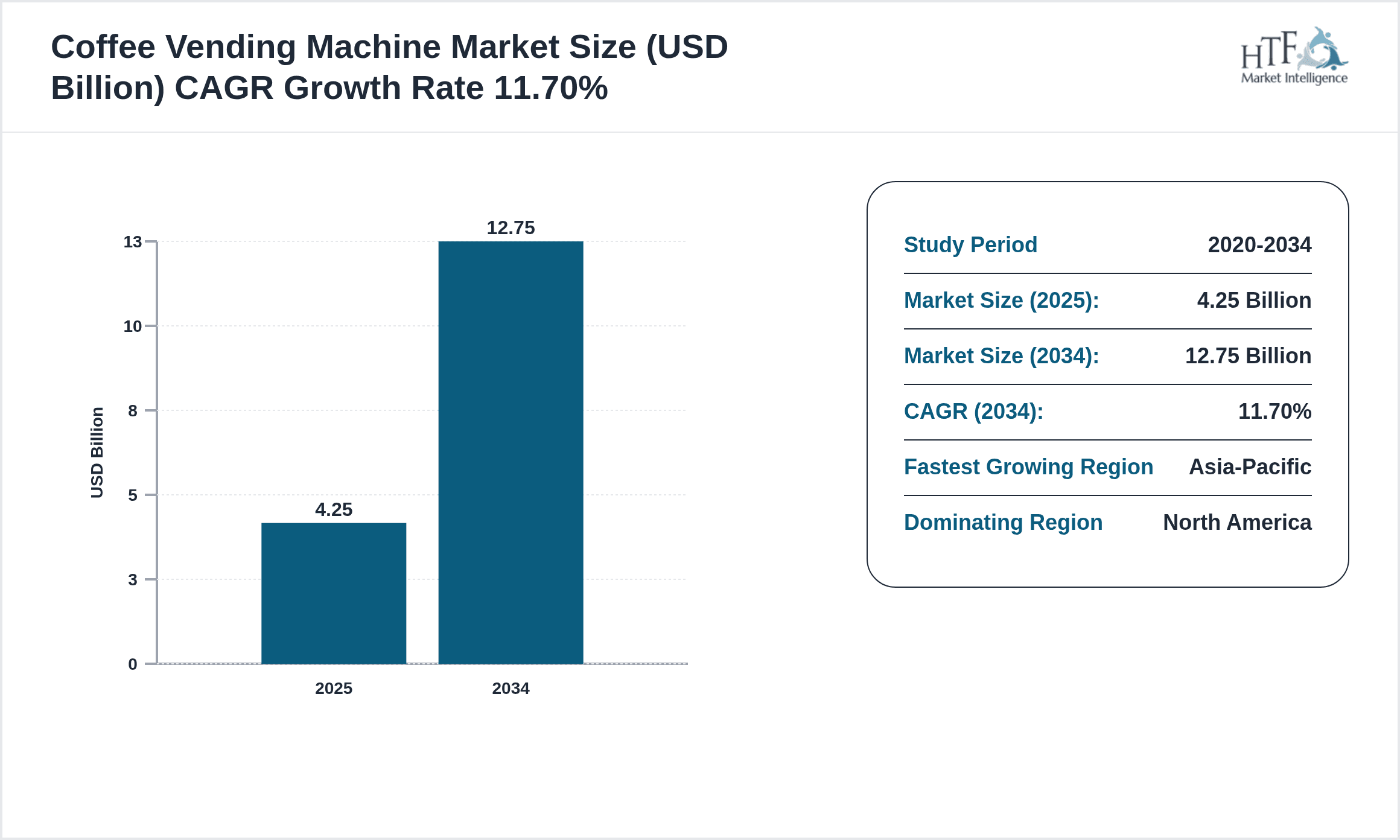
- •Market highlights reveal a robust compound annual growth rate (CAGR) of approximately 11.7% from 2024 to 2034, with the market size projected to triple from USD 4.25 billion in 2024 to USD 12.75 billion by 2034. North America currently dominates the market due to high coffee consumption and technological advancement, while Asia-Pacific is identified as the fastest-growing region driven by urbanization and expanding commercial sectors. Automatic coffee vending machines hold the largest share, attributed to their efficiency and consistency, whereas capsule-based machines exhibit the fastest growth due to rising demand for convenience and variety. The office segment leads applications, reflecting the integration of coffee vending solutions in workplace settings. These data points underscore the sector’s lucrative growth prospects and strategic importance.
- •The Coffee Vending Machine Market offers significant value to manufacturers, distributors, and end-users by enhancing beverage accessibility and quality. Its strategic importance spans improving operational efficiencies in commercial and institutional settings, catering to evolving consumer preferences for gourmet coffee, and driving sustainable business models through innovations like energy-efficient machines. Stakeholders benefit from expanding market opportunities, technological advancements, and the ability to deliver customized coffee experiences, positioning the market as a critical contributor to global coffee culture and related industries.
Competitive Landscape
The global Coffee Vending Machine Market exhibits intense competition shaped by innovation, product differentiation, and strategic partnerships. Leading players focus on integrating smart technologies such as IoT, AI-enabled maintenance, and user-friendly interfaces to enhance machine performance and customer experience. Market rivalry is characterized by aggressive product launches, regional expansions, and diversification into capsule-based and bean-to-cup technologies. Companies employ competitive pricing, broad distribution networks, and strong after-sales services to consolidate market share. Mergers and acquisitions have become pivotal for market consolidation and expanding technological capabilities. Additionally, regional competition arises from emerging local manufacturers in Asia-Pacific and Latin America, fostering innovation and price competitiveness. The competitive landscape underscores a dynamic environment where agility, innovation, and customer-centric strategies determine market leadership and future growth.
Prominent Players in Coffee Vending Machine Market
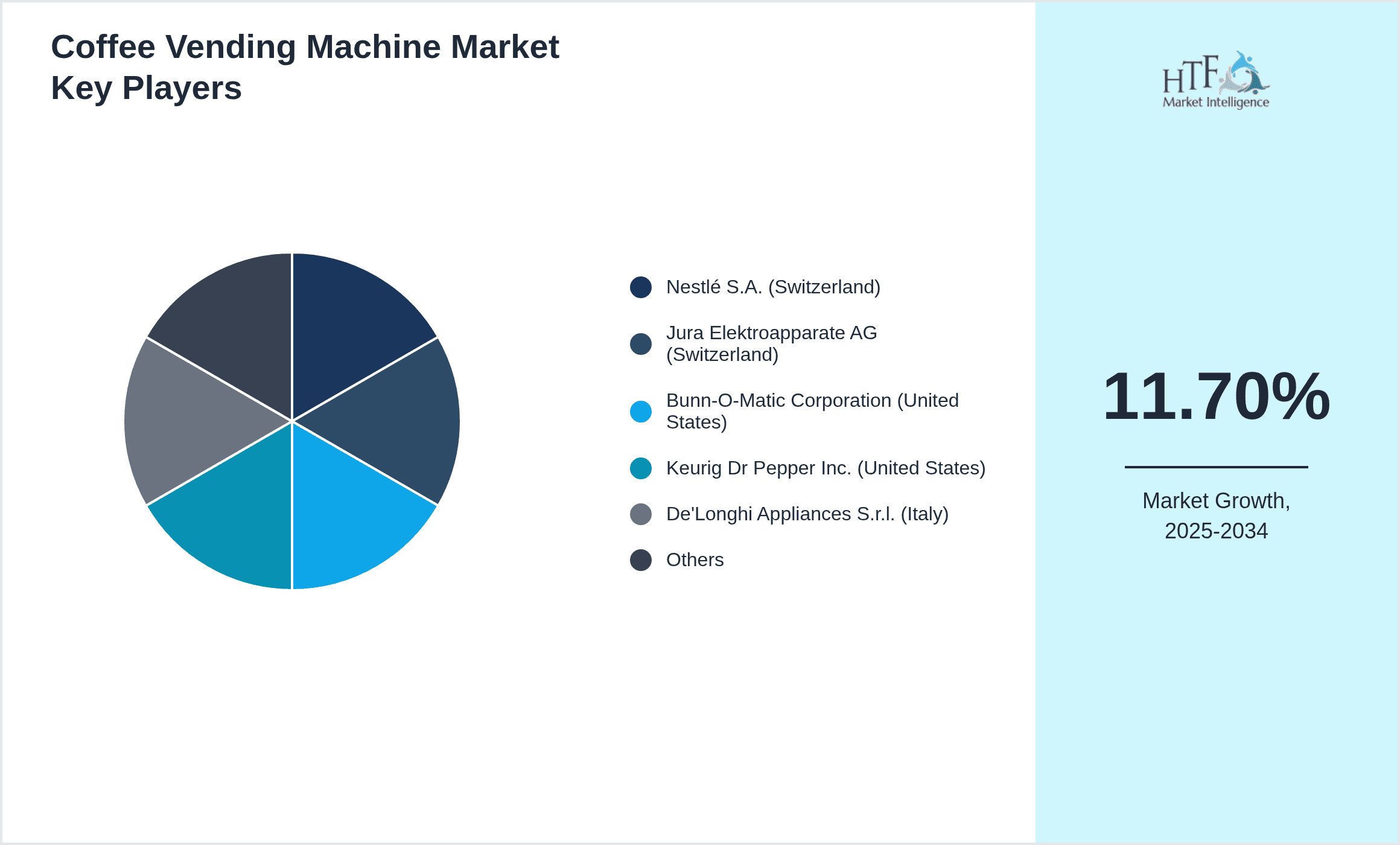
- •Nestlé S.A. (Switzerland)
- •Jura Elektroapparate AG (Switzerland)
- •Bunn-O-Matic Corporation (United States)
- •Keurig Dr Pepper Inc. (United States)
- •De'Longhi Appliances S.r.l. (Italy)
- •Electrolux AB (Sweden)
- •Franke Holding AG (Switzerland)
- •Saeco International Group S.p.A. (Italy)
- •La Cimbali S.p.A. (Italy)
- •Krones AG (Germany)
- •Gaggia S.p.A. (Italy)
- •WMF Group GmbH (Germany)
- •Rhea Vendors S.p.A. (Italy)
- •Vendo Company (United States)
- •N&W Global Vending S.p.A. (Italy)
- •Crane Merchandising Systems (United States)
- •SandenVendo Co., Ltd. (Japan)
- •Fuji Electric Co., Ltd. (Japan)
- •Royal Vendors, Inc. (United States)
- •Bianchi Industry S.p.A. (Italy)
- •La Marzocco S.r.l. (Italy)
- •Zanussi Elettrodomestici S.p.A. (Italy)
- •Saeco International Group (Italy)
- •Kohler Co. (United States)
- •Cimbali Group (Italy)
Market Breakdown
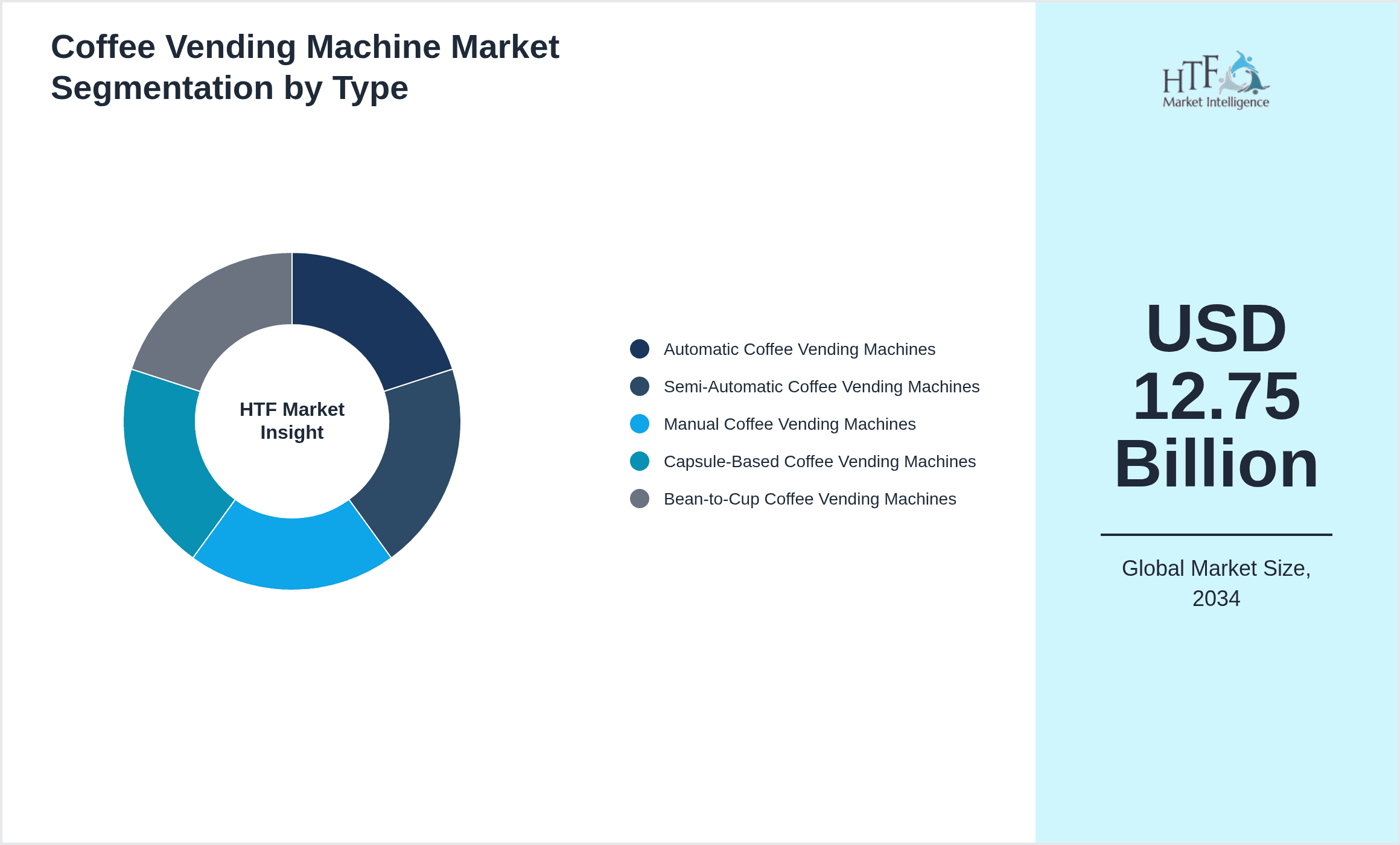
- •By Type
- ◦Automatic Coffee Vending Machines
- ◦Semi-Automatic Coffee Vending Machines
- ◦Manual Coffee Vending Machines
- ◦Capsule-Based Coffee Vending Machines
- ◦Bean-to-Cup Coffee Vending Machines
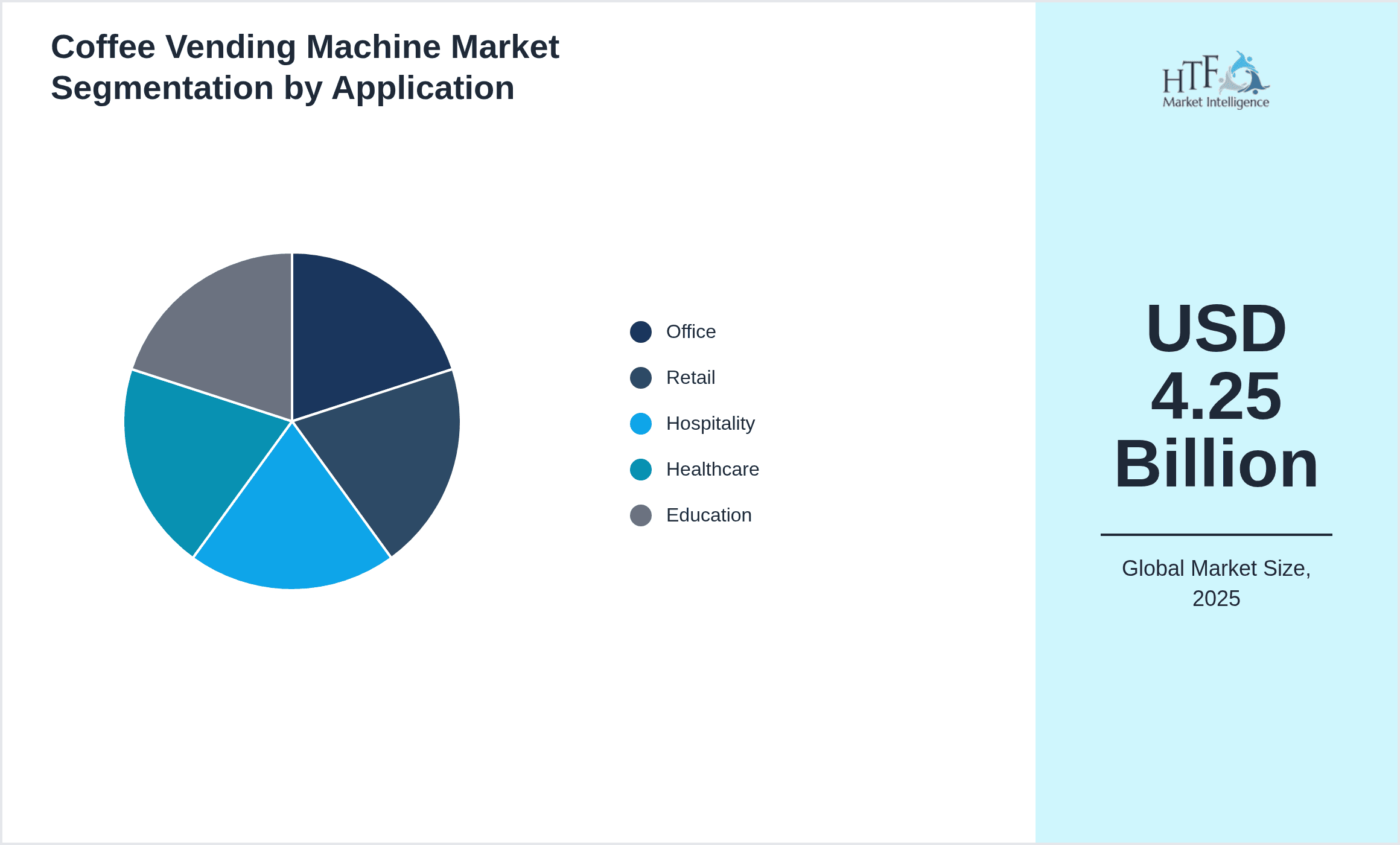
- •By Application
- ◦Office
- ◦Retail
- ◦Hospitality
- ◦Healthcare
- ◦Education
- •By Distribution Channel
- ◦Direct Sales
- ◦Online Retail
- ◦Distributors & Dealers
- ◦Vending Machine Operators
- •By Technology
- ◦IoT-Enabled Coffee Vending Machines
- ◦Touchless Operation Machines
- ◦Energy-Efficient Machines
Growth Dynamics
- •Rising global coffee consumption and the growing preference for premium and specialty coffee drive the Coffee Vending Machine Market's growth. The increasing adoption of automated coffee machines in commercial and institutional settings enhances efficiency and service quality, meeting consumer demand for convenience and consistency.
- •Technological advancements such as IoT integration, touchless operation, and energy-efficient designs are revolutionizing coffee vending machines. These innovations improve user experience, reduce maintenance costs, and align with sustainability goals, thereby attracting a broader user base and expanding market reach.
- •The expansion of office spaces, retail outlets, and hospitality sectors worldwide fuels demand for coffee vending machines. Urbanization and rising disposable incomes, especially in emerging regions like Asia-Pacific and Latin America, create new growth avenues by increasing access to automated coffee solutions.
- •Consumer lifestyle changes favoring quick-service and grab-and-go coffee solutions propel the adoption of capsule-based and bean-to-cup vending machines. These types offer customization and variety, appealing to younger demographics and tech-savvy consumers.
- •Government initiatives promoting energy efficiency and sustainability in commercial equipment encourage manufacturers to innovate and adopt greener technologies. This regulatory landscape supports market expansion by fostering environmentally friendly coffee vending solutions.
- •Collaborations between coffee machine manufacturers and coffee brands enhance product offerings and market penetration. Strategic partnerships enable co-branding and exclusive product launches, elevating customer engagement and expanding geographic footprint.
- •Increasing investments in smart vending solutions equipped with cashless payment systems and remote monitoring boost operational efficiency, reduce downtime, and improve user convenience, thereby driving market growth.
Market Trends
- •The Coffee Vending Machine Market is witnessing a surge in IoT-enabled machines that allow real-time monitoring and predictive maintenance, reducing operational costs and enhancing uptime. Companies are increasingly incorporating AI to personalize coffee preparation based on consumer preferences.
- •Sustainability is a growing trend, with manufacturers focusing on energy-efficient machines and recyclable capsule systems to reduce environmental impact. This shift aligns with corporate social responsibility goals and consumer demand for eco-friendly products.
- •The rise of capsule-based coffee vending machines reflects consumer demand for convenience, variety, and quality. Innovative capsule designs and partnerships with premium coffee brands are expanding the product portfolio and market appeal.
- •Touchless and contactless operation technologies have gained prominence post-pandemic, enhancing hygiene and safety in public and workplace environments. This trend is driving upgrades and new installations across sectors.
- •Integration of digital payment methods, including mobile wallets and NFC-enabled cards, is becoming standard, improving transaction speed and user experience. This trend supports wider adoption in retail and hospitality sectors.
- •Customization features allowing users to select coffee strength, temperature, and cup size are increasingly incorporated, providing personalized experiences that attract diverse consumer segments.
- •Expansion into emerging markets through strategic partnerships and localized product offerings is reshaping the competitive landscape by tapping into new consumer bases and increasing accessibility.
Market Opportunities
- •Emerging markets in Asia-Pacific and Latin America present significant growth opportunities due to increasing urbanization, rising incomes, and expanding commercial infrastructure, enabling wider adoption of coffee vending machines.
- •Innovations in capsule technology and sustainable materials offer avenues for product differentiation and environmental impact reduction, appealing to eco-conscious consumers and businesses.
- •Integration of smart features such as AI-driven customization, remote diagnostics, and cashless payment systems opens opportunities for enhanced customer engagement and operational efficiency.
- •Expanding applications beyond traditional offices and retail into healthcare, education, and hospitality sectors can diversify revenue streams and increase machine deployment.
- •Strategic partnerships with coffee brands and technology providers can facilitate co-branded products and innovative service models, boosting market penetration and brand loyalty.
- •Government incentives for energy-efficient appliances encourage manufacturers to develop green coffee vending machines, creating competitive advantages and meeting regulatory requirements.
- •Customization and personalization trends offer opportunities to develop machines catering to specific consumer preferences, enhancing user satisfaction and repeat usage.
Market Challenges
- •High initial investment and maintenance costs for advanced coffee vending machines can deter small businesses and limit market penetration in price-sensitive regions.
- •Technical complexities and the need for skilled maintenance personnel pose operational challenges, especially in regions with limited technical infrastructure.
- •Competition from alternative coffee delivery methods such as traditional cafes and portable coffee makers restricts market growth by offering consumers diverse options.
- •Supply chain disruptions and component shortages, exacerbated by global events, impact production timelines and increase costs for manufacturers and distributors.
- •Regulatory compliance related to safety, hygiene, and environmental standards varies across regions, complicating market entry and product standardization.
- •Consumer skepticism about machine-brewed coffee quality compared to barista-prepared beverages limits adoption among certain demographic segments.
- •Rapid technological advancements require continuous investment in R&D, which can strain resources for smaller market players.
Regulatory Framework
- •Between 2019 and 2024, several countries implemented energy efficiency standards for commercial vending machines, mandating lower power consumption and promoting eco-friendly designs. Compliance with these standards is critical for market access and competitive positioning.
- •Regulations enforcing hygienic standards and food safety for vending machines have been intensified globally, requiring manufacturers to integrate antimicrobial materials and automated cleaning systems, enhancing consumer trust.
- •Environmental regulations promoting the use of recyclable and biodegradable materials in capsule production have influenced product development, pushing manufacturers toward sustainable innovations.
- •Several regions introduced mandates for the integration of cashless payment systems in vending machines to enhance transaction security and reduce cash handling risks, impacting system designs and software integration.
- •Government incentives and subsidies for adopting energy-efficient and smart vending technologies have been launched in key markets, encouraging investments and accelerating market growth.
Market Intelligence
- •15th January 2025, Nestlé S.A. launched its latest IoT-enabled automatic coffee vending machine designed for office environments. This new machine features remote monitoring capabilities, predictive maintenance alerts, and customizable brewing profiles, enhancing operational efficiency and user satisfaction. The product aims to capitalize on the growing demand for smart office coffee solutions, providing seamless integration with existing workplace management systems and supporting sustainability through energy-saving modes. The launch underscores Nestlé’s commitment to innovation and leadership in the coffee vending segment. Source: Nestlé Official Press Release
- •10th March 2025, Jura Elektroapparate AG introduced a capsule-based coffee vending machine that incorporates biodegradable capsules and advanced brewing technology for superior flavor extraction. This innovation targets environmentally conscious consumers and commercial operators seeking sustainable solutions without compromising coffee quality. The machine supports contactless payment options and offers customizable drink sizes, catering to evolving consumer preferences. Jura’s strategic move aligns with global sustainability trends and strengthens its market position across Europe and Asia-Pacific. Source: Jura Corporate Website
- •20th February 2025, Bunn-O-Matic Corporation announced a strategic partnership with a leading coffee brand to co-develop a line of bean-to-cup vending machines optimized for retail and hospitality sectors. This collaboration focuses on delivering premium coffee experiences with enhanced customization features and IoT connectivity for operational analytics. The initiative aims to expand Bunn’s market footprint in North America and Asia-Pacific through combined brand strength and technological expertise, addressing rising demand for high-quality, automated coffee solutions. Source: Bunn Official Announcement
- •5th April 2025, Keurig Dr Pepper Inc. completed the acquisition of a European smart vending technology startup specializing in AI-driven maintenance and user interface enhancements. This acquisition enables Keurig to integrate advanced analytics and predictive maintenance capabilities into its coffee vending machines, reducing downtime and improving customer experience. The move supports Keurig’s growth strategy focused on innovation and digital transformation in the global coffee vending market. Source: Keurig Dr Pepper Corporate News
Regional Outlook
The North America currently holds a significant share of the market, primarily due to several key factors: increasing consumption rates, a burgeoning population, and robust economic momentum. These elements collectively drive demand, positioning this region as a leader in the market. On the other hand, Asia-Pacific is rapidly emerging as the fastest-growing area within the industry. This remarkable growth can be attributed to swift infrastructure development, the expansion of various industrial sectors, and a marked increase in consumer demand. These dynamics make this region a crucial player in shaping future market growth.
In our report, we cover a comprehensive analysis of the following regions and countries:
- North America
- LATAM
- West Europe
- Central & Eastern Europe
- Northern Europe
- Southern Europe
- East Asia
- Southeast Asia
- South Asia
- Central Asia
- Oceania
- MEA
| Feature | Details |
|---|---|
| Base Year Market Size | USD 4.25 Billion |
| Forecast Year Market Size | USD 12.75 Billion |
| CAGR | 11.7% |
| Forecast Period | 2026 to 2033 |
| YoY Growth | 11.1% |
| Scope of Report | Market is segmented by Type (Automatic Coffee Vending Machines, Semi-Automatic Coffee Vending Machines, Manual Coffee Vending Machines, Capsule-Based Coffee Vending Machines, Bean-to-Cup Coffee Vending Machines), Application (Office, Retail, Hospitality, Healthcare, Education), Distribution Channel (Direct Sales, Online Retail, Distributors & Dealers, Vending Machine Operators), Technology (IoT-Enabled Coffee Vending Machines, Touchless Operation Machines, Energy-Efficient Machines) |
| Regions Covered | North America, LATAM, West Europe, Central & Eastern Europe, Northern Europe, Southern Europe, East Asia, Southeast Asia, South Asia, Central Asia, Oceania, MEA |
| Key Companies | Nestlé S.A. (Switzerland), Jura Elektroapparate AG (Switzerland), Bunn-O-Matic Corporation (United States), Keurig Dr Pepper Inc. (United States), De'Longhi Appliances S.r.l. (Italy), Electrolux AB (Sweden), Franke Holding AG (Switzerland), Saeco International Group S.p.A. (Italy), La Cimbali S.p.A. (Italy), Krones AG (Germany), Gaggia S.p.A. (Italy), WMF Group GmbH (Germany), Rhea Vendors S.p.A. (Italy), Vendo Company (United States), N&W Global Vending S.p.A. (Italy), Crane Merchandising Systems (United States), SandenVendo Co., Ltd. (Japan), Fuji Electric Co., Ltd. (Japan), Royal Vendors, Inc. (United States), Bianchi Industry S.p.A. (Italy), La Marzocco S.r.l. (Italy), Zanussi Elettrodomestici S.p.A. (Italy), Saeco International Group (Italy), Kohler Co. (United States), Cimbali Group (Italy) |
Global Coffee Vending Machine Market Size, Growth & Revenue 2024-2034 - Table of Contents
Multidisciplinary researcher with 10+ years of experience uncovering insights across diverse domains focused on uncovering insights that drive informed decisions.
Frequently Asked Questions (FAQ):
The Market market is projected to grow at a steady CAGR from 2025 to 2030, driven by increasing demand and expansion in various applications.
North America currently leads the market, followed by Europe and Asia-Pacific.
Key growth drivers include increasing activities, rising demand for innovative solutions, technological advancements, and growing preference for efficient products.