
Global Casual Pants Market Size, Growth & Revenue 2024-2034
Global Casual Pants Market is segmented by Casual Pants Type (Denim Casual Pants, Chinos Casual Pants, Joggers Casual Pants, Cargo Casual Pants, Linen Casual Pants), Application (Men Casual Pants, Women Casual Pants, Kids Casual Pants, Unisex Casual Pants, Others), Distribution Channel (Retail Stores, E-commerce, Specialty Stores, Department Stores), Fabric Technology (Sustainable Fabric, Stretchable Fabric, Moisture-Wicking Fabric), and Geography (North America, LATAM, West Europe, Central & Eastern Europe, Northern Europe, Southern Europe, East Asia, Southeast Asia, South Asia, Central Asia, Oceania, MEA)
Pricing
Report Overview
Executive Summary
- •The global casual pants market represents a dynamic and rapidly evolving segment within the apparel industry, characterized by a broad variety of pants designed for informal and everyday wear across diverse consumer groups including men, women, kids, and unisex categories. This market includes key product types such as denim, chinos, joggers, cargo pants, and linen pants, each catering to distinct style preferences and functional needs. The scope extends to multiple sales channels, including brick-and-mortar retail, online platforms, and specialty stores, enabling broad consumer reach worldwide. Key factors influencing market growth include rising urban lifestyles, increasing emphasis on comfort and versatility in clothing, and advancements in fabric technologies that enhance wearability and sustainability. Furthermore, shifting fashion trends and increasing brand consciousness drive innovation and product diversification. Overall, the global casual pants market is poised for robust expansion, supported by demographic shifts, regional economic developments, and emerging consumer behavior trends that prioritize both style and practicality in apparel choices.
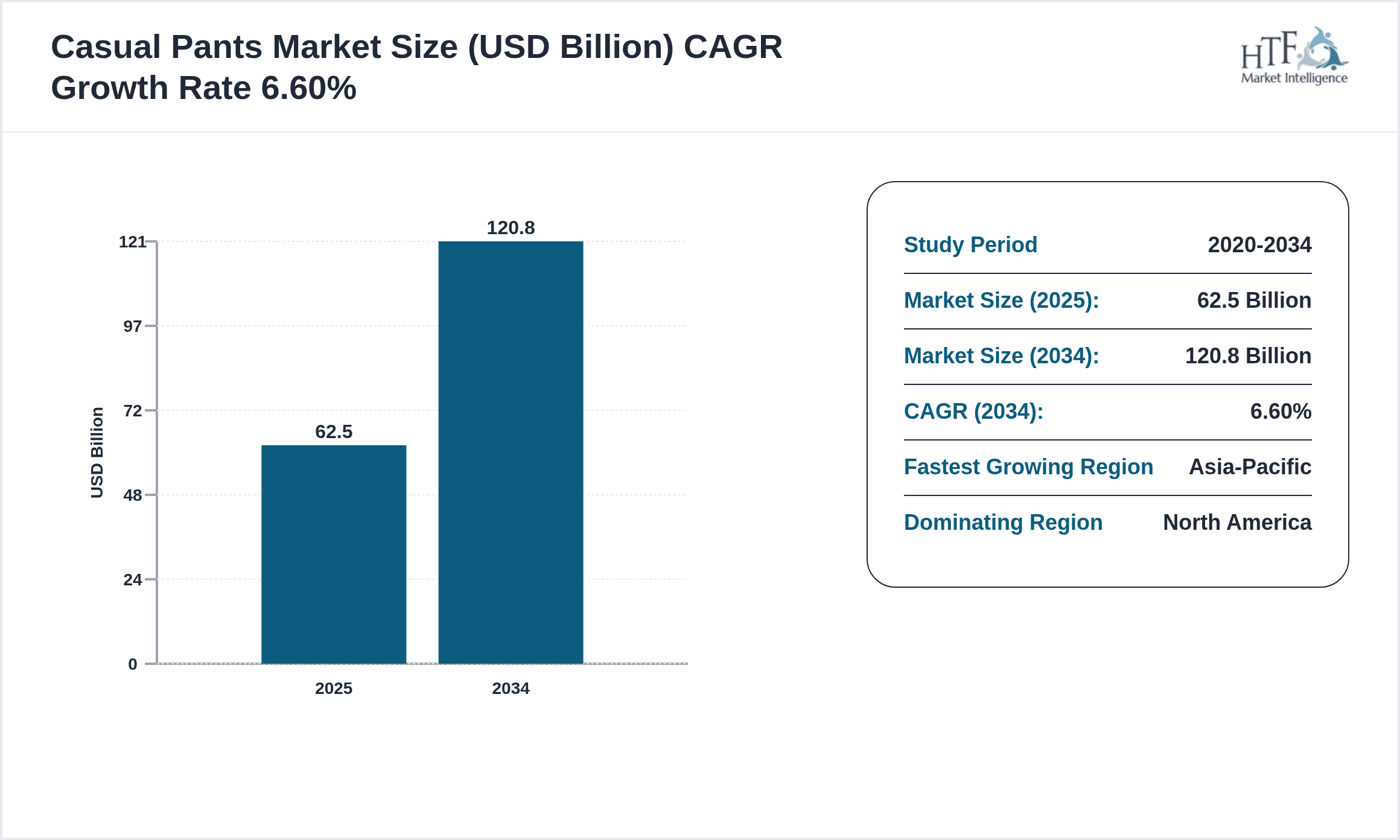
- •Noteworthy growth indicators include a compound annual growth rate (CAGR) of approximately 6.6% forecasted for the period 2024 to 2034, with market size expected to nearly double from USD 62.5 billion in 2024 to USD 120.8 billion by 2034. North America currently dominates the market, attributable to high disposable incomes and strong fashion retail infrastructure, while Asia-Pacific is identified as the fastest-growing region due to rising middle-class populations and expanding e-commerce penetration. Denim remains the leading product type by market share, followed closely by chinos, reflecting consumer preference for versatile and stylish casual wear. Applications such as men’s and women’s casual pants constitute the bulk of demand, with a notable increase in unisex and kids’ segments driven by changing societal norms and growing youth demographics. These highlights underscore significant opportunities and evolving competitive dynamics within the global casual pants market.
- •The value proposition of the casual pants market is anchored in its ability to blend comfort, style, and functionality, making it integral to the global apparel ecosystem. For manufacturers and retailers, this market offers substantial revenue potential through product innovation, sustainable fabric adoption, and omnichannel sales strategies. Consumers benefit from expanding choices that align with lifestyle preferences, including athleisure trends and eco-conscious products. Strategically, the market’s growth is supported by investments in advanced textile technologies and agile supply chains that respond rapidly to fashion cycles. The sector’s importance extends to economic development, employment generation, and cultural expression, positioning it as a critical focus area for stakeholders ranging from designers and brands to investors and policymakers aiming to capitalize on global apparel consumption trends.
Competitive Landscape
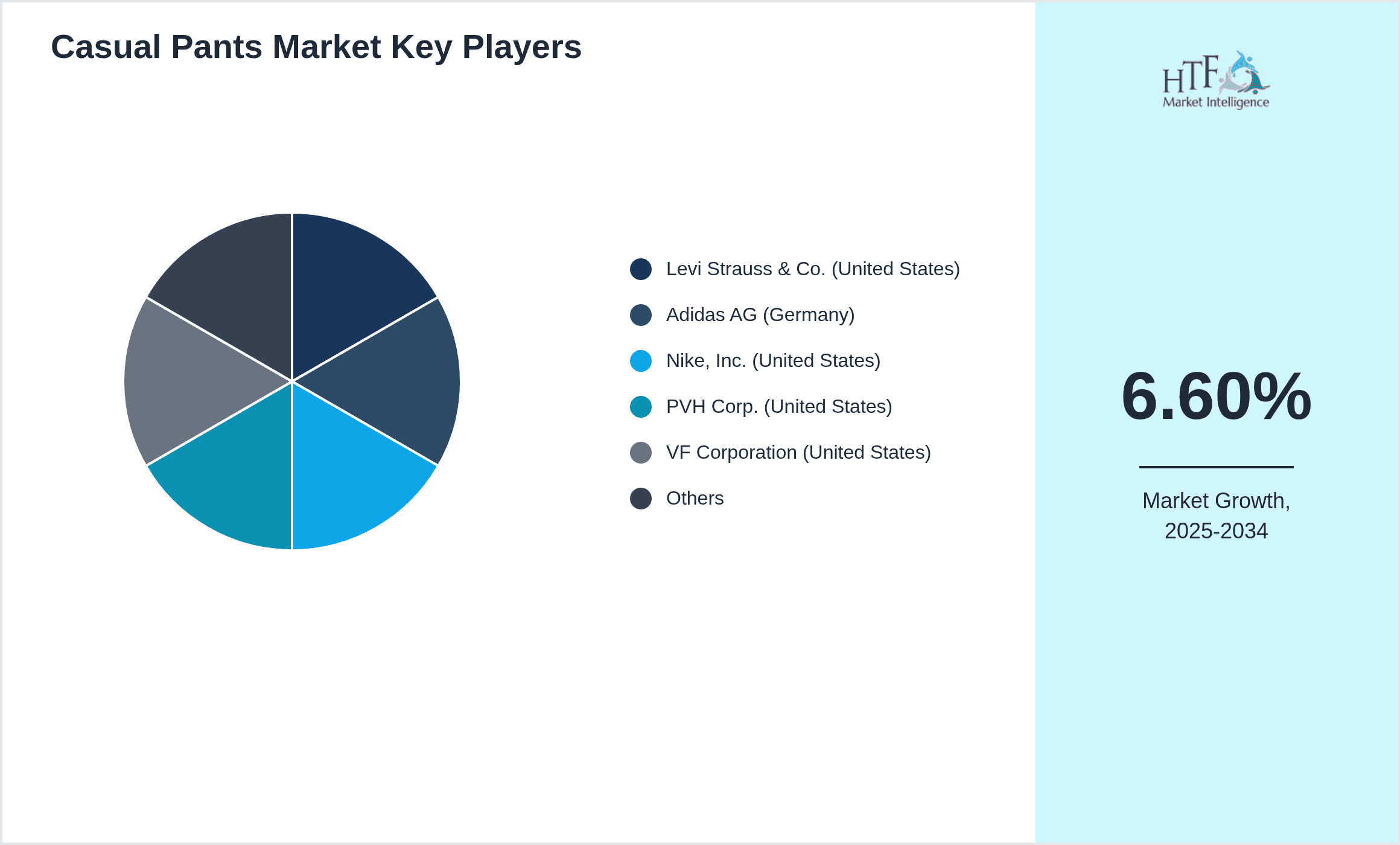
The global casual pants market exhibits intense competition characterized by a mixture of established multinational apparel brands and emerging regional players striving for market share through innovation, branding, and distribution excellence. Market leaders leverage robust research and development capabilities to introduce new fabric technologies, sustainable materials, and trendy designs that meet evolving consumer demands. Competitive strategies include aggressive marketing campaigns, strategic partnerships, and expansion into emerging markets to sustain growth. Pricing strategies vary from premium offerings targeting fashion-conscious consumers to value-driven products catering to budget segments. Distribution channels have diversified with omnichannel approaches combining physical retail presence and e-commerce platforms to enhance accessibility and customer engagement. Rivalry also manifests in rapid product lifecycle management and responsiveness to fashion trends, creating barriers for new entrants. Overall, the competitive environment fosters continuous innovation and quality improvement, driving differentiation and customer loyalty across global regions.
Leading Companies in Casual Pants Market
- •Levi Strauss & Co. (United States)
- •Adidas AG (Germany)
- •Nike, Inc. (United States)
- •PVH Corp. (United States)
- •VF Corporation (United States)
- •Fast Retailing Co., Ltd. (Japan)
- •H&M Group (Sweden)
- •Gap Inc. (United States)
- •Puma SE (Germany)
- •Uniqlo Co., Ltd. (Japan)
- •Columbia Sportswear Company (United States)
- •Under Armour, Inc. (United States)
- •Zara (Inditex Group) (Spain)
- •Lululemon Athletica Inc. (Canada)
- •American Eagle Outfitters, Inc. (United States)
- •Tommy Hilfiger (PVH Corp.) (United States)
- •Le Coq Sportif (France)
- •Jack & Jones (Denmark)
- •GAP Inc. (United States)
- •Superdry Plc (United Kingdom)
- •Skechers USA, Inc. (United States)
- •Abercrombie & Fitch Co. (United States)
- •Next plc (United Kingdom)
- •Mango (Spain)
- •Esprit Holdings Limited (Hong Kong)
Market Breakdown
- •By Casual Pants Type
- ◦Denim Casual Pants
- ◦Chinos Casual Pants
- ◦Joggers Casual Pants
- ◦Cargo Casual Pants
- ◦Linen Casual Pants
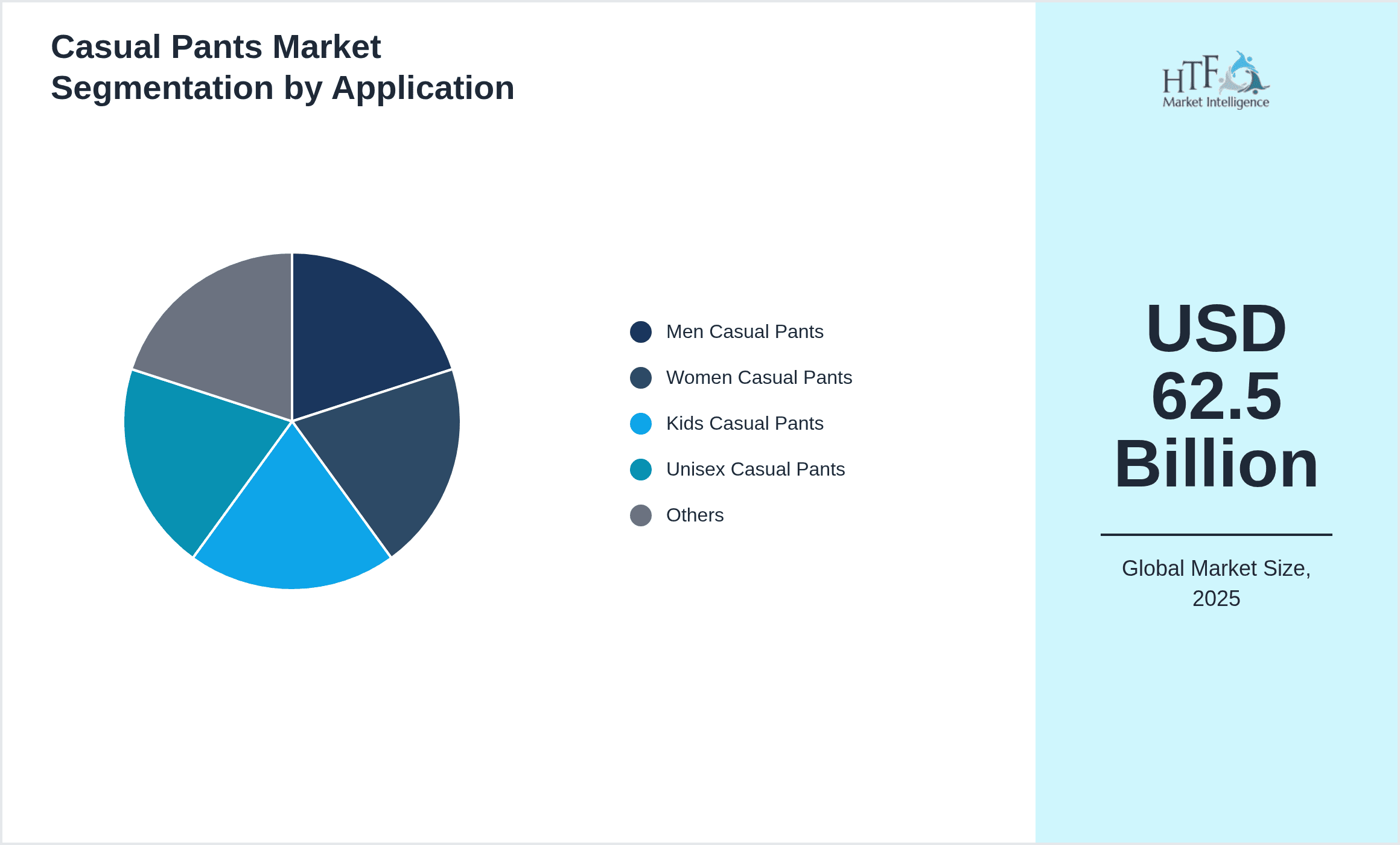
- •By Application
- ◦Men Casual Pants
- ◦Women Casual Pants
- ◦Kids Casual Pants
- ◦Unisex Casual Pants
- ◦Others
- •By Distribution Channel
- ◦Retail Stores
- ◦E-commerce
- ◦Specialty Stores
- ◦Department Stores
- •By Fabric Technology
- ◦Sustainable Fabric
- ◦Stretchable Fabric
- ◦Moisture-Wicking Fabric
Growth Dynamics
The global casual pants market's growth is fueled by increasing urbanization and rising disposable incomes, especially in emerging economies, facilitating greater spending on fashion and lifestyle products. Consumers' growing preference for comfort, versatility, and stylish apparel has shifted demand towards casual pants, particularly in segments like joggers and chinos. Technological advancements in fabric manufacturing, including sustainable and stretchable materials, have enhanced product appeal and functionality, attracting a broader consumer base. E-commerce proliferation has expanded market access, enabling brands to reach diverse geographies efficiently. Moreover, lifestyle changes such as remote working and athleisure trends have accelerated casual pant adoption across demographics, reinforcing sustained market growth.
Market Trends
Sustainability is a dominant trend impacting the casual pants market, with increasing consumer awareness driving demand for eco-friendly fabrics and ethical manufacturing practices. Brands are incorporating organic cotton, recycled materials, and water-saving dyeing technologies to align with environmental goals. Additionally, athleisure continues to blur the lines between sportswear and casual wear, with joggers and stretchable pants gaining popularity for both comfort and style. Customization and personalized fashion experiences are emerging through digital platforms, enhancing consumer engagement. Furthermore, the integration of smart textiles and wearable technology, although nascent, is beginning to influence product innovation, offering enhanced functionality and connectivity.
Market Opportunities
Expanding e-commerce penetration presents significant opportunities for casual pants manufacturers and retailers to tap into new consumer segments globally, particularly in developing regions where online shopping is rapidly growing. The rising demand for sustainable and ethically produced apparel offers avenues for product differentiation and brand loyalty. Innovation in fabric technology, such as antimicrobial and temperature-regulating materials, can create high-value product lines. Collaborations with fashion influencers and digital marketing strategies can boost brand visibility and consumer engagement. Additionally, increasing demand in untapped segments like kids and unisex pants provides growth potential through tailored product offerings and inclusive marketing campaigns.
Market Challenges
The casual pants market faces challenges including fluctuating raw material prices, especially cotton and synthetic fibers, which impact manufacturing costs and profit margins. Intense competition from both established brands and fast-fashion retailers exerts pricing pressure, complicating differentiation efforts. Supply chain disruptions, exacerbated by geopolitical tensions and pandemic-related restrictions, affect inventory management and timely product delivery. Regulatory compliance related to environmental standards and labor laws requires continuous adaptation and investment. Moreover, counterfeit products and intellectual property infringements undermine brand reputation and revenues. Navigating changing consumer preferences and maintaining relevance amid rapid fashion cycles are ongoing hurdles for market players.
Regulatory Framework
Between 2019 and 2024, several regulatory developments have shaped the global casual pants market, emphasizing sustainable manufacturing and labor compliance. Key regulations include stricter environmental norms on water usage and chemical management during textile production, compelling manufacturers to adopt eco-friendly processes and certifications. Enhanced labor laws in major producing regions mandate fair wages and safe working conditions, increasing operational transparency. Trade agreements and tariffs have undergone adjustments impacting import-export dynamics, requiring companies to optimize supply chains strategically. Additionally, consumer protection laws related to product labeling and safety standards have been reinforced, ensuring compliance across different markets. These evolving regulations necessitate continuous monitoring and adaptation by market participants to maintain competitiveness and market access.
Market Intelligence
- •15th January 2024, Levi Strauss & Co. launched their new sustainable denim collection incorporating recycled fibers and water-saving dyeing technology aimed at environmentally conscious consumers. This initiative reflects a strategic focus on sustainability aligned with growing market demand and regulatory expectations. The collection targets millennials and Gen Z shoppers, leveraging digital campaigns to enhance engagement and brand loyalty globally. The product line combines classic styles with modern comfort features, positioning Levi's to strengthen its market leadership in casual pants. Source: Levi Strauss & Co. official website.
- •30th June 2023, Adidas AG introduced an innovative range of joggers featuring moisture-wicking and stretchable fabric technology designed for both athletic and casual wear. The launch supports Adidas's strategy to capitalize on the athleisure trend, appealing to lifestyle-conscious consumers seeking versatile apparel. The product roll-out included collaborations with influencers and e-commerce platform expansions, boosting sales and market presence notably in Asia-Pacific and North America. This development underscores the importance of fabric innovation and digital marketing in sustaining competitive advantage. Source: Adidas corporate press release.
- •Recent market developments and strategic initiatives are continuously tracked through industry publications, company announcements, and regulatory filings. For the most current information, stakeholders are advised to monitor official corporate communications and recognized market intelligence platforms.
- •Recent market developments and strategic initiatives are continuously tracked through industry publications, company announcements, and regulatory filings. For the most current information, stakeholders are advised to monitor official corporate communications and recognized market intelligence platforms.
Regional Outlook
The North America currently holds a significant share of the market, primarily due to several key factors: increasing consumption rates, a burgeoning population, and robust economic momentum. These elements collectively drive demand, positioning this region as a leader in the market. On the other hand, Asia-Pacific is rapidly emerging as the fastest-growing area within the industry. This remarkable growth can be attributed to swift infrastructure development, the expansion of various industrial sectors, and a marked increase in consumer demand. These dynamics make this region a crucial player in shaping future market growth.
In our report, we cover a comprehensive analysis of the following regions and countries:
- North America
- LATAM
- West Europe
- Central & Eastern Europe
- Northern Europe
- Southern Europe
- East Asia
- Southeast Asia
- South Asia
- Central Asia
- Oceania
- MEA
| Feature | Details |
|---|---|
| Base Year Market Size | USD 62.5 Billion |
| Forecast Year Market Size | USD 120.8 Billion |
| CAGR | 6.6% |
| Forecast Period | 2026 to 2033 |
| YoY Growth | 6.4% |
| Scope of Report | Market is segmented by Casual Pants Type (Denim Casual Pants, Chinos Casual Pants, Joggers Casual Pants, Cargo Casual Pants, Linen Casual Pants), Application (Men Casual Pants, Women Casual Pants, Kids Casual Pants, Unisex Casual Pants, Others), Distribution Channel (Retail Stores, E-commerce, Specialty Stores, Department Stores), Fabric Technology (Sustainable Fabric, Stretchable Fabric, Moisture-Wicking Fabric) |
| Regions Covered | North America, LATAM, West Europe, Central & Eastern Europe, Northern Europe, Southern Europe, East Asia, Southeast Asia, South Asia, Central Asia, Oceania, MEA |
| Key Companies | Levi Strauss & Co. (United States), Adidas AG (Germany), Nike, Inc. (United States), PVH Corp. (United States), VF Corporation (United States), Fast Retailing Co., Ltd. (Japan), H&M Group (Sweden), Gap Inc. (United States), Puma SE (Germany), Uniqlo Co., Ltd. (Japan), Columbia Sportswear Company (United States), Under Armour, Inc. (United States), Zara (Inditex Group) (Spain), Lululemon Athletica Inc. (Canada), American Eagle Outfitters, Inc. (United States), Tommy Hilfiger (PVH Corp.) (United States), Le Coq Sportif (France), Jack & Jones (Denmark), GAP Inc. (United States), Superdry Plc (United Kingdom), Skechers USA, Inc. (United States), Abercrombie & Fitch Co. (United States), Next plc (United Kingdom), Mango (Spain), Esprit Holdings Limited (Hong Kong) |
Global Casual Pants Market Size, Growth & Revenue 2024-2034 - Table of Contents
Research enthusiast focused on transforming data uncovering into actionable insights through data-driven decision-making.
Frequently Asked Questions (FAQ):
The Compact Track Loaders market is projected to grow at a CAGR of 6.8% from 2025 to 2030, driven by increasing demand in construction and agricultural sectors.
North America currently leads the market with approximately 45% market share, followed by Europe at 28% and Asia-Pacific at 22%. The remaining regions account for 5% of the global market.
Key growth drivers include increasing construction activities, rising demand for versatile equipment in agriculture, technological advancements in track loader design, and growing preference for compact equipment in urban construction projects.