
Global Basketball Apparel Market - Outlook 2020-2034
Global Basketball Apparel Market is segmented by Product Type (Basketball Jerseys, Basketball Shorts, Basketball Shoes, Protective Gear, Basketball Accessories), Application (Professional Basketball, Amateur Basketball, Recreational Basketball, School Sports, Fitness & Training), Distribution Channel (Online Retail, Specialty Sports Stores, Department Stores, Direct-to-Consumer), Material Technology (Moisture-Wicking Fabrics, Breathable Textiles, Compression Materials), and Geography (North America, LATAM, West Europe, Central & Eastern Europe, Northern Europe, Southern Europe, East Asia, Southeast Asia, South Asia, Central Asia, Oceania, MEA)
Pricing
Report Overview
Executive Summary
- •The global basketball apparel market is a specialized segment of the sportswear industry focused on providing performance-enhancing and stylish clothing and accessories for basketball players and fans worldwide. This market includes a broad spectrum of products such as jerseys, shorts, basketball shoes, protective gear, and various accessories designed for professional athletes, amateurs, recreational users, and school sports programs. The market's scope encompasses product innovation, material technology advancements, and customization capabilities, catering to diverse consumer preferences and promoting both performance and comfort on and off the court. Applications range from professional leagues and tournaments to grassroots and fitness-oriented usage, reflecting basketball's widespread popularity and cultural influence globally. The value chain involves raw material sourcing, manufacturing, branding, distribution, and retailing, with growing trends toward sustainable and digitally-driven sales channels. Increasing health consciousness, rising participation in basketball, and collaborations with sports franchises significantly boost the demand. Furthermore, the market is shaped by evolving fashion trends, technological integration in fabrics, and enhanced consumer engagement through digital platforms, making it a vibrant and expanding industry sector with promising future growth potential.
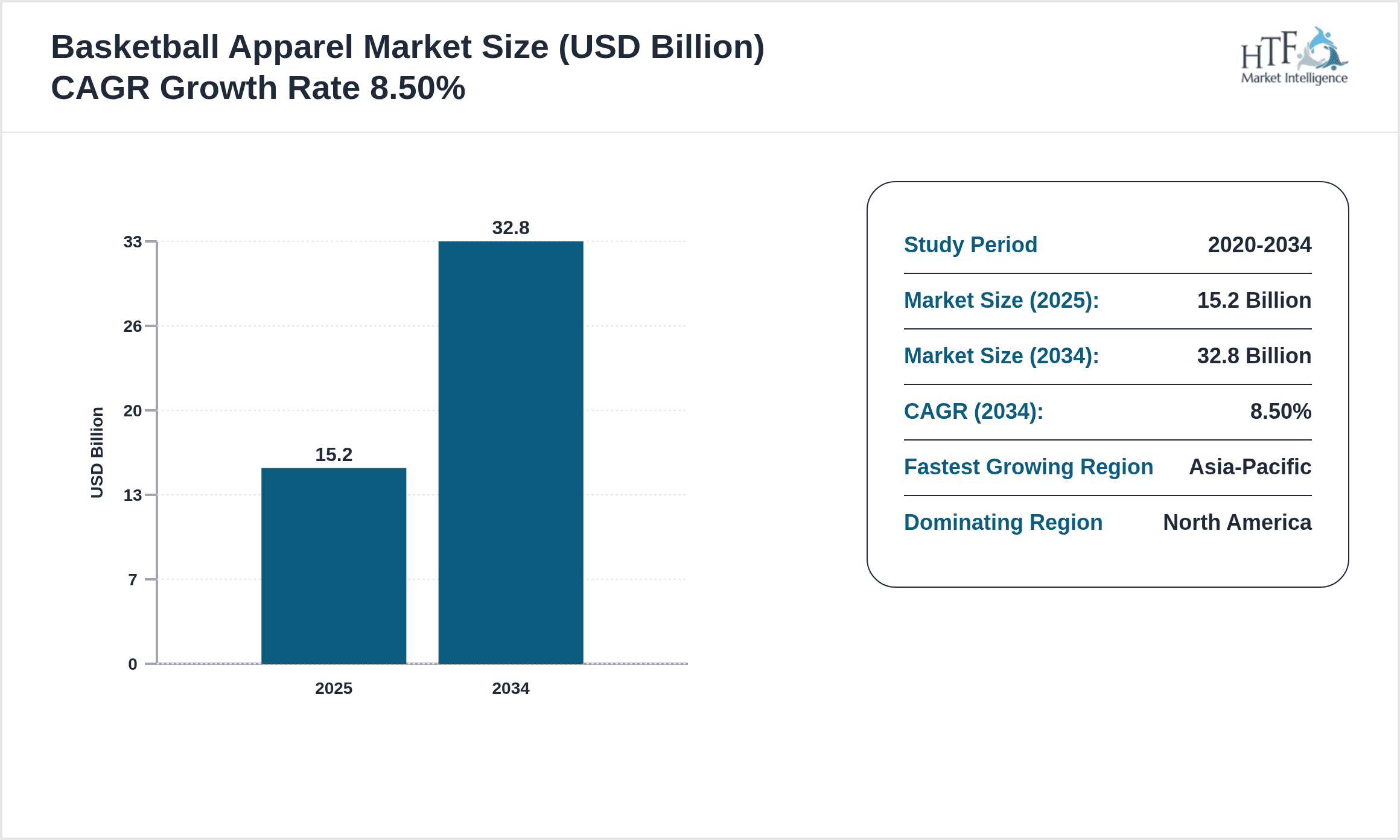
- •Key market highlights include a base market size of USD 15.2 billion in 2025, projected to reach USD 32.8 billion by 2034, representing a robust CAGR of 8.5%. The Asia-Pacific region is identified as the fastest growing market due to rising basketball popularity and increasing disposable incomes, while North America remains the dominant region driven by established professional leagues and strong brand presence. Product segments such as jerseys lead the market share, whereas basketball shoes demonstrate the highest growth momentum owing to innovation and lifestyle adoption. Emerging trends like athleisure integration, sustainability focus, and digital customization are shaping market dynamics, supported by increasing investments and strategic collaborations across the industry.
- •The basketball apparel market holds significant strategic importance across sports, retail, and fashion industries, offering substantial value propositions for manufacturers, retailers, athletes, and consumers. It drives economic activity through innovation, job creation, and global trade while promoting healthy lifestyles and sports participation. Stakeholders benefit from expanding digital platforms enabling direct consumer engagement and customization options, enhancing brand loyalty and market reach. The market's growth is closely tied to cultural trends, technological advancements, and regulatory frameworks promoting sustainability and fair trade, positioning it as a critical component in the evolving global sportswear landscape.
Competitive Landscape
The global basketball apparel market exhibits a highly competitive environment characterized by intense rivalry among established multinational corporations and emerging regional brands. Market leaders employ diverse strategies including product innovation, brand collaborations with professional teams and athletes, and expansion into emerging markets to maintain and enhance their market position. Competitive dynamics are further influenced by technological advancements in fabric and manufacturing processes, enabling differentiation through performance-enhancing and sustainable products. Pricing strategies are carefully balanced between premium offerings and affordable lines to cater to a broad consumer base. Distribution channels have evolved with a significant shift toward e-commerce platforms, enhancing direct-to-consumer engagement and data-driven marketing. Strategic partnerships, mergers, and acquisitions are recurrent, facilitating market consolidation and access to new technologies. Barriers to entry include high capital requirements, brand loyalty, and stringent quality standards. Regional competition varies with North America and Europe hosting mature markets with sophisticated consumer bases, while Asia-Pacific and Latin America offer growth opportunities with increasing basketball adoption and rising disposable income. Looking forward, innovation in smart and connected apparel, sustainability initiatives, and personalized consumer experiences are expected to shape the competitive landscape, driving growth and market differentiation.
Leading Companies in Basketball Apparel Market
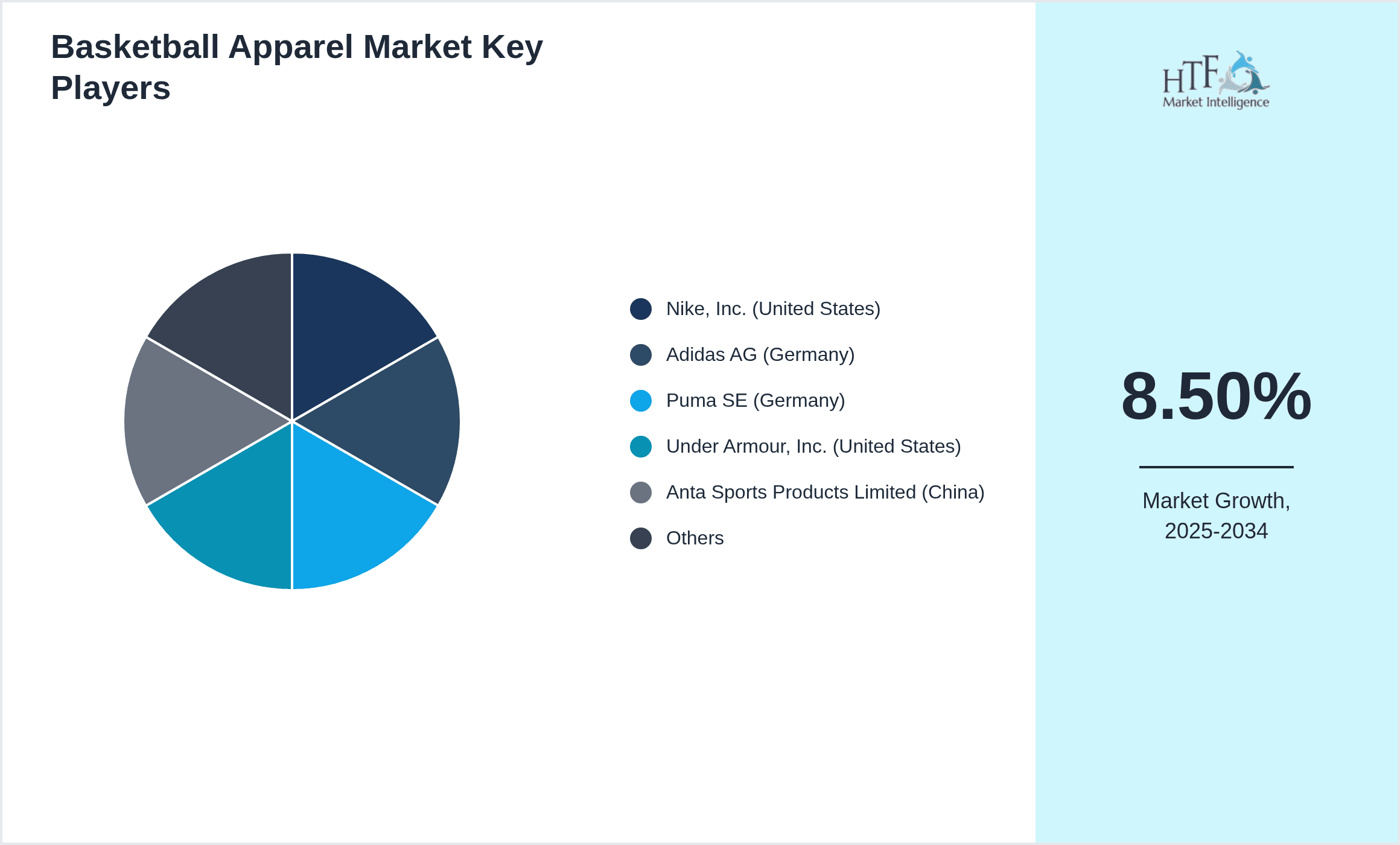
- •Nike, Inc. (United States)
- •Adidas AG (Germany)
- •Puma SE (Germany)
- •Under Armour, Inc. (United States)
- •Anta Sports Products Limited (China)
- •New Balance Athletics, Inc. (United States)
- •Li-Ning Company Limited (China)
- •ASICS Corporation (Japan)
- •Columbia Sportswear Company (United States)
- •Skechers U.S.A., Inc. (United States)
- •Fila Holdings Corp. (South Korea)
- •Reebok International Limited (United States)
- •Converse Inc. (United States)
- •Mizuno Corporation (Japan)
- •Jordan Brand (United States)
- •Decathlon S.A. (France)
- •Li Ning Company Limited (China)
- •Peak Sport Products Co., Ltd. (China)
- •ANTA Sports (Hong Kong)
- •K-Swiss Inc. (United States)
- •Brooks Sports, Inc. (United States)
- •Camel Group Co., Ltd. (China)
- •361 Degrees International Limited (China)
- •Hummel International (Denmark)
- •Umbro Ltd. (United Kingdom)

Market Breakdown
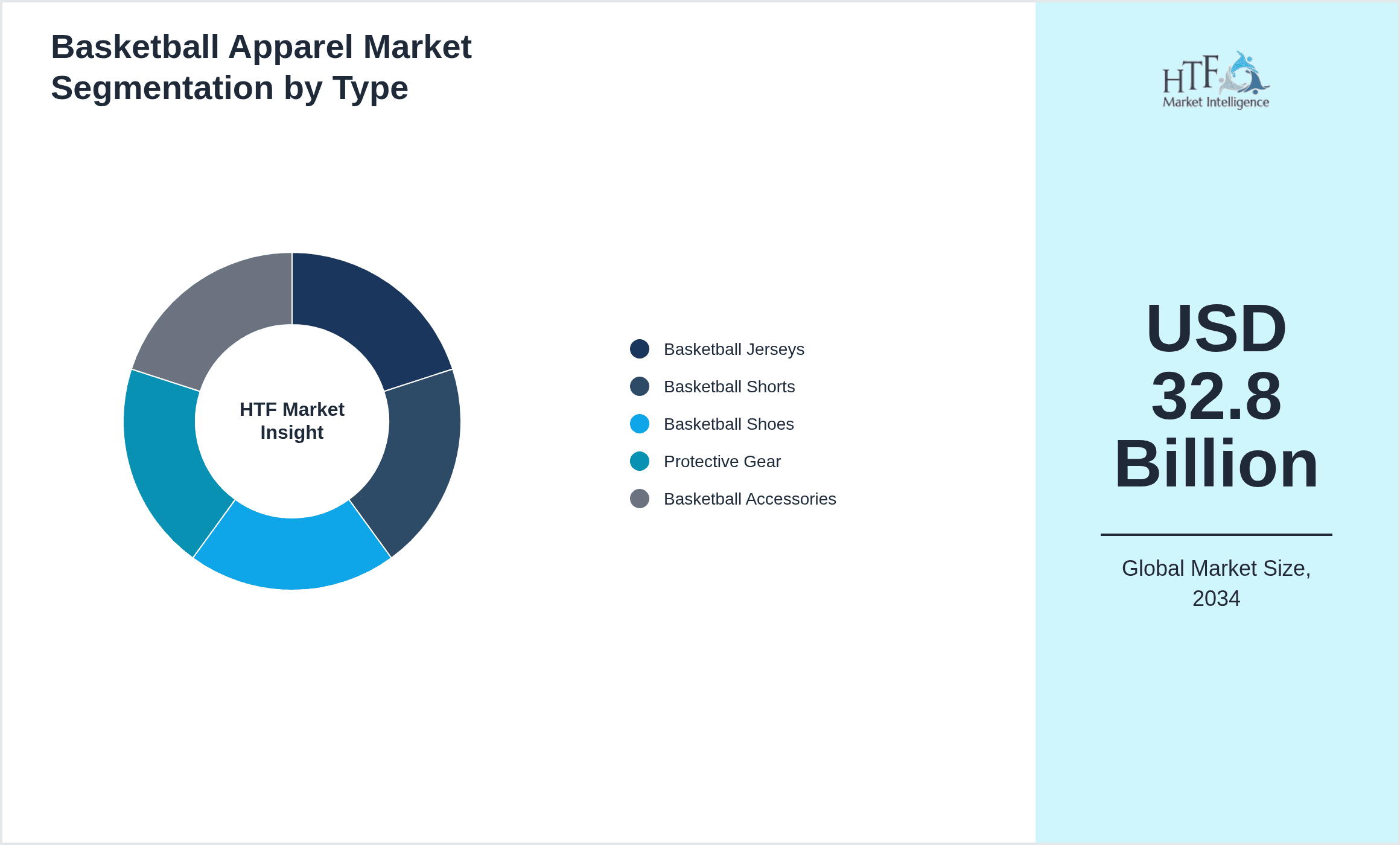
- •By Product Type
- ◦Basketball Jerseys
- ◦Basketball Shorts
- ◦Basketball Shoes
- ◦Protective Gear
- ◦Basketball Accessories
- •By Application
- ◦Professional Basketball
- ◦Amateur Basketball
- ◦Recreational Basketball
- ◦School Sports
- ◦Fitness & Training
- •By Distribution Channel
- ◦Online Retail
- ◦Specialty Sports Stores
- ◦Department Stores
- ◦Direct-to-Consumer
- •By Material Technology
- ◦Moisture-Wicking Fabrics
- ◦Breathable Textiles
- ◦Compression Materials
Growth Dynamics
- •Rising global participation in basketball across age groups and skill levels is driving demand for specialized basketball apparel. Initiatives by professional leagues and grassroots programs have increased visibility and player engagement, fueling market expansion with a growing consumer base.
- •Technological advancements in fabric technology, such as moisture-wicking and breathable materials, enhance athlete performance and comfort, encouraging adoption among both professional and recreational users. This innovation supports premium pricing and brand differentiation.
- •Increasing health awareness and fitness trends worldwide have led consumers to adopt basketball apparel for training and casual wear, expanding market reach beyond traditional sports applications and boosting athleisure demand.
- •Strategic collaborations between basketball apparel brands and professional athletes or teams have elevated product visibility and credibility, driving sales growth through targeted marketing and endorsement campaigns.
- •E-commerce proliferation and digital customization platforms enable brands to reach wider audiences with personalized product offerings, enhancing consumer engagement and enabling rapid market responsiveness.
- •Sustainability initiatives focusing on eco-friendly materials and manufacturing processes resonate with environmentally conscious consumers, creating new growth avenues and competitive advantages for market players.
Market Trends
- •Athleisure trend integration is becoming prominent, with basketball apparel crossing over into everyday fashion, driven by lifestyle influencers and social media, expanding consumer demographics significantly.
- •Digital innovation including augmented reality (AR) and virtual reality (VR) is being adopted to enhance online shopping experiences and enable virtual try-ons, increasing conversion rates and customer satisfaction.
- •Sustainability and circular economy focus in the basketball apparel sector is prompting brands to adopt recycled materials and promote product lifecycle management, aligned with global environmental policies.
- •Collaborations between established sports brands and streetwear labels are merging performance with style, creating limited editions that attract younger, fashion-conscious consumers and boost brand equity.
- •Customization and personalization of basketball apparel through online platforms allow consumers to design unique products, fostering loyalty and commanding premium pricing.
- •Expansion of direct-to-consumer sales channels is reducing reliance on traditional retail, enhancing profit margins, and enabling data-driven marketing strategies.
- •Technological integration such as smart textiles with sensors for performance tracking is emerging, signaling the next wave of innovation in basketball apparel.
Market Opportunities
- •The growing popularity of basketball in emerging markets such as Asia-Pacific and Latin America presents significant opportunities for market penetration and revenue growth by tailoring products to regional preferences and price points.
- •Innovation in sustainable and biodegradable materials offers potential for differentiation and appeal to environmentally conscious consumers, opening new market segments and regulatory incentives.
- •Expanding digital customization platforms enables brands to offer personalized products, increasing customer engagement and creating higher-value sales opportunities through bespoke apparel.
- •Collaborations with esports and virtual sports entities provide novel avenues for brand extension and tapping into younger, digitally native consumer bases.
- •Investment in smart apparel technologies integrating performance monitoring sensors can attract professional athletes and tech-savvy enthusiasts, positioning brands at the forefront of innovation.
- •Development of multifunctional apparel that caters to basketball and general fitness activities can broaden market appeal and increase product usage occasions.
- •Leveraging influencer marketing and social commerce platforms can accelerate brand visibility and direct consumer sales, especially among millennials and Gen Z demographics.
Market Challenges
- •Intense competition from established global brands and emerging local players creates pricing pressure and challenges in maintaining brand loyalty and market share.
- •Supply chain disruptions and fluctuating raw material costs impact production timelines and profit margins, necessitating agile operational strategies.
- •Counterfeit products and unauthorized replicas dilute brand value and pose significant challenges to intellectual property protection and consumer trust.
- •Regulatory complexities related to sustainability standards and labor practices require companies to invest substantially in compliance and transparency measures.
- •Rapidly changing fashion trends and consumer preferences demand continuous innovation and marketing agility, increasing operational costs and risks.
- •High entry barriers for new players due to capital intensity, established brand dominance, and consumer loyalty limit market diversification.
- •Balancing cost competitiveness with quality and technological innovation remains a persistent challenge amid global economic uncertainties.
Regulatory Framework
- •Between 2020 and 2025, key regulations such as the EU’s REACH regulation on chemicals in textiles have imposed stringent safety and environmental standards on basketball apparel manufacturers, ensuring consumer safety and eco-friendly production practices.
- •The US Federal Trade Commission has enforced labeling requirements mandating transparency about material composition and country of origin, impacting global supply chains and marketing strategies.
- •Sustainability mandates, including carbon footprint reduction targets and waste management policies in North America and Europe, have prompted apparel companies to adopt greener manufacturing technologies and circular economy models.
- •Regional labor laws and fair trade certifications have become critical regulatory considerations, influencing corporate social responsibility initiatives and ethical sourcing in Asia-Pacific manufacturing hubs.
- •Government incentives and subsidy programs promoting sustainable textile innovation and export facilitation have supported market growth in key regions, encouraging investments in research and development.
Market Intelligence
- •15th January 2025, Nike, Inc. announced the launch of its latest basketball shoe line incorporating sustainable materials and advanced cushioning technology designed to improve player performance and reduce environmental impact. The new product targets professional athletes and fitness enthusiasts globally, featuring digital customization options to enhance consumer engagement. This initiative aligns with Nike’s broader corporate sustainability goals and is expected to strengthen its market leadership by appealing to environmentally conscious consumers. Source: Nike Official Press Release
- •22nd March 2025, Adidas AG introduced a revolutionary moisture-wicking basketball jersey using bio-based fabrics that offer superior breathability and comfort while minimizing carbon footprint. This innovation underpins Adidas’s commitment to sustainability and product excellence, aiming to capture market share in Asia-Pacific and Europe where demand for eco-friendly sportswear is rising sharply. The jersey’s launch was supported by endorsements from top basketball players, enhancing brand visibility and consumer trust. Source: Adidas Corporate Announcement
- •5th May 2025, Under Armour, Inc. announced a strategic partnership with a leading esports organization to co-develop basketball apparel tailored for esports athletes and fans, blending traditional sportswear with digital culture elements. This collaboration aims to tap into the rapidly growing esports market, offering innovative merchandising and expanding Under Armour’s consumer base among younger demographics. The initiative includes limited-edition product drops and interactive digital campaigns. Source: Under Armour News Release
- •30th September 2024, Puma SE completed the acquisition of a niche basketball footwear startup specializing in smart shoes embedded with performance-tracking sensors. This acquisition enhances Puma’s innovation pipeline and positions the brand at the forefront of integrating technology with athletic footwear. The move is expected to contribute significantly to Puma’s growth strategy in North America and Asia-Pacific markets by offering differentiated products that address athlete performance optimization. Source: Puma Investor Relations
Regional Outlook
The North America currently holds a significant share of the market, primarily due to several key factors: increasing consumption rates, a burgeoning population, and robust economic momentum. These elements collectively drive demand, positioning this region as a leader in the market. On the other hand, Asia-Pacific is rapidly emerging as the fastest-growing area within the industry. This remarkable growth can be attributed to swift infrastructure development, the expansion of various industrial sectors, and a marked increase in consumer demand. These dynamics make this region a crucial player in shaping future market growth.
In our report, we cover a comprehensive analysis of the following regions and countries:
- North America
- LATAM
- West Europe
- Central & Eastern Europe
- Northern Europe
- Southern Europe
- East Asia
- Southeast Asia
- South Asia
- Central Asia
- Oceania
- MEA
| Feature | Details |
|---|---|
| Base Year Market Size | USD 15.2 Billion |
| Forecast Year Market Size | USD 32.8 Billion |
| CAGR | 8.5% |
| Forecast Period | 2026 to 2033 |
| YoY Growth | 8.1% |
| Scope of Report | Market is segmented by Product Type (Basketball Jerseys, Basketball Shorts, Basketball Shoes, Protective Gear, Basketball Accessories), Application (Professional Basketball, Amateur Basketball, Recreational Basketball, School Sports, Fitness & Training), Distribution Channel (Online Retail, Specialty Sports Stores, Department Stores, Direct-to-Consumer), Material Technology (Moisture-Wicking Fabrics, Breathable Textiles, Compression Materials) |
| Regions Covered | North America, LATAM, West Europe, Central & Eastern Europe, Northern Europe, Southern Europe, East Asia, Southeast Asia, South Asia, Central Asia, Oceania, MEA |
| Key Companies | Nike, Inc. (United States), Adidas AG (Germany), Puma SE (Germany), Under Armour, Inc. (United States), Anta Sports Products Limited (China), New Balance Athletics, Inc. (United States), Li-Ning Company Limited (China), ASICS Corporation (Japan), Columbia Sportswear Company (United States), Skechers U.S.A., Inc. (United States), Fila Holdings Corp. (South Korea), Reebok International Limited (United States), Converse Inc. (United States), Mizuno Corporation (Japan), Jordan Brand (United States), Decathlon S.A. (France), Li Ning Company Limited (China), Peak Sport Products Co., Ltd. (China), ANTA Sports (Hong Kong), K-Swiss Inc. (United States), Brooks Sports, Inc. (United States), Camel Group Co., Ltd. (China), 361 Degrees International Limited (China), Hummel International (Denmark), Umbro Ltd. (United Kingdom) |
Global Basketball Apparel Market - Outlook 2020-2034 - Table of Contents
Frequently Asked Questions (FAQ):
The Compact Track Loaders market is expected to see value worth 5.3 Billion in 2025.
North America currently leads the market with approximately 45% market share, followed by Europe at 28% and Asia-Pacific at 22%. The remaining regions account for 5% of the global market.
Key growth drivers include increasing construction activities, rising demand for versatile equipment in agriculture, technological advancements in track loader design, and growing preference for compact equipment in urban construction projects.