
Global Swimwear Market - Outlook 2024-2034
Global Swimwear (Swimsuit) Market is segmented by Product Type (One-Piece Swimsuits, Bikinis, Tankinis, Swim Shorts, Monokinis), Application (Beachwear, Sportswear, Casual Wear, Competitive Swimming, Resort Wear), Distribution Channel (E-commerce, Specialty Stores, Department Stores, Sports Retailers), Fabric Technology (Chlorine Resistant, UV Protection, Quick Dry, Sustainable Fabrics), and Geography (North America, LATAM, West Europe, Central & Eastern Europe, Northern Europe, Southern Europe, East Asia, Southeast Asia, South Asia, Central Asia, Oceania, MEA)
Pricing
Report Overview
Executive Summary
- •The global swimwear market is a vibrant segment within the apparel industry, catering to an extensive range of consumers engaging in water-related activities and leisure. It includes diverse product types such as one-piece swimsuits, bikinis, tankinis, swim shorts, and monokinis, designed using innovative fabrics to enhance comfort, durability, and protection against environmental factors. The market serves multiple applications spanning beachwear, sportswear, casual wear, competitive swimming, and resort wear, reflecting the varied demands of consumers worldwide. Growth is fueled by rising health consciousness leading to increased participation in water sports, fashion trends influencing swimwear styles, and expanding tourism and leisure industries. Geographically, North America dominates due to high consumer spending power and lifestyle preferences, while Asia-Pacific is the fastest-growing region driven by urbanization and increasing disposable incomes. The market faces challenges including environmental concerns over synthetic fabrics and intense competition but offers significant opportunities through technological advancements and untapped emerging markets.
- •Key market highlights include a base market size of USD 18.5 Billion in 2024 projected to reach USD 38.7 Billion by 2034, registering a robust CAGR of 7.5%. One-piece swimsuits hold the largest market share driven by their versatility and widespread consumer acceptance, while tankinis are gaining rapid popularity due to their blend of coverage and style. Beachwear remains the dominant application segment, with competitive swimming and resort wear segments showing promising growth trajectories. North America leads in market dominance with strong retail infrastructure and fashion consciousness, whereas Asia-Pacific exhibits the highest CAGR reflecting socio-economic growth and rising participation in aquatic sports. Year-over-year growth is estimated at approximately 7.25%, indicating steady expansion supported by innovation and marketing strategies targeting younger demographics and lifestyle shifts.
- •The swimwear market offers strategic value to apparel manufacturers, retailers, and material suppliers by combining fashion appeal with functional performance. Consumers benefit from evolving designs that integrate sustainability and advanced textile technologies for enhanced comfort and protection. Stakeholders including sports organizations and tourism sectors leverage swimwear trends to boost participation and engagement. The market’s growth potential is amplified by digital marketing, omni-channel retailing, and collaborations between fashion brands and athletes, fostering brand loyalty and expanding consumer reach. These dynamics underscore the market’s significance as a growth driver within the global apparel and leisure industries, with innovation and consumer-centric approaches pivotal to sustaining competitive advantage.

Competitive Landscape
The global swimwear market is characterized by intense competition among established apparel brands, specialized swimwear manufacturers, and emerging niche players. Companies compete on product innovation, design aesthetics, fabric technology, and brand positioning to capture diverse consumer segments. Market leaders leverage extensive R&D to introduce sustainable and performance-enhancing materials, incorporating UV protection, chlorine resistance, and quick-dry features. Strategic collaborations with athletes and influencers enhance brand visibility and consumer engagement. Pricing strategies vary from premium segments targeting affluent consumers to affordable lines catering to mass markets. Distribution channels encompass brick-and-mortar retail, e-commerce platforms, and specialty stores, with digital transformation playing a critical role in customer acquisition and retention. Barriers to entry include high innovation costs and brand loyalty, while regional competition intensifies as companies tailor offerings to local preferences. Future trends toward eco-friendly fabrics and customization are expected to reshape competitive dynamics and market shares.
Prominent Players in Swimwear Market
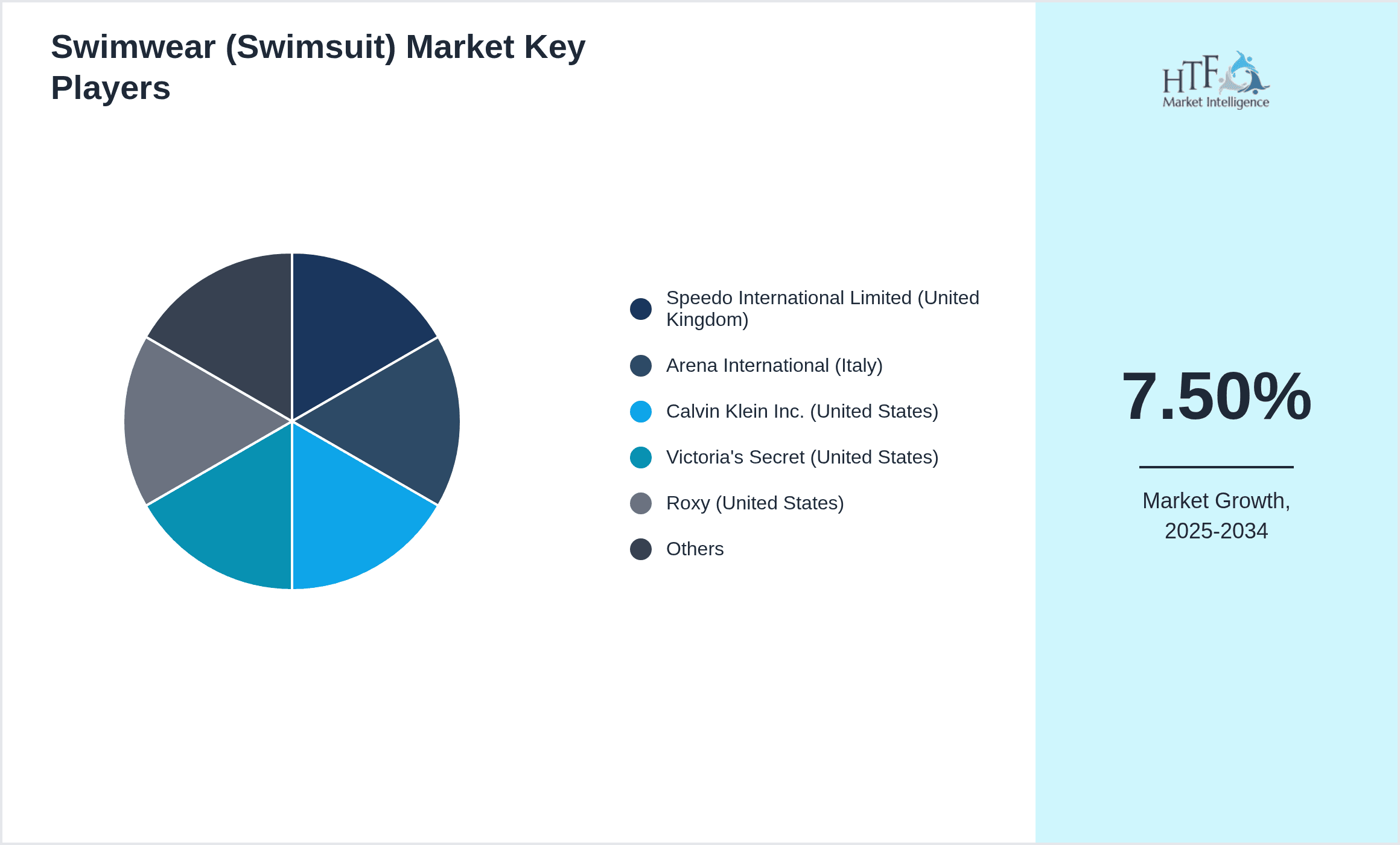
- •Speedo International Limited (United Kingdom)
- •Arena International (Italy)
- •Calvin Klein Inc. (United States)
- •Victoria's Secret (United States)
- •Roxy (United States)
- •Adidas AG (Germany)
- •Nike, Inc. (United States)
- •TYR Sport, Inc. (United States)
- •Dolfin Swimwear (United States)
- •Jantzen Inc. (United States)
- •Billabong International Limited (Australia)
- •Quiksilver, Inc. (Australia)
- •Lululemon Athletica Inc. (Canada)
- •Speedo Australia (Australia)
- •Marlies Dekkers (Netherlands)
- •Seafolly Pty Ltd (Australia)
- •Zoggs International Limited (United Kingdom)
- •H&M (Sweden)
- •Oysho (Spain)
- •Ralph Lauren Corporation (United States)
- •Lands' End, Inc. (United States)
- •Athleta (United States)
- •Patagonia, Inc. (United States)
- •Columbia Sportswear Company (United States)
- •Billabong International Limited (Australia)

Market Breakdown
- •By Product Type
- ◦One-Piece Swimsuits
- ◦Bikinis
- ◦Tankinis
- ◦Swim Shorts
- ◦Monokinis
- •By Application
- ◦Beachwear
- ◦Sportswear
- ◦Casual Wear
- ◦Competitive Swimming
- ◦Resort Wear
- •By Distribution Channel
- ◦E-commerce
- ◦Specialty Stores
- ◦Department Stores
- ◦Sports Retailers
- •By Fabric Technology
- ◦Chlorine Resistant
- ◦UV Protection
- ◦Quick Dry
- ◦Sustainable Fabrics
Growth Dynamics
- •The global swimwear market is propelled by increasing consumer interest in outdoor and aquatic activities, driven by a growing health and wellness culture. Rising participation in water sports and recreational swimming across all age groups encourages demand for performance-oriented and stylish swimwear. Technological advancements in fabric innovation, including chlorine resistance and UV protection, enhance product appeal and functionality, contributing to market expansion. Additionally, the surge in global tourism and beach vacations fuels demand for fashionable and diverse swimwear styles, further boosting sales. The rising influence of social media and celebrity endorsements also intensifies consumer engagement, promoting brand visibility and driving market growth worldwide.
- •The swimwear industry is witnessing evolving trends marked by an increasing preference for sustainable and eco-friendly fabrics, responding to environmental concerns and consumer awareness. The integration of smart textiles offering enhanced comfort and durability is gaining traction. Customized swimwear and limited-edition collections supported by digital technologies are redefining consumer experiences. The casualization of fashion and the blending of swimwear into everyday apparel create new market niches. Collaborations between swimwear brands and lifestyle influencers amplify trend adoption, while digital retail platforms enable personalized shopping experiences. These trends collectively reshape market dynamics and consumer expectations.
- •Market restraints include the environmental impact of synthetic materials commonly used in swimwear, raising sustainability concerns among consumers and regulatory bodies. High production costs associated with advanced fabric technologies and premium designs limit accessibility in price-sensitive markets. Intense competition and brand saturation create challenges for new entrants and smaller players to capture market share. Seasonal demand fluctuations and geopolitical uncertainties affecting tourism and retail sectors also constrain consistent market growth. Additionally, counterfeit products and supply chain disruptions pose risks to brand reputation and profitability.
- •Emerging opportunities in the swimwear market are abundant owing to increasing urbanization and disposable incomes in developing regions, particularly in Asia-Pacific and Latin America. Expansion into untapped markets with localized designs tailored to cultural preferences can drive new revenue streams. The growing demand for gender-neutral and inclusive swimwear broadens consumer segments. Advancements in sustainable textile manufacturing offer prospects for innovation and differentiation. Digital transformation facilitates direct-to-consumer sales and immersive marketing strategies. Strategic partnerships with global sports events and influencers unlock brand exposure and customer loyalty, enhancing long-term growth potential.
- •The swimwear market faces challenges such as stringent regulatory requirements related to textile safety, environmental standards, and labor practices, which increase operational complexities and costs. Volatile raw material prices, especially petrochemical derivatives used in synthetic fabrics, impact profitability. Rapidly changing fashion trends necessitate agile design and production cycles, pressuring supply chains. The COVID-19 pandemic highlighted vulnerabilities in global retail operations and consumer spending patterns, underscoring the need for resilient business models. Market players must navigate competitive pressures, technological disruptions, and shifting consumer behaviors to maintain market relevance.

Market Trends
- •The swimwear market is increasingly embracing sustainable and recycled materials, responding to growing environmental consciousness among consumers and regulatory mandates. Brands are launching collections using biodegradable fabrics and eco-friendly dyes, promoting circular fashion. This shift not only reduces ecological footprint but also enhances brand differentiation and customer loyalty in competitive landscapes.
- •Technological integration in swimwear, such as embedded UV sensors and quick-dry innovations, is gaining momentum. Smart swimwear enhances user experience by providing protective features and comfort, appealing to tech-savvy and health-conscious consumers. This trend opens avenues for product diversification and premium pricing.
- •Digital and social media marketing strategies are reshaping consumer engagement by enabling personalized content, influencer collaborations, and virtual try-on experiences. These approaches increase brand reach and conversion rates, especially among younger demographics, driving sales growth.
- •There is a rising trend of swimwear crossover into athleisure and casual fashion, blurring traditional usage boundaries. Consumers are adopting versatile swimwear styles suitable for multiple occasions, expanding market applications and increasing product utility.
- •Customization and limited-edition swimwear collections are becoming popular, leveraging digital platforms to offer personalized fits, colors, and prints. This trend enhances consumer engagement and willingness to pay premium prices, fostering brand loyalty.
Market Opportunities
- •The rising middle-class population and increasing leisure activities in Asia-Pacific present a significant growth opportunity for swimwear brands to penetrate emerging markets with region-specific product lines. Tailoring designs to local preferences can capture new customer segments.
- •Investments in sustainable fabric technologies and circular economy initiatives offer avenues for innovation and competitive advantage. Brands adopting eco-friendly production methods can access premium markets and comply with evolving regulations.
- •Expanding e-commerce platforms and direct-to-consumer sales models enable brands to reach broader audiences, reduce costs, and personalize customer experiences. Leveraging data analytics can optimize inventory and marketing strategies.
- •Collaborations with global sports events, influencers, and celebrities can enhance brand visibility and credibility, fostering customer loyalty and driving sales. These partnerships support market expansion and product endorsement.
- •Developing inclusive swimwear collections catering to diverse body types, gender identities, and cultural needs can open untapped market segments, aligning with social trends and consumer expectations.
Market Challenges
- •The dependence on synthetic materials raises sustainability concerns, with increasing regulatory scrutiny and consumer demand for eco-friendly alternatives creating pressure on manufacturers to innovate while managing costs effectively.
- •High production costs associated with advanced fabric technologies and premium designs limit market penetration in price-sensitive regions, challenging companies to balance quality and affordability.
- •Seasonality of swimwear demand leads to fluctuating revenue streams and inventory management complexities, requiring agile supply chain and marketing strategies to mitigate risks.
- •Intense competition and brand saturation, particularly in developed markets, pose challenges for differentiation and market share growth, necessitating continuous innovation and effective branding.
- •Disruptions in global supply chains, including raw material shortages and logistical delays, impact production timelines and cost structures, affecting overall market stability.
Regulatory Framework
- •From 2020 to 2024, key regulations have focused on textile safety standards including the restriction of hazardous substances and mandates for sustainable production processes. These require manufacturers to comply with environmental norms and ensure product safety, influencing raw material sourcing and manufacturing practices.
- •Governments have implemented stricter labeling requirements to improve transparency regarding fabric composition and care instructions, enhancing consumer trust and informed purchasing decisions.
- •Environmental regulations targeting the reduction of microplastic pollution have prompted the adoption of biodegradable and recycled materials in swimwear production, aligning with global sustainability goals.
- •Region-specific mandates, particularly in Europe and North America, enforce corporate social responsibility and ethical labor practices within the textile and apparel supply chains, impacting operational compliance.
- •Government incentives and subsidies for sustainable textile innovation promote research and development, fostering industry-wide shifts towards eco-friendly swimwear manufacturing.
Market Intelligence
- •15th March 2024, Speedo International Limited launched a new eco-friendly swimwear line featuring recycled nylon fabrics and advanced chlorine resistance technology. This collection targets environmentally conscious consumers and competitive swimmers, combining sustainability with performance. The initiative supports Speedo’s commitment to reducing plastic waste and enhancing product durability in aquatic sports markets globally. The launch was accompanied by a digital marketing campaign leveraging athlete endorsements to maximize visibility and consumer engagement in key regions including North America and Asia-Pacific. This strategic move positions Speedo as a leader in sustainable swimwear innovation while expanding its product portfolio to meet evolving consumer demands. Source: Official Speedo Press Release
- •22nd November 2023, Arena International introduced a smart swimwear range embedded with UV sensors and quick-dry fabrics aimed at enhancing user safety and comfort. The product integrates wearable technology that alerts swimmers to UV exposure, promoting health awareness. This innovation reflects Arena’s focus on combining technology with functionality, targeting both recreational and professional athletes. The launch was supported by partnerships with competitive swimming federations and digital retail platforms, facilitating wide market adoption. This development underscores the growing trend of tech-enabled apparel in the swimwear sector and strengthens Arena’s competitive position globally. Source: Arena Corporate Website
- •5th July 2024, Victoria’s Secret expanded its swimwear collection by unveiling a gender-neutral line designed to appeal to diverse consumer identities, aligning with inclusivity trends. The collection features versatile styles and sizes, promoting body positivity and social acceptance. This strategic expansion aims to capture new market segments and enhance brand equity amid shifting cultural dynamics. Victoria’s Secret leveraged influencer collaborations and omni-channel retail strategies to drive awareness and sales. The initiative reflects broader industry movements towards inclusivity and personalization in apparel, positioning the brand for future growth in global markets. Source: Victoria’s Secret Official Announcement
- •10th January 2025, Adidas AG announced a strategic partnership with a leading sustainable textile manufacturer to develop next-generation eco-friendly swimwear fabrics. This collaboration focuses on integrating biodegradable materials with high-performance features such as UV protection and durability. Adidas plans to incorporate these innovations across its swimwear and sportswear lines, enhancing its sustainability credentials and meeting consumer demands for responsible products. The partnership represents a significant investment in R&D and is expected to influence industry standards and competitive dynamics worldwide. This move aligns with Adidas’s corporate sustainability goals and market expansion strategies. Source: Adidas Corporate News
Regional Outlook
The North America currently holds a significant share of the market, primarily due to several key factors: increasing consumption rates, a burgeoning population, and robust economic momentum. These elements collectively drive demand, positioning this region as a leader in the market. On the other hand, Asia-Pacific is rapidly emerging as the fastest-growing area within the industry. This remarkable growth can be attributed to swift infrastructure development, the expansion of various industrial sectors, and a marked increase in consumer demand. These dynamics make this region a crucial player in shaping future market growth.
In our report, we cover a comprehensive analysis of the following regions and countries:
- North America
- LATAM
- West Europe
- Central & Eastern Europe
- Northern Europe
- Southern Europe
- East Asia
- Southeast Asia
- South Asia
- Central Asia
- Oceania
- MEA
| Feature | Details |
|---|---|
| Base Year Market Size | USD 18.5 Billion |
| Forecast Year Market Size | USD 38.7 Billion |
| CAGR | 7.5% |
| Forecast Period | 2026 to 2033 |
| YoY Growth | 7.25% |
| Scope of Report | Market is segmented by Product Type (One-Piece Swimsuits, Bikinis, Tankinis, Swim Shorts, Monokinis), Application (Beachwear, Sportswear, Casual Wear, Competitive Swimming, Resort Wear), Distribution Channel (E-commerce, Specialty Stores, Department Stores, Sports Retailers), Fabric Technology (Chlorine Resistant, UV Protection, Quick Dry, Sustainable Fabrics) |
| Regions Covered | North America, LATAM, West Europe, Central & Eastern Europe, Northern Europe, Southern Europe, East Asia, Southeast Asia, South Asia, Central Asia, Oceania, MEA |
| Key Companies | Speedo International Limited (United Kingdom), Arena International (Italy), Calvin Klein Inc. (United States), Victoria's Secret (United States), Roxy (United States) |
Global Swimwear Market - Outlook 2024-2034 - Table of Contents
Frequently Asked Questions (FAQ):
The Compact Track Loaders market is expected to see value worth 5.3 Billion in 2025.
North America currently leads the market with approximately 45% market share, followed by Europe at 28% and Asia-Pacific at 22%. The remaining regions account for 5% of the global market.
Key growth drivers include increasing construction activities, rising demand for versatile equipment in agriculture, technological advancements in track loader design, and growing preference for compact equipment in urban construction projects.