
Global Dance Shoes Market Size, Growth & Revenue 2025-2034
Global Dance Shoes Market is segmented by Type (Leather Dance Shoes, Synthetic Dance Shoes, Canvas Dance Shoes, Suede Dance Shoes, Mesh Dance Shoes), Application (Ballroom Dance Shoes, Ballet Dance Shoes, Latin Dance Shoes, Jazz Dance Shoes, Tap Dance Shoes), Closure Type (Lace-Up, Slip-On, Velcro, Buckled), Sole Material (Leather Sole, Rubber Sole, Synthetic Sole), and Geography (North America, LATAM, West Europe, Central & Eastern Europe, Northern Europe, Southern Europe, East Asia, Southeast Asia, South Asia, Central Asia, Oceania, MEA)
Pricing
Report Overview
Executive Summary
- •The global dance shoes market includes a wide range of footwear specifically designed to meet the requirements of various dance styles such as ballroom, ballet, Latin, jazz, and tap. These shoes are manufactured using diverse materials including leather, synthetic fabrics, canvas, suede, and mesh to ensure comfort, flexibility, and durability. The market serves a broad customer base encompassing professional dancers, amateurs, and dance enthusiasts engaged in both recreational and competitive dancing worldwide. Dance shoes play a critical role in supporting dancers' movements, enhancing performance, and preventing injuries through specialized designs. The continuous growth of dance schools, increasing popularity of dance-based fitness programs, and the rising influence of performing arts contribute significantly to market expansion. Technological advancements in material science and ergonomic designs are fostering innovation, while global cultural exchanges are broadening the adoption of various dance forms, collectively driving the market forward.
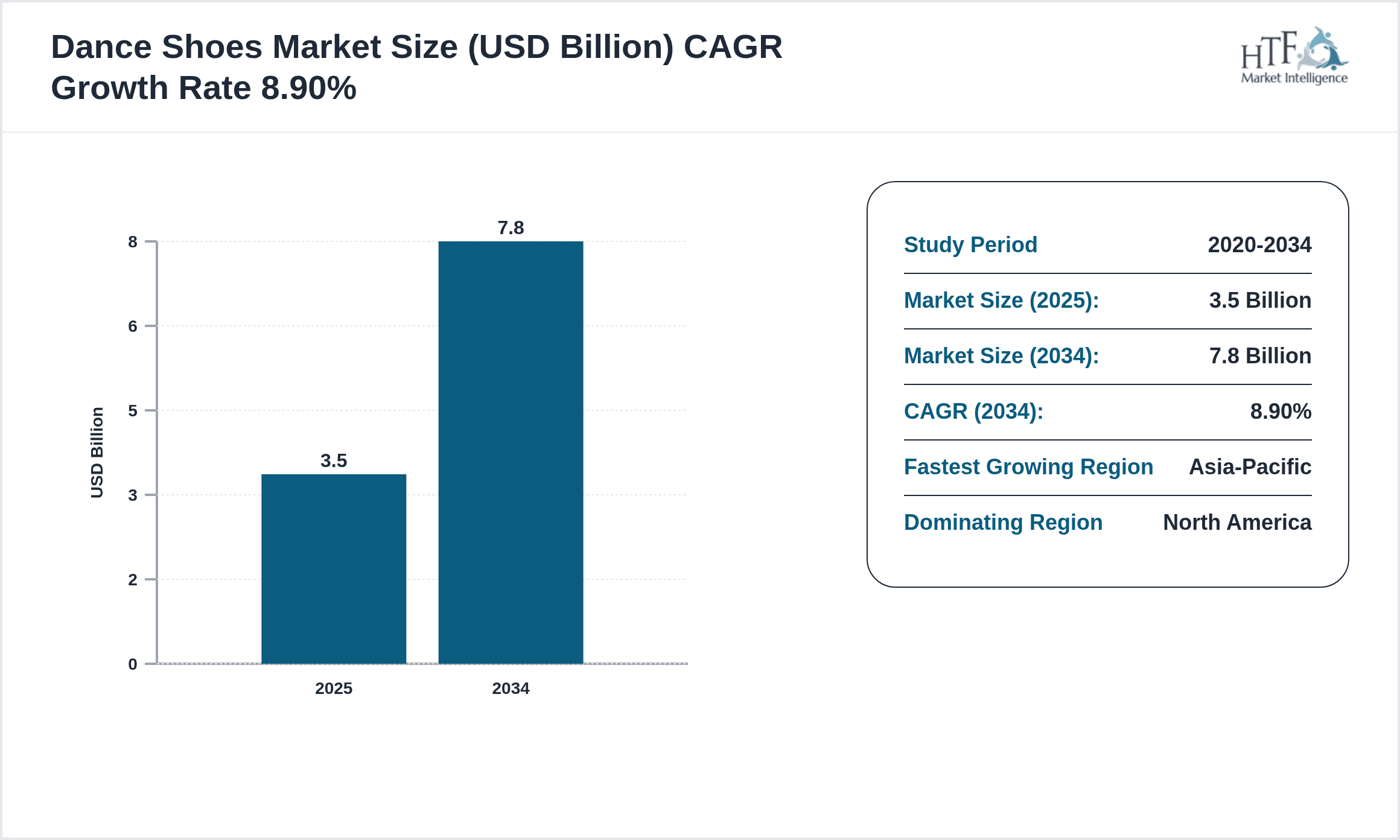
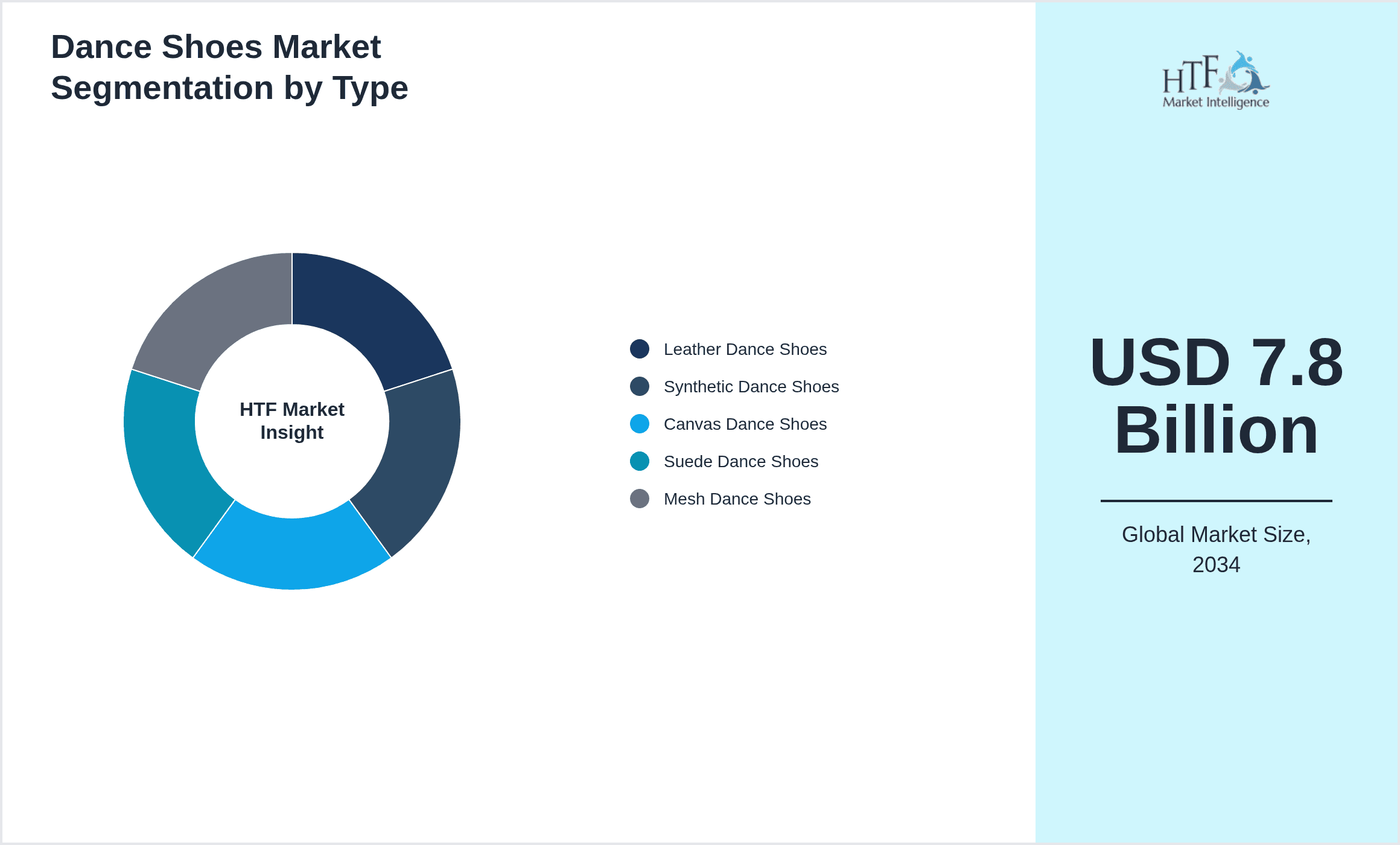
- •The dance shoes market has exhibited robust growth with a base market size of USD 3.5 billion in 2025 and is projected to reach USD 7.8 billion by 2034, registering a compound annual growth rate of 8.9%. North America leads the market in terms of revenue generation, supported by a strong presence of dance academies and entertainment industries. Asia-Pacific is identified as the fastest-growing region, fueled by rising disposable incomes, expanding middle-class populations, and increasing interest in dance as both art and fitness. Leather dance shoes dominate the product segment, accounting for the largest market share due to their durability and comfort. Mesh dance shoes show the highest growth potential owing to their breathability and lightweight characteristics. Ballroom dance remains the leading application segment, driven by the popularity of ballroom dance competitions and social dance events globally.
- •Dance shoes offer substantial value to industries such as performing arts, fitness, and entertainment by enhancing dancers’ performance and safety. For manufacturers and retailers, the market presents significant revenue opportunities through product innovation and expansion into emerging regions. Stakeholders benefit from the increasing demand for specialized footwear that combines style, comfort, and functionality. The market’s strategic importance is evident in its role supporting cultural preservation, fitness trends, and professional dance education worldwide. Furthermore, collaborations between dance shoe manufacturers and dance academies or professional dancers drive product development and brand recognition. The rising trend of dance-themed events and competitions continues to stimulate consumer interest, thereby sustaining market momentum and fostering diverse business models across global markets.
Competitive Landscape
The global dance shoes market is characterized by intense competition among established footwear manufacturers, niche dance shoe brands, and emerging players focusing on innovation and market penetration. Companies adopt multifaceted strategies including partnerships with dance academies and professional dancers to enhance product credibility and visibility. Global expansion through entry into emerging markets, especially in Asia-Pacific and Latin America, is a key approach to capture new customer bases. Product innovation focusing on advanced materials such as breathable mesh and ergonomic soles improves comfort and performance, differentiating players in a crowded marketplace. Technological adoption such as 3D printing and digital foot scanning enables customization and rapid prototyping, increasing customer satisfaction. Competitive pricing strategies and diversified product portfolios cater to both professional and amateur dancers, strengthening brand loyalty. Mergers and acquisitions facilitate consolidation and expansion of capabilities, while collaborations with fashion designers and influencers help align dance shoes with lifestyle trends. Overall, companies emphasize sustainability, quality, and technological advancements to sustain and enhance their market presence amid evolving consumer preferences and global dynamics.
Prominent Players in Dance Shoes Market
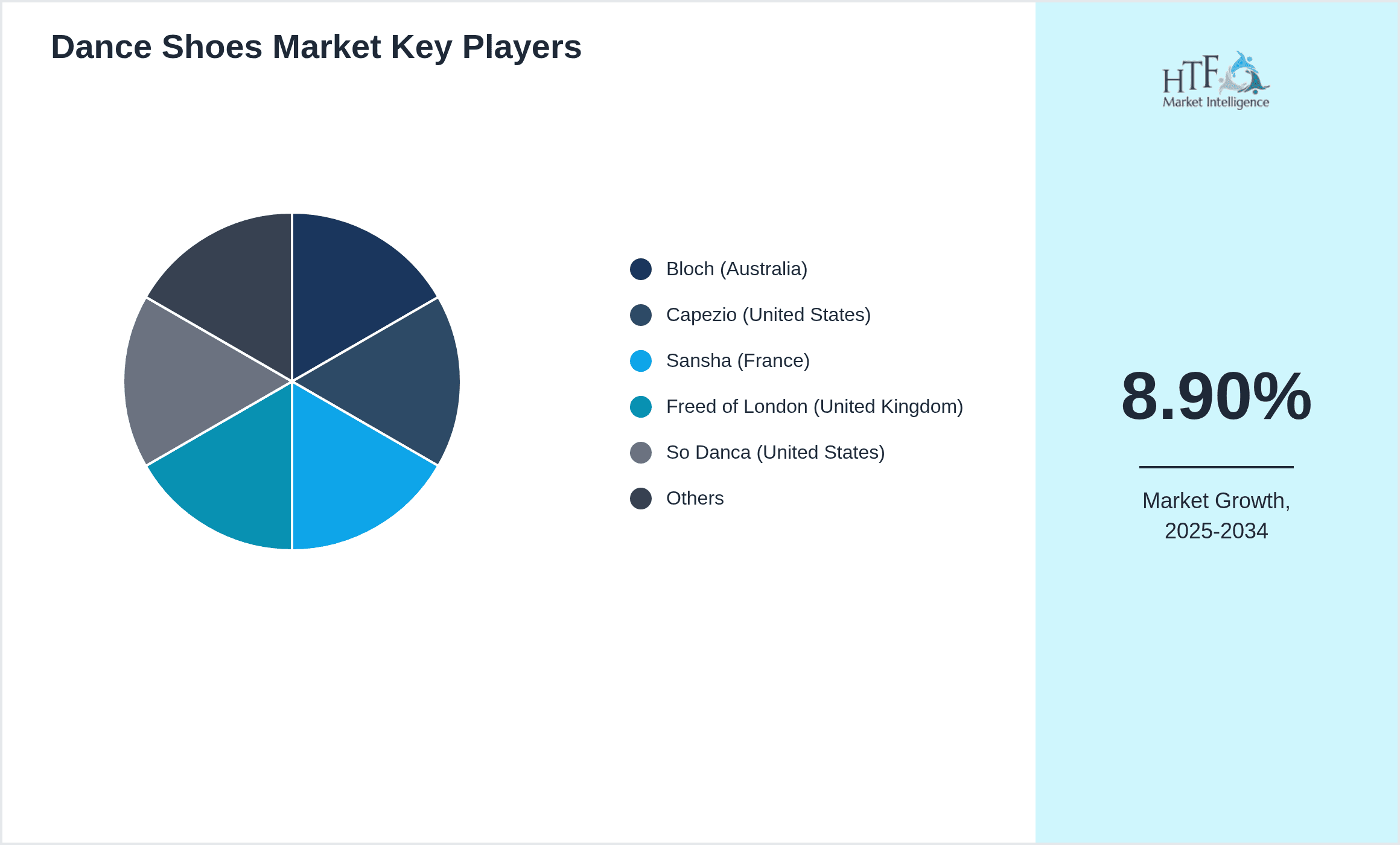
- •Bloch (Australia)
- •Capezio (United States)
- •Sansha (France)
- •Freed of London (United Kingdom)
- •So Danca (United States)
- •Mirella (United Kingdom)
- •Wear Moi (France)
- •Grishko (Russia)
- •Bloch International (Australia)
- •Ray Rose (United Kingdom)
- •Very Fine Dance Shoes (United States)
- •Aris Allen (United States)
- •Anna Kern (Russia)
- •Sansha Group (France)
- •Freed Dancewear (United Kingdom)
- •Danc'in (France)
- •Werner Kern (Germany)
- •SoDanca International (United States)
- •Capezio-Ballet Makers (United States)
- •Bleyer (Germany)

Market Breakdown
- •By Type
- ◦Leather Dance Shoes
- ◦Synthetic Dance Shoes
- ◦Canvas Dance Shoes
- ◦Suede Dance Shoes
- ◦Mesh Dance Shoes
- •By Application
- ◦Ballroom Dance Shoes
- ◦Ballet Dance Shoes
- ◦Latin Dance Shoes
- ◦Jazz Dance Shoes
- ◦Tap Dance Shoes
- •By Closure Type
- ◦Lace-Up
- ◦Slip-On
- ◦Velcro
- ◦Buckled
- •By Sole Material
- ◦Leather Sole
- ◦Rubber Sole
- ◦Synthetic Sole
Growth Dynamics
The global dance shoes market growth is propelled by increasing participation in dance activities worldwide, driven by rising popularity of dance fitness programs and social dance events. Growing awareness about the importance of specialized footwear in preventing injuries enhances demand. Technological advancements in material science introduce shoes with superior flexibility, breathability, and durability. Collaboration between dance shoe manufacturers and dance academies fosters product innovation tailored to specific dance styles. Additionally, the rise of virtual dance classes and online dance competitions during recent years has expanded market access. Increasing disposable incomes and expanding middle-class populations in emerging markets fuel consumption. The entertainment industry’s focus on dance-themed productions and competitions further stimulates demand. These factors collectively strengthen market growth and create new avenues for product development and customer engagement.
Market Trends
Emerging trends in the global dance shoes market include the integration of sustainable and eco-friendly materials, responding to consumer demand for environmentally conscious products. Brands are incorporating recycled fabrics and biodegradable components to reduce environmental impact. Customization and personalization of dance shoes through 3D scanning and printing technologies enable perfect fit and enhanced comfort. The rising popularity of hybrid dance forms and fusion performances drives demand for versatile footwear accommodating multiple styles. Increasing collaborations with fashion designers and influencers elevate dance shoes as lifestyle and fashion accessories. Digital marketing and e-commerce platforms expand market reach and facilitate direct consumer engagement. Furthermore, the development of smart dance shoes embedded with sensors to monitor performance and provide feedback is an innovative trend gaining traction. These trends are shaping the future landscape of the dance shoes industry by emphasizing sustainability, technology, and consumer experience.
Market Opportunities
The global dance shoes market presents significant opportunities through expansion in emerging markets where growing urbanization and disposable income increase dance participation. Untapped segments such as children’s dance shoes and adaptive footwear for special needs dancers offer growth potential. Integration of advanced technologies like smart sensors for performance tracking opens avenues for premium product development. Collaborations with professional dance institutions and fitness centers can enhance brand visibility and product adoption. Market players can capitalize on rising demand for sustainable products by developing eco-friendly dance shoes. Additionally, the surge in online dance tutorials and virtual competitions creates opportunities for digital marketing and direct-to-consumer sales channels. Expanding product portfolios to include multi-style dance shoes for fusion genres caters to evolving consumer preferences. These opportunities, coupled with increasing investments in research and development, position the market for sustained growth and innovation.
Market Challenges
The global dance shoes market faces challenges including high production costs associated with premium materials and advanced manufacturing processes, which can limit affordability for some consumer segments. Intense competition from low-cost manufacturers offering generic footwear impacts profitability and market share of established brands. Variations in dance styles and regional preferences complicate product standardization and inventory management. Supply chain disruptions, especially during global crises, affect raw material availability and distribution channels. Regulatory compliance with safety and material standards across different regions imposes additional operational complexities. Furthermore, counterfeit products and intellectual property infringements undermine brand reputation and sales. Limited consumer awareness about the importance of specialized dance footwear in some regions restrains market penetration. These challenges require companies to adopt efficient cost management, invest in brand education, and develop flexible supply chains to maintain competitiveness.
Regulatory Framework
In the past five years, global regulatory focus on safety standards for dance footwear has intensified, mandating compliance with material quality, flammability, and ergonomic design requirements to protect consumers. Regions such as North America and Europe have enforced stringent footwear manufacturing guidelines aligned with environmental regulations, promoting the use of sustainable and non-toxic materials. Additionally, import-export regulations impact the sourcing of raw materials and finished products, requiring adherence to customs and quality certification standards. Intellectual property laws have been strengthened globally to combat counterfeit dance shoes, safeguarding brand integrity. These regulations collectively ensure consumer safety, environmental sustainability, and fair competition within the dance shoes industry, compelling manufacturers to align production processes and supply chains with evolving legal frameworks to maintain market access and reputation.
Market Intelligence
- •Recent market developments and strategic initiatives are continuously tracked through industry publications, company announcements, and regulatory filings. For the most current information, stakeholders are advised to monitor official corporate communications and recognized market intelligence platforms.
- •Recent market developments and strategic initiatives are continuously tracked through industry publications, company announcements, and regulatory filings. For the most current information, stakeholders are advised to monitor official corporate communications and recognized market intelligence platforms.
- •Recent market developments and strategic initiatives are continuously tracked through industry publications, company announcements, and regulatory filings. For the most current information, stakeholders are advised to monitor official corporate communications and recognized market intelligence platforms.
- •Recent market developments and strategic initiatives are continuously tracked through industry publications, company announcements, and regulatory filings. For the most current information, stakeholders are advised to monitor official corporate communications and recognized market intelligence platforms.
- •Source: Industry publications, company websites, and regulatory agencies
Regional Outlook
The North America currently holds a significant share of the market, primarily due to several key factors: increasing consumption rates, a burgeoning population, and robust economic momentum. These elements collectively drive demand, positioning this region as a leader in the market. On the other hand, Asia-Pacific is rapidly emerging as the fastest-growing area within the industry. This remarkable growth can be attributed to swift infrastructure development, the expansion of various industrial sectors, and a marked increase in consumer demand. These dynamics make this region a crucial player in shaping future market growth.
In our report, we cover a comprehensive analysis of the following regions and countries:
- North America
- LATAM
- West Europe
- Central & Eastern Europe
- Northern Europe
- Southern Europe
- East Asia
- Southeast Asia
- South Asia
- Central Asia
- Oceania
- MEA
| Feature | Details |
|---|---|
| Base Year Market Size | USD 3.5 Billion |
| Forecast Year Market Size | USD 7.8 Billion |
| CAGR | 8.9% |
| Forecast Period | 2026 to 2033 |
| YoY Growth | 8.5% |
| Scope of Report | Market is segmented by Type (Leather Dance Shoes, Synthetic Dance Shoes, Canvas Dance Shoes, Suede Dance Shoes, Mesh Dance Shoes), Application (Ballroom Dance Shoes, Ballet Dance Shoes, Latin Dance Shoes, Jazz Dance Shoes, Tap Dance Shoes), Closure Type (Lace-Up, Slip-On, Velcro, Buckled), Sole Material (Leather Sole, Rubber Sole, Synthetic Sole) |
| Regions Covered | North America, LATAM, West Europe, Central & Eastern Europe, Northern Europe, Southern Europe, East Asia, Southeast Asia, South Asia, Central Asia, Oceania, MEA |
| Key Companies | Bloch (Australia), Capezio (United States), Sansha (France), Freed of London (United Kingdom), So Danca (United States), Mirella (United Kingdom), Wear Moi (France), Grishko (Russia), Bloch International (Australia), Ray Rose (United Kingdom), Very Fine Dance Shoes (United States), Aris Allen (United States), Anna Kern (Russia), Sansha Group (France), Freed Dancewear (United Kingdom), Danc'in (France), Werner Kern (Germany), SoDanca International (United States), Capezio-Ballet Makers (United States), Bleyer (Germany) |
Global Dance Shoes Market Size, Growth & Revenue 2025-2034 - Table of Contents
Frequently Asked Questions (FAQ):
The Compact Track Loaders market is expected to see value worth 5.3 Billion in 2025.
North America currently leads the market with approximately 45% market share, followed by Europe at 28% and Asia-Pacific at 22%. The remaining regions account for 5% of the global market.
Key growth drivers include increasing construction activities, rising demand for versatile equipment in agriculture, technological advancements in track loader design, and growing preference for compact equipment in urban construction projects.