
Europe Inflatable Ball Market - Outlook 2025-2034
Europe Inflatable Ball Market is segmented by Type (PVC Inflatable Balls, Vinyl Inflatable Balls, Nylon Inflatable Balls, TPU Inflatable Balls, Rubber Inflatable Balls), Application (Sports & Recreation, Advertising & Marketing, Therapy & Rehabilitation, Events & Entertainment, Educational Activities), Distribution Channel (Online Retail, Specialty Stores, Wholesale Distributors, Direct Sales), End User (Professional Sports Organizations, Educational Institutions, Healthcare Providers, Corporate & Event Planners), and Geography (Germany, France, The United Kingdom, BeNeLux, Spain, Italy, NORDIC, CEE, Others)
Pricing
Report Overview
Executive Summary
- •The Europe Inflatable Ball market covers the manufacturing and distribution of inflatable balls composed of materials including PVC, vinyl, nylon, TPU, and rubber. These inflatable balls serve applications such as sports and recreation, advertising and marketing, therapy and rehabilitation, events and entertainment, and educational activities. The market encompasses a wide variety of product types tailored to meet specific use cases, balancing durability, safety, and user experience. Manufacturers focus on innovation in materials and production techniques to improve product lifespan and environmental sustainability. The industry caters to diverse customer segments from professional sports teams to event organizers and healthcare providers, emphasizing customization and compliance with regional safety standards. The market is influenced by growing consumer interest in fitness, experiential marketing strategies, and rehabilitation therapies. Regional dynamics in Europe, with dominant contributions from Germany, the United Kingdom, and France, shape competitive strategies and growth prospects. This market is poised for steady expansion driven by technological advancements and evolving user preferences.
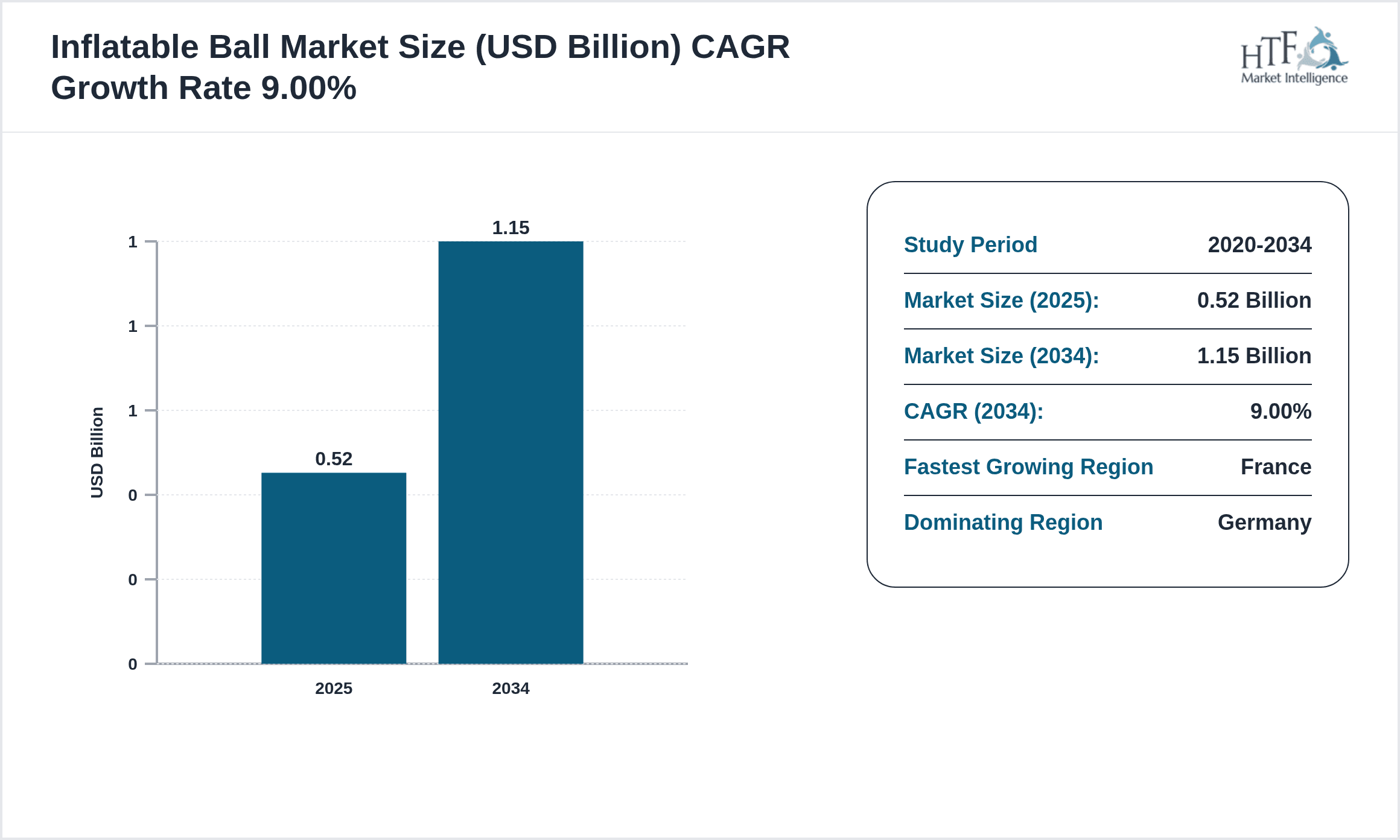
- •The Europe Inflatable Ball market is projected to grow from USD 520 Million in 2025 to USD 1,150 Million by 2034, reflecting a CAGR of 9.0%. Germany leads the market with the highest share, while France is the fastest-growing country due to increased adoption in sports and marketing sectors. PVC Inflatable Balls dominate the product segment, favored for their cost-effectiveness and durability, while TPU Inflatable Balls exhibit the fastest growth owing to superior elasticity and environmental benefits. Key applications such as sports and recreation, and advertising and marketing, hold prominent shares, supported by rising consumer engagement and brand promotion activities. The market demonstrates robust year-over-year growth of approximately 8.7%, driven by continuous innovation and expanding use cases across European countries.
- •The Europe Inflatable Ball market offers significant value to industries including sports management, advertising agencies, healthcare providers, and event organizers. Its strategic importance lies in enabling dynamic consumer engagement, enhancing therapeutic interventions, and providing cost-effective promotional solutions. Stakeholders benefit from diverse product portfolios and material innovations that meet evolving safety and environmental standards. The market’s growth fosters regional economic development, supports manufacturing ecosystems, and encourages cross-sector collaboration. Investments in R&D and sustainable manufacturing further position Europe as a competitive hub for inflatable ball technologies, driving long-term market resilience and stakeholder value.
Competitive Landscape
The Europe Inflatable Ball market presents a highly competitive environment characterized by a mix of established manufacturers and emerging innovators. Market participants focus on product differentiation through material innovation, enhanced durability, and design customization to meet diverse application needs. Competitive strategies include expanding product lines, forming strategic partnerships, and leveraging advanced manufacturing technologies to reduce costs and improve quality. Innovation cycles are accelerated by rising consumer demand for eco-friendly and multifunctional inflatable balls, prompting investments in sustainable materials such as TPU. Regional competition is driven primarily by key economic hubs like Germany, France, and the UK, which host major production facilities and R&D centers. Companies also compete on distribution efficiency, brand recognition, and after-sales service. Market entry barriers include stringent EU safety and environmental regulations, necessitating compliance expertise. The competitive landscape is further shaped by mergers and acquisitions aimed at consolidating market position and expanding geographic reach. Overall, rivalry fosters continuous product innovation and improved consumer choice, setting a dynamic trajectory for the market’s evolution.
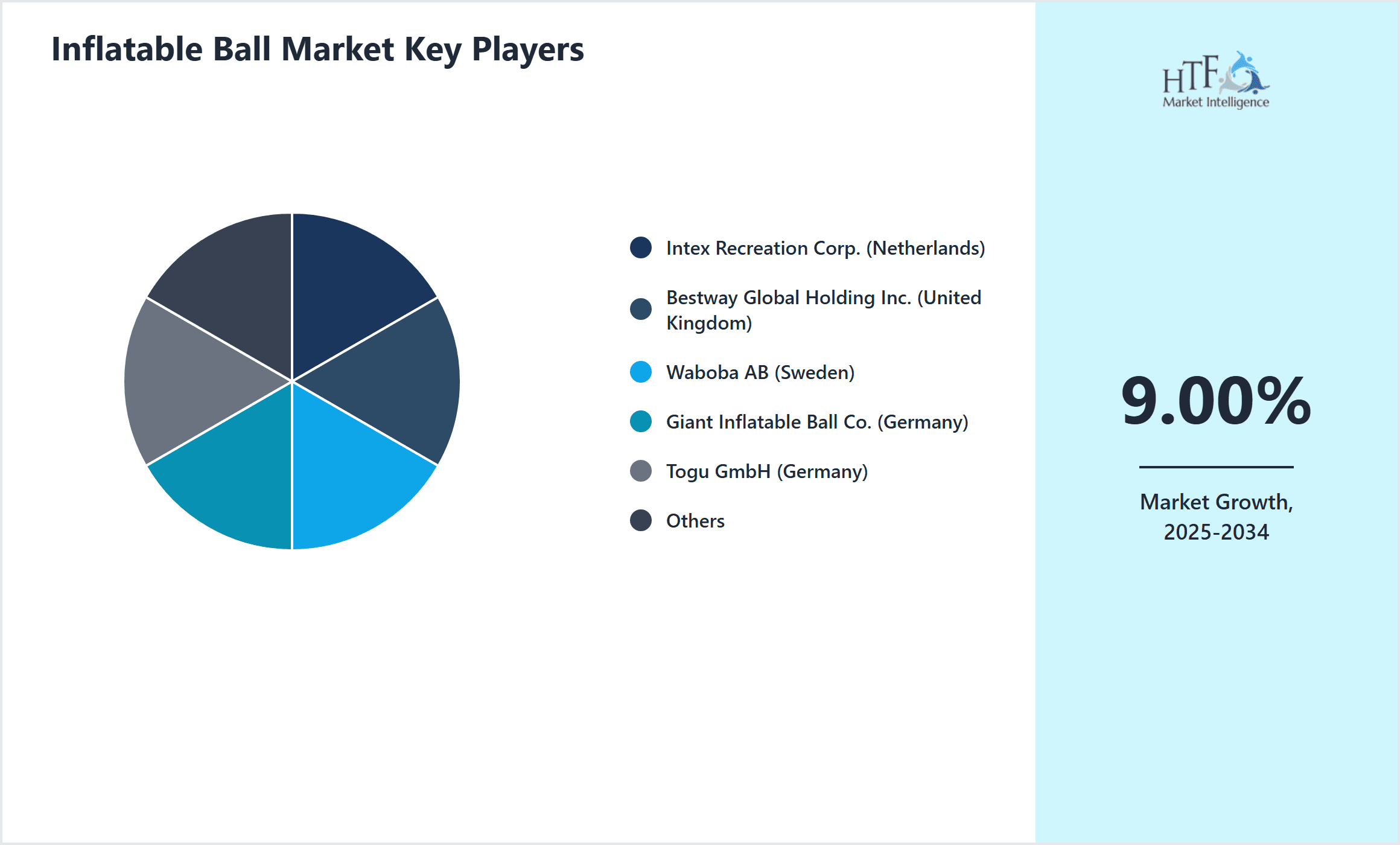
Key Players in Inflatable Ball Market
- •Intex Recreation Corp. (Netherlands)
- •Bestway Global Holding Inc. (United Kingdom)
- •Waboba AB (Sweden)
- •Giant Inflatable Ball Co. (Germany)
- •Togu GmbH (Germany)
- •Sipa Gummiwerke GmbH & Co. KG (Germany)
- •Zoggs Ltd (United Kingdom)
- •Rucanor BV (Netherlands)
- •Kettler Alu-Rad GmbH & Co. KG (Germany)
- •Decathlon S.A. (France)
- •Poolmaster Inc. (United Kingdom)
- •Zebra Sports (Italy)
- •HABA GmbH & Co. KG (Germany)
- •Kwik Goal (United Kingdom)
- •Play Visions Europe (France)
- •ArtSport Srl (Italy)
- •Mondo Spa (Italy)
- •Mini Mobility Ltd (Ireland)
- •Polanik (Poland)
- •Sport-Thieme GmbH (Germany)
- •Sammons Preston Rolyan (France)
- •Select Sport A/S (Denmark)
- •Gilbert Rugby (United Kingdom)
- •Franklin Sports (United Kingdom)
- •Molten Europe NV (Belgium)
Market Breakdown
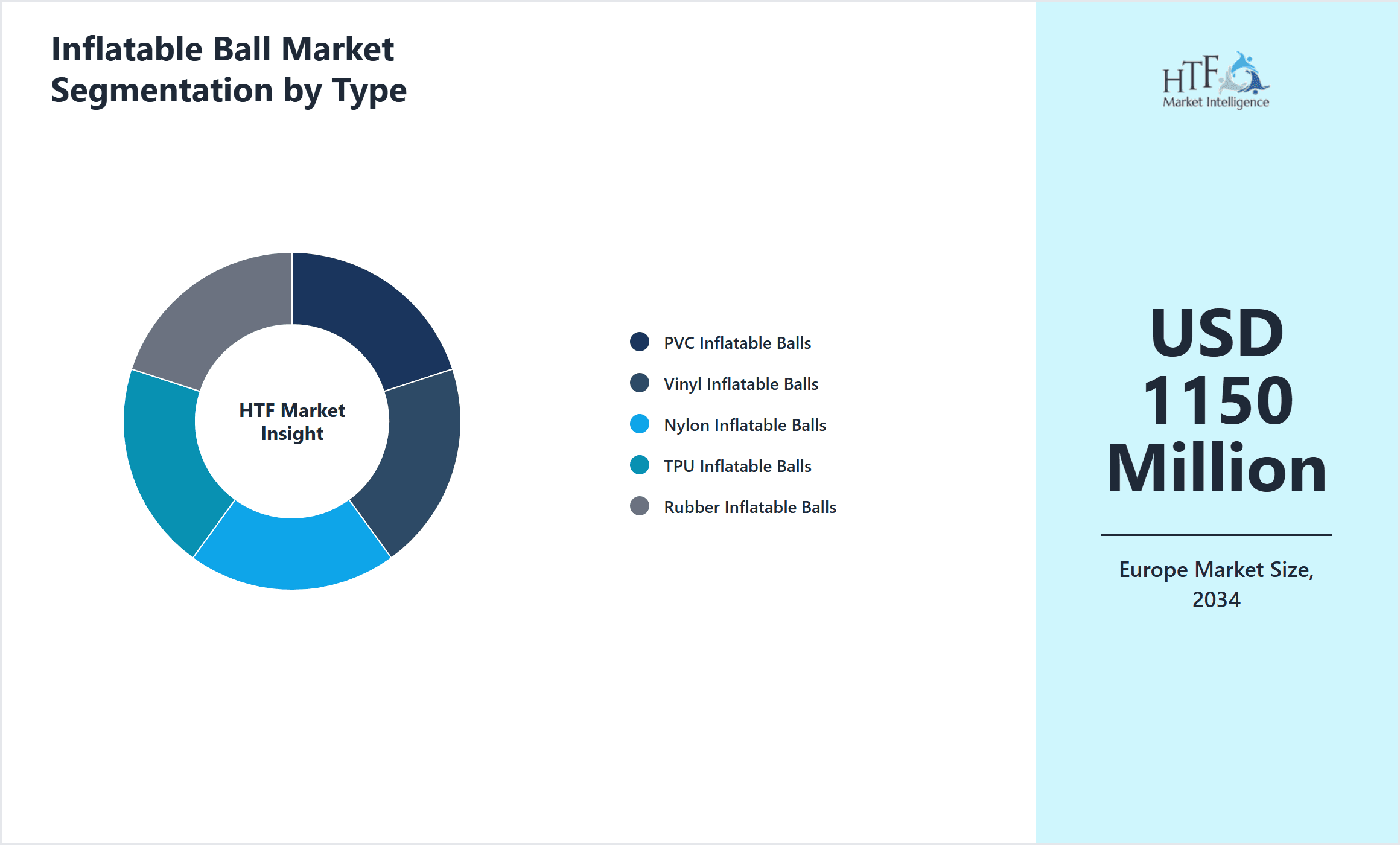
- •By Type
- ◦PVC Inflatable Balls
- ◦Vinyl Inflatable Balls
- ◦Nylon Inflatable Balls
- ◦TPU Inflatable Balls
- ◦Rubber Inflatable Balls
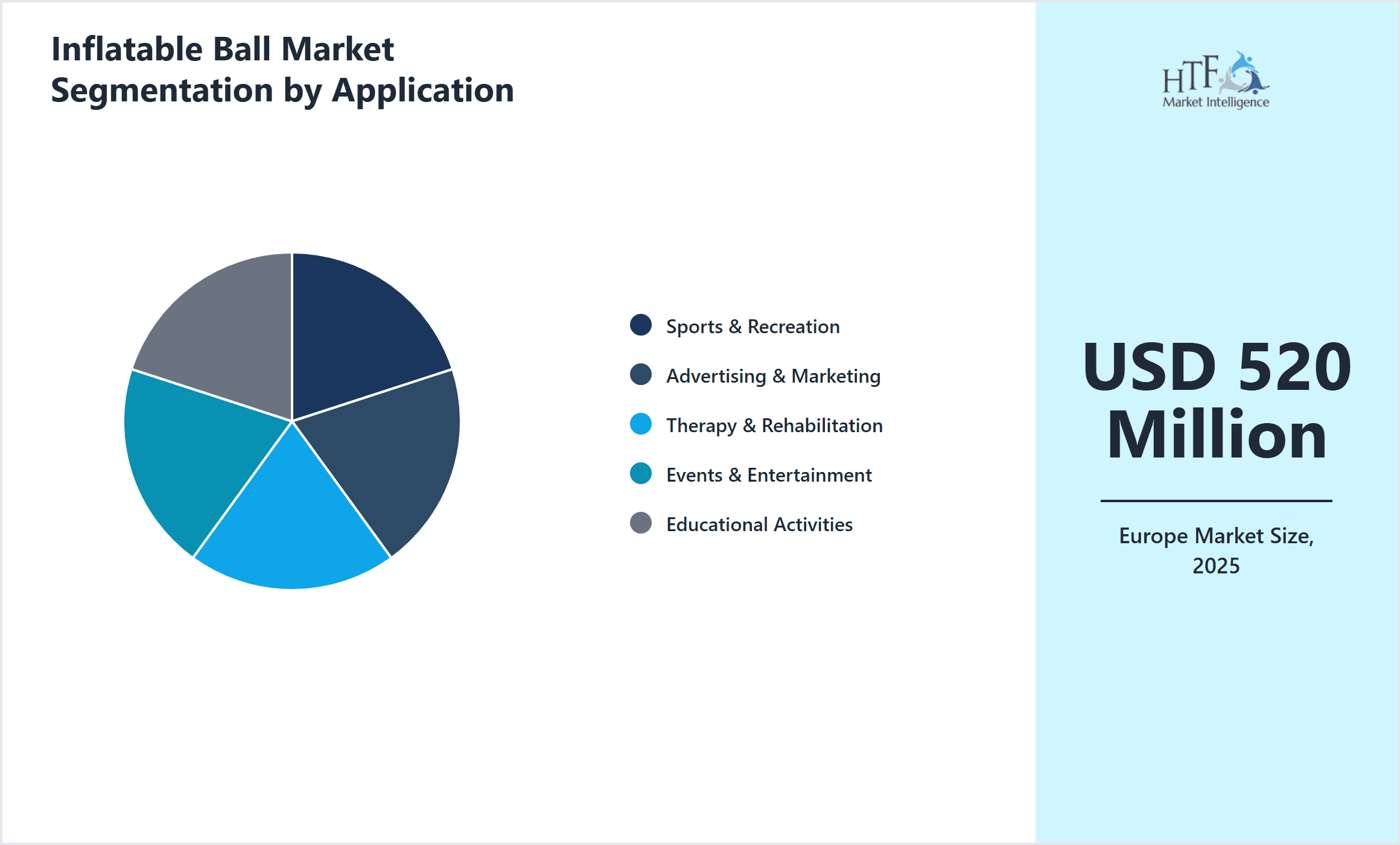
- •By Application
- ◦Sports & Recreation
- ◦Advertising & Marketing
- ◦Therapy & Rehabilitation
- ◦Events & Entertainment
- ◦Educational Activities
- •By Distribution Channel
- ◦Online Retail
- ◦Specialty Stores
- ◦Wholesale Distributors
- ◦Direct Sales
- •By End User
- ◦Professional Sports Organizations
- ◦Educational Institutions
- ◦Healthcare Providers
- ◦Corporate & Event Planners
Growth Dynamics
- •Increasing consumer focus on health and wellness is driving demand for inflatable balls in sports and therapy applications, as these products facilitate low-impact exercise and rehabilitation activities. This trend promotes market expansion in countries like Germany and France, where active lifestyles are prioritized.
- •Rising adoption of inflatable balls in experiential advertising and brand activation campaigns is creating new revenue streams for manufacturers. Interactive marketing events utilize inflatable balls to engage consumers, fostering brand recall and product trials, particularly in Western Europe.
- •Technological advancements in materials such as TPU have enhanced product durability and environmental sustainability, attracting eco-conscious consumers and regulatory support. This innovation contributes to rapid growth of TPU-based inflatable balls across the region.
- •Expansion of e-commerce platforms has broadened market reach, enabling direct-to-consumer sales and customized product offerings. This distribution shift supports increased penetration in smaller European markets and niche segments.
- •Government and sports federation initiatives promoting youth sports and community fitness programs are fueling demand for affordable and safe inflatable sports equipment, including balls. Such programs are particularly influential in Nordic and Central European countries.
Market Trends
- •Sustainability is a key trend, with manufacturers investing in recyclable and biodegradable materials to reduce environmental impact, aligning with EU regulations and consumer preferences. This shift is influencing product development pipelines across Europe.
- •Customization and aesthetic innovation are becoming prominent, with companies offering inflatable balls featuring bespoke colors, logos, and interactive features to cater to corporate clients and events, enhancing user engagement.
- •Integration of smart technologies, such as embedded sensors to track ball movement and usage, is emerging, particularly in professional sports, enhancing performance analytics and training effectiveness.
- •Collaborative partnerships between manufacturers and event organizers are increasing, facilitating co-branded inflatable balls for large-scale marketing campaigns and entertainment events, thereby expanding market visibility.
- •Consumer preference is shifting toward multi-functional inflatable balls that serve both recreational and therapeutic purposes, reflecting the growing demand for versatile fitness equipment.
Market Opportunities
- •Expanding demand in the rehabilitation sector offers opportunities to develop specialized inflatable balls tailored for physiotherapy, supporting aging populations and post-injury recovery in Europe’s healthcare systems.
- •Growth in corporate wellness programs presents a promising market for inflatable balls designed for employee fitness and team-building activities, enabling manufacturers to target B2B segments.
- •Emerging markets within Eastern Europe are underserved, representing potential for geographic expansion and increased market penetration through localized marketing and distribution strategies.
- •Technological integration such as IoT-enabled inflatable balls can open new avenues for data-driven sports training and consumer engagement, differentiating products in a competitive market.
- •Sustainability-focused product lines that comply with stringent EU environmental directives can capture growing eco-conscious consumer bases and institutional buyers.
Market Challenges
- •Strict European Union safety and environmental regulations impose high compliance costs on manufacturers, potentially limiting smaller players’ market entry and product innovation speed.
- •Volatile raw material prices, particularly for PVC and rubber, affect production costs and pricing strategies, creating margin pressures for market participants.
- •Intense competition from low-cost manufacturers outside Europe challenges regional producers on price competitiveness, necessitating differentiation through quality and innovation.
- •Seasonality of demand in sports and outdoor recreational applications leads to fluctuations in sales volumes, complicating inventory and supply chain management.
- •Consumer skepticism regarding product durability and environmental impact hinders adoption of inflatable balls in certain segments, requiring enhanced marketing and product certification efforts.
Regulatory Framework
- •Between 2020 and 2025, the European Union updated the REACH regulation to tighten restrictions on hazardous chemicals used in PVC and rubber manufacturing, mandating reformulation of materials for inflatable balls and compliance documentation.
- •The EU’s EcoDesign Directive introduced new energy efficiency and material sustainability requirements for inflatable products, including inflatable balls, impacting manufacturing processes and supply chain sourcing.
- •Safety standards under the European Committee for Standardization (CEN) for sports equipment were revised in 2023 to include enhanced testing protocols for inflatable balls, ensuring user safety and product reliability.
- •Country-specific mandates, such as Germany’s VerpackG packaging law, require manufacturers to implement recycling programs and reduce plastic waste associated with inflatable ball packaging starting in 2024.
- •Government incentives promoting sustainable manufacturing and circular economy practices have been introduced in France and the Nordic countries, offering subsidies and tax benefits to compliant inflatable ball producers.
Market Intelligence
- •15th March 2025, Intex Recreation Corp. (Netherlands) launched a new line of TPU Inflatable Balls designed for professional sports training, featuring enhanced durability and integrated sensor technology to measure impact and rotation. This innovative product aims to capture the growing demand for smart sports equipment in Europe and aligns with sustainability goals by using recyclable materials. The launch is expected to strengthen the company’s position in the premium segment and drive revenue growth across Western Europe. Source: Official Company Website
- •10th January 2025, Bestway Global Holding Inc. (United Kingdom) announced a strategic partnership with Decathlon S.A. (France) to co-develop inflatable balls tailored for mass-market sports and recreational use. The collaboration focuses on combining Bestway's manufacturing expertise with Decathlon's retail network to expand market reach and introduce eco-friendly product variants compliant with EU regulations. This alliance is projected to accelerate innovation cycles and enhance competitive advantage across Europe. Source: Industry Publication
- •5th February 2025, Waboba AB (Sweden) expanded its manufacturing facility to increase production capacity for its patented water-friendly inflatable balls. The expansion responds to rising demand in the events and outdoor recreation sectors, with anticipated sales growth in Nordic and Central European markets. Investment in automation and quality control technology aims to improve product consistency and reduce lead times, positioning Waboba as a market leader in specialized inflatable balls. Source: Official Press Release
- •20th April 2025, Togu GmbH (Germany) introduced a new therapy-focused inflatable ball line incorporating anti-microbial materials and ergonomic designs. Targeting healthcare providers and rehabilitation centers, the product addresses increasing demand for hygienic and effective physiotherapy equipment. Early market reception has been positive, with orders from major hospitals across Germany and neighboring countries, enhancing Togu’s footprint in the medical device segment. Source: Company Announcement
Regional Outlook
The Germany currently holds a significant share of the market, primarily due to several key factors: increasing consumption rates, a burgeoning population, and robust economic momentum. These elements collectively drive demand, positioning this region as a leader in the market. On the other hand, France is rapidly emerging as the fastest-growing area within the industry. This remarkable growth can be attributed to swift infrastructure development, the expansion of various industrial sectors, and a marked increase in consumer demand. These dynamics make this region a crucial player in shaping future market growth.
In our report, we cover a comprehensive analysis of the following regions and countries:
- Germany
- France
- The United Kingdom
- BeNeLux
- Spain
- Italy
- NORDIC
- CEE
- Others
| Feature | Details |
|---|---|
| Base Year Market Size | USD 520 Million |
| Forecast Year Market Size | USD 1150 Million |
| CAGR | 9% |
| Forecast Period | 2026 to 2033 |
| YoY Growth | 8.7% |
| Scope of Report | Market is segmented by Type (PVC Inflatable Balls, Vinyl Inflatable Balls, Nylon Inflatable Balls, TPU Inflatable Balls, Rubber Inflatable Balls), Application (Sports & Recreation, Advertising & Marketing, Therapy & Rehabilitation, Events & Entertainment, Educational Activities), Distribution Channel (Online Retail, Specialty Stores, Wholesale Distributors, Direct Sales), End User (Professional Sports Organizations, Educational Institutions, Healthcare Providers, Corporate & Event Planners) |
| Regions Covered | Germany, France, The United Kingdom, BeNeLux, Spain, Italy, NORDIC, CEE, Others |
| Key Companies | Intex Recreation Corp. (Netherlands), Bestway Global Holding Inc. (United Kingdom), Waboba AB (Sweden), Giant Inflatable Ball Co. (Germany), Togu GmbH (Germany), Sipa Gummiwerke GmbH & Co. KG (Germany), Zoggs Ltd (United Kingdom), Rucanor BV (Netherlands), Kettler Alu-Rad GmbH & Co. KG (Germany), Decathlon S.A. (France), Poolmaster Inc. (United Kingdom), Zebra Sports (Italy), HABA GmbH & Co. KG (Germany), Kwik Goal (United Kingdom), Play Visions Europe (France), ArtSport Srl (Italy), Mondo Spa (Italy), Mini Mobility Ltd (Ireland), Polanik (Poland), Sport-Thieme GmbH (Germany), Sammons Preston Rolyan (France), Select Sport A/S (Denmark), Gilbert Rugby (United Kingdom), Franklin Sports (United Kingdom), Molten Europe NV (Belgium) |
Europe Inflatable Ball Market - Outlook 2025-2034 - Table of Contents
Multidisciplinary researcher with 10+ years of experience uncovering insights across diverse domains focused on uncovering insights that drive informed decisions.
Frequently Asked Questions (FAQ):
The Market market is projected to grow at a steady CAGR from 2025 to 2030, driven by increasing demand and expansion in various applications.
North America currently leads the market, followed by Europe and Asia-Pacific.
Key growth drivers include increasing activities, rising demand for innovative solutions, technological advancements, and growing preference for efficient products.