
Global Domain Name System Firewall Market - Outlook 2025-2034
Global Domain Name System Firewall Market is segmented by Type (Hardware-based Domain Name System Firewalls, Software-based Domain Name System Firewalls, Cloud-based Domain Name System Firewalls, Hybrid Domain Name System Firewalls), Application (Enterprise Security, Telecommunications, Government, Cloud Services, Managed Security Services), Deployment Model (On-premise Deployment, Cloud Deployment, Hybrid Deployment), End User Industry (Banking, Financial Services, and Insurance (BFSI), Healthcare, IT and Telecommunications, Retail and E-commerce, Government and Defense), and Geography (North America, LATAM, West Europe, Central & Eastern Europe, Northern Europe, Southern Europe, East Asia, Southeast Asia, South Asia, Central Asia, Oceania, MEA)
Pricing
Report Overview
Executive Summary
- •The Global Domain Name System Firewall market is a critical segment of the cybersecurity landscape, focusing on protecting network infrastructures from malicious DNS activities. It includes hardware, software, and cloud-based firewalls that monitor, filter, and block harmful DNS traffic. These solutions serve various sectors such as enterprises, telecommunications, government agencies, and cloud service providers, addressing the growing threat of DNS-based cyberattacks worldwide. With the expansion of internet-connected devices and digital transformation across industries, the demand for DNS firewalls has significantly increased. The market encompasses innovative technologies that provide real-time threat intelligence, automated response mechanisms, and compliance with global cybersecurity standards, ensuring robust protection against phishing, malware, and ransomware attacks. As cyber threats evolve, DNS firewalls play an indispensable role in network security strategies, driving continuous advancements and adoption on a global scale.
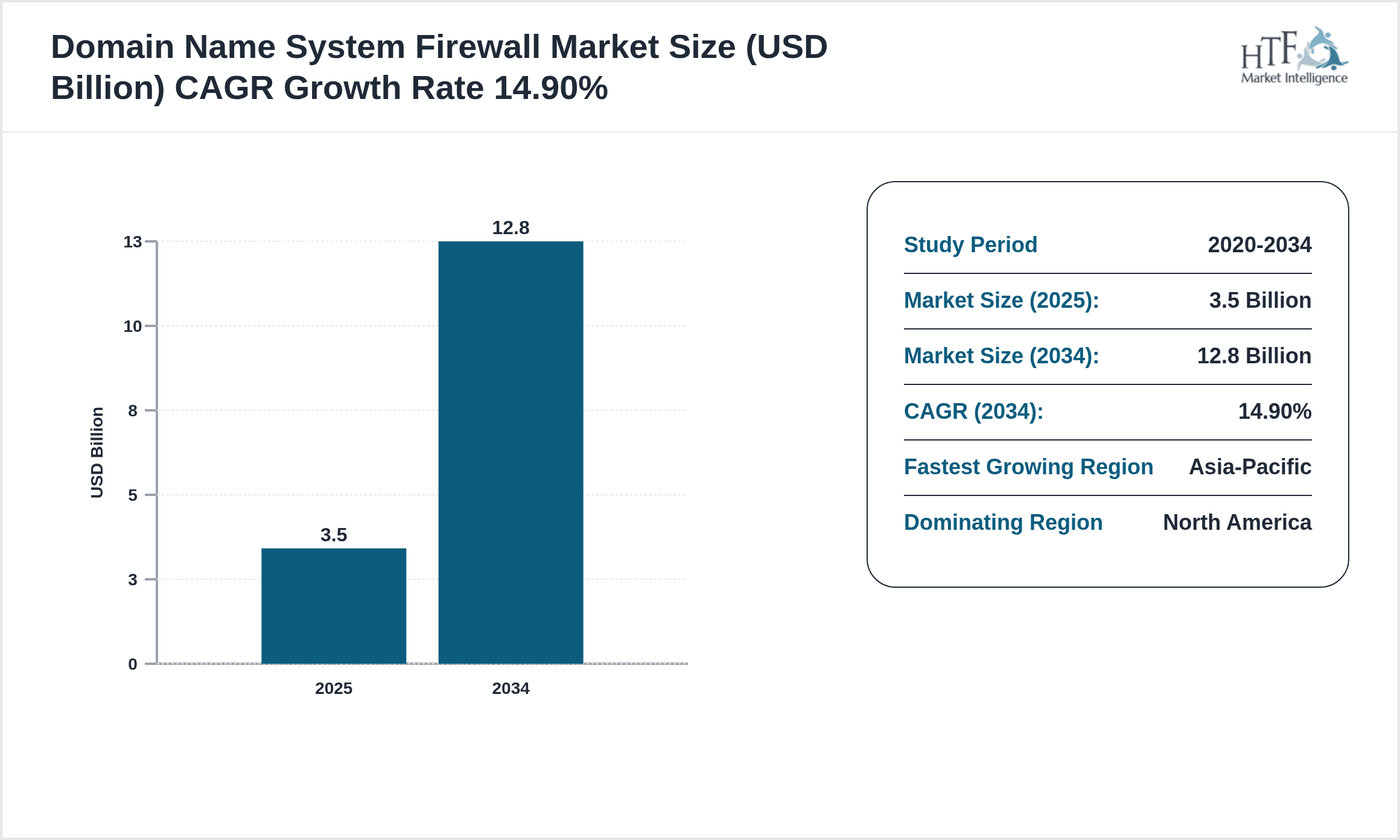
- •Key market highlights include a strong CAGR of 14.9% projected between 2025 and 2034, with the market size expected to grow from USD 3.5 billion in 2025 to USD 12.8 billion by 2034. North America currently dominates the market due to advanced cybersecurity infrastructure and regulatory frameworks, while Asia-Pacific is the fastest-growing region driven by digital adoption and increasing cyber threat awareness. Cloud-based DNS firewall solutions lead the product segment, reflecting the shift towards cloud security architectures. Enterprise security remains the largest application, supported by increasing corporate investments in network protection. These factors collectively underscore the robust growth trajectory and evolving dynamics of the DNS firewall market globally.
- •The strategic importance of the Domain Name System Firewall market lies in its ability to safeguard critical internet infrastructure and sensitive data across multiple industries. It enables organizations to proactively defend against DNS-based attacks that can cause severe operational disruptions and financial losses. By integrating DNS firewall solutions, stakeholders including enterprises, service providers, and government bodies can enhance their cybersecurity posture, comply with stringent regulations, and maintain trust with customers and partners. The market's value proposition is further strengthened by ongoing innovations in DNS threat detection, automation, and cloud-native deployments, making it a vital component of comprehensive cybersecurity strategies worldwide.
Competitive Landscape
The Global Domain Name System Firewall market features intense competition characterized by continuous innovation and strategic positioning. Market players focus on developing advanced threat intelligence capabilities, integrating AI and machine learning for improved DNS anomaly detection, and expanding cloud-native firewall offerings to meet evolving customer demands. Rivalry is heightened by the presence of multinational cybersecurity firms alongside specialized DNS security providers, each leveraging unique strengths in technology, customer base, and geographic reach. Strategic partnerships, collaborations, and acquisitions are common tactics to enhance product portfolios and accelerate market penetration. Pricing strategies vary, balancing premium features with competitive affordability to capture diverse market segments. Distribution channels include direct sales, managed security service providers, and cloud marketplaces, ensuring broad accessibility. Regional competition also plays a role, with North America and Europe hosting mature markets, while Asia-Pacific and Latin America offer emerging growth opportunities. Future trends point to increased focus on integration with broader security ecosystems and regulatory compliance tools, shaping the competitive landscape dynamically.
Leading Companies in Domain Name System Firewall Market
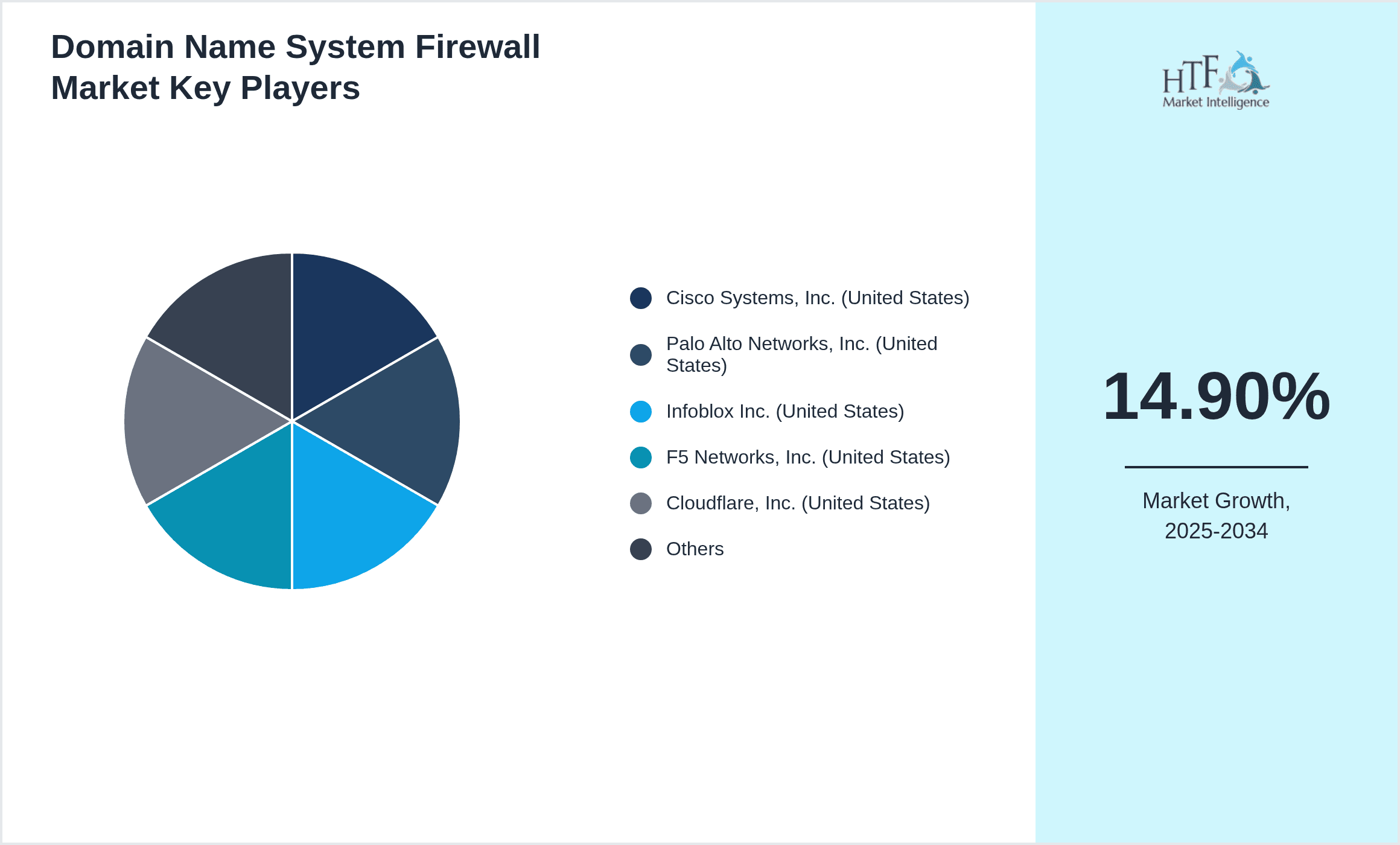
- •Cisco Systems, Inc. (United States)
- •Palo Alto Networks, Inc. (United States)
- •Infoblox Inc. (United States)
- •F5 Networks, Inc. (United States)
- •Cloudflare, Inc. (United States)
- •BlueCat Networks (Canada)
- •Neustar, Inc. (United States)
- •Menlo Security (United States)
- •Akamai Technologies, Inc. (United States)
- •Fortinet, Inc. (United States)
- •Check Point Software Technologies Ltd. (Israel)
- •Radware Ltd. (Israel)
- •Symantec Corporation (United States)
- •Trend Micro Incorporated (Japan)
- •Sophos Group plc (United Kingdom)
- •Barracuda Networks, Inc. (United States)
- •NortonLifeLock Inc. (United States)
- •McAfee Corp. (United States)
- •Zscaler, Inc. (United States)
- •Cloudbric Corporation (South Korea)
- •Infocyte, Inc. (United States)
- •SafeDNS (Latvia)
- •Neustar UltraDNS (United States)
- •Cyren Ltd. (Israel)
- •DNSFilter, Inc. (United States)
Market Breakdown
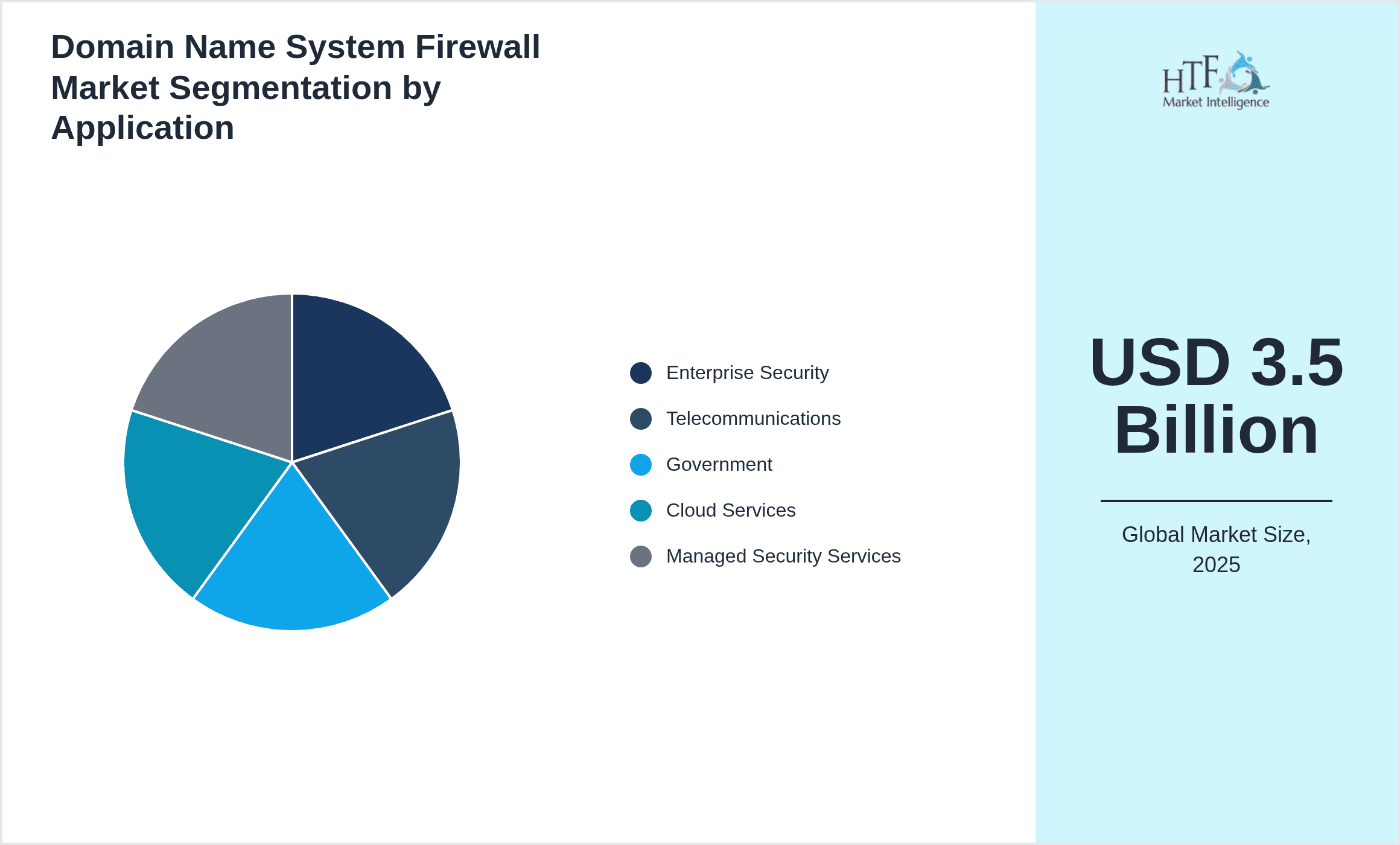
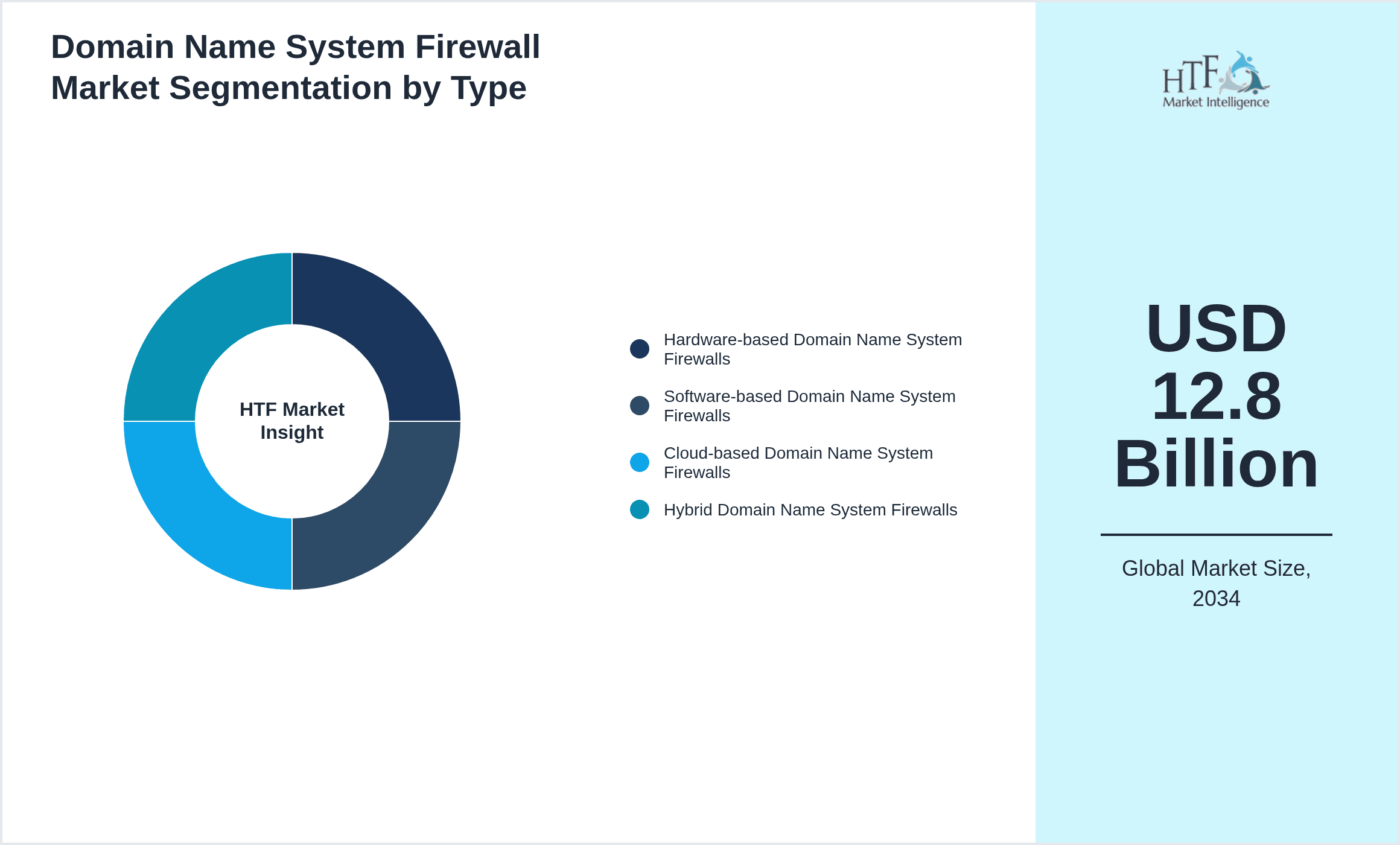
- •By Type
- ◦Hardware-based Domain Name System Firewalls
- ◦Software-based Domain Name System Firewalls
- ◦Cloud-based Domain Name System Firewalls
- ◦Hybrid Domain Name System Firewalls
- •By Application
- ◦Enterprise Security
- ◦Telecommunications
- ◦Government
- ◦Cloud Services
- ◦Managed Security Services
- •By Deployment Model
- ◦On-premise Deployment
- ◦Cloud Deployment
- ◦Hybrid Deployment
- •By End User Industry
- ◦Banking, Financial Services, and Insurance (BFSI)
- ◦Healthcare
- ◦IT and Telecommunications
- ◦Retail and E-commerce
- ◦Government and Defense
Growth Dynamics
- •The increasing frequency and sophistication of DNS-based cyberattacks, including phishing and malware distribution, drive demand for DNS firewall solutions that offer real-time threat detection and mitigation. Organizations are investing heavily in cybersecurity infrastructure to protect critical data and maintain regulatory compliance, accelerating market growth.
- •The rapid adoption of cloud computing and digital transformation initiatives across industries fuels the need for cloud-based DNS firewall solutions that provide scalable, flexible, and cost-effective security management, especially for enterprises and service providers.
- •Stringent data protection regulations and cybersecurity laws globally, such as GDPR and CCPA, compel organizations to implement advanced security measures including DNS firewalls, thereby expanding the market scope and adoption rates significantly.
- •The growing integration of artificial intelligence and machine learning in DNS firewall technologies enhances threat detection accuracy and response times, making these solutions more effective and attractive to security-conscious customers.
- •Expansion of IoT networks and connected devices increases the attack surface for DNS-based threats, prompting organizations to adopt robust DNS firewall solutions to safeguard complex network environments and ensure uninterrupted operations.
Market Trends
- •A notable trend is the rising preference for cloud-native DNS firewall solutions that integrate seamlessly with broader cloud security frameworks, enabling centralized management and improved threat intelligence sharing across distributed environments.
- •Increasing convergence of DNS firewall capabilities with Secure Access Service Edge (SASE) models reflects a strategic shift toward unified security architectures that combine networking and cybersecurity functions for enhanced protection and agility.
- •Adoption of automation and orchestration tools within DNS firewall platforms streamlines incident response and reduces manual intervention, improving operational efficiency and reducing response times to DNS threats.
- •The emergence of AI-driven predictive analytics in DNS firewall systems allows proactive identification of potential threats, enabling organizations to mitigate risks before they materialize into attacks.
- •Collaborations and partnerships between cybersecurity firms and cloud service providers accelerate the integration of DNS firewall solutions into cloud ecosystems, expanding market reach and customer base globally.
Market Opportunities
- •Emerging markets in Asia-Pacific and Latin America present substantial growth opportunities due to increasing digital adoption, rising cybersecurity budgets, and growing awareness of DNS-based threats among enterprises and governments.
- •The development of advanced hybrid DNS firewall solutions that combine hardware, software, and cloud capabilities offers vendors a chance to capture diverse customer segments seeking flexible deployment options.
- •Integration of DNS firewall technology with emerging 5G networks provides opportunities to secure high-speed, low-latency communications, essential for industries relying on real-time data transmission and IoT applications.
- •Increasing investments in managed security service providers (MSSPs) create avenues for DNS firewall solution providers to expand through partnerships and service-based delivery models, enhancing market penetration.
- •The rising demand for compliance-driven security frameworks in sectors like healthcare and BFSI opens opportunities to tailor DNS firewall offerings that address specific regulatory requirements and standards.
Market Challenges
- •Complexity in integrating DNS firewall solutions with existing legacy network infrastructures can hinder adoption, especially for enterprises lacking advanced IT capabilities or resources.
- •High initial investment and ongoing maintenance costs for advanced DNS firewall technologies may limit accessibility for small and medium-sized enterprises, restraining market growth in certain segments.
- •Rapidly evolving cyber threats require continuous updates and innovation in DNS firewall solutions; vendors face challenges in keeping pace with attackers’ techniques and maintaining effective protection.
- •Lack of skilled cybersecurity professionals to manage and optimize DNS firewall deployments poses operational challenges for organizations, impacting overall efficacy and return on investment.
- •Data privacy concerns and regulatory uncertainties in different regions may complicate the implementation of DNS firewall solutions that involve traffic monitoring and data analysis, requiring careful compliance management.
Regulatory Framework
- •Between 2020 and 2025, global regulations such as the European Union’s GDPR and California’s CCPA have established stringent data protection mandates requiring organizations to enhance DNS security measures to prevent data breaches and unauthorized access.
- •Increased enforcement of cybersecurity standards like the NIST Cybersecurity Framework and ISO/IEC 27001 has driven organizations worldwide to adopt advanced DNS firewall solutions to meet compliance and audit requirements effectively.
- •Regulatory bodies in North America and Europe have introduced specific guidelines for critical infrastructure protection, emphasizing DNS security as a foundational element of national cybersecurity strategies.
- •Emerging mandates in Asia-Pacific countries focus on enhancing cloud security and data sovereignty, influencing the development and deployment of cloud-based DNS firewall technologies.
- •Government incentives and cybersecurity initiatives, such as grants and public-private partnerships, have facilitated investments in DNS firewall deployments across various sectors, promoting wider adoption and innovation.
Market Intelligence
- •15th January 2025, Palo Alto Networks, Inc. expanded its DNS firewall portfolio with the launch of a cloud-native DNS security solution designed to integrate seamlessly with its Prisma Access platform. This offering enhances real-time threat detection and automated remediation capabilities, targeting enterprises undergoing digital transformation. The product supports hybrid deployment models, enabling flexible adoption across different network architectures. Palo Alto's strategic objective is to strengthen its position in the cloud security market by addressing evolving DNS-based threats with advanced AI-driven analytics and scalable cloud infrastructure. This launch underscores the increasing importance of integrated DNS protection in comprehensive cybersecurity strategies.
- •3rd March 2025, Cisco Systems, Inc. introduced an upgraded version of its hardware-based DNS firewall appliance featuring enhanced machine learning algorithms for improved detection of sophisticated DNS anomalies. The new appliance supports higher throughput and advanced threat intelligence feeds, catering to large enterprises and service providers. Cisco aims to leverage this innovation to capture larger market share in the DNS firewall segment by offering robust performance and seamless integration with existing network security ecosystems. This product launch reflects Cisco's commitment to evolving its security portfolio to meet the growing complexity of DNS-based cyber threats.
- •10th May 2025, Cloudflare, Inc. announced a strategic partnership with major cloud service providers to integrate its DNS firewall capabilities into multi-cloud security frameworks. This collaboration enables joint customers to benefit from enhanced DNS threat protection combined with cloud workload security and network performance optimization. Cloudflare’s objective is to expand its footprint in the cloud-native security market by offering scalable, automated DNS firewall services embedded within leading cloud platforms. The partnership exemplifies the trend toward unified cloud security solutions designed to address complex, distributed network environments effectively.
- •22nd July 2025, Infoblox Inc. completed the acquisition of a cybersecurity startup specializing in AI-powered DNS threat intelligence platforms. This acquisition aims to integrate advanced predictive analytics into Infoblox's existing DNS firewall solutions, enhancing proactive threat detection capabilities. Infoblox intends to leverage this technology to accelerate innovation and deliver enhanced DNS security services to enterprise and government customers globally. The move reinforces Infoblox's position as a market leader in DNS security and reflects ongoing consolidation trends within the cybersecurity industry.
- •Source: Official company press releases, industry publications
Regional Outlook
The North America currently holds a significant share of the market, primarily due to several key factors: increasing consumption rates, a burgeoning population, and robust economic momentum. These elements collectively drive demand, positioning this region as a leader in the market. On the other hand, Asia-Pacific is rapidly emerging as the fastest-growing area within the industry. This remarkable growth can be attributed to swift infrastructure development, the expansion of various industrial sectors, and a marked increase in consumer demand. These dynamics make this region a crucial player in shaping future market growth.
In our report, we cover a comprehensive analysis of the following regions and countries:
- North America
- LATAM
- West Europe
- Central & Eastern Europe
- Northern Europe
- Southern Europe
- East Asia
- Southeast Asia
- South Asia
- Central Asia
- Oceania
- MEA
| Feature | Details |
|---|---|
| Base Year Market Size | USD 3.5 Billion |
| Forecast Year Market Size | USD 12.8 Billion |
| CAGR | 14.9% |
| Forecast Period | 2026 to 2033 |
| YoY Growth | 14.9% |
| Scope of Report | Market is segmented by Type (Hardware-based Domain Name System Firewalls, Software-based Domain Name System Firewalls, Cloud-based Domain Name System Firewalls, Hybrid Domain Name System Firewalls), Application (Enterprise Security, Telecommunications, Government, Cloud Services, Managed Security Services), Deployment Model (On-premise Deployment, Cloud Deployment, Hybrid Deployment), End User Industry (Banking, Financial Services, and Insurance (BFSI), Healthcare, IT and Telecommunications, Retail and E-commerce, Government and Defense) |
| Regions Covered | North America, LATAM, West Europe, Central & Eastern Europe, Northern Europe, Southern Europe, East Asia, Southeast Asia, South Asia, Central Asia, Oceania, MEA |
| Key Companies | Cisco Systems, Inc. (United States), Palo Alto Networks, Inc. (United States), Infoblox Inc. (United States), F5 Networks, Inc. (United States), Cloudflare, Inc. (United States), BlueCat Networks (Canada), Neustar, Inc. (United States), Menlo Security (United States), Akamai Technologies, Inc. (United States), Fortinet, Inc. (United States), Check Point Software Technologies Ltd. (Israel), Radware Ltd. (Israel), Symantec Corporation (United States), Trend Micro Incorporated (Japan), Sophos Group plc (United Kingdom), Barracuda Networks, Inc. (United States), NortonLifeLock Inc. (United States), McAfee Corp. (United States), Zscaler, Inc. (United States), Cloudbric Corporation (South Korea), Infocyte, Inc. (United States), SafeDNS (Latvia), Neustar UltraDNS (United States), Cyren Ltd. (Israel), DNSFilter, Inc. (United States) |
Global Domain Name System Firewall Market - Outlook 2025-2034 - Table of Contents
Multidisciplinary researcher with 10+ years of experience uncovering insights across diverse domains focused on uncovering insights that drive informed decisions.
Frequently Asked Questions (FAQ):
The Market market is expected to see significant growth and value in 2025.
North America currently leads the market, followed by Europe and Asia-Pacific.
Key growth drivers include increasing activities, rising demand for innovative solutions, technological advancements, and growing preference for efficient products.