
Global Workers Compensation Insurance Market Size, Growth & Revenue 2025-2034
Global Workers Compensation Insurance Market is segmented by Workers Compensation Insurance Type (Voluntary Workers Compensation Insurance, Statutory Workers Compensation Insurance, Employers Liability Insurance, Occupational Disease Coverage, Wage Replacement Benefits), Application Industry (Manufacturing, Construction, Healthcare, Retail, Transportation), Service Delivery Model (Direct Insurance, Broker Mediated Insurance, Online Insurance Platforms, Third-Party Administrators), Claims Management Technology (Manual Processing, Automated Claims Processing, AI-Powered Risk Assessment, Blockchain-Enabled Claims), and Geography (North America, LATAM, West Europe, Central & Eastern Europe, Northern Europe, Southern Europe, East Asia, Southeast Asia, South Asia, Central Asia, Oceania, MEA)
Pricing
Report Overview
Executive Summary
- •The global workers compensation insurance market is a critical segment of the insurance industry, addressing the need for financial protection against workplace injuries and occupational illnesses. This insurance provides essential coverage to employees by compensating medical expenses, rehabilitation, and wage losses, while safeguarding employers from litigation and financial liabilities. Spanning diverse industries like manufacturing, construction, healthcare, retail, and transportation, the market reflects the universal importance of employee protection. The market includes statutory coverage mandated by law, voluntary insurance options, employers liability, and specific disease-related products, tailored to the regulatory landscape of different regions. Technological integration in claims processing and risk management is accelerating efficiency and customer service quality. The market is influenced by strict regulatory mandates, rising workplace safety awareness, and evolving labor laws globally. With projected growth driven by increased industrialization, workforce expansion, and the emergence of new occupational hazards, the workers compensation insurance market is positioned for significant expansion. This growth is further supported by rising demand in emerging economies and innovations in insurance product offerings, making it a strategic sector for insurers and stakeholders worldwide.
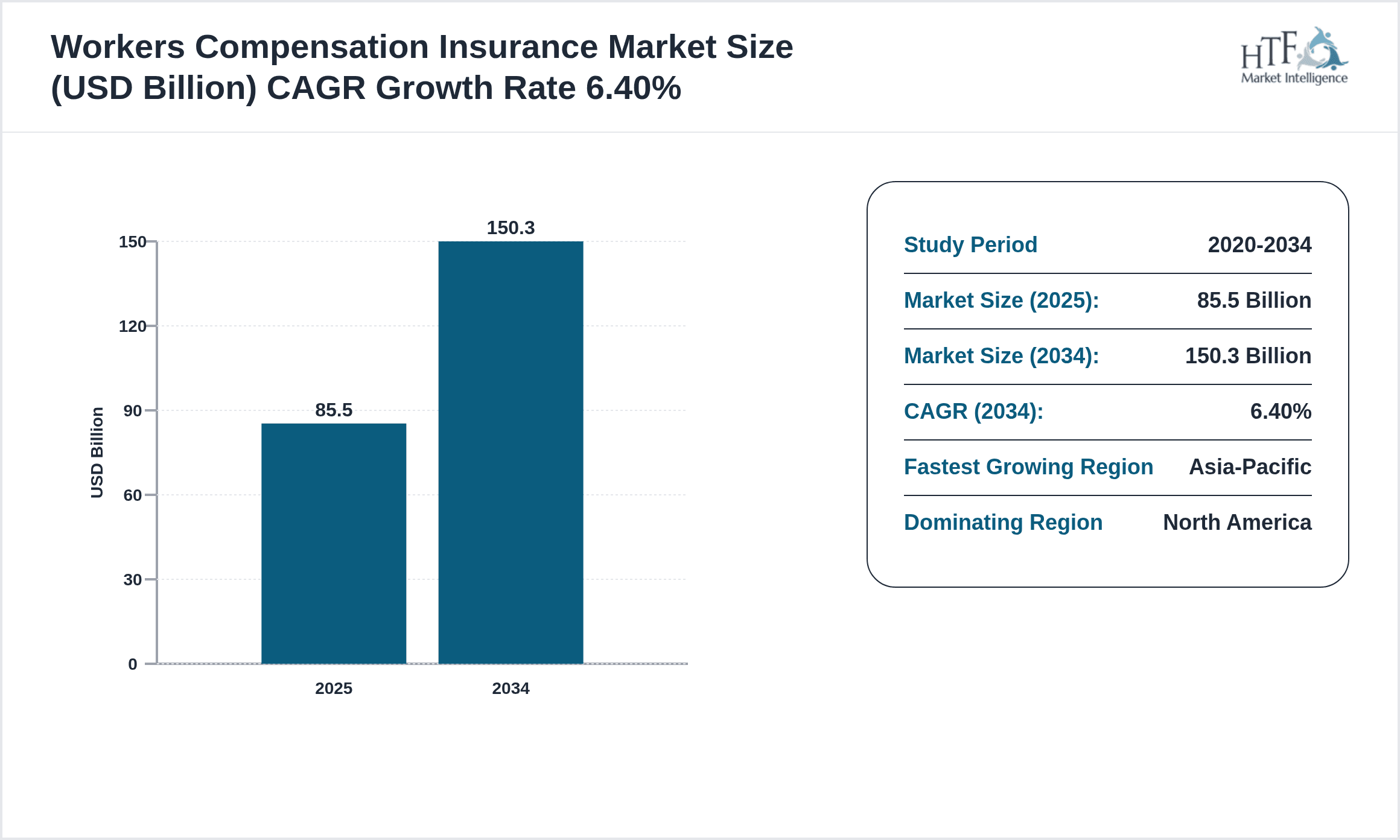
- •The market's key highlights include a robust CAGR of 6.4% forecasted from 2025 to 2034, with the market size expected to grow from USD 85.5 Billion in 2025 to USD 150.3 Billion by 2034. North America currently dominates the market due to advanced regulatory frameworks and high insurance penetration, while Asia-Pacific exhibits the fastest growth rate fueled by rapid industrial growth and increasing workforce formalization. Statutory workers compensation remains the leading product type, driven by mandatory government regulations, while occupational disease coverage is rapidly gaining traction as awareness of workplace health risks increases. The market is characterized by intense competition among global and regional insurers, innovation in product design, and integration of digital tools to enhance underwriting and claims processes. These factors collectively shape a dynamic market environment with substantial opportunities for new entrants and established players alike.
- •Workers compensation insurance offers significant value propositions to industries by mitigating financial risk associated with workplace accidents and illnesses, ensuring employee welfare, and promoting compliance with statutory safety requirements. For employers, it provides protection against costly litigation and loss of productivity, while employees gain essential security and support during periods of incapacity. Insurers benefit from diversified portfolios and opportunities to innovate with tailored policies and technology-driven services. The strategic importance of this market extends to government bodies aiming to uphold labor standards and social security systems. As industries evolve and labor markets shift, workers compensation insurance remains a foundational pillar for sustainable economic development and workforce stability globally.
Competitive Landscape
The global workers compensation insurance market is characterized by a highly competitive environment featuring a mix of large multinational insurers and specialized regional players. Market dynamics are influenced by regulatory compliance, pricing strategies, underwriting capabilities, and claims management efficiencies. Companies are increasingly investing in digital transformation initiatives, including AI-driven risk assessment and automated claims processing, to enhance customer experience and operational efficiency. Strategic partnerships, mergers, and acquisitions are common approaches to expanding market reach and product portfolios. Differentiation is often achieved through customized product offerings tailored to specific industries and regional regulatory nuances. Pricing pressures persist due to competitive bidding and regulatory caps in some regions, compelling insurers to innovate and optimize cost structures. Distribution channels are evolving with greater emphasis on direct digital platforms and broker partnerships. The competitive landscape continues to shift with emerging markets attracting new entrants, while established players leverage their brand equity and capital strength to consolidate market positions. Future trends indicate a growing focus on sustainability, occupational health innovations, and integration of telematics and wearable technologies for proactive risk management.
Prominent Players in Workers Compensation Insurance Market
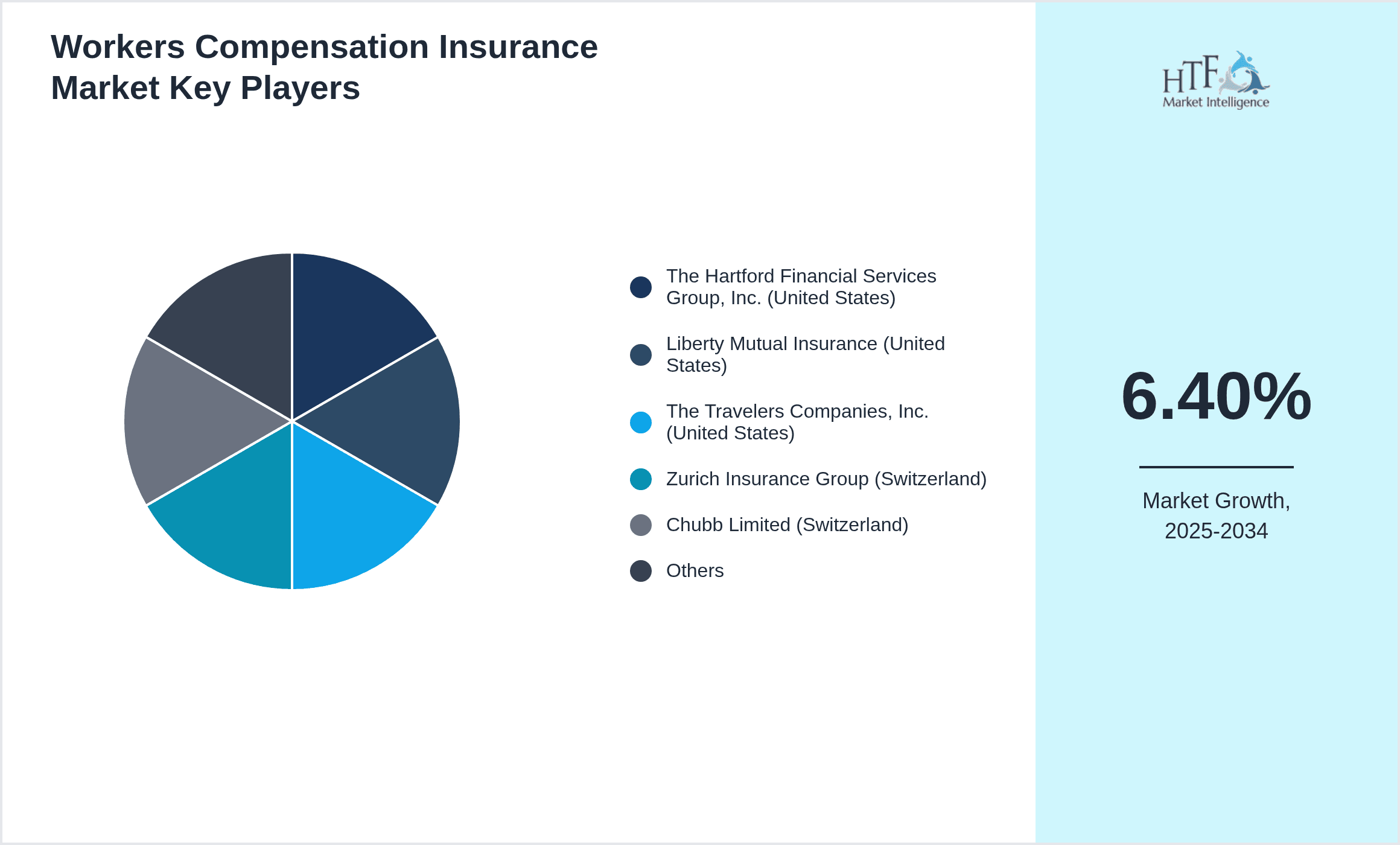
- •The Hartford Financial Services Group, Inc. (United States)
- •Liberty Mutual Insurance (United States)
- •The Travelers Companies, Inc. (United States)
- •Zurich Insurance Group (Switzerland)
- •Chubb Limited (Switzerland)
- •AIG (American International Group, Inc.) (United States)
- •AXA SA (France)
- •Allianz SE (Germany)
- •CNA Financial Corporation (United States)
- •Tokio Marine Holdings, Inc. (Japan)
- •Sompo Holdings, Inc. (Japan)
- •Mapfre S.A. (Spain)
- •MS&AD Insurance Group Holdings, Inc. (Japan)
- •Berkshire Hathaway Inc. (United States)
- •QBE Insurance Group Limited (Australia)
- •RSA Insurance Group (United Kingdom)
- •Hanwha General Insurance Co., Ltd. (South Korea)
- •Direct Line Insurance Group (United Kingdom)
- •The Hanover Insurance Group, Inc. (United States)
- •RenaissanceRe Holdings Ltd. (Bermuda)
- •W. R. Berkley Corporation (United States)
- •Allied World Assurance Company Holdings, AG (Switzerland)
- •Tokio Millennium Re AG (Switzerland)
- •MSP Insurance Company (United States)
- •Great American Insurance Group (United States)
Market Breakdown
- •By Workers Compensation Insurance Type
- ◦Voluntary Workers Compensation Insurance
- ◦Statutory Workers Compensation Insurance
- ◦Employers Liability Insurance
- ◦Occupational Disease Coverage
- ◦Wage Replacement Benefits
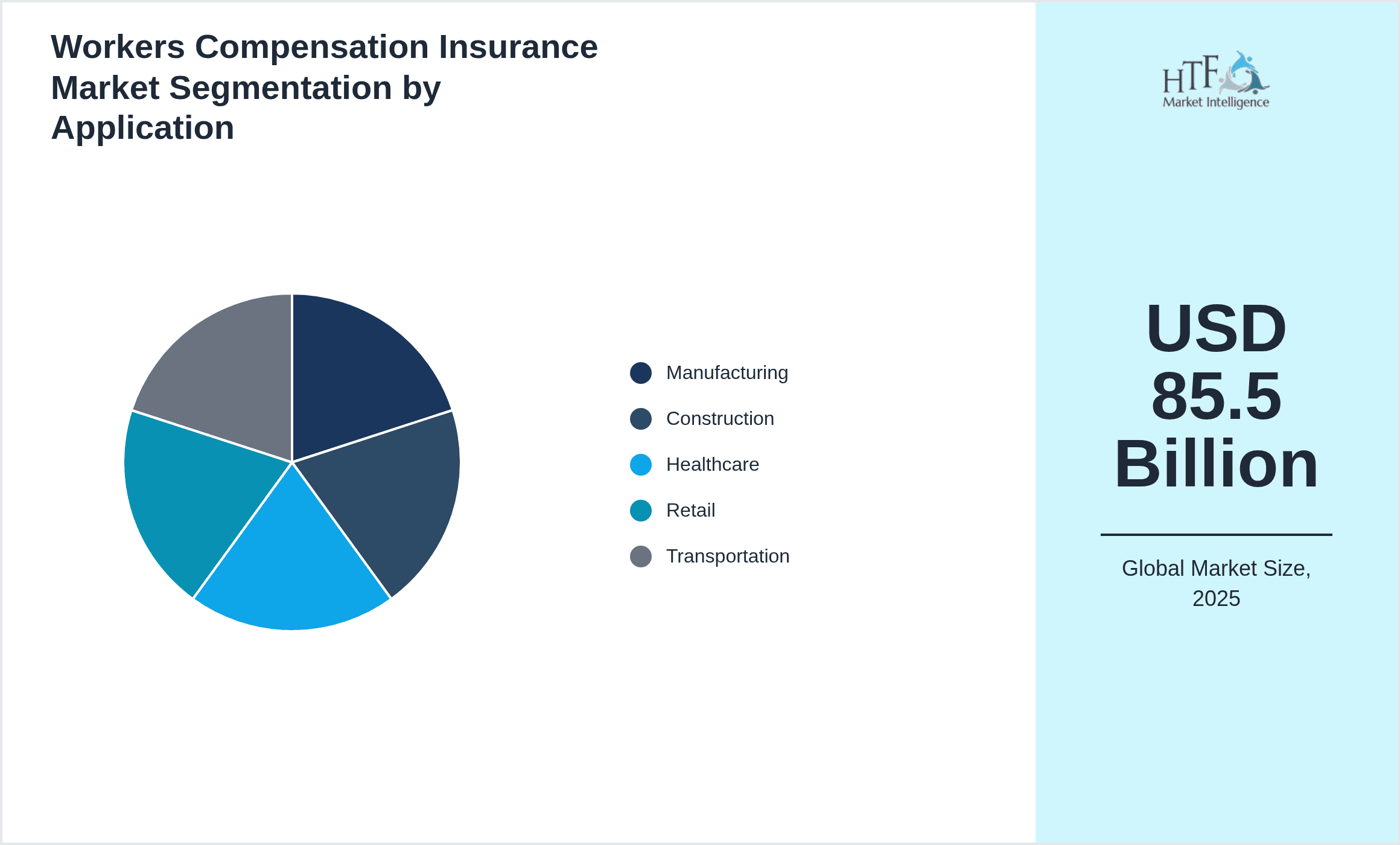
- •By Application Industry
- ◦Manufacturing
- ◦Construction
- ◦Healthcare
- ◦Retail
- ◦Transportation
- •By Service Delivery Model
- ◦Direct Insurance
- ◦Broker Mediated Insurance
- ◦Online Insurance Platforms
- ◦Third-Party Administrators
- •By Claims Management Technology
- ◦Manual Processing
- ◦Automated Claims Processing
- ◦AI-Powered Risk Assessment
- ◦Blockchain-Enabled Claims
Growth Dynamics
The global workers compensation insurance market is projected to experience steady growth propelled by increasing industrial activities and expanding workforce populations, particularly in emerging economies. Heightened awareness of employee safety and regulatory mandates enforcing compulsory coverage are key factors driving market expansion. Advances in technology enable efficient claims processing and risk management, enhancing insurer capabilities and customer satisfaction. Furthermore, the rise in occupational diseases and workplace accidents due to evolving job profiles underscores the importance of comprehensive insurance solutions. The growth trajectory is also supported by insurers innovating product offerings tailored to diverse industry needs and regional regulatory requirements, thus broadening market appeal globally. Strategic investments in digital platforms and data analytics further facilitate market penetration and operational excellence.
Market Trends
The workers compensation insurance market is witnessing a shift toward digitalization with increased adoption of automated claims management and AI-based underwriting tools. Insurers are leveraging big data analytics to assess risk profiles more accurately and personalize insurance packages. There is growing integration of telematics and wearable devices to monitor workplace hazards proactively, enabling prevention and early intervention. Sustainability and corporate social responsibility are becoming influential, with companies emphasizing employee health and safety culture. Additionally, regulatory reforms in various regions are fostering transparency and standardization, enhancing market trust and compliance. These trends collectively contribute to improved efficiency, customer experience, and risk mitigation in the market.
Market Opportunities
Emerging economies present significant growth opportunities as industrialization accelerates and formal employment sectors expand, increasing demand for workers compensation insurance. There is a rising need for coverage tailored to new occupational risks associated with technology-driven industries and the gig economy. Digital platforms and InsurTech innovations offer avenues to reach underserved markets and streamline policy management. Governments introducing or tightening mandatory insurance regulations create expanded market potential. Additionally, growing focus on occupational health and mental wellness opens prospects for novel insurance products. Strategic partnerships between insurers and technology firms can unlock enhanced service delivery and customer engagement, fueling future growth.
Market Challenges
The workers compensation insurance market faces challenges including complex and varying regulatory frameworks across regions, causing compliance difficulties for global insurers. Pricing pressures from competitive markets and regulatory caps can limit profitability. Fraudulent claims and lack of standardized data impede efficient claims management. Resistance to technology adoption in certain markets delays operational improvements. Additionally, emerging risks related to new types of employment and occupational diseases require continuous product innovation, which can be resource intensive. Economic downturns and fluctuating labor market conditions also affect insurance uptake and premium volumes, posing risks to market stability.
Regulatory Framework
Between 2020 and 2025, major global regions have implemented or enhanced workers compensation regulations to improve employee protection and ensure insurer accountability. In North America, the U.S. strengthened state-level mandates requiring employers to maintain statutory coverage with clear reporting standards and penalties for non-compliance. Europe introduced harmonized directives promoting cross-border insurance practices and standardized claims processing. Asia-Pacific countries like Japan and Australia updated their occupational health laws incorporating compulsory insurance schemes and expanded coverage for occupational diseases. Latin America and Middle East & Africa regions focused on developing foundational legal frameworks to increase insurance penetration among informal sectors. These regulations mandate comprehensive coverage provisions, timely claim settlements, and insurer solvency requirements, significantly shaping market dynamics and fostering growth through increased compliance and risk mitigation.
Market Intelligence
- •15th March 2025, Zurich Insurance Group launched an AI-driven claims management platform designed to streamline workers compensation claims processing across multiple jurisdictions. This solution integrates machine learning algorithms to detect fraudulent claims early, reduce processing times, and enhance customer service. Targeted at both large enterprises and SMEs, the platform aims to improve operational efficiency and reduce costs for insurers. Zurich’s strategic objective includes expanding digital capabilities to meet evolving regulatory requirements and increasing market share in Asia-Pacific and Europe. The platform’s deployment is expected to set a new industry benchmark for claims automation and risk management.
- •10th July 2025, Liberty Mutual Insurance announced the introduction of a new occupational disease coverage product specifically targeting emerging risks in the healthcare and manufacturing sectors. The product features flexible benefit options and enhanced rehabilitation support, addressing gaps in traditional workers compensation policies. Liberty Mutual’s innovation responds to rising awareness of chronic workplace illnesses and regulatory changes in North America and Europe. The company aims to capture growing demand among employers seeking comprehensive employee protection solutions. This initiative underscores Liberty Mutual’s commitment to product diversification and market leadership in workers compensation insurance.
- •22nd November 2024, The Hartford Financial Services Group, Inc. completed the acquisition of a regional InsurTech startup specializing in telematics-based workplace safety monitoring solutions. The strategic acquisition enables Hartford to integrate real-time risk assessment tools into its workers compensation insurance offerings, enhancing preventive measures and claims accuracy. This move strengthens Hartford’s position in the U.S. market and supports expansion into digital insurance services. The acquisition aligns with broader industry trends emphasizing technology-driven risk mitigation and customer engagement.
- •Recent market developments and strategic initiatives are continuously tracked through industry publications, company announcements, and regulatory filings. For the most current information, stakeholders are advised to monitor official corporate communications and recognized market intelligence platforms.
Regional Outlook
The North America currently holds a significant share of the market, primarily due to several key factors: increasing consumption rates, a burgeoning population, and robust economic momentum. These elements collectively drive demand, positioning this region as a leader in the market. On the other hand, Asia-Pacific is rapidly emerging as the fastest-growing area within the industry. This remarkable growth can be attributed to swift infrastructure development, the expansion of various industrial sectors, and a marked increase in consumer demand. These dynamics make this region a crucial player in shaping future market growth.
In our report, we cover a comprehensive analysis of the following regions and countries:
- North America
- LATAM
- West Europe
- Central & Eastern Europe
- Northern Europe
- Southern Europe
- East Asia
- Southeast Asia
- South Asia
- Central Asia
- Oceania
- MEA
| Feature | Details |
|---|---|
| Base Year Market Size | USD 85.5 Billion |
| Forecast Year Market Size | USD 150.3 Billion |
| CAGR | 6.4% |
| Forecast Period | 2026 to 2033 |
| YoY Growth | 6.2% |
| Scope of Report | Market is segmented by Workers Compensation Insurance Type (Voluntary Workers Compensation Insurance, Statutory Workers Compensation Insurance, Employers Liability Insurance, Occupational Disease Coverage, Wage Replacement Benefits), Application Industry (Manufacturing, Construction, Healthcare, Retail, Transportation), Service Delivery Model (Direct Insurance, Broker Mediated Insurance, Online Insurance Platforms, Third-Party Administrators), Claims Management Technology (Manual Processing, Automated Claims Processing, AI-Powered Risk Assessment, Blockchain-Enabled Claims) |
| Regions Covered | North America, LATAM, West Europe, Central & Eastern Europe, Northern Europe, Southern Europe, East Asia, Southeast Asia, South Asia, Central Asia, Oceania, MEA |
| Key Companies | The Hartford Financial Services Group, Inc. (United States), Liberty Mutual Insurance (United States), The Travelers Companies, Inc. (United States), Zurich Insurance Group (Switzerland), Chubb Limited (Switzerland), AIG (American International Group, Inc.) (United States), AXA SA (France), Allianz SE (Germany), CNA Financial Corporation (United States), Tokio Marine Holdings, Inc. (Japan), Sompo Holdings, Inc. (Japan), Mapfre S.A. (Spain), MS&AD Insurance Group Holdings, Inc. (Japan), Berkshire Hathaway Inc. (United States), QBE Insurance Group Limited (Australia), RSA Insurance Group (United Kingdom), Hanwha General Insurance Co., Ltd. (South Korea), Direct Line Insurance Group (United Kingdom), The Hanover Insurance Group, Inc. (United States), RenaissanceRe Holdings Ltd. (Bermuda), W. R. Berkley Corporation (United States), Allied World Assurance Company Holdings, AG (Switzerland), Tokio Millennium Re AG (Switzerland), MSP Insurance Company (United States), Great American Insurance Group (United States) |
Global Workers Compensation Insurance Market Size, Growth & Revenue 2025-2034 - Table of Contents
Frequently Asked Questions (FAQ):
The Compact Track Loaders market is projected to grow at a CAGR of 6.8% from 2025 to 2030, driven by increasing demand in construction and agricultural sectors.
North America currently leads the market with approximately 45% market share, followed by Europe at 28% and Asia-Pacific at 22%. The remaining regions account for 5% of the global market.
Key growth drivers include increasing construction activities, rising demand for versatile equipment in agriculture, technological advancements in track loader design, and growing preference for compact equipment in urban construction projects.