
Global Conference Tables Market Size, Growth & Revenue 2024-2034
Global Conference Tables Market is segmented by Type (Modular Conference Tables, Executive Conference Tables, Folding Conference Tables, Collaborative Tables, Custom-built Tables), Application (Corporate Offices, Educational Institutions, Healthcare Facilities, Government Agencies, Hospitality), Material Type (Wood, Metal, Glass, Laminate, Composite Materials), Distribution Channel (Direct Sales, Online Retail, Dealerships, Wholesale Distributors), and Geography (North America, LATAM, West Europe, Central & Eastern Europe, Northern Europe, Southern Europe, East Asia, Southeast Asia, South Asia, Central Asia, Oceania, MEA)
Pricing
Report Overview
Executive Summary
- •The Global Conference Tables Market is a specialized segment within the commercial furniture industry focused on the production and supply of tables designed for meetings, collaboration, and formal discussions across multiple sectors. It includes a diversity of product types such as modular, executive, folding, collaborative, and custom-designed tables that accommodate varying space requirements and aesthetic preferences. The market scope spans corporate offices, educational campuses, healthcare institutions, government agencies, and hospitality venues worldwide, driven by evolving workplace designs and the demand for multifunctional meeting solutions. Technological advancements, including integrated connectivity and ergonomic innovations, are further expanding the utility and appeal of conference tables. This market is influenced by increasing remote and hybrid work models, prompting demand for flexible furnishings that support dynamic collaboration. As organizations prioritize efficient space usage and employee interaction, the conference tables segment continues to experience robust growth and innovation globally.
- •Key market highlights include a base market valuation of USD 4.2 Billion in 2024, with a projected rise to USD 9.8 Billion by 2034, reflecting a CAGR of 8.3%. North America holds the leading regional market share due to the presence of major corporate offices and a high adoption rate of modern office furniture. Asia-Pacific is identified as the fastest-growing region, supported by rapid urbanization, expanding commercial infrastructure, and growing corporate sectors in emerging economies. Modular conference tables dominate the product segment owing to their flexibility and scalability, while collaborative tables show the highest growth rate, reflecting the shift towards open office concepts. Applications in corporate offices lead market demand, closely followed by educational institutions, emphasizing the need for versatile furniture solutions in learning environments.
- •The value proposition of the conference tables market lies in supporting efficient communication, teamwork, and organizational productivity through well-designed furniture solutions. Industry stakeholders, including manufacturers, distributors, and end-users, benefit from the strategic importance of investing in ergonomic, technology-enhanced, and sustainable conference tables. These products contribute to creating conducive environments for decision-making and innovation across sectors. Furthermore, the market is poised for continued expansion as companies increasingly prioritize employee collaboration spaces and adapt to hybrid work models, driving demand for innovative and customizable conference table solutions worldwide.

Competitive Landscape
The competitive landscape of the Global Conference Tables Market is characterized by a mix of multinational corporations and regional manufacturers competing through product innovation, quality enhancement, and strategic pricing. Leading players emphasize the adoption of advanced materials, ergonomic designs, and integrated technology features such as built-in power outlets and connectivity options to differentiate their offerings. Market rivalry is intensified by the growing demand for sustainable and customizable furniture solutions, prompting companies to invest in research and development. Distribution channel expansion, including direct sales, online platforms, and partnerships with interior design firms, enhances market reach. Additionally, mergers and acquisitions are shaping the competitive dynamics by consolidating capabilities and expanding portfolios. Regional competition is prominent in emerging markets, where local manufacturers leverage cost advantages and tailored designs to capture market share. Overall, innovation-led differentiation and strategic alliances are pivotal for maintaining competitive advantage in this evolving market.
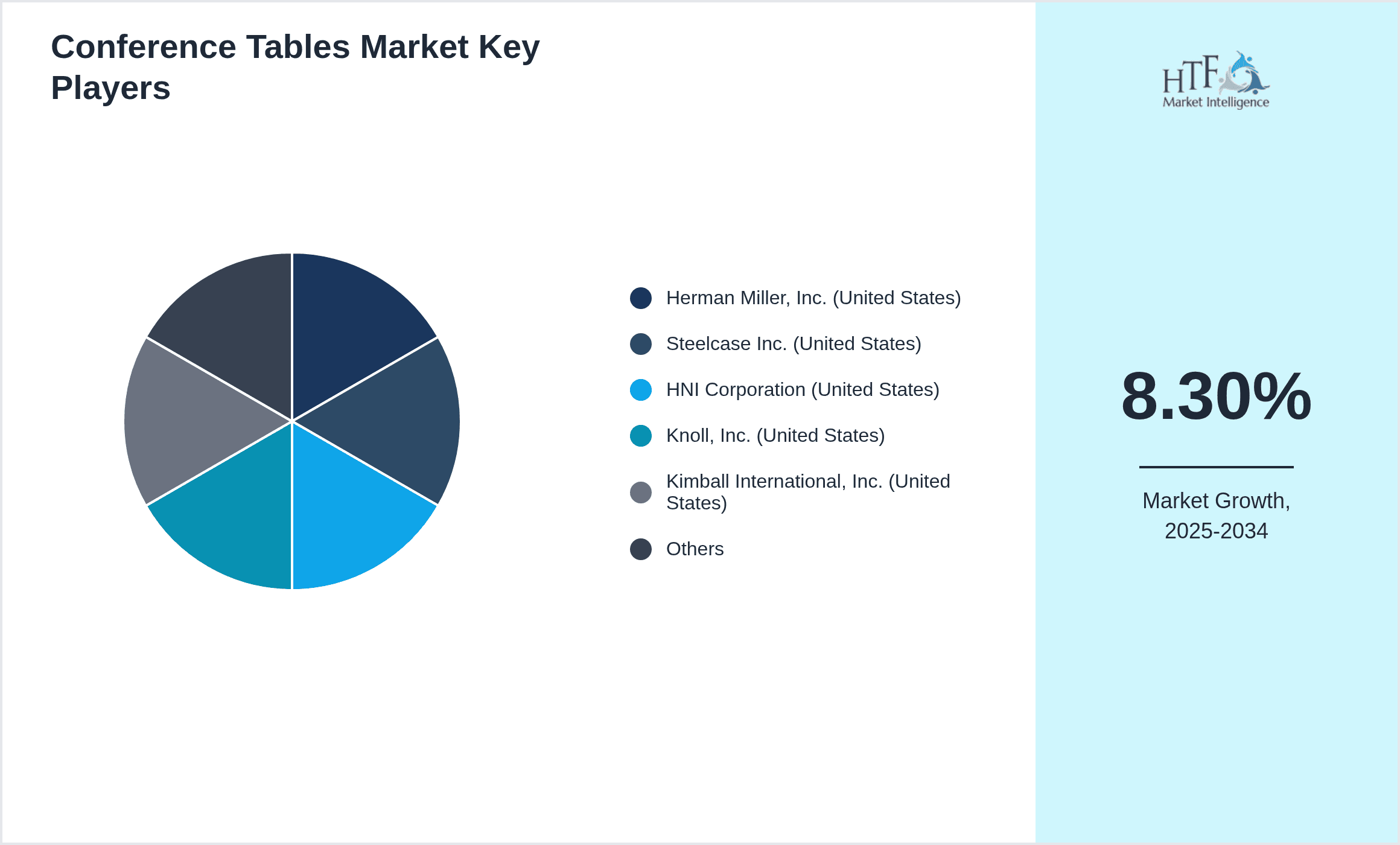
Leading Companies in Conference Tables Market
- •Herman Miller, Inc. (United States)
- •Steelcase Inc. (United States)
- •HNI Corporation (United States)
- •Knoll, Inc. (United States)
- •Kimball International, Inc. (United States)
- •Okamura Corporation (Japan)
- •Haworth, Inc. (United States)
- •Global Furniture Group (Canada)
- •Teknion Corporation (Canada)
- •Interstuhl Büromöbel GmbH & Co. KG (Germany)
- •Durable Corporation (Germany)
- •Humanscale Corporation (United States)
- •Allsteel, Inc. (United States)
- •KI (Krueger International, Inc.) (United States)
- •Senator International (United Kingdom)
- •Bisley Office Furniture (United Kingdom)
- •Fursys Inc. (South Korea)
- •Cascades Inc. (Canada)
- •Nienkämper (Canada)
- •Vitra AG (Switzerland)
- •Haworth Asia (Singapore)
- •La-Z-Boy Incorporated (United States)
- •Eurotech Seating (Canada)
- •Bene AG (Austria)
- •KI Furniture (United States)
Market Breakdown
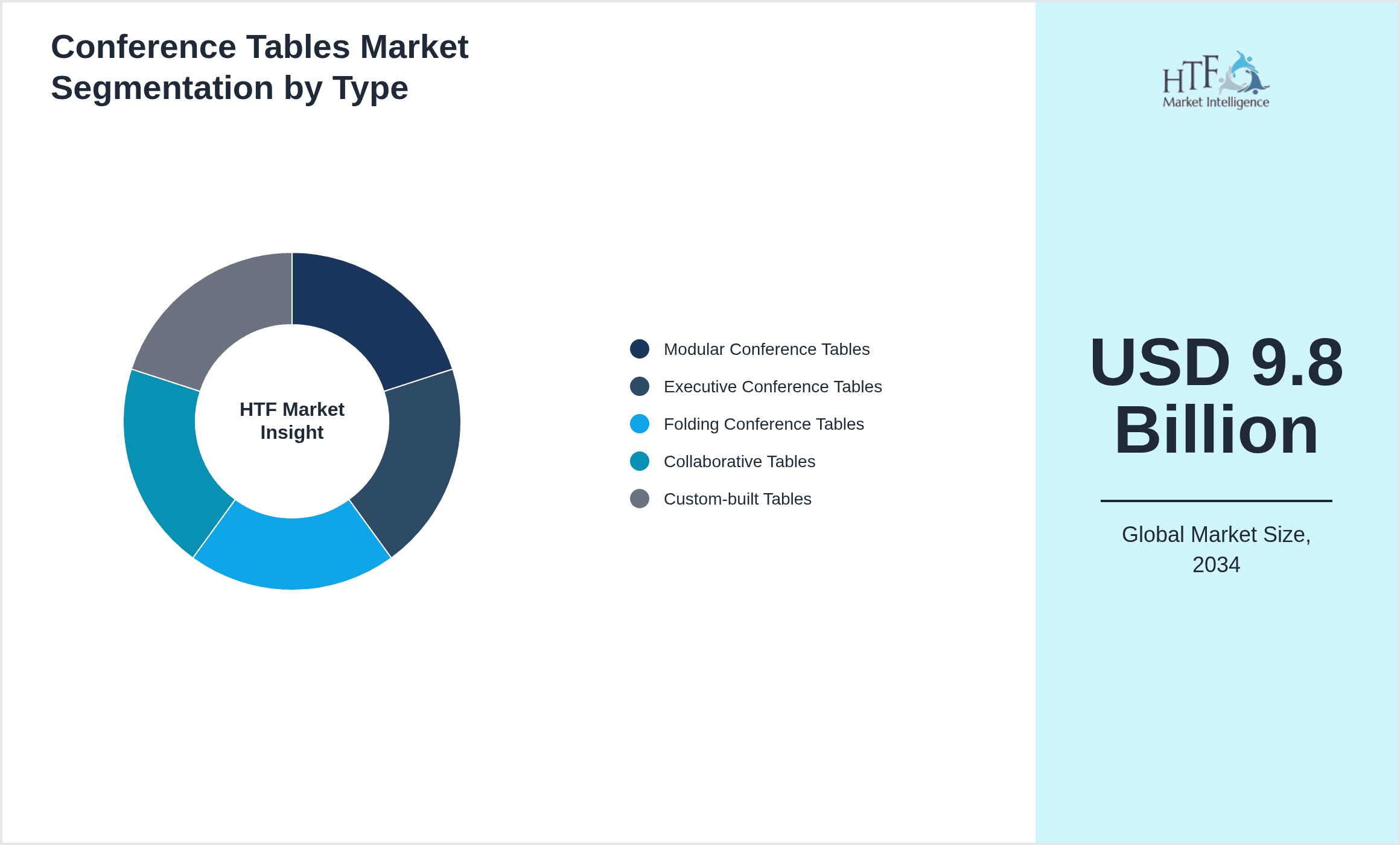
- •By Type
- ◦Modular Conference Tables
- ◦Executive Conference Tables
- ◦Folding Conference Tables
- ◦Collaborative Tables
- ◦Custom-built Tables
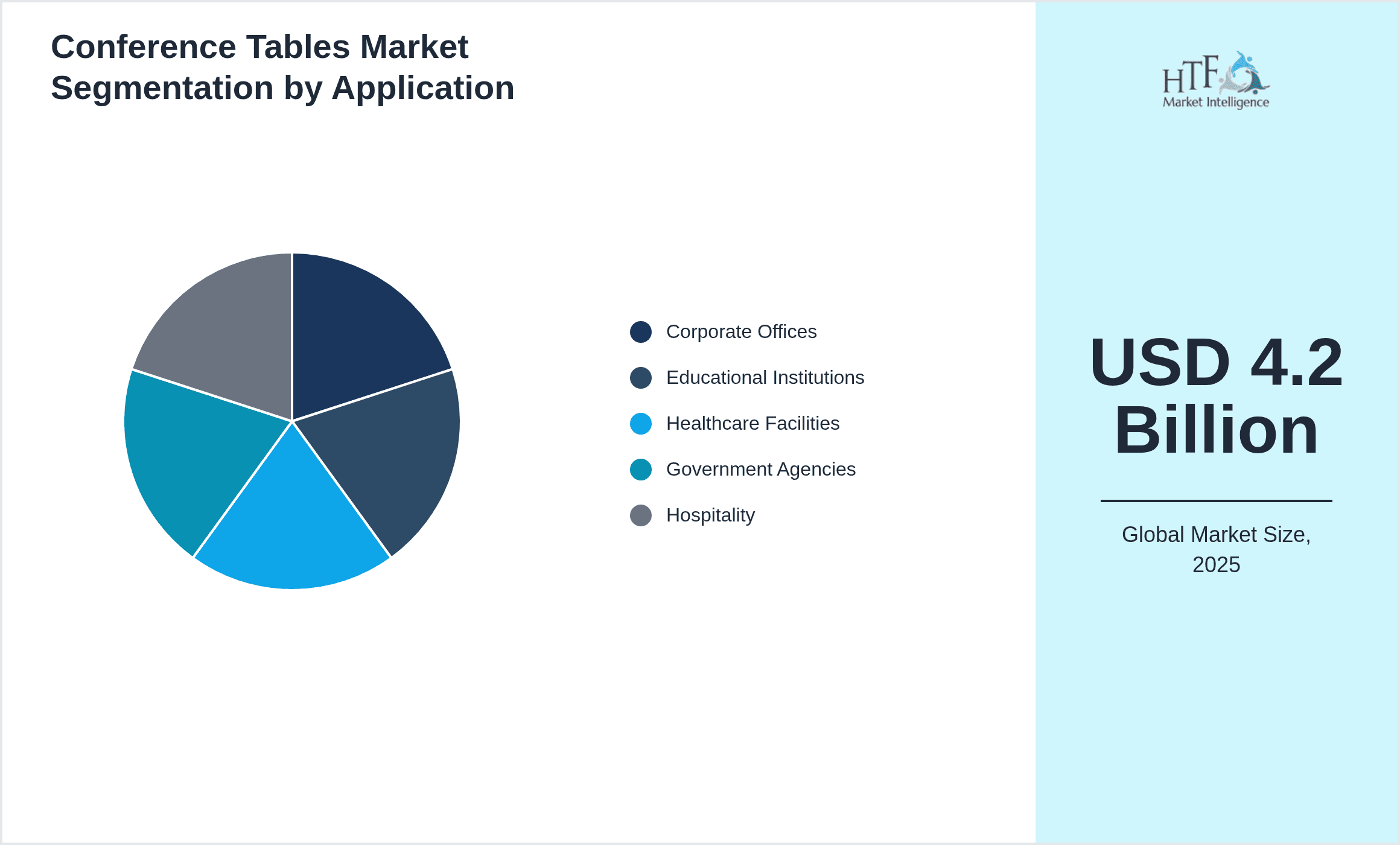
- •By Application
- ◦Corporate Offices
- ◦Educational Institutions
- ◦Healthcare Facilities
- ◦Government Agencies
- ◦Hospitality
- •By Material Type
- ◦Wood
- ◦Metal
- ◦Glass
- ◦Laminate
- ◦Composite Materials
- •By Distribution Channel
- ◦Direct Sales
- ◦Online Retail
- ◦Dealerships
- ◦Wholesale Distributors
Growth Dynamics
- •Rising corporate investments in modern office infrastructure are fueling demand for modular conference tables that offer flexibility and scalability. Leading firms are redesigning workspaces to support hybrid work models, increasing the need for adaptable meeting furniture. For example, several multinational companies are upgrading their conference rooms with modular designs to optimize space utilization and enhance collaboration.
- •The integration of technology within conference tables, such as embedded power outlets, USB ports, and wireless charging pads, is driving market growth by improving user convenience and connectivity. This trend is especially prominent in North America and Europe, where technology adoption rates in office furniture are highest, boosting demand for innovative conference table solutions.
- •Sustainability concerns and rising environmental awareness are encouraging manufacturers to adopt eco-friendly materials and production processes. The shift towards sustainable wood sources, recyclable metals, and low-emission finishes is attracting environmentally conscious buyers, particularly in the Asia-Pacific region, contributing to market expansion.
- •Expansion of educational institutions and healthcare facilities seeking durable, ergonomic, and easy-to-maintain conference tables is creating new growth avenues. These sectors require specialized furniture that supports collaborative learning and patient engagement, driving demand for tailored conference table solutions.
- •Increasing government spending on public infrastructure and office modernization across emerging economies is propelling the demand for conference tables. Government agencies are investing in upgraded meeting spaces to foster effective communication and decision-making, thus boosting the market in regions such as Latin America and the Middle East & Africa.
Market Trends
- •Collaborative tables designed to facilitate team interaction and brainstorming are gaining traction, reflecting a shift from traditional hierarchical meeting setups to more open and dynamic workspaces. Companies like Herman Miller and Steelcase have introduced innovative collaborative table designs that emphasize modularity and technology integration.
- •The rise of remote and hybrid work models is influencing conference table designs to be more versatile and portable, with folding and lightweight options becoming popular. This trend aligns with the need for flexible office arrangements that can be reconfigured rapidly to suit changing work patterns.
- •Digitalization of meeting environments, including smart conference tables with integrated video conferencing and connectivity features, is transforming the user experience. This trend is bolstered by increasing investments in smart office technologies across North America and Europe.
- •Sustainable materials and green manufacturing processes are becoming standard expectations, with companies marketing eco-certified conference tables that appeal to environmentally conscious consumers. This shift is influencing procurement policies in corporate and public sectors globally.
- •Customization and aesthetic personalization are emerging trends, with end-users demanding conference tables that reflect corporate branding and culture. Manufacturers offer tailored finishes, shapes, and sizes to meet diverse client requirements, enhancing market differentiation.
Market Opportunities
- •There is strategic growth potential in expanding into emerging markets within Asia-Pacific and Latin America, where rapid urbanization and expanding business infrastructures are driving furniture demand. Companies can capitalize on this by establishing local manufacturing and distribution networks to reduce costs and increase market penetration.
- •The integration of IoT and smart technologies into conference tables presents significant opportunities for product innovation, enabling real-time collaboration, resource management, and enhanced user experiences. This innovation can create competitive advantages and open new revenue streams through value-added features.
- •Developing eco-friendly and sustainable conference tables aligned with global environmental regulations offers opportunities to differentiate products and appeal to a growing segment of environmentally conscious buyers. Certification and transparency in material sourcing can enhance brand reputation and market share.
- •Offering customization services and modular designs that cater to the evolving needs of hybrid workplaces can attract diverse client segments, including startups, educational institutions, and government agencies. This flexibility addresses changing space utilization patterns and enhances customer satisfaction.
- •Collaborating with interior design firms and technology providers can expand market reach and create integrated workspace solutions that combine aesthetics with functionality. These partnerships can drive innovation and provide comprehensive offerings to end-users.
Market Challenges
- •High production costs associated with premium materials and integrated technology features can limit market accessibility, particularly in price-sensitive regions. Manufacturers must balance quality and affordability to maintain competitiveness and market share.
- •Supply chain disruptions and raw material price volatility have posed challenges in maintaining consistent production and delivery schedules, affecting market stability. Recent global events have further complicated logistics and increased lead times, impacting customer satisfaction.
- •Lack of standardization in conference table sizes and configurations complicates procurement processes for large organizations with multiple locations, leading to inefficiencies and increased costs. This fragmentation challenges manufacturers to offer versatile yet standardized solutions.
- •Growing competition from low-cost manufacturers, especially in emerging markets, exerts pricing pressure on established players, necessitating continuous innovation and value addition to sustain profit margins.
- •Adapting to rapidly changing workplace trends, such as the shift to remote work, requires agile product development and marketing strategies, which can strain resources and complicate long-term planning.
Regulatory Framework
- •Between 2019 and 2024, several regions implemented stricter regulations on the use of sustainable and low-emission materials in furniture manufacturing, requiring compliance with environmental certifications such as FSC and GREENGUARD. These mandates have increased production costs but also promoted adoption of eco-friendly products across the market.
- •Workplace safety and ergonomic standards have been enhanced globally, with agencies like OSHA and the European Committee for Standardization issuing guidelines that impact conference table design and manufacturing. Compliance ensures better employee health outcomes but requires manufacturers to innovate continuously.
- •Regulations addressing chemical use and formaldehyde emissions in wood-based furniture have tightened, particularly in North America and Europe, compelling manufacturers to reformulate materials and adopt safer alternatives to meet legal requirements.
- •Country-specific mandates on import tariffs and trade policies have affected global supply chains, influencing pricing structures and market entry strategies for international players, particularly impacting cross-border furniture trade between Asia-Pacific and Western markets.
- •Government incentives promoting sustainable manufacturing and green building certifications have encouraged industry players to invest in environmentally responsible production processes, aligning market growth with broader ecological goals.
Market Intelligence
- •15th January 2025, Herman Miller, Inc. launched an innovative modular conference table series featuring integrated wireless charging pads, embedded USB ports, and customizable LED lighting to enhance meeting productivity in corporate environments. The product targets technology-savvy offices seeking ergonomic and connected furniture solutions, reinforcing Herman Miller's leadership in smart office furnishings. The launch includes a digital configurator tool enabling customers to tailor dimensions and finishes, facilitating seamless integration into diverse workspace designs. This initiative aims to capture growing demand for adaptable and tech-enabled conference tables amid evolving workplace trends. Source: Herman Miller Official Press Release
- •10th March 2025, Steelcase Inc. introduced its latest collaborative table range designed to support hybrid work models with features such as integrated video conferencing capabilities, modular seating options, and sustainable materials certified by FSC. The new line reflects Steelcase's commitment to innovation and sustainability, targeting corporate and educational sectors globally. The tables are engineered for easy reconfiguration, promoting dynamic team interactions and effective remote collaboration. This launch strengthens Steelcase's market position by addressing current demands for flexible and environmentally responsible office furniture. Source: Steelcase Corporate Website
- •20th April 2025, HNI Corporation completed the acquisition of a European furniture manufacturer specializing in eco-friendly conference tables, expanding its product portfolio and geographic footprint in Europe and Asia-Pacific. This strategic move enables HNI to leverage advanced sustainable manufacturing technologies and meet increasing demand for green office solutions. The acquisition supports HNI's growth strategy focused on innovation, market diversification, and enhanced customer offerings in key global markets. Integration plans include joint R&D initiatives and expanded distribution channels to accelerate market penetration. Source: HNI Corporation Investor Relations
- •5th February 2025, Knoll, Inc. entered into a partnership with a leading technology provider to develop smart conference tables equipped with IoT-enabled sensors for real-time space utilization monitoring and environmental control. This collaboration aims to deliver data-driven insights to optimize meeting room usage and enhance user comfort. The partnership aligns with Knoll's vision to integrate technology with contemporary furniture design, addressing the needs of modern, connected workplaces. Pilot programs are underway in North America and Europe with plans for global rollout. Source: Knoll Press Announcement
Regional Outlook
The North America currently holds a significant share of the market, primarily due to several key factors: increasing consumption rates, a burgeoning population, and robust economic momentum. These elements collectively drive demand, positioning this region as a leader in the market. On the other hand, Asia-Pacific is rapidly emerging as the fastest-growing area within the industry. This remarkable growth can be attributed to swift infrastructure development, the expansion of various industrial sectors, and a marked increase in consumer demand. These dynamics make this region a crucial player in shaping future market growth.
In our report, we cover a comprehensive analysis of the following regions and countries:
- North America
- LATAM
- West Europe
- Central & Eastern Europe
- Northern Europe
- Southern Europe
- East Asia
- Southeast Asia
- South Asia
- Central Asia
- Oceania
- MEA
| Feature | Details |
|---|---|
| Base Year Market Size | USD 4.2 Billion |
| Forecast Year Market Size | USD 9.8 Billion |
| CAGR | 8.3% |
| Forecast Period | 2026 to 2033 |
| YoY Growth | 8% |
| Scope of Report | Market is segmented by Type (Modular Conference Tables, Executive Conference Tables, Folding Conference Tables, Collaborative Tables, Custom-built Tables), Application (Corporate Offices, Educational Institutions, Healthcare Facilities, Government Agencies, Hospitality), Material Type (Wood, Metal, Glass, Laminate, Composite Materials), Distribution Channel (Direct Sales, Online Retail, Dealerships, Wholesale Distributors) |
| Regions Covered | North America, LATAM, West Europe, Central & Eastern Europe, Northern Europe, Southern Europe, East Asia, Southeast Asia, South Asia, Central Asia, Oceania, MEA |
| Key Companies | Herman Miller, Inc. (United States), Steelcase Inc. (United States), HNI Corporation (United States), Knoll, Inc. (United States), Kimball International, Inc. (United States), Okamura Corporation (Japan), Haworth, Inc. (United States), Global Furniture Group (Canada), Teknion Corporation (Canada), Interstuhl Büromöbel GmbH & Co. KG (Germany), Durable Corporation (Germany), Humanscale Corporation (United States), Allsteel, Inc. (United States), KI (Krueger International, Inc.) (United States), Senator International (United Kingdom), Bisley Office Furniture (United Kingdom), Fursys Inc. (South Korea), Cascades Inc. (Canada), Nienkämper (Canada), Vitra AG (Switzerland), Haworth Asia (Singapore), La-Z-Boy Incorporated (United States), Eurotech Seating (Canada), Bene AG (Austria), KI Furniture (United States) |
Global Conference Tables Market Size, Growth & Revenue 2024-2034 - Table of Contents
Multidisciplinary researcher with 10+ years of experience uncovering insights across diverse domains focused on uncovering insights that drive informed decisions.
Frequently Asked Questions (FAQ):
The Compact Track Loaders market is expected to see value worth 5.3 Billion in 2025.
North America currently leads the market with approximately 45% market share, followed by Europe at 28% and Asia-Pacific at 22%. The remaining regions account for 5% of the global market.
Key growth drivers include increasing construction activities, rising demand for versatile equipment in agriculture, technological advancements in track loader design, and growing preference for compact equipment in urban construction projects.