
Global Wheel Dolly Market Size, Growth & Revenue 2025-2034
Global Wheel Dolly Market is segmented by Wheel Dolly Type (Hydraulic Wheel Dolly, Mechanical Wheel Dolly, Pneumatic Wheel Dolly, Electric Wheel Dolly, Manual Wheel Dolly), Application Area (Automotive Repair, Industrial Handling, Logistics, Aircraft Maintenance, Marine Services), Service Type (Maintenance Services, Installation Services, Rental Services, Aftermarket Support), Deployment Model (Cloud-based Monitoring Systems, On-premise Equipment, Hybrid Deployment), and Geography (North America, LATAM, West Europe, Central & Eastern Europe, Northern Europe, Southern Europe, East Asia, Southeast Asia, South Asia, Central Asia, Oceania, MEA)
Pricing
Report Overview
Executive Summary
- •The global Wheel Dolly market is a critical segment within industrial handling and automotive maintenance industries, providing essential solutions for safe and efficient movement of heavy wheeled equipment. The market includes various product types such as hydraulic, mechanical, pneumatic, electric, and manual wheel dollies, each tailored for specific load capacities and operational environments. Applications range from automotive repair, logistics, aircraft maintenance, marine services, to industrial handling, addressing diverse end-user requirements. The value chain involves raw material sourcing, manufacturing, distribution, and aftermarket services, underscoring the importance of quality and innovation. Rising demand for ergonomic and automated solutions, coupled with stringent safety regulations, propels market growth globally. Regional dynamics reflect North America's dominance due to advanced infrastructure and technological adoption, while Asia-Pacific is the fastest-growing market driven by industrial expansion and increasing mechanization. The market faces challenges including high upfront costs and supply chain complexities but benefits from opportunities in electric-powered dollies and emerging markets. Overall, the market's trajectory is influenced by technological advancements, regulatory frameworks, and evolving customer needs, making it a focal point for stakeholders seeking long-term value and operational excellence.
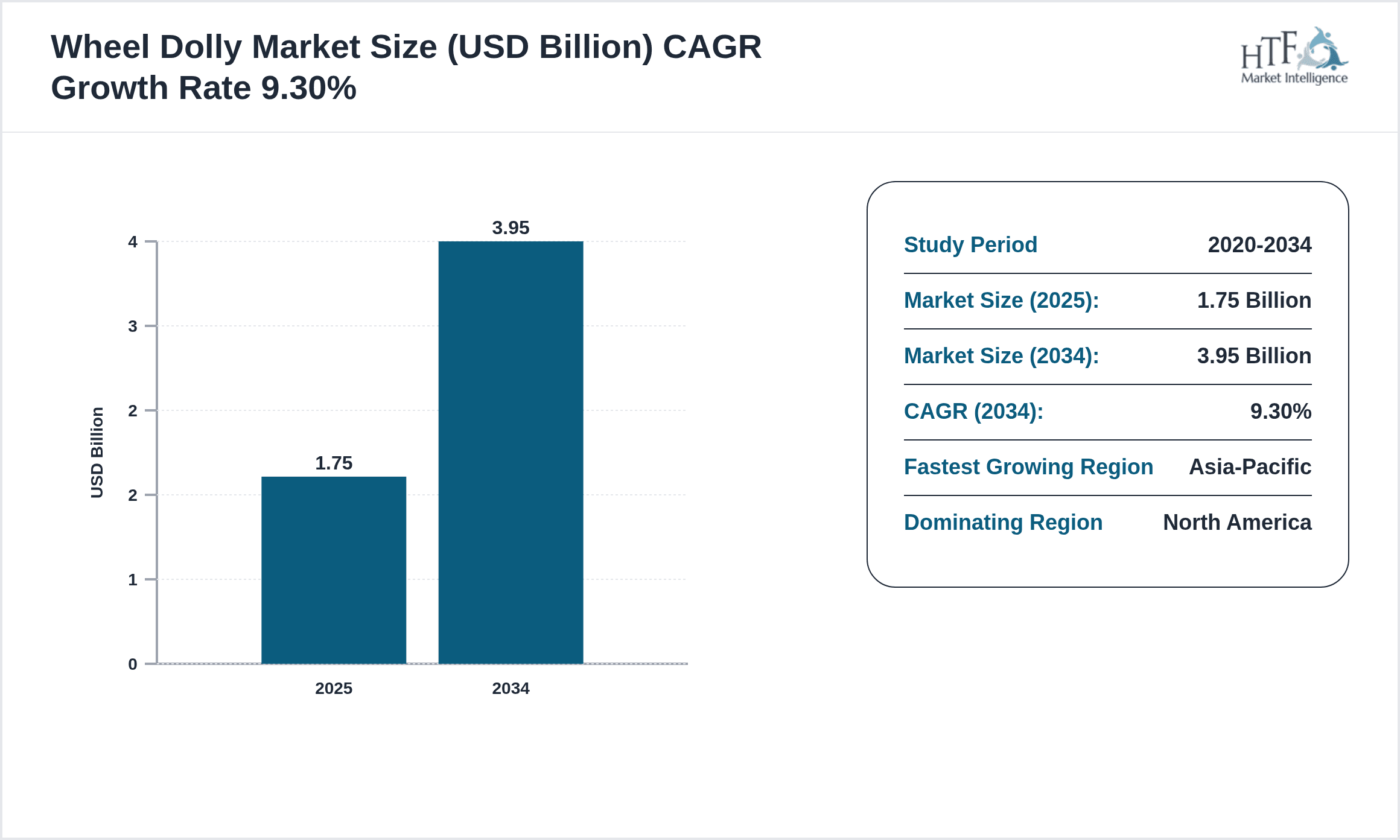
- •Key market highlights include a base market size of USD 1.75 Billion in 2025, with a forecast to reach USD 3.95 Billion by 2034, reflecting a CAGR of 9.3%. The year-on-year growth rate stands at approximately 9.0%, indicating robust expansion fueled by increasing industrial activities and adoption of advanced dolly technologies. The hydraulic wheel dolly segment leads the product types, while electric wheel dollies exhibit the fastest growth due to their enhanced efficiency and safety features. Geographically, North America dominates the market, supported by well-established automotive and aerospace industries, whereas Asia-Pacific is the fastest growing, driven by infrastructure development and rising industrial automation.
- •The wheel dolly market presents significant value propositions for automotive, industrial, logistics, aerospace, and marine sectors by improving operational efficiency, safety, and maneuverability of heavy equipment. Strategic importance is underscored by the need for ergonomic solutions that reduce labor intensity, lower accident risks, and optimize space utilization. The market's evolution is aligned with trends in electrification, automation, and sustainability, offering stakeholders opportunities to innovate product designs and expand service offerings. Consequently, manufacturers, distributors, and end-users are positioned to benefit from technological advancements and expanding applications, making the market a vital component of global industrial equipment portfolios.
Competitive Landscape
The global Wheel Dolly market's competitive environment is characterized by a diverse array of players ranging from multinational corporations to specialized regional manufacturers. Market dynamics are influenced by continuous innovation in product design, focusing on enhancing load capacity, maneuverability, energy efficiency, and safety features. Competitive strategies include differentiation through technology integration, such as electric and automated dollies, strategic partnerships, and expansions into emerging markets. Companies leverage advanced manufacturing processes and robust distribution networks to maintain market positioning, while pricing strategies are balanced to cater to both premium and cost-sensitive segments. Mergers and acquisitions serve as a growth lever, enabling consolidation and expansion of product portfolios. Market entry barriers include high capital requirements, regulatory compliance, and technological expertise. Furthermore, regional competition is shaped by varying industrial growth rates and infrastructure development, with Asia-Pacific presenting significant opportunities due to rapid mechanization. Future competitive trends indicate an increasing focus on sustainability, digitalization, and customer-centric solutions, driving market players to invest heavily in R&D and strategic collaborations to capture market share.
Key Participants in Wheel Dolly Market
- •Stertil-Koni (Netherlands)
- •Rotary Lift (United States)
- •RAVAGLIOLI S.p.A. (Italy)
- •Bishamon Industries Corporation (Japan)
- •Herculift (United States)
- •Ideal Automotive Equipment (United Kingdom)
- •MI-T-M Corporation (United States)
- •Sterling Equipment (Canada)
- •Wesco (Germany)
- •Dura Automotive Systems (United States)
- •Konecranes (Finland)
- •Enerpac Tool Group (United States)
- •Nussbaum (Germany)
- •Alfa Equipment (Italy)
- •Advance Equipment (United States)
- •Hawk Equipment (United States)
- •Omega Lift (United Kingdom)
- •Tuxedo Manufacturing (United States)
- •Atlas Equipment (Germany)
- •Sunrise Equipment (China)
- •Morse Manufacturing (United States)
- •Midwest Lift Equipment (United States)
- •BendPak (United States)
- •H&E Equipment Services (United States)
- •JESSE Equipment (Germany)
Market Breakdown
- •By Wheel Dolly Type
- ◦Hydraulic Wheel Dolly
- ◦Mechanical Wheel Dolly
- ◦Pneumatic Wheel Dolly
- ◦Electric Wheel Dolly
- ◦Manual Wheel Dolly
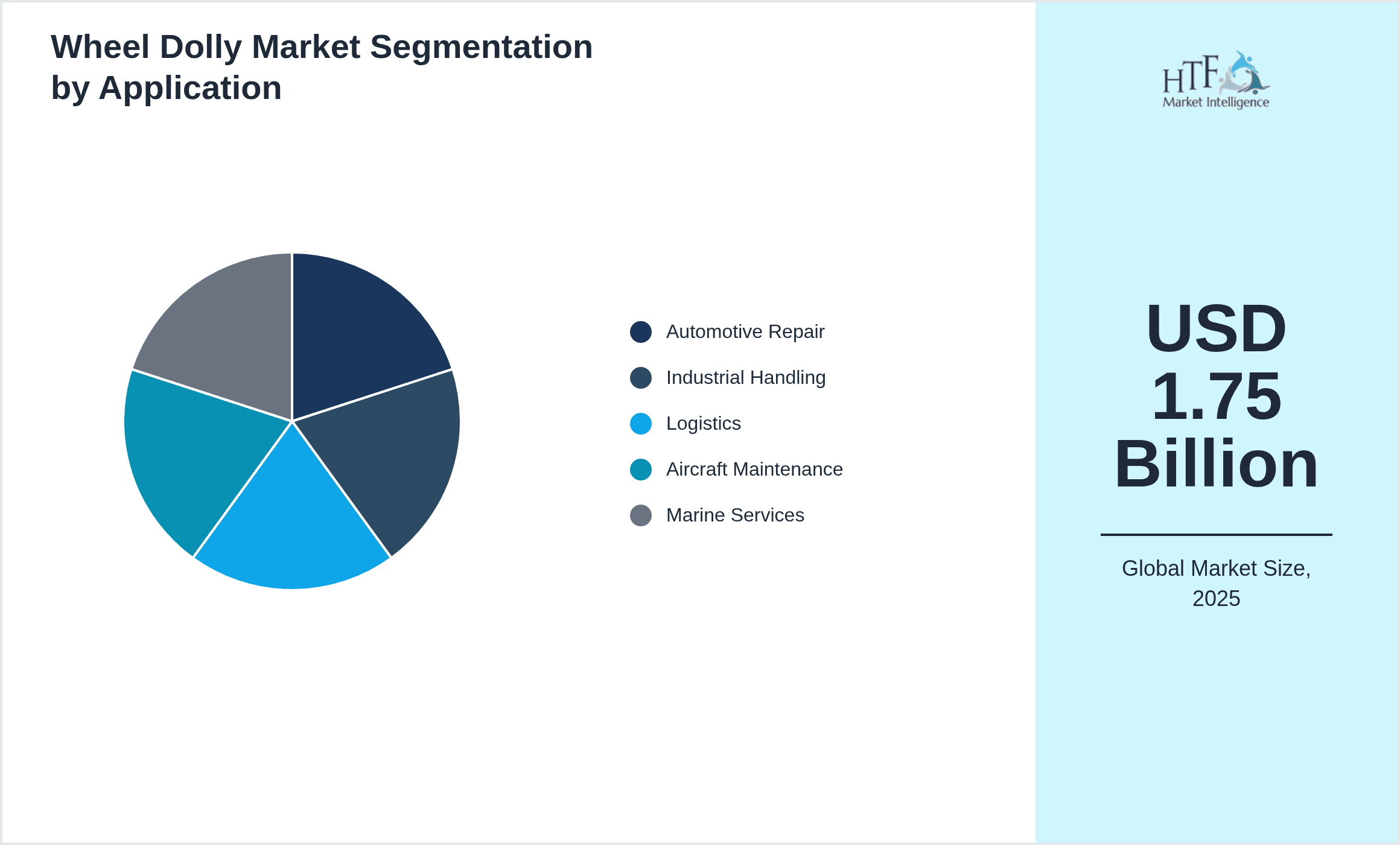
- •By Application Area
- ◦Automotive Repair
- ◦Industrial Handling
- ◦Logistics
- ◦Aircraft Maintenance
- ◦Marine Services
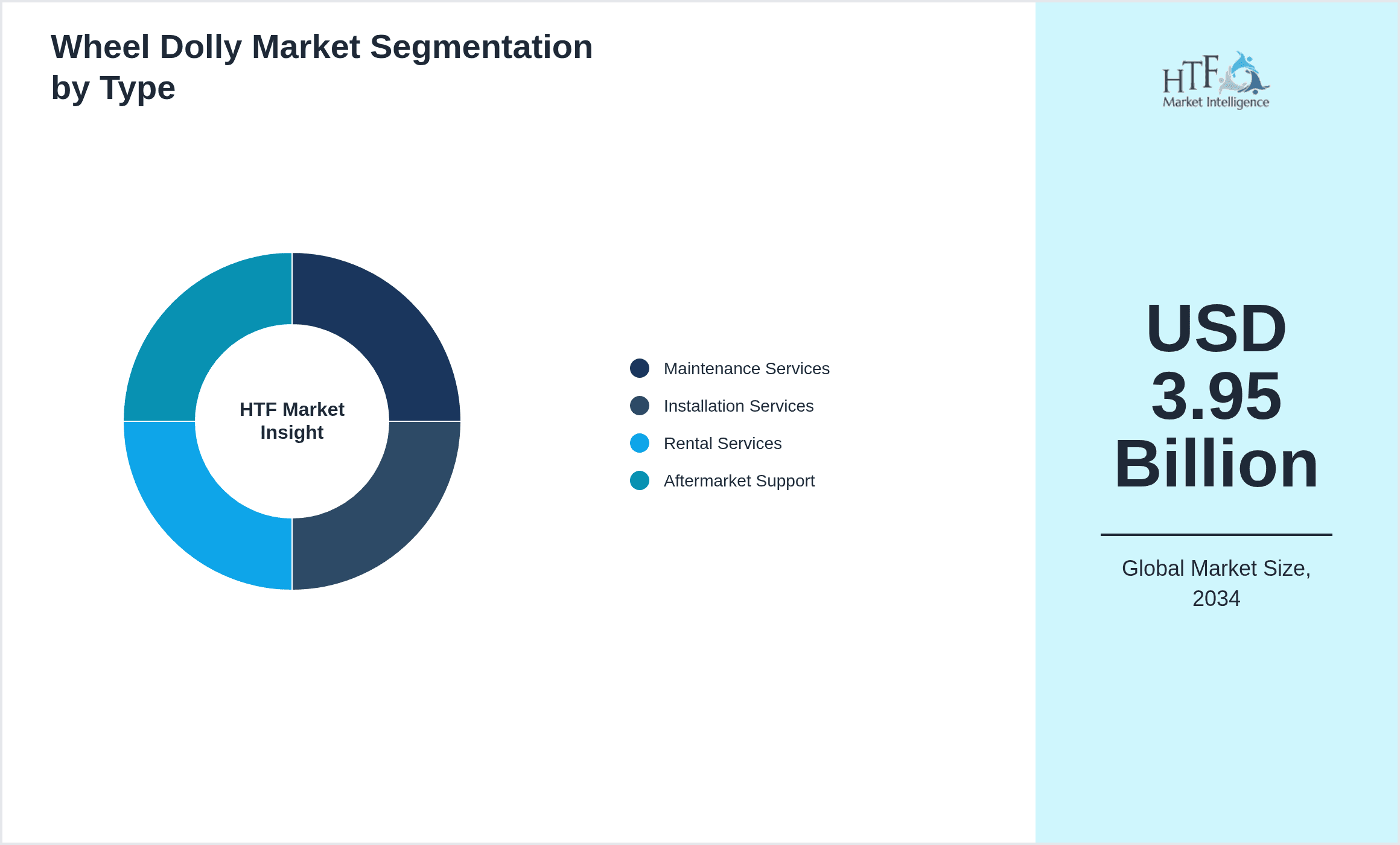
- •By Service Type
- ◦Maintenance Services
- ◦Installation Services
- ◦Rental Services
- ◦Aftermarket Support
- •By Deployment Model
- ◦Cloud-based Monitoring Systems
- ◦On-premise Equipment
- ◦Hybrid Deployment
Growth Dynamics
- •The rising adoption of automation and electric-powered wheel dollies is significantly driving market growth by improving safety and reducing manual labor in industrial applications. For example, electric wheel dollies offer enhanced maneuverability and energy efficiency, appealing to logistics and automotive sectors aiming for operational excellence.
- •Increasing industrialization and expansion of automotive repair and aircraft maintenance services globally are fueling demand for advanced wheel dolly solutions that support heavy-duty lifting and precise positioning. This trend is particularly marked in Asia-Pacific, where infrastructure investments are accelerating.
- •Stringent safety regulations globally are compelling industries to adopt ergonomically designed and technologically advanced wheel dollies that minimize workplace injuries and comply with health and safety standards, thus boosting market penetration.
- •Integration of IoT and cloud-based monitoring in wheel dolly systems enables predictive maintenance and real-time operational analytics, attracting service providers and end-users focused on minimizing downtime and optimizing asset utilization.
- •Growing focus on sustainable and energy-efficient equipment is encouraging manufacturers to innovate in electric and pneumatic wheel dollies, aligning with environmental regulations and corporate social responsibility commitments, thereby expanding market opportunities.
- •Rising demand from emerging markets due to increasing mechanization across logistics, marine, and industrial sectors presents significant growth avenues, supported by government initiatives promoting industrial automation.
- •Strategic investments and partnerships among key players to enhance product portfolios and geographic reach are driving competitive dynamics and accelerating market expansion.
Market Trends
- •The growing trend toward electrification in wheel dollies is revolutionizing the market by offering cleaner, quieter, and more efficient operation, which is increasingly favored in urban and indoor environments such as automotive workshops and warehouses.
- •Adoption of smart technologies including IoT sensors and cloud connectivity is enabling remote monitoring and predictive maintenance, reducing operational costs and enhancing equipment uptime across industries.
- •Collaborations between manufacturers and technology firms are fostering innovation in wheel dolly design, incorporating features like automated control systems and ergonomic enhancements to improve user safety and comfort.
- •Sustainability considerations are influencing material selection and manufacturing processes, with an emphasis on recyclable materials and energy-efficient production methods, aligning with global environmental goals.
- •Expansion of rental and aftermarket services is gaining traction, providing flexible solutions to end-users and creating new revenue streams for manufacturers and service providers.
- •The integration of cloud-based deployment models for equipment monitoring and management is enhancing operational transparency and facilitating data-driven decision-making.
- •Emerging markets are witnessing increased adoption of wheel dollies due to rising industrial activities and infrastructure projects, presenting new growth corridors for market players.
Market Opportunities
- •There is significant growth potential in developing electric and IoT-enabled wheel dollies that cater to the demand for automation and energy efficiency, especially within logistics and automotive sectors seeking to enhance operational productivity.
- •Emerging economies offer untapped markets due to expanding industrial bases and increasing mechanization, representing opportunities for manufacturers to establish early presence and customized solutions.
- •Expanding rental and maintenance services for wheel dollies can address cost constraints of small and medium enterprises, promoting wider adoption through flexible ownership models.
- •Collaborative ventures between technology providers and traditional manufacturers can accelerate innovation, creating advanced products that meet evolving safety regulations and user expectations.
- •Integration of sustainable materials and energy-efficient technologies in wheel dolly manufacturing aligns with regulatory pressures and consumer preferences, offering competitive differentiation and market expansion.
- •Geographical expansion into regions like Latin America and Middle East & Africa, supported by infrastructure development and industrialization, presents lucrative market entry opportunities.
- •Development of modular and customizable wheel dolly systems can cater to diverse application requirements, enhancing market appeal across industries.
Market Challenges
- •High capital expenditure associated with advanced wheel dolly systems, especially electric and IoT-enabled variants, poses adoption barriers for cost-sensitive end-users in developing regions.
- •Complex supply chain dynamics, including raw material price volatility and logistics disruptions, impact manufacturing costs and delivery timelines, affecting market stability.
- •Regulatory compliance across multiple regions increases product development complexity and prolongs time-to-market, challenging manufacturers to maintain uniform standards.
- •Limited awareness and technical expertise among end-users regarding advanced wheel dolly technologies hinder market penetration and necessitate investment in training and support services.
- •Competition from low-cost regional manufacturers offering basic wheel dollies limits pricing power of premium product providers, impacting profitability margins.
- •Rapid technological changes require continuous innovation investments, which can strain resources for small and mid-sized companies, affecting competitive positioning.
- •Challenges related to integration of new technologies with existing equipment and processes may reduce operational efficiency during transition phases.
Regulatory Framework
- •Between 2020 and 2025, global safety standards such as ISO 3691-5 for industrial trucks were updated to include requirements for powered industrial wheel dollies, mandating enhanced operator safety and equipment reliability. Compliance with these standards is crucial for manufacturers targeting international markets.
- •The European Machinery Directive 2006/42/EC, enforced during 2021-2025, requires manufacturers to ensure that wheel dolly equipment adheres to stringent safety and environmental regulations, influencing design and production processes within the region.
- •In North America, OSHA regulations have been strengthened to mandate ergonomic designs and regular maintenance of industrial handling equipment, including wheel dollies, to reduce workplace injuries, impacting product features and service offerings.
- •Environmental regulations focusing on emissions and energy consumption have prompted adoption of electric and pneumatic wheel dollies, especially in Europe and North America, aligning with government incentives and sustainability goals.
- •Country-specific mandates in Asia-Pacific, such as China's GB standards for industrial equipment safety, have driven local manufacturers to upgrade product quality and safety features, enhancing competitiveness in global markets.
Market Intelligence
- •15th January 2025, Stertil-Koni announced the launch of its new line of electric-powered hydraulic wheel dollies designed for automotive and industrial applications. These models feature enhanced battery life, integrated IoT connectivity for real-time monitoring, and advanced safety mechanisms to prevent operator fatigue. The initiative aims to reduce carbon footprint while improving operational efficiency in workshops and logistics centers globally. This launch positions Stertil-Koni as a market leader in sustainable and smart wheel dolly solutions. Source: Official Stertil-Koni Press Release
- •22nd March 2025, Rotary Lift unveiled a cloud-based monitoring platform integrated with their pneumatic wheel dollies, enabling predictive maintenance and asset management for fleet operators. The platform uses AI analytics to optimize maintenance schedules and reduce downtime. This innovation supports the growing demand for digital transformation in equipment management, targeting automotive repair shops and industrial logistics providers worldwide. Rotary Lift's strategic move enhances their competitive edge in the evolving wheel dolly market. Source: Rotary Lift Corporate News
- •10th July 2025, RAVAGLIOLI S.p.A. announced a strategic partnership with a leading IoT technology firm to co-develop smart wheel dollies featuring automated control and safety systems. The collaboration aims to accelerate product innovation and address the increasing demand for ergonomic and technologically advanced handling equipment in aerospace and marine sectors. The partnership strengthens RAVAGLIOLI's market presence and enhances their product portfolio for global clientele. Source: Industry Publication - Equipment Today
- •5th September 2024, Bishamon Industries Corporation completed the acquisition of a regional wheel dolly manufacturer specializing in electric and pneumatic models. This acquisition expands Bishamon’s product range and geographic footprint in Asia-Pacific, enabling access to emerging markets and reinforcing their focus on sustainable equipment solutions. The consolidation is expected to drive synergies in R&D and manufacturing efficiencies. Source: Bishamon Corporate Announcement
Regional Outlook
The North America currently holds a significant share of the market, primarily due to several key factors: increasing consumption rates, a burgeoning population, and robust economic momentum. These elements collectively drive demand, positioning this region as a leader in the market. On the other hand, Asia-Pacific is rapidly emerging as the fastest-growing area within the industry. This remarkable growth can be attributed to swift infrastructure development, the expansion of various industrial sectors, and a marked increase in consumer demand. These dynamics make this region a crucial player in shaping future market growth.
In our report, we cover a comprehensive analysis of the following regions and countries:
- North America
- LATAM
- West Europe
- Central & Eastern Europe
- Northern Europe
- Southern Europe
- East Asia
- Southeast Asia
- South Asia
- Central Asia
- Oceania
- MEA
| Feature | Details |
|---|---|
| Base Year Market Size | USD 1.75 Billion |
| Forecast Year Market Size | USD 3.95 Billion |
| CAGR | 9.3% |
| Forecast Period | 2026 to 2033 |
| YoY Growth | 9% |
| Scope of Report | Market is segmented by Wheel Dolly Type (Hydraulic Wheel Dolly, Mechanical Wheel Dolly, Pneumatic Wheel Dolly, Electric Wheel Dolly, Manual Wheel Dolly), Application Area (Automotive Repair, Industrial Handling, Logistics, Aircraft Maintenance, Marine Services), Service Type (Maintenance Services, Installation Services, Rental Services, Aftermarket Support), Deployment Model (Cloud-based Monitoring Systems, On-premise Equipment, Hybrid Deployment) |
| Regions Covered | North America, LATAM, West Europe, Central & Eastern Europe, Northern Europe, Southern Europe, East Asia, Southeast Asia, South Asia, Central Asia, Oceania, MEA |
| Key Companies | There is significant growth potential in developing electric and IoT-enabled wheel dollies that cater to the demand for automation and energy efficiency, especially within logistics and automotive sectors seeking to enhance operational productivity., Emerging economies offer untapped markets due to expanding industrial bases and increasing mechanization, representing opportunities for manufacturers to establish early presence and customized solutions., Expanding rental and maintenance services for wheel dollies can address cost constraints of small and medium enterprises, promoting wider adoption through flexible ownership models., Collaborative ventures between technology providers and traditional manufacturers can accelerate innovation, creating advanced products that meet evolving safety regulations and user expectations., Integration of sustainable materials and energy-efficient technologies in wheel dolly manufacturing aligns with regulatory pressures and consumer preferences, offering competitive differentiation and market expansion., Geographical expansion into regions like Latin America and Middle East & Africa, supported by infrastructure development and industrialization, presents lucrative market entry opportunities., Development of modular and customizable wheel dolly systems can cater to diverse application requirements, enhancing market appeal across industries. |
Global Wheel Dolly Market Size, Growth & Revenue 2025-2034 - Table of Contents
Multidisciplinary researcher with 10+ years of experience uncovering insights across diverse domains focused on uncovering insights that drive informed decisions.
Frequently Asked Questions (FAQ):
The Compact Track Loaders market is expected to see value worth 5.3 Billion in 2025.
North America currently leads the market with approximately 45% market share, followed by Europe at 28% and Asia-Pacific at 22%. The remaining regions account for 5% of the global market.
Key growth drivers include increasing construction activities, rising demand for versatile equipment in agriculture, technological advancements in track loader design, and growing preference for compact equipment in urban construction projects.