
Global Zirconia Oxygen Analyzer Market Size, Growth & Revenue 2025-2034
Global Zirconia Oxygen Analyzer Market is segmented by Product Type (Portable Analyzers, Fixed Analyzers, Handheld Analyzers, Process Analyzers, Online Analyzers), Application Segment (Industrial Combustion Control, Automotive Exhaust Monitoring, Environmental Monitoring, Medical Equipment, Energy Production), Service Type (Installation Services, Calibration Services, Maintenance Services, Repair Services), Deployment Model (On-Premise, Cloud-Connected, Hybrid), and Geography (North America, LATAM, West Europe, Central & Eastern Europe, Northern Europe, Southern Europe, East Asia, Southeast Asia, South Asia, Central Asia, Oceania, MEA)
Pricing
Report Overview
Executive Summary
- •The Global Zirconia Oxygen Analyzer Market represents a critical segment within industrial and environmental instrumentation, focusing on devices that facilitate precise measurement of oxygen levels in various gaseous environments. These analyzers employ zirconium dioxide sensors, which provide rapid, accurate, and reliable oxygen detection essential for optimizing combustion efficiency, ensuring compliance with stringent emission regulations, and enhancing safety in industrial processes. The market spans a wide scope, including applications in industrial combustion control, automotive exhaust monitoring, environmental monitoring, energy production, and medical fields. End users range from power plants and automotive manufacturers to environmental monitoring agencies and healthcare providers, creating a diverse demand base. The value chain integrates raw material suppliers, sensor manufacturers, assembled analyzer producers, distributors, and service providers who offer calibration and maintenance support. Technological advancements have led to a variety of product types such as portable, fixed, handheld, process, and online analyzers, each addressing specific operational requirements across sectors. Increasing emphasis on reducing carbon emissions and improving fuel efficiency, coupled with stringent government regulations globally, are driving market growth. Furthermore, rising industrialization, especially in emerging economies, fuels demand for advanced oxygen analyzers to optimize combustion processes and reduce pollutants. The market is characterized by continuous innovation focusing on sensor accuracy, durability, and ease of integration with automated control systems, enhancing the value proposition for industrial and environmental stakeholders.
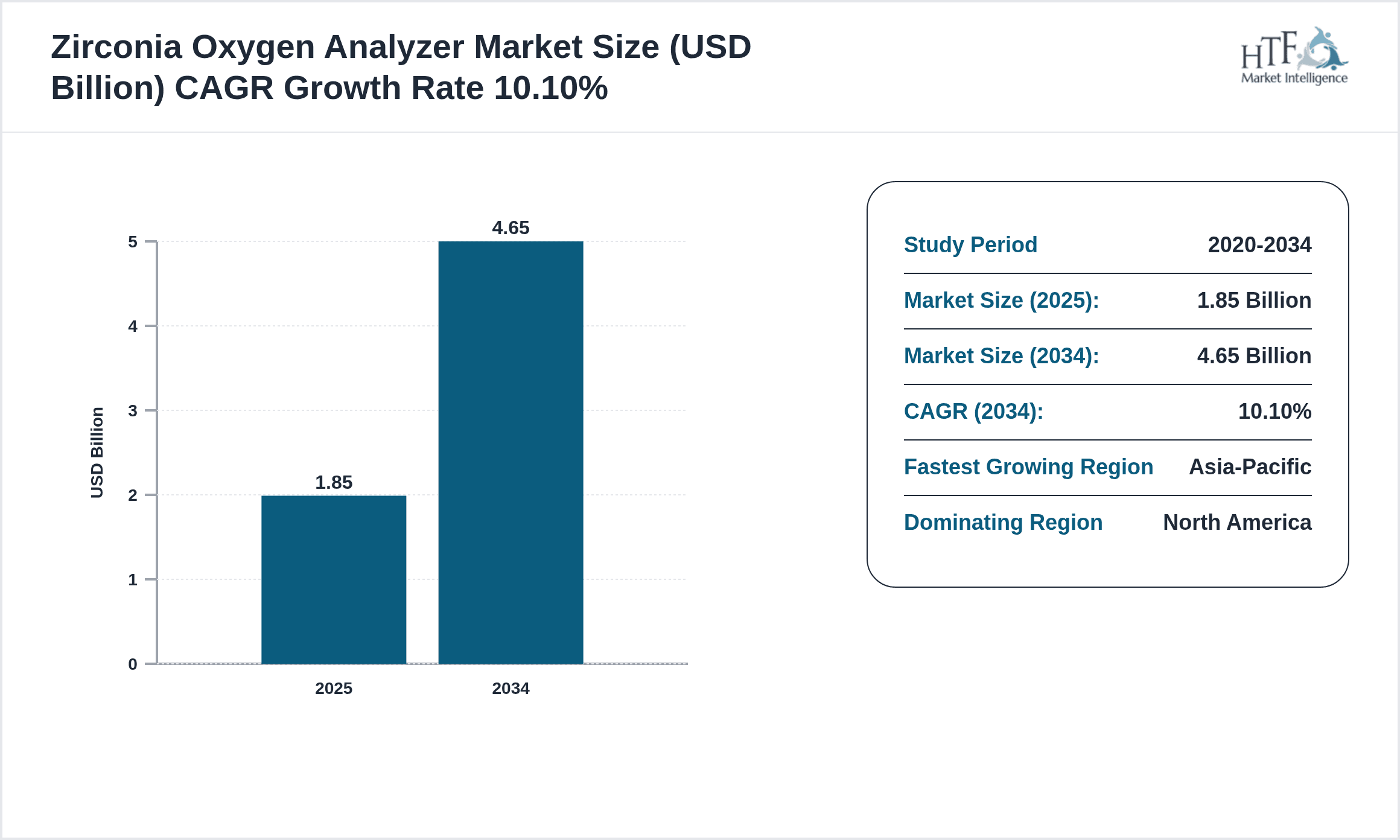
- •Key market highlights include a base year market size of USD 1.85 billion in 2025, growing at a robust CAGR of 10.1% through 2034 to reach an estimated USD 4.65 billion. North America currently dominates the market, driven by stringent environmental regulations and advanced industrial infrastructure, while Asia-Pacific is the fastest growing region due to rapid industrial expansion and increasing adoption of emission monitoring technologies. Fixed analyzers lead the product segment owing to their widespread use in continuous monitoring applications, whereas portable analyzers are the fastest growing type, favored for onsite and flexible measurements. The integration of advanced sensor technologies and IoT connectivity enhances analyzer capabilities, supporting predictive maintenance and real-time data analytics. Market growth is further supported by increasing investments in clean energy projects and rising demand for energy-efficient combustion processes across industries.
- •The value proposition of zirconia oxygen analyzers lies in their ability to provide accurate, reliable, and real-time oxygen measurements that enable industries to optimize combustion efficiency, reduce fuel consumption, and comply with environmental regulations. This strategic functionality is instrumental for stakeholders across power generation, automotive, environmental monitoring, and healthcare sectors, facilitating operational excellence and sustainability goals. The analyzers contribute to cost savings through improved process control and reduced emissions penalties, while supporting global efforts toward carbon footprint reduction. As regulatory frameworks tighten and environmental consciousness grows, the demand for advanced oxygen analysis solutions is expected to accelerate, offering significant growth opportunities for manufacturers, technology innovators, and service providers within the global market ecosystem.
Competitive Landscape
The competitive landscape of the Global Zirconia Oxygen Analyzer Market is characterized by intense rivalry among established multinational corporations and innovative regional players. Market dynamics are influenced by the continuous advancement in sensor technology, integration of digital solutions such as IoT-enabled analyzers, and strategic collaborations to enhance product portfolios. Companies adopt diverse competitive strategies including mergers and acquisitions, joint ventures, and partnerships to expand geographic reach and technological capabilities. Innovation is a key differentiator, with firms focusing on improving sensor accuracy, response time, durability under harsh conditions, and user-friendly interfaces. Pricing strategies vary from premium pricing for high-precision devices to cost-competitive models targeting emerging markets. Distribution channels include direct sales, authorized dealers, and online platforms, ensuring broad market penetration. Barriers to entry are moderate, given the technical expertise required in sensor development and regulatory compliance. Regional competition is robust, with North America and Europe hosting technologically advanced players, while Asia-Pacific sees rapid growth fueled by domestic manufacturers and increasing demand. Future competitive trends point towards increased adoption of AI and machine learning for predictive maintenance and enhanced data analytics, positioning companies to deliver value-added services alongside traditional oxygen measurement products.
Leading Companies in Zirconia Oxygen Analyzer Market
- •Siemens AG (Germany)
- •Honeywell International Inc. (United States)
- •Emerson Electric Co. (United States)
- •ABB Ltd. (Switzerland)
- •Yokogawa Electric Corporation (Japan)
- •Testo SE & Co. KGaA (Germany)
- •Thermo Fisher Scientific Inc. (United States)
- •Horiba, Ltd. (Japan)
- •GE Measurement & Control Solutions (United States)
- •MKS Instruments, Inc. (United States)
- •Drägerwerk AG & Co. KGaA (Germany)
- •Amphenol Advanced Sensors (United States)
- •Zirconia Sensor Company (United Kingdom)
- •Dynament Ltd. (United Kingdom)
- •Sensirion AG (Switzerland)
- •Alphasense Ltd. (United Kingdom)
- •Analytik Jena AG (Germany)
- •Teledyne Technologies Incorporated (United States)
- •General Electric Company (United States)
- •Kistler Group (Switzerland)
- •Ametek, Inc. (United States)
- •Panametrics, Inc. (United States)
- •Horiba Instruments (United States)
- •Sensidyne, LP (United States)
- •Bacharach, Inc. (United States)
Market Breakdown
- •By Product Type
- ◦Portable Analyzers
- ◦Fixed Analyzers
- ◦Handheld Analyzers
- ◦Process Analyzers
- ◦Online Analyzers
- •By Application Segment
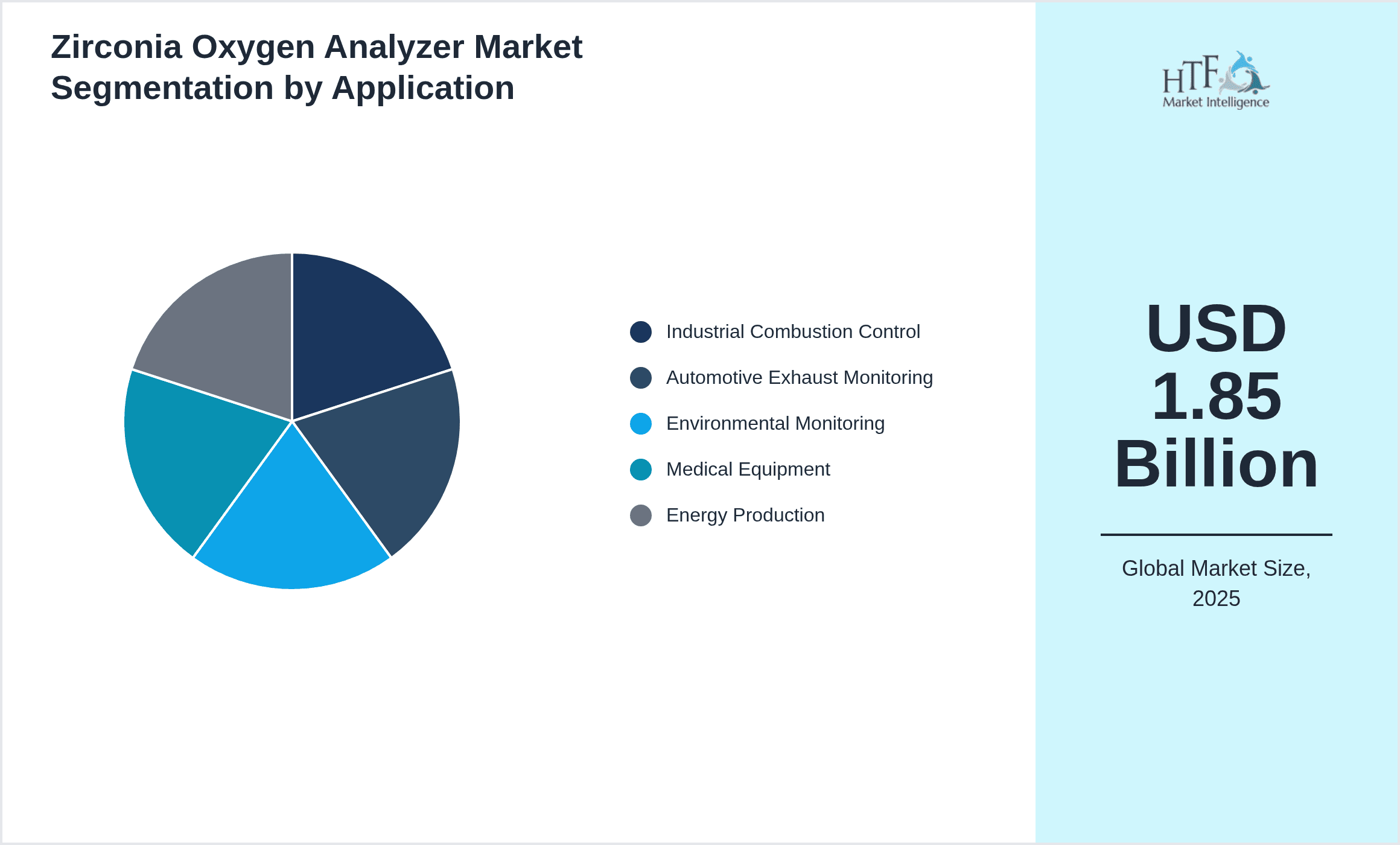
- ◦Industrial Combustion Control
- ◦Automotive Exhaust Monitoring
- ◦Environmental Monitoring
- ◦Medical Equipment
- ◦Energy Production
- •By Service Type
- ◦Installation Services
- ◦Calibration Services
- ◦Maintenance Services
- ◦Repair Services
- •By Deployment Model
- ◦On-Premise
- ◦Cloud-Connected
- ◦Hybrid
Growth Dynamics
- •Stringent environmental regulations globally, such as emissions norms imposed by agencies like the EPA and the European Environment Agency, have accelerated demand for precise oxygen analyzers to ensure compliance and reduce pollutants.
- •Rapid industrialization in emerging economies, especially within the Asia-Pacific region, is driving expansion of power plants and manufacturing facilities, thereby increasing the requirement for advanced oxygen monitoring solutions.
- •Technological advancements including the integration of IoT and real-time data analytics in oxygen analyzers are enhancing operational efficiency and predictive maintenance capabilities, further stimulating market growth.
- •Growing emphasis on energy efficiency and fuel optimization in industries such as automotive and power generation is boosting the adoption of zirconia oxygen analyzers for accurate combustion control.
- •Increasing awareness of environmental sustainability among governments and corporations is pushing investments towards cleaner technologies where oxygen analyzers play a pivotal role.
- •Rising demand for portable and handheld analyzer variants facilitates flexible onsite measurement applications, broadening market penetration across various sectors.
- •Government incentives and subsidies promoting clean energy projects indirectly support the growth of oxygen analyzer markets by fostering infrastructure development requiring precise gas monitoring.

Market Trends
- •The increasing integration of IoT-enabled sensors in zirconia oxygen analyzers allows for enhanced real-time monitoring, remote diagnostics, and improved data collection, transforming traditional analyzer functionalities.
- •Adoption of miniaturized and portable oxygen analyzers is rising, driven by demand for onsite, real-time measurements in automotive emissions testing and field environmental monitoring.
- •Collaboration between analyzer manufacturers and software developers is resulting in advanced analytics platforms that deliver actionable insights for process optimization and compliance reporting.
- •Sustainability initiatives and carbon reduction goals are encouraging industries to deploy more sophisticated oxygen sensing technologies, fostering growth in high-precision fixed analyzers.
- •Increased focus on maintenance-free and long-lifespan sensor technologies is shaping product innovation, reducing total cost of ownership for end users.
- •Expansion of market reach into emerging economies is leading to tailored product offerings that balance cost and performance to meet diverse regional requirements.
- •Integration of wireless communication protocols in oxygen analyzers supports seamless connectivity with plant control systems, enhancing automation and efficiency.

Market Opportunities
- •Emerging markets in Asia-Pacific present significant growth potential due to rapid industrial growth and increasing environmental regulations, creating demand for advanced oxygen analyzers.
- •Development of hybrid analyzers combining portable and fixed functionalities offers new avenues for market penetration in diverse applications with flexibility requirements.
- •Investment in smart sensor technology and AI-driven analytics platforms can enhance product differentiation and provide value-added services to end users.
- •Expansion into healthcare applications such as respiratory monitoring and medical diagnostics can diversify revenue streams and reduce dependency on industrial sectors.
- •Strategic partnerships with environmental agencies and industrial associations can facilitate market access and promote adoption through education and standards development.
- •Growing demand for sustainable energy solutions like biomass and waste-to-energy plants increases the need for precise oxygen monitoring, presenting niche opportunities.
- •Customization of oxygen analyzer solutions to meet industry-specific requirements can enhance customer loyalty and open niche markets.
Market Challenges
- •High initial investment and operational costs of advanced zirconia oxygen analyzers limit adoption especially among small and medium enterprises in developing regions.
- •The requirement for regular calibration and maintenance to ensure accuracy poses operational challenges and increases total cost of ownership.
- •Competition from alternative oxygen sensing technologies such as electrochemical and paramagnetic sensors creates pricing and technological pressures.
- •Supply chain disruptions impacting raw material availability, particularly high-purity zirconium dioxide, can affect production schedules and costs.
- •Complex regulatory environments across regions require manufacturers to adapt products and documentation, increasing compliance costs.
- •Technological obsolescence risk due to rapid innovation demands continuous R&D investment to maintain competitive advantage.
- •Lack of skilled technicians for installation and maintenance in emerging markets hinders widespread adoption.
Regulatory Framework
- •Between 2020 and 2025, the implementation of stricter emission standards such as the EPA's Clean Air Act amendments and the European Union’s Industrial Emissions Directive mandated enhanced monitoring of oxygen levels in combustion processes, driving demand for zirconia oxygen analyzers.
- •Regulations requiring continuous emissions monitoring systems (CEMS) in power plants and industrial facilities enforced compliance with real-time oxygen measurement standards, impacting product design and certification requirements.
- •Safety standards such as IEC 61508 and ISO 9001 compliance became critical for manufacturers to ensure reliability and operational safety of oxygen analyzers in hazardous environments.
- •Region-specific mandates including China's Environmental Protection Law and India’s Air (Prevention and Control of Pollution) Act introduced localized certification and testing protocols affecting market entry strategies.
- •Government incentives promoting clean energy and emission reduction technologies provided subsidies and tax benefits for deploying advanced oxygen analysis instruments, encouraging market growth.
Market Intelligence
- •15th January 2025, Siemens AG launched its next-generation zirconia oxygen analyzer featuring enhanced sensor durability, IoT connectivity, and real-time data analytics capabilities aimed at power generation and industrial clients. The new product integrates cloud-based monitoring, enabling predictive maintenance and reducing downtime, thereby improving operational efficiency. This launch underscores Siemens’ commitment to innovation and expanding its footprint in emerging markets. The analyzer’s improved accuracy and rapid response time support tighter regulatory compliance, positioning it as a preferred solution for environmental monitoring. Source: Siemens AG Official Press Release
- •10th March 2025, Honeywell International Inc. introduced a portable zirconia oxygen analyzer designed for automotive emission testing and field environmental analysis. The device features a lightweight design, extended battery life, and wireless data transmission, facilitating ease of use and flexibility. Targeting growing demand in Asia-Pacific and Latin America, this innovation enables rapid onsite oxygen measurement, supporting regulatory compliance and quality control. The launch is part of Honeywell’s strategic focus on expanding its environmental solutions portfolio and addressing market needs for portable, user-friendly analyzers. Source: Honeywell International Press Release
- •5th May 2025, Emerson Electric Co. announced a strategic partnership with a leading software provider to develop AI-driven analytics platforms integrated with their zirconia oxygen analyzers. This initiative aims to enhance data interpretation, predictive maintenance, and remote diagnostics capabilities, offering customers value-added services beyond traditional sensing. The collaboration is expected to strengthen Emerson’s competitive position by leveraging digital transformation trends and meeting increasing demand for smart instrumentation in industrial automation. Source: Emerson Electric Co. Corporate Announcement
- •20th August 2025, ABB Ltd. completed acquisition of a regional zirconia sensor manufacturer to expand its product portfolio and strengthen presence in emerging Asian markets. The acquisition provides ABB access to advanced sensor technologies and a broader customer base, enabling accelerated innovation and market penetration. This strategic move aligns with ABB’s growth objectives to address rising demand for oxygen analyzers in power generation and environmental monitoring sectors. Source: ABB Ltd. Official Statement
Regional Outlook
The North America currently holds a significant share of the market, primarily due to several key factors: increasing consumption rates, a burgeoning population, and robust economic momentum. These elements collectively drive demand, positioning this region as a leader in the market. On the other hand, Asia-Pacific is rapidly emerging as the fastest-growing area within the industry. This remarkable growth can be attributed to swift infrastructure development, the expansion of various industrial sectors, and a marked increase in consumer demand. These dynamics make this region a crucial player in shaping future market growth.
In our report, we cover a comprehensive analysis of the following regions and countries:
- North America
- LATAM
- West Europe
- Central & Eastern Europe
- Northern Europe
- Southern Europe
- East Asia
- Southeast Asia
- South Asia
- Central Asia
- Oceania
- MEA
| Feature | Details |
|---|---|
| Base Year Market Size | USD 1.85 Billion |
| Forecast Year Market Size | USD 4.65 Billion |
| CAGR | 10.1% |
| Forecast Period | 2026 to 2033 |
| YoY Growth | 10.1% |
| Scope of Report | Market is segmented by Product Type (Portable Analyzers, Fixed Analyzers, Handheld Analyzers, Process Analyzers, Online Analyzers), Application Segment (Industrial Combustion Control, Automotive Exhaust Monitoring, Environmental Monitoring, Medical Equipment, Energy Production), Service Type (Installation Services, Calibration Services, Maintenance Services, Repair Services), Deployment Model (On-Premise, Cloud-Connected, Hybrid) |
| Regions Covered | North America, LATAM, West Europe, Central & Eastern Europe, Northern Europe, Southern Europe, East Asia, Southeast Asia, South Asia, Central Asia, Oceania, MEA |
| Key Companies | Siemens AG (Germany), Honeywell International Inc. (United States), Emerson Electric Co. (United States), ABB Ltd. (Switzerland), Yokogawa Electric Corporation (Japan) |
Global Zirconia Oxygen Analyzer Market Size, Growth & Revenue 2025-2034 - Table of Contents
Frequently Asked Questions (FAQ):
The Compact Track Loaders market is projected to grow at a CAGR of 6.8% from 2025 to 2030, driven by increasing demand in construction and agricultural sectors.
North America currently leads the market with approximately 45% market share, followed by Europe at 28% and Asia-Pacific at 22%. The remaining regions account for 5% of the global market.
Key growth drivers include increasing construction activities, rising demand for versatile equipment in agriculture, technological advancements in track loader design, and growing preference for compact equipment in urban construction projects.