
Europe AV-over-IP Decoder Market - Europe Size & Outlook 2020-2034
Europe AV-over-IP Decoder Market is segmented by Decoder Type (Hardware Decoders, Software Decoders, Hybrid Decoders, Edge Decoders, Cloud-based Decoders), Application Area (Broadcasting, Corporate AV, Education, Healthcare, Entertainment), Deployment Model (On-premise Deployment, Cloud Deployment, Hybrid Deployment), Service Type (Installation Services, Maintenance Services, Consulting Services, Integration Services), and Geography (Germany, France, The United Kingdom, BeNeLux, Spain, Italy, NORDIC, CEE, Others)
Pricing
Report Overview
Executive Summary
- •The Europe AV-over-IP Decoder market comprises technologies and solutions enabling the transmission and decoding of audiovisual content over IP networks, integrating hardware and software decoders for diverse applications including broadcasting, corporate AV, education, healthcare, and entertainment. This market serves critical functions in facilitating low-latency, high-quality AV streaming, supporting seamless interoperability across complex network infrastructures. Key end users range from media houses requiring robust broadcast solutions to corporate and educational institutions adopting AV-over-IP for improved communication and collaboration. The value chain includes component manufacturers, system integrators, technology providers, and service vendors collaborating to deploy scalable, flexible AV distribution systems. The market's growth is fueled by trends such as digitization, cloud adoption, and the demand for real-time content delivery, positioning AV-over-IP decoders as essential components in Europe's evolving digital AV ecosystem.
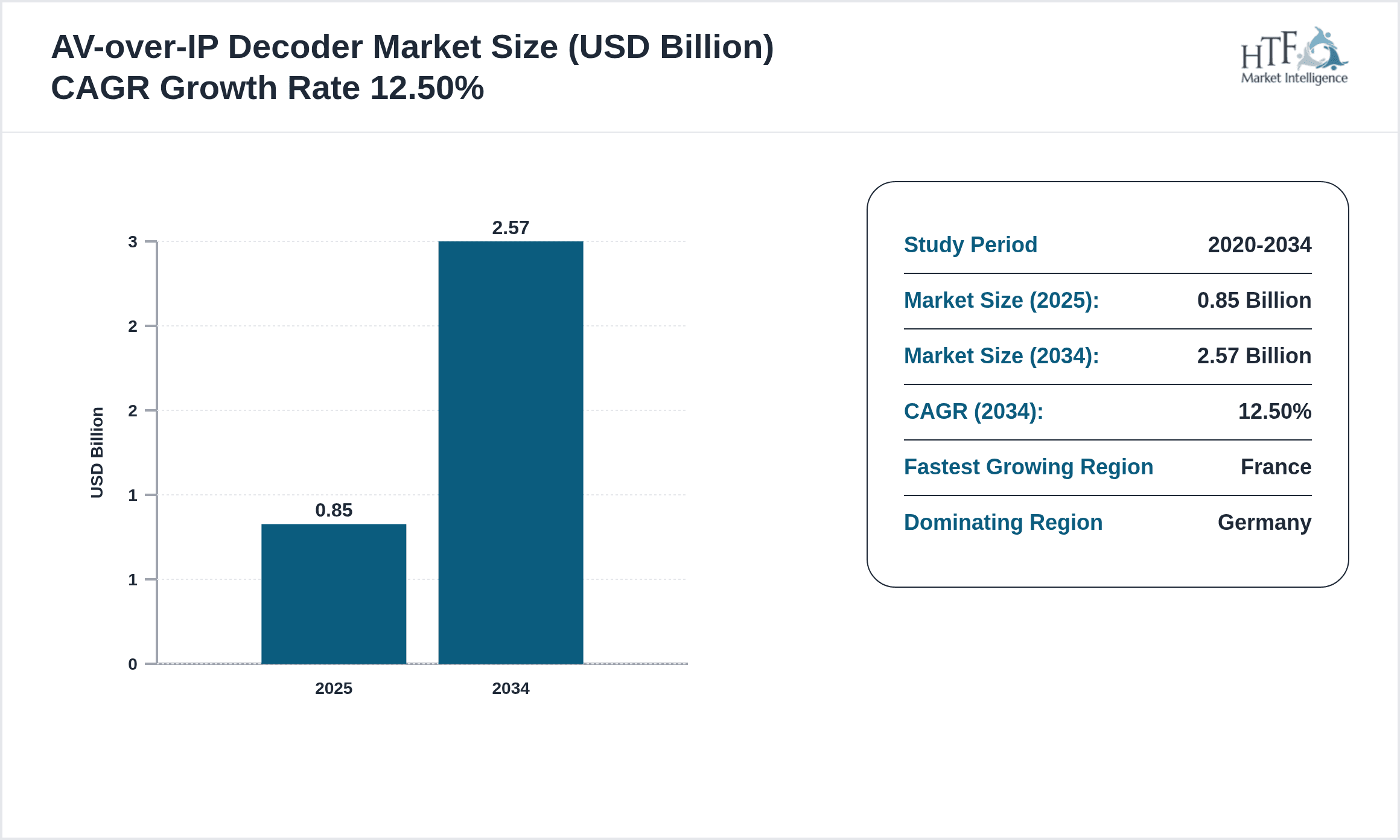
- •Market highlights include a base market size of USD 0.85 billion in 2025, projected to reach USD 2.57 billion by 2034, reflecting a robust CAGR of 12.5%. Germany dominates the regional market, driven by strong broadcast and corporate sectors, while France is the fastest growing country owing to increasing adoption of cloud-based decoders and investments in smart infrastructure. Hardware decoders remain the leading product type, with cloud-based decoders exhibiting the fastest growth due to their scalability and remote management capabilities. The market benefits from technological advancements, increasing digital transformation across industries, and favorable regulatory frameworks supporting IP-based AV solutions.
- •The Europe AV-over-IP Decoder market offers strategic value to stakeholders by enabling efficient AV content distribution, enhancing user experience through low latency and high-definition streaming, and supporting emerging use cases such as remote education and telemedicine. For technology vendors and integrators, the market presents opportunities to innovate in decoder functionality and cloud integration. End users benefit from improved operational efficiency and scalability, while investors find potential in the expanding digital AV infrastructure and the increasing shift from traditional AV to network-based systems.
Competitive Landscape
The competitive environment in the Europe AV-over-IP Decoder market is characterized by rapid technological innovation, strategic partnerships, and consolidation activities aimed at enhancing market positioning and expanding geographic reach. Market leaders focus on developing integrated hardware-software solutions that offer superior performance, interoperability, and scalability to meet diverse application requirements. Competitive strategies include aggressive R&D investments, product portfolio expansion, and customization capabilities tailored to specific end-user needs. Pricing strategies balance affordability with high-quality standards, while distribution channels leverage partnerships with system integrators and technology consultants to maximize market penetration. The landscape also features emerging players specializing in cloud-based and edge decoding technologies, intensifying competition and driving continuous innovation. Market entry barriers include the need for technical expertise, compliance with evolving regulatory standards, and the establishment of robust service and support networks. Regional competition varies with Germany and France exhibiting strong vendor presence and innovation hubs, while other European countries show growing adoption rates fueled by digital infrastructure investments. Future trends suggest increased emphasis on AI-driven decoding, enhanced cybersecurity features, and integration with IoT ecosystems to maintain competitive advantage.
Key Participants in AV-over-IP Decoder Market
- •Barco NV (Belgium)
- •Crestron Electronics Inc. (United States)
- •Extron Electronics (United States)
- •Kramer Electronics (Israel)
- •Visix Inc. (United States)
- •AMX LLC (United States)
- •Just Add Power, Inc. (United States)
- •Atlona, Inc. (United States)
- •Gefen LLC (United States)
- •Hall Research (United States)
- •Matrox Graphics Inc. (Canada)
- •Aurora Multimedia Corp. (United States)
- •VITEC Inc. (United States)
- •Black Box Corporation (United States)
- •BrightSign, LLC (United States)
- •Sony Corporation (Japan)
- •Cisco Systems, Inc. (United States)
- •Huawei Technologies Co., Ltd. (China)
- •Crestron Germany GmbH (Germany)
- •Extron Europe GmbH (Germany)
- •L-Acoustics (France)
- •RTI (United States)
- •Netgear Inc. (United States)
- •AVPro Edge (United States)
- •Lightware Visual Engineering (Hungary)
Market Breakdown
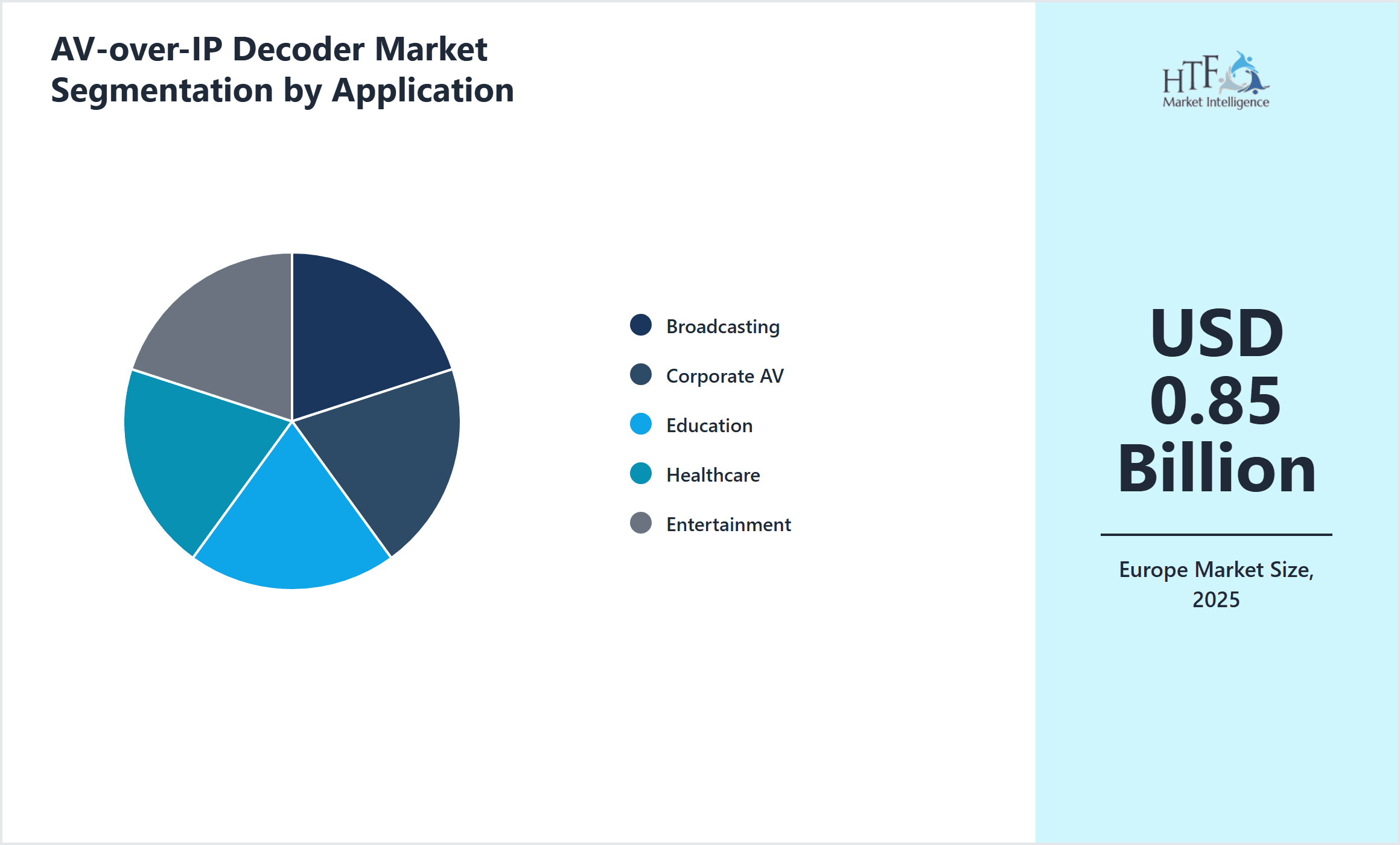
- •By Decoder Type
- ◦Hardware Decoders
- ◦Software Decoders
- ◦Hybrid Decoders
- ◦Edge Decoders
- ◦Cloud-based Decoders
- •By Application Area
- ◦Broadcasting
- ◦Corporate AV
- ◦Education
- ◦Healthcare
- ◦Entertainment
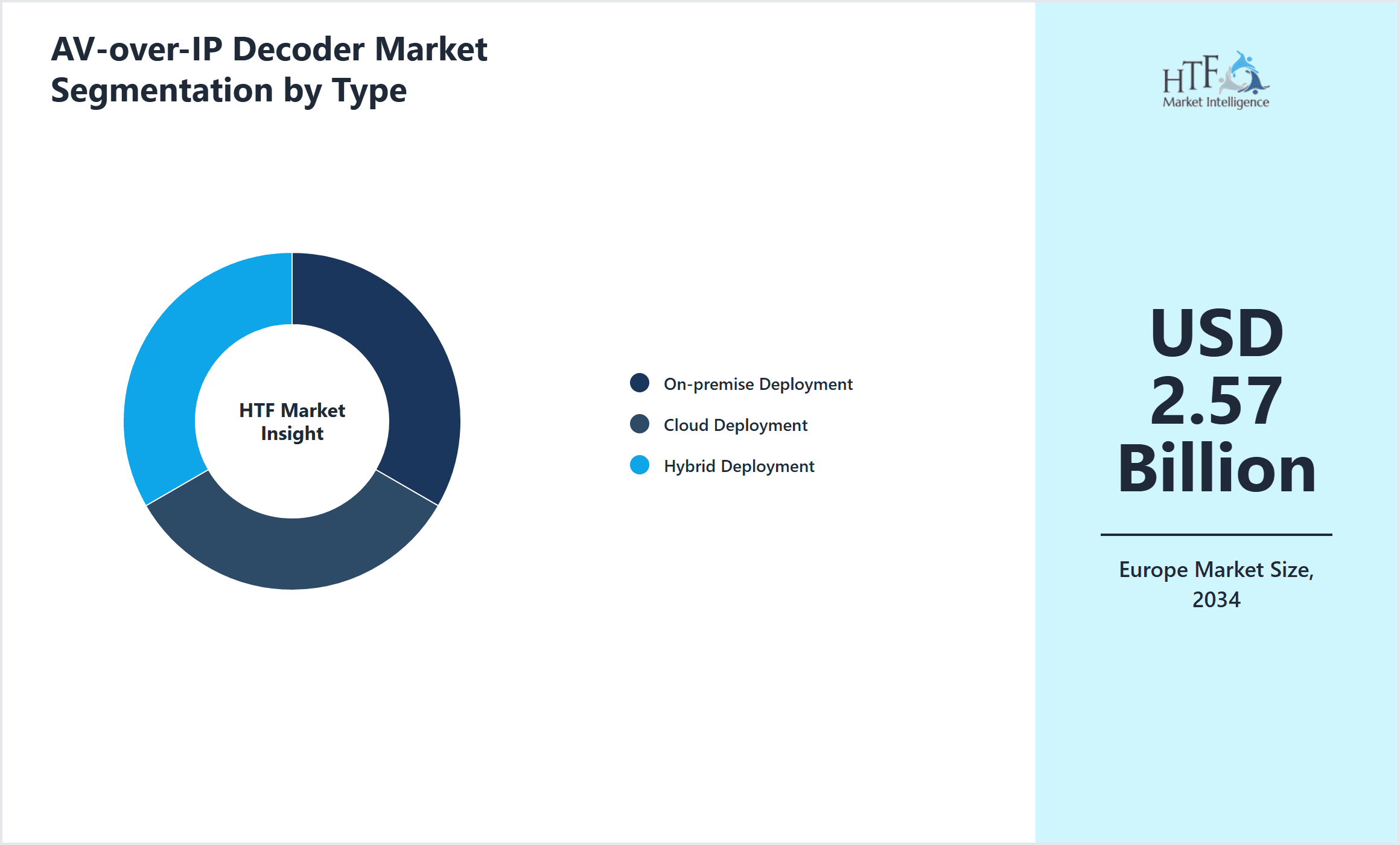
- •By Deployment Model
- ◦On-premise Deployment
- ◦Cloud Deployment
- ◦Hybrid Deployment
- •By Service Type
- ◦Installation Services
- ◦Maintenance Services
- ◦Consulting Services
- ◦Integration Services
Growth Dynamics
- •Increasing adoption of IP-based AV infrastructures in broadcasting and corporate sectors is driving demand for AV-over-IP decoders, as these solutions offer scalability, flexibility, and superior signal quality compared to traditional AV systems.
- •Technological advancements in cloud computing and edge processing enable cloud-based decoders to reduce latency and improve real-time content delivery, accelerating market growth in regions with advanced digital infrastructure.
- •Rising demand for remote education and telemedicine applications in Europe is pushing investments in AV-over-IP technology, facilitating interactive and high-quality audiovisual communication across institutions and healthcare providers.
- •Government initiatives promoting smart city development and digital transformation are expanding opportunities for AV-over-IP decoder deployment in public venues, transportation hubs, and entertainment complexes.
- •Increasing collaboration among AV technology vendors and service providers is fostering ecosystem development, enabling end-users to access integrated solutions that improve operational efficiency and user experience.
- •Growing preference for energy-efficient and compact AV decoding hardware supports adoption in space-constrained environments, including corporate meeting rooms and educational campuses.
- •Investment in cybersecurity for AV-over-IP networks is becoming a critical growth driver as organizations seek to protect sensitive audiovisual data and ensure uninterrupted service delivery.
Market Trends
- •The transition from traditional AV distribution to IP-based systems is accelerating, fueled by the need for scalable and interoperable solutions capable of supporting 4K/8K video streaming and immersive audio formats.
- •Emergence of AI-powered decoders enhances content management and automated quality control, enabling smarter AV networks that adapt to changing performance requirements.
- •Sustainable AV hardware design, emphasizing lower power consumption and recyclable materials, is gaining traction among European manufacturers to meet environmental regulations and consumer expectations.
- •Integration of AV-over-IP decoders with unified communication platforms is expanding, facilitating seamless collaboration and multimedia sharing across corporate and educational settings.
- •Growing adoption of subscription-based and as-a-service models for AV technology deployment enables cost-effective access to advanced decoder functionalities without large upfront investments.
- •Collaborative ecosystems among technology vendors, integrators, and cloud service providers are shaping future innovation pathways and market expansion strategies.
- •Increasing consumer preference for personalized and interactive AV experiences is driving feature enhancements in decoders, including multi-stream processing and dynamic content adaptation.
Market Opportunities
- •Expanding demand for advanced AV solutions in emerging European markets presents significant growth opportunities for decoder manufacturers focusing on cost-effective and scalable products.
- •Integration of AV-over-IP decoders with 5G networks offers potential for ultra-low latency streaming applications, particularly in live broadcasting and remote collaboration sectors.
- •Development of customizable and modular decoder platforms enables catering to vertical-specific needs, enhancing market penetration in healthcare, education, and corporate domains.
- •Growing investments in smart city infrastructure and digital signage create new avenues for AV-over-IP decoder deployment in public and commercial spaces.
- •Partnerships with cloud service providers facilitate hybrid deployment models, allowing customers to leverage on-premise and cloud decoding capabilities tailored to their operational requirements.
- •Advancements in cybersecurity protocols for AV networks open opportunities for providers offering secure and compliant decoder solutions.
- •Increasing adoption of immersive technologies such as virtual and augmented reality in entertainment and training drives demand for high-performance AV decoding hardware.
Market Challenges
- •High initial investment costs for advanced AV-over-IP decoder systems may restrain adoption among small and medium-sized enterprises, limiting market penetration in cost-sensitive segments.
- •Complexity in integrating heterogeneous AV devices and ensuring interoperability across diverse network environments poses technical challenges for system integrators and end-users.
- •Strict regulatory compliance requirements related to data privacy and network security increase development costs and operational burdens for decoder manufacturers and service providers.
- •Limited availability of skilled professionals proficient in AV-over-IP technologies hampers deployment efficiency and support services across certain European regions.
- •Latency and bandwidth constraints in legacy network infrastructures affect the quality of AV streaming, necessitating costly upgrades and impacting user experience.
- •Rapid technological obsolescence requires continuous innovation and product updates, challenging manufacturers to maintain competitive relevance while managing costs.
- •Supply chain disruptions and component shortages may delay production timelines and increase costs, affecting the availability of AV-over-IP decoder solutions.
Regulatory Framework
- •The European Union’s General Data Protection Regulation (GDPR), enacted in 2018, imposes stringent data privacy and security requirements affecting AV-over-IP decoder solutions, requiring manufacturers to ensure secure data handling and compliance across the value chain.
- •The Radio Equipment Directive (RED) 2014/53/EU, applicable from 2016, mandates essential safety and electromagnetic compatibility standards for AV-over-IP devices, influencing product design and certification processes.
- •Energy-related Product (ErP) Directive enforces energy efficiency requirements on electronic devices, encouraging manufacturers to optimize power consumption of AV decoding hardware sold within the EU.
- •The EU Cybersecurity Act, effective from 2019, establishes a framework for cybersecurity certification schemes applicable to AV-over-IP products, promoting enhanced security standards and market trust.
- •Country-specific mandates such as Germany’s IT Security Act and France’s ANSSI guidelines require compliance for network-connected AV systems in critical infrastructure and public sector deployments, increasing market complexity and compliance costs.
Market Intelligence
- •15th February 2025, Barco NV launched its latest AV-over-IP hardware decoder featuring 8K video support, ultra-low latency streaming, and enhanced security protocols aimed at the broadcasting and corporate sectors in Europe. This product integrates AI-based content optimization and supports hybrid deployment models, enabling flexible cloud and on-premise operations. The launch is positioned to strengthen Barco’s market leadership in Europe by addressing growing demand for high-resolution AV content distribution and secure network environments. The solution’s modular design facilitates easy upgrades and customization, anticipating future technological advancements and customer needs. Source: Official Barco NV Press Release
- •10th April 2025, Crestron Electronics introduced a cloud-based AV-over-IP decoder platform designed for scalable deployment in educational and healthcare institutions across Europe. The platform features remote management capabilities, integrated cybersecurity features, and seamless interoperability with existing AV infrastructures. Crestron’s innovation aims to capitalize on the increasing adoption of remote learning and telemedicine by providing cost-effective, flexible decoding solutions that support multi-site operations. The product is expected to accelerate AV-over-IP migration in regulated sectors requiring secure and reliable audiovisual communication. Source: Crestron Electronics Corporate Announcement
- •5th June 2025, Extron Electronics announced a strategic partnership with a leading European cloud service provider to develop hybrid AV-over-IP decoder solutions combining on-premise hardware with cloud-based processing power. This collaboration focuses on enhancing scalability and reducing latency in live event broadcasting and corporate communications. The initiative reflects the growing trend toward hybrid deployment models and the integration of cloud technologies in AV systems. Market analysts anticipate this partnership will drive innovation and competitive differentiation in the European AV-over-IP decoder market. Source: Extron Electronics Official News
- •Recent market developments and strategic initiatives are continuously tracked through industry publications, company announcements, and regulatory filings. For the most current information, stakeholders are advised to monitor official corporate communications and recognized market intelligence platforms.
Regional Outlook
The Germany currently holds a significant share of the market, primarily due to several key factors: increasing consumption rates, a burgeoning population, and robust economic momentum. These elements collectively drive demand, positioning this region as a leader in the market. On the other hand, France is rapidly emerging as the fastest-growing area within the industry. This remarkable growth can be attributed to swift infrastructure development, the expansion of various industrial sectors, and a marked increase in consumer demand. These dynamics make this region a crucial player in shaping future market growth.
In our report, we cover a comprehensive analysis of the following regions and countries:
- Germany
- France
- The United Kingdom
- BeNeLux
- Spain
- Italy
- NORDIC
- CEE
- Others
| Feature | Details |
|---|---|
| Base Year Market Size | USD 0.85 Billion |
| Forecast Year Market Size | USD 2.57 Billion |
| CAGR | 12.5% |
| Forecast Period | 2026 to 2033 |
| YoY Growth | 12.4% |
| Scope of Report | Market is segmented by Decoder Type (Hardware Decoders, Software Decoders, Hybrid Decoders, Edge Decoders, Cloud-based Decoders), Application Area (Broadcasting, Corporate AV, Education, Healthcare, Entertainment), Deployment Model (On-premise Deployment, Cloud Deployment, Hybrid Deployment), Service Type (Installation Services, Maintenance Services, Consulting Services, Integration Services) |
| Regions Covered | Germany, France, The United Kingdom, BeNeLux, Spain, Italy, NORDIC, CEE, Others |
| Key Companies | Expanding demand for advanced AV solutions in emerging European markets presents significant growth opportunities for decoder manufacturers focusing on cost-effective and scalable products., Integration of AV-over-IP decoders with 5G networks offers potential for ultra-low latency streaming applications, particularly in live broadcasting and remote collaboration sectors., Development of customizable and modular decoder platforms enables catering to vertical-specific needs, enhancing market penetration in healthcare, education, and corporate domains., Growing investments in smart city infrastructure and digital signage create new avenues for AV-over-IP decoder deployment in public and commercial spaces., Partnerships with cloud service providers facilitate hybrid deployment models, allowing customers to leverage on-premise and cloud decoding capabilities tailored to their operational requirements. |
Europe AV-over-IP Decoder Market - Europe Size & Outlook 2020-2034 - Table of Contents
Frequently Asked Questions (FAQ):
The Compact Track Loaders market is expected to see value worth 5.3 Billion in 2025.
North America currently leads the market with approximately 45% market share, followed by Europe at 28% and Asia-Pacific at 22%. The remaining regions account for 5% of the global market.
Key growth drivers include increasing construction activities, rising demand for versatile equipment in agriculture, technological advancements in track loader design, and growing preference for compact equipment in urban construction projects.