
Global Border Security System Market Size, Growth & Revenue 2024-2034
Global Border Security System Market is segmented by Product Type (Biometric Systems including facial recognition and fingerprint scanners, Video Surveillance Systems with AI-enabled analytics, Radar Detection Systems for long-range monitoring, Perimeter Sensors such as motion and vibration detectors, Command and Control Systems integrating multi-source data), Application (Surveillance for border monitoring, Access Control at checkpoints and entry points, Intrusion Detection for unauthorized crossings, Perimeter Security to secure physical boundaries, Cybersecurity protecting digital infrastructure), End User (Government and Defense Agencies, Customs and Border Protection Authorities, Private Security Firms, Critical Infrastructure Operators), Deployment Model (On-Premise Installations, Cloud-Based Security Solutions, Hybrid Deployment Models), and Geography (North America, LATAM, West Europe, Central & Eastern Europe, Northern Europe, Southern Europe, East Asia, Southeast Asia, South Asia, Central Asia, Oceania, MEA)
Pricing
Report Overview
Executive Summary
- •The global Border Security System market involves advanced technologies and integrated solutions aimed at safeguarding national borders from illegal crossings, smuggling, and security breaches. It includes biometric identification, video surveillance, radar systems, sensors, and command and control centers that collectively provide comprehensive perimeter protection and threat detection. This market serves multiple sectors, including government defense agencies and private security contractors, addressing challenges posed by increasing cross-border threats and evolving security landscapes. Technological advancements in AI, machine learning, and cloud computing have significantly enhanced the efficiency and responsiveness of border security infrastructures worldwide. The market’s scope extends across land borders, airports, seaports, and critical infrastructure, emphasizing real-time monitoring, data analytics, and rapid response mechanisms to ensure national security and public safety. Increasing geopolitical tensions and the need for secure trade routes further underscore the strategic importance of border security systems globally.
- •Key market highlights include a robust CAGR of approximately 10.17% projected through 2034, driven by heightened security concerns, technological innovation, and government investments. The market size is expected to grow from USD 12.5 Billion in 2024 to USD 34.7 Billion by 2034. Video surveillance remains the dominant product type, while biometric systems are rapidly gaining traction as the fastest-growing segment. North America currently leads the market in size, with Asia-Pacific demonstrating the fastest growth due to increasing infrastructure development and modernization in border control technologies. Critical dynamics include integration of AI and IoT, increased adoption of cloud-based command centers, and evolving cybersecurity frameworks to address digital threats at borders.
- •The value proposition of border security systems lies in their ability to deliver real-time, actionable intelligence and enhance situational awareness, thereby reducing security risks and operational costs. These systems enable governments to enforce regulations effectively, protect citizens, and secure trade and travel routes. Stakeholders, including technology providers, integrators, and end-users, benefit from scalable, interoperable solutions that adapt to diverse geographic and threat environments. Strategic importance is amplified by increasing geopolitical tensions, global migration patterns, and the evolving nature of border threats, positioning border security systems as critical drivers for national security and economic stability worldwide.

Competitive Landscape
The global Border Security System market is characterized by intense competition among established defense contractors, technology innovators, and specialized security solution providers. Companies compete through continuous innovation in biometric technologies, AI-powered analytics, and integrated surveillance platforms to differentiate their offerings. Strategic partnerships, mergers and acquisitions, and government contracts play a pivotal role in shaping market positioning. The dynamic rivalry fosters rapid product development cycles and pricing strategies targeted at diverse government budgets and security needs. Market players emphasize enhancing interoperability, cyber resilience, and modular system designs to address evolving threats and regulatory requirements. Regional competition also influences innovation, with North America and Europe leading in cutting-edge technology deployment, while Asia-Pacific focuses on rapid adoption and infrastructure expansion. The competitive landscape is further defined by barriers to entry due to stringent certification processes and the critical nature of border security applications, ensuring only technologically advanced and compliant players thrive.
Leading Companies in Border Security System Market
- •Lockheed Martin Corporation (United States)
- •Raytheon Technologies Corporation (United States)
- •Thales Group (France)
- •Leonardo S.p.A. (Italy)
- •Hikvision Digital Technology Co., Ltd. (China)
- •FLIR Systems, Inc. (United States)
- •Boeing Defense, Space & Security (United States)
- •Saab AB (Sweden)
- •L3Harris Technologies, Inc. (United States)
- •Elbit Systems Ltd. (Israel)
- •Bosch Security Systems (Germany)
- •Honeywell International Inc. (United States)
- •ZTE Corporation (China)
- •Indra Sistemas, S.A. (Spain)
- •Axis Communications AB (Sweden)
- •Dahua Technology Co., Ltd. (China)
- •Canon Inc. (Japan)
- •Nokia Corporation (Finland)
- •Kapsch TrafficCom AG (Austria)
- •Garrett Electronics, Inc. (United States)
- •Hanwha Techwin Co., Ltd. (South Korea)
- •Verint Systems Inc. (United States)
- •Avigilon Corporation (Canada)
- •Dedrone GmbH (Germany)
- •QinetiQ Group plc (United Kingdom)
Market Breakdown
- •By Product Type
- ◦Biometric Systems including facial recognition and fingerprint scanners
- ◦Video Surveillance Systems with AI-enabled analytics
- ◦Radar Detection Systems for long-range monitoring
- ◦Perimeter Sensors such as motion and vibration detectors
- ◦Command and Control Systems integrating multi-source data
- •By Application
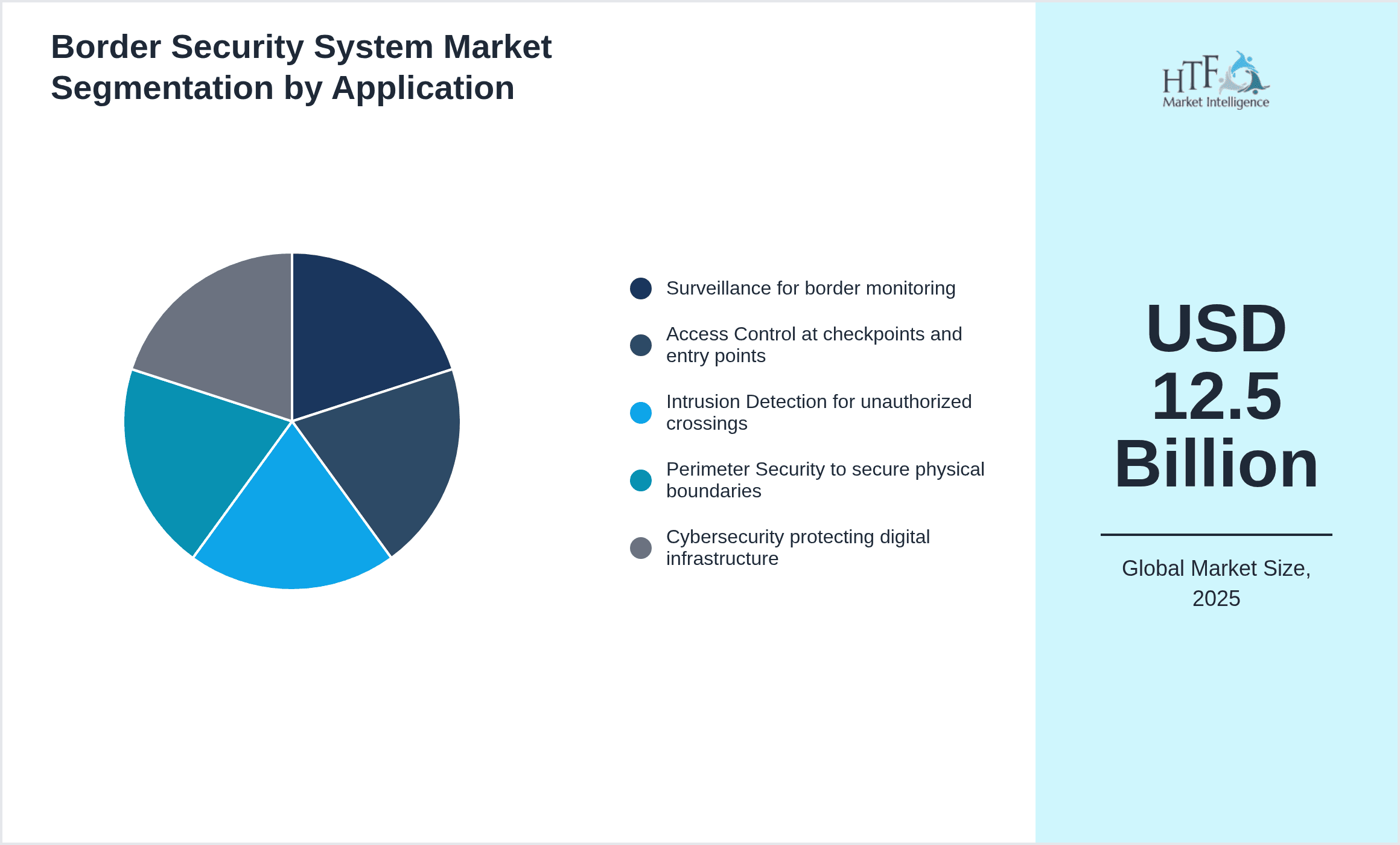
- ◦Surveillance for border monitoring
- ◦Access Control at checkpoints and entry points
- ◦Intrusion Detection for unauthorized crossings
- ◦Perimeter Security to secure physical boundaries
- ◦Cybersecurity protecting digital infrastructure
- •By End User
- ◦Government and Defense Agencies
- ◦Customs and Border Protection Authorities
- ◦Private Security Firms
- ◦Critical Infrastructure Operators
- •By Deployment Model
- ◦On-Premise Installations
- ◦Cloud-Based Security Solutions
- ◦Hybrid Deployment Models
Growth Dynamics
- •Increasing geopolitical tensions and rising cross-border threats have led to significant government expenditure on advanced border security systems. This trend is supported by escalating investments in AI-driven surveillance and biometric identification technologies, which enhance detection accuracy and operational efficiency.
- •Technological advancements such as integration of IoT sensors, real-time data analytics, and cloud computing have transformed border security infrastructures, enabling seamless monitoring and rapid threat response across multiple terrains and environments.
- •The growing need to secure trade routes and critical infrastructure has accelerated adoption of perimeter security systems, fostering collaborations between governments and private sector companies to deploy scalable and interoperable border security solutions.
- •Emerging cyber threats targeting border control systems have driven focused R&D investments to bolster cybersecurity frameworks, ensuring the protection of sensitive data and operational continuity against sophisticated digital attacks.
- •Increasing use of unmanned aerial vehicles (UAVs) and drones for border surveillance presents new market opportunities, prompting vendors to innovate drone detection and countermeasure technologies integrated with existing border security systems.

Market Trends
- •AI-powered video analytics have become a dominant trend, enabling automated threat recognition and reducing false alarms, thereby optimizing border security personnel deployment and resource allocation.
- •The adoption of cloud-based command and control centers allows centralized monitoring and coordination across multiple border checkpoints, enhancing real-time communication and operational flexibility.
- •Integration of multi-modal biometric authentication methods, including facial, iris, and fingerprint recognition, is gaining traction to strengthen identity verification and reduce unauthorized access incidents.
- •Sustainability considerations are influencing product development, with vendors focusing on energy-efficient sensors and surveillance equipment to minimize environmental impact while maintaining high performance.
- •Collaborations between technology providers and government agencies are increasing to develop customized border security solutions tailored to specific regional threat profiles and regulatory requirements.

Market Opportunities
- •Expanding infrastructure development in emerging economies offers significant opportunities to deploy advanced border security systems, particularly in Asia-Pacific and Latin America regions where modernization efforts are accelerating.
- •The integration of AI and machine learning with traditional security hardware opens avenues for innovation in predictive analytics, enabling proactive threat detection and enhanced border management efficiency.
- •Growing demand for seamless, interoperable border security solutions encourages partnerships between technology firms and system integrators to deliver end-to-end platforms adaptable to diverse operational environments.
- •Increasing focus on cybersecurity presents opportunities to develop specialized solutions aimed at protecting critical border infrastructure from evolving digital threats and cyber warfare tactics.
- •Development of drone detection and counter-UAV technologies addresses emerging aerial threats, creating a niche market segment within the broader border security ecosystem.
Market Challenges
- •High capital expenditure and operational costs associated with deploying comprehensive border security systems can limit adoption, especially in developing economies with constrained budgets.
- •Complex regulatory environments and varying international standards present challenges in harmonizing technologies and ensuring compliance across different regions.
- •Technical limitations related to sensor accuracy, environmental factors, and system integration can affect the reliability and effectiveness of border security solutions.
- •Growing sophistication of cyber threats necessitates continuous upgrades to cybersecurity measures, imposing significant resource demands on security agencies and vendors.
- •Talent shortages and skill gaps in operating advanced border security technologies hinder optimal utilization and maintenance of deployed systems.
Regulatory Framework
- •Between 2019 and 2024, several countries implemented enhanced data protection regulations requiring border security systems to comply with stringent privacy and cybersecurity standards, impacting system design and deployment.
- •Regulations mandating interoperability of border security technologies have been introduced, promoting standardized communication protocols and data sharing among agencies to improve coordinated responses.
- •Safety standards for biometric data collection and storage were established globally to protect individual rights and ensure ethical use of sensitive personal information in border control processes.
- •Region-specific mandates on usage of surveillance technologies, including drone monitoring and radar systems, have been enacted to balance security needs with civil liberties and environmental considerations.
- •Government incentives and funding programs have been launched to support research and deployment of next-generation border security solutions, fostering innovation and adoption in critical regions.
Market Intelligence
- •15th January 2025, Lockheed Martin Corporation launched an AI-driven integrated border surveillance system combining radar, thermal imaging, and biometric identification to enhance detection accuracy in complex terrains. This solution targets government defense agencies seeking to modernize their border security infrastructure while ensuring rapid threat response and operational scalability. The system’s modular design allows seamless integration with existing command and control platforms, thereby reducing deployment time and costs. Lockheed Martin aims to strengthen its market position by addressing evolving security challenges with cutting-edge technology. Source: Official Lockheed Martin Press Release
- •7th March 2025, Thales Group introduced a cloud-based border security management platform enabling real-time data analytics and centralized control for multi-border operations. The platform leverages AI and machine learning to provide predictive insights and automated alerts for potential security breaches. Designed for interoperability, it supports integration with various biometric and sensor technologies, facilitating enhanced situational awareness. This launch reflects Thales’ strategic focus on digital transformation within the border security sector, targeting government and critical infrastructure operators globally. Source: Thales Official Website
- •22nd May 2025, Raytheon Technologies Corporation announced a strategic partnership with a leading drone detection startup to develop counter-UAV systems tailored for border security applications. This collaboration aims to address increasing threats posed by unauthorized drone incursions by combining Raytheon's radar expertise with innovative detection algorithms. The joint initiative targets deployment in high-risk border areas and critical infrastructure sites, enhancing aerial threat management capabilities. This move aligns with Raytheon’s commitment to expanding its security technology portfolio and responding to emerging market demands. Source: Raytheon Press Release
- •30th August 2025, Leonardo S.p.A. completed the acquisition of a cybersecurity firm specializing in protecting border control networks from cyberattacks. This acquisition strengthens Leonardo’s ability to offer comprehensive security solutions encompassing both physical and digital domains. The integration of advanced cybersecurity technologies into Leonardo’s border security product suite enhances resilience against increasingly sophisticated cyber threats targeting national borders. This strategic move positions Leonardo as a holistic provider in the border security market, addressing evolving industry challenges. Source: Leonardo Corporate Announcement
Regional Outlook
The North America currently holds a significant share of the market, primarily due to several key factors: increasing consumption rates, a burgeoning population, and robust economic momentum. These elements collectively drive demand, positioning this region as a leader in the market. On the other hand, Asia-Pacific is rapidly emerging as the fastest-growing area within the industry. This remarkable growth can be attributed to swift infrastructure development, the expansion of various industrial sectors, and a marked increase in consumer demand. These dynamics make this region a crucial player in shaping future market growth.
In our report, we cover a comprehensive analysis of the following regions and countries:
- North America
- LATAM
- West Europe
- Central & Eastern Europe
- Northern Europe
- Southern Europe
- East Asia
- Southeast Asia
- South Asia
- Central Asia
- Oceania
- MEA
| Feature | Details |
|---|---|
| Base Year Market Size | USD 12.5 Billion |
| Forecast Year Market Size | USD 34.7 Billion |
| CAGR | 10.17% |
| Forecast Period | 2026 to 2033 |
| YoY Growth | 10.17% |
| Scope of Report | Market is segmented by Product Type (Biometric Systems including facial recognition and fingerprint scanners, Video Surveillance Systems with AI-enabled analytics, Radar Detection Systems for long-range monitoring, Perimeter Sensors such as motion and vibration detectors, Command and Control Systems integrating multi-source data), Application (Surveillance for border monitoring, Access Control at checkpoints and entry points, Intrusion Detection for unauthorized crossings, Perimeter Security to secure physical boundaries, Cybersecurity protecting digital infrastructure), End User (Government and Defense Agencies, Customs and Border Protection Authorities, Private Security Firms, Critical Infrastructure Operators), Deployment Model (On-Premise Installations, Cloud-Based Security Solutions, Hybrid Deployment Models) |
| Regions Covered | North America, LATAM, West Europe, Central & Eastern Europe, Northern Europe, Southern Europe, East Asia, Southeast Asia, South Asia, Central Asia, Oceania, MEA |
| Key Companies | Lockheed Martin Corporation (United States), Raytheon Technologies Corporation (United States), Thales Group (France), Leonardo S.p.A. (Italy), Hikvision Digital Technology Co., Ltd. (China), FLIR Systems, Inc. (United States), Boeing Defense, Space & Security (United States), Saab AB (Sweden), L3Harris Technologies, Inc. (United States), Elbit Systems Ltd. (Israel), Bosch Security Systems (Germany), Honeywell International Inc. (United States), ZTE Corporation (China), Indra Sistemas, S.A. (Spain), Axis Communications AB (Sweden), Dahua Technology Co., Ltd. (China), Canon Inc. (Japan), Nokia Corporation (Finland), Kapsch TrafficCom AG (Austria), Garrett Electronics, Inc. (United States), Hanwha Techwin Co., Ltd. (South Korea), Verint Systems Inc. (United States), Avigilon Corporation (Canada), Dedrone GmbH (Germany), QinetiQ Group plc (United Kingdom) |
Global Border Security System Market Size, Growth & Revenue 2024-2034 - Table of Contents
Frequently Asked Questions (FAQ):
The Compact Track Loaders market is expected to see value worth 5.3 Billion in 2025.
North America currently leads the market with approximately 45% market share, followed by Europe at 28% and Asia-Pacific at 22%. The remaining regions account for 5% of the global market.
Key growth drivers include increasing construction activities, rising demand for versatile equipment in agriculture, technological advancements in track loader design, and growing preference for compact equipment in urban construction projects.