
Global Household Coffee Maker Market - Outlook 2025-2034
Global Household Coffee Maker Market is segmented by Type (Automatic Coffee Makers, Semi-Automatic Coffee Makers, Manual Coffee Makers, Capsule Coffee Makers, Pod Coffee Makers), Application (Espresso, Drip Coffee, Single Serve, French Press, Cold Brew), Distribution Channel (Online Retail, Specialty Stores, Supermarkets & Hypermarkets, Direct Sales), Technology Integration (Smart Coffee Makers, Non-Smart Coffee Makers), and Geography (North America, LATAM, West Europe, Central & Eastern Europe, Northern Europe, Southern Europe, East Asia, Southeast Asia, South Asia, Central Asia, Oceania, MEA)
Pricing
Report Overview
Executive Summary
- •The global household coffee maker market is a dynamic sector comprising a variety of brewing devices tailored for residential use, including automatic, semi-automatic, manual, capsule, and pod coffee makers. This market addresses diverse consumer preferences through multiple applications such as espresso, drip coffee, single serve, French press, and cold brew, delivering convenience and quality at home. The industry encompasses manufacturers, distributors, and retailers who innovate to meet evolving demands, integrating smart technologies and eco-friendly designs. Over the forecast period, the market is expected to witness significant growth fueled by rising coffee consumption trends, urbanization, and increased disposable incomes across major regions. Geographic segmentation highlights North America as the dominating region due to high adoption rates and premium product demand, while Asia-Pacific is the fastest growing region driven by expanding middle-class populations and growing coffee culture. Competitive dynamics are shaped by innovation, mergers, and strategic partnerships among leading global players. This comprehensive market analysis offers insights into segmentation, growth drivers, challenges, and future opportunities shaping the household coffee maker industry worldwide.
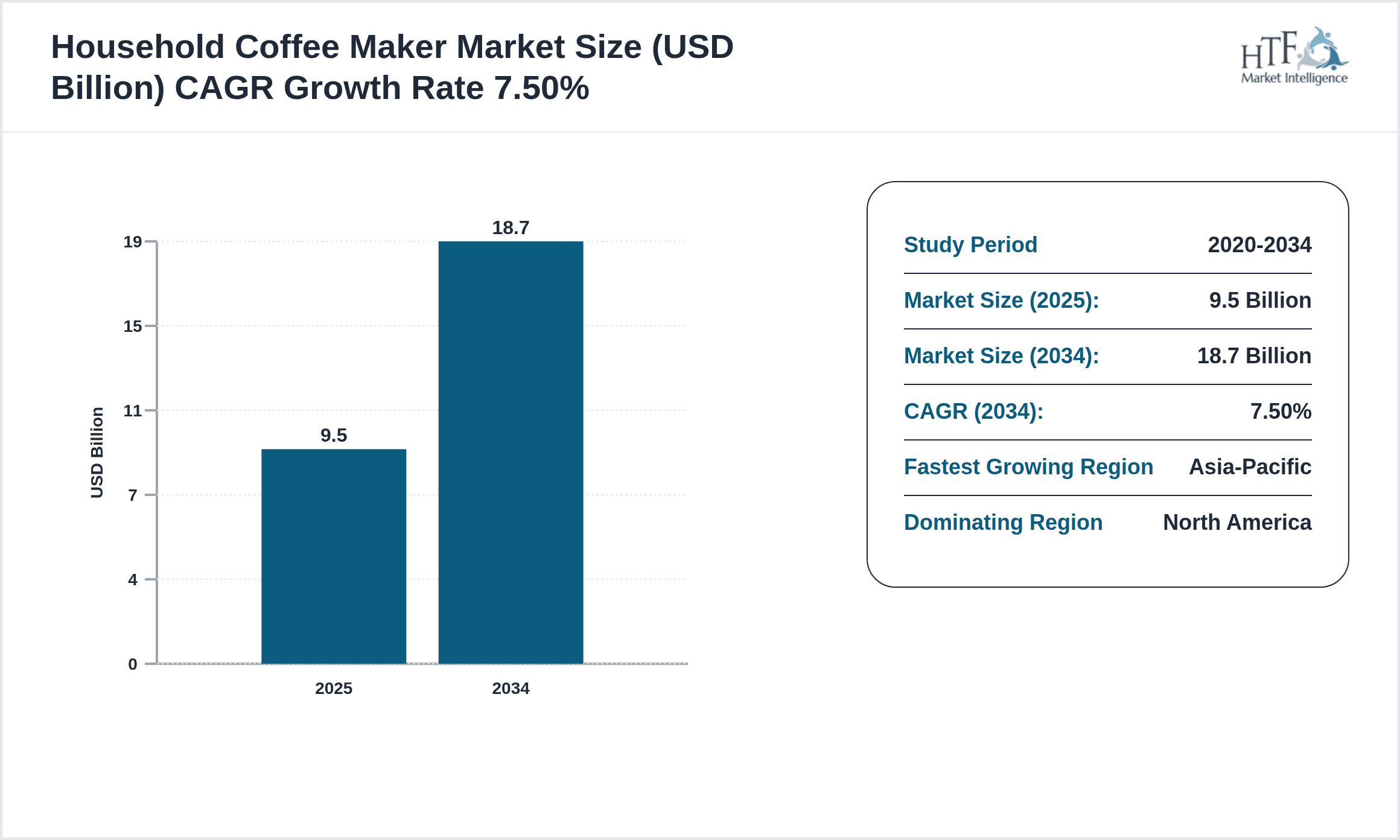
- •Key market highlights include a robust CAGR of 7.5% projected from 2025 to 2034, with the market size expected to nearly double from USD 9.5 billion in 2025 to USD 18.7 billion by 2034. Automatic coffee makers lead the product category, accounting for the largest market share, while capsule coffee makers represent the fastest growing segment due to convenience and variety offered. Application-wise, espresso coffee makers dominate, followed by drip coffee systems, reflecting consumer preferences for specialty coffee styles. Regionally, North America holds the largest market share supported by sophisticated retail networks and premium consumer base, whereas Asia-Pacific is poised for rapid growth propelled by urbanization and lifestyle shifts. These data points emphasize the sector’s significant potential and evolving consumer dynamics, providing valuable insights for stakeholders to strategize and capitalize on emerging trends.
- •The household coffee maker market offers considerable value propositions to manufacturers, retailers, and consumers by bridging convenience with quality brewing experiences at home. For industries, the market’s growth translates into expanding opportunities in product innovation, distribution channels, and digital integration, fostering competitive advantage. Consumers benefit from a wide range of options catering to diverse taste preferences, budgets, and lifestyles. The strategic importance of this market lies in its capacity to harness rising coffee culture globally, drive sustainable product development, and leverage smart appliance trends. Stakeholders can harness insights on regional growth patterns, technological advancements, and shifting consumer behaviors to optimize product portfolios, marketing strategies, and investment decisions, ensuring sustained value creation in this vibrant market sector.
Competitive Landscape
The competitive landscape of the global household coffee maker market is characterized by intense rivalry among established multinational corporations and emerging regional players striving to innovate and capture consumer loyalty. Market participants focus heavily on product differentiation through technological advancements such as smart connectivity, energy efficiency, and user-friendly interfaces to enhance brewing experiences. Strategic partnerships, acquisitions, and collaborative ventures are common as companies aim to expand geographic footprints and diversify product portfolios. Pricing strategies vary from premium to affordable models, targeting diverse consumer segments worldwide. Distribution channels encompass online platforms, specialty stores, and mass retailers, enabling widespread market penetration. Innovation pipelines emphasize capsule systems and automatic machines, reflecting consumer demand for convenience and customization. Barriers to entry include high R&D costs and brand loyalty, while regulatory compliance and sustainability also shape competitive tactics. Overall, the market is poised for consolidation alongside rapid innovation as players seek to maintain leadership in a growing, fragmented industry.
Leading Companies in Household Coffee Maker Market
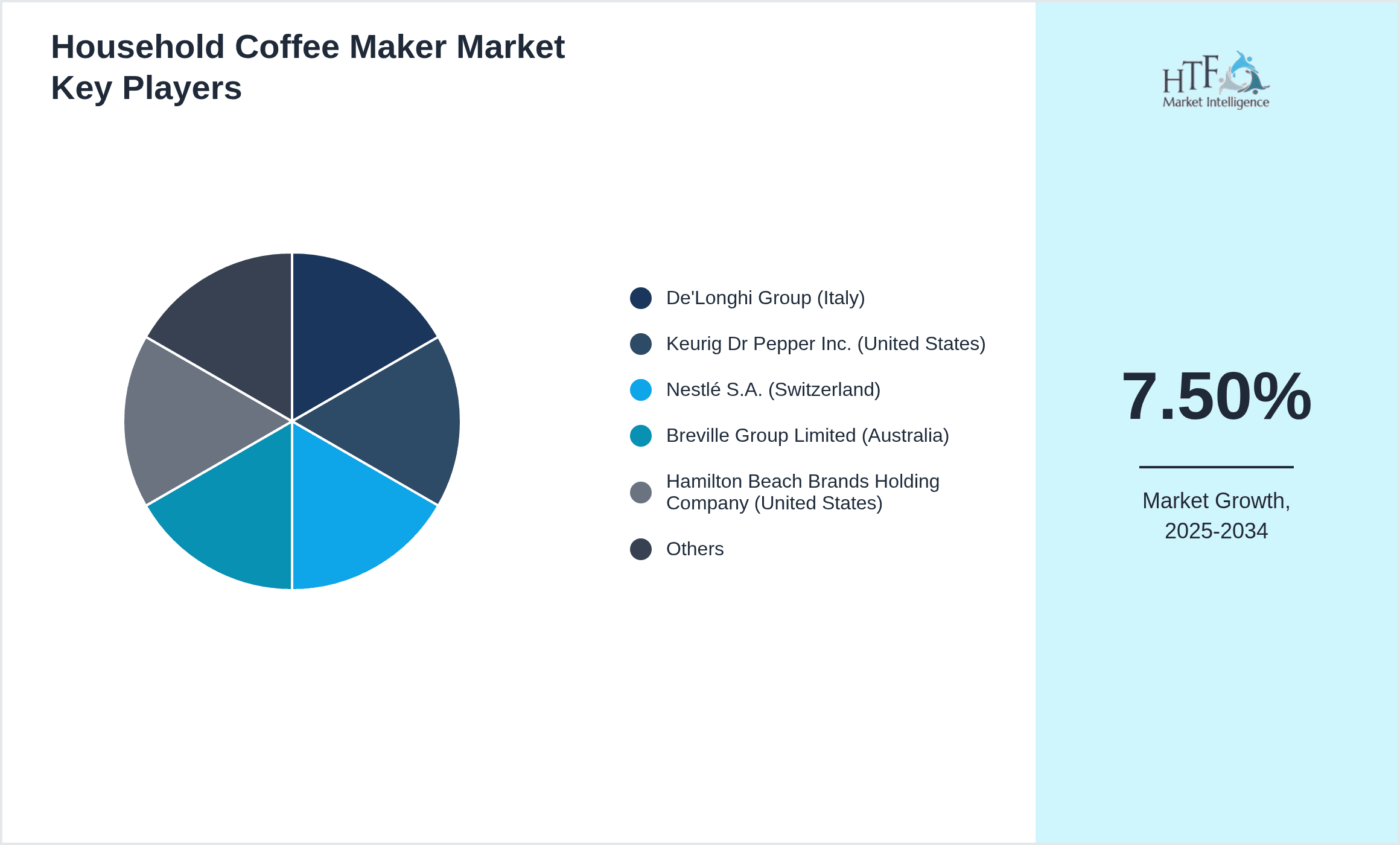
- •De'Longhi Group (Italy)
- •Keurig Dr Pepper Inc. (United States)
- •Nestlé S.A. (Switzerland)
- •Breville Group Limited (Australia)
- •Hamilton Beach Brands Holding Company (United States)
- •Jura Elektroapparate AG (Switzerland)
- •Melitta Group (Germany)
- •Krups (France)
- •Philips Domestic Appliances (Netherlands)
- •Bunn-O-Matic Corporation (United States)
- •Cuisinart (United States)
- •Saeco International Group (Italy)
- •Smeg S.p.A. (Italy)
- •Nespresso (Switzerland)
- •Russell Hobbs (United Kingdom)
- •Panasonic Corporation (Japan)
- •Sunbeam Products, Inc. (United States)
- •Black & Decker (United States)
- •Zojirushi Corporation (Japan)
- •DeLonghi Appliances S.r.l. (Italy)
Market Breakdown
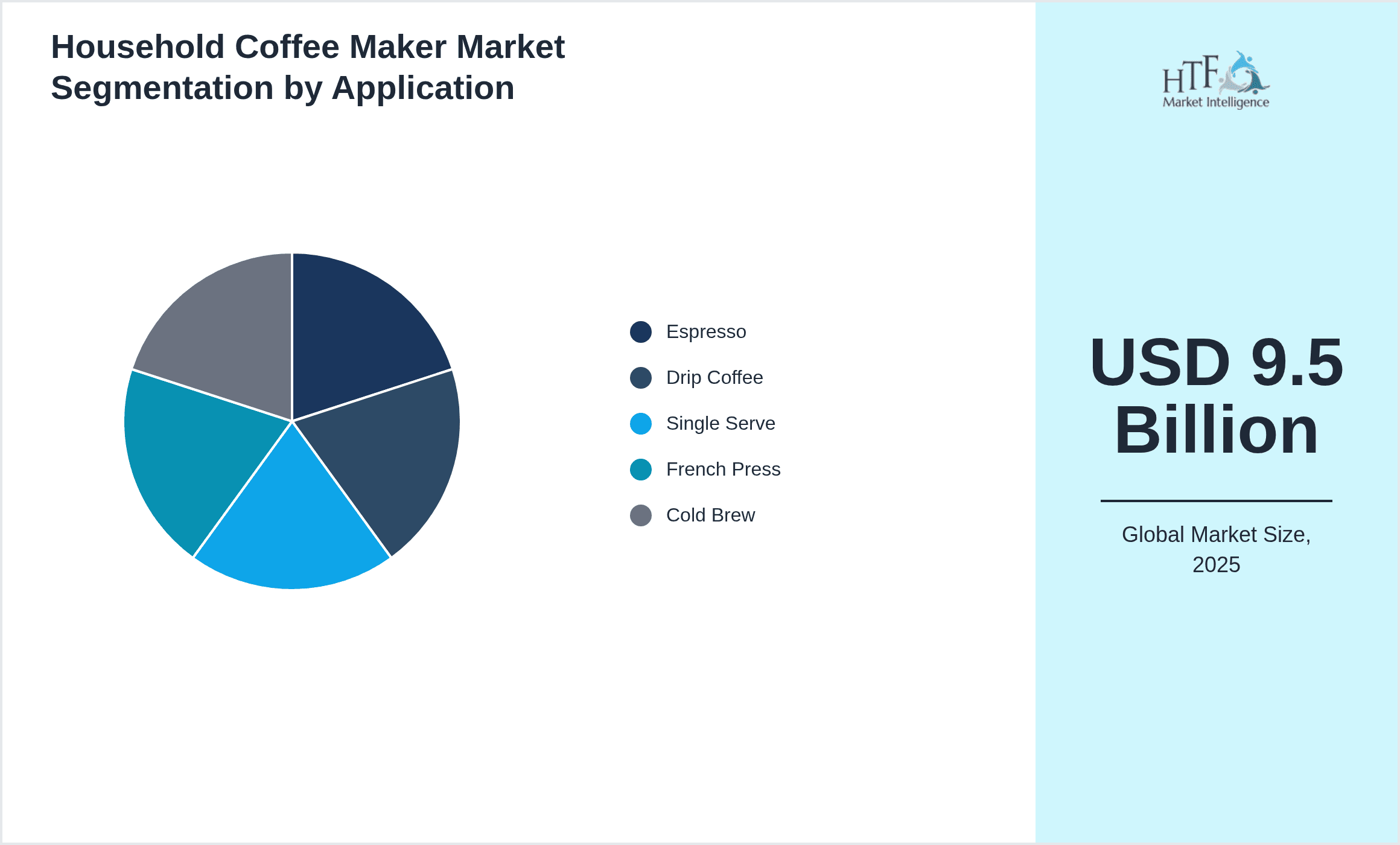
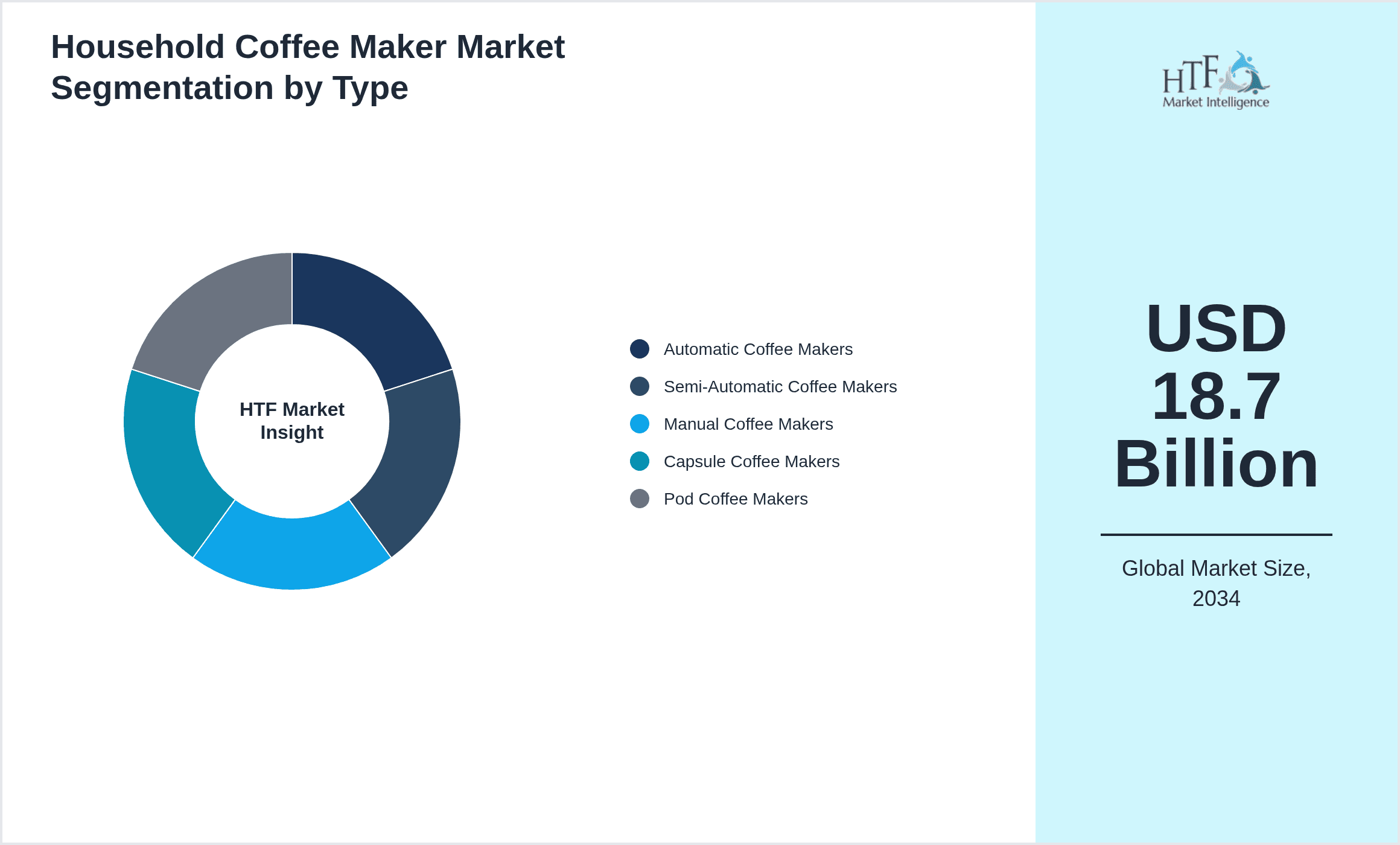
- •By Type
- ◦Automatic Coffee Makers
- ◦Semi-Automatic Coffee Makers
- ◦Manual Coffee Makers
- ◦Capsule Coffee Makers
- ◦Pod Coffee Makers
- •By Application
- ◦Espresso
- ◦Drip Coffee
- ◦Single Serve
- ◦French Press
- ◦Cold Brew
- •By Distribution Channel
- ◦Online Retail
- ◦Specialty Stores
- ◦Supermarkets & Hypermarkets
- ◦Direct Sales
- •By Technology Integration
- ◦Smart Coffee Makers
- ◦Non-Smart Coffee Makers
Growth Dynamics
The growth of the global household coffee maker market is primarily driven by increasing coffee consumption worldwide, particularly among younger demographics embracing home brewing culture. Rising disposable incomes in emerging economies are enabling consumers to invest in premium and technologically advanced coffee machines. Additionally, urbanization and changing lifestyles promote demand for convenient, quick coffee preparation methods, favoring automatic and capsule coffee makers. Manufacturers are responding with innovative features like app connectivity and energy-saving modes, further stimulating adoption. The surge in e-commerce facilitates easy access to diverse product ranges, enhancing market penetration globally. Environmental awareness is encouraging the development of sustainable and reusable pod options, aligning with consumer preferences. Collectively, these factors contribute to a robust market expansion trajectory, with Asia-Pacific emerging as a significant growth hotspot due to lifestyle modernization and expanding middle-class populations.
Market Trends
Current trends in the household coffee maker market include a marked shift towards smart appliances featuring IoT integration, enabling remote control and personalized brewing profiles. Capsule coffee makers continue to gain traction for their convenience and variety, driving innovation in recyclable and biodegradable pods. Sustainability is a growing focus, with manufacturers adopting eco-friendly materials and energy-efficient designs to meet consumer demand and regulatory pressures. Additionally, premiumization is evident as consumers seek barista-quality experiences at home, encouraging the launch of advanced espresso and drip coffee machines. The rise of online sales channels is reshaping distribution, offering consumers extensive product options and reviews. Regional preferences, such as cold brew popularity in North America and espresso in Europe, influence specialized product offerings. These trends collectively shape product development and marketing strategies within the global competitive landscape.
Market Opportunities
Strategic opportunities in the household coffee maker market lie in expanding presence within emerging markets, particularly in Asia-Pacific and Latin America, where rising incomes and coffee culture adoption are accelerating demand. Innovations in smart technology and sustainable materials present avenues for differentiation and premium product development. The growing trend of health-conscious consumers opens potential for coffee makers with integrated filtration and customizable brewing strength features. Collaborations with coffee pod manufacturers can enhance product ecosystems, driving customer retention. Additionally, expanding e-commerce platforms provide scalable distribution channels, enabling targeted marketing and direct consumer engagement. Leveraging data analytics to personalize offerings and improve user experience is another key opportunity for market players aiming to strengthen brand loyalty and capture new segments.
Market Challenges
The household coffee maker market faces challenges such as high initial investment costs for advanced automatic and capsule machines, which may deter price-sensitive consumers, especially in developing regions. Environmental concerns regarding single-use pods and their disposal pose reputational risks and regulatory hurdles, requiring innovation in sustainable alternatives. Intense competition among numerous players results in pricing pressures and margin erosion, complicating profitability. Supply chain disruptions and component shortages can delay product launches and impact availability. Additionally, varying consumer preferences across regions necessitate tailored product strategies, increasing operational complexity. Compliance with diverse international standards and evolving regulations further complicates market entry and expansion efforts. Addressing these challenges demands strategic innovation, cost optimization, and proactive sustainability initiatives to maintain growth momentum.
Regulatory Framework
Regulatory oversight in the household coffee maker market has intensified globally between 2020 and 2025, focusing on energy efficiency, electrical safety, and environmental impact. Regions such as the European Union have implemented stricter energy labeling requirements and eco-design directives mandating reduced power consumption and increased recyclability of components. North America enforces rigorous safety certifications to ensure consumer protection against electrical hazards. Additionally, regulations addressing single-use plastics and waste management, particularly concerning coffee pods, are shaping product design and material use. Manufacturers must comply with diverse standards across regions, including RoHS, REACH, and WEEE directives, to access key markets. Governments are also promoting sustainable manufacturing practices through incentives, encouraging innovation in biodegradable pods and energy-saving technologies. These regulatory frameworks are pivotal in guiding product development, marketing claims, and corporate sustainability strategies in the global coffee maker industry.
Market Intelligence
- •15th January 2025, De'Longhi Group launched its latest smart automatic coffee maker featuring AI-driven brewing customization and energy-saving functions tailored for global consumers seeking premium home coffee experiences. This product integrates app connectivity allowing users to control brewing remotely and save personalized profiles. The launch strengthens De'Longhi's competitive positioning in the smart appliance segment, targeting urban markets with rising demand for convenience and quality. The advanced features are expected to boost adoption rates, particularly in North America and Europe, where consumers prioritize innovation and sustainability. Source: De'Longhi Official Website
- •10th March 2025, Keurig Dr Pepper Inc. introduced a new line of fully recyclable coffee pods compatible with its popular single-serve machines, addressing environmental concerns and regulatory pressures. The initiative aligns with growing consumer demand for sustainable products and positions the company as a leader in eco-friendly coffee solutions. The recyclable pods maintain flavor integrity while reducing landfill waste, supporting global sustainability goals. This development is anticipated to enhance brand loyalty and expand market share in regions with strict environmental regulations such as Europe and North America. Source: Keurig Press Release
- •5th May 2025, Nestlé S.A. announced a strategic partnership with a leading smart home technology firm to integrate voice-activated controls and personalized coffee brewing presets into its Nespresso machines. This innovation aims to capture tech-savvy consumers and expand penetration in Asia-Pacific and North America. The collaboration enhances user convenience and aligns with the trend of connected kitchen appliances, offering seamless integration with popular smart home ecosystems. Expected to launch by late 2025, this initiative underscores Nestlé’s commitment to innovation and market leadership. Source: Nestlé Corporate Announcement
- •20th July 2025, Breville Group Limited expanded its global footprint by acquiring a specialized coffee pod manufacturer based in Europe, aiming to diversify its product offerings and strengthen supply chain resilience. The acquisition will enable Breville to accelerate development of proprietary capsule systems and enhance market responsiveness to consumer trends. This strategic move supports Breville’s growth ambitions in the premium segment and reinforces its presence across North America and Europe. The integration is expected to generate synergies in R&D and distribution within the next fiscal year. Source: Breville Investor Relations
Regional Outlook
The North America currently holds a significant share of the market, primarily due to several key factors: increasing consumption rates, a burgeoning population, and robust economic momentum. These elements collectively drive demand, positioning this region as a leader in the market. On the other hand, Asia-Pacific is rapidly emerging as the fastest-growing area within the industry. This remarkable growth can be attributed to swift infrastructure development, the expansion of various industrial sectors, and a marked increase in consumer demand. These dynamics make this region a crucial player in shaping future market growth.
In our report, we cover a comprehensive analysis of the following regions and countries:
- North America
- LATAM
- West Europe
- Central & Eastern Europe
- Northern Europe
- Southern Europe
- East Asia
- Southeast Asia
- South Asia
- Central Asia
- Oceania
- MEA
| Feature | Details |
|---|---|
| Base Year Market Size | USD 9.5 Billion |
| Forecast Year Market Size | USD 18.7 Billion |
| CAGR | 7.5% |
| Forecast Period | 2026 to 2033 |
| YoY Growth | 7.2% |
| Scope of Report | Market is segmented by Type (Automatic Coffee Makers, Semi-Automatic Coffee Makers, Manual Coffee Makers, Capsule Coffee Makers, Pod Coffee Makers), Application (Espresso, Drip Coffee, Single Serve, French Press, Cold Brew), Distribution Channel (Online Retail, Specialty Stores, Supermarkets & Hypermarkets, Direct Sales), Technology Integration (Smart Coffee Makers, Non-Smart Coffee Makers) |
| Regions Covered | North America, LATAM, West Europe, Central & Eastern Europe, Northern Europe, Southern Europe, East Asia, Southeast Asia, South Asia, Central Asia, Oceania, MEA |
| Key Companies | De'Longhi Group (Italy), Keurig Dr Pepper Inc. (United States), Nestlé S.A. (Switzerland), Breville Group Limited (Australia), Hamilton Beach Brands Holding Company (United States), Jura Elektroapparate AG (Switzerland), Melitta Group (Germany), Krups (France), Philips Domestic Appliances (Netherlands), Bunn-O-Matic Corporation (United States), Cuisinart (United States), Saeco International Group (Italy), Smeg S.p.A. (Italy), Nespresso (Switzerland), Russell Hobbs (United Kingdom), Panasonic Corporation (Japan), Sunbeam Products, Inc. (United States), Black & Decker (United States), Zojirushi Corporation (Japan), DeLonghi Appliances S.r.l. (Italy) |
Global Household Coffee Maker Market - Outlook 2025-2034 - Table of Contents
Research enthusiast focused on transforming data uncovering into actionable insights through data-driven decision-making.
Frequently Asked Questions (FAQ):
The Compact Track Loaders market is projected to grow at a CAGR of 6.8% from 2025 to 2030, driven by increasing demand in construction and agricultural sectors.
North America currently leads the market with approximately 45% market share, followed by Europe at 28% and Asia-Pacific at 22%. The remaining regions account for 5% of the global market.
Key growth drivers include increasing construction activities, rising demand for versatile equipment in agriculture, technological advancements in track loader design, and growing preference for compact equipment in urban construction projects.