
Global Intelligent Asthma Monitoring Devices Market Scope & Changing Dynamics 2025-2034
Global Intelligent Asthma Monitoring Devices Market is segmented by Type (Wearable Devices, Portable Spirometers, Smart Inhalers, Mobile Apps, Environmental Sensors), Application (Home Care, Hospital, Clinics, Emergency Services, Telehealth), Connectivity Technology (Bluetooth, Wi-Fi, Cellular, Zigbee), End User (Pediatric Patients, Adult Patients, Geriatric Patients), and Geography (North America, LATAM, West Europe, Central & Eastern Europe, Northern Europe, Southern Europe, East Asia, Southeast Asia, South Asia, Central Asia, Oceania, MEA)
Pricing
Report Overview
Executive Summary
- •The Global Intelligent Asthma Monitoring Devices market involves a variety of cutting-edge technologies and products aimed at enhancing asthma management through continuous monitoring and data-driven insights. It includes a broad spectrum of devices such as wearable monitors, portable spirometers, smart inhalers integrated with sensors, mobile applications that track symptoms and medication use, and environmental sensors that detect air quality and allergens. These technologies empower patients and healthcare providers by enabling early detection of asthma exacerbations and facilitating personalized treatment plans. The market spans multiple applications across home care setups, hospitals, clinics, emergency medical services, and telehealth platforms, reflecting the diverse contexts in which asthma management occurs. The evolution of this market is driven by the rising global incidence of asthma, technological innovations in IoT and AI, and increased healthcare digitization. These devices contribute to reducing emergency visits, hospital admissions, and improving overall quality of life for asthma sufferers worldwide.
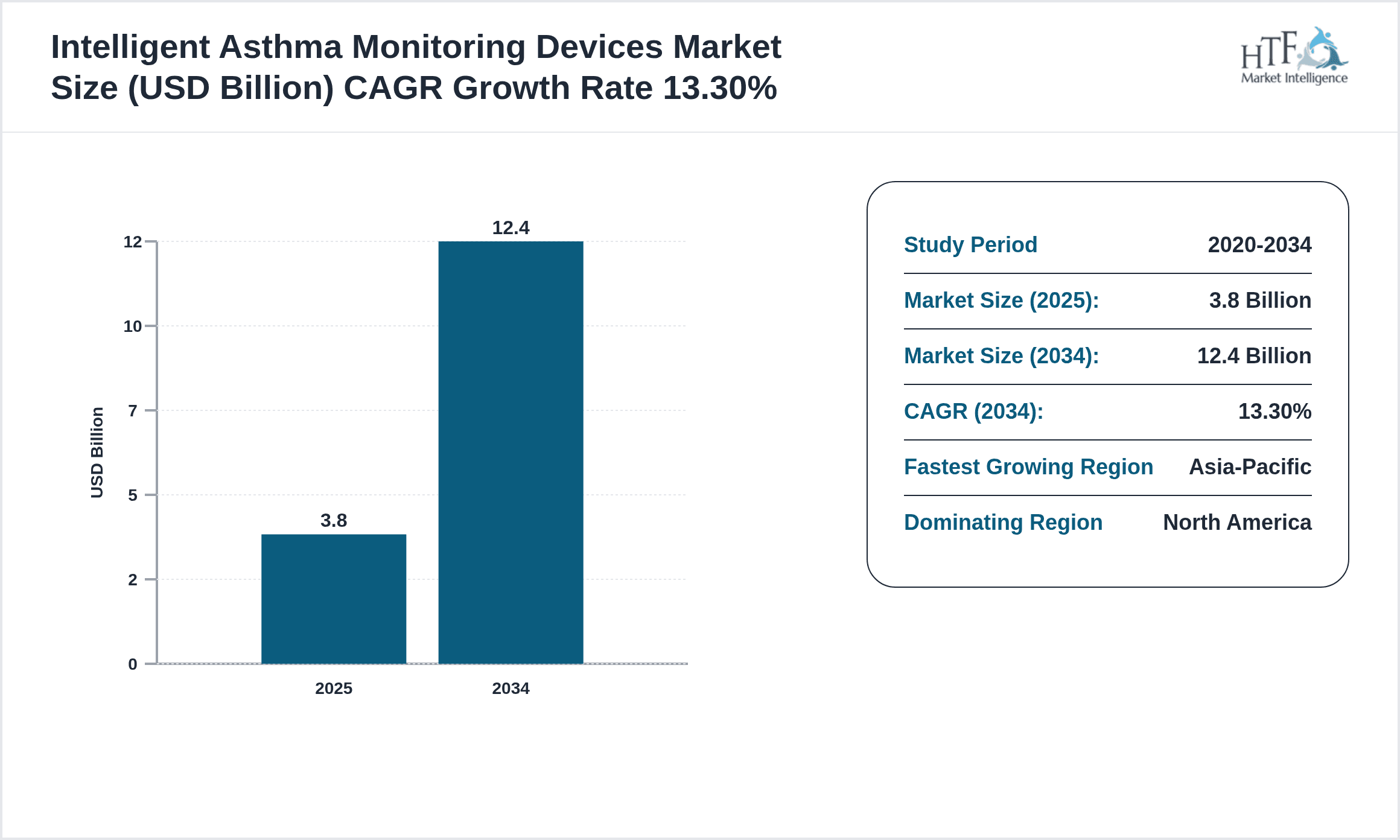
- •Significant growth indicators include a compound annual growth rate of 13.3% projected from 2025 through 2034, with the market size expanding from USD 3.8 Billion in 2025 to USD 12.4 Billion by 2034. North America leads the market due to advanced healthcare infrastructure and high adoption of digital health technologies, while Asia-Pacific offers the fastest growth driven by increasing asthma prevalence and improving healthcare access. Wearable devices dominate product types owing to their convenience and real-time monitoring capabilities, whereas smart inhalers experience rapid adoption due to integration with digital adherence tracking. Key applications such as home care and telehealth are gaining traction amidst rising patient preference for remote health management solutions. These data points underscore the expanding relevance and commercial potential of intelligent asthma monitoring technologies globally.
- •Intelligent asthma monitoring devices present critical value propositions by enabling early intervention, optimizing medication use, and minimizing severe asthma attacks. This market holds strategic importance for healthcare providers seeking to improve patient outcomes through continuous monitoring and data analytics. For patients, these devices offer enhanced convenience and control over their condition, reducing dependence on emergency care. Payers benefit from decreased hospitalization costs and improved chronic disease management. Additionally, technology developers and healthcare startups gain opportunities for innovation and market penetration. The converging trends of digital health adoption and rising respiratory disease burden position this market as a vital segment within the broader connected healthcare and medical devices industry.
Competitive Landscape
The competitive environment in the Global Intelligent Asthma Monitoring Devices market is characterized by extensive innovation, strategic partnerships, and global expansion efforts. Leading companies focus on developing integrated platforms combining hardware and software to deliver comprehensive asthma management solutions. Collaboration with healthcare providers and technology firms accelerates product development and market reach. Companies invest heavily in R&D to incorporate artificial intelligence, machine learning, and cloud connectivity that enhance data accuracy and predictive analytics. Strategic alliances with pharmaceutical companies facilitate integration with drug delivery systems such as smart inhalers. Market players adopt competitive pricing strategies and expand distribution through partnerships with hospitals, clinics, and telehealth providers to enhance accessibility. Mergers and acquisitions serve to consolidate market positions and broaden product portfolios. Regional market penetration strategies emphasize tailoring solutions to local regulatory requirements and asthma prevalence patterns, ensuring sustained growth and competitive advantage globally.
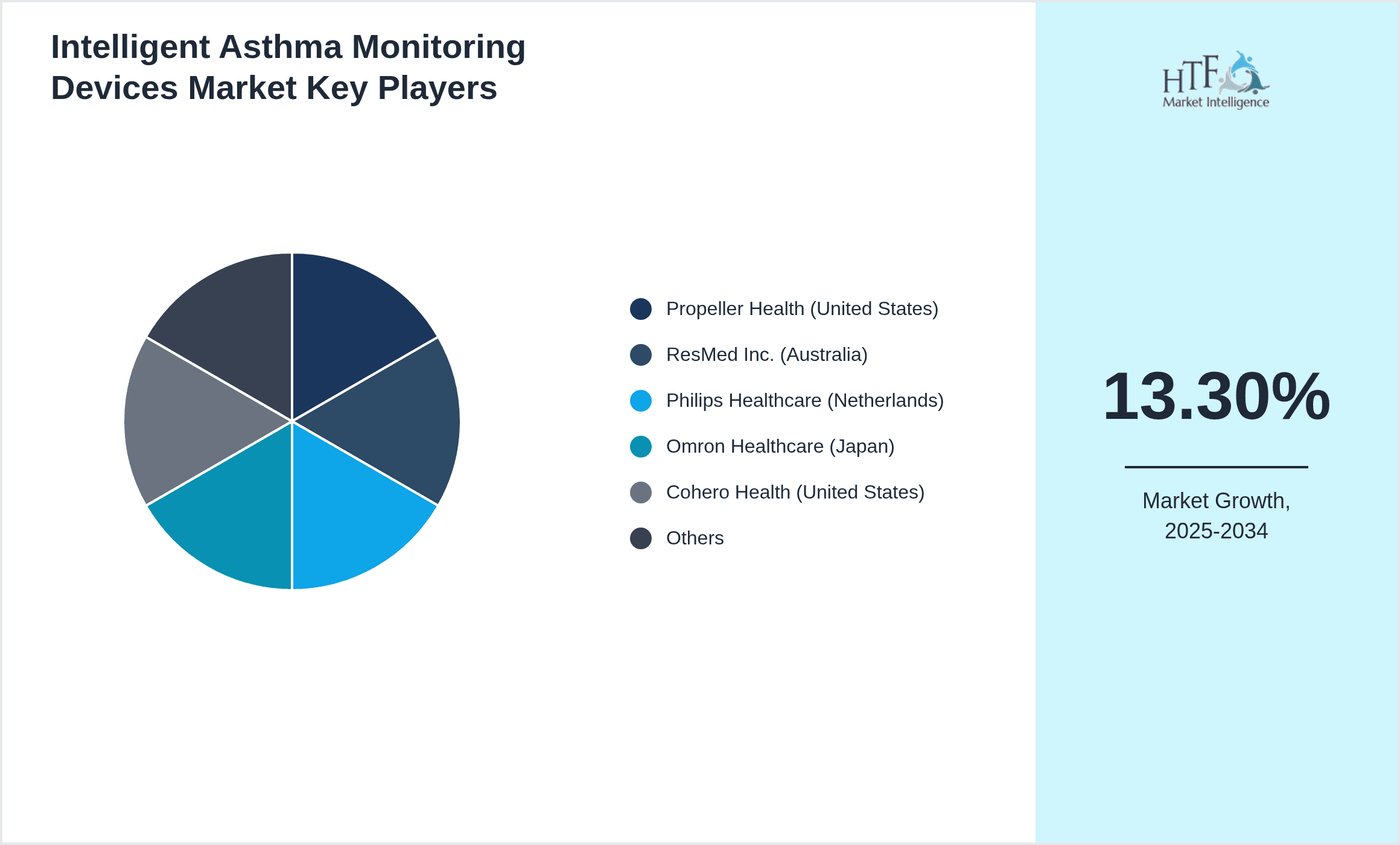
Prominent Players in Intelligent Asthma Monitoring Devices Market
- •Propeller Health (United States)
- •ResMed Inc. (Australia)
- •Philips Healthcare (Netherlands)
- •Omron Healthcare (Japan)
- •Cohero Health (United States)
- •Adherium (New Zealand)
- •Bosch Healthcare Solutions (Germany)
- •Teva Pharmaceuticals (Israel)
- •Medtronic plc (Ireland)
- •CareTRx (United States)
- •Vitalograph (United Kingdom)
- •Circassia Pharmaceuticals (United Kingdom)
- •Cohero Health (United States)
- •AsthmaMD (United States)
- •NuvoAir (Sweden)
- •Zeply Health (United States)
- •Propeller Health (United States)
- •Biosensorix (United States)
- •Adherium (New Zealand)
- •Inspiro Medical (United States)
Market Breakdown
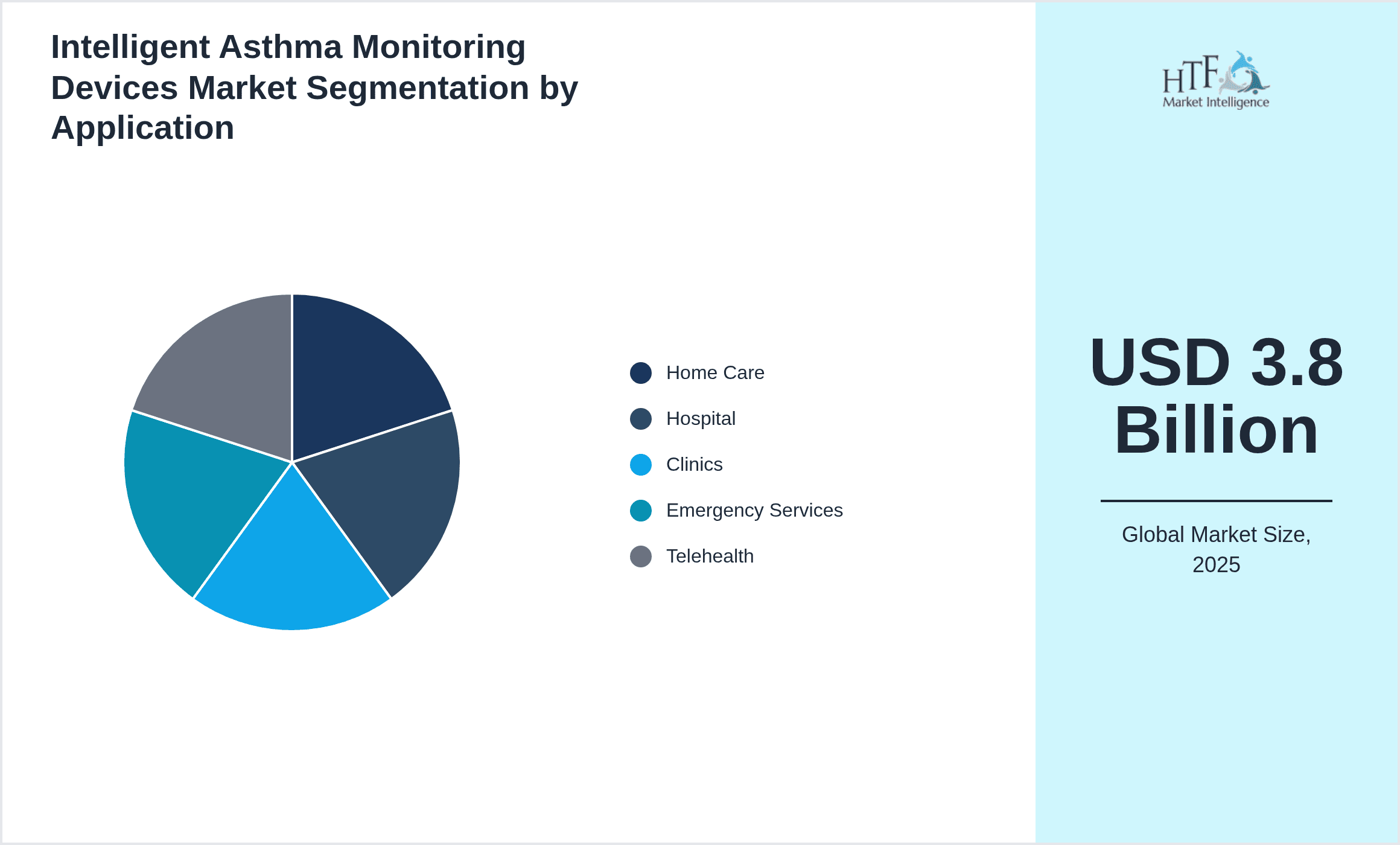
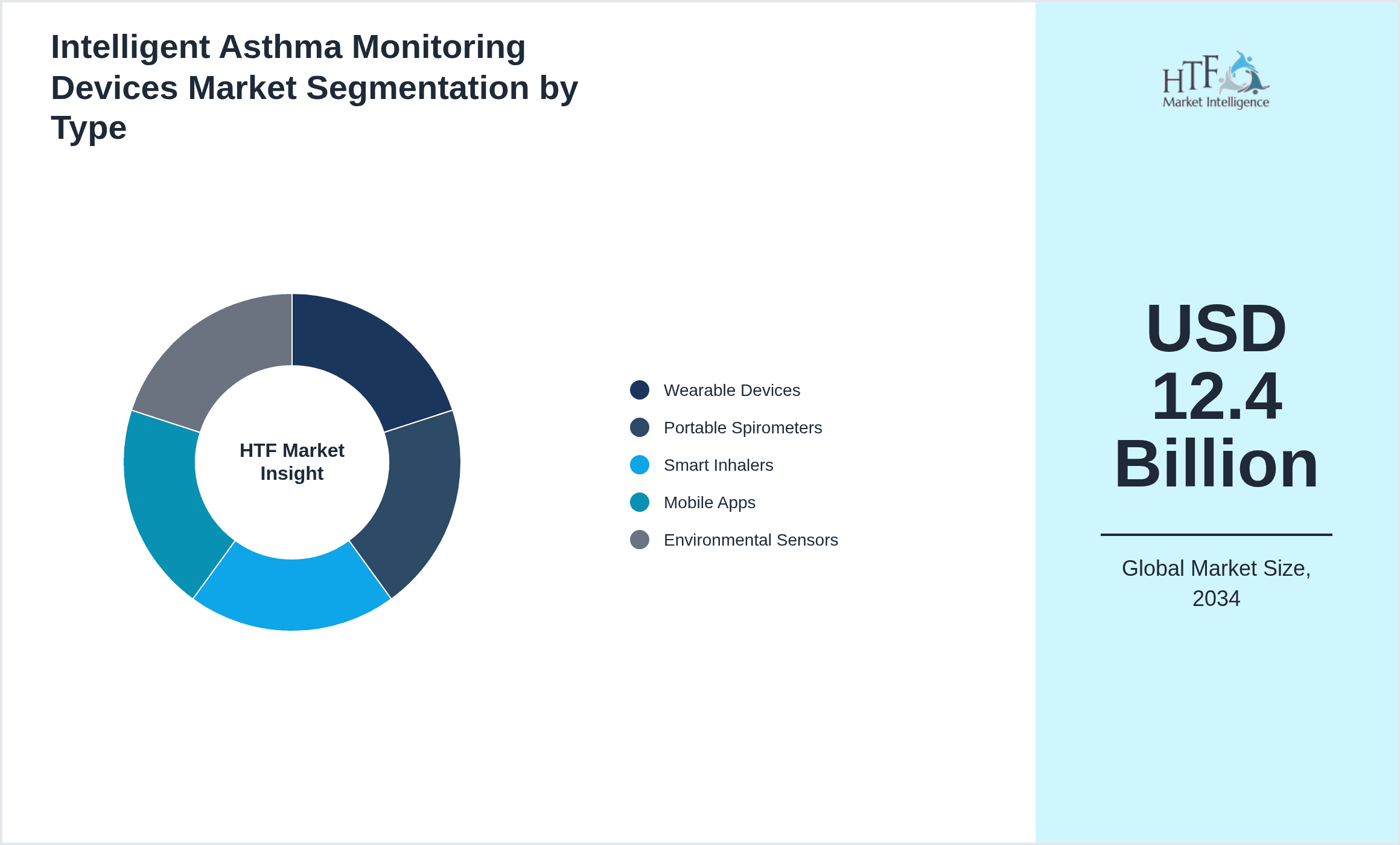
- •By Type
- ◦Wearable Devices
- ◦Portable Spirometers
- ◦Smart Inhalers
- ◦Mobile Apps
- ◦Environmental Sensors
- •By Application
- ◦Home Care
- ◦Hospital
- ◦Clinics
- ◦Emergency Services
- ◦Telehealth
- •By Connectivity Technology
- ◦Bluetooth
- ◦Wi-Fi
- ◦Cellular
- ◦Zigbee
- •By End User
- ◦Pediatric Patients
- ◦Adult Patients
- ◦Geriatric Patients
Growth Dynamics
Rising asthma prevalence globally propels demand for intelligent monitoring devices that offer precise, real-time respiratory data. Increasing urban pollution and allergens exacerbate asthma symptoms, making continuous monitoring critical. Growing patient awareness and preference for home-based care drive adoption of wearable and portable devices. Technological advances in IoT, AI, and cloud computing facilitate development of sophisticated monitoring solutions with predictive analytics and remote access, enhancing disease management efficacy. Government initiatives promoting digital health and chronic disease management further stimulate sector growth. Recent launches such as Propeller Health’s enhanced smart inhaler platform demonstrate market momentum. Integration of telehealth services accelerates adoption by enabling remote consultations and timely interventions, reducing hospital visits and healthcare costs. These factors collectively foster robust market expansion across regions.
Market Trends
Integration of artificial intelligence and machine learning into asthma monitoring devices enables predictive analytics that forecast exacerbations ahead of time, improving patient outcomes. Increasing interoperability of devices with electronic health records supports personalized treatment plans and data-driven clinical decisions. The rise of telehealth platforms facilitates continuous remote monitoring and virtual care, expanding the reach of asthma management solutions. Wearable devices are evolving towards smaller form factors with enhanced battery life and multi-parameter sensors, increasing user comfort and data accuracy. Strategic collaborations between medical device companies and pharmaceutical firms accelerate innovation in smart inhalers with digital adherence monitoring. Sustainability trends encourage development of eco-friendly device materials and energy-efficient technologies. Regional focus on emerging markets in Asia-Pacific and Latin America introduces new growth avenues driven by rising asthma incidence and improving healthcare infrastructure.
Market Opportunities
Emerging markets in Asia-Pacific and Latin America offer vast growth opportunities due to increasing asthma prevalence and improving healthcare access. Innovations in AI-enabled predictive monitoring and integration with smart home ecosystems open new product development avenues. Expansion of telehealth and mobile health solutions enables broader adoption in rural and under-served areas. Collaborations with pharmaceutical companies to bundle asthma medications with digital monitoring devices enhance patient adherence and generate new revenue streams. Growing consumer demand for personalized healthcare drives development of customized monitoring solutions tailored to pediatric, adult, and geriatric populations. Investment in data security and privacy features strengthens user trust and regulatory compliance, facilitating market entry. Additionally, rising environmental awareness creates demand for devices that monitor air quality alongside respiratory parameters, providing comprehensive asthma management.
Market Challenges
High device costs and limited reimbursement policies restrict widespread adoption, particularly in developing regions where asthma burden is rising rapidly. Data privacy concerns and regulatory complexities around medical device approvals pose barriers to market entry and scaling. Variability in patient compliance and technological literacy affects device usage consistency, impacting data quality and clinical outcomes. Fragmented healthcare systems hinder integration of monitoring data into centralized electronic health records. Challenges in achieving interoperability among diverse devices and platforms complicate seamless asthma management. Supply chain disruptions and component shortages affect production timelines and increase costs. Furthermore, lack of standardization in device performance and data reporting creates market uncertainty for stakeholders. These challenges require coordinated efforts among manufacturers, regulators, payers, and healthcare providers to ensure sustainable market growth.
Regulatory Framework
Recent regulatory developments focus on enhancing safety, efficacy, and data security of intelligent asthma monitoring devices. The United States FDA introduced updated guidelines in 2021 for digital health technologies emphasizing real-world evidence and cybersecurity measures. The European Union implemented the Medical Device Regulation in 2021 with stringent requirements for device clinical evaluation and post-market surveillance. In Asia-Pacific, countries like Japan and Australia have adopted expedited approval pathways for innovative digital health solutions to promote rapid market access. Data protection laws such as GDPR in Europe and HIPAA in the US mandate strict patient data confidentiality, influencing device design and data handling practices. These regulations collectively shape market dynamics by ensuring high product standards and fostering consumer trust, while imposing compliance costs that impact industry players.
Market Intelligence
Recent market developments and strategic initiatives are continuously tracked through industry publications, company announcements, and regulatory filings. For the most current information, stakeholders are advised to monitor official corporate communications and recognized market intelligence platforms.
Regional Outlook
The North America currently holds a significant share of the market, primarily due to several key factors: increasing consumption rates, a burgeoning population, and robust economic momentum. These elements collectively drive demand, positioning this region as a leader in the market. On the other hand, Asia-Pacific is rapidly emerging as the fastest-growing area within the industry. This remarkable growth can be attributed to swift infrastructure development, the expansion of various industrial sectors, and a marked increase in consumer demand. These dynamics make this region a crucial player in shaping future market growth.
In our report, we cover a comprehensive analysis of the following regions and countries:
- North America
- LATAM
- West Europe
- Central & Eastern Europe
- Northern Europe
- Southern Europe
- East Asia
- Southeast Asia
- South Asia
- Central Asia
- Oceania
- MEA
| Feature | Details |
|---|---|
| Base Year Market Size | USD 3.8 Billion |
| Forecast Year Market Size | USD 12.4 Billion |
| CAGR | 13.3% |
| Forecast Period | 2026 to 2033 |
| YoY Growth | 12.5% |
| Scope of Report | Market is segmented by Type (Wearable Devices, Portable Spirometers, Smart Inhalers, Mobile Apps, Environmental Sensors), Application (Home Care, Hospital, Clinics, Emergency Services, Telehealth), Connectivity Technology (Bluetooth, Wi-Fi, Cellular, Zigbee), End User (Pediatric Patients, Adult Patients, Geriatric Patients) |
| Regions Covered | North America, LATAM, West Europe, Central & Eastern Europe, Northern Europe, Southern Europe, East Asia, Southeast Asia, South Asia, Central Asia, Oceania, MEA |
| Key Companies | Propeller Health (United States), ResMed Inc. (Australia), Philips Healthcare (Netherlands), Omron Healthcare (Japan), Cohero Health (United States), Adherium (New Zealand), Bosch Healthcare Solutions (Germany), Teva Pharmaceuticals (Israel), Medtronic plc (Ireland), CareTRx (United States), Vitalograph (United Kingdom), Circassia Pharmaceuticals (United Kingdom), Cohero Health (United States), AsthmaMD (United States), NuvoAir (Sweden), Zeply Health (United States), Propeller Health (United States), Biosensorix (United States), Adherium (New Zealand), Inspiro Medical (United States) |
Global Intelligent Asthma Monitoring Devices Market Scope & Changing Dynamics 2025-2034 - Table of Contents
Frequently Asked Questions (FAQ):
The Compact Track Loaders market is expected to see value worth 5.3 Billion in 2025.
North America currently leads the market with approximately 45% market share, followed by Europe at 28% and Asia-Pacific at 22%. The remaining regions account for 5% of the global market.
Key growth drivers include increasing construction activities, rising demand for versatile equipment in agriculture, technological advancements in track loader design, and growing preference for compact equipment in urban construction projects.