
Global Payroll Management System Market Size, Growth & Revenue 2025-2034
Global Payroll Management System Market is segmented by Type (Cloud-based Payroll Management System, On-premise Payroll Management System, Hybrid Payroll Management System, Hosted Payroll Services, Managed Payroll Services), Application (Small and Medium Enterprises, Large Enterprises, Government Organizations, Healthcare Sector, Banking, Financial Services and Insurance), Deployment Model (Public Cloud, Private Cloud, Hybrid Cloud), Service Model (Software as a Service, Platform as a Service, Infrastructure as a Service), and Geography (North America, LATAM, West Europe, Central & Eastern Europe, Northern Europe, Southern Europe, East Asia, Southeast Asia, South Asia, Central Asia, Oceania, MEA)
Pricing
Report Overview
Executive Summary
- •The global Payroll Management System market integrates advanced software solutions designed to automate and optimize payroll processing for a variety of organizations including SMEs, large enterprises, government agencies, healthcare, and BFSI sectors. These systems encompass diverse deployment models such as cloud-based, on-premise, hybrid, hosted, and managed services that address critical functions like salary computation, tax compliance, benefits administration, and real-time payroll analytics. The market’s scope extends worldwide, driven by digitalization trends, increasing complexity of labor laws, and rising demand for efficient, secure payroll automation. Payroll Management Systems enhance operational efficiency by reducing manual errors, ensuring regulatory compliance, and providing scalable, flexible solutions adaptable to dynamic workforce requirements. The integration of AI and machine learning technologies is further transforming payroll processing, enabling predictive analytics and improved decision-making. This market holds strategic importance across industries for improving employee satisfaction, reducing costs, and enhancing organizational productivity, making it a critical component of modern HR infrastructure globally.
- •Key market highlights reveal a robust CAGR of 10.2% from 2025 to 2034, driven by rapid adoption of cloud-based payroll solutions and increasing regulatory compliance mandates worldwide. The market size, valued at USD 12.5 Billion in 2025, is forecasted to reach USD 31.2 Billion by 2034, reflecting strong growth potential. North America dominates the market with the highest share due to early technology adoption and stringent labor regulations, while Asia-Pacific exhibits the fastest growth propelled by expanding SME sectors and digital transformation initiatives. Cloud-based payroll systems lead product types with the largest market share, whereas hybrid systems demonstrate the fastest growth rate due to their flexibility. Application-wise, SMEs are the dominating segment, leveraging scalable payroll solutions, with large enterprises closely following. These growth indicators underscore the increasing reliance on automated payroll systems to enhance operational efficiency and compliance.
- •The Payroll Management System market presents significant value propositions including enhanced accuracy in salary computations, real-time compliance updates, seamless integration with HR and accounting modules, and improved data security. Strategic importance spans across industries as organizations seek to streamline payroll operations, reduce administrative costs, and mitigate risks associated with non-compliance. Payroll solutions empower HR departments to focus on talent management and employee engagement by alleviating manual payroll burdens. Moreover, the scalability and customization capabilities of modern payroll systems enable tailored services addressing diverse regional labor laws and multi-currency payroll requirements. These advantages position payroll management systems as indispensable tools for global businesses aiming to maintain workforce satisfaction, operational excellence, and regulatory adherence.

Competitive Landscape
The global Payroll Management System market is characterized by intense competition driven by continuous innovation, strategic partnerships, and geographic expansion of key players. Leading companies focus on enhancing product portfolios through integration of AI, machine learning, and automation features that improve payroll accuracy and compliance capabilities. Companies adopt multi-cloud strategies and hybrid deployment models to cater to diverse customer requirements and regulatory environments. Partnerships with regional HR service providers and technology firms facilitate market penetration in emerging regions. Mergers and acquisitions enable consolidation, expanding service offerings and customer base while optimizing operational efficiencies. Pricing strategies emphasize subscription-based models and scalable solutions to attract SMEs and large enterprises alike. Focus on data security and compliance with global labor laws remains a priority, driving investments in cybersecurity and continuous product upgrades. Market players also invest in customer support and training services to enhance user experience and retention, ensuring sustainable competitive advantages in a rapidly evolving payroll technology landscape.
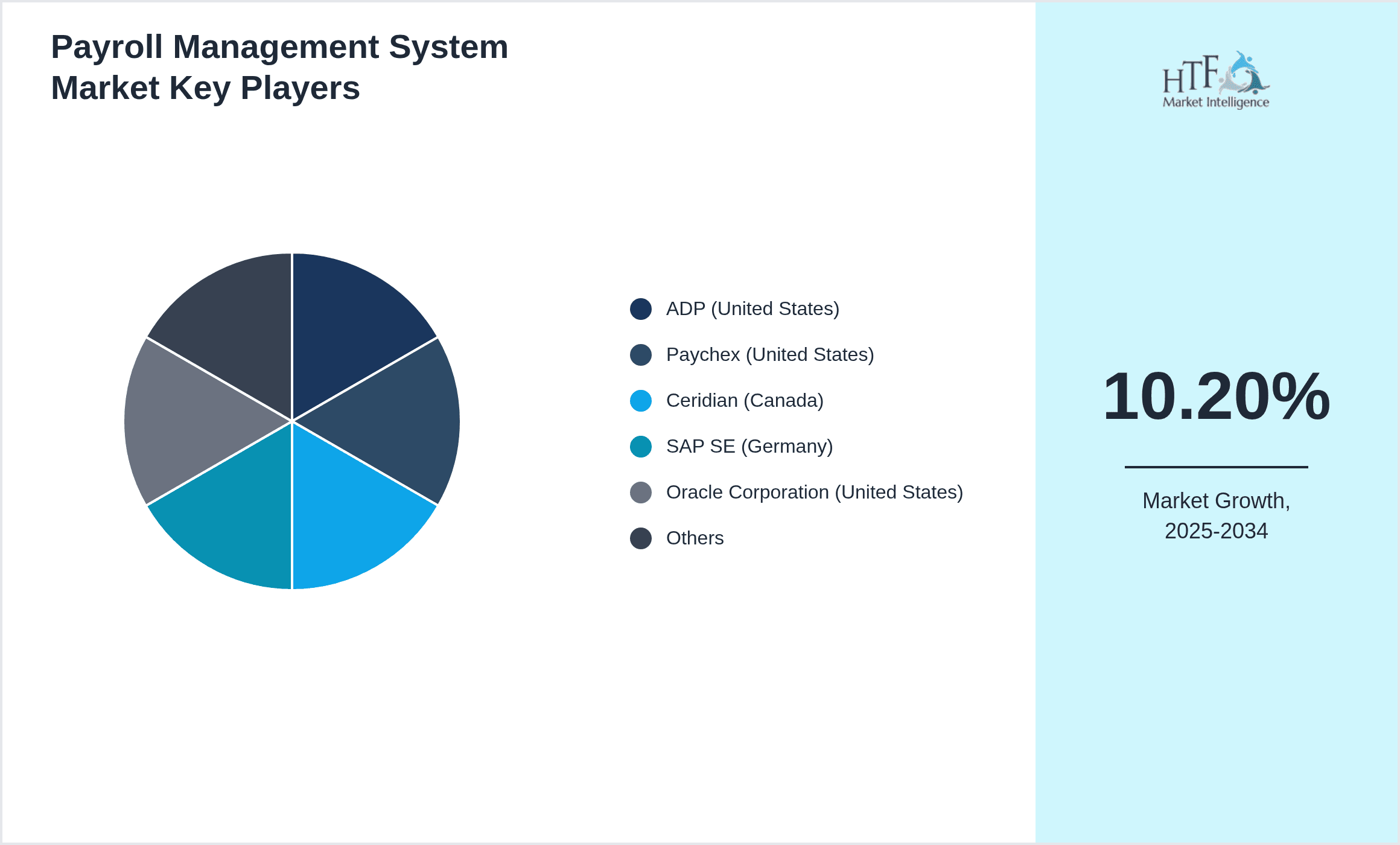
Leading Companies in Payroll Management System Market
- •ADP (United States)
- •Paychex (United States)
- •Ceridian (Canada)
- •SAP SE (Germany)
- •Oracle Corporation (United States)
- •UKG (United States)
- •Workday (United States)
- •Intuit Inc. (United States)
- •Sage Group (United Kingdom)
- •Zellis Holdings (United Kingdom)
- •Ramco Systems (India)
- •Infor (United States)
- •Kronos Incorporated (United States)
- •Insperity (United States)
- •Paycor (United States)
- •Gusto (United States)
- •BambooHR (United States)
- •Epicor Software Corporation (United States)
- •Xero Limited (New Zealand)
- •Cerner Corporation (United States)
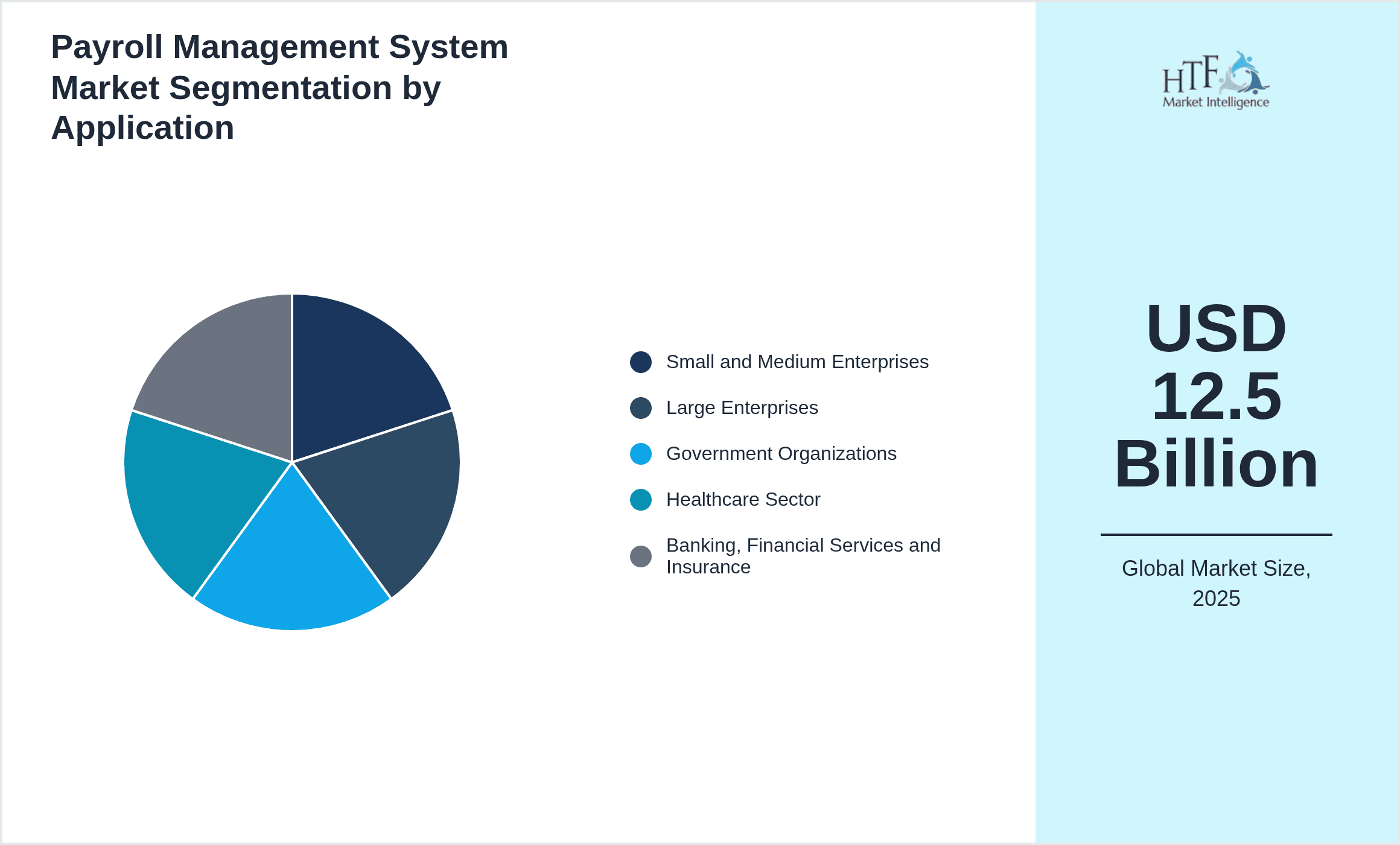
Market Segments
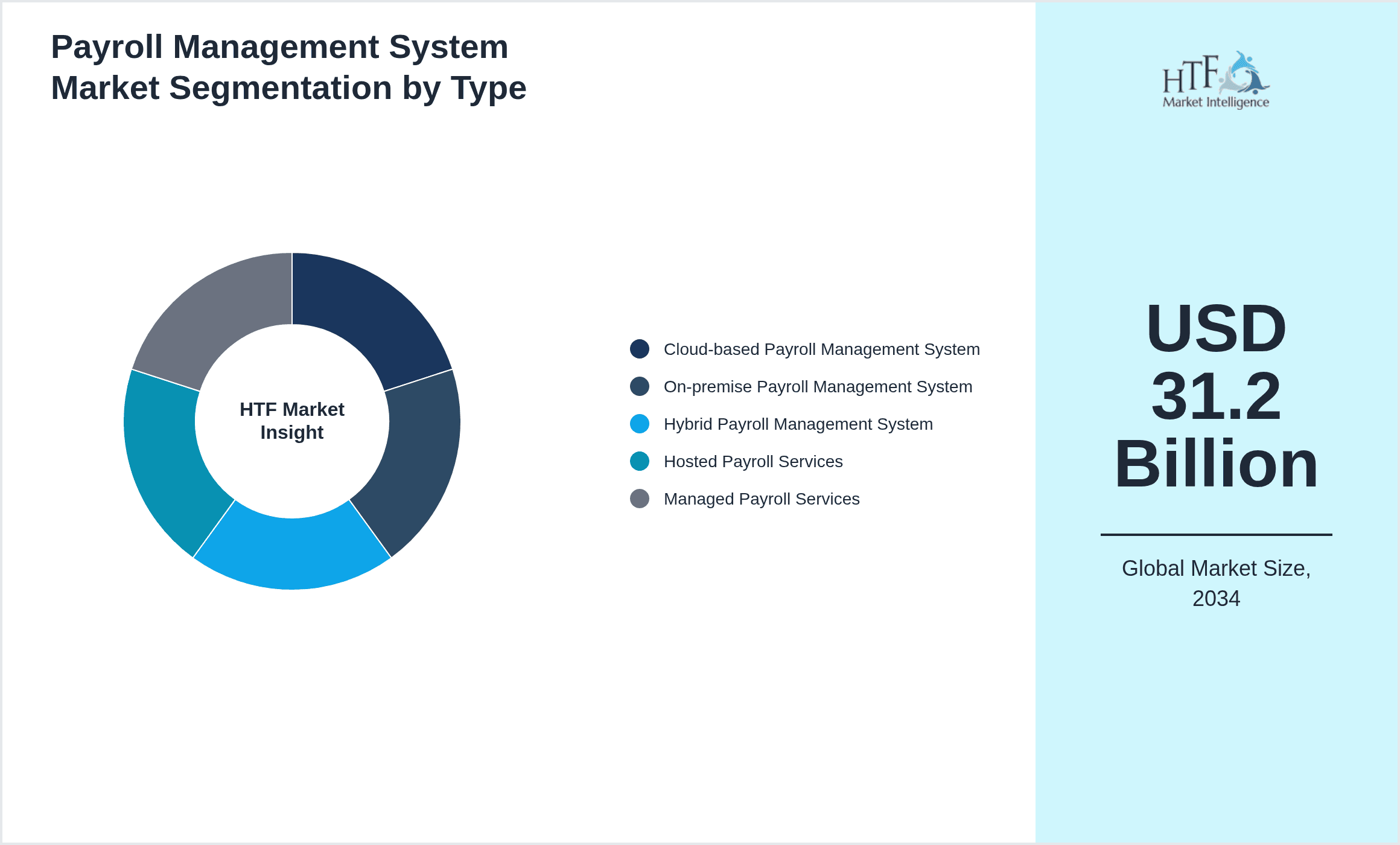
- •By Type
- ◦Cloud-based Payroll Management System
- ◦On-premise Payroll Management System
- ◦Hybrid Payroll Management System
- ◦Hosted Payroll Services
- ◦Managed Payroll Services
- •By Application
- ◦Small and Medium Enterprises
- ◦Large Enterprises
- ◦Government Organizations
- ◦Healthcare Sector
- ◦Banking, Financial Services and Insurance
- •By Deployment Model
- ◦Public Cloud
- ◦Private Cloud
- ◦Hybrid Cloud
- •By Service Model
- ◦Software as a Service
- ◦Platform as a Service
- ◦Infrastructure as a Service
Growth Dynamics
Rapid digital transformation across industries drives the adoption of automated payroll management systems, replacing manual and legacy processes. Organizations increasingly implement cloud-based solutions to leverage scalability, real-time updates, and reduced IT overhead, thus ensuring compliance with changing labor laws and tax regulations. The rise of remote workforces and global business operations necessitates multi-jurisdictional payroll capabilities, enhancing demand for integrated platforms. Additionally, advancements in AI and machine learning enable predictive analytics for payroll forecasting and fraud detection, strengthening system efficiency. Regulatory pressures and the need for data security compel organizations to adopt sophisticated payroll systems that ensure data privacy and compliance. Recent news highlights include ADP’s launch of AI-powered payroll analytics enhancing decision-making capabilities and SAP’s introduction of cloud payroll solutions tailored for global enterprises, illustrating ongoing market momentum fueled by technological innovation and evolving workforce dynamics.
Market Trends
The Payroll Management System market is evolving with increased integration of AI and blockchain technologies to enhance transparency, security, and automation. Emerging trends include the adoption of mobile payroll applications facilitating on-the-go access for employees and managers, improving engagement and operational agility. Companies are focusing on developing customizable solutions catering to diverse industry-specific compliance requirements across geographies. The shift towards subscription-based pricing models provides flexibility and affordability, particularly for SMEs. Strategic collaborations between payroll providers and HR software firms enable seamless end-to-end workforce management. Recent developments such as Oracle’s rollout of blockchain-enabled payroll services highlight a trend toward immutable and secure payroll records. Sustainability and green IT practices are gaining attention, with organizations seeking energy-efficient cloud payroll solutions aligning with corporate social responsibility goals. These trends collectively define the future trajectory of payroll management systems, emphasizing innovation, user experience, and compliance robustness.
Market Opportunities
Expanding digital economies in Asia-Pacific and Latin America present substantial opportunities for payroll management system providers to penetrate underserved SME segments requiring cost-effective, scalable solutions. The increasing complexity of global payroll compliance due to evolving labor laws creates demand for advanced software capable of real-time regulatory updates and automated compliance checks. Integration of payroll with emerging HR technologies such as talent management and employee engagement platforms opens avenues for holistic workforce solutions. Cloud adoption in developing regions remains nascent, offering growth potential through localized deployment and customization. Strategic acquisitions and partnerships with regional technology firms enable market entrants to leverage local expertise and regulatory knowledge. The rise of gig economy and flexible work arrangements necessitate payroll solutions supporting contingent workforce management, creating niche market segments. Recent investments in AI-driven payroll automation and data analytics tools further bolster growth prospects by enhancing operational efficiency and strategic decision-making capabilities across regions.
Market Challenges
Complex regulatory environments across different countries impose significant challenges for payroll management system providers, requiring constant updates to maintain compliance with diverse tax laws, labor regulations, and data privacy standards. Data security concerns, particularly related to sensitive employee information, necessitate robust cybersecurity measures, increasing operational costs and complexity. Integration challenges arise when connecting payroll systems with legacy HR and accounting software, leading to potential data inconsistencies and process inefficiencies. Resistance to change and lack of digital literacy among small enterprises hinder adoption of advanced payroll technologies. Additionally, high implementation costs and customization demands for multinational corporations limit standardization and scalability. Recent incidents involving data breaches in payroll systems emphasize the criticality of security investments. Market players face intense pricing pressure due to competition from low-cost providers, impacting profitability and growth sustainability. These challenges collectively impact the deployment and expansion of payroll management systems across global markets.
Regulatory Framework
The global payroll management market adheres to various regional and international regulations enacted between 2020 and 2025, focusing on data privacy and labor compliance. The EU’s General Data Protection Regulation enforces stringent employee data handling and privacy standards, impacting payroll data management globally. The United States implemented the California Consumer Privacy Act extending privacy protections affecting payroll data for California-based employees. Increasingly complex tax reporting requirements necessitate payroll systems to integrate real-time legislative updates to maintain compliance. Governments worldwide introduced mandates for electronic payslips and digital tax filings to enhance transparency and efficiency. Moreover, regulations around mandatory social security contributions and benefit management require payroll systems to ensure accurate calculations and timely submissions. These evolving frameworks compel payroll solution providers to continuously update software capabilities and enhance compliance monitoring features, ensuring adherence to legal standards and mitigating risks associated with non-compliance.
Market Intelligence
Recent market developments and strategic initiatives are continuously tracked through industry publications, company announcements, and regulatory filings. For the most current information, stakeholders are advised to monitor official corporate communications and recognized market intelligence platforms.
Regional Outlook
The North America currently holds a significant share of the market, primarily due to several key factors: increasing consumption rates, a burgeoning population, and robust economic momentum. These elements collectively drive demand, positioning this region as a leader in the market. On the other hand, Asia-Pacific is rapidly emerging as the fastest-growing area within the industry. This remarkable growth can be attributed to swift infrastructure development, the expansion of various industrial sectors, and a marked increase in consumer demand. These dynamics make this region a crucial player in shaping future market growth.
In our report, we cover a comprehensive analysis of the following regions and countries:
- North America
- LATAM
- West Europe
- Central & Eastern Europe
- Northern Europe
- Southern Europe
- East Asia
- Southeast Asia
- South Asia
- Central Asia
- Oceania
- MEA
| Feature | Details |
|---|---|
| Base Year Market Size | USD 12.5 Billion |
| Forecast Year Market Size | USD 31.2 Billion |
| CAGR | 10.2% |
| Forecast Period | 2026 to 2033 |
| YoY Growth | 9.76% |
| Scope of Report | Market is segmented by Type (Cloud-based Payroll Management System, On-premise Payroll Management System, Hybrid Payroll Management System, Hosted Payroll Services, Managed Payroll Services), Application (Small and Medium Enterprises, Large Enterprises, Government Organizations, Healthcare Sector, Banking, Financial Services and Insurance), Deployment Model (Public Cloud, Private Cloud, Hybrid Cloud), Service Model (Software as a Service, Platform as a Service, Infrastructure as a Service) |
| Regions Covered | North America, LATAM, West Europe, Central & Eastern Europe, Northern Europe, Southern Europe, East Asia, Southeast Asia, South Asia, Central Asia, Oceania, MEA |
| Key Companies | ADP (United States), Paychex (United States), Ceridian (Canada), SAP SE (Germany), Oracle Corporation (United States), UKG (United States), Workday (United States), Intuit Inc. (United States), Sage Group (United Kingdom), Zellis Holdings (United Kingdom), Ramco Systems (India), Infor (United States), Kronos Incorporated (United States), Insperity (United States), Paycor (United States), Gusto (United States), BambooHR (United States), Epicor Software Corporation (United States), Xero Limited (New Zealand), Cerner Corporation (United States) |
Global Payroll Management System Market Size, Growth & Revenue 2025-2034 - Table of Contents
Frequently Asked Questions (FAQ):
The Compact Track Loaders market is projected to grow at a CAGR of 6.8% from 2025 to 2030, driven by increasing demand in construction and agricultural sectors.
North America currently leads the market with approximately 45% market share, followed by Europe at 28% and Asia-Pacific at 22%. The remaining regions account for 5% of the global market.
Key growth drivers include increasing construction activities, rising demand for versatile equipment in agriculture, technological advancements in track loader design, and growing preference for compact equipment in urban construction projects.