
North America Glass Reinforced Gypsum Market Roadmap to 2034
North America Glass Reinforced Gypsum (GRG) Market is segmented by Glass Reinforcement Type (Fiberglass Mat Reinforced, Fiberglass Mesh Reinforced, Composite Reinforced, Non-woven Reinforced, Woven Reinforced), Application Area (Interior Wall Panels, Ceiling Systems, Decorative Elements, Acoustic Panels, Fire-resistant Panels), Installation Method (Drywall Installation, Suspended Ceiling Systems, Prefabricated Panel Assemblies, Custom Fabricated Components), End-Use Sector (Commercial Buildings, Residential Construction, Institutional Facilities, Renovation and Retrofit Projects), and Geography (United States, Canada, Mexico)
Pricing
Report Overview
Executive Summary
- •The North America Glass Reinforced Gypsum (GRG) market is a vital segment within the construction materials industry, offering advanced gypsum panels reinforced with glass fibers to enhance mechanical strength, fire resistance, and design flexibility. These panels are extensively used in interior applications like ceiling systems, wall panels, acoustic solutions, and decorative architectural elements, catering to commercial, residential, and institutional sectors. The market benefits from innovations in composite reinforcements such as fiberglass mats and meshes, which improve panel durability and ease of installation. Environmental regulations and growing emphasis on fire safety and acoustic performance drive adoption across North America, especially in the United States and Canada. The market is characterized by increasing demand for lightweight, sustainable building materials that meet stringent building codes and aesthetic requirements. Furthermore, advancements in manufacturing processes and customization capabilities are enabling manufacturers to deliver tailored GRG solutions that align with evolving architectural trends and sustainability goals. This comprehensive report analyzes the market size, segmentation by type and application, regional performance, regulatory environment, and competitive landscape, highlighting growth drivers, challenges, emerging opportunities, and future outlook through 2034.
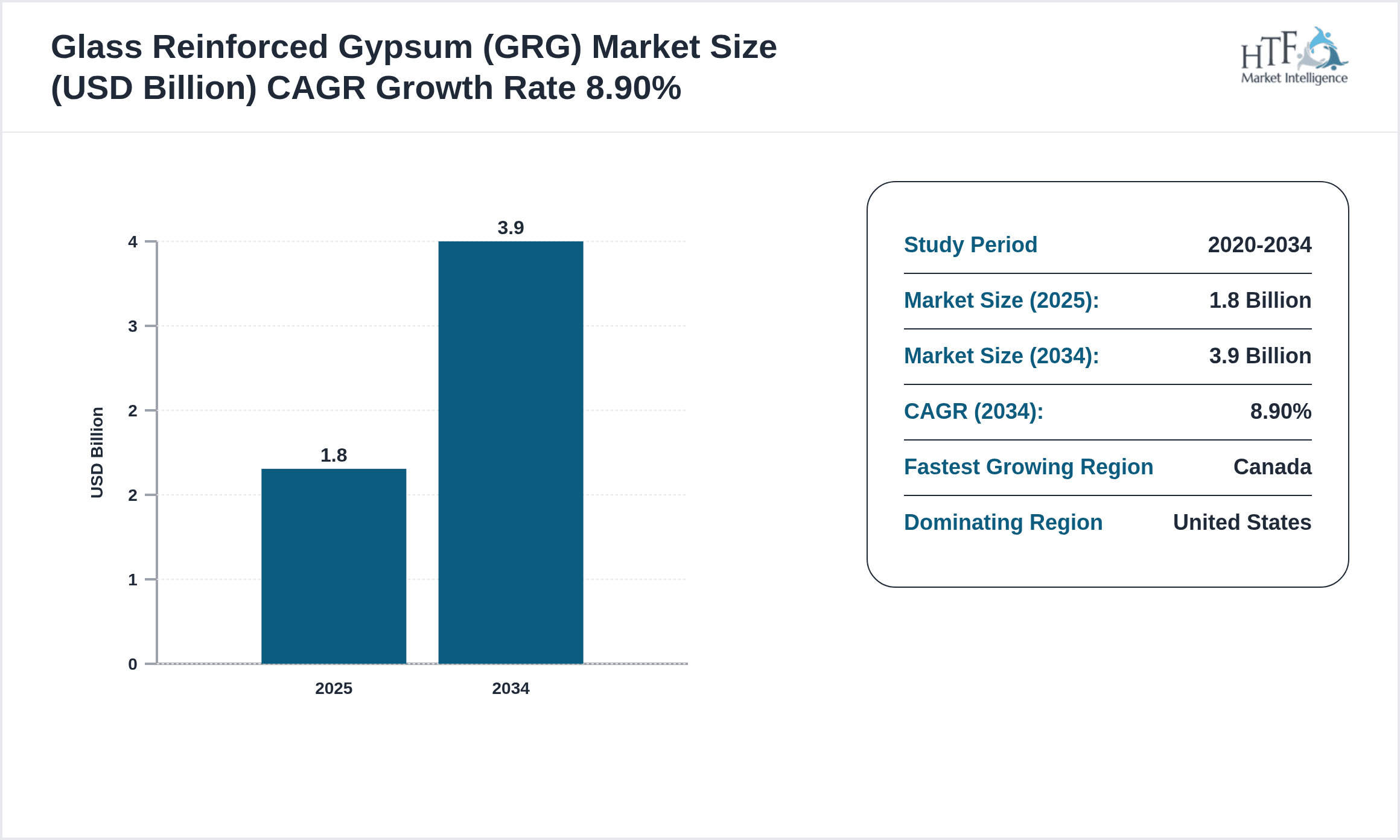
- •Key market highlights reveal that the North America GRG market reached USD 1.8 Billion in 2025, up from USD 1.2 Billion in 2020, with a robust CAGR of 8.9% projected through 2034 to reach USD 3.9 Billion. The United States dominates the market with over 60% share, while Canada is the fastest-growing country fueled by rising construction activity and regulatory support. Fiberglass mat reinforced GRG products lead the market segment, offering superior fire resistance and structural integrity. Market growth is propelled by increasing infrastructure investments, demand for fire-safe materials, and innovation in composite reinforcements. Year-on-year growth averages 8.5%, reflecting steady adoption across major applications including interior wall panels, ceiling systems, and decorative architectural elements.
- •The value proposition of GRG products lies in their combination of lightweight construction, fire resistance, acoustic performance, and aesthetic versatility, making them indispensable for modern building designs. Stakeholders including manufacturers, contractors, architects, and regulatory bodies benefit from the strategic relevance of GRG in enhancing building safety and compliance with environmental standards. The market’s growth trajectory is supported by government incentives for sustainable construction, rising renovation activities, and the increasing complexity of architectural designs requiring customizable panel solutions. Furthermore, the integration of glass reinforcements improves durability and lifecycle performance, reducing maintenance costs and improving occupant safety. This positions the North America GRG market as a critical component in the construction materials ecosystem, aligning with industry trends toward sustainability, resilience, and innovation.
Competitive Landscape
The North America Glass Reinforced Gypsum (GRG) market is characterized by a competitive environment where key players focus on innovation, strategic partnerships, and geographic expansion to enhance market share. Market participants employ advanced manufacturing technologies to produce high-quality, customized GRG panels that meet diverse architectural and regulatory requirements. Competitive strategies include product differentiation through enhanced fire resistance and acoustic properties, cost optimization to maintain price competitiveness, and development of eco-friendly materials aligning with sustainability mandates. Collaborations with construction firms and design studios enable penetration into high-value projects, while mergers and acquisitions consolidate market presence and technological capabilities. Pricing strategies are influenced by raw material costs and regional demand fluctuations, with emphasis on value-added services such as technical support and installation assistance. Distribution channels are diversified across direct sales, distributors, and online platforms to broaden reach. Regional competition is driven by localized demand variations and regulatory frameworks, fostering innovation and responsiveness to client needs. Future trends point to increased digitalization in production and supply chain management, further intensifying competition and operational efficiency across the market.
Prominent Players in Glass Reinforced Gypsum Market
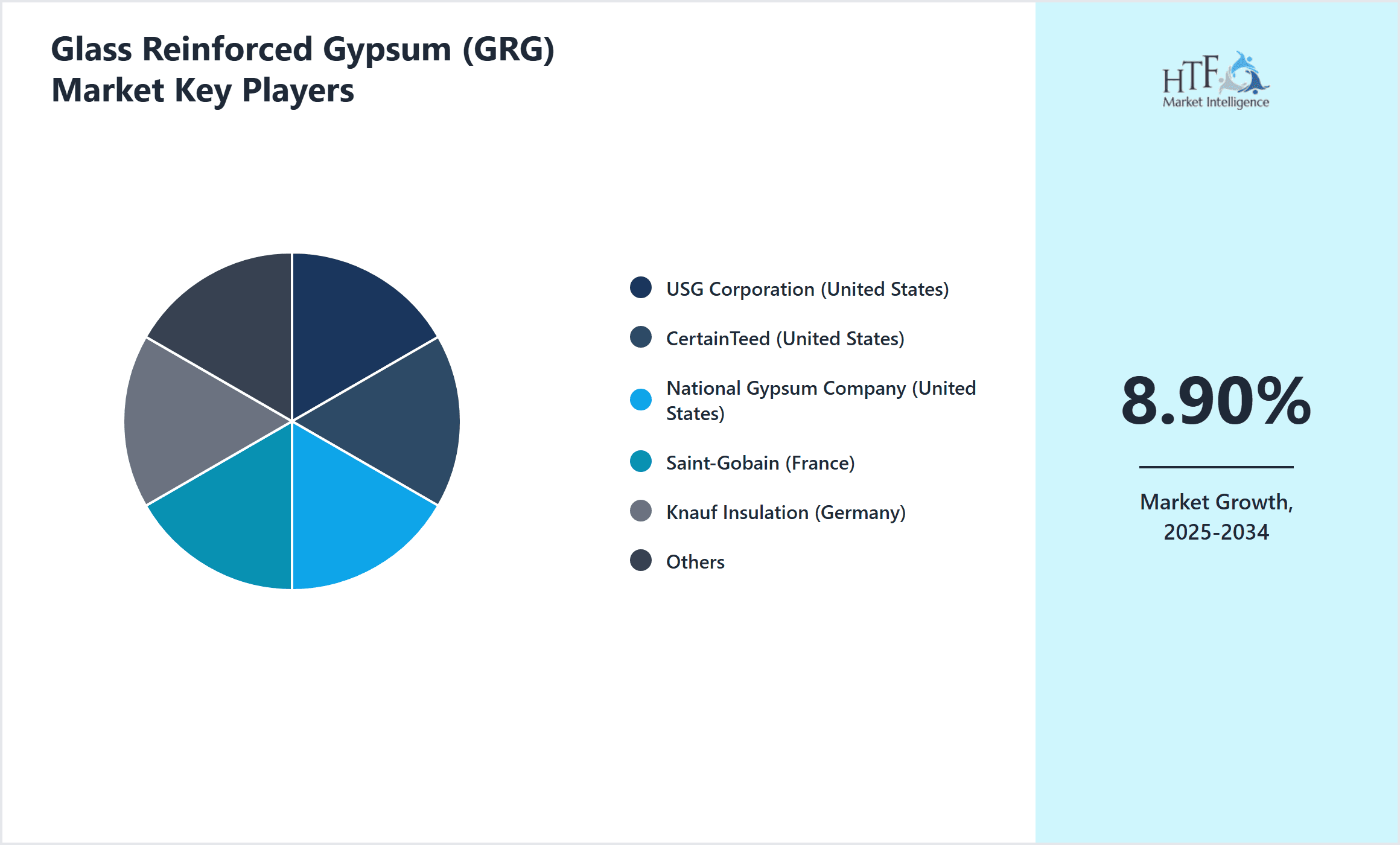
- •USG Corporation (United States)
- •CertainTeed (United States)
- •National Gypsum Company (United States)
- •Saint-Gobain (France)
- •Knauf Insulation (Germany)
- •Georgia-Pacific LLC (United States)
- •Owens Corning (United States)
- •Armstrong World Industries (United States)
- •Saint-Gobain ADFORS (United States)
- •Continental Building Products (United States)
- •National Plasterers Council (United States)
- •Gyptech (Canada)
- •CGC Inc. (Canada)
- •USG Boral (Australia)
- •American Gypsum (United States)
- •LafargeHolcim (Switzerland)
- •Boral Limited (Australia)
- •Nichias Corporation (Japan)
- •Saint-Gobain Sekurit (France)
- •CertainTeed Ceilings (United States)
- •Knauf Gypsum (Germany)
- •Tremco Incorporated (United States)
- •Etex Group (Belgium)
- •Versico Roofing Systems (United States)
- •National Gypsum Canada (Canada)
Market Breakdown
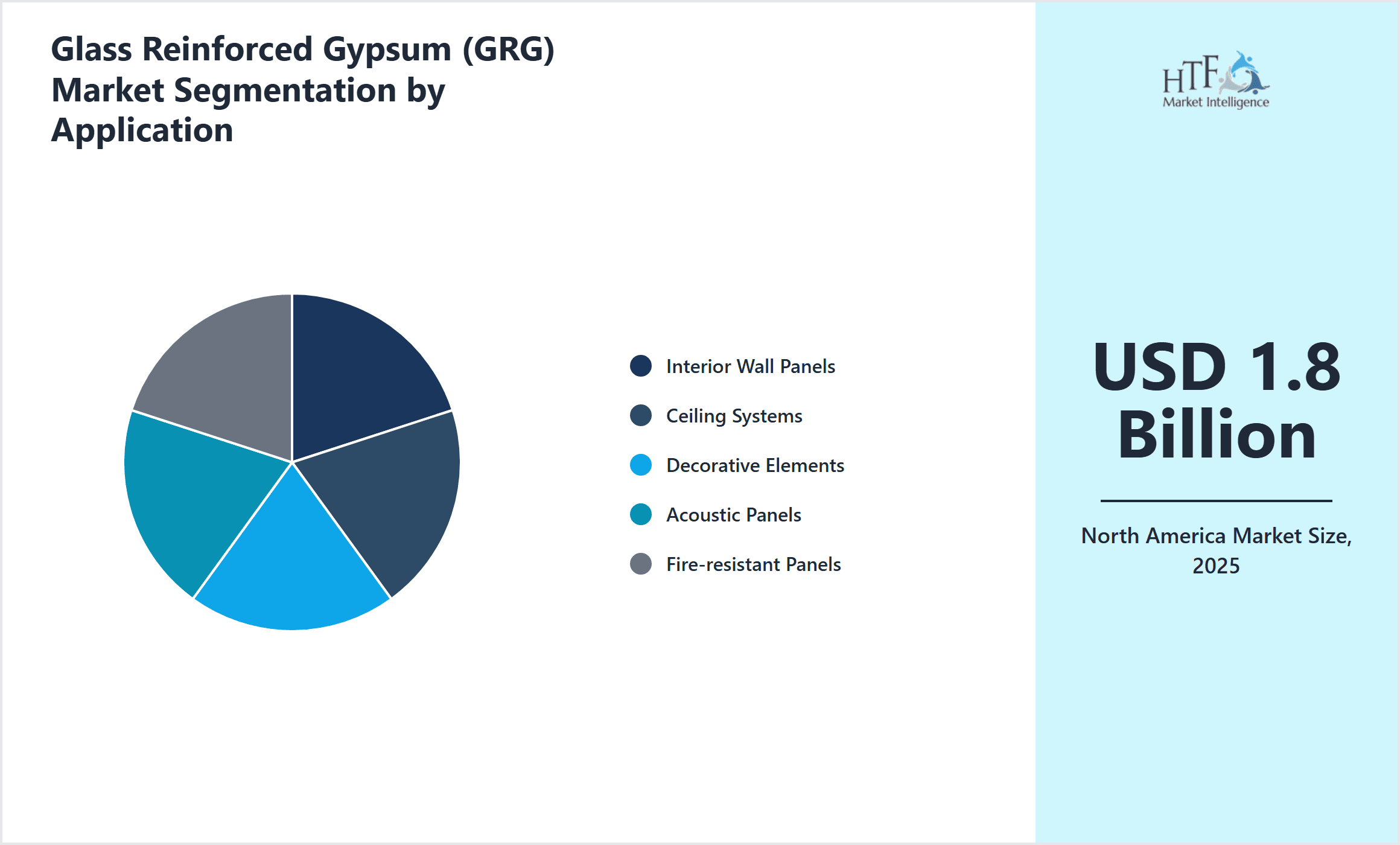
- •By Glass Reinforcement Type
- ◦Fiberglass Mat Reinforced
- ◦Fiberglass Mesh Reinforced
- ◦Composite Reinforced
- ◦Non-woven Reinforced
- ◦Woven Reinforced
- •By Application Area
- ◦Interior Wall Panels
- ◦Ceiling Systems
- ◦Decorative Elements
- ◦Acoustic Panels
- ◦Fire-resistant Panels
- •By Installation Method
- ◦Drywall Installation
- ◦Suspended Ceiling Systems
- ◦Prefabricated Panel Assemblies
- ◦Custom Fabricated Components
- •By End-Use Sector
- ◦Commercial Buildings
- ◦Residential Construction
- ◦Institutional Facilities
- ◦Renovation and Retrofit Projects
Growth Dynamics
The North America Glass Reinforced Gypsum market growth is driven by increasing demand for fire-resistant and acoustically efficient building materials, which are critical in commercial and institutional construction. Regulatory mandates on fire safety and environmental sustainability are compelling architects and contractors to specify GRG products that comply with stringent standards, thereby expanding market adoption. Additionally, technological advancements in composite reinforcement materials enhance the durability and aesthetic flexibility of GRG panels, attracting design-centric construction projects. The growth is further supported by rising infrastructure investments, especially in urban centers where modern architectural trends favor lightweight, customizable panel solutions. Renovation activities in older building stock also contribute significantly to market expansion, as GRG panels provide cost-effective and efficient upgrades. Moreover, the growing awareness regarding indoor air quality and acoustic comfort is prompting increased use of specialized acoustic GRG panels. The interplay of these factors is creating sustained demand growth, positioning the market for robust expansion through 2034.
Market Trends
A prominent trend in the North America GRG market is the integration of sustainable materials and eco-friendly manufacturing processes, aligning with green building certifications like LEED and WELL. Manufacturers are increasingly utilizing recycled glass fibers and low-emission gypsum cores to reduce environmental footprint. Another trend is the customization of GRG panels to meet complex architectural designs, supported by digital fabrication and 3D modeling technologies that enable precise shaping and detailing. The adoption of prefabricated GRG assemblies accelerates construction timelines and reduces on-site labor requirements. Furthermore, there is a rising preference for multi-functional panels combining fire resistance, acoustic control, and aesthetic appeal, enhancing value propositions for end-users. These trends reflect the market’s evolution toward innovation-driven, sustainable, and design-flexible solutions that cater to the diverse needs of North America’s construction sector.
Market Opportunities
The North America GRG market presents significant opportunities in expanding applications within the residential renovation segment, where demand for lightweight, fire-resistant materials is growing due to aging infrastructure and stricter building codes. Furthermore, emerging smart building technologies offer potential for integrating GRG panels with embedded sensors for environmental monitoring, creating value-added solutions. Market players can also capitalize on expanding demand in mid-sized cities experiencing rapid urbanization and commercial development. Innovation in composite reinforcements to enhance panel strength and reduce weight opens avenues for new product launches targeting niche applications such as modular construction and high-rise buildings. Additionally, increasing government incentives for sustainable construction and energy-efficient materials provide financial support to accelerate GRG adoption. Strategic partnerships with architectural firms and contractors to co-develop customized solutions can further unlock untapped market segments.
Market Challenges
The North America Glass Reinforced Gypsum market faces challenges including fluctuating raw material prices, particularly fiberglass and gypsum, which impact production costs and pricing strategies. Supply chain disruptions and logistics complexities add to operational risks, especially in the context of recent global events affecting material availability. Additionally, the market contends with competition from alternative construction materials such as fiber cement boards and metal panels, which may offer comparable performance in certain applications. Regulatory compliance with evolving fire safety and environmental standards requires continuous product innovation and certification, increasing R&D expenditures. Limited awareness among smaller contractors and end-users about the benefits of GRG panels can constrain market penetration in less urbanized areas. Furthermore, installation complexities and the need for skilled labor for customized GRG solutions pose barriers to wider adoption. Addressing these challenges requires strategic investment in supply chain resilience, education, and technological advancements.
Regulatory Framework
Between 2020 and 2025, North America has seen the implementation of several key regulations impacting the Glass Reinforced Gypsum market. The International Building Code (IBC) updates in 2021 introduced stricter fire-resistance requirements for interior wall and ceiling materials, directly influencing GRG product specifications. The Environmental Protection Agency (EPA) has enforced regulations limiting volatile organic compounds (VOCs) emissions from construction materials, prompting manufacturers to adopt low-emission gypsum cores and adhesives. OSHA guidelines from 2023 emphasize worker safety during installation of composite panels, including GRG, mandating enhanced safety protocols and training programs. Additionally, regional codes such as California’s Title 24 energy standards require building materials to meet energy efficiency and sustainability benchmarks, encouraging the use of eco-friendly GRG products. The National Fire Protection Association (NFPA) standards continue to evolve, enhancing fire safety testing and certification criteria for GRG panels. These regulatory frameworks collectively drive product innovation and quality assurance, ensuring that GRG materials meet rigorous performance and environmental standards across North America.
Market Intelligence
- •15th January 2025, USG Corporation announced the launch of a next-generation fiberglass mat reinforced gypsum panel designed to deliver superior fire resistance and acoustic performance. The new product incorporates recycled glass fibers and a proprietary gypsum core formulation that reduces weight by 15% while maintaining structural integrity. Targeted at commercial high-rise and institutional construction projects, the panel meets the 2021 International Building Code fire safety standards and qualifies for LEED certification credits. This launch aims to address growing demand for sustainable, high-performance interior building materials in North America and strengthen USG’s market leadership. Strategic marketing campaigns and partnerships with major construction firms are planned to accelerate adoption. Source: USG Corporation Official Press Release.
- •20th March 2025, CertainTeed introduced an innovative composite reinforced GRG ceiling system integrating embedded LED lighting and acoustic dampening technology. This system utilizes advanced digital fabrication techniques to customize panel shapes and lighting layouts, reducing installation time by 30%. The product targets premium commercial and hospitality sectors seeking integrated design solutions that enhance aesthetics and functionality. By combining multiple performance attributes in a single panel, CertainTeed aims to differentiate its offerings and capture emerging market niches. The company also announced plans to expand manufacturing capacity in Canada to meet rising demand across North America. Source: CertainTeed Corporate Announcement.
- •5th June 2025, National Gypsum Company completed acquisition of Gyptech Canada, a specialty GRG manufacturer known for its customized architectural panels. The acquisition strengthens National Gypsum’s product portfolio and expands its footprint in the Canadian market, which is experiencing accelerated growth driven by infrastructure investments and building code updates. The combined entity plans to leverage Gyptech’s expertise in bespoke panel fabrication and National Gypsum’s distribution network to enhance customer service and innovation capacity. This strategic move consolidates market presence and supports long-term growth ambitions in North America’s evolving construction materials landscape. Source: National Gypsum Company Press Release.
- •Recent market developments and strategic initiatives are continuously tracked through industry publications, company announcements, and regulatory filings. For the most current information, stakeholders are advised to monitor official corporate communications and recognized market intelligence platforms.
Regional Outlook
The United States currently holds a significant share of the market, primarily due to several key factors: increasing consumption rates, a burgeoning population, and robust economic momentum. These elements collectively drive demand, positioning this region as a leader in the market. On the other hand, Canada is rapidly emerging as the fastest-growing area within the industry. This remarkable growth can be attributed to swift infrastructure development, the expansion of various industrial sectors, and a marked increase in consumer demand. These dynamics make this region a crucial player in shaping future market growth.
In our report, we cover a comprehensive analysis of the following regions and countries:
- United States
- Canada
- Mexico
| Feature | Details |
|---|---|
| Base Year Market Size | USD 1.8 Billion |
| Forecast Year Market Size | USD 3.9 Billion |
| CAGR | 8.9% |
| Forecast Period | 2026 to 2033 |
| YoY Growth | 8.5% |
| Scope of Report | Market is segmented by Glass Reinforcement Type (Fiberglass Mat Reinforced, Fiberglass Mesh Reinforced, Composite Reinforced, Non-woven Reinforced, Woven Reinforced), Application Area (Interior Wall Panels, Ceiling Systems, Decorative Elements, Acoustic Panels, Fire-resistant Panels), Installation Method (Drywall Installation, Suspended Ceiling Systems, Prefabricated Panel Assemblies, Custom Fabricated Components), End-Use Sector (Commercial Buildings, Residential Construction, Institutional Facilities, Renovation and Retrofit Projects) |
| Regions Covered | United States, Canada, Mexico |
| Key Companies | USG Corporation (United States), CertainTeed (United States), National Gypsum Company (United States), Saint-Gobain (France), Knauf Insulation (Germany), Georgia-Pacific LLC (United States), Owens Corning (United States), Armstrong World Industries (United States), Saint-Gobain ADFORS (United States), Continental Building Products (United States), National Plasterers Council (United States), Gyptech (Canada), CGC Inc. (Canada), USG Boral (Australia), American Gypsum (United States), LafargeHolcim (Switzerland), Boral Limited (Australia), Nichias Corporation (Japan), Saint-Gobain Sekurit (France), CertainTeed Ceilings (United States), Knauf Gypsum (Germany), Tremco Incorporated (United States), Etex Group (Belgium), Versico Roofing Systems (United States), National Gypsum Canada (Canada) |
North America Glass Reinforced Gypsum Market Roadmap to 2034 - Table of Contents
Frequently Asked Questions (FAQ):
The Compact Track Loaders market is expected to see value worth 5.3 Billion in 2025.
North America currently leads the market with approximately 45% market share, followed by Europe at 28% and Asia-Pacific at 22%. The remaining regions account for 5% of the global market.
Key growth drivers include increasing construction activities, rising demand for versatile equipment in agriculture, technological advancements in track loader design, and growing preference for compact equipment in urban construction projects.