
South America Pharmaceutical Plastic Bottles Market - Outlook 2020-2034
South America Pharmaceutical Plastic Bottles Market is segmented by Product Type (Polyethylene Terephthalate (PET), High-Density Polyethylene (HDPE), Polypropylene (PP), Polyvinyl Chloride (PVC), Others), Application (Oral Liquid Packaging, Tablet & Capsule Bottles, Injectable Packaging, Topical Packaging, Nutraceutical Containers), Service Type (Custom Packaging Solutions, Standard Packaging, Contract Manufacturing, Logistics & Distribution), Packaging Feature (Child-Resistant Packaging, Tamper-Evident Packaging, Sustainable/Recyclable Packaging), and Geography (Brazil, Argentina, Chile, Peru, Colombia, Rest of South America)
Pricing
Report Overview
Executive Summary
- •The South America Pharmaceutical Plastic Bottles market represents a critical segment within the pharmaceutical packaging industry, focusing on plastic containers designed to securely store and transport medicinal products. This market covers a range of bottle types made from materials such as PET, HDPE, PP, and PVC, employed to package oral liquids, tablets, capsules, injectables, topical medications, and nutraceuticals. Pharmaceutical manufacturers and contract packagers are the primary end users, who demand compliance with stringent regulatory norms to ensure product integrity, safety, and shelf life. The value chain integrates raw material suppliers, bottle manufacturers, pharmaceutical companies, and distribution networks. Increasing pharmaceutical production, coupled with the rising prevalence of chronic diseases and growing health awareness in South America, drives demand for reliable packaging solutions. Innovations focusing on sustainability, tamper evidence, and child-resistant features are shaping market offerings. This report provides a comprehensive analysis of market dynamics, including growth drivers, challenges, opportunities, and competitive landscape, supported by detailed quantitative forecasts from 2020 to 2034.
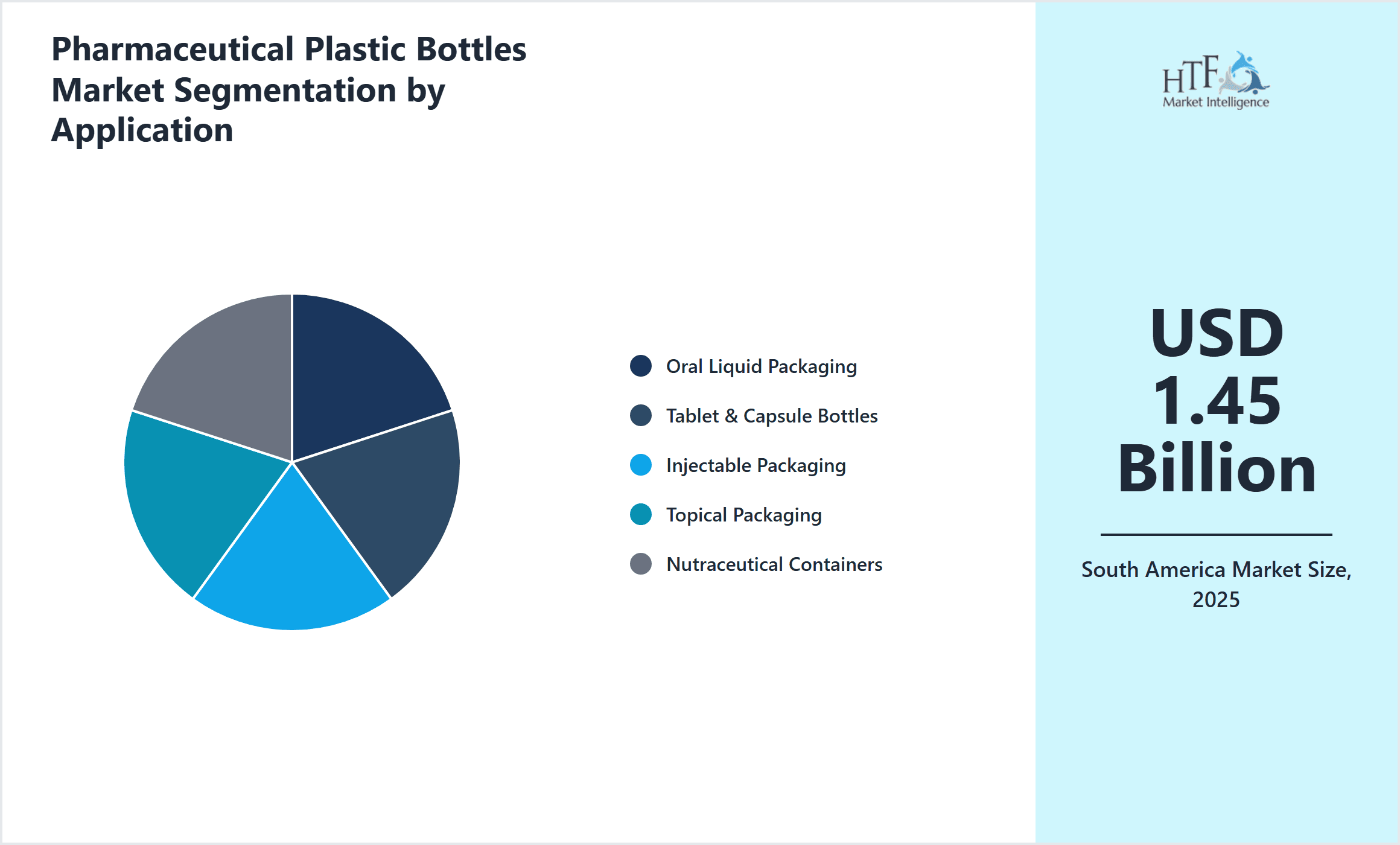
- •Key market highlights include a base market size of USD 1.45 Billion in 2025, with projections reaching USD 3.60 Billion by 2034, reflecting a compound annual growth rate (CAGR) of 10.3%. Brazil dominates the regional landscape, contributing the largest share, while Chile is identified as the fastest-growing country due to increasing pharmaceutical investments and adoption of advanced packaging technologies. Polyethylene terephthalate (PET) bottles remain the leading product type due to their favorable barrier properties and recyclability, whereas polypropylene (PP) bottles are witnessing rapid growth attributed to their cost-effectiveness and chemical resistance. Year-on-year growth rates average 9.8%, underscoring consistent market expansion fueled by rising pharmaceutical production and evolving consumer needs across South America.
- •The South America Pharmaceutical Plastic Bottles market holds significant strategic importance for pharmaceutical companies, packaging manufacturers, and healthcare stakeholders. It enables secure, compliant, and user-friendly packaging solutions essential for drug efficacy and patient safety. The growing demand for sustainable and innovative packaging aligns with global environmental objectives and local regulatory frameworks, presenting lucrative growth avenues. Additionally, the market supports economic development by fostering regional manufacturing capabilities and supply chain enhancements. Stakeholders benefit from detailed insights into market segmentation, competitive positioning, and emerging trends, facilitating informed decision-making and strategic investments in this dynamically evolving sector.

Competitive Landscape
The South America Pharmaceutical Plastic Bottles market is characterized by a highly competitive environment featuring a mix of multinational corporations and regional manufacturers. Market participants adopt diverse competitive strategies such as product innovation, capacity expansion, strategic partnerships, and mergers and acquisitions to strengthen their market presence. Emphasis on research and development drives innovation in sustainable packaging materials and advanced functionalities like child resistance and tamper-evident features. Companies focus on optimizing cost structures and supply chain efficiencies to maintain pricing competitiveness amid fluctuating raw material costs. Distribution channel expansion and geographic diversification are key strategic imperatives to capture emerging markets within South America. Regulatory compliance and quality certifications serve as critical differentiators in vendor selection by pharmaceutical firms. Market entry barriers include high capital investment requirements and adherence to stringent quality and safety standards. The competitive landscape continues to evolve with increasing adoption of digital technologies for packaging design and traceability, ensuring enhanced product security and regulatory adherence. Future trends point towards consolidation and collaboration to leverage economies of scale and technological advancements, positioning companies to capitalize on the growing demand in the region.
Leading Companies in Pharmaceutical Plastic Bottles Market
- •Amcor plc (Australia)
- •Gerresheimer AG (Germany)
- •Berry Global Inc. (United States)
- •Silgan Holdings Inc. (United States)
- •WestRock Company (United States)
- •Plastipak Packaging Inc. (United States)
- •MJS Packaging (United Kingdom)
- •Graham Packaging Company (United States)
- •O.Berk Company (United States)
- •Rexam PLC (United Kingdom)
- •Nipro Corporation (Japan)
- •AptarGroup, Inc. (United States)
- •Gerard Daniel Worldwide (United States)
- •Clariant AG (Switzerland)
- •Consolidated Container Company (United States)
- •Hoffmaster Group, Inc. (United States)
- •Alpha Packaging (United States)
- •MJS Packaging (United Kingdom)
- •Tekni-Plex, Inc. (United States)
- •Nampak Ltd. (South Africa)
- •Plastipak Holdings, Inc. (United States)
- •Bormioli Luigi S.p.A. (Italy)
- •Sidel Group (France)
- •RPC Group Plc (United Kingdom)
- •Berry Global Group, Inc. (United States)
Market Breakdown
- •By Product Type
- ◦Polyethylene Terephthalate (PET)
- ◦High-Density Polyethylene (HDPE)
- ◦Polypropylene (PP)
- ◦Polyvinyl Chloride (PVC)
- ◦Others
- •By Application
- ◦Oral Liquid Packaging
- ◦Tablet & Capsule Bottles
- ◦Injectable Packaging
- ◦Topical Packaging
- ◦Nutraceutical Containers
- •By Service Type
- ◦Custom Packaging Solutions
- ◦Standard Packaging
- ◦Contract Manufacturing
- ◦Logistics & Distribution
- •By Packaging Feature
- ◦Child-Resistant Packaging
- ◦Tamper-Evident Packaging
- ◦Sustainable/Recyclable Packaging
Growth Dynamics
- •Increasing pharmaceutical production in South America, driven by rising chronic disease prevalence and expanding healthcare infrastructure, propels demand for pharmaceutical plastic bottles. For instance, Brazil’s growing generics market necessitates affordable and reliable packaging options.
- •Regulatory emphasis on packaging safety, including tamper-evident and child-resistant features, compels manufacturers to innovate and upgrade plastic bottle designs, enhancing product security and consumer trust across the region.
- •The surge in consumer awareness around environmental sustainability fosters adoption of recyclable and biodegradable plastic materials, incentivizing companies to develop eco-friendly pharmaceutical packaging solutions.
- •Technological advancements in barrier properties and multi-layer plastic bottle manufacturing improve shelf life and drug stability, enabling expanded use in injectable and sensitive pharmaceutical formulations.
- •Investment growth in local pharmaceutical manufacturing facilities across countries such as Argentina and Chile stimulates demand for localized supply of plastic bottles, reducing import dependency and enhancing supply chain resilience.
- •Expansion of contract manufacturing and packaging services in South America facilitates market penetration for plastic bottle producers by offering integrated solutions tailored to pharmaceutical clients’ needs.
- •Increasing government initiatives supporting healthcare infrastructure and pharmaceutical accessibility in underserved areas generate opportunities for market growth through expanded pharmaceutical distribution requiring robust packaging.

Market Trends
- •Sustainability is a dominant trend, with manufacturers shifting towards recycled PET and bio-based plastics in pharmaceutical bottle production to align with South American environmental regulations and consumer preferences.
- •Digitalization of packaging, including serialization and smart labeling technologies, is increasingly adopted to enhance traceability and combat counterfeit medicines in the regional pharmaceutical supply chain.
- •Customization and personalization of pharmaceutical plastic bottles, such as dose-specific packaging and patient-friendly designs, are gaining traction to improve patient compliance and differentiate products.
- •Collaborations between pharmaceutical companies and packaging suppliers are expanding to co-develop innovative bottle designs that improve drug protection while reducing material use and costs.
- •Growth in nutraceutical and wellness segments drives demand for specialized plastic bottles designed for supplements, vitamins, and herbal products with distinct packaging requirements.
- •Increasing adoption of lightweight packaging reduces transportation costs and carbon footprint, aligning with broader industry efforts to enhance operational efficiency and sustainability.
- •Emergence of regional manufacturing hubs in countries like Colombia boosts local production and supply of pharmaceutical plastic bottles, reducing lead times and import costs.

Market Opportunities
- •Rising demand for eco-friendly and biodegradable plastic bottles presents significant growth potential for manufacturers investing in sustainable materials and green production technologies.
- •Expanding pharmaceutical manufacturing in emerging South American countries offers untapped markets for plastic bottle suppliers to establish local partnerships and distribution networks.
- •Integration of smart packaging solutions, including QR codes and RFID tags, enables enhanced product authentication and consumer engagement, opening avenues for innovation-driven growth.
- •Growth in home healthcare and self-medication trends increases demand for user-friendly, portable pharmaceutical packaging, encouraging development of novel bottle designs.
- •Investment in contract packaging and pharmaceutical outsourcing creates opportunities for plastic bottle manufacturers to offer bundled services, enhancing customer value propositions.
- •Regulatory incentives promoting local manufacturing and import substitution support market expansion for regional plastic bottle producers through favorable policies and subsidies.
- •Collaborative innovation with pharmaceutical companies to develop tamper-evident and child-resistant designs tailored to regional needs can differentiate suppliers and increase market share.
Market Challenges
- •Volatility in raw material prices, particularly petroleum-based resins, creates cost pressures and margin uncertainties for pharmaceutical plastic bottle manufacturers in South America.
- •Strict regulatory compliance requirements for pharmaceutical packaging, including quality certifications and traceability, pose significant challenges for new entrants and smaller manufacturers.
- •Limited recycling infrastructure and consumer awareness in certain South American countries hinder the widespread adoption of sustainable plastic bottles, impacting market growth.
- •Competition from alternative packaging materials such as glass and metal in specific pharmaceutical applications may constrain plastic bottle market expansion in high-barrier or premium segments.
- •Logistical challenges involving transportation and distribution across diverse and sometimes remote geographies increase supply chain complexities for plastic bottle suppliers.
- •Economic uncertainties and currency fluctuations in South American countries can affect investment decisions and operational costs for manufacturers and distributors.
- •Intellectual property concerns and counterfeit packaging products necessitate stringent quality controls, increasing operational costs and complexity.
Regulatory Framework
- •ANVISA (Brazilian Health Regulatory Agency) regulations updated between 2020 and 2025 mandate stringent quality and safety standards for pharmaceutical plastic packaging, including specifications for material compatibility, tamper evidence, and child resistance, significantly impacting market compliance requirements.
- •The Mercosur Technical Regulation for Pharmaceutical Packaging harmonizes packaging standards across member countries such as Argentina, Brazil, Paraguay, and Uruguay, facilitating smoother cross-border trade and ensuring consistent quality norms within South America.
- •Environmental regulations introduced between 2020 and 2025 in countries like Chile and Colombia focus on reducing plastic waste, promoting recyclable packaging materials, and enforcing extended producer responsibility (EPR), influencing plastic bottle design and material selection.
- •Regulatory mandates require serialization and traceability features on pharmaceutical packaging to curb counterfeit medicines, compelling manufacturers to integrate digital technologies in plastic bottle production and labeling.
- •Government initiatives offering tax incentives and subsidies to local manufacturers support the pharmaceutical packaging industry’s growth, encouraging investments in advanced production technologies and sustainable materials.
Market Intelligence
- •15th March 2025, Amcor plc launched a new line of sustainable pharmaceutical plastic bottles made from 100% recycled PET resin targeting South American markets. These bottles incorporate advanced barrier technologies to enhance drug stability and feature tamper-evident closures meeting ANVISA requirements. Amcor aims to reduce environmental impact while addressing growing demand for eco-friendly packaging in Brazil and neighboring countries. The product launch is part of Amcor’s broader sustainability strategy aligned with global environmental goals and regional regulatory frameworks. This initiative is expected to strengthen Amcor's market position and expand its customer base in South America. Source: Amcor Official Press Release
- •10th January 2025, Berry Global Inc. introduced polypropylene (PP) pharmaceutical bottles designed specifically for injectable medications with enhanced chemical resistance and sterilization compatibility. The new product line supports South American pharmaceutical companies in complying with strict safety standards and improving supply chain efficiency. Berry Global has collaborated with local distributors to ensure availability across key markets including Brazil, Argentina, and Chile. This innovation addresses the increasing demand for robust packaging solutions in the region’s expanding injectable drug segment. Source: Berry Global News Update
- •20th May 2024, Gerresheimer AG announced a strategic partnership with a leading South American pharmaceutical manufacturer to co-develop child-resistant and tamper-evident plastic bottles tailored for the regional market. The collaboration focuses on integrating advanced safety features while maintaining cost-effectiveness to meet local regulatory requirements and consumer expectations. This joint venture is expected to accelerate product development cycles and enhance market penetration in countries such as Colombia and Peru. Source: Gerresheimer Press Release
- •30th November 2024, Silgan Holdings Inc. completed the acquisition of a regional plastic bottle manufacturer based in Chile, enhancing its production capacity and distribution network in South America. This acquisition aims to leverage Silgan’s global expertise and local market knowledge to provide customized packaging solutions, improve supply chain responsiveness, and support growing pharmaceutical demand in the region. The deal is anticipated to consolidate Silgan’s position as a key supplier in the South American pharmaceutical packaging market. Source: Silgan Holdings Corporate Announcement
Regional Outlook
The Brazil currently holds a significant share of the market, primarily due to several key factors: increasing consumption rates, a burgeoning population, and robust economic momentum. These elements collectively drive demand, positioning this region as a leader in the market. On the other hand, Chile is rapidly emerging as the fastest-growing area within the industry. This remarkable growth can be attributed to swift infrastructure development, the expansion of various industrial sectors, and a marked increase in consumer demand. These dynamics make this region a crucial player in shaping future market growth.
In our report, we cover a comprehensive analysis of the following regions and countries:
- Brazil
- Argentina
- Chile
- Peru
- Colombia
- Rest of South America
| Feature | Details |
|---|---|
| Base Year Market Size | USD 1.45 Billion |
| Forecast Year Market Size | USD 3.6 Billion |
| CAGR | 10.3% |
| Forecast Period | 2026 to 2033 |
| YoY Growth | 9.8% |
| Scope of Report | Market is segmented by Product Type (Polyethylene Terephthalate (PET), High-Density Polyethylene (HDPE), Polypropylene (PP), Polyvinyl Chloride (PVC), Others), Application (Oral Liquid Packaging, Tablet & Capsule Bottles, Injectable Packaging, Topical Packaging, Nutraceutical Containers), Service Type (Custom Packaging Solutions, Standard Packaging, Contract Manufacturing, Logistics & Distribution), Packaging Feature (Child-Resistant Packaging, Tamper-Evident Packaging, Sustainable/Recyclable Packaging) |
| Regions Covered | Brazil, Argentina, Chile, Peru, Colombia, Rest of South America |
| Key Companies | Amcor plc (Australia), Gerresheimer AG (Germany), Berry Global Inc. (United States), Silgan Holdings Inc. (United States), WestRock Company (United States), Plastipak Packaging Inc. (United States), MJS Packaging (United Kingdom), Graham Packaging Company (United States), O.Berk Company (United States), Rexam PLC (United Kingdom), Nipro Corporation (Japan), AptarGroup, Inc. (United States), Gerard Daniel Worldwide (United States), Clariant AG (Switzerland), Consolidated Container Company (United States), Hoffmaster Group, Inc. (United States), Alpha Packaging (United States), MJS Packaging (United Kingdom), Tekni-Plex, Inc. (United States), Nampak Ltd. (South Africa), Plastipak Holdings, Inc. (United States), Bormioli Luigi S.p.A. (Italy), Sidel Group (France), RPC Group Plc (United Kingdom), Berry Global Group, Inc. (United States) |
South America Pharmaceutical Plastic Bottles Market - Outlook 2020-2034 - Table of Contents
Frequently Asked Questions (FAQ):
The Compact Track Loaders market is projected to grow at a CAGR of 6.8% from 2025 to 2030, driven by increasing demand in construction and agricultural sectors.
North America currently leads the market with approximately 45% market share, followed by Europe at 28% and Asia-Pacific at 22%. The remaining regions account for 5% of the global market.
Key growth drivers include increasing construction activities, rising demand for versatile equipment in agriculture, technological advancements in track loader design, and growing preference for compact equipment in urban construction projects.