
Global Fuel Dispensing Systems Market Size, Growth & Revenue 2024-2034
Global Fuel Dispensing Systems Market is segmented by Type (Automatic Fuel Dispensers, Manual Fuel Dispensers, Mobile Fuel Dispensers, Fuel Transfer Pumps, Metering Systems), Application (Retail Fuel Stations, Commercial Fleet Refueling, Industrial Fueling, Marine Refueling, Aviation Fueling), End User Sector (Automotive, Marine, Aviation, Industrial, Agriculture), Technology Integration (IoT-Enabled Systems, Digital Metering, Environmental Compliance Technologies), and Geography (North America, LATAM, West Europe, Central & Eastern Europe, Northern Europe, Southern Europe, East Asia, Southeast Asia, South Asia, Central Asia, Oceania, MEA)
Pricing
Report Overview
Executive Summary
- •The global Fuel Dispensing Systems market represents a vital segment within the broader energy infrastructure sector, focusing on the delivery and management of various fuel types including gasoline, diesel, biofuels, and aviation fuel. This market covers a diverse range of equipment such as automatic and manual fuel dispensers, mobile refueling units, fuel transfer pumps, and precision metering systems. These systems are integral to retail fuel stations, commercial fleets, industrial facilities, marine ports, and airports worldwide, ensuring efficient, safe, and accurate fuel transactions. Innovations in digital metering, IoT connectivity, and compliance with stringent environmental regulations are transforming the market dynamics. The rising demand for cleaner fuels and the integration of advanced technologies to optimize dispensing operations are key factors shaping the market. With ongoing geopolitical developments and the push toward sustainability, the market’s scope continues to expand globally, encompassing developed and emerging markets. This report details the segmentation, growth drivers, challenges, and competitive landscape of the global Fuel Dispensing Systems market through 2034.
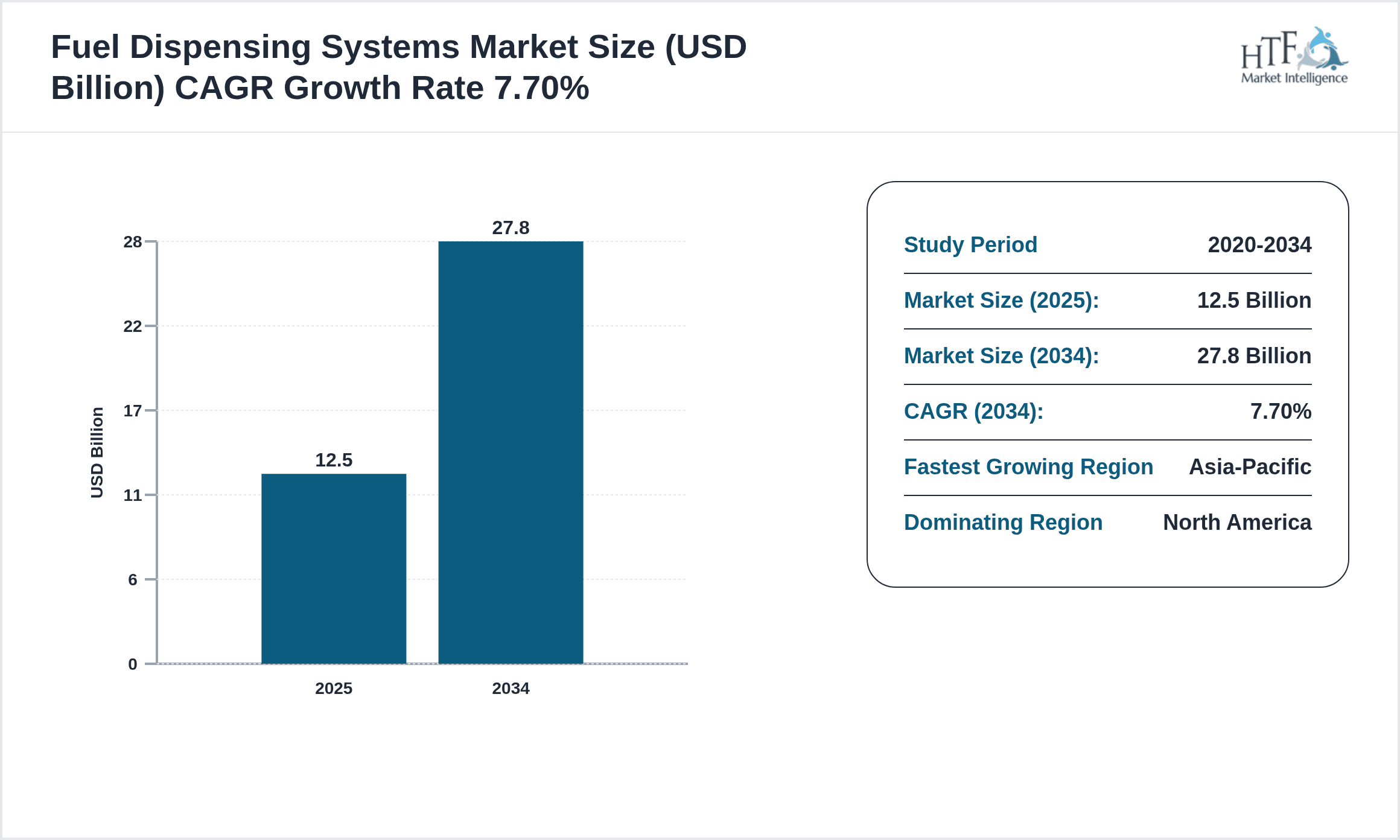
- •Key market highlights include a base market size of USD 12.5 Billion in 2024, projected to reach USD 27.8 Billion by 2034, reflecting a robust CAGR of 7.7%. The market is led by automatic fuel dispensers, which dominate due to their efficiency and technological integration. Retail fuel stations remain the largest application segment, driven by increasing vehicle ownership and fuel consumption globally. North America currently dominates the market, benefiting from advanced infrastructure and stringent regulatory frameworks, while Asia-Pacific is identified as the fastest-growing region due to rapid industrialization and expanding transportation sectors. The market's growth is also fueled by innovations in mobile fuel dispensers and metering systems that enhance operational flexibility and precision.
- •The strategic importance of the Fuel Dispensing Systems market spans multiple industries including automotive, aviation, marine, and industrial sectors. For stakeholders, these systems offer critical value propositions such as improved fuel management, enhanced safety, compliance with environmental standards, and cost efficiency. The integration of IoT and digital technologies enables real-time monitoring and predictive maintenance, reducing downtime and operational costs. Furthermore, the shift toward sustainable fuels and alternative energy sources presents opportunities for market expansion and product innovation. Industry players and investors focus on leveraging these trends to capture emerging market segments and enhance competitive positioning globally.
Competitive Landscape
The global Fuel Dispensing Systems market is characterized by intense competition among established multinational corporations and specialized regional players. Market dynamics revolve around innovation, technological integration, and service differentiation to meet evolving customer demands and regulatory requirements. Leading companies invest heavily in R&D to develop advanced dispensing technologies such as IoT-enabled systems, digital metering, and environmentally compliant solutions that reduce emissions and improve fuel accuracy. Strategic partnerships, mergers, and acquisitions are common tactics to enhance product portfolios and global reach. Pricing strategies focus on balancing cost competitiveness with value-added features, while distribution channels are optimized to ensure timely delivery and local support. The rivalry is further intensified by the entry of new players offering niche solutions tailored to emerging markets. Overall, competitive advantage is derived from product innovation, robust supply chains, regulatory compliance, and customer-centric service models.
Prominent Players in Fuel Dispensing Systems Market
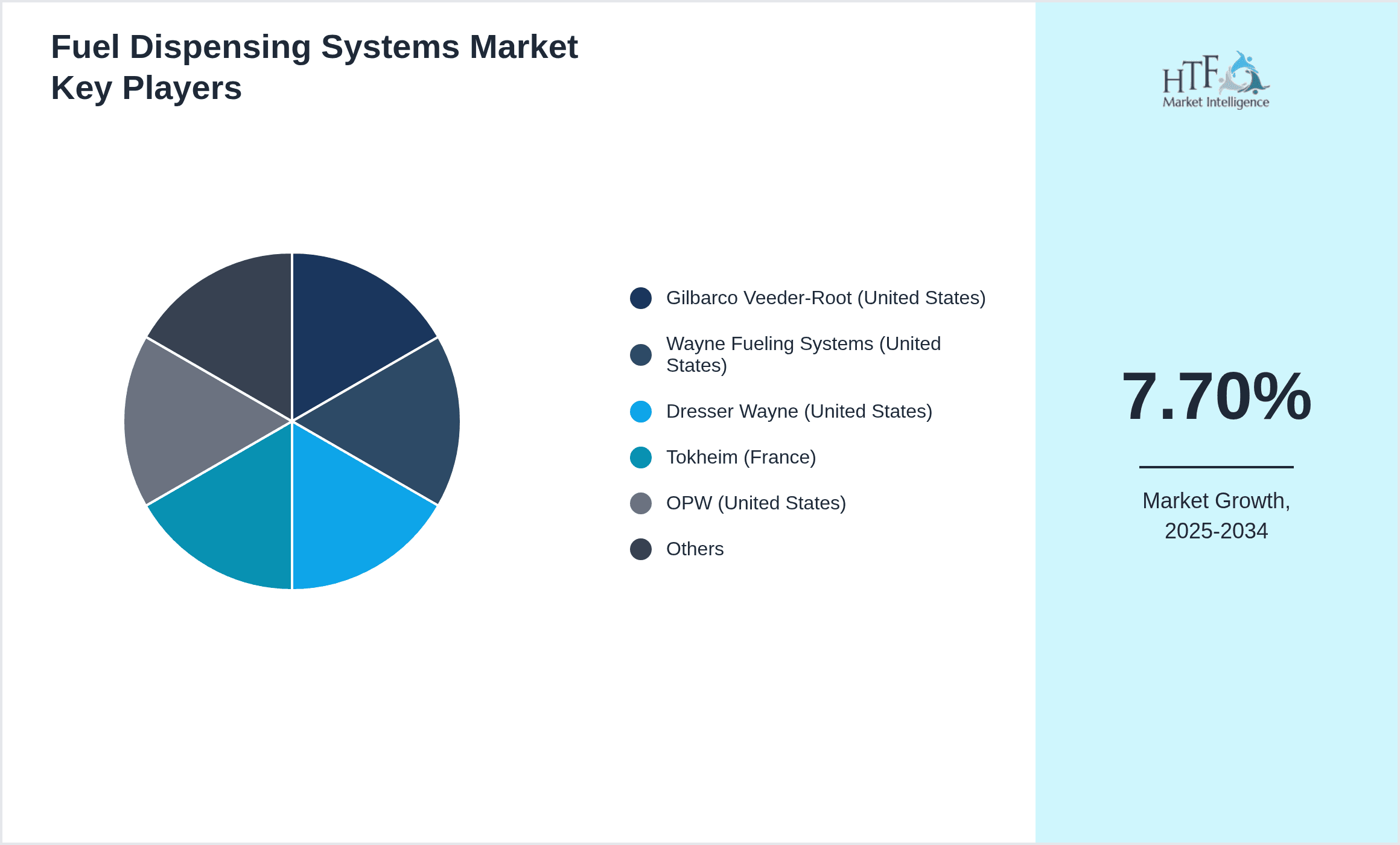
- •Gilbarco Veeder-Root (United States)
- •Wayne Fueling Systems (United States)
- •Dresser Wayne (United States)
- •Tokheim (France)
- •OPW (United States)
- •Hengyu Group (China)
- •Tatsuno Corporation (Japan)
- •Bennett Pump Company (United States)
- •Larsen & Toubro (India)
- •Petrotec (Portugal)
- •Piusi (Italy)
- •Bauer Kompressoren (Germany)
- •Baldwin Filters (United States)
- •Elaflex (Germany)
- •OPW Fuel Management Systems (United States)
- •Veeder-Root (United States)
- •Alemite Corporation (United States)
- •Petrolink (South Korea)
- •Syntech Systems (India)
- •Hytek Group (United States)
- •Tatsuno Engineering (Japan)
- •Zhejiang Yizhong Fluid Technology (China)
- •Oceania Fuel Systems (Australia)
- •Dover Fueling Solutions (United States)
- •Tokheim Group (France)
Market Breakdown
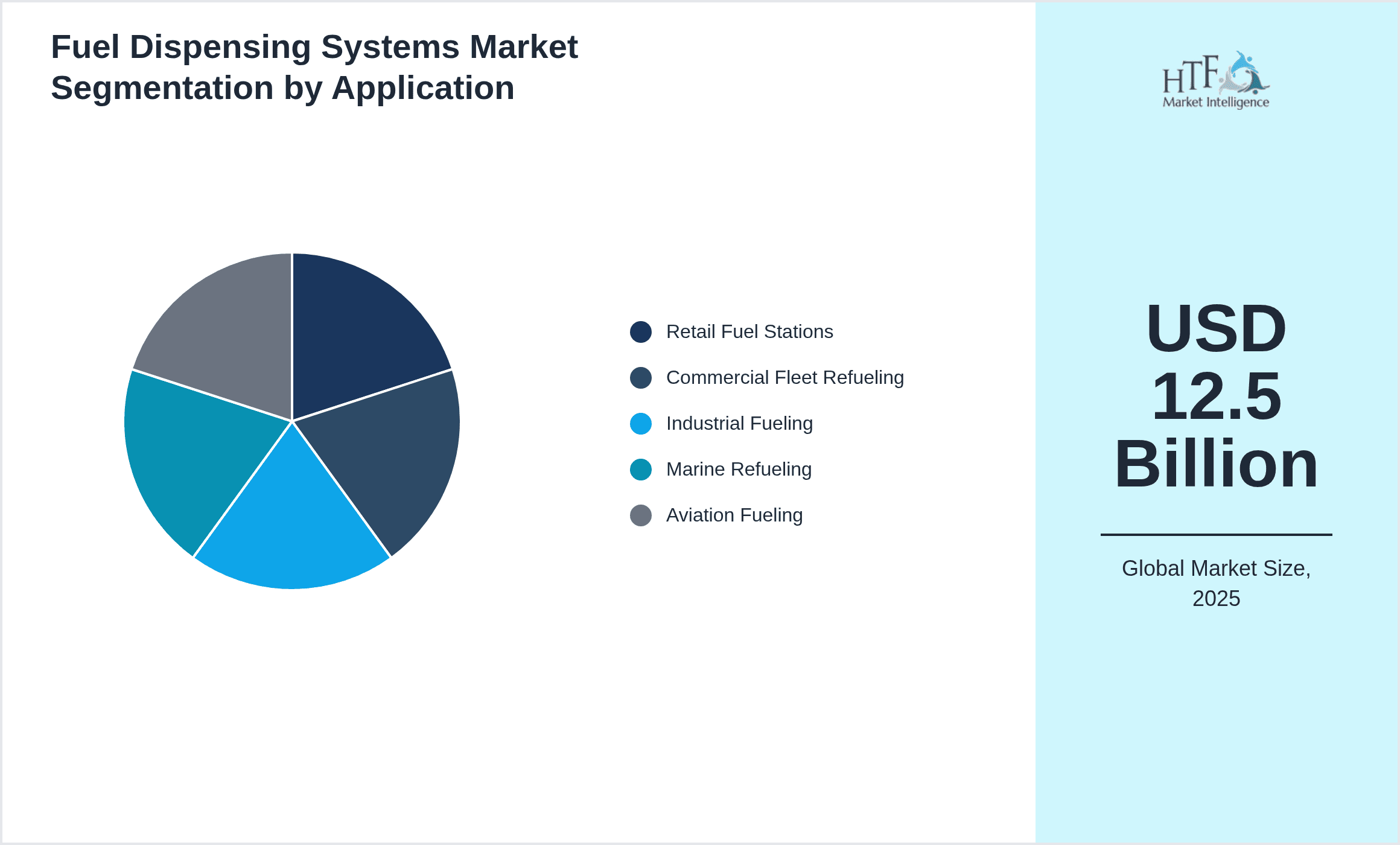
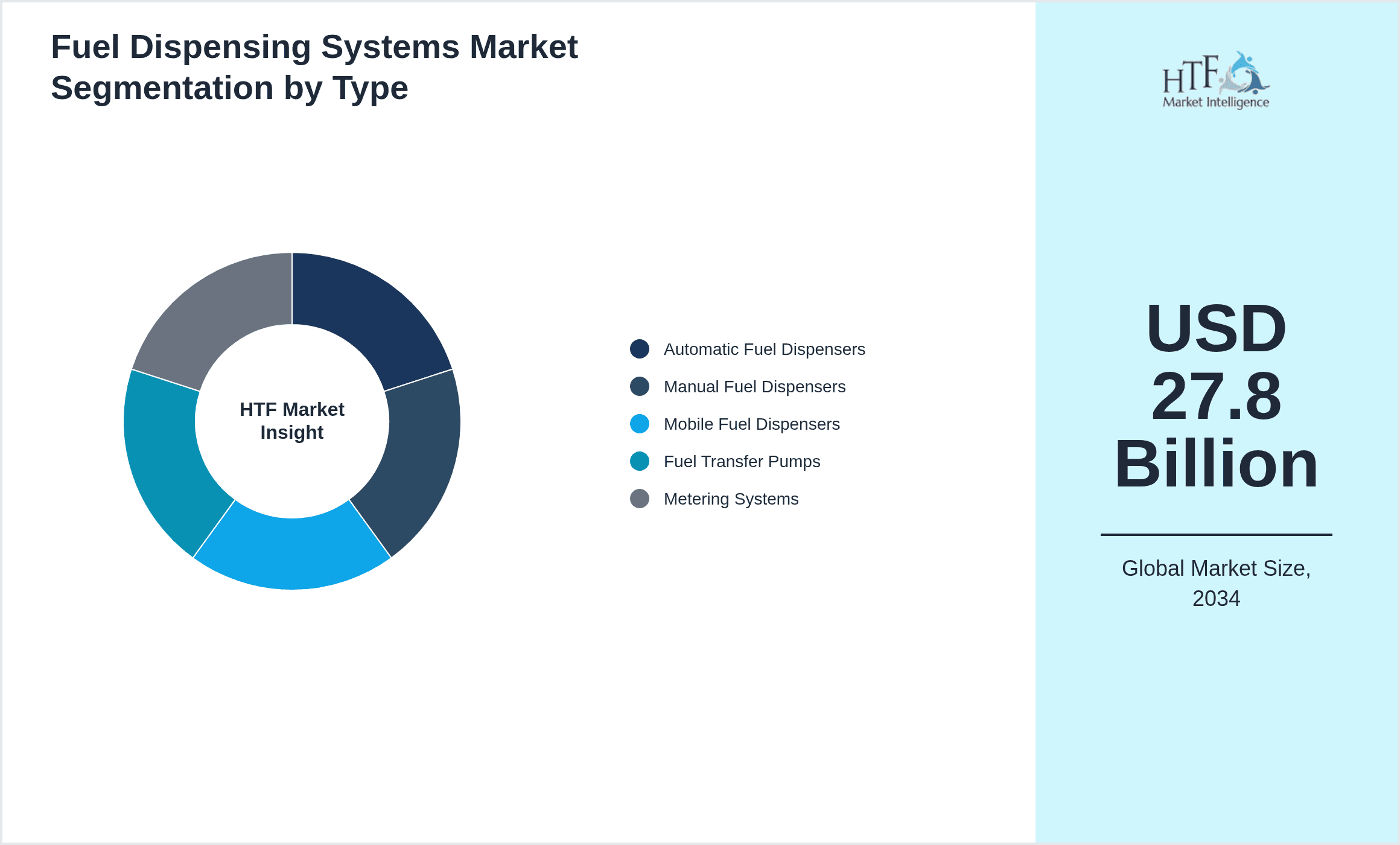
- •By Type
- ◦Automatic Fuel Dispensers
- ◦Manual Fuel Dispensers
- ◦Mobile Fuel Dispensers
- ◦Fuel Transfer Pumps
- ◦Metering Systems
- •By Application
- ◦Retail Fuel Stations
- ◦Commercial Fleet Refueling
- ◦Industrial Fueling
- ◦Marine Refueling
- ◦Aviation Fueling
- •By End User Sector
- ◦Automotive
- ◦Marine
- ◦Aviation
- ◦Industrial
- ◦Agriculture
- •By Technology Integration
- ◦IoT-Enabled Systems
- ◦Digital Metering
- ◦Environmental Compliance Technologies
Growth Dynamics
- •The global Fuel Dispensing Systems market is propelled by increasing demand for efficient and accurate fuel delivery solutions across expanding transportation and industrial sectors. Rising vehicle ownership worldwide, particularly in emerging economies, fuels the need for advanced retail fuel stations equipped with automatic dispensers. Additionally, commercial fleets and logistics companies invest in mobile refueling systems to enhance operational efficiency. Technological advancements such as IoT integration and digital metering improve reliability and reduce fuel losses, further driving adoption. Government initiatives promoting environmental compliance and fuel quality standards also encourage upgrades and modernization of existing systems. The growing emphasis on safety and emission reduction in fuel dispensing operations creates sustained demand, positioning the market for robust growth over the forecast period.
- •Another significant growth driver is the increasing investment in infrastructure development globally, including new fuel stations and industrial fuel handling facilities. Expansion of aviation and marine transport sectors necessitates specialized fueling systems that meet stringent safety and operational standards. The adoption of biofuels and alternative fuel types requires adaptable dispensing technologies, providing additional market impetus. Furthermore, the integration of smart technologies facilitates real-time monitoring and predictive maintenance, reducing operational costs and downtime. These factors combined create a favorable environment for market expansion, as stakeholders prioritize modernization and efficiency enhancements in fuel dispensing operations.
- •Corporate focus on sustainability and compliance with international environmental regulations compels fuel station operators and industrial users to upgrade to eco-friendly dispensing systems. This includes vapor recovery technologies, leak detection, and emission control features integrated into modern dispensers. Rising awareness about fuel theft prevention and accurate metering also motivates adoption of advanced systems with secure digital transactions. The growing trend of digital transformation in the energy sector supports the deployment of connected and automated fuel dispensing networks, enhancing operational transparency and customer experience. Collectively, these growth dynamics reinforce the market's positive trajectory through 2034.
- •The market also benefits from increasing government subsidies and incentives aimed at modernizing fuel infrastructure, particularly in developing regions. Enhanced focus on safety standards and accident prevention during fueling operations boosts demand for reliable and compliant dispensing equipment. Additionally, the rise of convenience stores integrated with fuel stations drives technology upgrades to provide seamless customer service and loyalty programs. The growing trend of fleet electrification encourages hybrid fueling solutions that support both traditional fuels and alternative energy sources, expanding product offerings. These trends collectively augment market growth by encouraging innovation and infrastructure investment globally.
- •Finally, strategic collaborations between technology providers and fuel retailers enable the development of customized solutions addressing specific operational challenges. The increasing use of data analytics and cloud computing in fuel management optimizes inventory control and cost efficiency. These innovations attract investments and partnerships, fostering competitive advantage among market participants. The continual evolution of fuel dispensing technology aligned with global energy transition initiatives presents significant growth opportunities. As a result, industry players are poised to capitalize on expanding markets, regulatory support, and technological advancements to sustain long-term market growth.
Market Trends
- •A prevailing trend in the Fuel Dispensing Systems market is the rapid adoption of IoT-enabled dispensers that provide real-time data analytics for fuel consumption, leak detection, and maintenance scheduling. This digital transformation enhances operational efficiency and reduces downtime, attracting significant interest from fuel retailers and industrial users. Leading companies are investing in smart fuel management systems that integrate seamlessly with enterprise resource planning platforms, facilitating comprehensive fuel asset management.
- •Sustainability is shaping the market with increased deployment of vapor recovery units and emission control technologies in fuel dispensers. Operators are prioritizing environmentally compliant systems to meet stringent regulations and reduce environmental impact. The trend towards biofuels and alternative fuel dispensing is also gaining traction, requiring adaptable and sophisticated metering solutions.
- •Another significant trend is the integration of contactless payment and advanced security features within fuel dispensing units. This enhances customer experience by reducing transaction times and improving safety. Companies are innovating in user interface design and mobile payment technologies to cater to evolving consumer preferences and regulatory mandates.
- •The market is witnessing increased collaborations between fuel dispensing system manufacturers and technology firms to develop AI-driven predictive maintenance and operational analytics. These partnerships aim to minimize equipment failure and optimize service schedules, thus improving uptime and customer satisfaction. Such strategic alliances are accelerating innovation cycles and expanding technological capabilities.
- •Lastly, the rise of mobile fueling services supported by compact and efficient mobile dispensers is transforming fuel delivery to commercial fleets and remote locations. This trend addresses logistical challenges and enhances fuel accessibility, especially in regions with limited infrastructure. Market players are focusing on portable, user-friendly systems to capitalize on this emerging demand.
Market Opportunities
- •The global Fuel Dispensing Systems market presents significant opportunities in emerging economies where fuel infrastructure is expanding rapidly. Investments in new retail fuel stations and commercial fueling facilities create demand for advanced dispensing technologies. Companies can leverage this growth by tailoring products to local market needs and regulatory environments, offering scalable and cost-effective solutions.
- •Rising demand for alternative and biofuels opens avenues for the development of specialized dispensers capable of handling diverse fuel types. This technological innovation enables market players to differentiate and access new customer segments. Additionally, integrating environmental compliance features into these systems positions companies favorably amid tightening regulations.
- •The shift towards digitalization and IoT integration in fuel management offers opportunities for service-based business models such as subscription-based maintenance and remote monitoring. This creates recurring revenue streams and enhances customer retention. Companies investing in software platforms and analytics can capitalize on this trend to provide value-added services.
- •Mobile fuel dispensing solutions tailored for fleet operators and remote locations represent a growing market niche. Developing compact, efficient, and easy-to-operate mobile dispensers can capture untapped demand and enhance market penetration. Strategic partnerships with logistics companies and fleet managers can accelerate adoption.
- •Collaborations with governments and regulatory bodies to support infrastructure modernization and environmental compliance provide opportunities for co-development and funding. Participation in public-private partnerships can enhance market visibility and accelerate technology deployment in key regions. These initiatives also facilitate compliance with evolving standards, reducing market entry barriers.
Market Challenges
- •One of the primary challenges facing the Fuel Dispensing Systems market is the high initial capital expenditure required for upgrading to advanced and environmentally compliant technologies. Small and medium-sized fuel station operators may delay modernization due to budget constraints, hindering market penetration and growth in certain regions.
- •Stringent and varying regulatory frameworks across countries complicate product development and compliance efforts for manufacturers. Navigating diverse safety, environmental, and quality standards requires substantial investment in certification and testing, increasing time-to-market and costs.
- •The market also contends with technical challenges related to integrating legacy systems with new digital and IoT-enabled dispensing technologies. Compatibility issues and the need for specialized technical support can deter adoption among existing infrastructure owners, slowing technological transition.
- •Fluctuating fuel prices and geopolitical uncertainties impact capital investments in fuel infrastructure, causing unpredictable demand patterns. Economic downturns or regulatory changes affecting fuel consumption can reduce order volumes and affect market stability.
- •Supply chain disruptions, including raw material shortages and logistic delays, pose challenges for timely production and delivery of fuel dispensing equipment. These issues are exacerbated by global events such as pandemics or trade restrictions, increasing operational risks for manufacturers and suppliers.
Regulatory Framework
- •Between 2020 and 2024, numerous countries implemented updated safety and environmental regulations impacting the Fuel Dispensing Systems market. For example, stricter emission standards for vapor recovery systems and leak detection requirements became mandatory, compelling operators to upgrade equipment. These regulations aim to reduce air pollution and enhance operational safety at fuel dispensing sites.
- •Enforcement mechanisms include regular inspections, certification processes, and penalties for non-compliance, which have driven manufacturers to innovate and comply proactively. The evolving regulatory landscape has also spurred the development of advanced monitoring and automated control technologies integrated within dispensers.
- •International standards such as those from the International Organization for Standardization (ISO) and regional bodies like the European Union’s Environmental Directives have influenced market requirements, promoting harmonization of safety and quality benchmarks. These standards facilitate cross-border trade and adoption of best practices.
- •Specific mandates for the adoption of digital metering and IoT-enabled systems have been introduced in developed markets, encouraging transparency and real-time data availability. These policies support efficient fuel management and fraud prevention, benefiting all stakeholders.
- •Government initiatives promoting infrastructure modernization, sustainability, and energy transition provide incentives and funding to accelerate compliance and technology upgrades. These policy frameworks have positively impacted market growth by reducing financial barriers and fostering innovation in fuel dispensing technologies.
Market Intelligence
- •15th January 2024, Gilbarco Veeder-Root launched its latest line of IoT-enabled automatic fuel dispensers featuring enhanced real-time monitoring capabilities and improved energy efficiency. Targeted at retail fuel stations and commercial fleets, these dispensers integrate advanced digital metering and cloud-based analytics platforms to optimize fuel management and reduce operational costs. The initiative supports operators in meeting stringent environmental regulations while enhancing customer experience through faster and more secure transactions. This innovation positions the company to strengthen its market leadership amid growing demand for smart fuel dispensing solutions. Source: Official Gilbarco Veeder-Root Press Release
- •22nd March 2023, Tokheim (France) introduced a new mobile fuel dispensing system designed for remote industrial and military applications. The compact and rugged design includes advanced safety features and digital flow metering, enabling precise fuel delivery in challenging environments. This product launch addresses increasing demand for flexible refueling solutions in emerging markets and supports sustainability goals by reducing fuel spillage and emissions. The system’s modular architecture allows easy integration with existing fleet management platforms, providing operational versatility. The innovation reflects Tokheim’s commitment to expanding its product portfolio and global footprint. Source: Tokheim Corporate Announcement
- •Recent market developments and strategic initiatives are continuously tracked through industry publications, company announcements, and regulatory filings. For the most current information, stakeholders are advised to monitor official corporate communications and recognized market intelligence platforms.
- •Recent market developments and strategic initiatives are continuously tracked through industry publications, company announcements, and regulatory filings. For the most current information, stakeholders are advised to monitor official corporate communications and recognized market intelligence platforms.
Regional Outlook
The North America currently holds a significant share of the market, primarily due to several key factors: increasing consumption rates, a burgeoning population, and robust economic momentum. These elements collectively drive demand, positioning this region as a leader in the market. On the other hand, Asia-Pacific is rapidly emerging as the fastest-growing area within the industry. This remarkable growth can be attributed to swift infrastructure development, the expansion of various industrial sectors, and a marked increase in consumer demand. These dynamics make this region a crucial player in shaping future market growth.
In our report, we cover a comprehensive analysis of the following regions and countries:
- North America
- LATAM
- West Europe
- Central & Eastern Europe
- Northern Europe
- Southern Europe
- East Asia
- Southeast Asia
- South Asia
- Central Asia
- Oceania
- MEA
| Feature | Details |
|---|---|
| Base Year Market Size | USD 12.5 Billion |
| Forecast Year Market Size | USD 27.8 Billion |
| CAGR | 7.7% |
| Forecast Period | 2026 to 2033 |
| YoY Growth | 7.4% |
| Scope of Report | Market is segmented by Type (Automatic Fuel Dispensers, Manual Fuel Dispensers, Mobile Fuel Dispensers, Fuel Transfer Pumps, Metering Systems), Application (Retail Fuel Stations, Commercial Fleet Refueling, Industrial Fueling, Marine Refueling, Aviation Fueling), End User Sector (Automotive, Marine, Aviation, Industrial, Agriculture), Technology Integration (IoT-Enabled Systems, Digital Metering, Environmental Compliance Technologies) |
| Regions Covered | North America, LATAM, West Europe, Central & Eastern Europe, Northern Europe, Southern Europe, East Asia, Southeast Asia, South Asia, Central Asia, Oceania, MEA |
| Key Companies | Gilbarco Veeder-Root (United States), Wayne Fueling Systems (United States), Dresser Wayne (United States), Tokheim (France), OPW (United States), Hengyu Group (China), Tatsuno Corporation (Japan), Bennett Pump Company (United States), Larsen & Toubro (India), Petrotec (Portugal), Piusi (Italy), Bauer Kompressoren (Germany), Baldwin Filters (United States), Elaflex (Germany), OPW Fuel Management Systems (United States), Veeder-Root (United States), Alemite Corporation (United States), Petrolink (South Korea), Syntech Systems (India), Hytek Group (United States), Tatsuno Engineering (Japan), Zhejiang Yizhong Fluid Technology (China), Oceania Fuel Systems (Australia), Dover Fueling Solutions (United States), Tokheim Group (France) |
Global Fuel Dispensing Systems Market Size, Growth & Revenue 2024-2034 - Table of Contents
Multidisciplinary researcher with 10+ years of experience uncovering insights across diverse domains focused on uncovering insights that drive informed decisions.
Frequently Asked Questions (FAQ):
The Market market is projected to grow at a steady CAGR from 2025 to 2030, driven by increasing demand and expansion in various applications.
North America currently leads the market, followed by Europe and Asia-Pacific.
Key growth drivers include increasing activities, rising demand for innovative solutions, technological advancements, and growing preference for efficient products.