
Global Clothing Labels Market - Outlook 2024-2034
Global Clothing Labels Market is segmented by Type (Woven Labels, Printed Labels, Heat Transfer Labels, Embroidered Labels, Leather Labels), Application (Branding, Care Instructions, Size Marking, Decorative, Security Labels), End User (Apparel Manufacturers, Retailers, Fashion Designers, Sportswear Companies), Distribution Channel (Direct Sales, Distributors, Online Platforms), and Geography (North America, LATAM, West Europe, Central & Eastern Europe, Northern Europe, Southern Europe, East Asia, Southeast Asia, South Asia, Central Asia, Oceania, MEA)
Pricing
Report Overview
Executive Summary
- •The global clothing labels market is a critical component of the apparel and textile industry, serving the dual function of branding and functional information dissemination. This market includes a variety of label types such as woven, printed, heat transfer, embroidered, and leather labels, each offering unique benefits. The scope extends to applications ranging from brand identification and care instructions to size marking and decorative purposes, with an increasing emphasis on security labeling to combat counterfeiting. Key industry drivers include rising fashion retail activities, growing demand for sustainable and customized labels, and advancements in labeling technologies. The market operates on a global scale with significant contributions from major regions including North America, Europe, Asia-Pacific, Latin America, and the Middle East & Africa. Stakeholders such as clothing manufacturers, brand owners, and retailers rely heavily on innovative labeling solutions to enhance product appeal and comply with regulatory requirements, driving continuous market evolution and expansion.
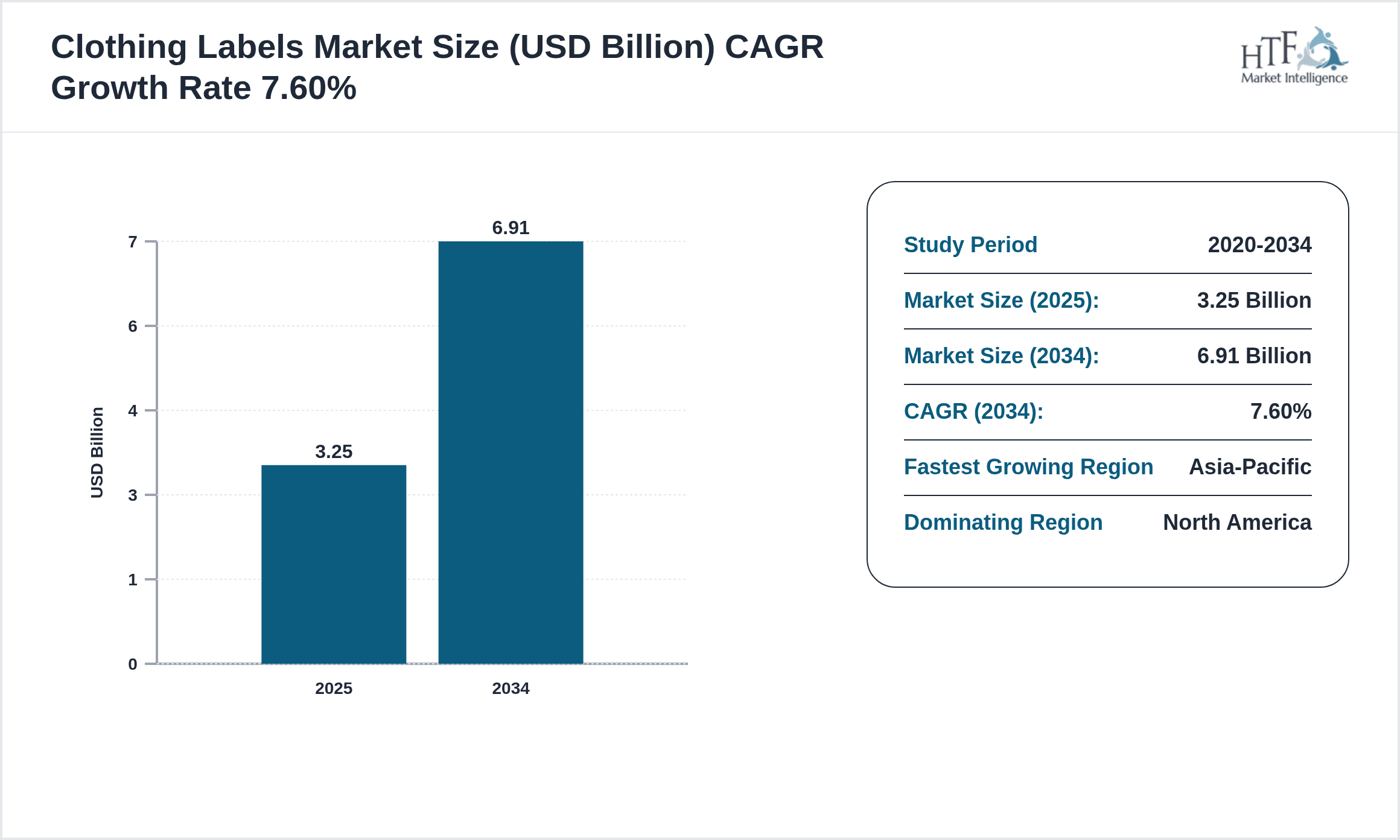
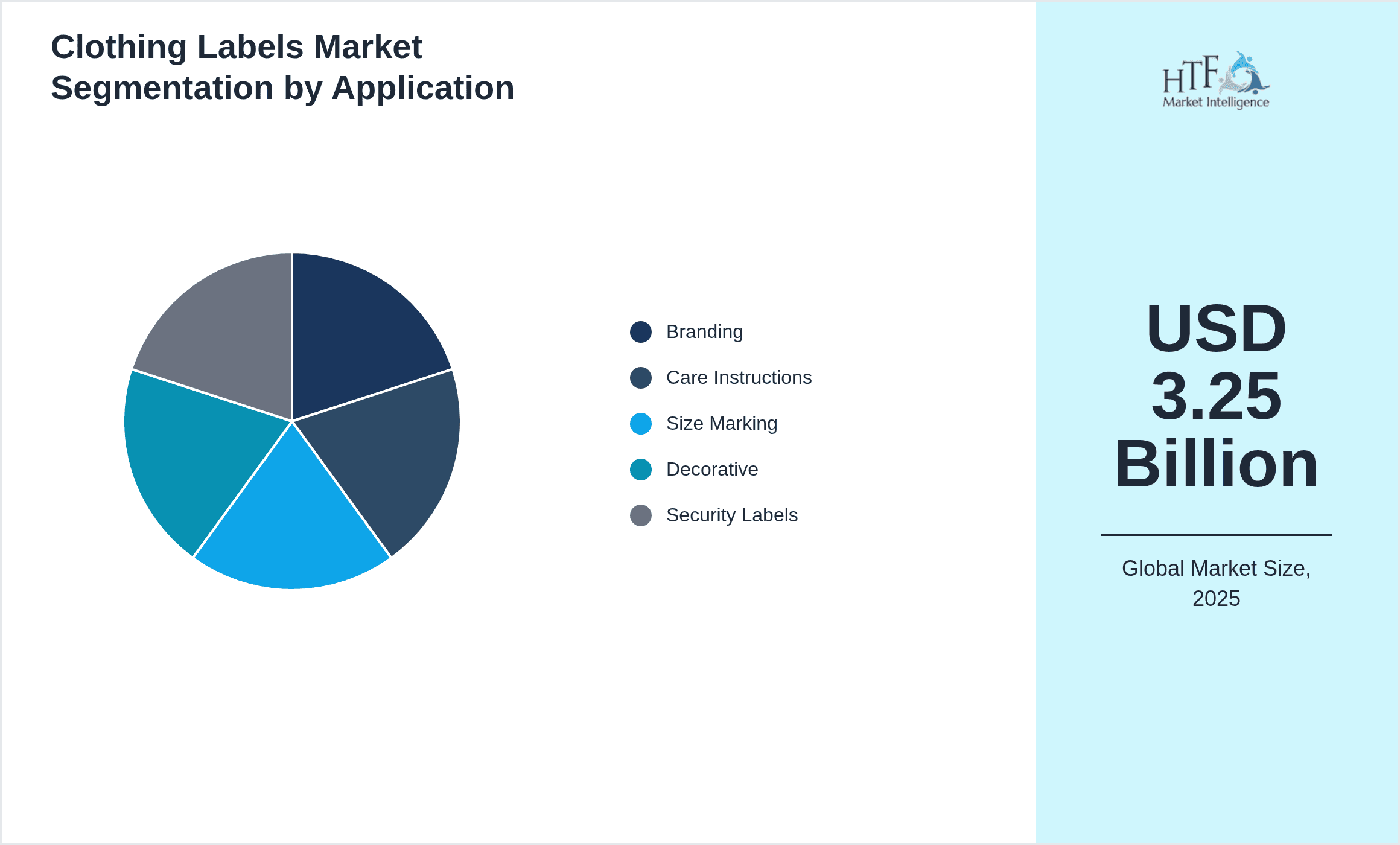
- •Key market highlights include a base market size of USD 3.25 Billion in 2024, projected to reach USD 6.91 Billion by 2034, reflecting a strong CAGR of 7.6%. The North American region currently dominates the market, while the Asia-Pacific region is expected to exhibit the fastest growth due to burgeoning textile industries and rising consumer demand. Woven labels hold a commanding market share as the leading product type, with heat transfer labels emerging as the fastest growing segment due to their versatility and aesthetic appeal. Application-wise, branding labels represent the largest segment, followed closely by care instruction labels. These data points underscore robust growth fueled by technological innovations and expanding applications within the global clothing labels market.
- •From a strategic perspective, the clothing labels market offers substantial value to apparel manufacturers, retail chains, and branding agencies by enabling product differentiation and regulatory compliance. The integration of advanced materials and printing techniques elevates the consumer experience and supports sustainability initiatives. Additionally, the rise of e-commerce and global fashion trends intensifies the need for distinct and secure labeling solutions. Consequently, companies investing in research and development of eco-friendly and smart labels are positioned to capitalize on emerging opportunities. The market’s dynamic nature necessitates vigilant monitoring of technological, regulatory, and consumer behavior shifts to sustain competitive advantage and foster long-term growth.
Competitive Landscape
The competitive environment in the global clothing labels market is characterized by intense rivalry among established multinational corporations and emerging regional players. Companies focus heavily on innovation, particularly in sustainable materials and digital printing technologies, to differentiate their offerings and meet evolving consumer demands. Strategic partnerships, mergers, and acquisitions are common to expand product portfolios and geographic reach. Pricing strategies vary by region and application, with premium branding labels commanding higher margins. Distribution channels include direct sales to apparel manufacturers, retail partnerships, and online platforms, reflecting a multi-channel approach. Market entry barriers are moderate, influenced by the need for technical expertise and compliance with international standards. Competitive advantages are often derived from intellectual property assets, customization capabilities, and supply chain efficiencies. Future trends indicate a shift towards smart labels embedded with RFID and authentication features, intensifying innovation-driven competition.
Leading Companies in Clothing Labels Market
- •Avery Dennison Corporation (United States)
- •CCL Industries Inc. (Canada)
- •SML Group (Hong Kong)
- •Avery Weigh-Tronix (United Kingdom)
- •Zhejiang Hailide New Material Co., Ltd. (China)
- •CCL Label (United States)
- •Labeltronix, Inc. (United States)
- •Lintec Corporation (Japan)
- •Multi-Color Corporation (United States)
- •Uflex Limited (India)
- •Mactac (United States)
- •Nexgen Packaging Inc. (Canada)
- •Omet S.p.A. (Italy)
- •Printec Group (Norway)
- •Reynolds Group Holdings Limited (United Kingdom)
- •Sato Holdings Corporation (Japan)
- •Shanghai Label Technology Co., Ltd. (China)
- •Stanley Security Solutions (United States)
- •Toppan Printing Co., Ltd. (Japan)
- •Ungerboeck Systems International (United States)
- •Veritiv Corporation (United States)
- •WestRock Company (United States)
- •Zebra Technologies Corporation (United States)
- •Zhejiang Huayuan Printing And Packaging Co., Ltd. (China)
- •Zhejiang Yisheng Packaging Technology Co., Ltd. (China)
Market Breakdown
- •By Type
- ◦Woven Labels
- ◦Printed Labels
- ◦Heat Transfer Labels
- ◦Embroidered Labels
- ◦Leather Labels
- •By Application
- ◦Branding
- ◦Care Instructions
- ◦Size Marking
- ◦Decorative
- ◦Security Labels
- •By End User
- ◦Apparel Manufacturers
- ◦Retailers
- ◦Fashion Designers
- ◦Sportswear Companies
- •By Distribution Channel
- ◦Direct Sales
- ◦Distributors
- ◦Online Platforms
Growth Dynamics
- •Rising global demand for fashionable and branded apparel is a primary growth driver, fueling increased consumption of high-quality clothing labels that enhance brand visibility and consumer trust. Apparel manufacturers seek innovative label types to differentiate their products in competitive markets.
- •Technological advancements, including digital printing and eco-friendly materials, have enabled manufacturers to produce customizable and sustainable clothing labels, appealing to environmentally conscious consumers and regulatory bodies.
- •The expansion of e-commerce platforms has increased the need for secure labeling solutions such as tamper-evident and RFID-enabled labels, which help in authenticating products and preventing counterfeiting in online retail.
- •Growth in emerging markets, especially in Asia-Pacific and Latin America, driven by rising disposable incomes and expanding textile industries, creates significant opportunities for market expansion and adoption of premium label types.
- •Stringent government regulations regarding labeling standards and product safety worldwide compel clothing manufacturers to adopt compliant labeling solutions, thereby driving demand for quality and standardized clothing labels.

Market Trends
- •The industry is witnessing a shift towards sustainable and biodegradable labeling materials, as environmental regulations and consumer preferences increasingly favor eco-friendly solutions in the fashion sector.
- •Integration of smart technologies such as RFID and NFC tags within clothing labels is gaining momentum, enhancing product traceability and customer engagement through interactive features.
- •Customization and personalization trends are growing, with brands investing in unique label designs and printing techniques to create distinct product identities and improve brand loyalty.
- •Digital printing technology adoption is transforming the market by enabling faster production cycles, reduced costs, and higher design flexibility for clothing labels.
- •Collaborations between label manufacturers and textile producers are increasing to develop integrated labeling solutions that improve garment durability and aesthetic appeal.

Market Opportunities
- •Emerging markets in Asia-Pacific and Latin America offer lucrative opportunities due to growing apparel manufacturing hubs and increasing consumer awareness about branding and product authenticity.
- •The rise of smart clothing and wearable technology presents new avenues for innovative label integration, including embedded sensors and interactive features.
- •Increasing demand for sustainable fashion encourages label manufacturers to develop eco-friendly materials and processes, opening new product lines and market segments.
- •Collaborative partnerships between clothing labels and fashion brands can lead to co-branded label solutions, enhancing market penetration and customer engagement.
- •Advancements in digital printing and automation provide opportunities to reduce production costs and lead times, appealing to both luxury and mass-market apparel segments.
Market Challenges
- •Volatility in raw material prices, especially for specialized fibers and eco-friendly substrates, poses cost challenges to label manufacturers, affecting profitability and pricing strategies.
- •Compliance with diverse international labeling regulations requires continuous monitoring and adaptation, increasing operational complexity for global clothing label producers.
- •The rise of counterfeit products pressures companies to invest heavily in security label technologies, which may increase production costs and require advanced expertise.
- •Limited awareness and adoption of advanced labeling technologies in developing regions hamper market penetration and innovation diffusion.
- •Intense competition and pricing pressures from numerous small-scale label producers challenge the market position of established players.
Regulatory Framework
- •Between 2019 and 2024, several regions implemented updated textile labeling standards mandating clear care instructions and fiber content disclosures to enhance consumer safety and product transparency. These regulations have driven demand for standardized and durable labeling materials.
- •The European Union introduced stricter regulations on chemical use in textiles, including labels, requiring compliance with REACH standards, which impacts material choices and manufacturing processes for clothing labels.
- •In North America, the FTC’s Textile Fiber Products Identification Act has been reinforced to ensure accurate labeling, compelling manufacturers to adopt high-quality labeling technologies to avoid penalties and recalls.
- •Asia-Pacific countries such as Japan and South Korea have enacted policies promoting eco-labeling and sustainable textile certifications, incentivizing manufacturers to adopt environmentally friendly labeling solutions.
- •Government initiatives worldwide supporting anti-counterfeiting measures have led to increased adoption of security labels embedded with RFID and holographic features, enhancing product authentication.
Market Intelligence
- •15th January 2025, Avery Dennison Corporation unveiled its new line of sustainable woven labels made from recycled materials, targeting eco-conscious apparel brands. This product integrates advanced durability features while reducing environmental impact, positioning the company as a leader in sustainable labeling solutions. The launch is expected to accelerate adoption of green labels in the global market, meeting growing regulatory and consumer demands for sustainability. Source: Avery Dennison Official Press Release
- •10th March 2025, CCL Industries Inc. introduced an innovative heat transfer label technology with enhanced colorfastness and elasticity, ideal for performance sportswear. The solution caters to rising demand for durable, high-quality labels compatible with activewear fabrics, enabling brand visibility without compromising garment comfort. This advancement is poised to capture significant market share in the rapidly expanding athletic apparel segment. Source: CCL Industries Newsroom
- •22nd May 2025, SML Group announced a strategic partnership with a leading textile manufacturer in Asia-Pacific to co-develop smart labels embedded with RFID for enhanced product authentication and inventory management. This collaboration aims to leverage SML’s technological expertise and regional manufacturing capabilities to meet rising anti-counterfeiting requirements, strengthening market presence in the fast-growing Asia-Pacific region. Source: SML Group Corporate Announcement
- •30th August 2025, Zhejiang Hailide New Material Co., Ltd. expanded its production capacity for eco-friendly printed labels in China, responding to increasing demand from domestic and international apparel brands focused on sustainability. The facility upgrade incorporates state-of-the-art printing technology, enabling higher throughput and customization options. This expansion is expected to enhance the company’s competitiveness and support the global shift towards environmentally responsible labeling. Source: Zhejiang Hailide Official Statement
Regional Outlook
The North America currently holds a significant share of the market, primarily due to several key factors: increasing consumption rates, a burgeoning population, and robust economic momentum. These elements collectively drive demand, positioning this region as a leader in the market. On the other hand, Asia-Pacific is rapidly emerging as the fastest-growing area within the industry. This remarkable growth can be attributed to swift infrastructure development, the expansion of various industrial sectors, and a marked increase in consumer demand. These dynamics make this region a crucial player in shaping future market growth.
In our report, we cover a comprehensive analysis of the following regions and countries:
- North America
- LATAM
- West Europe
- Central & Eastern Europe
- Northern Europe
- Southern Europe
- East Asia
- Southeast Asia
- South Asia
- Central Asia
- Oceania
- MEA
| Feature | Details |
|---|---|
| Base Year Market Size | USD 3.25 Billion |
| Forecast Year Market Size | USD 6.91 Billion |
| CAGR | 7.6% |
| Forecast Period | 2026 to 2033 |
| YoY Growth | 7.3% |
| Scope of Report | Market is segmented by Type (Woven Labels, Printed Labels, Heat Transfer Labels, Embroidered Labels, Leather Labels), Application (Branding, Care Instructions, Size Marking, Decorative, Security Labels), End User (Apparel Manufacturers, Retailers, Fashion Designers, Sportswear Companies), Distribution Channel (Direct Sales, Distributors, Online Platforms) |
| Regions Covered | North America, LATAM, West Europe, Central & Eastern Europe, Northern Europe, Southern Europe, East Asia, Southeast Asia, South Asia, Central Asia, Oceania, MEA |
| Key Companies | Avery Dennison Corporation (United States), CCL Industries Inc. (Canada), SML Group (Hong Kong), Avery Weigh-Tronix (United Kingdom), Zhejiang Hailide New Material Co., Ltd. (China), CCL Label (United States), Labeltronix, Inc. (United States), Lintec Corporation (Japan), Multi-Color Corporation (United States), Uflex Limited (India), Mactac (United States), Nexgen Packaging Inc. (Canada), Omet S.p.A. (Italy), Printec Group (Norway), Reynolds Group Holdings Limited (United Kingdom), Sato Holdings Corporation (Japan), Shanghai Label Technology Co., Ltd. (China), Stanley Security Solutions (United States), Toppan Printing Co., Ltd. (Japan), Ungerboeck Systems International (United States), Veritiv Corporation (United States), WestRock Company (United States), Zebra Technologies Corporation (United States), Zhejiang Huayuan Printing And Packaging Co., Ltd. (China), Zhejiang Yisheng Packaging Technology Co., Ltd. (China) |
Global Clothing Labels Market - Outlook 2024-2034 - Table of Contents
Frequently Asked Questions (FAQ):
The Compact Track Loaders market is projected to grow at a CAGR of 6.8% from 2025 to 2030, driven by increasing demand in construction and agricultural sectors.
North America currently leads the market with approximately 45% market share, followed by Europe at 28% and Asia-Pacific at 22%. The remaining regions account for 5% of the global market.
Key growth drivers include increasing construction activities, rising demand for versatile equipment in agriculture, technological advancements in track loader design, and growing preference for compact equipment in urban construction projects.