
Global Chainsaws Market Size, Growth & Revenue 2024-2034
Global Chainsaws Market is segmented by Application (Forestry, Agriculture, Landscaping, Construction, Firefighting), Type (Gas-Powered, Electric, Battery-Powered, Pneumatic, Hydraulic), and Geography (North America, LATAM, West Europe, Central & Eastern Europe, Northern Europe, Southern Europe, East Asia, Southeast Asia, South Asia, Central Asia, Oceania, MEA)
Pricing
Report Overview
Executive Summary
- •The global chainsaws market comprises a wide range of portable cutting tools designed for wood processing and removal across forestry, agriculture, landscaping, construction, and firefighting sectors. This market includes various chainsaw types such as gas-powered, electric, battery-powered, pneumatic, and hydraulic, each catering to different operational needs and preferences. The industry is characterized by ongoing advancements in battery efficiency and emission control technologies, driving shifts from traditional gas-powered models to more environmentally friendly electric and battery-operated alternatives. The market serves both professional and consumer segments, encompassing industrial-grade heavy-duty chainsaws for commercial forestry operations and lightweight models for residential lawn care and landscaping. Environmental regulations and increasing demand for noise reduction and ease of use are influencing product development and adoption. Global urbanization trends and the expansion of forestry management practices contribute to sustained demand. The market is geographically segmented into major regions including North America, Europe, Asia-Pacific, Latin America, and the Middle East & Africa, each with distinct growth dynamics and regulatory frameworks.
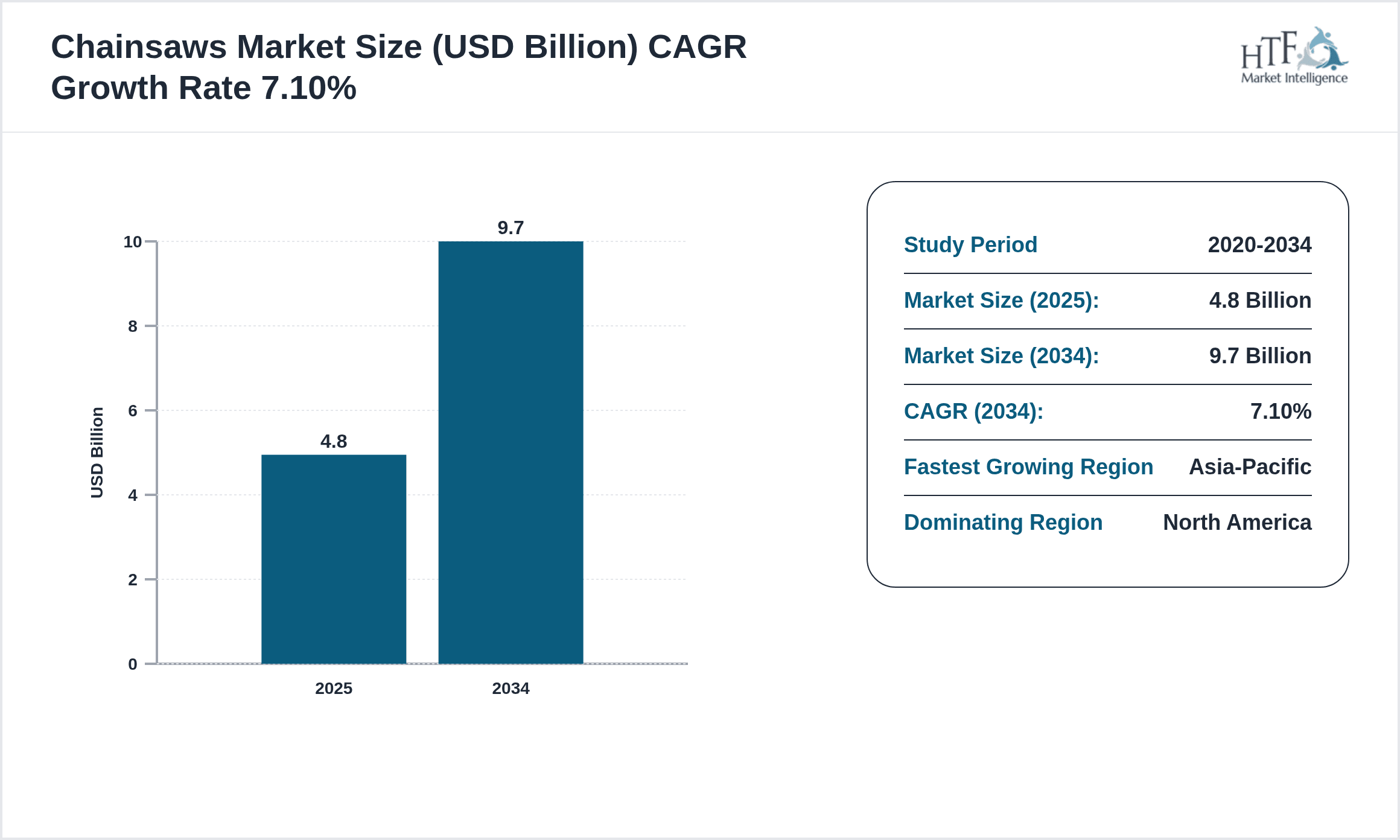
- •Key highlights include a robust compound annual growth rate (CAGR) of 7.1% projected from 2024 to 2034, with the market expected to nearly double in size from USD 4.8 billion in 2024 to USD 9.7 billion by 2034. Gas-powered chainsaws currently dominate due to their power and reliability in professional applications, while battery-powered chainsaws represent the fastest-growing segment driven by technological improvements and environmental policies. North America commands the largest market share, attributable to advanced infrastructure and strong demand in forestry and landscaping, whereas the Asia-Pacific region exhibits the highest growth rate fueled by expanding agricultural mechanization and rising construction activities. The market also experiences competitive pressure from evolving consumer preferences favoring lightweight and low-emission chainsaws. Key companies actively invest in R&D to innovate cordless technologies and improve safety standards, positioning themselves for future growth.
- •The global chainsaws market holds significant strategic importance for industries involved in natural resource management, agriculture, urban development, and emergency services. Its growth facilitates sustainable forestry practices, efficient agricultural maintenance, and enhanced landscaping quality. For manufacturers, the market offers opportunities for product differentiation through technology integration and compliance with stringent emission norms. Stakeholders including distributors, retailers, and end-users benefit from the increasing availability of ergonomic and eco-friendly chainsaw models. The market’s evolution is closely tied to regulatory developments and innovations that reduce environmental impact while improving operational efficiency and user safety. Overall, the chainsaws market acts as a critical enabler of productivity and environmental stewardship across multiple sectors worldwide.
Competitive Landscape
The global chainsaws market is highly competitive with numerous established players vying for market share through product innovation, strategic partnerships, and geographic expansion. Companies focus on developing advanced battery technologies, emissions-compliant engines, and ergonomic designs to differentiate their offerings. Innovation is a key competitive strategy, driving the introduction of lightweight cordless chainsaws and smart safety features such as automatic chain brakes and vibration reduction. The market sees frequent collaborations between manufacturers and distributors to enhance supply chains and service networks. Pricing strategies are adapted to regional purchasing power and regulatory compliance costs. Mergers and acquisitions play a pivotal role in consolidating market positions and expanding product portfolios. Regional competition is influenced by localized consumer preferences and regulatory frameworks, necessitating tailored marketing and R&D efforts. Future trends suggest intensified competition around sustainability and digital integration, including IoT-enabled chainsaws.
Leading Companies in Chainsaws Market
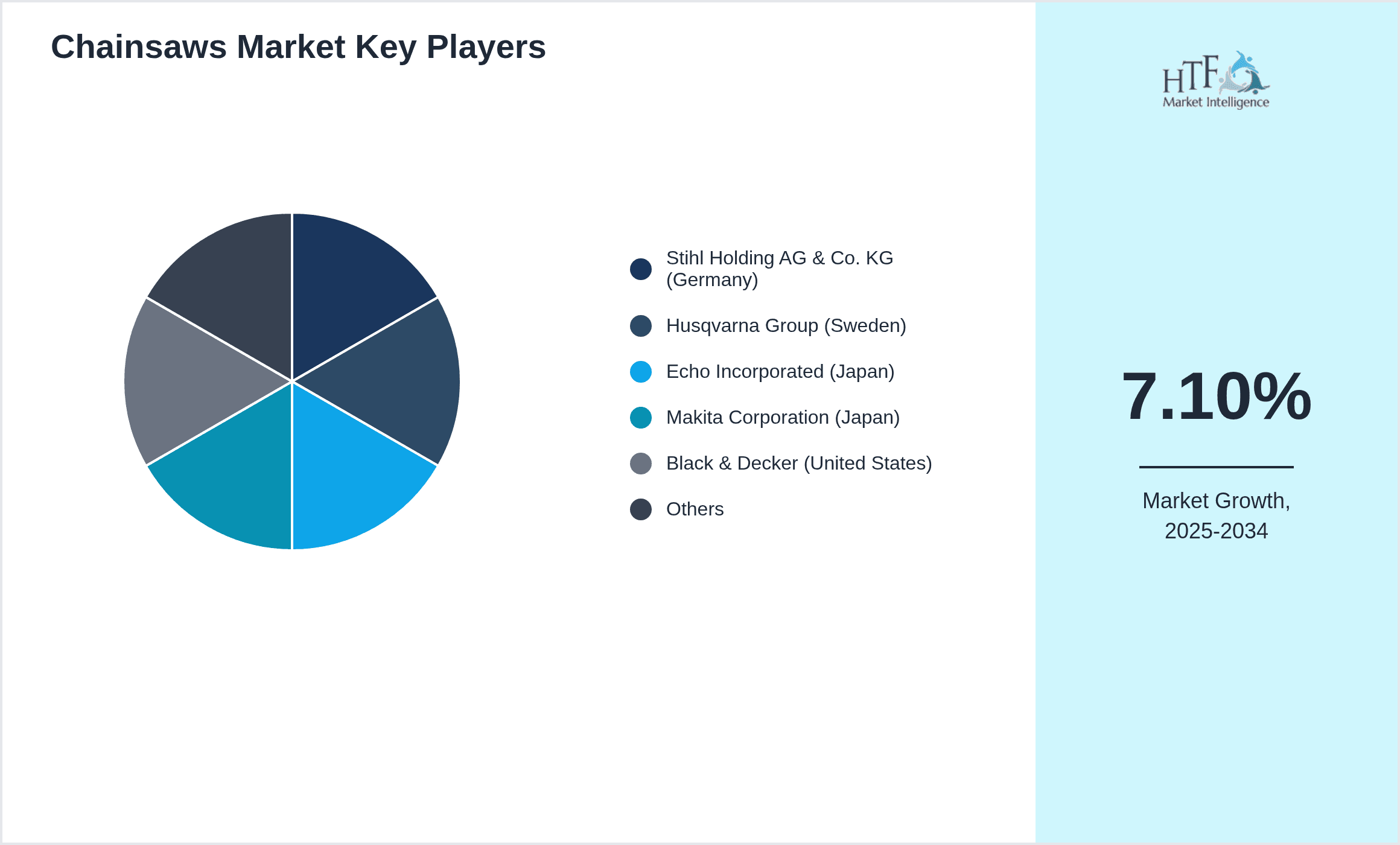
- •Stihl Holding AG & Co. KG (Germany)
- •Husqvarna Group (Sweden)
- •Echo Incorporated (Japan)
- •Makita Corporation (Japan)
- •Black & Decker (United States)
- •Greenworks Tools (United States)
- •Echo Bear Cat (United States)
- •Hitachi Koki Co., Ltd. (Japan)
- •Poulan (United States)
- •DeWalt (United States)
- •MTD Products (United States)
- •Jonsered (Sweden)
- •Remington Outdoor Company (United States)
- •Shindaiwa Inc. (Japan)
- •Greenworks Commercial (United States)
- •Tanaka Power Equipment (Japan)
- •Poulan Pro (United States)
- •Makita Europe (United Kingdom)
- •Ryobi Limited (Japan)
- •Toro Company (United States)
- •Craftsman (United States)
- •Kärcher GmbH & Co. KG (Germany)
- •Black & Decker Europe (United Kingdom)
- •EGO Power+ (United States)
- •Bosch Power Tools (Germany)
Chainsaws Market Breakdown
- •By Type
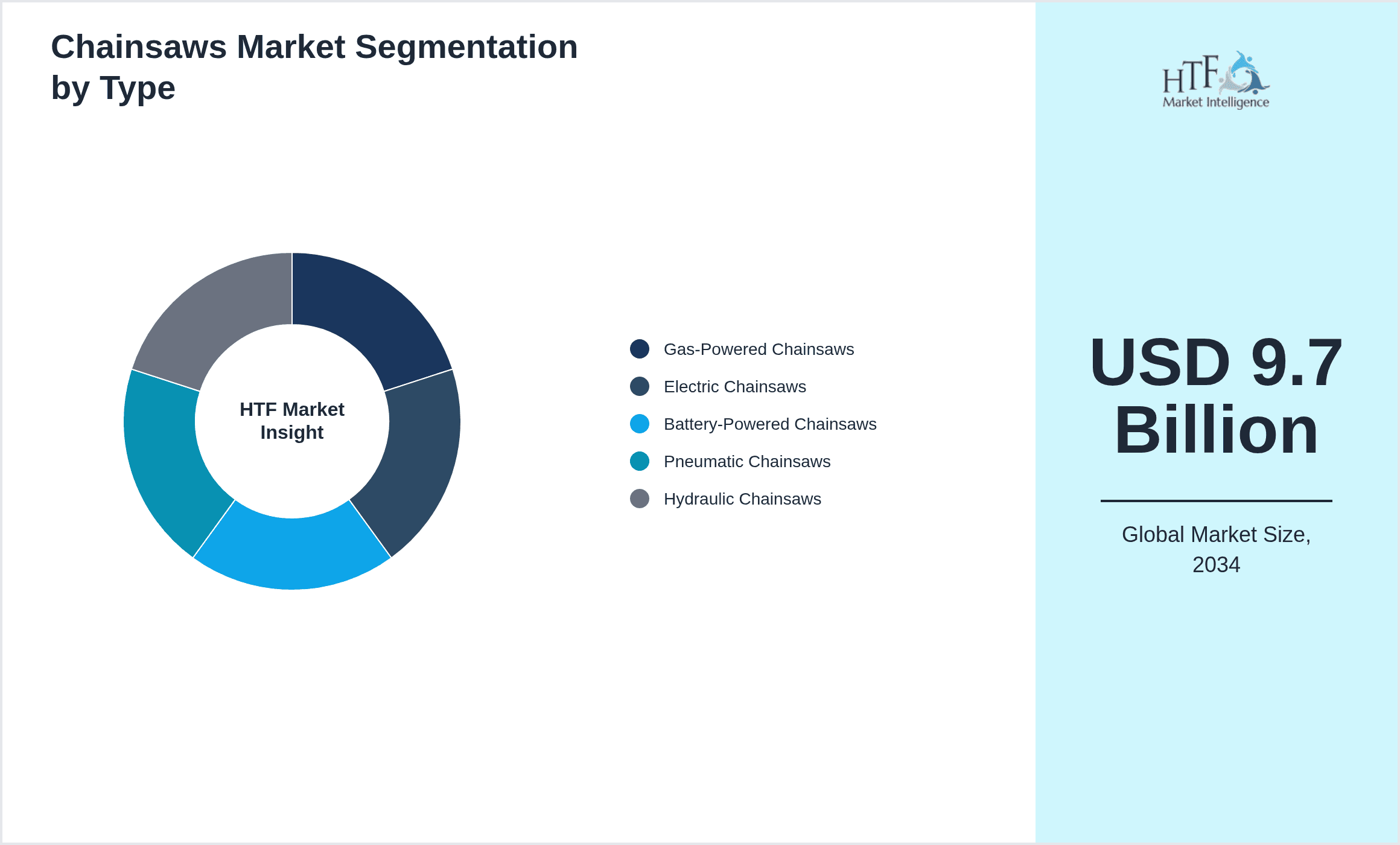
- ◦Gas-Powered Chainsaws
- ◦Electric Chainsaws
- ◦Battery-Powered Chainsaws
- ◦Pneumatic Chainsaws
- ◦Hydraulic Chainsaws
- •By Application
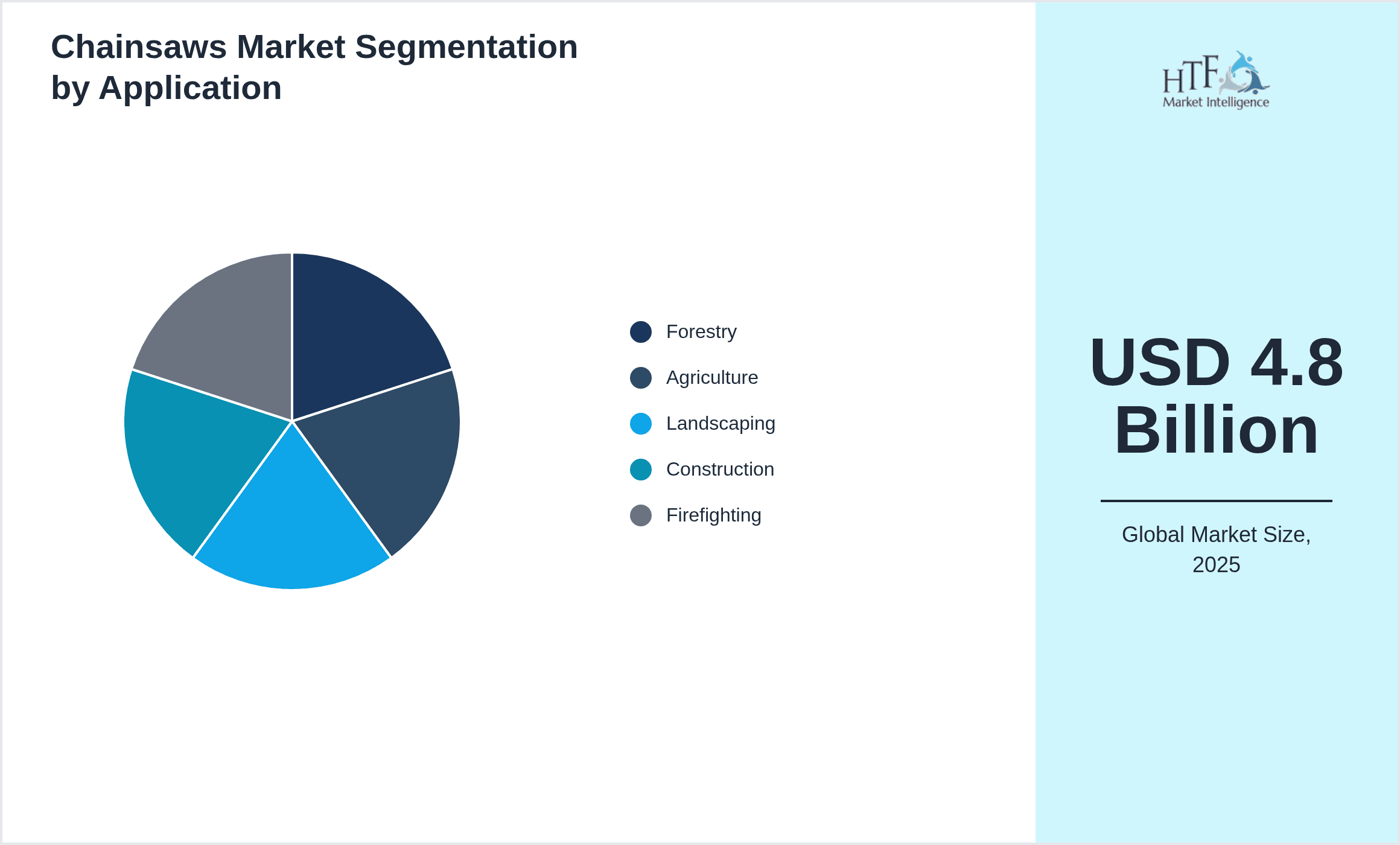
- ◦Forestry
- ◦Agriculture
- ◦Landscaping
- ◦Construction
- ◦Firefighting
- •By End-User Segment
- ◦Professional Users
- ◦Residential Users
- ◦Commercial Enterprises
- •By Distribution Channel
- ◦Offline Retail
- ◦Online Sales
- ◦Wholesale Distributors
Growth Dynamics
- •Rising demand for efficient forestry and agricultural equipment is a primary growth driver, with chainsaws playing a vital role in timber harvesting, land clearing, and crop management. This demand is driven by increased mechanization in developing regions and sustainable forestry initiatives in developed markets.
- •Technological advancements such as improved battery technology and electric motor efficiency have enabled the rise of cordless chainsaws, appealing to environmentally conscious users and expanding market penetration in urban landscaping and residential sectors.
- •Stringent environmental regulations targeting emissions and noise pollution from gas-powered chainsaws are accelerating the shift towards electric and battery-operated alternatives, fostering innovation and new product development among manufacturers.
- •Growing awareness about operator safety has led to the incorporation of advanced safety features like automatic chain brakes, anti-vibration systems, and ergonomic designs, which enhance user experience and market acceptance.
- •Expansion of e-commerce and online retail channels has improved product accessibility, enabling manufacturers to reach a broader customer base globally, thus supporting market growth and competitive differentiation.
Market Trends
- •The chainsaws market is witnessing a notable rise in demand for cordless battery-powered models due to increasing consumer preference for cleaner and quieter equipment, especially in residential and urban landscaping applications.
- •Integration of smart technologies such as IoT-enabled chainsaws with real-time performance monitoring and predictive maintenance capabilities is an emerging trend, helping professionals optimize operational efficiency and reduce downtime.
- •Manufacturers are adopting sustainable manufacturing practices, including the use of recyclable materials and energy-efficient production processes, aligning with global sustainability goals and consumer expectations.
- •Collaborations between chainsaw manufacturers and forestry management organizations to develop specialized equipment tailored for specific regional forestry conditions are becoming more common, enhancing product relevance and adoption.
- •There is an increasing trend towards compact and lightweight chainsaws, facilitating ease of use, portability, and reduced operator fatigue, which is especially popular among homeowners and landscaping professionals.
Market Opportunities
- •Growing urban forestry and green infrastructure initiatives provide significant opportunities for chainsaw manufacturers to develop specialized, low-emission, and quiet models suitable for city environments and noise-restricted zones.
- •Emerging markets in Asia-Pacific and Latin America present untapped potential due to increasing agricultural mechanization and infrastructure development, creating demand for affordable and durable chainsaw options.
- •Investment in battery technology innovation offers opportunities to enhance runtime, reduce charging time, and improve overall performance of battery-powered chainsaws, driving higher adoption rates.
- •Expanding online distribution channels and digital marketing strategies allow manufacturers to engage directly with end-users, improve brand visibility, and customize product offerings based on consumer feedback.
- •Collaborations with safety training organizations and forestry associations can foster brand loyalty and promote the adoption of advanced chainsaws featuring enhanced safety and ergonomic designs.
Market Challenges
- •High initial cost and maintenance requirements of advanced chainsaws, especially battery-powered models, pose affordability challenges for price-sensitive customers in emerging markets.
- •Limitations in battery technology, including shorter runtime and longer charging times compared to gas-powered alternatives, restrict widespread adoption in heavy-duty professional applications.
- •Environmental regulations, while promoting cleaner technologies, also increase compliance costs and operational complexities for manufacturers relying on traditional gas-powered chainsaw production.
- •Intense competition from both established players and new entrants results in pricing pressure and necessitates continuous innovation to maintain market share.
- •Supply chain disruptions and raw material price fluctuations impact production costs and delivery timelines, affecting overall market stability and growth momentum.
Regulatory Framework
- •Between 2019 and 2024, multiple regions implemented stricter emission standards targeting small internal combustion engines, compelling chainsaw manufacturers to reduce pollutant output and improve fuel efficiency. Compliance with Stage V emission norms in Europe and EPA regulations in North America has driven product redesigns and innovation in gas-powered chainsaws.
- •Noise pollution regulations have intensified in urban areas globally, mandating maximum decibel levels for outdoor power equipment including chainsaws. These requirements have accelerated the adoption of quieter electric and battery-powered models to meet local ordinances and consumer expectations.
- •Safety standards such as ANSI and ISO have been updated to include enhanced requirements for chain brake systems, anti-vibration features, and user protective equipment, influencing design and manufacturing processes.
- •Country-specific mandates in Asia-Pacific and Latin America emphasize certification and import regulations, ensuring product quality and safety compliance, thereby shaping market entry strategies for global manufacturers.
- •Government incentives and subsidies promoting electric outdoor power equipment have emerged in several regions to encourage environmentally friendly alternatives, creating favorable market conditions for battery-powered chainsaws.
Market Intelligence
- •15th January 2025, Stihl Holding AG & Co. KG launched a new line of battery-powered chainsaws featuring enhanced battery life and rapid charging technology targeting professional forestry users. This launch aims to capture the growing demand for eco-friendly outdoor power equipment while complying with stringent emission regulations. The new models incorporate advanced safety features such as automatic chain brakes and ergonomic designs to reduce operator fatigue. With this product introduction, Stihl aims to strengthen its leadership in the global chainsaws market and expand its customer base in urban and suburban areas.
- •10th March 2025, Husqvarna Group unveiled its latest electric chainsaw series designed for residential and landscaping customers, emphasizing noise reduction and lightweight construction. The launch includes integration with a mobile app for monitoring battery status and maintenance alerts, positioning the company at the forefront of smart outdoor equipment innovation. This strategic move aligns with increasing consumer demand for sustainable and user-friendly tools, supporting Husqvarna’s growth ambitions in the Asia-Pacific and European markets.
- •5th May 2024, Makita Corporation announced a strategic partnership with a leading battery technology firm to develop next-generation lithium-ion batteries aimed at extending runtime and reducing charging times for cordless chainsaws. This collaboration reflects Makita’s commitment to innovation and sustainability, targeting the expanding market for electric outdoor power tools. The partnership is expected to accelerate product development cycles and enhance competitive positioning in key global markets including North America and Europe.
- •20th September 2024, Black & Decker expanded its online retail presence globally by launching a dedicated e-commerce platform for outdoor power equipment, including chainsaws. This initiative supports direct-to-consumer sales, personalized marketing, and faster delivery options, enhancing customer engagement and brand loyalty. The platform also offers virtual demonstrations and customer support, leveraging digital channels to drive market penetration in emerging economies.
- •Source: Official company announcements and industry publications
Regional Outlook
The North America currently holds a significant share of the market, primarily due to several key factors: increasing consumption rates, a burgeoning population, and robust economic momentum. These elements collectively drive demand, positioning this region as a leader in the market. On the other hand, Asia-Pacific is rapidly emerging as the fastest-growing area within the industry. This remarkable growth can be attributed to swift infrastructure development, the expansion of various industrial sectors, and a marked increase in consumer demand. These dynamics make this region a crucial player in shaping future market growth.
In our report, we cover a comprehensive analysis of the following regions and countries:
- North America
- LATAM
- West Europe
- Central & Eastern Europe
- Northern Europe
- Southern Europe
- East Asia
- Southeast Asia
- South Asia
- Central Asia
- Oceania
- MEA
| Feature | Details |
|---|---|
| Base Year Market Size | USD 4.8 Billion |
| Forecast Year Market Size | USD 9.7 Billion |
| CAGR | 7.1% |
| Forecast Period | 2026 to 2033 |
| YoY Growth | 6.9% |
| Regions Covered | North America, LATAM, West Europe, Central & Eastern Europe, Northern Europe, Southern Europe, East Asia, Southeast Asia, South Asia, Central Asia, Oceania, MEA |
| Key Companies | Stihl Holding AG & Co. KG (Germany), Husqvarna Group (Sweden), Echo Incorporated (Japan), Makita Corporation (Japan), Black & Decker (United States), Greenworks Tools (United States), Echo Bear Cat (United States), Hitachi Koki Co., Ltd. (Japan), Poulan (United States), DeWalt (United States), MTD Products (United States), Jonsered (Sweden), Remington Outdoor Company (United States), Shindaiwa Inc. (Japan), Greenworks Commercial (United States), Tanaka Power Equipment (Japan), Poulan Pro (United States), Makita Europe (United Kingdom), Ryobi Limited (Japan), Toro Company (United States), Craftsman (United States), Kärcher GmbH & Co. KG (Germany), Black & Decker Europe (United Kingdom), EGO Power+ (United States), Bosch Power Tools (Germany) |
Global Chainsaws Market Size, Growth & Revenue 2024-2034 - Table of Contents
Research enthusiast focused on transforming data uncovering into actionable insights through data-driven decision-making.
Frequently Asked Questions (FAQ):
The Compact Track Loaders market is projected to grow at a CAGR of 6.8% from 2025 to 2030, driven by increasing demand in construction and agricultural sectors.
North America currently leads the market with approximately 45% market share, followed by Europe at 28% and Asia-Pacific at 22%. The remaining regions account for 5% of the global market.
Key growth drivers include increasing construction activities, rising demand for versatile equipment in agriculture, technological advancements in track loader design, and growing preference for compact equipment in urban construction projects.