
Global Vinyl Toluene Market Size, Growth & Revenue 2024-2034
Global Vinyl Toluene Market is segmented by Vinyl Toluene Product Type (Pure Vinyl Toluene, Modified Vinyl Toluene, Vinyl Toluene Copolymers, Vinyl Toluene Resins, Other Vinyl Toluene Derivatives), Application Segment (Adhesives & Sealants, Coatings, Plastic Additives, Rubber & Elastomers, Others (Printing Inks, Textiles)), End-Use Industry (Automotive, Construction, Consumer Goods, Electronics, Packaging), Distribution Channel (Direct Sales, Distributors & Wholesalers, Online Platforms), and Geography (North America, LATAM, West Europe, Central & Eastern Europe, Northern Europe, Southern Europe, East Asia, Southeast Asia, South Asia, Central Asia, Oceania, MEA)
Pricing
Report Overview
Executive Summary
- •The Global Vinyl Toluene Market is a critical segment within the chemical industry, involving the manufacture and application of vinyl toluene derivatives used in adhesives, coatings, plastic additives, and rubber sectors. This market's scope includes pure vinyl toluene, modified variants, copolymers, and resin forms, serving a broad spectrum of industrial applications. Vinyl toluene's chemical properties such as thermal stability and compatibility with polymers make it indispensable in enhancing product performance across automotive, construction, and consumer goods industries worldwide. Increasing demand for high-performance adhesives and coatings, coupled with advancements in polymer chemistry, propels market growth. The industry is shaped by evolving regulatory frameworks, sustainability initiatives, and innovation in production processes. Geographically, North America leads in market share due to advanced industrial infrastructure, while Asia-Pacific is projected to grow rapidly driven by expanding manufacturing bases and urbanization. This report delivers comprehensive insights into market segmentation, competitive landscape, growth drivers, challenges, and future opportunities through 2034.
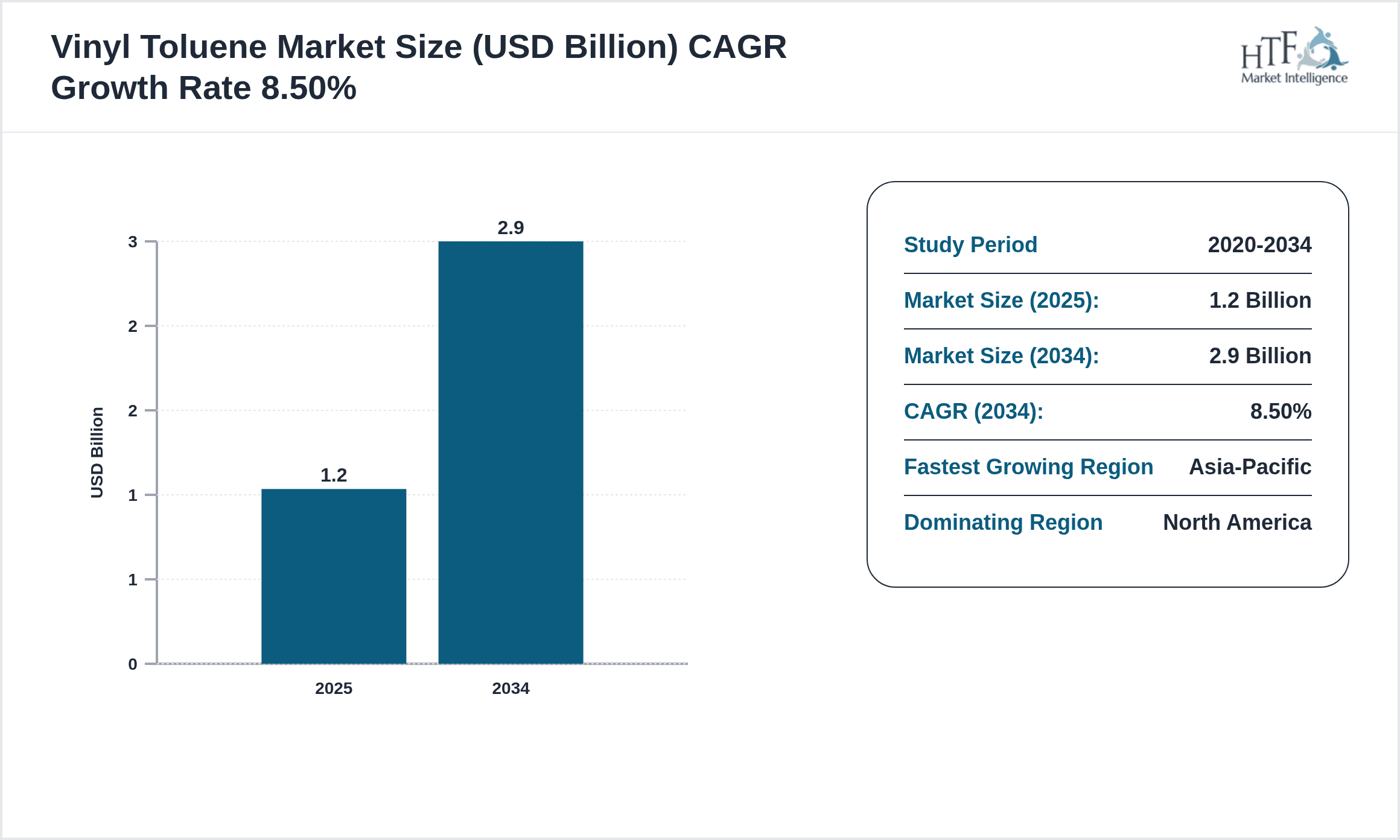
- •Noteworthy market highlights include a projected CAGR of 8.5% from 2024 to 2034, with the market value expected to reach USD 2.9 Billion by 2034 from USD 1.2 Billion in 2024. Pure vinyl toluene dominates the product landscape, whereas vinyl toluene copolymers exhibit the fastest growth rate. Adhesives and sealants remain the largest application segment, closely followed by coatings. North America holds the largest market share, but Asia-Pacific is the fastest-growing region, driven by rapid industrialization and infrastructure development. These growth indicators underscore the increasing adoption of vinyl toluene in diverse industries globally, highlighting significant investment and innovation opportunities.
- •The market's value proposition lies in vinyl toluene's ability to enhance product functionalities such as durability, adhesion, and chemical resistance, which are vital across automotive, construction, and consumer product manufacturing. Its strategic importance is evident as industries seek sustainable and high-performance materials to meet stringent regulations and consumer expectations. Stakeholders including chemical manufacturers, formulators, and end-users benefit from the expanding applications and technological advancements. Moreover, emerging markets present vast potential for expansion, making vinyl toluene a key component in the global chemical supply chain and a catalyst for industrial innovation and economic growth.
Competitive Landscape
The Global Vinyl Toluene Market exhibits a highly competitive environment characterized by the presence of diversified chemical manufacturers ranging from multinational corporations to regional players. Market competition is driven by technological innovation, product differentiation, and strategic partnerships. Companies invest heavily in research and development to enhance vinyl toluene formulations, improving performance and environmental compliance. Pricing strategies and capacity expansions are pivotal in maintaining market position, with some players focusing on vertical integration to streamline supply chains. Mergers and acquisitions also play a significant role in consolidating market share and expanding geographical footprints. The rivalry intensifies with the emergence of players in Asia-Pacific targeting rapid market growth. Continuous innovation, coupled with adherence to evolving regulations and sustainability standards, defines competitive dynamics. Future trends indicate increasing collaborations between chemical companies and end-user industries to develop customized vinyl toluene solutions, further intensifying market competition.
Leading Companies in Vinyl Toluene Market
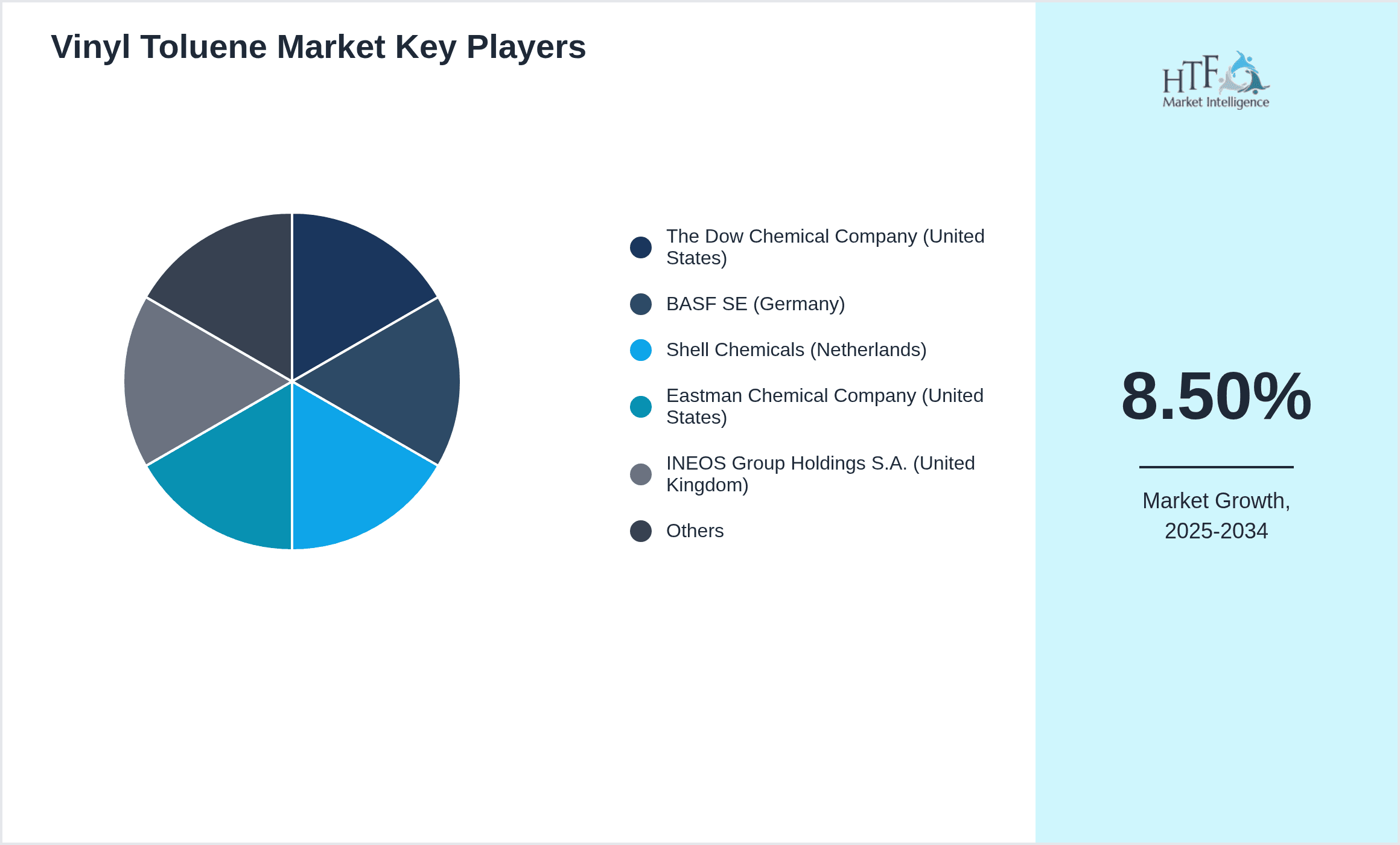
- •The Dow Chemical Company (United States)
- •BASF SE (Germany)
- •Shell Chemicals (Netherlands)
- •Eastman Chemical Company (United States)
- •INEOS Group Holdings S.A. (United Kingdom)
- •LG Chem Ltd. (South Korea)
- •Chevron Phillips Chemical Company (United States)
- •Sinopec Shanghai Petrochemical Company Limited (China)
- •Formosa Plastics Corporation (Taiwan)
- •PetroChina Company Limited (China)
- •Clariant AG (Switzerland)
- •Mitsubishi Chemical Corporation (Japan)
- •Evonik Industries AG (Germany)
- •LG Household & Health Care Ltd. (South Korea)
- •Sumitomo Chemical Co., Ltd. (Japan)
- •Wanhua Chemical Group Co., Ltd. (China)
- •Celanese Corporation (United States)
- •Ascend Performance Materials (United States)
- •LyondellBasell Industries N.V. (Netherlands)
- •SABIC (Saudi Arabia)
- •Covestro AG (Germany)
- •Huntsman Corporation (United States)
- •Eastman Chemical Company (United States)
- •Reliance Industries Limited (India)
- •Mitsui Chemicals, Inc. (Japan)

Market Breakdown
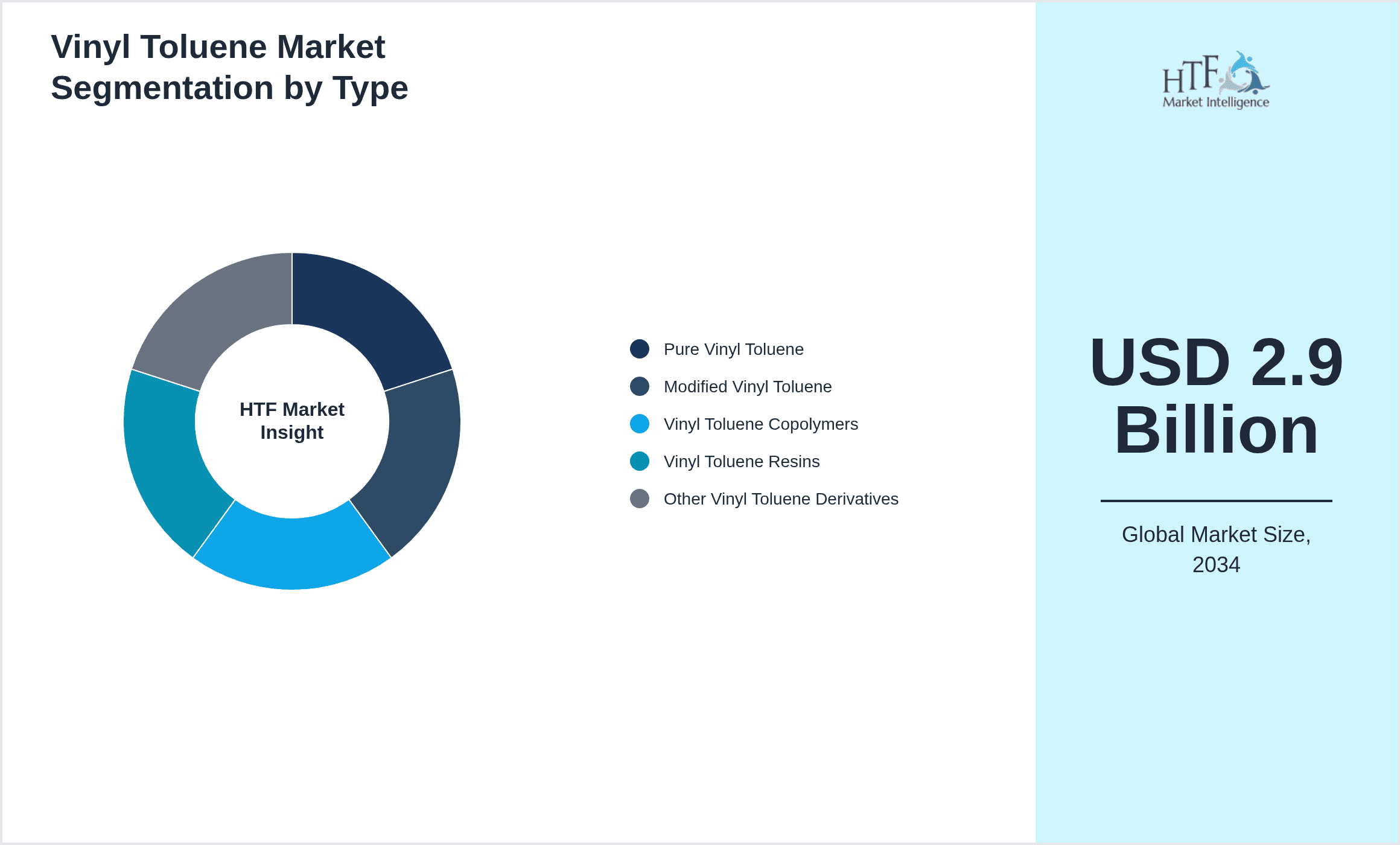
- •By Vinyl Toluene Product Type
- ◦Pure Vinyl Toluene
- ◦Modified Vinyl Toluene
- ◦Vinyl Toluene Copolymers
- ◦Vinyl Toluene Resins
- ◦Other Vinyl Toluene Derivatives
- •By Application Segment
- ◦Adhesives & Sealants
- ◦Coatings
- ◦Plastic Additives
- ◦Rubber & Elastomers
- ◦Others (Printing Inks, Textiles)
- •By End-Use Industry
- ◦Automotive
- ◦Construction
- ◦Consumer Goods
- ◦Electronics
- ◦Packaging
- •By Distribution Channel
- ◦Direct Sales
- ◦Distributors & Wholesalers
- ◦Online Platforms
Growth Dynamics
- •The growth of the Global Vinyl Toluene Market is primarily driven by the increasing demand for high-performance adhesives and sealants in automotive and construction industries. These sectors require materials offering superior bonding and durability, propelling vinyl toluene consumption.
- •Rapid urbanization and infrastructure development in emerging economies, particularly in the Asia-Pacific region, create substantial demand for coatings and plastic additives enhanced by vinyl toluene, supporting robust market expansion.
- •Advancements in polymer technology enable the production of modified and copolymer vinyl toluene varieties, offering improved chemical resistance and mechanical properties, which attract new applications and industry adoption.
- •Stringent environmental regulations promoting the use of eco-friendly and low-VOC materials encourage manufacturers to develop sustainable vinyl toluene-based products, aligning with global sustainability goals and driving market growth.
- •Strategic collaborations and partnerships between chemical producers and end-users foster innovation and customized solutions, enhancing market penetration and accelerating adoption of vinyl toluene in novel applications.
- •Increasing investments in research and development focused on improving vinyl toluene production efficiency and reducing manufacturing costs boost overall market competitiveness and accessibility.
- •Growing consumer preference for durable and high-quality consumer goods stimulates demand for vinyl toluene in the elastomers and plastics sectors, contributing to sustained market momentum.
Market Trends
- •The market is witnessing a trend toward the development of bio-based and greener vinyl toluene variants, driven by environmental concerns and consumer demand for sustainable products. Companies are investing in renewable feedstock sources to reduce carbon footprint.
- •Integration of advanced catalyst technologies in vinyl toluene synthesis processes enhances product purity and yield, enabling manufacturers to offer superior quality materials with consistent performance.
- •Emerging applications in electronics and packaging industries are leveraging vinyl toluene's chemical stability and adhesive properties, expanding the market beyond traditional sectors.
- •Digitalization and automation in chemical manufacturing facilitate real-time monitoring and quality control of vinyl toluene production, improving operational efficiency and reducing waste.
- •Collaborative innovation between chemical companies and academic institutions accelerates the discovery of novel vinyl toluene copolymers with enhanced functionalities tailored to specific end-use requirements.
- •Regional shifts in production capacities favor Asia-Pacific due to lower operational costs and supportive government policies, influencing global supply chain dynamics for vinyl toluene.
- •Sustainability-focused packaging trends stimulate demand for vinyl toluene-based plastic additives that improve recyclability and material performance, aligning with circular economy initiatives.
Market Opportunities
- •There is significant growth potential in developing high-performance vinyl toluene copolymers for specialty adhesives in the rapidly growing electronics and automotive sectors, which demand tailored chemical properties.
- •Expansion in emerging markets such as Latin America and the Middle East & Africa offers untapped demand for vinyl toluene-based coatings and sealants aligned with accelerating industrialization and infrastructure investments.
- •Innovations in eco-friendly vinyl toluene formulations present opportunities to capture environmentally conscious consumer segments and comply with tightening global regulations on chemical safety and emissions.
- •Strategic partnerships with end-user industries to co-develop customized vinyl toluene solutions can drive deeper market penetration and foster long-term customer loyalty.
- •Advancements in additive manufacturing and 3D printing open new application avenues for vinyl toluene-based materials with enhanced adhesive and mechanical properties.
- •Digital commerce and direct-to-customer distribution models can improve market access and reduce supply chain complexities, especially in niche and specialty vinyl toluene products.
- •Increasing focus on circular economy practices encourages development of recyclable vinyl toluene derivatives, creating a competitive edge and aligning with global sustainability trends.
Market Challenges
- •Volatility in raw material prices, particularly petrochemical feedstocks, poses significant cost challenges for vinyl toluene manufacturers, impacting pricing stability and profit margins.
- •Strict regulatory frameworks across regions necessitate continuous compliance efforts, increasing operational costs and complicating market entry for new players in the vinyl toluene market.
- •Environmental concerns related to VOC emissions and chemical waste management require manufacturers to invest in cleaner production technologies, which can be capital intensive and time-consuming.
- •Competition from alternative adhesive and coating chemistries such as acrylics and polyurethanes limits market share expansion for vinyl toluene-based products in certain applications.
- •Supply chain disruptions caused by geopolitical tensions and logistic challenges affect the consistent availability of vinyl toluene, especially in regions reliant on imports.
- •Lack of awareness and technical expertise among end-users in emerging markets restricts adoption of advanced vinyl toluene formulations, necessitating increased educational efforts.
- •High capital requirements for setting up production facilities and R&D capabilities act as barriers for new entrants and small-scale manufacturers in the market.
Regulatory Framework
- •Between 2019 and 2024, major regulatory bodies globally have implemented stricter VOC emission limits impacting vinyl toluene production and application processes, mandating manufacturers to adopt cleaner technologies and reformulate products to meet compliance.
- •The REACH regulation in Europe has introduced rigorous chemical safety evaluations for vinyl toluene compounds, requiring detailed hazard assessments and registration to ensure safe usage across industries.
- •In North America, the EPA has enforced updated air quality standards and occupational exposure limits for vinyl toluene emissions, influencing manufacturing practices and worker safety protocols.
- •Several Asian countries including China and India have enacted environmental protection laws focused on industrial emissions and waste management, compelling local producers to upgrade facilities and invest in pollution control systems.
- •Government incentives promoting sustainable chemical production, such as tax credits and grants for green technologies, have emerged in multiple regions encouraging the development of eco-friendly vinyl toluene products.
Market Intelligence
- •15th January 2025, BASF SE launched an advanced vinyl toluene copolymer product designed for high-performance adhesive applications in the automotive sector. The new product features enhanced thermal stability and bonding strength, enabling manufacturers to meet stringent durability requirements. This innovation is expected to boost BASF’s market share in the global vinyl toluene market and cater to growing demand in emerging economies. The launch aligns with BASF’s strategic focus on sustainable and high-value chemical solutions to drive growth.
- •2nd March 2025, The Dow Chemical Company announced a strategic partnership with a leading Asian coatings manufacturer to co-develop eco-friendly vinyl toluene-based coatings. The collaboration aims to reduce VOC emissions and improve product lifecycle sustainability, targeting regulations in Asia-Pacific markets. This initiative strengthens Dow’s position in the fast-growing Asia-Pacific region and exemplifies industry trends pushing towards green chemistry.
- •10th February 2025, Shell Chemicals expanded its vinyl toluene production capacity at its European manufacturing facility, investing USD 150 million in state-of-the-art process technologies. This expansion addresses increasing demand from the construction and automotive industries, enhancing supply reliability. The upgrade also incorporates energy-efficient measures, aligning with Shell’s sustainability commitments and market competitiveness.
- •28th April 2025, Eastman Chemical Company unveiled a novel vinyl toluene resin with superior chemical resistance targeted at the packaging industry. The product launch supports growing demand for durable and recyclable packaging materials, offering customers enhanced performance and sustainability benefits. Eastman’s innovation is poised to tap into the evolving consumer goods market trends emphasizing environmental responsibility.
- •Source: Official press releases, Company websites, Industry publications
Regional Outlook
The North America currently holds a significant share of the market, primarily due to several key factors: increasing consumption rates, a burgeoning population, and robust economic momentum. These elements collectively drive demand, positioning this region as a leader in the market. On the other hand, Asia-Pacific is rapidly emerging as the fastest-growing area within the industry. This remarkable growth can be attributed to swift infrastructure development, the expansion of various industrial sectors, and a marked increase in consumer demand. These dynamics make this region a crucial player in shaping future market growth.
In our report, we cover a comprehensive analysis of the following regions and countries:
- North America
- LATAM
- West Europe
- Central & Eastern Europe
- Northern Europe
- Southern Europe
- East Asia
- Southeast Asia
- South Asia
- Central Asia
- Oceania
- MEA
| Feature | Details |
|---|---|
| Base Year Market Size | USD 1.2 Billion |
| Forecast Year Market Size | USD 2.9 Billion |
| CAGR | 8.5% |
| Forecast Period | 2026 to 2033 |
| YoY Growth | 8.2% |
| Scope of Report | Market is segmented by Vinyl Toluene Product Type (Pure Vinyl Toluene, Modified Vinyl Toluene, Vinyl Toluene Copolymers, Vinyl Toluene Resins, Other Vinyl Toluene Derivatives), Application Segment (Adhesives & Sealants, Coatings, Plastic Additives, Rubber & Elastomers, Others (Printing Inks, Textiles)), End-Use Industry (Automotive, Construction, Consumer Goods, Electronics, Packaging), Distribution Channel (Direct Sales, Distributors & Wholesalers, Online Platforms) |
| Regions Covered | North America, LATAM, West Europe, Central & Eastern Europe, Northern Europe, Southern Europe, East Asia, Southeast Asia, South Asia, Central Asia, Oceania, MEA |
| Key Companies | The Dow Chemical Company (United States), BASF SE (Germany), Shell Chemicals (Netherlands), Eastman Chemical Company (United States), INEOS Group Holdings S.A. (United Kingdom), LG Chem Ltd. (South Korea), Chevron Phillips Chemical Company (United States), Sinopec Shanghai Petrochemical Company Limited (China), Formosa Plastics Corporation (Taiwan), PetroChina Company Limited (China), Clariant AG (Switzerland), Mitsubishi Chemical Corporation (Japan), Evonik Industries AG (Germany), LG Household & Health Care Ltd. (South Korea), Sumitomo Chemical Co., Ltd. (Japan), Wanhua Chemical Group Co., Ltd. (China), Celanese Corporation (United States), Ascend Performance Materials (United States), LyondellBasell Industries N.V. (Netherlands), SABIC (Saudi Arabia), Covestro AG (Germany), Huntsman Corporation (United States), Eastman Chemical Company (United States), Reliance Industries Limited (India), Mitsui Chemicals, Inc. (Japan) |
Global Vinyl Toluene Market Size, Growth & Revenue 2024-2034 - Table of Contents
Frequently Asked Questions (FAQ):
The Compact Track Loaders market is expected to see value worth 5.3 Billion in 2025.
North America currently leads the market with approximately 45% market share, followed by Europe at 28% and Asia-Pacific at 22%. The remaining regions account for 5% of the global market.
Key growth drivers include increasing construction activities, rising demand for versatile equipment in agriculture, technological advancements in track loader design, and growing preference for compact equipment in urban construction projects.