
Southeast Asia Sheet Metal Fabrication Machines Market Size, Growth & Revenue 2025-2034
Southeast Asia Sheet Metal Fabrication Machines Market is segmented by Sheet Metal Fabrication Machine Type (CNC Punching Machines, Laser Cutting Machines, Press Brakes, Shearing Machines, Plasma Cutting Machines), Application Sector (Automotive Manufacturing, Construction, Electronics, Aerospace, Heavy Machinery), Service Type (Installation and Commissioning, Maintenance and Repair, Training Services, Consultation and Technical Support), Deployment Model (On-Premise Machines, Automated Fabrication Systems, Hybrid Manual-Automated Models), and Geography (Singapore, Malaysia, Thailand, Indonesia, Vietnam, Philippines, Others)
Pricing
Report Overview
Executive Summary
- •The Southeast Asia Sheet Metal Fabrication Machines market encompasses a broad range of machinery designed for cutting, bending, and shaping sheet metal, essential for manufacturing components in automotive, construction, electronics, aerospace, and heavy machinery industries. The market's scope includes CNC punching machines, laser cutting machines, press brakes, shearing machines, and plasma cutting machines. These machines offer precision, automation capabilities, and efficiency improvements, supporting both small-scale and large manufacturing enterprises. The value chain integrates raw material suppliers, machine producers, distributors, after-sales service providers, and end users, reflecting a complex ecosystem influenced by technological innovation and regional industrial expansion. With increasing demand driven by rapid urbanization and infrastructure projects, the market is positioned for substantial growth. Southeast Asia’s industrial diversification and government initiatives to enhance manufacturing competitiveness further reinforce market expansion. This report provides a detailed analysis of market size, segmentation, growth drivers, challenges, and competitive landscape, offering stakeholders actionable insights for strategic planning and investment decisions.
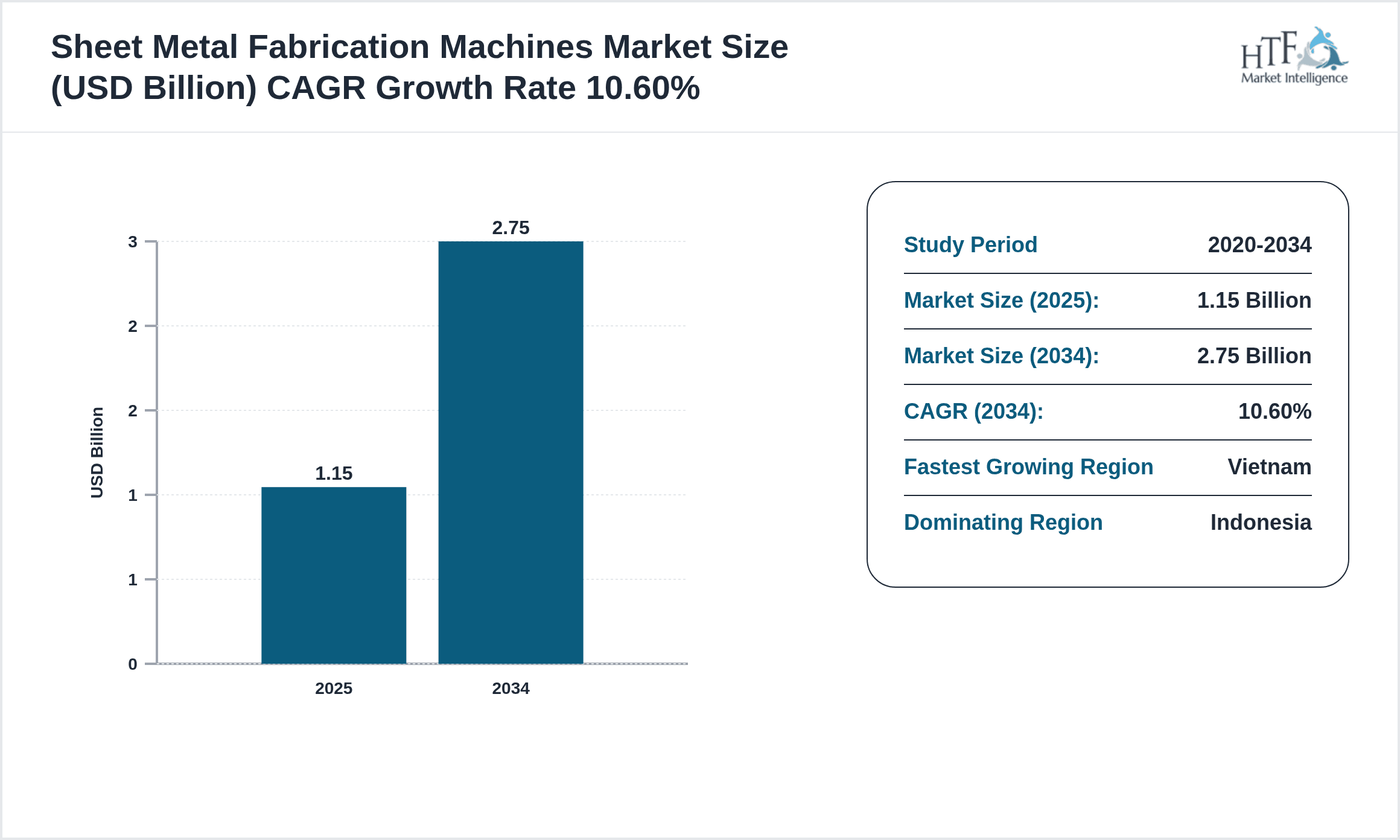
- •Key highlights of the Southeast Asia market include a base market size of USD 1.15 billion in 2025, with a projected growth to USD 2.75 billion by 2034, reflecting a robust CAGR of 10.6%. Laser cutting machines dominate the product segment due to their precision and versatility, while CNC punching machines are identified as the fastest growing type driven by automation trends. The automotive and construction sectors represent the largest application areas, propelled by regional infrastructure development and industrialization. Indonesia leads as the dominating country by market share, while Vietnam is recognized as the fastest growing market, benefiting from expanding manufacturing bases and favorable government policies.
- •This market presents significant value propositions to stakeholders including machine manufacturers, distributors, end users, and investors. The integration of advanced technologies such as Industry 4.0, IoT, and AI in sheet metal fabrication enhances operational efficiency and product quality, meeting evolving industrial demands. The strategic importance of this market is underscored by increasing demand for lightweight, durable metal components across sectors. Moreover, the market's growth supports regional economic development and industrial modernization initiatives, making it a critical focus area for policymakers and industry players aiming for sustainable competitive advantage in Southeast Asia.
Competitive Landscape
The Southeast Asia Sheet Metal Fabrication Machines market exhibits a competitive environment characterized by a mix of global machinery manufacturers and regional suppliers who adopt differentiated strategies to capture market share. Players focus on innovation, product customization, and after-sales service excellence to meet diverse customer requirements across automotive, construction, and electronics industries. Strategic partnerships and collaborations enable technology transfer and local adaptation, while pricing strategies balance quality and cost competitiveness in this price-sensitive market. Mergers and acquisitions, though limited, serve as a means to expand distribution networks and enhance technological capabilities. Market entry barriers include substantial capital investment, technical expertise requirements, and stringent regulatory compliance. Competitive advantages are often derived from the ability to offer comprehensive solutions integrating automation and smart manufacturing features. Regional competition varies, with Indonesia and Vietnam being focal points for investment and production. Future trends indicate increased emphasis on digitalization, sustainability, and supply chain integration, driving competitive dynamics in this evolving market.
Prominent Players in Sheet Metal Fabrication Machines Market
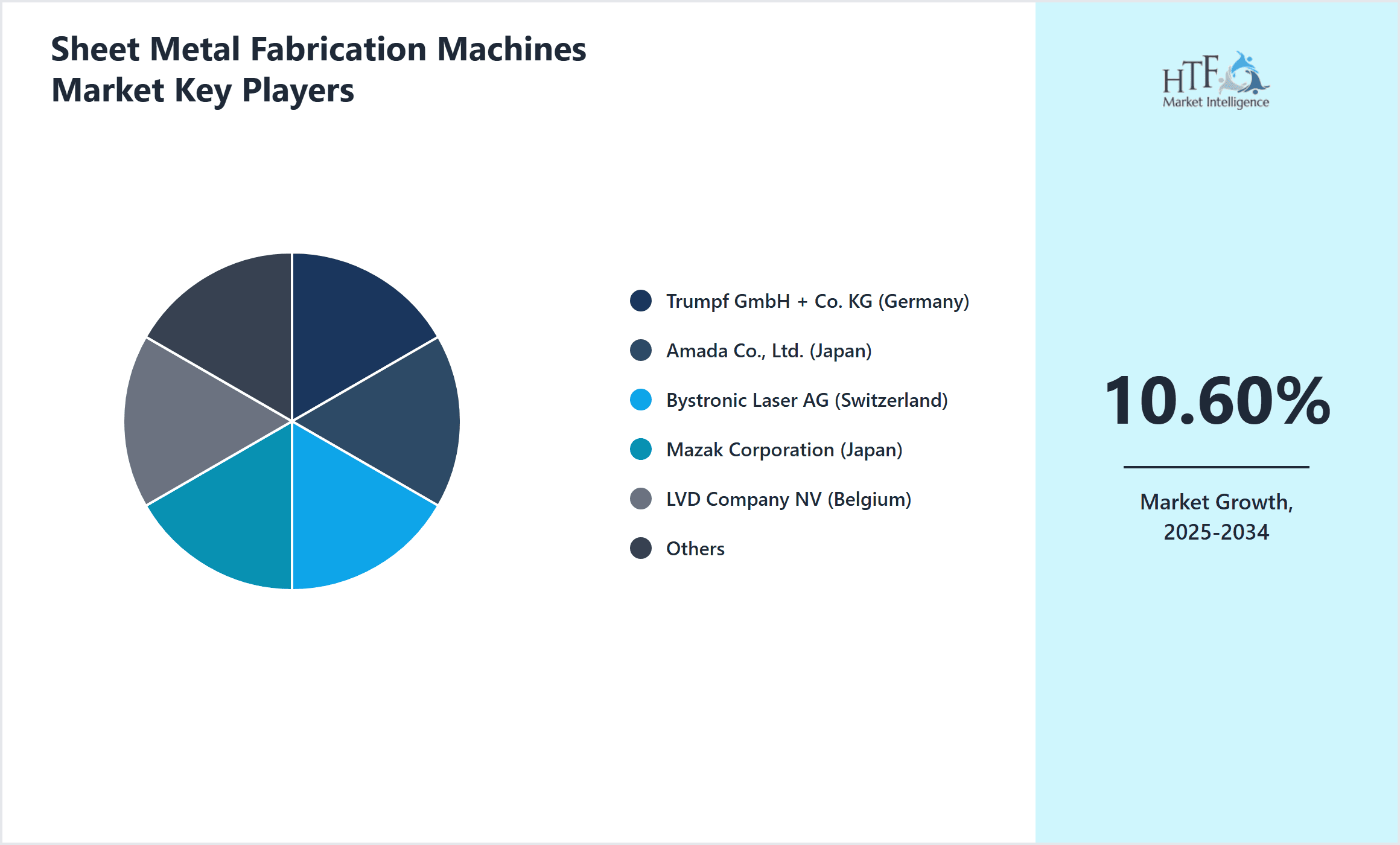
- •Trumpf GmbH + Co. KG (Germany)
- •Amada Co., Ltd. (Japan)
- •Bystronic Laser AG (Switzerland)
- •Mazak Corporation (Japan)
- •LVD Company NV (Belgium)
- •Komatsu Ltd. (Japan)
- •Haco Group (Belgium)
- •Durma Makina Sanayi ve Ticaret A.S. (Turkey)
- •Salvagnini Italia S.p.A. (Italy)
- •Mitsubishi Electric Corporation (Japan)
- •Fagor Arrasate S. Coop. (Spain)
- •Accurpress (Canada)
- •Prima Industrie S.p.A. (Italy)
- •Jinan Bodor CNC Machine Co., Ltd. (China)
- •Koike Aronson, Inc. (United States)
- •Durma Machinery (Turkey)
- •Toshiba Machine Co., Ltd. (Japan)
- •Messer Cutting Systems (Germany)
- •Baileigh Industrial (United States)
- •Cincinnati Incorporated (United States)
- •Feeler Machinery (Taiwan)
- •Amada Miyachi America, Inc. (United States)
- •Adira Machinery (Chile)
- •Ficep Corporation (Italy)
- •OMAG Srl (Italy)
Market Breakdown
- •By Sheet Metal Fabrication Machine Type
- ◦CNC Punching Machines
- ◦Laser Cutting Machines
- ◦Press Brakes
- ◦Shearing Machines
- ◦Plasma Cutting Machines
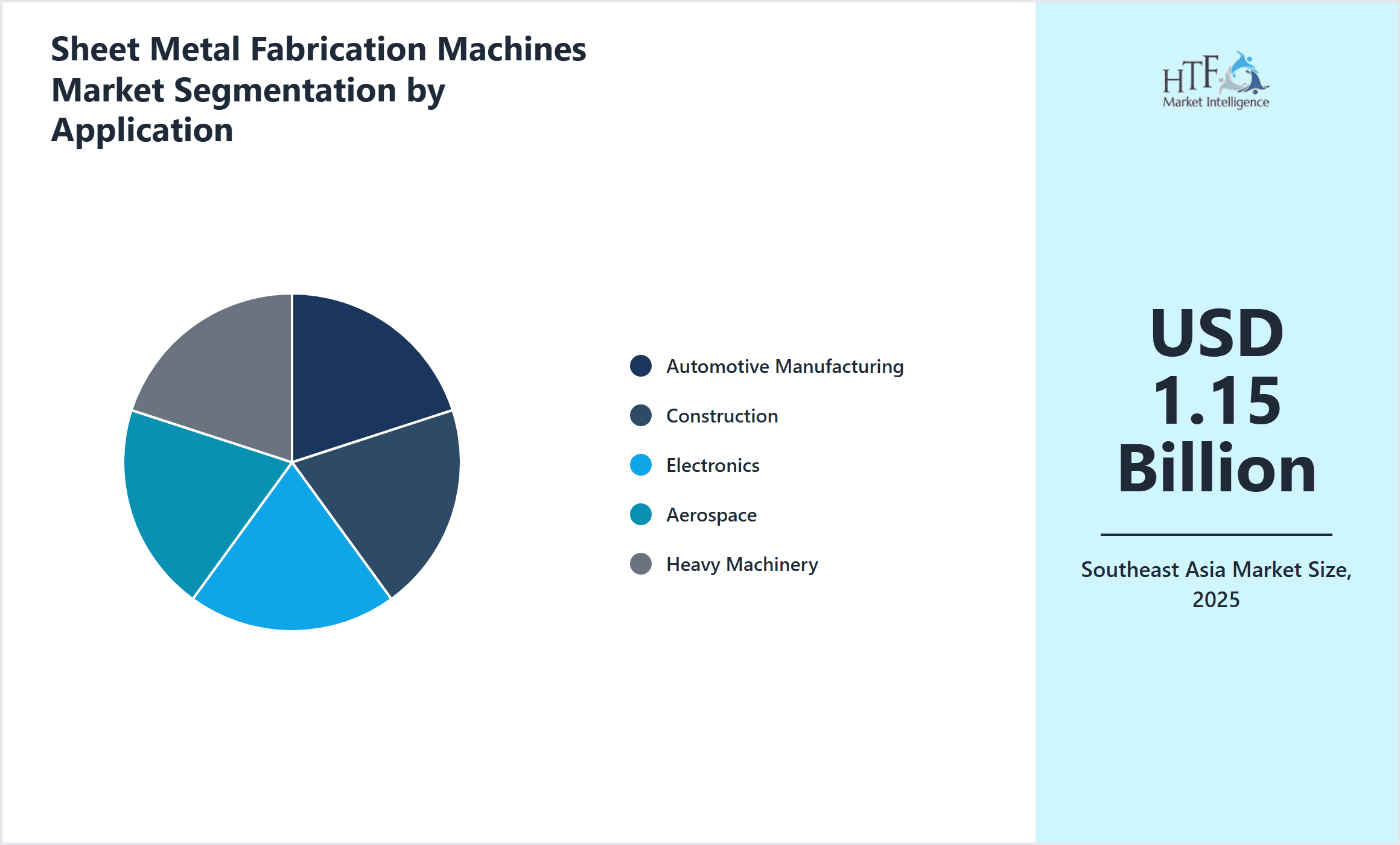
- •By Application Sector
- ◦Automotive Manufacturing
- ◦Construction
- ◦Electronics
- ◦Aerospace
- ◦Heavy Machinery
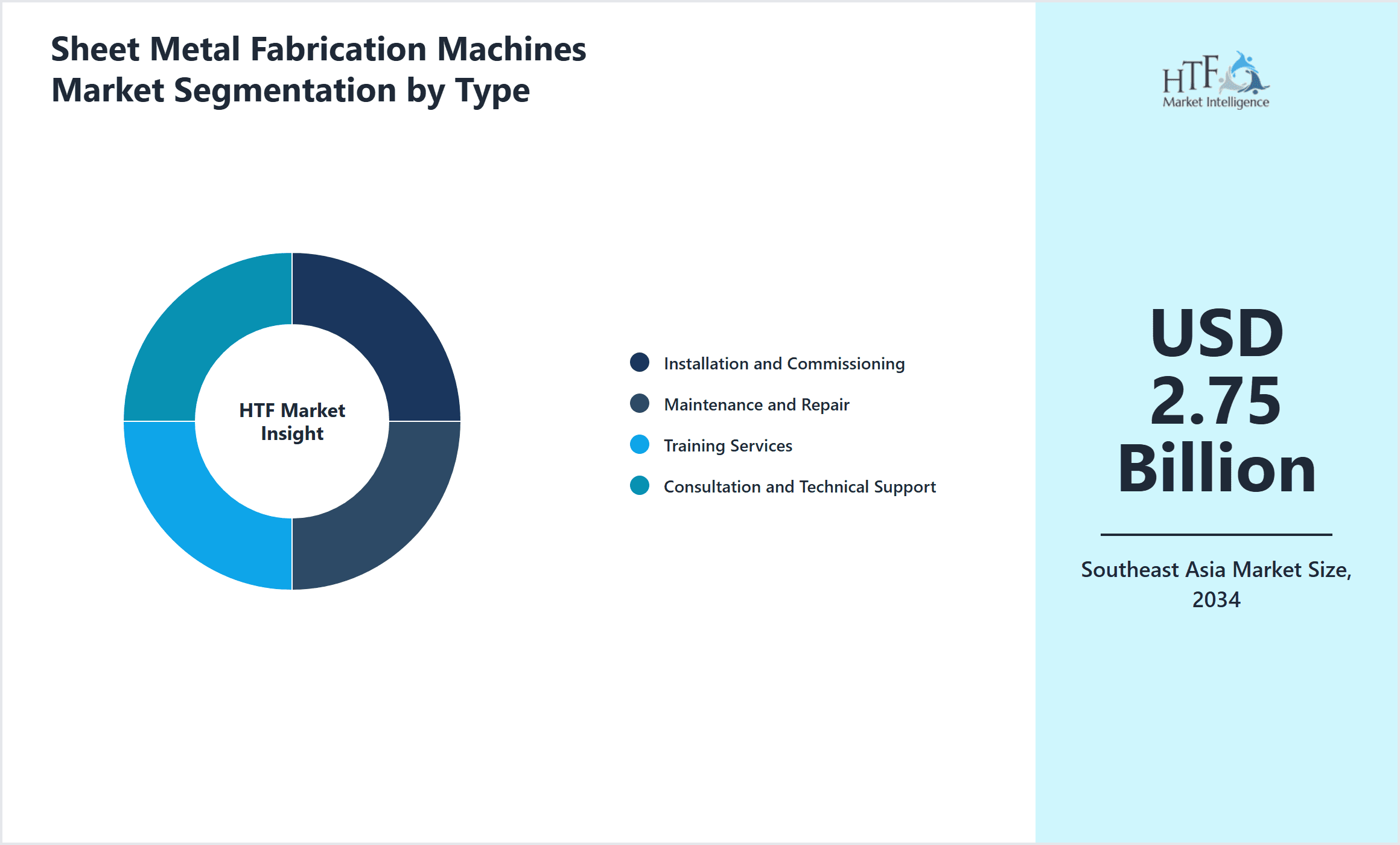
- •By Service Type
- ◦Installation and Commissioning
- ◦Maintenance and Repair
- ◦Training Services
- ◦Consultation and Technical Support
- •By Deployment Model
- ◦On-Premise Machines
- ◦Automated Fabrication Systems
- ◦Hybrid Manual-Automated Models
Growth Dynamics
- •Rapid industrialization across Southeast Asia, especially in Indonesia and Vietnam, is driving increased demand for sheet metal fabrication machines, as industries seek to expand manufacturing capacity and modernize production lines.
- •Government initiatives promoting infrastructure development and manufacturing competitiveness in countries like Malaysia and Thailand are stimulating investments in advanced fabrication machinery with automation capabilities.
- •Technological advancements such as integration of Industry 4.0 elements, including IoT-enabled machines and AI-driven process optimization, are enhancing operational efficiency and attracting adoption among regional manufacturers.
- •Rising demand in the automotive and electronics sectors for precision metal components is encouraging manufacturers to adopt laser cutting and CNC punching machines for improved quality and throughput.
- •Increasing focus on cost reduction and sustainability is driving the adoption of energy-efficient machines and systems capable of minimizing waste and enhancing resource utilization in metal fabrication.
- •The growing presence of global sheet metal fabrication machine suppliers establishing local partnerships and service centers is accelerating market penetration and customer support in Southeast Asia.
- •Expansion of small and medium enterprises in the region is creating new market segments for compact and versatile fabrication machines tailored for lower volume and customized production.
Market Trends
- •There is a growing shift towards automation and digitalization in sheet metal fabrication, with manufacturers increasingly investing in CNC and laser technologies integrated with smart software for real-time monitoring and quality control.
- •Southeast Asian manufacturers are adopting modular and flexible machine designs to accommodate diverse product lines and fluctuating production volumes, enhancing operational agility.
- •The rise in demand for lightweight and complex metal components in automotive and aerospace sectors is driving innovation in precision cutting and bending technologies.
- •Sustainability initiatives are encouraging the use of eco-friendly fabrication processes, including machines with reduced energy consumption and lower emissions, aligning with regional environmental policies.
- •Collaborations between machine manufacturers and software providers are emerging to develop integrated Industry 4.0 solutions that enable predictive maintenance and optimized production workflows.
- •Market players are increasingly focusing on after-sales service excellence and training programs to enhance customer retention and build long-term relationships in the competitive Southeast Asian market.
- •The COVID-19 pandemic accelerated the adoption of remote monitoring and support technologies for sheet metal fabrication equipment, a trend expected to continue post-pandemic.
Market Opportunities
- •Expanding automotive manufacturing hubs in Vietnam and Indonesia offer significant growth potential for sheet metal fabrication machine suppliers focused on high-precision laser cutting and punching solutions.
- •Investment in infrastructure projects across Southeast Asia, including smart cities and transportation networks, creates demand for heavy machinery and construction-related metal fabrication equipment.
- •Small and medium enterprise segments offer opportunities for compact, cost-effective fabrication machines tailored to niche applications, fostering market diversification.
- •Integration of Industry 4.0 technologies presents avenues for developing advanced, connected machines that enhance productivity and enable data-driven manufacturing strategies.
- •Collaborations with local distributors and service providers can facilitate deeper market penetration and after-sales support, improving customer satisfaction and loyalty.
- •Growing demand for sustainable and energy-efficient fabrication solutions aligns with emerging regulatory frameworks, creating opportunities for green technology adoption.
- •Emerging applications in electronics and aerospace sectors seeking miniaturized and precision metal components can drive specialized equipment development and sales.
Market Challenges
- •High capital expenditure and maintenance costs for advanced sheet metal fabrication machines limit accessibility for small and medium enterprises in Southeast Asia.
- •Skilled labor shortages and limited technical expertise in operating and maintaining complex automated machinery pose challenges to market growth.
- •Variability in regulatory standards and compliance requirements across Southeast Asian countries complicates market entry and operational consistency.
- •Competition from low-cost machine imports and unorganized local manufacturers pressures pricing and profit margins for established players.
- •Supply chain disruptions and raw material price volatility impact production schedules and cost structures for machine manufacturers and end users.
- •Resistance to technology adoption among traditional manufacturers slows the transition to automated and digitally integrated fabrication systems.
- •Environmental regulations requiring emissions controls and waste management increase operational complexity and capital requirements.
Regulatory Framework
- •Between 2020 and 2025, Southeast Asian countries implemented machinery safety standards mandating compliance with international certifications such as ISO 12100 for machine safety design, ensuring operator protection and reducing workplace accidents.
- •Environmental regulations introduced in 2023 across countries like Indonesia and Thailand require fabrication machines to meet energy efficiency standards and limit emissions, encouraging adoption of greener technologies.
- •Import tariffs and customs regulations related to industrial machinery have seen periodic adjustments, impacting cost structures and supply chain planning for manufacturers and distributors within the region.
- •Government policies promoting digitalization and Industry 4.0 adoption include financial incentives and subsidies for manufacturers investing in automated sheet metal fabrication technologies, fostering modernization efforts.
- •Workplace safety and labor laws across Southeast Asia mandate regular training, certification, and maintenance protocols for operators of sheet metal fabrication machines, enhancing compliance and operational reliability.
Market Intelligence
- •12th April 2024, Trumpf GmbH + Co. KG launched its latest range of laser cutting machines featuring enhanced automation and IoT connectivity tailored for Southeast Asian manufacturers. These machines offer increased cutting precision, reduced energy consumption, and real-time production monitoring capabilities. The launch aims to address the growing demand for smart manufacturing solutions in the automotive and electronics sectors across Indonesia and Vietnam. Trumpf’s initiative underscores a strategic focus on expanding regional presence and supporting Industry 4.0 adoption. The new product lineup is expected to strengthen Trumpf’s competitive position by offering integrated solutions that optimize fabrication processes and lower operational costs. Source: Official Trumpf Press Release
- •5th August 2024, Amada Co., Ltd. introduced a compact CNC punching machine designed for small and medium enterprises in Southeast Asia. This machine incorporates AI-driven error detection and adaptive tooling technology, enhancing productivity and reducing downtime. Amada’s innovation targets growing manufacturing hubs in Malaysia and the Philippines, where SMEs seek cost-effective yet advanced fabrication equipment. The product launch aligns with regional industrial diversification strategies and digital transformation trends. Amada’s enhanced service network in Southeast Asia complements this offering, providing installation, training, and maintenance support tailored to local market needs. Source: Amada Official Website
- •20th January 2025, Bystronic Laser AG announced a strategic partnership with a leading Southeast Asian distributor to expand access to its laser cutting and bending solutions. This collaboration aims to enhance after-sales service capabilities, including remote diagnostics and predictive maintenance, leveraging IoT technologies. Bystronic’s move addresses increasing customer demand for reliable support and machine uptime in Indonesia, Thailand, and Vietnam. The partnership is anticipated to accelerate market penetration and improve customer satisfaction, reinforcing Bystronic’s leadership in the region’s sheet metal fabrication equipment sector. Additionally, joint training programs for operators and technicians are planned to boost skill development. Source: Bystronic Corporate News
- •Recent market developments and strategic initiatives are continuously tracked through industry publications, company announcements, and regulatory filings. For the most current information, stakeholders are advised to monitor official corporate communications and recognized market intelligence platforms.
Regional Outlook
The Indonesia currently holds a significant share of the market, primarily due to several key factors: increasing consumption rates, a burgeoning population, and robust economic momentum. These elements collectively drive demand, positioning this region as a leader in the market. On the other hand, Vietnam is rapidly emerging as the fastest-growing area within the industry. This remarkable growth can be attributed to swift infrastructure development, the expansion of various industrial sectors, and a marked increase in consumer demand. These dynamics make this region a crucial player in shaping future market growth.
In our report, we cover a comprehensive analysis of the following regions and countries:
- Singapore
- Malaysia
- Thailand
- Indonesia
- Vietnam
- Philippines
- Others
| Feature | Details |
|---|---|
| Base Year Market Size | USD 1.15 Billion |
| Forecast Year Market Size | USD 2.75 Billion |
| CAGR | 10.6% |
| Forecast Period | 2026 to 2033 |
| YoY Growth | 10.1% |
| Scope of Report | Market is segmented by Sheet Metal Fabrication Machine Type (CNC Punching Machines, Laser Cutting Machines, Press Brakes, Shearing Machines, Plasma Cutting Machines), Application Sector (Automotive Manufacturing, Construction, Electronics, Aerospace, Heavy Machinery), Service Type (Installation and Commissioning, Maintenance and Repair, Training Services, Consultation and Technical Support), Deployment Model (On-Premise Machines, Automated Fabrication Systems, Hybrid Manual-Automated Models) |
| Regions Covered | Singapore, Malaysia, Thailand, Indonesia, Vietnam, Philippines, Others |
| Key Companies | Trumpf GmbH + Co. KG (Germany), Amada Co., Ltd. (Japan), Bystronic Laser AG (Switzerland), Mazak Corporation (Japan), LVD Company NV (Belgium), Komatsu Ltd. (Japan), Haco Group (Belgium), Durma Makina Sanayi ve Ticaret A.S. (Turkey), Salvagnini Italia S.p.A. (Italy), Mitsubishi Electric Corporation (Japan), Fagor Arrasate S. Coop. (Spain), Accurpress (Canada), Prima Industrie S.p.A. (Italy), Jinan Bodor CNC Machine Co., Ltd. (China), Koike Aronson, Inc. (United States), Durma Machinery (Turkey), Toshiba Machine Co., Ltd. (Japan), Messer Cutting Systems (Germany), Baileigh Industrial (United States), Cincinnati Incorporated (United States), Feeler Machinery (Taiwan), Amada Miyachi America, Inc. (United States), Adira Machinery (Chile), Ficep Corporation (Italy), OMAG Srl (Italy) |
Southeast Asia Sheet Metal Fabrication Machines Market Size, Growth & Revenue 2025-2034 - Table of Contents
Research enthusiast focused on transforming data uncovering into actionable insights through data-driven decision-making.
Frequently Asked Questions (FAQ):
The Market market is projected to grow at a steady CAGR from 2025 to 2030, driven by increasing demand and expansion in various applications.
North America currently leads the market, followed by Europe and Asia-Pacific.
Key growth drivers include increasing activities, rising demand for innovative solutions, technological advancements, and growing preference for efficient products.